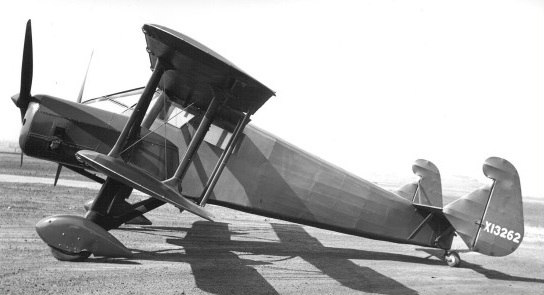
Cubcrafters CC11-100 Sport Cub / PA-18   

Cubcrafters registered 48 aircraft (and reporting 52 sales) by 2012’s end. The Carbon Cub SS—with its proprietary CC340, 180 hp engine—and Sport Cub S2 continued in the 2013 market. 2012 Price: US$172,990 (Carbon Cub SS); US$134,950 (Sport Cub S2).

CubCrafters Carbon Cub
CubCrafters Carbon Cub SS

CubCrafters Carbon Cub SS
Engine: Titan 340 cc, 80 hp
Cruise speed: 104 kias
Useful load: 424 pounds
Base price: $189,990
Courtesy CubCrafters

Stall: 31 kt / 36 mph / 58 kmh
Cruise: 96 kt / 110 mph / 177 kmh
VNE: 120 kt / 138 mph / 222 kmh
Empty Weight: 374 kg / 825 lbs
MTOW Weight: 599 kg / 1320 lbs
Climb Ratio: 800 ft/min / 4 m/s
Take-off distance (50ft obstacle): 400 ft / 122 m
Landing distance (50ft obstacle): 500 ft / 152 m

CubCrafters CC11-100 Sport Cub
Engine: Continental O-200
TBO (hrs.): 1800
Horsepower@altitude: 100@SL
Fuel type: 100/100LL
Propeller type: FP/two-blade
Landing gear type: Fixed/Conv.
Max ramp weight (lbs): 1320
Gross weight (lbs.): 1320
Landing weight (lbs.): 1320
Empty weight, std. (lbs.): 825
Useful load, std. (lbs.): 495
Useful fuel, std. (gals.): 24
Payload, full std. fuel (lbs.): 351
Wingspan: 34 ft. 8 in.
Overall length: 23 ft. 3 in.
Height: 8 ft. 5 in.
Wing area (sq. ft.): 176
Wing loading (lbs./sq.ft.): 7.5
Power loading (lbs./hp): 13.2
Seating capacity: 2
Cabin doors: 1
Cabin width (in.): 30
Cabin height (in.): 50
Cruise speed, 75% (kts.): 92
Fuel consumption, 75% (gph): 4.5
Best rate of climb, SL (gph.): 800
Stall speed, dirty (kts.): 31
Service ceiling (ft.): 14,000
Takeoff ground run (ft.): 250
Takeoff over 50 ft. obstacle (ft.): 950
Landing ground run (ft.): 200
Landing over 50 ft. obstacle (ft.): 1000

2009 SPORT CUB S2
Base Price: $127, 500
Engine: 100 hp Continental O-200
Propeller type: 72×42-in. wood, carbon and glass composite
Max takeoff weight (lbs.): 1320
Max landing weight (lbs.): 1320
Gross weight (lbs.): 1320
Empty weight, std. (lbs.): 832
Max payload, full fuel (lbs.): 345 (wheels)
Fuel capacity (USgals.): 25 (24 usable)
Max useful load, std. (lbs.): 488
Cargo weight (lbs.): 120
Wingspan: 34 ft. 2 in.
Overall length: 23 ft. 3 in.
Overall height: 8 ft. 4 in.
Cabin width (in.): 30
Cabin height (in.): 52
Seating capacity: 2
Vso (kts.): 40
Vne (kts.): 32
Cruise speed (kts.): 103
Top speeed (mph): 122
Fuel consumption (gph): 4-5
Max range (mi.): 450
Takeoff ground roll (ft.): 415
Landing ground roll (ft.): 245

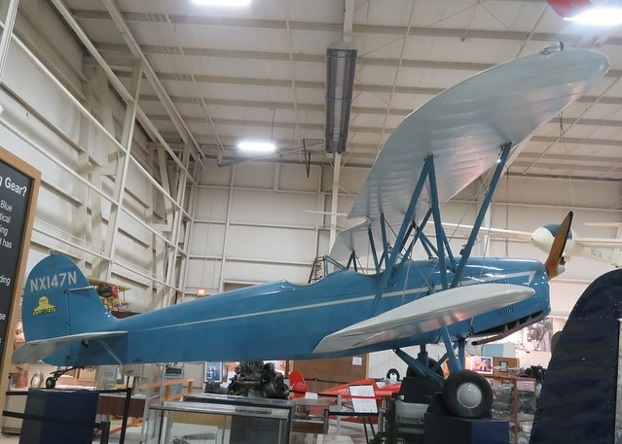
2001 Cub Crafters PA-18-180
Base price: $135,975 (new), $120,000-$130,000 (rebuilt)
Engine make/model:Lycoming O-360-C4P
Horsepower@rpm@takeoff: 180@2700@SL
Horsepower for takeoff:180
TBO hrs.: 2000
Fuel type:100LL
Propeller type/diameter: Fixed-pitch Sensenich/McCauley
Landing gear type: Conventional
Max ramp weight (lbs.): 2000
Gross weight (lbs.): 2000
Landing weight (lbs.): 2000
Empty weight, std. (lbs.): 1060
Empty weight, as tested (lbs.): 1150
Useful load, std. (lbs.): 940
Payload, full std. fuel (lbs.): 580-733
Usable fuel, std. (gals.): 34.4-60
Oil capacity (qts.): 8
Wingspan: 35.8 ft.
Overall length: 22.5 ft.
Height: 6 ft. 9 in.
Wing loading (lbs./sq. ft.): 11.2
Power loading (lbs./hp.): 11.1
Wheel base (in.): 17 ft. 2 in.
Wheel track (in.): 6 ft. 4.5 in.
Wheel size (in.): 8.00 x 6 (26-in. tundra opt.)
Seating capacity: 2-3 (opt.)
Cabin doors: 1
Cabin width (in.): 24
Cabin height (in.): 48
Baggage capacity (lbs.): 200
Max level speed (miles): 140
Cruise speed (miles) 75% power @ 6,500 ft.: 127
Cruise speed (miles) 65% power @ 6,500 ft.: 120
Cruise speed (miles) 55% power @ 6,500 ft.: 111
Max endurance (w/ reserve) (long-range tanks 61-USG) 75% power: 5.5 hrs.
Max endurance (w/ reserve) (long-range tanks 61-USG) 65% power: 7.1 hrs.
Max endurance (w/ reserve) (long-range tanks 61-USG) 55% power: 8.7 hrs.
Fuel consumption (USgph) 75% power: 10.9
Fuel consumption (USgph) 65% power: 8.5
Fuel consumption (USgph) 55% power: 7.0
Stall speed (flaps down, power off) (mi.): 30 indicated A/S
Stall speed (flaps down, power on) (mi.): 22 indicated A/S
Best rate of climb (fpm): 1500
Service ceiling (ft.): 25,000 (est.)
Takeoff ground roll (ft.): 150-200
Landing ground roll (ft.): 250-400
Croydon Aircraft Pither Replica

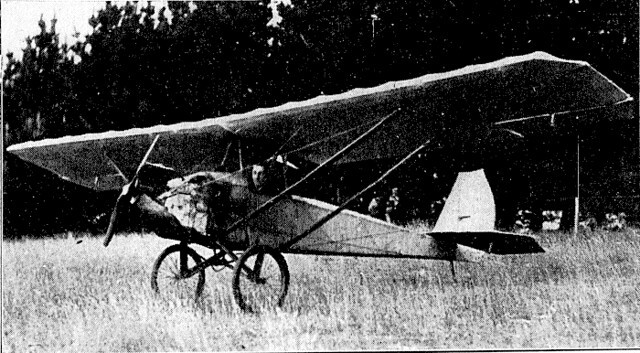
Colin Smith and his Croydon Aircraft Company team put Herbert Pither’s design to a practical test. Colin was able to make working drawings from Otago Witness photographs, supplemented by specifications helpfully cited in newspaper reports.
He is confident the replica is as authentic as it is possible to be, given that there is no way of knowing what adjustments Pither made during testing.
Colin insisted the work be done from Pither’s perspective, protecting against the inevitable influence of hindsight. Helpful suggestions by interested on lookers to improve the design have been firmly resisted, and the only conscious design concessions (like extra strengthening and temporarily fixing the all flying tail plane in position) have been made for safety reasons.
The craft is heavier than Pither’s, 500 lb (230kg) though with the same centre of balance, making it, if anything, less likely to fly at the 250 lb (113kg) power output Pither specified.
February 18, 2005, at Mandeville airfield, Southland saw the first flight of the replica monoplane under the hands of Jerry Chisum. While exact measures of its performance are still being analysed, pilot Jerry Chisum eased it through a series of low runs of about 100m along the airfield. The take off speed measured from a chase car as 70kmph.

Chisum rated the craft as surprisingly airworthy and controllable.


The Pither can be inspected at the Croydon hangar, Mandeville, but Colin has no plans for more flying in the meantime.
‘We’ve proven it can do what Pither claimed, and exploring the extent of its limitations has never been part of the plan, and no more. We’re not intending to do circuits or take it up to 100 feet. If we wanted it to do more, we’d build something that had done more.”

Crowe/Robins GRS-1

This gyrocopter is a product from Alf Crowe and Glen Robins. Alf originally started building it as a two-seater. Glen Robins designed the cab, making it a single-seat machine, and made the necessary engine adjustments and added a pre-rotator. So the “GRS” in the designation stands for “Glen Robins Special”. It is powered by a Subaru EA81 engine onto a three-blade warp drive propeller. The rotor blades, built by the late George Clark, are 28 foot and wooden with a 9-inch chord (following the Van Craft pattern). They have a steel insert through them for the length of the blade. They have a lot of inertia and take a while to build up to speed, but the pre-rotator does help. It had its first flight at its home base Taonui in October 2001, with Alf Crowe at the helm.
The registration ZK-RAJ being withdrawn on 30 June 2003.

Engine: Subaru EA81.
Prop: three-blade warp drive.
Blades: 28 ft x 9 in.

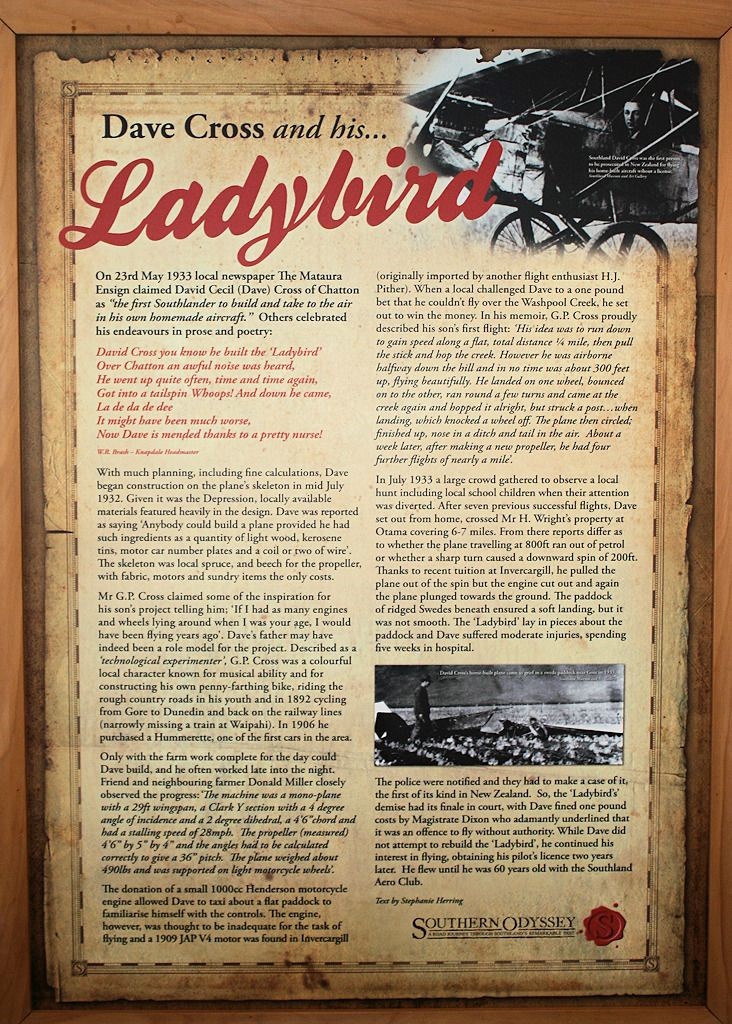
Cross Ladybird

Mr. David Cross, aged 23, in the aeroplane designed and built by himself in which he crashed from a height of 300 ft. near Gore, New Zealand, on Monday. Mr Cross was injured and the machine was wrecked.

The Ladybird first flew on 21 May 33 with ex-Pither 40hp JAP engine. Span 29ft.

He made several flights (Approx 6 ) including one of 14km and he was the first man to be prosecuted in New Zealand for flying without a licence.

On 24 May 1933 the ODT reported, “Some months ago it was hoped to take the machine into the air, but the engine with which it was then equipped – a four-cylinder motor cycle engine – was not sufficiently powerful to lift the plane and the young aviator finally obtained an old engine imported from England by Mr Pither of Invercargill some 22 years ago for aviation purposes.

“This was overhauled and found to be in good order and after some alterations it was installed in the machine.

“Much study and energy had been devoted to the construction of a small monoplane at Chatton, Eastern Southland, when a very proud young man named David Cecil Cross, made his first successful trial flights in the machine.

“In the presence of about 20 onlookers the monoplane was taken out on Sunday morning and the young man took his place at the controls.

“The machine took off beautifully, crossed the Washpool Creek and a row of tall poplar trees, reached an altitude of 200 feet and made a good landing. The return journey was commenced a few minutes later and would have been equally successful had not one of the wheels struck a log of wood which was almost hidden in the ground.

“A wheel was torn off and a certain amount of damage was done to the undercarriage, but the pilot was uninjured. Naturally the young man was very proud of his achievement, although the slight mishap at the end of the trial was a disappointment to him. The monoplane has a wing span of 29 feet and on account of its graceful lines has been called the Ladybird. Despite its age, the engine now installed is in excellent order.”

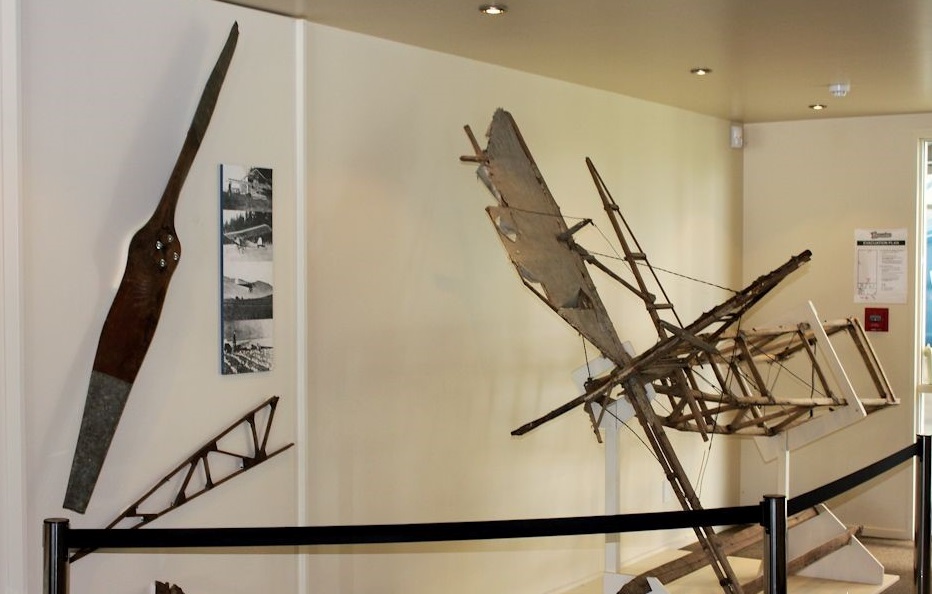
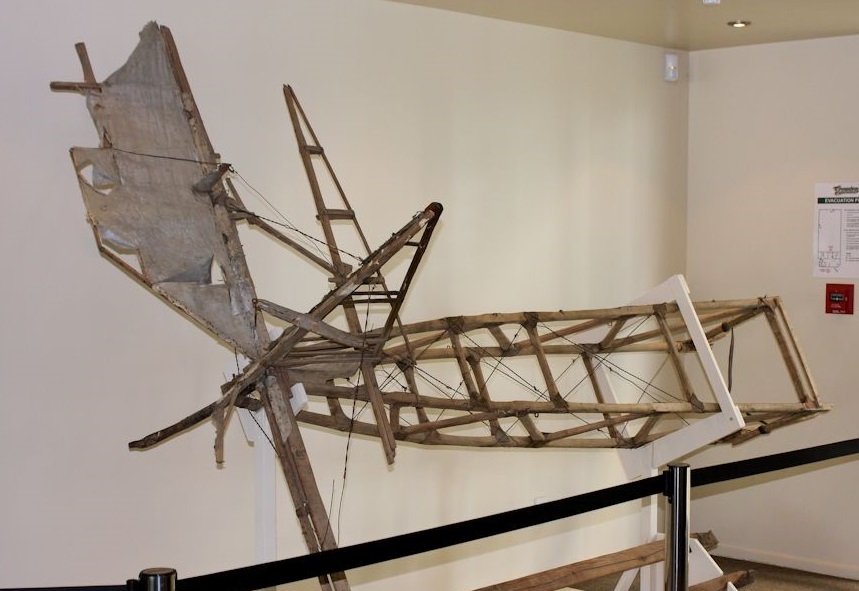
The Ladybird crashed in a turnip paddock at Otamita, Southland on 10 July 1933, and the remains went to the Croydon Aviation Heritage Centre at Mandeville, New Zealand, in 2012.