CUP Hydran

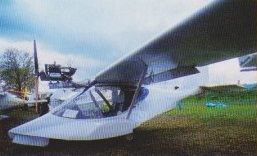
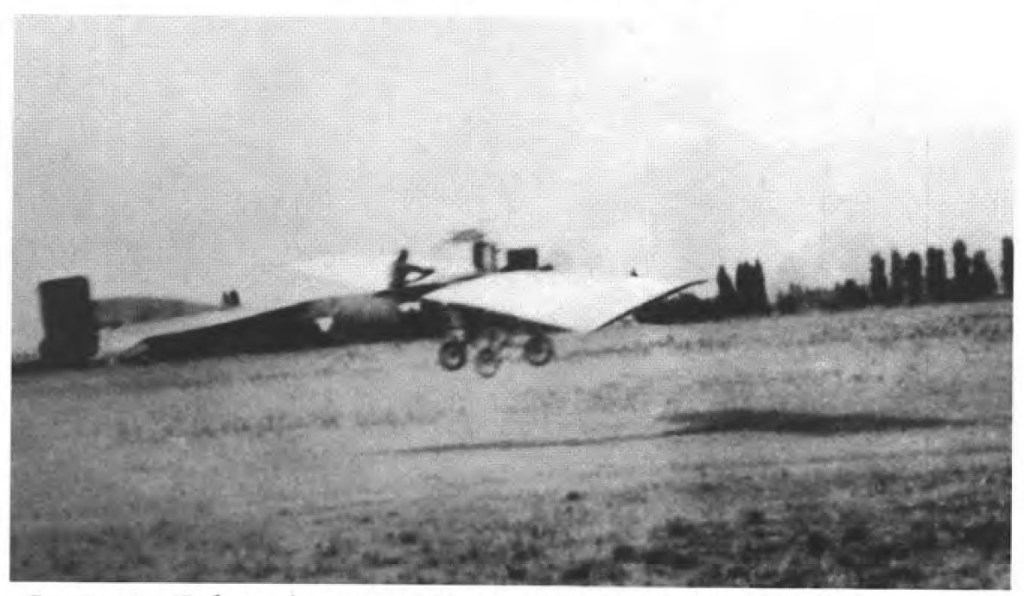
The Hydran amphibious flying boat has a composite covered aluminium tube structure.

Engine: Rotax 582, 65 hp
Wing span: 9.42 m
Wing area: 12.9 sq.m
MAUW: 450 kg
Empty weight: 330 kg
Fuel capacity: 50 lt
Max speed: 180 kph
Cruise speed: 150 kph
Minimum speed: 60 kph
Climb rate: 3 m/s
Seats: 2
Fuel consumption: 12.5-15 lt/hr
Price (1998): 88 000 000 Lr

Culver XPQ-15 / XTD3C

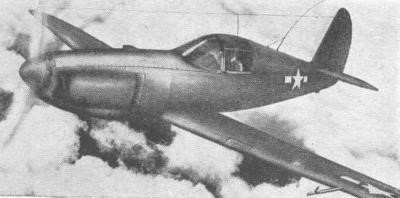
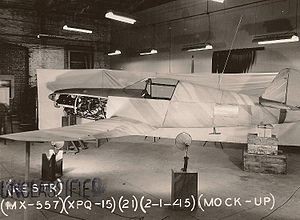
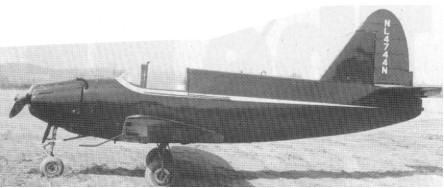
The Culver XPQ-15, also known as the XTD3C-1, was an American target drone developed by the Culver Aircraft Company late in World War II. The XPQ-15 was a low-wing monoplane of conventional design. It was powered by a Franklin O-405 opposed piston engine. Design work began in 1943.

Four examples of the XPQ-15 were built for evaulation by the United States Army Air Forces in 1945; two additional aircraft were tested by the United States Navy as the XTD3C-1. No production contract was placed.

Variants:

XPQ-15
USAAF variant; four produced.

XTD3C-1
USN variant; two produced, BuNos 29665-29666.

XPQ-15
Engine: 1 × Franklin O-405, 200 hp (150 kW)
Maximum speed: 220 mph (354 km/h; 191 kn)

Culver V / XPQ-15

Last Culver design started life on paper in 1942. This was the Model V (for Victory) which borrowed from the LCA and the LAR but differed quite considerably in fuselage layout, first flown September 1945. A Simpli Fly control system was fitted to make flying as easy as driving a car, but the aircraft was overweight and the control system prone to failure. It failed to compete in the post war market and only 378 were built before Culver went bankrupt.

Wings were similar in planform to earlier models, but had extra dihedral added to the outer wings. Power was provided by an 85hp Continental C 85 12 which gave a maximum speed of 135mph, a climb rate of 660 ft/min, a service ceiling of 13100 ft and a range of 625 miles. The fuselage had a forward opening canopy and the cockpit was level with the leading edge of the wing, giving the characteristic Y look.

Final model, the V 2, was designed to overcome some of the failings of the V. This grossed 1680 lbs, compared with 1600 lbs for the V, and performance was slightly down. Structurally, the V differed from earlier models in having a wing of semi monocoque structure, covered in plastic bonded plywood. Manually operated flaps were fitted, larger on the V than the V 2.

Four were built as drones designated XPQ-15.

The Culver V was put back into production briefly, in 1956 by the Superior Aircraft Co, and a further six aircraft built, powered by the 95hp Continental, but that was the end of the line. In 1987, of the 380 odd built, some thirty remain on the register.

Engine: Continental, 85 hp
Wingspan: 29 ft
Length: 20 ft 8.5 in
Height: 6 ft 9.5 in
Wing area: 125.9 sq.ft
Empty weight: 1070 lb
Loaded weight: 1600 lb
Cruise: 125 mph
ROC: 600 fpm
Service ceiling: 13,100 ft
Range: 700 mi

Culver NR-D / TD2C-1 / PQ-14

NR-D

The Culver NR-D radio-controlled target aircraft was designed to simulate enemy attacks. It featured an orthodox single-seat cockpit and could be controlled manually.

It was produced in quantity for both the US Navy and the USAF.

The Navy version was powered by a 150 hp Franklin 6ACT-298-J5 and designated TD2C-1, a total of 1198 being delivered.

The USAF versions were the PQ-14A and PQ-14B, and powered by the 150 hp Franklin O-300-11, 150 and 594 of the respective models were delivered.

There are civilian conversions of all three models.

Wingspan: 30 ft
Length: 19 ft 5.75 in
Height: 8 ft 4.5 in
Wing area: 103 sq.ft
Loaded weight: 1830 lb
Max speed: 175 mph at SL / 160 mph at 17,000 ft
ROC: 800 fpm
Range: 512 mi at 160 mph

Culp Special

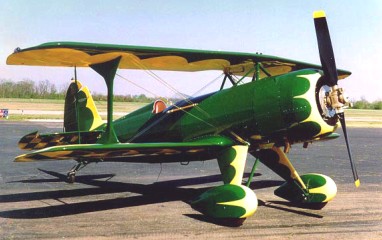
Culp began construction of his Special in 1994 and after some 7000 man hour it rolled out on 1 March 1995. It first flew in March 1995.

Everything about the Culp Special was meant to bring about that 1930’s airshow airplane feeling. Working with Hale Wallace of Steen Aerolab, Steve Culp redesigned the Skybolt and developed the modifications necessary for this round engine aircraft. The Culp Special is a fully aerobatic bi-plane using a 360 hp 9-cylinder Russian Vedeneyev M-14P radial engine. The aircraft is built using tube, wood and fabric construction materials. The two seat aircraft has an empty weight of 1480 lbs., a cruise speed of 150 mph and range of 600 sm.

The fuselage is 4130 chromoly tubing with wood formers, but tail components are made of 2130 steel tubes. Wings have a 41 in constant chord with solid spruce spars. The forward spar measures 6 x 1 inch. The upper wing contains 24 quarter inch built-up spruce ribs; the lower has 22 ribs, and rib spacing is 10.5 inch.

Ailerons are fitted to all four wing panels with their pivot point at 30% of chord. Each aileron spans 70 inches and contains seven ribs. The top wing uses a NACA 632A015 airfoil and 6.5 degrees of sweepback. It’s span is 24 feet. The lower wing with its NACA 0012 airfoil spans 23 feet. Aircraft length is 21 feet. Culp has replaced the wing fabric with 0.0625 in birch plywood.

Horizontal tail span is 9 feet. Trim tabs are fitted into each elevator half, and there is also a rudder trim tab.
The tubular steel landing gear incorporates bungee shock absorbers and has a 82 inch tread. It has Cleveland wheels with heavy duty dual-piston caliper brakes and 10 x 6.00 tires. Wag Aero fibreglass pants streamline the wheels. The tail wheel is an 8 in stearable system.

Engine: 360 hp 9-cylinder Vedeneyev M-14P
HP range: 240-400 hp
Gross weight: 2300 lb
Empty weight: 1480 lb
Fuel capacity: 54 USG
Top speed: 220 mph
Cruise speed: 150 mph
Stall: 70 mph
Range: 600 sm.
Rate of climb: 4500 fpm
Takeoff dist: 500 ft
Landing dist: 300 ft
Wing constant chord: 41 in
Aileron span: 70 in
Top wing: NACA 632A015
Top wing sweepback: 6.5 degrees
Top wingspan: 24 ft
Lower wing: NACA 0012
Lower wing span: 23 ft.
Wing area: 161 sq.ft
Length: 21 ft.
Horizontal tail span: 9 ft.
Wheel tread: 82 in
Tires: 10 x 6.00
Seats: 2
Cockpit width: 32 in
Landing gear: tailwheel

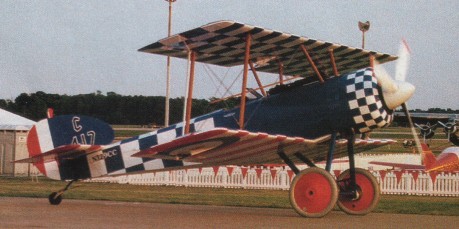
Culp Sopwith Pup

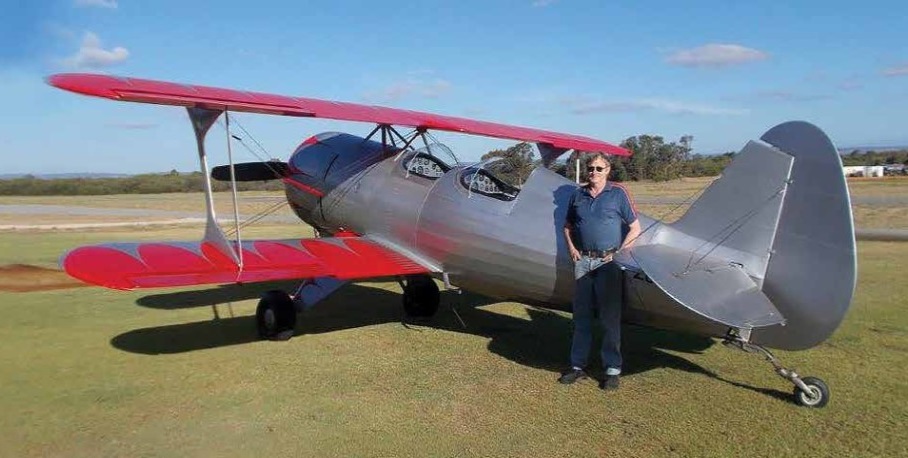
A scratch built replica from scaled up model aircraft plans. The project took approximately 5 years to complete. The aircraft took the Bronze Lindy award in the plansbuilt category at Oshkosh 2004.

Engine: M-14P, 360 hp
HP range: 200-400 hp
Cruise: 160 mph
Stall: 38 mph
Range: 690 sm
Rate of climb: 4000 fpm
Takeoff dist: 300 ft
Landing dist: 400 ft
Fuel capacity: 53 USG
Empty weight: 1750 lb
Gross weight: 2400 lb
Length: 18 ft
Wing span: 26.5 ft
Wing area: 265 sq.ft
Seats: 2
Cockpit width: 26 in
Landing gear: tailwheel

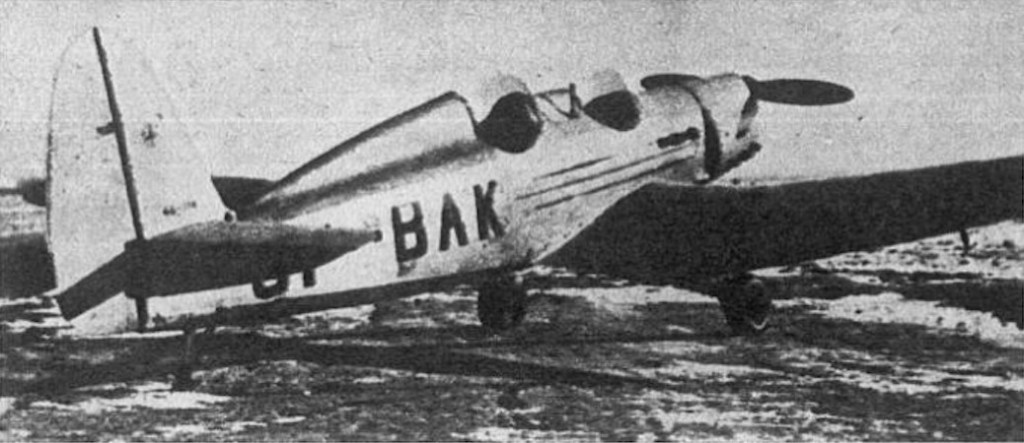
CSS CSS.11        

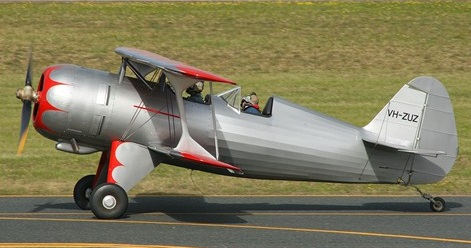
The CSS-11 is an aircraft very similar to the CSS-10 aircraft. Work on both structures was carried out in parallel. The CSS-11 aircraft was built under the direction of engineer Leszek Dulęba. In April 1947, Leszek Dulęba was appointed as the Airframe Team Manager. Two prototypes of the CSS-11 aircraft were built in the CSS workshops.

The CSS-11 aircraft is a two-seater low-wing monoplane of mixed construction. The fuselage is made of steel tube, the wings are of wooden structure.

Simple wings with a wooden structure. NACA 23012 profile. They had one spar, covered with plywood from the front. The back part of the wing is covered with fabric. Slotted ailerons, differentially deflected, with a wooden frame, covered with fabric. The wing has no flaps.

Open cabins, second cabin located above. Truss hull, welded from steel pipes. The hull in the cabins is covered with duralumin sheet, in the rear part with fabric on profiled slats.

Trapezoidal tail with rounded ends. Double-girder fins, nose caisson covered with plywood, the rest with canvas. Rudders with a wooden frame, covered with canvas.

Fixed landing gear with tail wheel.

Walter “Minor 6-III” in-line engine with a take-off power of 125 hp (92 kW). The engine is carbureted. Two-bladed wooden propeller.

CSS-11 SP-BAH

On 18 October 1948, the first prototype made its first flight. The pilot was J. Szymankiewicz. Both aircraft were handed over to GIL for tests.

The CSS-11 aircraft proved successful. It had good flight characteristics. The results were better than expected. The plane performed aerobatic manoeuvres correctly and easily exited the spin. The assessment of the aircraft said that the CSS-11 aircraft is suitable for training and aerobatics.

Just like CSS-10, it was planned to launch serial production of CSS-11 aircraft. Production was to be 30 machines. The lack of engines stood in the way. License production of Walter engines in Poland has not been started. In the period 1952-1953, for political reasons, both prototypes were cancelled.

Engine: Walter Minor 6-III, 125 hp (92 kW)
Span: 10.60 m / 34 ft 8 in
Wing area: 16.50 sq/m / 168 sq.ft
Length: 7.50 m / 24 ft 8 in
Height: 1.83m / 7 ft
Empty weight: 575 kg
Take-off weight: 850 kg / 2070 lb
Payload: 200 kg
Fuel capacity: 90 lt
Top speed: 208 km/h / 140 mph
Cruising speed: 175 km/h / 105 mph
Landing speed: 75 km/h
ROC: 4.2 m/s
Ceiling: 5,950 m
Range: 660 km / 680 mi
Landing run: 160m
TO run: 120 m

CSS CSS.10

In 1946, the CSS office received an order from the Ministry of Communications to develop thrree aircraft: school, training and aerobatic and passenger. In 1947, the first training aircraft project was developed, which was the CSS-10. The constructors of the aircraft were Franciszek Misztal and Stanisław Lasota.

The CSS-10 aircraft is a two-seat low-wing monoplane of mixed construction. The fuselage is made of steel pipes, the wings are of wooden structure.

Simple wings with a wooden structure. The wing has one spar, covered with plywood from the front. The back part of the wing is covered with fabric. Slotted ailerons, differentially deflected, with a wooden frame, covered with fabric. The wing has no flaps.

Open cabins, second cabin located above. Truss hull, welded from steel tube. The hull in the cabins is covered with duralumin sheet, in the rear part with fabric on profiled slats.

Trapezoidal tail with rounded ends. Double-girder fins, nose caisson covered with plywood, the rest with canvas. Rudders with a wooden frame, covered with canvas.

Fixed landing gear with tail wheel.

Since the construction of the CSS-10 aircraft in the workshops in Okęcie was impossible, the construction of prototypes began at WSK PZL Mielec. Corrections have been made to the design. The Walter Mikron II engine was used, with a power of 65 hp (48 kW). Therefore, the designation of the aircraft was changed to CSS-10 A. The CSS-10 A prototype, made its first flight on 3 September 1948 piloted by Ludwik Lech.

The CSS-10 aircraft was transported to Warsaw to the Central Aviation Institute. At GIL, the aircraft was tested. The aircraft did not perform well because the engine was underpowered. Due to the low engine power relative to the gross weight, the aircraft had a long take-off, low climb and unsatisfactory stall and spin characteristics and was deemed unsuitable for pilot training.

Another prototype, designated CSS-10 C, was equipped with a 105 hp (77 kW) Walter Minor 4-III engine. In addition, the wing received a slight slant. The first flight was made on 24 April 1949. This aircraft was also transported to GIL. The tests of the aircraft went well and the aircraft was cleared for aerobatics. In 1952, the aircraft was subjected to state tests, as a result of which the aircraft was approved for flights as a training and training aircraft. It was planned to build 40 aircraft of this type, but due to the lack of engines, the project was not implemented.

At that time, it was planned to start production of Walter engines under license in Poland. Production of the engines was not undertaken.

It was planned to produce 40 aircraft of this type, but due to the lack of Walter Minor 4-III engines, the project was finally abandoned.

In 1952, the planes were parked behind the hangar. The CSS-10A aircraft was destroyed (1955). In 1955, the CSS-10 C aircraft was renovated by members of the Warsaw Aero Club at Okęcie. The aircraft was shown at the Aviation Exhibition at Okęcie (1956). In order for the aircraft to fly, it was necessary to repair the landing gear, which was not carried out. In 1960 the plane was written off.

There was also an aircraft design, which was marked CSS-10 B. It differed from the CSS-10 C aircraft with a covered cabin. This prototype was not built.

CSS-10 A
Engine: Walter Mikron III, 48 kW (65 hp) take-off power / continuous 35 kW (48 hp).
Span: 10.70 m
Wing area: 15.73 sq.m
Length: 7.36 m
Height: 1.96m
Empty weight: 462 kg
Take-off weight: 691 kg
Payload: 149 kg
Fuel capacity: 82 lt
Top speed: 149 km/h
Cruising speed: 112 km/h
Landing speed: 75 km/h
ROC: 1.5 m/s
Ceiling: 2,250 m
Range: 310 km
TO run: 130 m
Landing run: 150 m

CSS-10 C
Engine: Walter Mikron 4-III, 77 kW (105 hp) take-off power / continuous 59 kW (80 hp)
Span: 10.58 m
Wing area: 15.73 sq.m
Length: 7.55 m
Height: 1.91m
Empty weight: 505 kg
Take-off weight: 756 kg
Payload: 251 kg
Fuel capacity: 82 lt
Top speed: 185 km/h
Cruising speed: 152 km/h
Landing speed: 72 km/h
ROC: 3.5 m/s
Ceiling: 4,900 m
Range: 440 km
Landing run: 130 m
TO run: 150 m