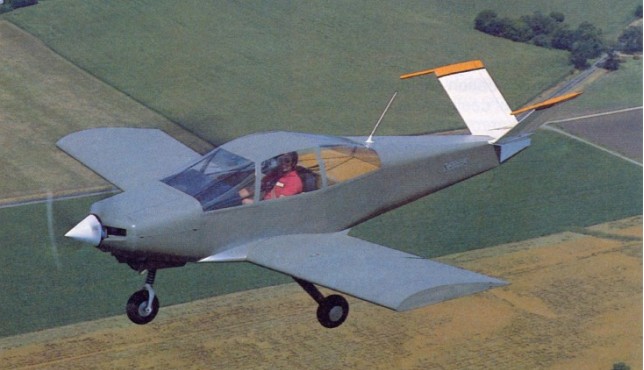
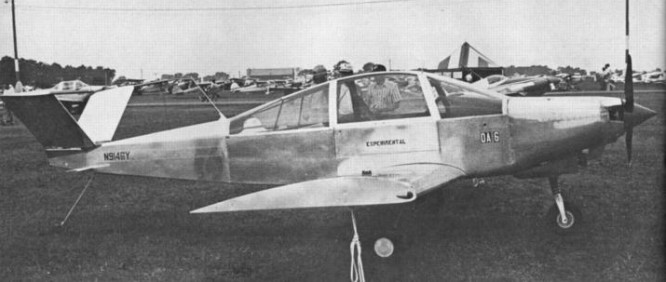
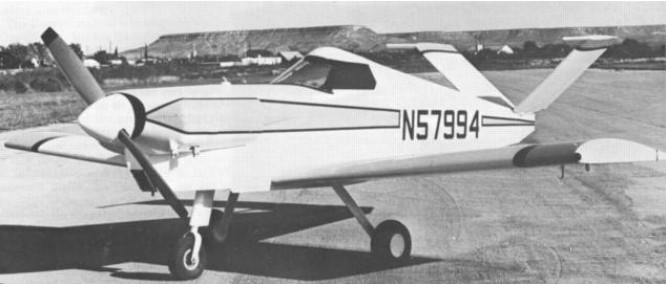
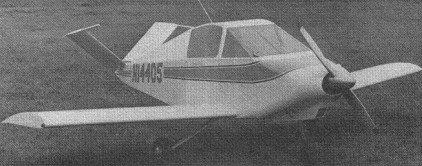
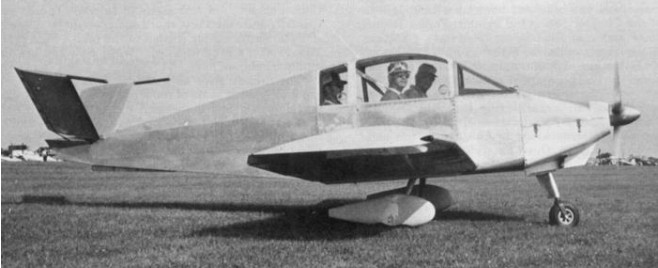
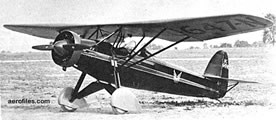
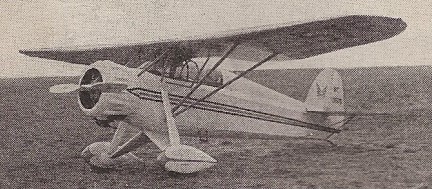
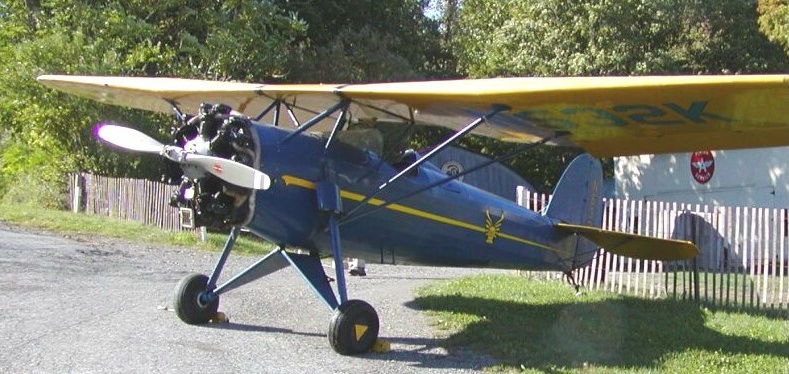
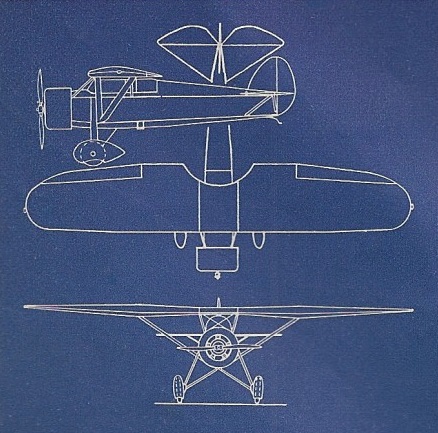
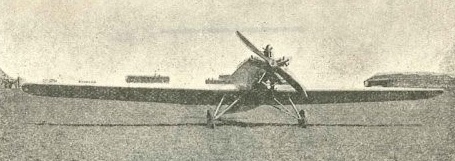
The DA-5A single-seat, low-wing monoplane makes use of the same V-type tail as the DA-2A. The pilot sits inside an enclosed canopy behind a 65-hp Continental turning a fixed-pitch prop. Both the wings and fuselage are alight alloy structure with stressed skins, and the landing gear is the non-retractable tricycle type.
Many DA-5 and DA-5A aircraft have been built from plans. DA-1 through DA-5 used the Clark Y airfoil.
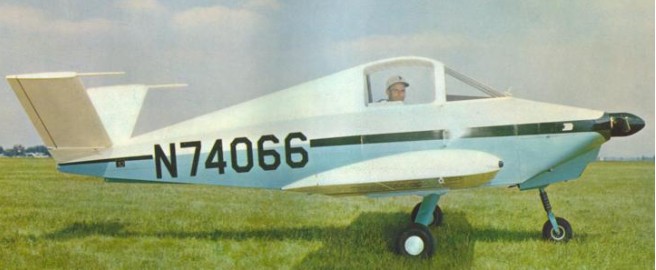
In 1966, the Davis all-metal design was voted the most popular at the Rockford EAA Fly-in. It requires little work on the part of the builder because of its simple construction, with no compound curves or ex-pensive fittings. The Davis design uses the 100-hp Continental and is one of the few do-it-yourself planes with a V-tail. Of low-wing, two seat side-by-side and nose undercarriage. The prototype DA-2 nosegear used a spring instead of rubber doughnuts. Engine range 65-100 hp.
Many DA-2A and DA-2B aircraft have been built from plans. DA-2A scratchbuilding plans describe both DA-2A and DA-2B versions. DA-1 through DA-5 used the Clark Y airfoil.
The DA-4 was completed as DA-2C. The DA-4 was intended as the production version of the DA-2, but was sold unfinished. Brent Hughes finished it as DA-2C N26146. This should not be confused with the D2C “Bandit” mods.
DA-2A Engine: Cont A-65 Wingspan 19’3”. Length 17’l0”. Gross Wt. 1125 lbs. Empty Wt. 610 lbs. Fuel capacity 20 USG. Top speed 120 mph. Cruise 115 mph. Stall 62 mph. Climb rate 400 fpm. Takeoff run 800 ft. Landing roll 700 ft. Range 450 sm. Seats: 2
The Davis DA-1 was a light aircraft designed in the United States in the 1950s which never progressed beyond the prototype stage.
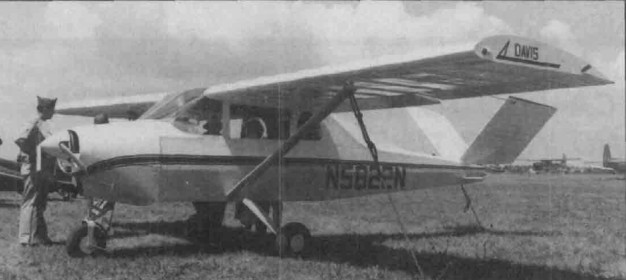
Leeon D. Davis constructed his DA-1 starting on 24 April 1957. It was a strut-braced high-wing single-engine all-aluminum airplane designed around the new Lycoming O-360 engine. The fixed-nosegear-equipped piston-engine DA-1 was of otherwise conventional configuration, but a V-tail.
Wings and tail surfaces of the DA-1 used external heat treated ribs; those surfaces were of constant chord. DA-1 through DA-5 used the Clark Y airfoil.
Power for the DA-1 was a horizontally-opposed Lycoming O-360 of 180 hp (134 kW), which gave a top speed of 125 mph (201 km/h).
Registered N5822N, it was first flown on 24 May 1958, initial test flights showed that there was not enough elevator authority with full flaps, and the plane was very loud. Soundprofing, and aerodynamic modifications were applied. Davis tried to bring the plane to market as a certified aircraft (his goal was a selling price of under $10,000), but was not successful.
DA-1 Powerplant: 1 × Lycoming O-360, 180 hp (134 kW) Length: 22 ft 3 in ( m) Wingspan: 32 ft 0 in (9.76 m) Wing area: 167 ft2 ( m2) Empty weight: 1,200 lb (545 kg) Gross weight: 2,370 lb (1,080 kg) Maximum speed: 125 mph (201 km/h) Range: 475 miles Crew: One pilot Capacity: 4 passengers Number built 1
Walter C. Davis was a former WWI pilot who had been working in his family’s business, the Davis Automobile Company of Richmond, Indiana, when it was sold in 1928. Redirecting his talents back to flying, he purchased the production rights to the Vulcan V-3 and began work on the first Davis aircraft in March 1929. He hired Vulcan test pilot, Pat Love, and engineer Dwight Huntington and opened his factory in Richmond, Indiana.
Huntington’s slight re-design of the aircraft included adding the gently curved leading edge to the vertical stabilizer. Davis then set up dealers in California, Dayton, Boston, Seattle, Salt Lake City and Pittsburgh. Air racing success continued in 1929 and all seemed well. The advent of the Great Depression ultimately led to the demise of Davis Aircraft, but the company struggled on.
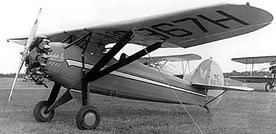
Davis D-166 – N647N
In December 1929, two new models were engineered with different engines, the D-1 with a 65 hp LeBlond and the D-1K with the 100 hp Kinner K-5. Both models were certificated, but sales lagged. Davis countered by aggressively pursuing direct sales to buyers and attended trade shows in St. Louis, Detroit and New York. He added the D-1-66 (later D-1-85) with an 85 hp LeBlond engine and cut prices, but then lost the entire finished inventory of planes to a fire.
The D-1 is a parasol-winged aircraft of mixed construction with a two-spar wing and a rectangular welded steel-tube fuselage, the whole being covered by fabric. There are tandem open cockpits and it is fitted with a fixed tailwheel undercarriage which is attached by struts to the fuselage top and bottom. The wing is braced by struts from the lower fuselage. Various engines of between 60 to 125 hp (45 to 93 kW) have been fitted.
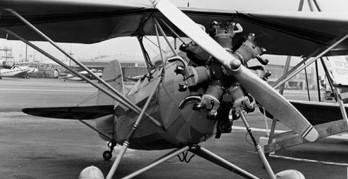
Produced 1929-1930, the D-1 was used by sporting pilots and by private pilot owners for leisure flying. Davis Aircraft Corp. produced three models of the D4 series. The first two models were the D-1-85 with an 85 hp Le Blond engine and the D-1-K with a 100 hp Kinner engine. The third model, the D1-W was equipped with a 125 hp Warner Scarab seven-cylinder radial air-cooled engine. The Dl-W features complete dual controls for its tandem seats.
In September 1930, Art Chester bought a Davis D-1-85 parasol, and flew it to victory in the 25 mile event at the September 1930 National Air Races. A late model D-1W “The Whistler II” was built in 1933 for Davis with a canopy. It was raced in the 1934 Miami air race by Art Davis winning the category at 133.478 mph. NC150Y which was destroyed in a crash at the 1932 Nationals. It was later owned by movie star Richard Arlen, and restored to become a Grand Champion antique.
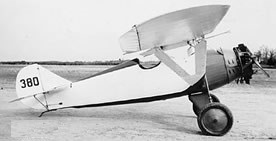
D-1-W
Unfortunately, the commercial market for airplanes just wasn’t there and in 1932 Davis turned to the production of lawn mowers. A few additional planes left the factory in 1933 but they were apparently made up from existing parts inventory or airframes returned to the factory for various reasons. They received new serial and registration numbers. Most Davis aircraft were sold ($2,965 with a 60hp LeBlond in 1929) in the United States but at least one went to Argentina. Fourteen examples remained in 2001 in various states of airworthiness and several were still airworthy in 2011.
D-1 23 built Engine: 60 hp (45 kW) LeBlond 5D Span: 30 ft 2 in Length (overall): 19 ft 10 in Gross Weight: 1,334 lb Useful Load: 495 lb Baggage: 20 lb Fuel: 20 gal Oil: 2 gal High Speed: 101 mph Cruise Speed: 85 mph Landing Speed: 38 mph Range: 350 sm Type Data: ATC 256 Year of Introduction: 1929 Price (1929): $3,285 Price (1930): $2,995
D-1 Engine: LeBlond 70 5DE, 70 hp Span: 30 ft 2 in Length (overall): 19 ft 10 in Gross Weight: 1,334 lb Useful Load: 495 lb Baggage: 20 lb Fuel: 20 gal Oil: 2 gal High Speed: 101 mph Cruise Speed: 85 mph Landing Speed: 38 mph Range: 350 sm Type Data: ATC 256 Year of Introduction: 1929 Price (1929): $3,285 Price (1930): $2,995
D-1 Engine: LeBlond 70 DE, 70 hp Span: 30 ft 2 in Length (overall): 19 ft 10 in Gross Weight: 1,334 lb Useful Load: 495 lb Baggage: 20 lb Fuel: 20 gal Oil: 2 gal High Speed: 101 mph Cruise Speed: 85 mph Landing Speed: 38 mph Range: 350 sm Type Data: ATC 256 Year of Introduction: 1929 Price (1929): $3,285 Price (1930): $2,995
D-1-66 4 built Engine: 85 hp (63 kW) LeBlond 5DF Span: 30 ft 3 in Length (overall): 21 ft 6 in Gross Weight: 1,380 lb Useful Load: 526 lb Baggage: 47 lb Fuel: 20 USgal Oil: 2-1/2 USgal High Speed: 112 mph Cruise Speed: 97 mph Landing Speed: 40 mph Range: 360 sm Type Data: ATC 317 Year of Introduction: 1930 Total Production: 4 Price (1930): $3,395 Price (1931): $2,795
D-1-85 Engine: 1 × LeBlond, 85 hp
D-1-K 11 built Engine: 100 hp (75 kW) Kinner K-5 Span: 30 ft 3 in Length (overall): 19 ft 10 in Gross Weight: 1,461 lb Useful Load: 536 lb Baggage: 27 lb Fuel: 25 USgal Oil: 2-1/2 USgal High Speed: 130 mph Cruise Speed: 100 mph Landing Speed: 40 mph Range: 400 sm Type Data: ATC 272 Year of Introduction: 1930 Total Production: 11 Price (1930): $3,995 to $4,185 Price (1932): $2,295
D-1-L prototype of the D-1-166 (1 built) Engine: 90 hp (67 kW) Lambert R-266
D-1-W (8 converted from D-1-K) Engine: Warner Scarab, 125 hp (93 kW) Length: 20 ft 4 in (6.20 m) Wingspan: 30 ft 2 in (9.19 m) Height: 7 ft 3 in (2.21 m) Empty weight: 925 lb (420 kg) Gross weight: 1,461 lb (663 kg) Maximum speed: 142 mph (229 km/h; 123 kn) Cruise speed: 122 mph (106 kn; 196 km/h) Stall speed: 46 mph (40 kn; 74 km/h) Initial climb rate 1,360 fpm. Range: 480 mi (417 nmi; 772 km) Service ceiling: 14,800 ft (4,511 m) Crew: one Capacity: one passenger
D-1-W Engine: Warner Super Scarab SS-50A, 145 hp Propeller: Sensenich Model 86CA-69 Wing span: 30 ft. 3 in Wing area: 145 sq. ft Airfoil: Goettigen 387 modified Length: 21 ft. 6 in Height: 7 ft. 3 in Empty weight: 1134 lb Weight loaded: 1471 lb Baggage: None Fuel: 30 USgal Oil: 3 USgal Maximum speed: 142 mph Cruising speed: 123 mph Landing speed: 46 mph Initial rate of climb: 1,270 fpm Service ceiling: 19,000 ft Normal range: 480 mi Starter: Eclipse Y-150 Type Data: Memo 2-394
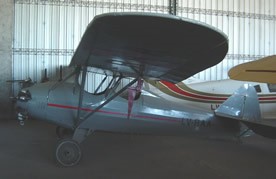
Vulcan Aircraft updated the engine of the American Moth from a 60 hp Detroit Air-Cat to a Warner radial and the aircraft became the Vulcan V-3. It finished second in the National Air Races “A” Division, New York to Los Angeles Derby. Later it took first in the Los Angeles to Cincinnati race at 90.3 mph. Shortly after these achievements, William Burke died leaving the company’s future in doubt.
Davis V3 – LV-RAA
Walter C. Davis was a former WWI pilot who had been working in his family’s business, the Davis Automobile Company of Richmond, Indiana, when it was sold in 1928. Redirecting his talents back to flying, he purchased the production rights to the Vulcan V-3 and began work on the first Davis aircraft in March 1929.
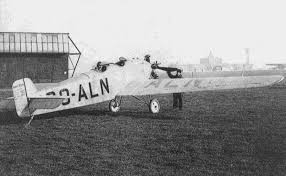
In 1929 Georges Dassy built a low wing monoplane designed by Glymes who also worked at SABCA (Belgian Public Limited Company of Aeronautical Constructions). G. Dassy, like many other Belgian manufacturers, made their prototype in the context of the so-called “subsidy” program to encourage a national aeronautical industry.
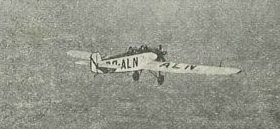
This prototype – the Dassy DA 1 – performed its first flight in August 1930 registered OO-ALN.
The Dassy DA1 was powered with a Renard engine and entirely made of spruce wood coated with plywood
OO-ALN was sold to the pilot builder and director of the national aviation school, Jef Guldentops, in September 1930, which used it either at Haren or at its Leefdaal aerodrome (Tervuren) until 1940.
The registration was cancelled in April 1946, because presumed destroyed during the war.
The DA 1 allowed the development of the Dassy DA 2 two-seater tandem monoplane, adaptable easily into a three-seater.
Dassy DA 1 Engine: Renard 5-cyl, 120 hp at 1580 rpm Engine weight: 130 kg Wingspan: 11.50 m Wing area: 14 m² Length: 6.40 m Height: 2.30 m Empty weight: 420 kg Maximum weight: 725 k Maximum speed: 194 km / h Cruising speed (80% of power): 175 km / h ROC: 250 m / min Ceiling: 7,000 m Range: 1,000 km
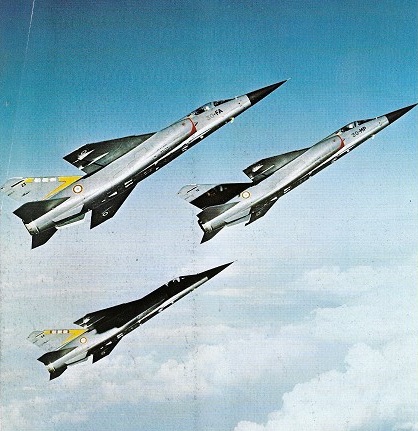
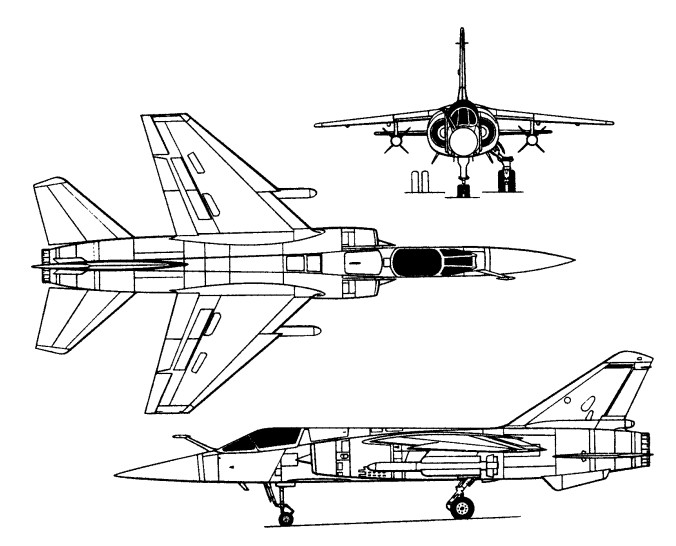
In the 1960s Dassault designed the Mirage F1 as a successor for the Mirage III family. Loss of energy in low-level manoeuvring flight of the delta-winged Mirage III led to development of a traditional layout for the wing. Evolved in parallel with the Mirage F2 as a scale-down, multi-role single-seat fighter employing a SNECMA Atar turbojet, the Mirage F1 was the subject of a government contract awarded in 1964. Possessing a conventional sweptback wing equipped with high-lift devices, and conventional swept tail surfaces, the private venture prototype F1 flew on 23 December 1966.
On 23 December 1966 the first prototype made its maiden flight. Three pre-series aircraft were ordered in September 1967, the first of these flying on 20 March 1969.
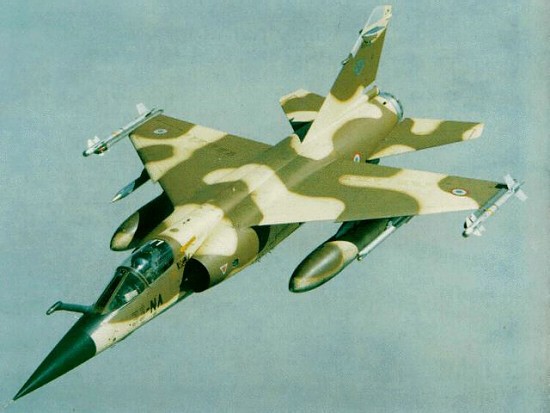
The initial production model for France’s Armee de l’Air was designated F1C, placed emphasis on the intercept mission, was powered by an Atar 9K-50 turbojet affording 7200kg with afterburning, and had an armament of two 30mm cannon, two Matra 550 Magic and two Matra R 530 or Super 530 AAMs. An initial order for the F1C for the Armee de l’Air was placed in 1969, 162 being procured by that service (plus 64 recce F1CRs and 20 two-seat F1B trainers), initial operational capability being achieved in 1974. Many of the Armee de l’Air aircraft were delivered in, or retroactively modified to, F1C-200 standard with an 8cm fuselage plug to accommodate a removable flight refuelling probe.
The Mirage F.1C entered service with France’s air defence command (CAF-DA) in 1973, equipped with Thomson-CSF Cyrano IV all-sector fire-control radar. This type has also met with considerable success on the export market, customers including Ecuador, Greece, Iraq, Jordan, Kuwait, Libya, Morocco. South Africa and Spain. Production of 81 of this variant was followed by 89 Mirage F.1C-200 fighters fitted with a fixed inflight-refuelling probe at the base of the windscreen. The F.1-CR-200 became operational in July 1983, and carries cameras and infrared sensors internally with additional sensors in an under-fuselage pod. Improved navigation systems, radar, and a flight refuelling probe fitted as standard.
The Armée de l’Air (French Air Force) operated the F1C as its main interceptor fighter until the service entree of the Mirage 2000 in 1984.
The first flight was made by the Dassault Mirage F.1B two seat dual role trainer/tactical aircraft on 26 May 1976. Twenty Mirage F.1B conversion trainers (based on the Mirage F.1C but lacking its internal cannon) have also been received. It proved attractive to overseas customers, initial orders being received from Ecuador, Iraq, Jordan, Kuwait, Libya, Morocco and Spain.
F.1B
Single-seat aircraft, including the F.1A with its slightly increased fuel tankage, have a notional maximum weapon-carrying capacity of 13,889 lb (6 300 kg), excluding the fitted cannon. This total is made up of 4,630 lb (2 100 kg) on the centreline; 220 lb (100 kg) of chaff/flare dispensers on the fuselage shoulder; 2,866 lb (1 300 kg) at the inner wing; 1,213 lb (550 kg) on the outer wing pylons, and 331 lb (150kg) on the wing-tip AAM positions. Maximum FIC/E internal fuel capacity is 946 Imp gal (4 300 1) or 7,568 lb (3 433 kg) of Jet A-1 /Avtur whilst three external tanks can hold a further 1,012 Imp gal (4 600 1) or 8,096 lb (3 672 kg). Fuel and weaponry must be traded-off between the confines of a 16,314 lb (7 400 kg) empty weight and 35,715 lb (16 200 kg) max take¬off weight.
French Air Force F.1-Cs were delivered as or converted to F.1-C-200s by the installation of detachable flight refuelling probe.
The Mirage F1E was a dedicated strike and attack aircraft which incorperated upgraded systems, including radar. Dassault also designed a two-seat version of the F1E for training, designated F1D.
A simplified version, lacking certain avionics such as the Cyrano radar, was produced for South Africa (F1AZ and F1CZ for the interceptor variant) and Libya for the clear-weather attack role with ranging radar as the Mirage F.1A, with Aida radar in a slimmer nose filled with much of the electronics previously located behind the cockpit, where more fuel could now be stored. Other additions were Doppler navigation, an inertial platform. and a laser rangefinder. Libya, together with Iraq, Jordan, Morocco, Qatar and Spain, also bought the multi-role Mirage F.1E. An export model, the Mirage F.1E, is based on the F.lC with upgraded Cyrano IVM radar offering terrain-avoidance, air-to-surface ranging, and look-down capability. The model also has an inertial platform, digital computer, and improved head-up display. The Mirage F.1E entered service in 1976, and offered multi-role capability, including anti¬ship attack with the AM.39 Exocet missile.
According to Dassault data the Mirage F1E’s LO-LO combat radius with one centreline Exocet, two Magics, two ECM pods and two 264 Imp gal (1 200 1) external tanks is 435 mls (700 km), including the missile’s range of 37-43 mls (60-70 km). This is achieved at a cruising speed of 400 kts (742 km/h), apart from the first 59 mls (95 km) of the homeward flight, which are flown at 550 kts (1 019 km/h). Radius can be increased to 559 mls (900 km) with one “buddy” refuelling. A larger, 484 Imp gal (2 200 lt), tank is also available, but can be fitted only singly on the centreline pylon and has hitherto been employed mainly for ferrying. With one large and two small tanks and a H1-LO-HI mission profile, the Mirage F.IE’s radius may be increased to 870 mls (1 400 km), but only if the Magics and ECM pods are left at home and the weapon load reduced to just two 250-kg (55l-lb) bombs. Production of the AM.39 Exocet armed Mirage F.1-EQ6 for the Iraqi Air FoU continued until late 1988. The French Air Force has received the last of its Mirage F.1-CR-200 reconnaissance fighters. The specialized reconnaissance model is the Mirage F.1CR (based on the Mirage F.1C-200 and with a secondary attack capability) and this replaced the 50 or so Mirage IIIR/RD aircraft which equiped the 33e Escadre at Strasbourg, the French air force’s sole tactical reconnaissance unit. Selected in February 1979, two Mirage F.ICR prototypes were produced for test duties, the first making its maiden flight on 20 November 1981. These two machines being followed by 62 production examples. Mission-related equipment includes OMERA cameras carried internally together with an infra-red sensor, while additional electromagnetic or optical sensors can be housed in an external pod fitted beneath the aircraft’s belly. Air-to-air missiles can also be carried for defensive purposes, while inflight-refuelling gear is also fitted as standard.
First flown on 22 December 1974, and built as an engine test bed under official contract, the Mirage F1.M53 was also envisaged as the basis for a contender in the contest to find a successor for the Lockheed F-104G in service with Belgium, Denmark, the Netherlands and Norway. Evolved from the basic Atar 9K-50 turbojet-powered Mirage F1C, the Mirage F1.M53 – referred to for a brief period as the “F1E”, the suffix letter signifying Exportation and the designation subsequently being reassigned – was powered by the SNECMA M53 turbofan rated at 5550kg dry and 8500kg with maximum afterburning. M53 installation involved significant fuselage structural redesign, and to provide suitability for ground attack and long-range interdiction tasks in addition to that of interception, provision was made for multi-role avionics. By comparison with the F1C, the F1.M53 had increased fuel capacity, enlarged engine air intakes and strengthened undercarriage. The nose profile was revised to provide for the introduction of a retractable flight refuelling probe. The installed armament remained two 30mm cannon and it was proposed to distribute up to 4000kg of ordnance between seven external stations. The other contenders for the multi-national fighter contract were the Saab 37 Viggen and the General Dynamics F-16. With choice of the F-16 as winner of the competition, plans to produce a second prototype F1.M53 for testing and integration of systems were discarded.
Variants of the basic aircraft offered for export, in addition to the F1C, were the F1A with simplified avionics for operation under VFR conditions and the F1E multi-role air superiority/ground attack/reconnaissance version. Export customers were Ecuador (16 F1AJs), Greece (40 F1CGs), Iraq (113 F1EQs), Jordan (17 F1CJs and 17 F1EJs), Kuwait (27 F1CKS), Libya (16 F1ADs and 16 F1EDs), Morocco (30 F1CHs and 20 F1EHs), Qatar (12 F1EDAs), South Africa (32 F1AZs and 16 F1CZs) and Spain (45 F1CEs and 22 F1EEs). Production of the Mirage F1 was completed in 1990 with 731 built (including F1B and F1D two-seat trainers and F1CR reconnaissance aircraft). In 1991, work began on the adaptation of 30 F1C-200S as F1CT ground attack fighters.
In the 1991 Gulf War, the Mirage F1 was operated on both sides. In the 1980s Dassault sold a large number of Mirage F1E and some F1B aircraft to Iraq (designated F1EQ and F1BQ respectively). When coalition forces struck numerous hardened aircraft shelters to neutralize the Iraqi Air Force in support of operation Desert Storm, many of these aircraft were destroyed. Taking part in the coalition was France, supporting air operations with F1CR and F1CT aircraft.
The last French F1 Mirage was retired from active service in June 2014, and stored at Châteaudun air base, near Paris, while waiting for a buyer. Replaced in the French Armée de l’air by the Dassault Mirage 2000 and Dassault Rafale, it was still in use in five air forces around the world. Draken International was after the retired French planes. Instead, in December 2017, it acquired 22 Mirage F1 fighter jets from the Spanish Air Force.
Mirage F1C Powerplant: one 70.21 kN (15,873 lb st) SNECMA Atar 9K-50 turbojet Length 15.23m (49 ft 11½ in) Height 4.50m (14 ft 9 in) Wing span (over tip missiles) 9.32m (30 ft 10 in) Wing area: 25 sq.m / 269.10 sq ft Empty weight: 7400 kg / 16314 lb Max Take-Off Weight 16.200 kg (35,714 lb) Max level speed at 12,000m (39,370 ft) Mach 2.2 or 2350 km/h (1,460 mph) Landing speed: 124 kts / 230 km/h Cruising speed: 478 kts / 885 km/h Initial climb rate: 41338.58 ft/min / 210.0 m/s Service ceiling 20,000m (65,615 ft) Range w/max.payload: 900 km / 559 miles Armament: two DEFA 553 30mm cannons (135 rounds/gun), up to 4000 kg (8,818 lb) ordnance Hardpoints: 7 T/O run: 670 m. Ldg run: 610 m. Combat radius lo-lo-lo: 740 km. Fuel internal: 4300 lt. Air refuel: Yes. Crew: 1
Mirage F.1CR Powerplant: one SNECMA Atar 9K-50 turbojet rated at 7200-kg (15,873-lb) afterburning thrust. Maximum speed at sea level 1475 km/h (917 mph) or Mach 1.2 Maximum. speed at altitude 2335 km/h (1450 mph) or Mach 2.2 Ferry range 300 km (2,050 miles) Empty weight 7400 kg (16,314 lb) Maximurn take-off 16200 kg (35,715 lb) Wingspan 8.40 m (27 ft 6¾ in) Length 15.00 m (49 ft 2½ in) Height 4.50 m (14 ft 9 in) Wing area 25.00 sq.m (269.1 sq.ft)
Mirage F.1E Engine: one 15,873-lb (7,200-kg) reheated thrust SNECMA Atar 9K-50 turbojet. mximum speed, clean Mach 2.2 speed (1,321 mph / 2,125 km/h) at 36,090 ft (11,000 m) Initial climb rate 39,370 ft (12,000 m) per minute Service ceiling 20000 m (65,615 ft) Endurance 3 hours 45 minutes Radius 265 miles (425 km) on a hi-lo-hi mission with a 7.716-lb (3,500-kg) warload. Empty weight 7400 kg (16,314 lb) Maximum take-off 16200 kg (35,714 lb) Wingspan 8.40 m (27 ft 6 ¾ in) Length 15.00 m (49 ft 2 ½ in) Height 4,50 m (14 ft 9 in) Wing area 25.00sq.m (269.1 sq ft). Armament: two 30-min DEFA 553 cannon (125 rpg) up to 4000 kg (8,818 lb) ordnance
F1.M53 Max take-off weight: 15200 kg / 33510 lb Empty weight: 8024 kg / 17690 lb Wingspan: 8.45 m / 27 ft 9 in Length: 15.53 m / 50 ft 11 in Height: 4.56 m / 14 ft 12 in Wing area: 25.00 sq.m / 269.10 sq ft Max. speed: 2335 km/h / 1451 mph Range: 1200 km / 746 miles