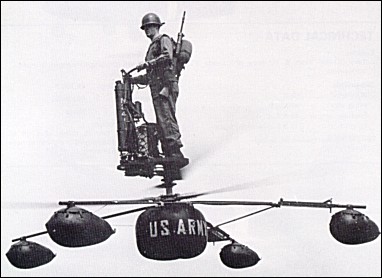
de Lackner DH-4 Heli-Vector / HZ-1 Aerocycle

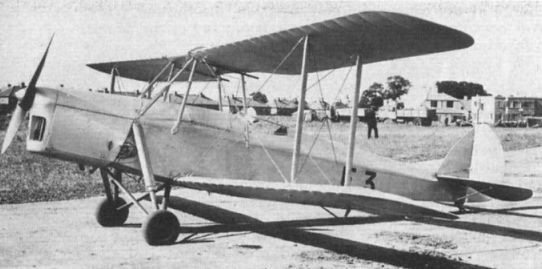
The flying platforms grew out of research conduction by the US National Advisory Committee on Aeronautics in the early 1950s on the feasibility of one-man flying platforms for combat use. The tests involved pilots “flying” tethered platforms, at first lifted by compressed air, and then by rotors.

The concepts investigated in the tests were based on thinking by NACA engineer Charles H. Zimmerman, who proposed that if the rotors of a helicopter were placed on the bottom of the aircraft, a pilot would be able to steer it just by shifting his or her weight, a concept Zimmerman called “kinesthetic control”. It was hoped that kinesthetic control would allow a pilot to fly such platforms with little training. The tests demonstrated the technical validity of the concept. The NACA results were released to the public, resulting in flying platform prototypes from three companies: de Lackner, Bensen, and Hiller.

de Lackner company privately developed a rotorcraft named the “DH-4 Helivector”, later renamed the HZ-1 Aerocycle. The de Lackner machine consisted of a frame that supported the engine of a 30 kW (40 HP) Mercury outboard motor, with landing gear consisting of an arrangement of airbags on the ends of spars. The airbags were later replaced by metal skids. The engine drove a pair of 4.6 meter (15 foot) contra-rotating rotors directly beneath it, while the pilot stood vertically on a platform above the engine, protected from falling into the rotors by a safety harness, and hanging on motorcycle handlebars with it a twist-grip throttle. He used kinesthetic control to fly the machine.
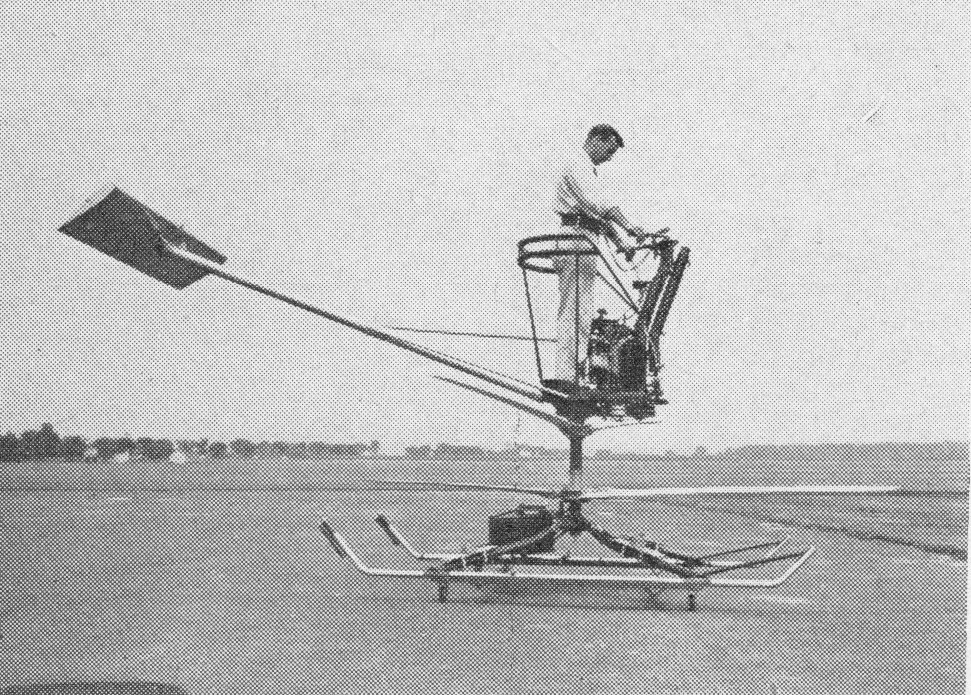
Aerocycle, 1958

The Helivector / Aerocycle first flew in January 1955, and the Army ordered twelve examples ‘off-the-shelf’ shortly after. The aircraft was initially designated YHO-2 (a designation which was later also applied to five Hughes H-55 helicopter prototypes), though this was subsequently changed to HZ-1. De Lackner claimed the machines could fly at up to 105 kph (65 mph), carry up to 55 kilograms (120 pounds) payload besides the pilot, and fly for an hour. However, while the thing looked like it would have been a lot of fun to fly, it was also dangerous. Not only did the pilot stand above the whirling rotors, but the rotors were wide and close to the ground, making them a hazard on landings and takeoffs since they could easily kick up rocks and other debris.

The Aerocycle carried its single pilot and 32kW engine on a circular platform located just above two belt-driven, contra-rotating fifteen-foot propellers. The engine throttle and a few basic instruments were attached to bicycle-type handlebars fixed to a three-foot tall pedestal atop the main platform. The pilot stood to the rear of the pedestal and was secured to it by safety belts, and guided his craft by simply leaning in the desired direction of travel. The machine’s landing gear initially consisted of a single large air bag placed directly beneath the propellers and augmented by four smaller air bags fixed to outrigger bars, though this system was ultimately abandoned in favor of helicopter-type metal skids. The HZ-1 was surprisingly stable despite its appearance, and its top speed of more than 110kph made it considerably faster than most of the other unconventional one-man flying machines evaluated by the Army.

The Army’s research was to explore the feasibility of inexpensive, safe, and easily operated personal aircraft. The Aerocycle was especially successful in the ease of operation category, for during the service tests soldiers required only about twenty minutes of instruction before flying the aircraft.
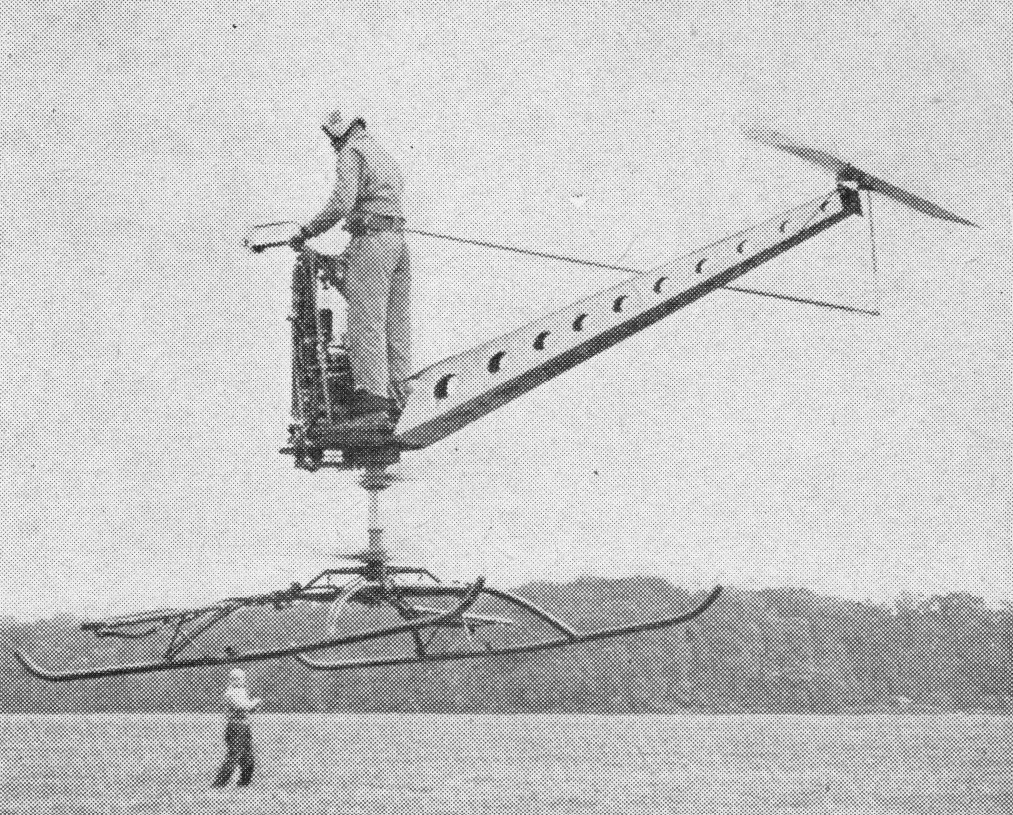
Under test at the Forrestal Research Centre

Some sources claim that the Helivector / Aerocycle was easy to fly, others state that the test pilot insisted that novices could not pilot it safely. After two flight accidents in which the contra-rotating rotors flexed and collided, the project was abandoned as impractical. At least one survives as a museum display.

De Lackner HZ-1
Engine: 1 x Kieckhaefer Mercury Mark 55, 32kW
Main rotor diameter: 4.57m
Height: 2.13m
Take-off weight: 206kg
Empty weight: 78kg
Max speed: 120km/h
Cruising speed: 90km/h
Service ceiling: 1520m
Range: 24km
Crew: 1
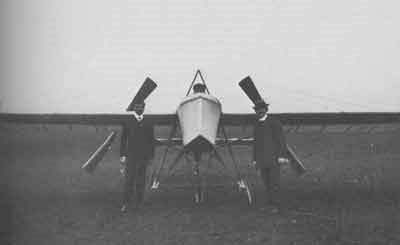
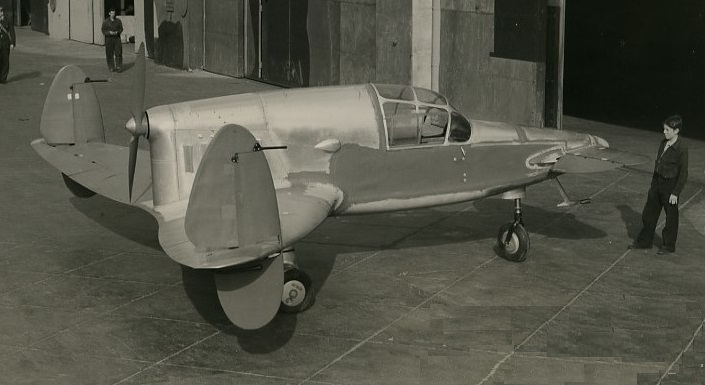
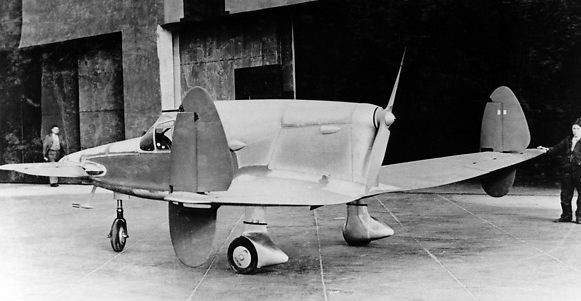
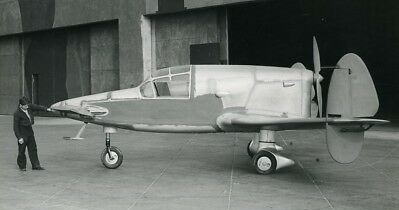
de Havilland Aeronautical Technical School TK.5

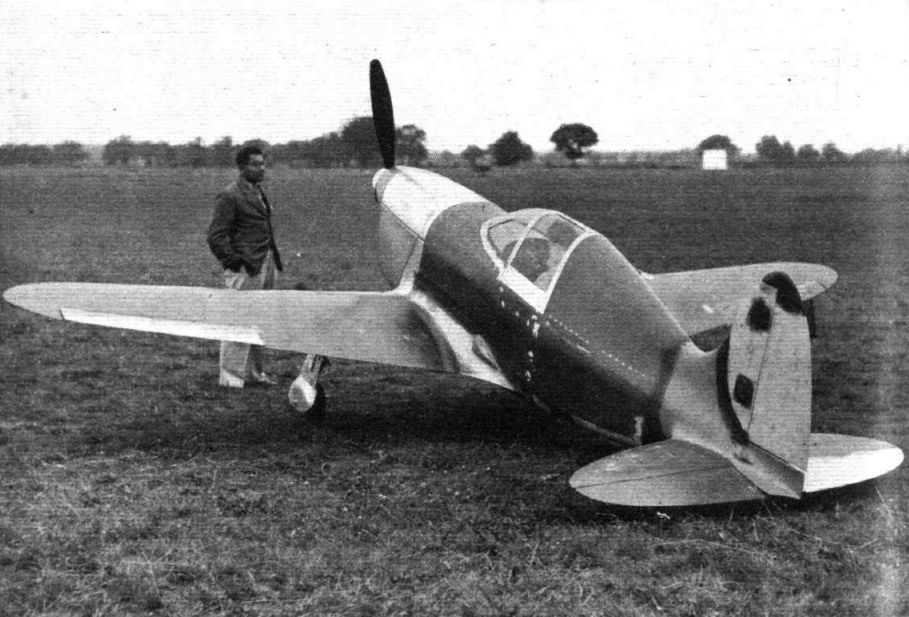
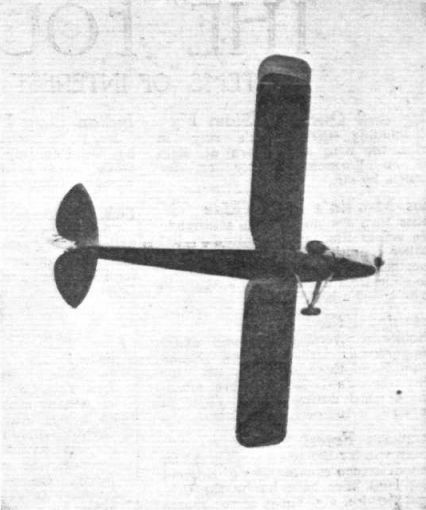
The de Havilland T.K.5 was an unflown British single-seat canard research aircraft designed and built by students of the de Havilland Technical School between 1938 and 1939.

It was a low-wing monoplane with a 140 hp (104 kW) de Havilland Gipsy Major IC piston engine driving a pusher propeller.

The only T.K.5, registered G-AFTK, was tested by Geoffrey de Havilland in 1939 but it refused to leave the ground and was scrapped.

Engine: 1 × de Havilland Gipsy Major IC, 140 hp (104 kW)
Wingspan: 19 ft 8 in (7.83 m)
Length: 18 ft 3 in (5.56 m)
Gross weight: 1366 lb (620 kg)
Crew: 1
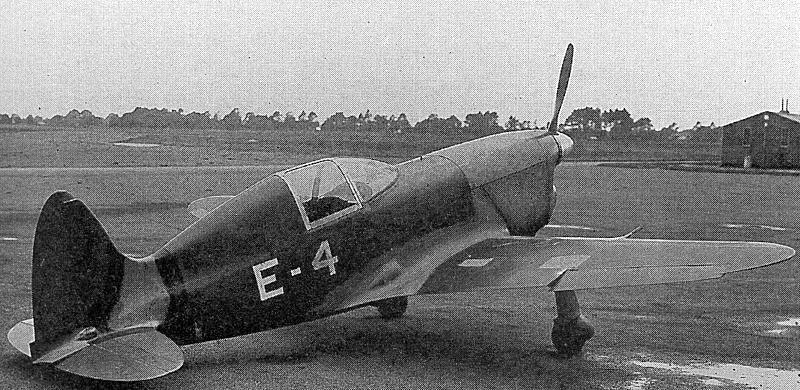
de Havilland Aeronautical Technical School T.K.4

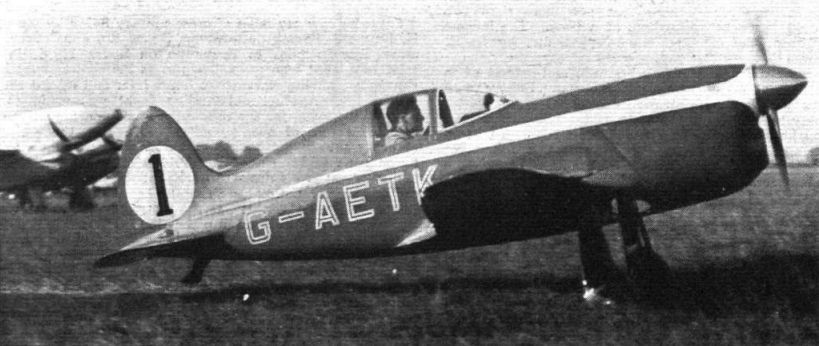
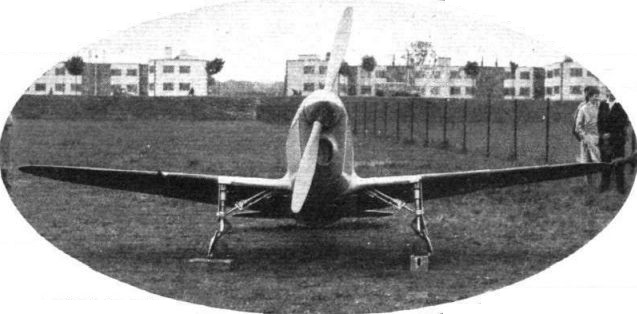
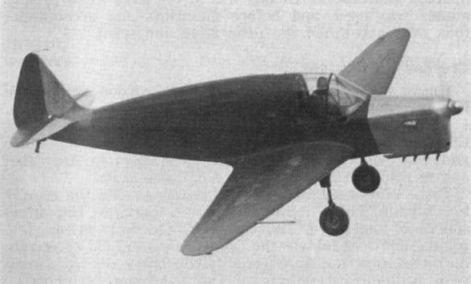
The T.K.4 single-seat racing monoplane was designed and built by students of the de Havilland Technical School at Stag Lane Aerodrome in 1937 with the aim of building the smallest possible aircraft around the 140 hp (104 kW) de Havilland Gipsy Major II.

It was a low-wing monoplane with a conventional retractable landing gear and had a variable-pitch propeller and was fitted with slots and flaps.

The only T.K.4, registered G-AETK, was first flown on 30 July 1937.

It was 9th in the 1937 Kings Cup Race at a speed of 230.5 mph. The aircraft crashed on 1 October 1937 killing the pilot R.J. Waight while he was attempting a 100 km class record.

Engine: 1 × de Havilland Gipsy Major II, 140 hp (104 kW)
Wingspan: 19 ft 8 in (6 m)
Length: 15 ft 6 in (4.73 m)
Empty weight: 928 lb (421 kg)
Gross weight: 1450 lb (616 kg)
Maximum speed: 230 mph (369 km/h)
Range: 500 miles (311 km)
Service ceiling: 21,000 ft (6,400 m)
Rate of climb: 1,350 ft/min (6.9 m/s)
Crew: 1
de Havilland Aeronautical Technical School T.K.2

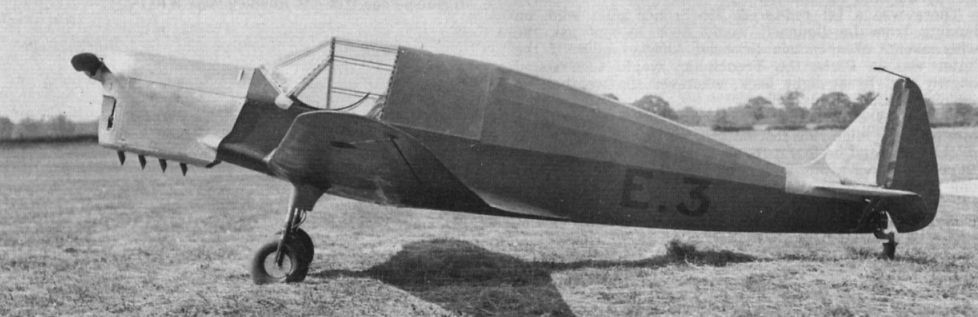
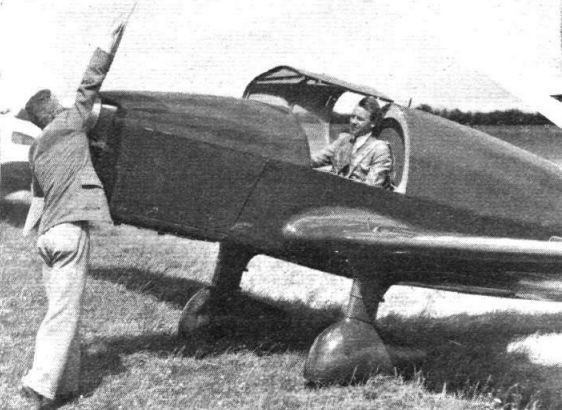
The T.K.2 was designed by students of the de Havilland Aeronautical Technical School as a high speed tourer, under the leadership of Marcus Langley, the school’s instructor in design. It was a single-engined, two-seat low cantilever wing monoplane, with an enclosed cockpit and fixed spatted undercarriage.

It first flew on 16 August 1935 at Hatfield Aerodrome, piloted by Hubert S. Broad, and powered by a 147 hp (110 kW) de Havilland Gipsy Major inverted inline engine. Subsequently, for racing purposes, the passenger seat was usually replaced with an additional fuel tank.

It won two races before World War II, and afterwards set a class closed circuit speed record.

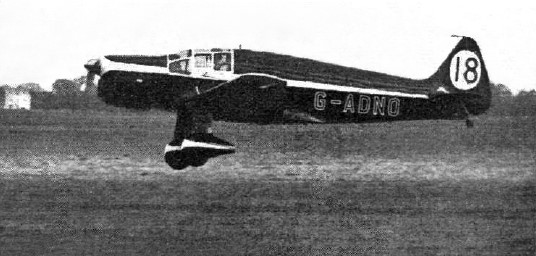
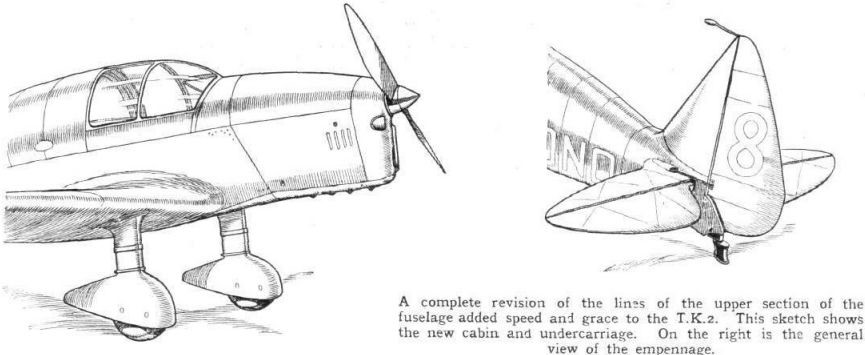
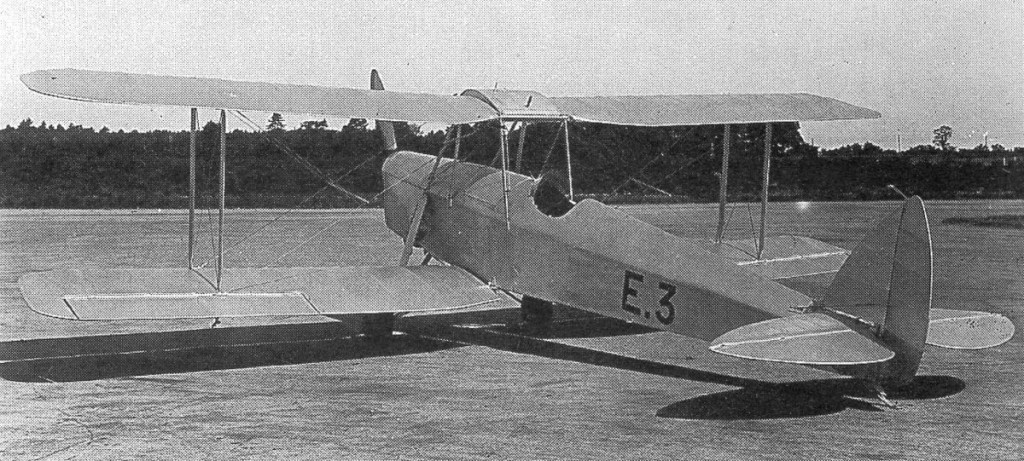
In late 1935 or early 1936, it received a more aerodynamically refined canopy, and spats extended rearwards. In 1938, it flew with wings clipped by 4 ft (1.22 m) to 28 ft 0 in (8.53 m) and re-engined with a 140 hp (104 kW) de Havilland Gipsy Major II. At the same time, the forward canopy section was revised again, its sides extended downwards below the rear cockpit rim. Post-WWII, it flew with a Gipsy Major 10 engine. The aircraft was not intended for production, and only one T.K.2 was built. It was test flown on various occasions under ‘B conditions’ with identities E-3, E-5 and E-0235, but otherwise carried the official registration G-ADNO.

Engine: 1 × de Havilland Gipsy Major, 147 hp (110 kW)
Wingspan: 32 ft 0 in (9.75 m)
Wing area: 125 sq.ft (11.6 sq.m)
Length: 22 ft 5 in (6.83 m)
Empty weight: 1,049 lb (476 kg)
Gross weight: 1,600 lb (726 kg)
Maximum speed: 182 mph (293 km/h)
Crew: 2

de Havilland Aeronautical Technical School T.K.1

The de Havilland T.K.1 was a two-seat biplane and the first design built by students of the de Havilland Technical School. The T.K.1 was built by students under the direction of Marcus Langley at Stag Lane Aerodrome in 1934.

It was based on converting the de Havilland Swallow Moth monoplane to a biplane. It was a conventional two-seat biplane powered by a 120 hp (90Kw) de Havilland Gipsy III and first flown in June 1934.

It was flown by Geoffrey de Havilland to 5th place in the 1934 Kings Cup Race with a speed of 124.4 mph. It was sold onto a private owner in 1936 who flew it for a short time as a single-seater before it was scrapped.

Engine: 1 × de Havilland Gipsy III, 120 hp (90 kW)
Wingspan: 27 ft 0 in (8.23 m)
Length: 24 ft 0 in (7.32 m)
Empty weight: 950 lb (431 kg)
Gross weight: 1450 lb (658 kg)
Maximum speed: 118 mph (189 km/h)
Cruise speed: 100 mph (160 km/h)
Crew: 2

de Havilland Canada DHC-3 Otter

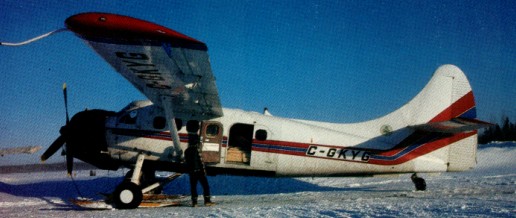
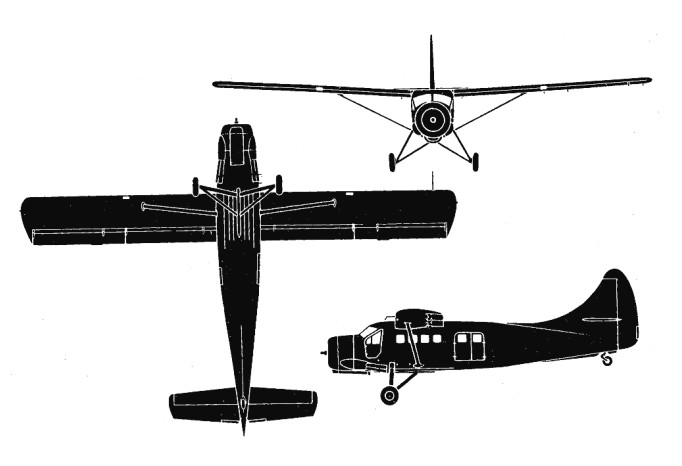
In the late 1940s de Havilland Canada developed a larger version of the Beaver, with cabin space for some 14 passengers or a freight load of up to 1016kg. The de Havilland Canada DHC-3 Otter, which was essentially a scaled-up Beaver, with an all-metal airframe and a 447kW Pratt & Whitney R.1340 Wasp radial, and which was initially known as the King Beaver.

de Havilland Canada DHC-3 Otter Article

Pratt & Whitney powered, a high-wing monoplane with a single bracing strut on each side, its parallel-chord wing with double-slotted flaps for good STOL performance.

The prototype first flew on 12 December 1951, and first deliveries were made in 1952.

When production ceased in 1968, 460 had been built, including 66 for the Royal Canadian Air Force and 227 for the US armed forces (223 of the U-1A for the US Army and four of the UC-1 [changed to U-1B in 1962] for the US Navy). An initial order for 84 had been placed for the U.S. Army by 1955 under the designation C-137.

Delivery of a substantial number of DHC Otter to the Indian Air Force was completed in mid-1958.

When released by military operators, many Otters joined those already on the civil market, where again the type had found ready acceptance for its versatility. Like the Beaver, the Otter can operate on wheel, ski, float or amphibious float landing gears.

Despite its already impressive STOL performance, the Otter was selected as the basis for a Canadian experiment in advanced STOL characteristics, a programme undertaken by the company in conjunction with the Defense Research Board. As part of this programme an Otter was fitted with extremely large flaps inboard of the strut/wing junction points; this also necessitated an enlargement of the tail surfaces, and ground stability was ensured by the replacement of the original tailwheel landing gear with a float chassis fitted with quadricycle wheels instead of the floats. The STOL modifications reduced the Otter’s stalling speed by 16km/h. The flaps were then removed, and a 1112kg thrust General Electric J85-GE-7 turbojet installed, in the fuselage aft of the wings, with adjustable nozzles protruding one through each side of the fuselage. This arrangement permitted far greater control of speed, and allowed spot landings. Finally, the single Wasp radial was replaced by a pair of wing-mounted Pratt & Whitney Aircraft of Canada PT6 turboprops, whose slipstream was found beneficial to the controllability of the aircraft.

Under the designation DHC-3-T Turbo-Otter, one aircraft has been modified by Cox Air Resources to turboprop power, a 494kW PT6A-27 replacing the standard Wasp. Empty weight is thus reduced to 1861kg, resulting in a useful payload increment.

Airtech Canada of Peterborough, Ontario, has converted a number of Otters to take either the 800 hp / 447kW PZL-3S or 1000 hp / 746kW Kalisz ASz-621R nine-cylinder air-cooled radial engines manufactured in Poland, each driving a PZL four-bladed constant speed propeller. The re-engined aircraft offer increased climb rates and greater fuel economy at lower power settings. The first PZL-3S conversion flew in August 1983.

Gallery

Variant:
Texas Turbine Conversions DHC-3 Otter

Engine: 1 x Pratt & Whitney R-1340-S1H1-G Wasp radial, 600 hp / 447kW
Max take-off weight: 3629 kg / 8001 lb
Empty weight: 2010 kg / 4431 lb
Wingspan: 17.68 m / 58 ft 0 in
Length: 12.75 m / 42 ft 10 in
Height: 3.84 m / 13 ft 7 in
Wing area: 34.84 sq.m / 375.01 sq ft
Max. speed: 246 km/h / 153 mph
Cruise speed: 195 km/h / 121 mph
Ceiling: 5485 m / 18000 ft
Range w/max.payload: 1408 km / 875 miles
Fuel consumption: 30 Imp.Gal/hr.
Accommodation: 2 crew plus 14 troops or 6 stretchers and 4 passengers, or freight.

Engine: PZL, 600 hp.
MTOW: 8000 lbs.
Wing span: 58 ft.

Engine: PZL, 1,000 hp.
ROC: 2000 fpm.
T/O time (water): 10 sec.
Fuel consumption: 40 Imp.Gal/hr.
Cruise: 144 mph.
MTOW: 8000 lbs.
Wing span: 58 ft.

de Havilland Canada DHC-1 Chipmunk

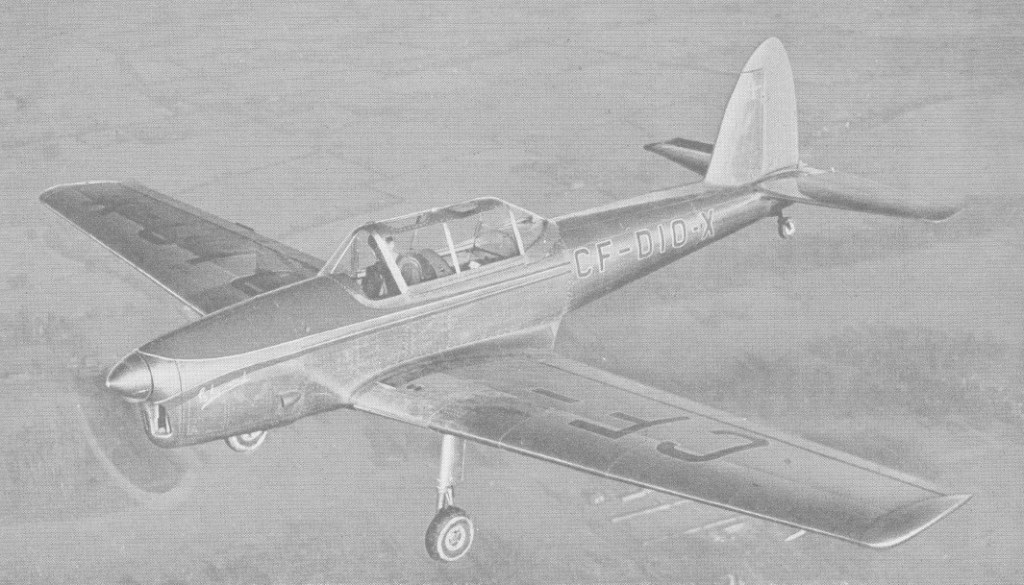
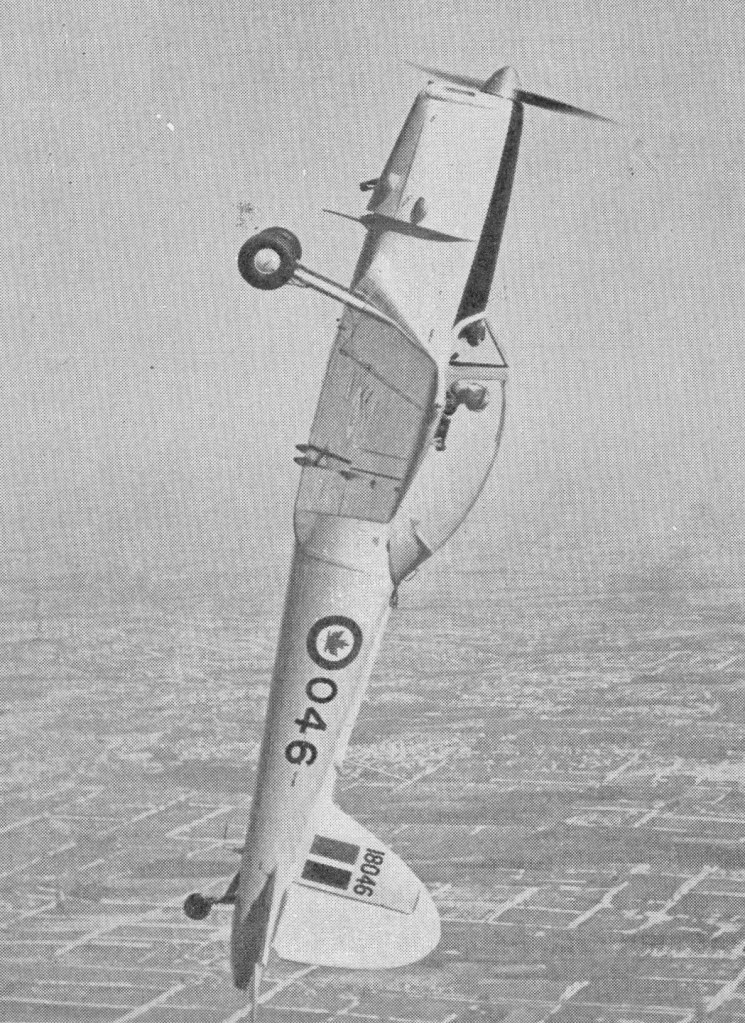
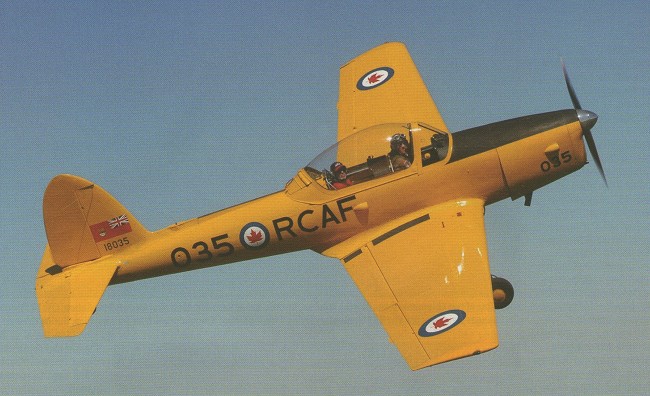
A design exercise team was assembled under the direction of W.J. (“Jackie”) Jakimiuk for a primary trainer in both Canada and the United Kingdom. The team began production in December 1945 of detailed parts of what was to become known as the Chipmunk, culminating in the first flight on 22 May 1946 at Downsview, Toronto. The prototype, flown by Pat Fillingham from the parent company at Hatfield, was powered by a 108kW de Havilland Gipsy Major 1C. Chipmunks built to the prototype’s specification were designated DHC-1B-1, while those with a Gipsy Major 10-3 were designated DHC-1 B-2.

de Havilland Canada DHC-1 Chipmunk Article

DH Chipmunk – the first

Seating is tandem fashion under a sliding bubble canopy. A 145 hp Gipsy Major four-cylinder engine turns either a fixed-pitch wood propeller or a metal Fairey-Reed airscrew. The fuselage and wings are of all metal construction, but the ailerons, elevators, and rudder are fabric covered.

Downsview built 218 Chipmunks, the last in 1951.
The first batch being built in Canada, a total of 153 aircraft. Examples from this initial production run were sent as demonstrators to the UK, South Africa, South American and India, as well as the RCAF which accepted 45. These original aircraft went to the 14 flying clubs in Canada which participated in the ab initio air force training and refresher flying scheme.
In 1955 a further order of 60 aircraft was placed by the RCAF. In all, the Canadian production totalled 218, the majority of this number sporting the distinctive one piece bubble canopy and designated the Chip¬munk T.30. The main external difference between the British and Canadian aircraft lay in the design of the canopy, the British version having the metal formed pattern. The RCAF accepted its first DHC-1 Chipmunks in 1948 and did not retire the last one until 1972.

Two were evaluated by the Aeroplane and Armament Experimental Establishment at Boscombe Down. As a result, the fully-aerobatic Chipmunk was ordered from Hatfield and Chester to Specification 8/48 as an ab initio trainer for the RAF. The value of the Chipmunk had also been realised by the RAF, which placed large orders, eventually taking on charge 740 examples of a total production run of 1000 aircraft manufactured in Britain.

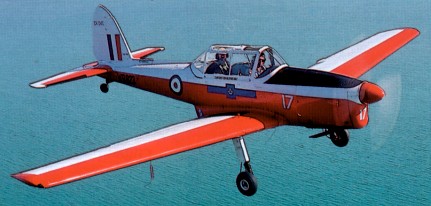
Beginning in 1950, the University Air Squadrons were the first RAF units to receive Chipmunks, shortly followed by the twenty Reserve Flying Schools. The first to wear RAF roundels were flown by the Oxford University Air Squadron from February 1950; thereafter, the type replaced the Tiger Moth with all 17 university air squadrons. National service pilots underwent their initial training on the Chipmunk, which served intermittently at the RAF College, Cranwell.
The selection of the Chipmunk as the RAF’s primary trainer during the early 1950s expansion of its pilot training programme transformed the aircraft’s story. With increased orders to meet these expanded needs, eventually totalling 735 out of 1,014 manufactured in the UK.
In 1952, the aircraft received the royal seal of approval when HRH the Duke of Edinburgh took his first flying lessons in Chipmunk (which can be seen at RAF Museum Cosford) operated by a special flight at White Waltham, Berkshire.
New trainers such as the Scottish Aviation Bulldog entered service with the RAF but they did not completely replace the Chipmunk. Many Air Experience Flights continued to operate Chipmunks through the 1980s and into the mid-1990s.
Although best known as a training aircraft, RAF Chipmunks operating from Berlin were converted for covert reconnaissance missions. A few Chipmunks of No. 114 Squadron were pressed into service in Cyprus on internal security flights during the troubles of 1958.
Chipmunk production was also under¬taken by the Portuguese, who purchased an initial batch of 10 UK built aircraft and produced a further 60, built under licence by the state run General Aeronautical Material Workshops (OGMA) aircraft factory. Manufactured from 1955, the Portuguese air force Chipmunks were due for retirement in 1989, but many examples are still in service with the RAF, Sri Lankan air force and the Royal Thai Air Force.

De Havilland Canada Chipmunk 1

Other users included Burma, Ceylon, Chile, Colombia, Denmark, Egypt, Eire, Iraq, Jordan, Lebanon, Malaya, Saudi Arabia, Syria, Thailand and Uruguay.
On 27 March 1997, the Army Air Corps flew their last sortie in the Chipmunk T.10.
As a civilian replacement trainer, how¬ever, the Chipmunk was never really a great success, due almost entirely to the cost. In 1948 a new Chipmunk cost $C10,500 which, compared with a war surplus Tiger Moth at $NZ500.
Only six DHC 1Mk.21s were made in the UK specifically for civilian use, coming off de Havilland’s production line at Chester in 1952. The six were built as Mk.20s the export version of the Chipmunk but were converted to yet another model, the Mk.21. Differences included the replacement of the military cartridge starter with an electric unit and the fitting of two 12 gal fuel tanks in place of the 9 gal tanks of the RAF Chipmunks.
A total of 1277 Chipmunks were built in either Canada, the UK or Portugal.

Gallery

Variation:
Sasin SA-9 Spraymaster

de Havilland Canada DHC 1 Chipmunk
Engine : DeHavilland Gipsy Major 8, 143 hp
Length : 25.427 ft / 7.75 m
Height : 6.988 ft / 2.13 m
Wingspan : 34.35 ft / 10.47 m
Wing area : 173.3 sqft / 16.1 sq.m
Max take off weight : 2015.4 lb / 914.0 kg
Max. speed : 120 kts / 222 km/h
Service ceiling : 15814 ft / 4820 m
Wing load : 11.69 lbs/sq.ft / 57.0 kg/sq.m
Range : 244 nm / 451 km
Crew : 2

Chipmunk T.Mk 10
Engine: 1 x De Havilland Gipsy 8, 108kW
Max take-off weight: 914 kg / 2015 lb
Empty weight: 646 kg / 1424 lb
Wingspan: 10.46 m / 34 ft 4 in
Length: 7.75 m / 25 ft 5 in
Height: 2.13 m / 7 ft 0 in
Wing area: 15.97 sq.m / 171.90 sq ft
Max. speed: 222 km/h / 138 mph
Cruise speed: 187 km/h / 116 mph
Ceiling: 4815 m / 15800 ft
Range: 451 km / 280 miles

DHC1B-2-S5 Chipmunk II
Engine : DH Gypsy Major 10 Mk1-3A, 146 hp
Wing Span : 34ft 4in (10.5m)
Length : 25ft 5in (7.8m)
Height : 7ft (2.1m)
Range : 485 miles (781 km)
Speed : 120 Mph(193 km/h)

Mk.21

Mk.22
Wing span: 34 ft 3 in (10.5m).

de Havilland DH 115 Vampire

DH115 Vampire T35

DH 113 Vampire / DH 115 Vampire two-seaters Article

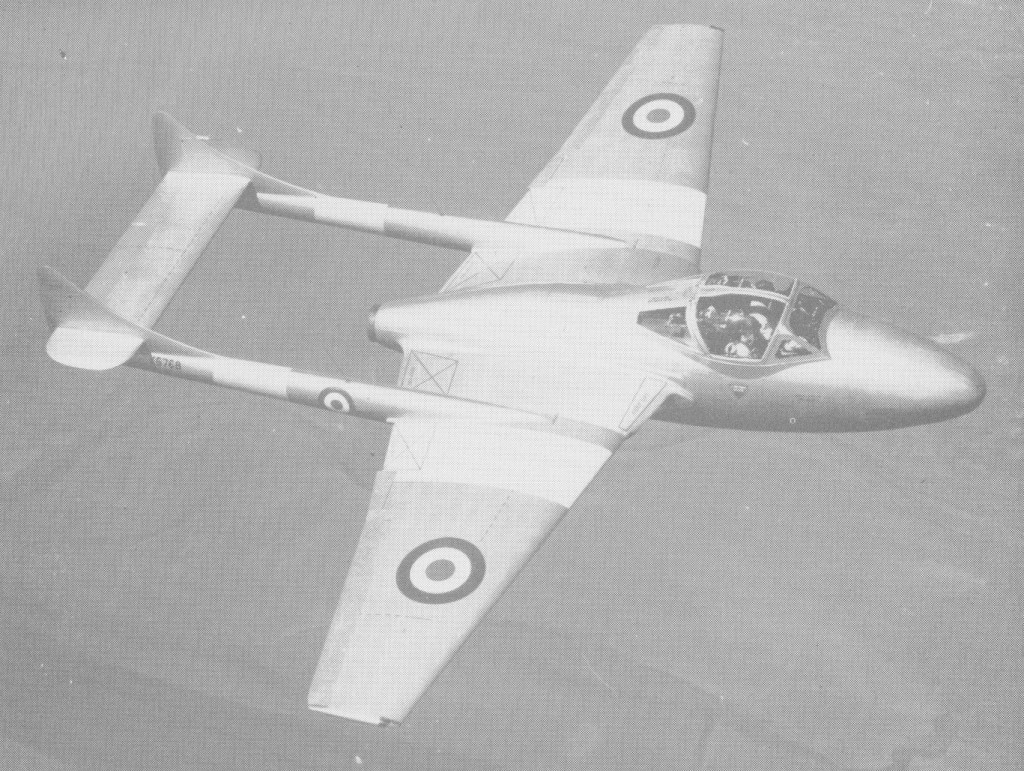
In 1953, the RAF introduced two new trainers into service, the piston engined Percival Provost T.1, which replaced the Prentice, and the jet powered DH Vampire T.11 which replaced the Harvard and the Meteor T.7 with the Advanced Flying Schools. The DH. 115 Vampire T.11 was based upon the earlier two seat DH.113 Vampire night fighter variants, but deleted the radar and introduced dual controls. All the control surfaces are cable-operated through a series of pulleys, only the flaps, airbrakes and undercarriage are hydraulic—even the wheel brakes are pneumatic. One of Vampire’s features is its composite wood and metal construction. Between the first bulkhead and the fourth (which is just forward of the engine) the fuselage is wood and fabric. The rest of the fuselage, as well as the wings, booms and tail, is flush-riveted aluminium. The Goblin engine has a total oil loss design, which means that there is no oil scavenger pump, oil filter, cooler and so on. The engine is a centrifugal-flow turbojet, about 3,000 lbs of thrust.

de Havilland DH 115 Vampire Article

Vampire production terminated with the Vampire T.Mk.11 and Vampire T.Mk.22 two-seat trainers for the RAF and Fleet Air Arm, 804 being completed between 1951 and 1958; this mark also achieved considerable export success.

The T.55 being the export version of the RAF’s T.11. Some operated by Zimbabwe.

In 1964, DH-115 Vampire T35 A79-617 was fitted with Sidewinder missile guidance equipment.

Gallery

DH-115 Vampire T35
Engine: De Havilland Goblin 35 Centrifugal flow turbojet, 3500lb (1588kg)
Fuel: Aviation Turbine Fuel (Jet Fuel)
Centre Tank Capacity: 96 ImpGal / 436 Lt / 115 USG
Wing Tank Capacity (2): 52 ImpGal / 236 Lt / 62 USG
Leading Edge Tank Capacity (2): 65 ImpGal / 296 Lt / 78 USG
Drop Tank Capacity: 100 Impl Gal / 454 Lt / 120 USGs
Wingspan: 38 ft 0 in / 11.58 m
Length: 34 ft 9 in / 9.37 m
Wing Area: 262 sq. ft / 24.34 sq. m
Height: 6 ft 2 in / 1.88 m
Empty weight: 7,253 lb / 3,290 kg
Max Takeoff weight: 12,360 lb / 5,606 kg
Armament: two or four 20mm Hispano Cannons, two 500 or 1,000lb (227 or 454 kg) bombs or eight 60lb (27kg) rocket projectiles.
Maximum Speed: 461 kt / 531 mph / 855 km/h
Cruise Speed: 275 kt / 316 mph / 509 km/h

De Havilland DH 115 Vampire T.Mk 55
Engine: De Havilland Goblin 35b, 14911 N
Length : 34.416 ft / 10.49 m
Height : 6.594 ft / 2.01 m
Wingspan : 37.992 ft / 11.58 m
Wing area : 271.468 sq.ft / 25.22 sq.m
Max take off weight : 13613.7 lb / 6174.0 kg
Weight empty : 7902.7 lb / 3584.0 kg
Max. weight carried : 5711.0 lb / 2590.0 kg
Max. speed : 454 kts / 840 km/h
Initial climb rate : 3346.46 ft/min / 17.0 m/s
Service ceiling : 32808 ft / 10000 m
Wing loading: 50.23 lb/sq.ft / 245.0 kg/sq.m
Range : 324 nm / 600 km
Endurance: 1 h
Crew: 2
Armament: 2x MK20mm Hispano 404; 2 Bomb 227kg

de Havilland DH 113 Vampire

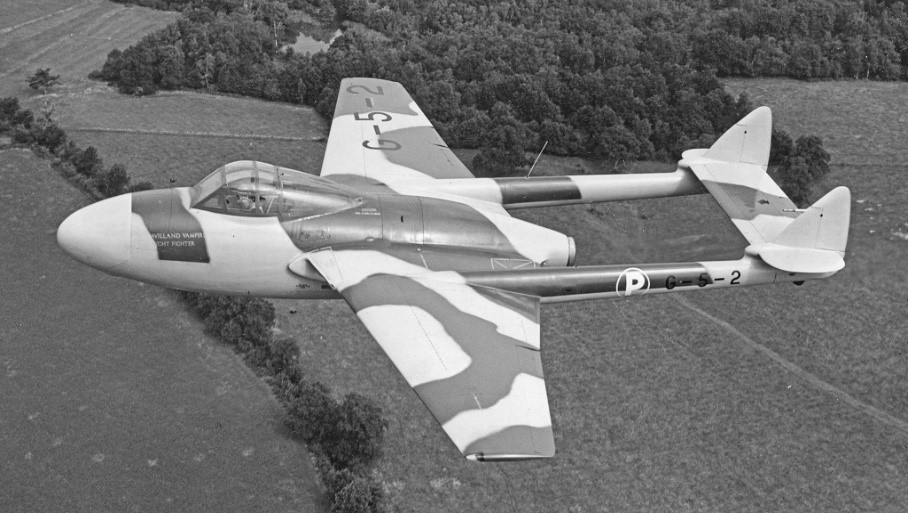
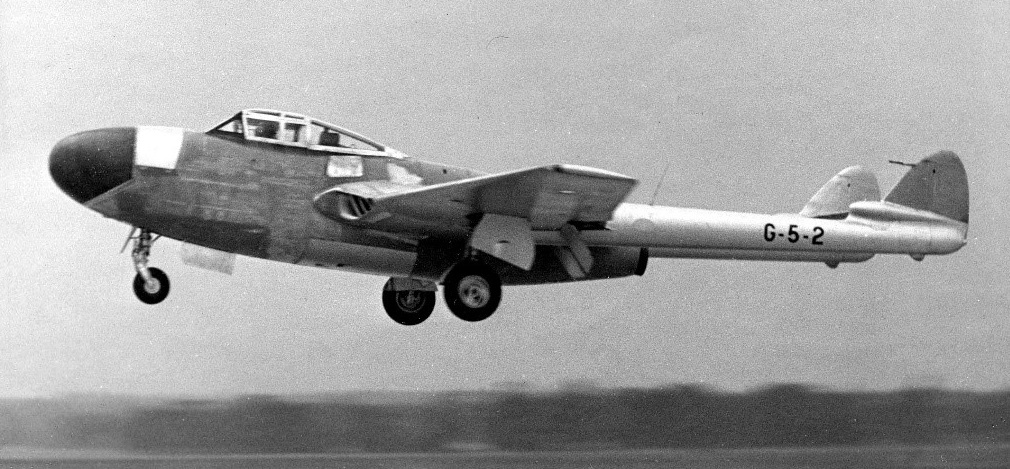
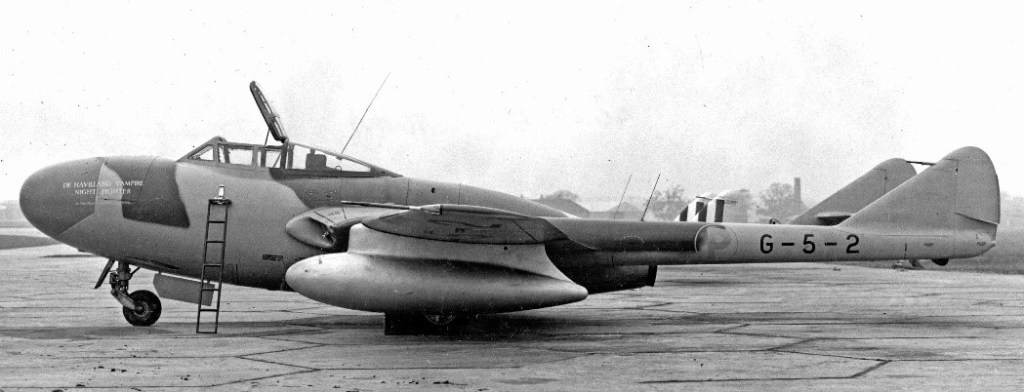
DH 113 Vampire NF10 prototype G-5-2 showing the extended tailplane adopted for production aircraft.

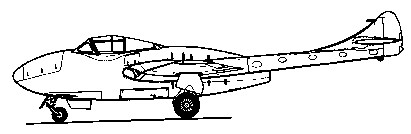
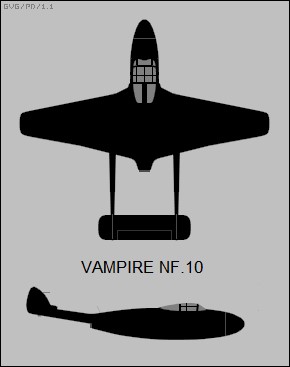
Although developed earlier than the Venom, the DH113 Vampire Night-Fighter (NF) had a later type number in the company sequence by the time it was produced. It was developed from the single-seat Vampire FB.5 as a private venture low-cost Night-Fighter for the export market. It featured lengthened and wider two-seat, side-by-side arrangement and a wooden fuselage nacelle with AI Mk.10 radar within a nose radome. A more powerful 3,350 lb Goblin 3 engine was fitted and first flight was from Hatfield on 28th August 1949 by Geoffrey Pike.

de Havilland DH 113 Vampire Article

de Havilland DH113 Vampire NF10

The first prototype DH Vampire NF10 (G-5-2) was flown for the first time at Hatfield on 28th August 1949 with test pilot Geoffrey Pike at the controls. Nine days later it made its public debut at the SBAC Show at Farnborough and just a month later Egypt became its first customer when it ordered 12 aircraft. This order was never fulfilled due to a UK Government enforce embargo due to the increasing hostilities between Egypt and Israel.

DH 113 Vampire / DH 115 Vampire two-seaters Article

The prototype DH 113 Vampire NF10 G-5-2 takes off for the first time on 28 August 1949.

The enlarged nose section resulted in concerns over both directional and longitudinal stability as well as overall control and because of this the prototype was test flown with enlarged triangular tail fins.

DH 113 Vampire NF10 prototype G-5-2 being tested with modified fins in November 1949.

These were later found not to be necessary and were not fitted to production aircraft. An increase in tailplane span was required however and this is a characteristic feature of production two-seat Vampires. The extended tailplane was also used by the DH112 Venom and Sea Venom.

The RAF took over the Egyptian Air Force order and put them into service as an interim measure between the retirement of the de Havilland Mosquito night fighter and the full introduction of the Meteor night fighter.

Three prototypes were built, the third of which was completed as the prototype night fighter, the DH112 Venom. The DH113 was originally designed utilising the wings and tail of the single-seat vampire day-fighter which could accommodate a side-by-side configuration, albeit slight offset behind the pilot.

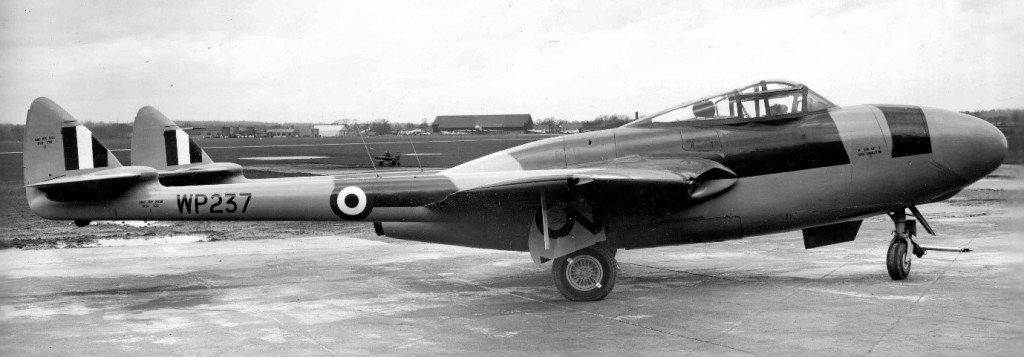
Those DH113 Vampire NF10 aircraft that were originally ordered by Egypt were taken into RAF service in the UK as the NF.Mk.10 and this then led to the further procurement of additional RAF aircraft. Initial service deliveries of the NF.10 were in the spring of 1951. Crews were never happy about the lack of ejection seats. Only 78 NF.10s were built, and they only remained in front-line service to 1954.

DH 113 Vampire NF10 WP237 in RAF service in April 1951.

The aircraft became the first RAF jet Night-Fighter when the initial Vampires replaced Mosquitos of 25 Squadron at West Malling in July 1951, two other home-defence units (RAF Coltishall and RAF Leuchars) were also equipped with this aircraft. By November 1953 the short operational life began coming to an end with the arrival of the Venom NF.2s for 23 Squadron.

Equipped with an AI Mk X radar, the type was also operated by the Indian and Italian Air Forces.

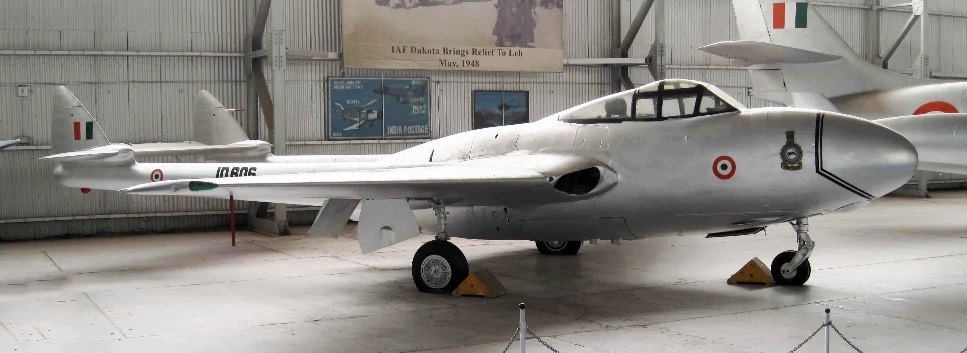
DH113 Vampire NF54 ID606 of the Indian AF on display at Palam, New Delhi.

Export sales were to Switzerland, who had one example for evaluation, and Italy, followed by India who acquired surplus RAF aircraft. Thirty-six NF.10s were converted to a navigation trainer and redesignated “Vampire NF(T).10”. The AI.X radar was replaced by ballast in the form of concrete blocks, and the navigation kit was upgraded. They were modified for navigation training with a clear-view canopy, but still without ejector seats. These aircraft were used by 1 ANS at Topcliffe, 2 ANS at Thorney Island and the Central Navigation & Control School (CNCS) at Shawbury, the last retiring in September 1959.

Total production was of 93 aircraft, comprising three prototypes, 76 aircraft for the RAF and 14 Vampire NF54 aircraft for the Italian Air Force. De Havilland built an export variant of the NF.10 designated the “Vampire NF.54”. A total of 14 was built for Italy and delivered in 1952:1953; 30 retired NF.10s were also refurbished to the NF.54 configuration for India, with deliveries from 1954 to 1958.

Removal of the radar from the night fighter and fitting of dual controls resulted in a jet trainer model of the aircraft, the DH.115 Vampire which entered British service as the Vampire T.11.

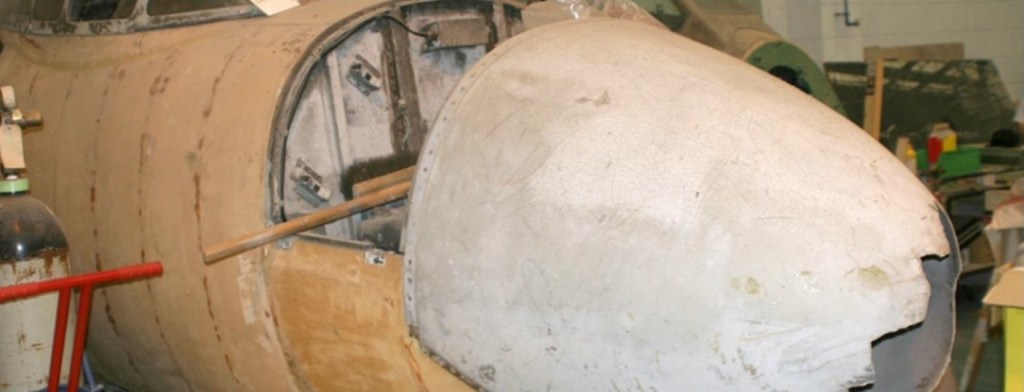
Surviving DH 113 are Vampire NF10 ID606 at the Indian Air Force Museum, Palam, New Delhi, India, and Vampire NF54 MM6152 at the Italian Air Force Museum, Vigna di Valle, Italy.

Engine: De Havilland Goblin 35 B, 14911 N / 3,350 lbst
Length: 34.613 ft / 10.55 m
Height: 6.562 ft / 2.0 m
Wingspan: 38.025 ft / 11.59 m
Wing area: 262.642 sq.ft / 24.4 sq.m
Max take off weight: 13119.8 lb / 5950.0 kg
Weight empty: 7673.4 lb / 3480.0 kg
Max. weight carried: 5446.4 lb / 2470.0 kg
Max. speed: 454 kts / 840 km/h / 538 mph at sea level
Initial climb rate: 3346.46 ft/min / 17.0 m/s
Service ceiling: 32808 ft / 10000 m
Wing load: 50.02 lb/sq.ft / 244.0 kg/sq.m
Range: 324 nm / 600 km
Range with drop tanks: 1,220 miles
Endurance: 1 h
Crew: 2
Armament: four 20mm Hispano cannon