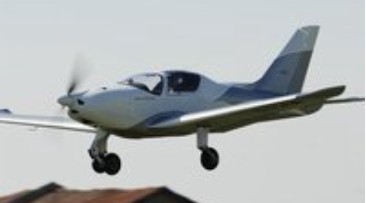
Stall: 34 kt / 39 mph / 63 kmh
Cruise: 124 kt / 143 mph / 230 kmh
VNE: 162 kt / 186 mph / 300 kmh
Empty Weight: 278 kg / 613 lbs
MTOW Weight: 472 kg / 1041 lbs
Climb Ratio: 700 ft/min / 4 m/s
Take-off distance (50ft obstacle): 660 ft / 200 m
Stall: 34 kt / 39 mph / 63 kmh
Cruise: 124 kt / 143 mph / 230 kmh
VNE: 162 kt / 186 mph / 300 kmh
Empty Weight: 278 kg / 613 lbs
MTOW Weight: 472 kg / 1041 lbs
Climb Ratio: 700 ft/min / 4 m/s
Take-off distance (50ft obstacle): 660 ft / 200 m
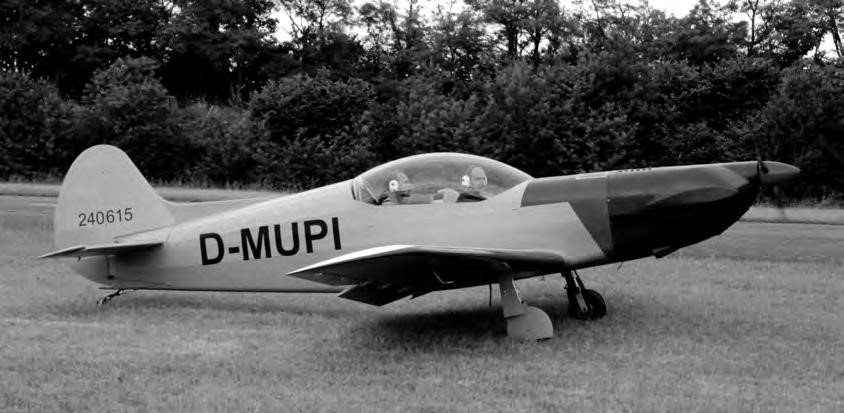
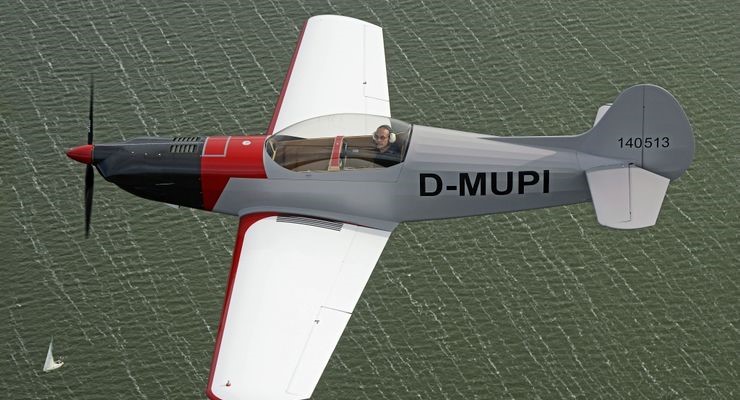

Two M.S.406H fighters were supplied to Switzerland in September 1938 and April 1939 to serve as pattern aircraft for a licence-manufactured version. These were hybrids, mating the M.S.405 airframe with the HS 12Y31 engine of the M.S.406 and Swiss-specified instrumentation, armament and radio.
Production was initiated by the Eidgenossisches Konstruktions-Werkstatte as the D-3800, the Hispano-Suiza 12Y31 engine being manufactured by Adolph Saurer AG. The drum-fed 7.5mm wing guns were replaced by belt-fed weapons, the two-pitch Chauviere propeller was supplanted by an Escher-Wyss EW-V3 controllable-pitch unit, and the original M.S.405 wing structure was retained (rather than the simplified and lighter wing of the M.S.406). A pre-series of eight D-3800s was built in 1939, and the first series aircraft was delivered in January 1940. Seventy-four series D-3800s were built, the last of these being delivered on 29 August 1940, and later, in 1942, two further aircraft were assembled from spares. During 1943, all D-3800s underwent modification of cooling and hydraulic systems to standardise with the D-3801, and were fitted with similar ejector exhausts. Employed for advanced training after withdrawal from first-line service, the last D-3800s were scrapped in 1954.
Take-off weight; 2480 kg / 5467 lb
Empty weight; 1800 kg / 3968 lb
Wingspan; 10.62 m / 34 ft 10 in
Length; 8.17 m / 26 ft 10 in
Height; 2.71 m / 8 ft 11 in
Wing area; 17.10 sq.m / 184.06 sq ft
Max. speed; 475 km/h / 295 mph
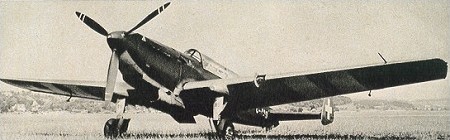
In 1934, the Swiss air arm, or Fliegertruppe, called upon the EKW (Eidgenossische Konstruktions Werkstätte, or Federal Construction Workshop) to design a new airplane that could combine the roles of fighter, reconnaissance and tactical sup¬port aircraft. EKW’s efforts to fulfill such a difficult requirement produced two very different blueprints. The C-35 biplane and the C-36, a mono¬plane with a metal cantilever-wing structure. The Swiss government judged the C-35 a surer prospect and the first of 80 production aircraft entered service at the end of 1937.
When war broke out in Europe in September 1939, the Fliegertruppe stepped up its patrols to guard its borders against both German and Allied intruders. At the same time, the C-36 blueprints were reconsidered.
By this time EKW had become EFW (Eidgenossische Flugzeug Werke), and the team at Emmen flew the first of the new aircraft on 23 February 1939.
The C 36 had developed into a modified sub type with twin tail fins designated C-3601, powered by the same 860 hp Hispano-Suiza 12Yers engine as the C 35 but now with a variable pitch propeller. On November 30, a second. aircraft, designated C 3602, flew with a 1000 hp Saurer built 12Y 51 engine and more reasonable speed of 510 km/h (317 mph).
Following flight tests, modifications were made and an initial batch entered production as the C-3603, first flown on November 23, 1941. Ten were built, and after service evaluation a further 142 followed, serving with the Swiss air force between 1942 and 1952 in the combat role.
Ordered into production by three manufacturers—the Eidgenossische Flugzeugwerke (Federal Aircraft Factory, or EFW) at Emmen, Doflug at Alterirhein and Pilatus Allgemeine Gesellschaft at Stans, in 1942, the C-3603, as the principal operational variant was designated, entered service with the Fliegertruppe as a long-range reconnaissance and ground support plane.
Two others, designated C-3603-1 TR, were produced for training and parachute tests. In 1945 a C-3603-1 was converted for target-towing.
Further improvements followed, and in 1946 Farner-Werke at Grenchen converted a C-3603-1 into a more advanced target-tug. A long tube was fitted from the rear cockpit to eject the target sleeve above the taiiplane and between the twin fins, with a cable-cutting device available to the pilot. Twenty C-3603s were converted to this standard.
Unlike its predecessors the C 3603 had retractable landing gear, the legs folding to the rear with the wheels turning 90 degrees to lie inside the wings. Pilot and radio operator/ navigator sat under a ‘greenhouse’ canopy, the latter having a pair of 7.5 mm (0.295 in) machine guns. Two more such guns were fixed in the wings, and a 20 mm (0.79 in) Hispano fired through the propeller hub (engine was the same as the C 3602). Racks under the wings carried up to four 100 kg (220 lb) bombs or ten rocket projectiles (from 1945). By 1944 a total of 160 had been delivered and they remained in operational service until 1953.
The C-3603 was designed under the direction of EKW chief designer, J.Branger, and was just entering production when the Fliegertruppe was faced with a choice regarding engines and fuel. Until 1939, Swiss aircraft had relied on normal, high-octane petroleum fuel, which had to be imported and which might be in short supply due to the exigencies of war. If so, their flights would have to be limited to conserve existing stocks of the fuel. The alternative was to use K fuel, a wartime synthetic fuel produced at the Ems wood-processing plant. In order to maintain the level of crew training, the Swiss military decided to use the K fuel. The C-3603s then had to be modified to use the synthetic substance, and the designers were able to in¬corporate the necessary modifications into the C-3603-1 smoothly enough for production at the EFW plant of that newer variant to proceed in 1942, without a lag in overall production of the C-36 series. The C-3603-1 was powered by a 1,000-hp 12-cylinder Hispano-Suiza HS-51 12Y engine, built under license by SLM Winterthur and Adolph Saurer Allgemeine Gesellschaft in Arbon.
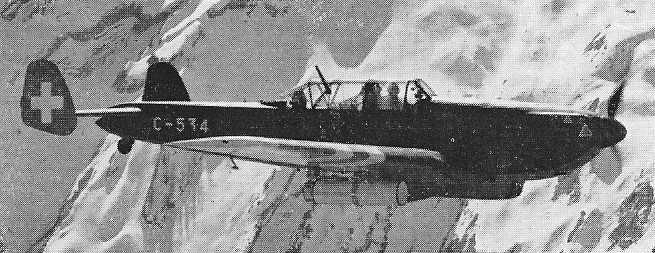
Another wartime modification of the C-3603s was a change in the landing gear. After all Swiss tactical airfields were provided with paved runways, the plane’s wheel fairings, which were very unpopular with the maintenance staff, were removed. A floodlight was installed in the front portion of each undercarriage fairing to illuminate the taxiways during night flying operations.
By 1944, 144 C-3603s had been built, and six C-3603-ls would be added between 1947 and 1948. Stored components then were assembled into 11 complete aircraft, given 1,250-hp / 933kW Saurer YS-2 engines and designated C-3604s. On August 21, 1944 the faster C 3604, with three forward firing cannon, made its first flight and was rewarded by an order for 100. The type entering service in 1947-48. Spares produced for the C-3603 and not used enabled a further six C-3603-1 s to be assembled in 1948.
But within a year negotiations had been opened with de Havilland for manufacture of Vampire jets, and only 13 of the C 3604 model were built. All these machines stayed on Flugwaffe strength.
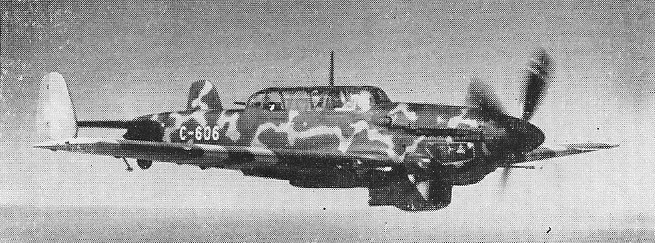
In 1945, a C-3603-1 was converted into a Sehlepp, or target tug, and in 1946, the Farner Werke at Grenchen a more advanced version was evolved and fitted to 20 other aircraft within a year. During the early 1950s a requirement for an aircraft to tow illuminated targets at night was met with the conversion of a C-3603-1, and this machine remained in service until replaced by the C-3605 in 1972. By 1953, all 60 surviving aircraft had been converted to that role.
Further conversions of 40 C-3603-1 s to target-tugs began in 1953, while another aircraft was fitted beneath one wing with a winch built by ML Aviation in the UK for high-speed towing, and a ballast tank beneath the other wing. In the same year, 20 more C-3603-1s were converted by the military at Dubendorf for catastrophe relief using underwing supply containers.
In the mid-1960s, Jean-Pierre Weibel, in charge of the EFW’s Structures Department, proposed that a new engine be adapted to the existing airframes when the Hispano-Suiza engines of the 40 C-3603-1 conversions began to wear out. The choice of a suitable engine was an 1,150-hp Avco Lycoming T53-L-7 turbo¬prop. In September 1967 the idea was approved and work began on the conversion, which was to involve the minimum possible amount of alteration to the airframe. At 555 pounds, the T53-L-7 was less than half the weight of the original piston engine. That made it necessary to add an additional section to the nose to compensate for a serious change in the aircraft’s center of gravity. The 10-foot-9-inch-diameter Escher-Wyss V7 propeller was replaced by a Hamilton Standard 53C51 with a diameter of 9 feet 9.5 inches. New wheels with disc brakes updated the landing gear. The layout and instrumentation of the pilot’s cockpit was modernized, while a hydraulic drive supplemented the mechanical impeller for the SZW-52 winch in the rear cockpit. A third, central, fin was added.
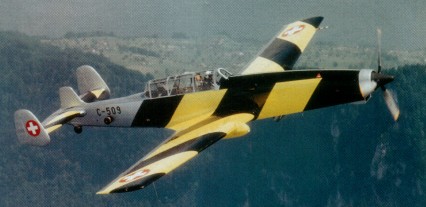
The overall result was a fuselage—now 39 feet 5¾ inches long— that seemed to extend as far forward of the wing as behind it. More startling than the airplane’s appearance, however, was its performance when the first prototype (actually, a modification of the 102nd production C-3603), serial No. C-502, began flight testing on August 19, 1968. Its handling qualities were excellent, and pilots also praised its short takeoff and landing capabilities (a takeoff run of 336 feet to reach an altitude of 50 feet, and 564 feet to land from an altitude of 50 feet). An impressive rate of climb (2,407 feet per minute) resulted from its new turboprop engine.
All of those capabilities were especially appreciated for the low-level flying over mountainous terrain that the target tugs would be called upon to perform. Maxi¬mum speed was 268 mph at 10,000 feet, with an economy cruising speed of 217 mph. Empty weight was 5,806 pounds, while the normal loaded weight was 7,275 pounds. By December 1968, when the plane underwent military evaluation, the only further modification deemed necessary was the addition of a small central tail fin to improve stability.
The cost-effectiveness of the program exceeded all expectations, although it was not until 1971 that the Swiss mili¬tary ordered the EFW at Emmen to begin conversion work on the next five exam¬ples of what was by then designated the C-3605. A budget of 30 million Swiss francs was delegated to pay for a total of 23 converted aircraft – an order completed by January 1973. At the same time, the target tugs also underwent a change in color scheme to identify them to the anti¬aircraft crews—from red striping to broad diagonal black and yellow bands over the wings, horizontal stabilizers and forward part of the fuselage.
All 23 C-3605s were still flying late as 1978. The C-3605s began experiencing a disturbing recurrence of forced landings in the mid-1980s, which were generally diagnosed as being due to a loss of torque and overall power. The turboprop engines had worn out before the airframes, and spare parts for them were running low. Rather than re-engining the aging veteran yet again, the Swiss judged it more economical to replace it with a new, purpose-built aircraft, equipped with the latest model turboprop engine and a fixed target-towing installation – the Pilatus PC-9. In April 1987, C-3605s flew their last missions.
C-3603
Engine: Saurer/Hispano-Suiza 12Y-51
Take-off weight; 3590 kg / 7915 lb
Empty weight; 2315 kg / 5104 lb
Max load: 3,402 lb
Wingspan; 13.7 m / 44 ft 11 in
Length; 10.2 m / 33 ft 6 in
Height; 4.1 m / 13 ft 5 in
Wing area; 28.7 sq.m / 308.92 sq ft
Max. Speed; 477 km/h / 296 mph
Cruise speed; 430 km/h / 267 mph
Ceiling; 10000 m / 32800 ft
Range w/max.fuel; 680 km / 423 miles
Armament; 1 x 20mm cannon, 4 x 7.5mm machine-guns, 400kg of bombs
Crew; 2
C-3603-1
Engine: Hispano-Suiza HS-51 12Y 12-cylinder, 1,000-hp.
Max speed: 246 mph.
ROC: 34 feet per second.
Ceiling: 28,540 ft.
Endurance: 2 hr.
Range: 422 miles.
C-3604
Engine: Saurer YS-2 / Hispano-Suiza 12Y-52. 1,250-hp.
Wingspan: 45 ft 1 in
Length: 33 ft 7.5 in
Height: 11 ft
Wing area: 307.8 sq.ft
Empty weight: 6260 lb
Loaded weight: 9480 lb
Max speed at 14,764 ft: 348 mph
Max speed SL: 298 mph
Cruise: 226 mph at 15,750 ft
Seats: 2
Armament: 3 x 20mm cann, 4 x 7.5mm mg
C-3605
Engine; 1 x Avco Lycoming T53-L-7, 820kW / 1150-hp
Max take-off weight; 3716 kg / 8192 lb
Empty weight; 2634 kg / 5807 lb
Wingspan; 13.74 m / 45 ft 1 in
Length; 12.03 m / 39 ft 6 in
Height; 4.05 m / 13 ft 3 in
Wing area; 28.7 sq.m / 308.92 sq ft
Max. Speed; 432 km/h / 268 mph at 10,000 ft
Cruise speed; 350 km/h / 217 mph
Ceiling; 10000 m / 32800 ft
ROC: 2,407 fpm
Range w/max fuel; 980 km / 609 miles
TO dist to 50ft: 336 ft.
Ldg dist from 50 ft: 564 ft.
Crew; 2
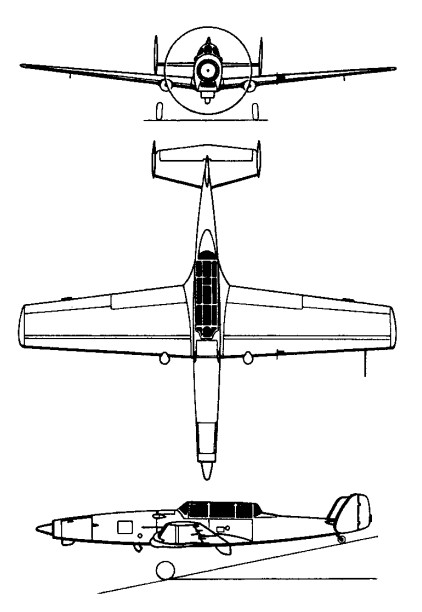
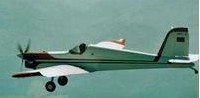
Designed by Deiter Reich, only technical plans were available. Approx. 3000 hours to build.
Price (1998) 990 DM (Plans)
Plans price 2009: 15000 EURO
Constructed with wood, the ULF-2 has a Citroen Visa engine.
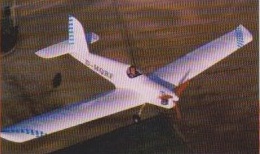
Stall: 24 kt / 28 mph / 45 kmh
Cruise: 65 kt / 75 mph / 120 kmh
VNE: 76 kt / 87 mph / 140 kmh
Empty Weight: 205 kg / 452 lbs
MTOW Weight: 325 kg / 717 lbs
Climb Ratio: 600 ft/min / 3,0 m/s
Glide Ratio: 17
Take-off distance (50ft obstacle): 490 ft / 150 m
Landing distance (50ft obstacle): 330 ft / 100 m
Engine: Citroen Visa II, 32 hp
Wing span: 11 m
Wing area: 13.9 sq.m
MAUW: 300 kg
Empty weight: 185 kg
Fuel capacity: 30 lt
Max speed: 140 kph
Cruise speed: 100 kph
Minimum speed: 45 kph
Climb rate: 3.5 m/s
Fuel consumption: 3.8 lt/hr
Seats: 1
Certification: Vz
Plan price (1998): 1 046,50 DM
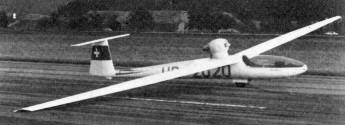
The Prometheus 1 was an experimental powered sailplane from Switzerland, based on the airframe of the FFA Diamant 18.
Design and construction began in late 1970, the wings, Fuselage, tail units and landing gear coming from an original Diamant 18. The aircraft flew for the first time on 21 June 1971, powered by a 176 lb (80 kg) Microturbo Eclair II turbojet engine mounted on a pylon above the wing center-section. This had been later replaced by a more powerful TRS 25 engine.
Engine: One 264 lb (120 kg) st Microturbo TRS 25 turbojet
Fuel capacity: 2 x 8.75 Imp gallon (40 litre) wing tanks, 1 x 0.4 Imp gallon (1.8 litre) fuselage tank.
Total fuel: 17.9 Imp gallons (81.8 litres).
Oil capacity: 0.11 Imp gallons (0.5 litres).
Wing span: 59 ft 0.5 in / 18,0 m
Wing aspect ratio: 22,5
Length overall: 24 ft 9.5 in / 7,56 m
Height over tail: 4 ft 5 in / 1,35 m
Tailplane span: 9 ft 6,25 in / 2,90 m
Weight empty: 639 lb / / 290 kg
Max T-O weight: 1,102 lb / / 500 kg
Max level speed / Vne: 146 knots / / 168 mph / / 270 km/h
Max cruising speed at S/L: 113 knots / 130 mph / 210 km/h
Econ cruising speed at SL: 92 knots / 106 mph / 170 km/h
Stalling speed, flaps up: 43.5 knots / 50 mph / 80 km/h
Stalling speed, flaps down: 37 knots / 42.5 mph / 68 km/h
Max rate of climb at S/L: 591 fpm / 180 m/min
Service ceiling: 36,100 ft / 11,000 m
T-O run: 984 ft / 300 m
T-O to 50 ft (15 m): 1,476 ft / 450 m
Landing from 50 ft (15 m): 492 ft / 150 m
Landing run: 164 ft / 50 m
Range with max fuel: > 135 nm / > 155 miles / >250 km

Combining the visibility of a helicopter with slow-flying capabilities, the original concept for the Edgley EA7 Optica was as a three-seat touring aircraft. Designer John Edgley, at that time a post-graduate student at the Imperial College of Science & Technology, London, began the final aerodynamic design in 1974 and a model was wind tunnel tested in 1975. Construction of a prototype began in 1976 in London, and final assembly was carried out at the College of Aeronautics, Cranfield. The first flight was made on 14 December 1979 with a 119kW Avco Lycoming O-320 engine but this was later changed to a 134kW IO-360. The Optica relies on ducted fan technology and a NASA designed aerofoil for its abilities. A one to one direct drive connects a five-bladed fixed-pitch fan to a Lycoming IO-360 200 hp fuel injected engine, enabling quiet operation and low vibration levels. As well as the normally aspirated Lycoming (TBO 1800 hours), a 210 hp turbo-charged Lycoming fit was available and a turbine installation was also being considered.
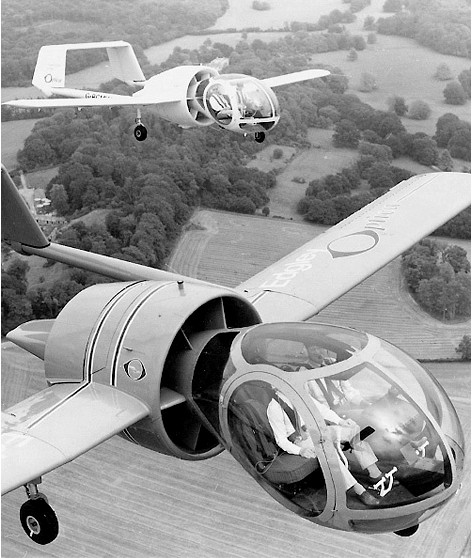
Mounting the whole cockpit assembly ahead of the fan and engine gives the pilot and passengers a 270 degree panoramic vision, plus almost vertical downward vision; the cockpit canopy design allows photography through the panels. The tricycle landing gear is fixed and unfaired, with maintenance-free solid suspension, and the airframe is of all-metal construction; its internal cabin width of 1.68m permits three-abreast seating, while baggage space and positions for mounting specialised observation equipment are provided behind the seats and in the unrestricted floor area in front of the two passenger seats.
A considerable flap area provides for STOL capability, enabling continuous en route flight at a very low loiter speed of 50 kts (57 mph/92 kmh). A power setting of 65 per cent covers 570 nm (1,050 km) at 94 kts (108 mph) for six hours with normal reserves. A mixture of cruise and loiter enables around nine hours airborne while maximum loiter stretches out to 13 hours.
Gliding characteristics are good with an approach speed of 65 kts and a threshold speed of 45 kts, 5 kts above the stall with 20 degree flap. The ROC (rate of climb) is around 720 fpm to a ceiling of 14,000 feet.
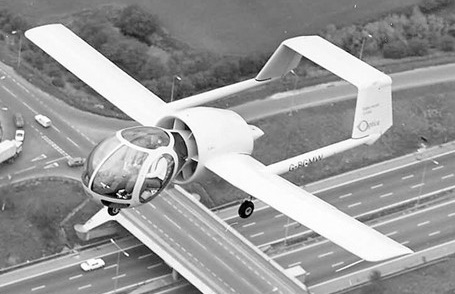
Considerable interest was shown in the Optica from the time of its first appearance, and at the 1981 Paris air show the announcement of a first production order was made – 25 for Australian distributor H. C. Sleigh Aviation Ltd.
With GBP 2.3-million funding, Edgley bought Old Sarum airfield near Salisbury, and set up a production line in existing hangars. Initial plans covered the construction of 200 aircraft, beginning in mid-1983, with first production models to be available at the end of that year for approximately GBP 55,000 each. However, the crash of an early production aircraft in 1985 led to the collapse of the company.
In October 1985, Optica Industries was formed to continue activities, and by the end of 1986, 15 aircraft had been produced. In January 1987 the factory was destroyed by arson along with all but one airworthy Optica. The company was reformed again as Brooklands Aircraft (later Aerospace), and the Optica Scout, renamed the Scoutmaster, returned to production with a 194kW Textron Lycoming O-540 engine. Six had been delivered to customers by the end of 1989. In March 1990, after building another five aircraft, all manufacturing was halted and a receiver called in. In July 1990 the Optica project was acquired by Lovaux Ltd at Hum and a resumption of full-scale production and marketing was planned.
Looking for an EDGLY EA-7 PRE-FLIGHT MANUAL.
William Wurthmann
william.wurthmann4@gmil.com
July 2021
Engine; 1 x Avco Lycoming IO-360, 149kW
Max take-off weight; 1236 kg / 2725 lb
Empty weight; 850 kg / 1874 lb
Wingspan; 11.99 m / 39 ft 4 in
Length; 8.15 m / 26 ft 9 in
Height; 2.31 m / 7 ft 7 in
Wing area; 15.84 sq.m / 170.50 sq ft
Max. speed; 203 km/h / 126 mph
Stall speed; 55 mph
Cruise speed; 174 km/h / 108 mph
Ceiling; 4265 m / 14000 ft
Range; 1046 km / 650 miles
Endurance: 12 hr.
Brooklands Optica Scout
Length : 26.903 ft / 8.2 m
Height : 6.562 ft / 2.0 m
Wingspan : 39.37 ft / 12.0 m
Wing area : 170.071 sq.ft / 15.8 sq.m
Max take off weight : 2899.6 lb / 1315.0 kg
Weight empty : 2090.3 lb / 948.0 kg
Max. weight carried : 809.2 lb / 367.0 kg
Max. speed : 115 kts / 213 km/h
Landing speed : 58 kts / 108 km/h
Cruising speed : 86 kts / 159 km/h
Initial climb rate : 807.09 ft/min / 4.1 m/s
Service ceiling : 14026 ft / 4275 m
Wing load : 17.02 lb/sq.ft / 83.0 kg/sq.m
Range : 572 nm / 1060 km
Engine : Lycoming IO 540 V4A, 260 hp
Crew : 2+1
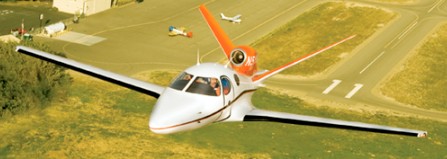
The Eclipse 400 seats four and cruises at 41,000 feet, three miles above its closest competition. Its robust v-tail design provides superior handling and its gold standard Pratt & Whitney Canada PW615F engine produces exceptional thrust and envious fuel economy.
Engines: 1 x Pratt & Whitney Canada PW615F
Length; 29.0 ft
Height; 8.8 ft
Wingspan; 36.0 ft
Max cruise speed (FL350); 330 ktas
Long range cruise speed (FL400); 290 ktas
Max range (FAA IFR + 45-min reserve); 1,250 nm
Service Ceiling; 41,000 ft
Time to Climb to FL250; 13 min
Time to Climb to FL350; 22 min
Stall Speed (VSO); 61 kt
Takeoff Distance to 50 ft. (Sea level, ISA, MGTOW); 2,045 ft
Landing Distance (Sea level, ISA, Max landing weight); 2,100 ft
Seats: 1 + 3
Baggage Capacity, Interior; 18 cu ft
Baggage Capacity, Exterior; 14 cu ft
The 1927 VM-11 was built at Bettis Field, McKeesport, in association with Clifford Ball and D Barr Peat. It had a four-place cabin and open cockpit at the rear. It was registered N1540 c/n 11, which was later changed to N2972.
The VM-11 crashed on 3 November 1927.
Engine: 180hp Mercedes 6
Wingspan 38’2″
Length: 24’6
Seats: 5
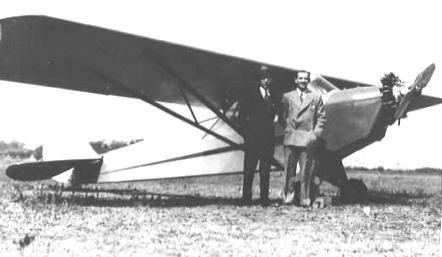
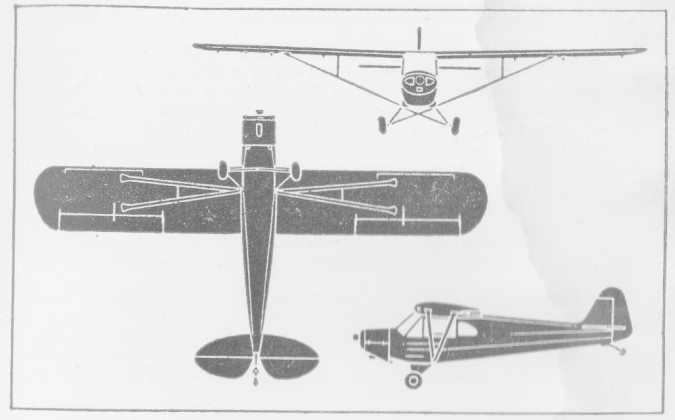
The Technological Research Institute constituted the technical base on which Companhia Aeronáutica Paulista emerged. The Institute designed two aircraft that came to be manufactured in series by this company, in addition to designing the Paulistinha aircraft, it was the Paulistinha project, passed on to Companhia Aeronáutica Paulista (CPA) together with the Planalto plane that generated the first royalties paid to the IPT.
Neiva P-56 Paulistinha Article
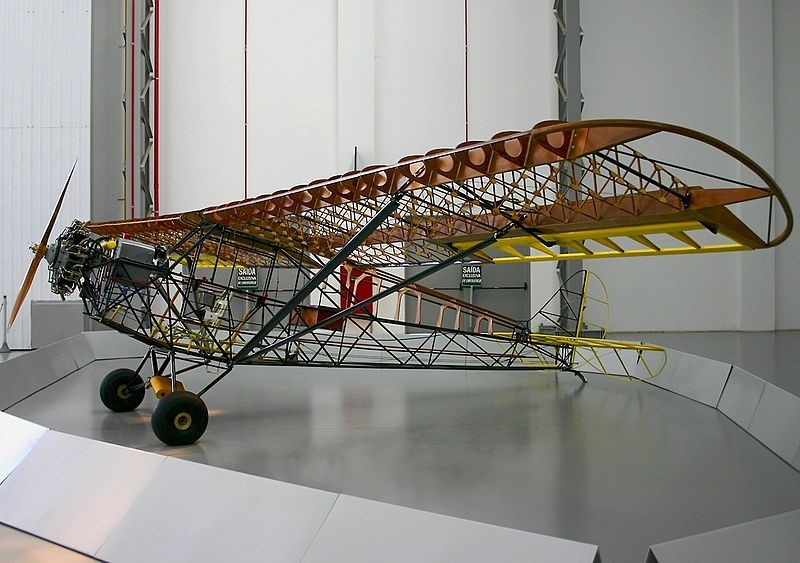
Originally developed by Empresa Aeronáutica Ypiranga (EAY) as an unlicensed copy of the Taylor Cub powered by a Salmson 9Ad radial engine, the EAY-201 featured a high strut-braced wing, two enclosed tandem seats, and a steel-tube fuselage with fabric covering. Its tailwheel undercarriage was not retractable.
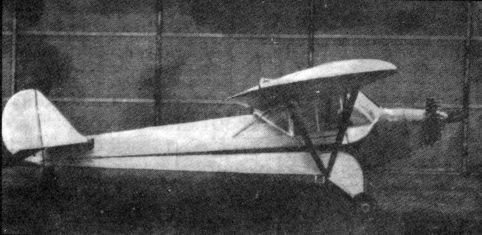
First flown in 1935, EAY had built five examples by the time that the firm was purchased by Companhia Aeronáutica Paulista (CAP) in 1942. CAP continued manufacturing the type under the designation CAP-4 with a 65 hp Franklin engine.
The Paulistinha was produced in three versions. The CAP 4 Tourer, the CAP 4B ambulance aircraft, and the CAP 4C military observation monoplane. The CAP 4C had a cut-down rear fuselage with the side windows extended aft.
Production of the Paulistinha was stopped in 1948, when the Paulistta company experienced financial difficulties, and resumed in 1956 by the Sociedade Construtora Aeronautica Neiva as the Pulistinha 56 (90 hp Continental C90-8F) and 56-B (100 hp Lycoming). The Paulistinha 56-C appeared in 1958, and 210 had been delivered by mid-1963. The Paulistinaha L-6 (100 hp Lycoming) was a liason version for the Brazilian Air Force, 19 being delivered in 1959.
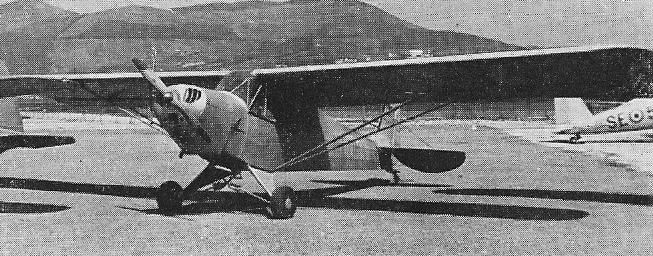
The type was widely successful, with nearly 800 units being produced for Brazil’s flying clubs and armed forces, as well as for export to Argentina, Paraguay, Chile, Uruguay and Portugal. At the time of peak production in 1943, a new CAP-4 left the factory every day, and production continued until 1948 when the company enter financial difficulties.

In 1956, Sociedade Aeronáutica Neiva (Neiva) acquired the rights renaming it to P-56 Paulistinha, the design was used as the basis for an agricultural aircraft, the P-56 Agricola, adding a fibreglass chemical hopper and spraybars, but this was unable to compete with imported, purpose-built agricultural aircraft.
In dimensions and characteristics, it is similar to the last series of the Paulistinha CAP-4 produced by Companhia Aeronáutica Paulista , from which Neiva acquired the rights, launching a new version, named Paulistinha 56 or Neiva 56.
First flying in 1955, the Neiva P-56 Paulistinha could be equipped with a Continental C-90-8F or C90-12F engine, which could develop up to 115hp at 2625 RPM. A total of 256 were built
Its fuel system consists of two gas tanks, one at the top of the cabin and the other between the instrument panel and the engine fire wall, before entering the carburetor the gasoline passes through a filter and decanter type “cup” “.
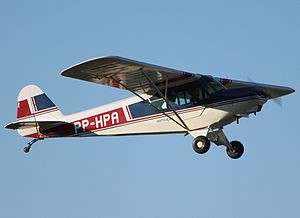
The Brazilian Air Force operated this aircraft between 1959 and 1967, with the military designation L-6 . It was used in bombing connection, observation and calibration missions. Paraguayan Military Aviation bought four aircraft in the early 1960s. The Paraguayan Aeroclub bought four aircraft in the 1950s
In total about 840 were built.
Variants:
EAY-201
original version
Engine: Salmson 9Ad
Seats: 2
CAP-4 Paulistinha
main production version
Engine: 1 × Franklin 4AC, 48 kW (65 hp)
Wingspan: 10.10 m (33 ft 2 in)
Wing area: 17.0 m2 (183 sq ft)
Length: 6.65 m (21 ft 10 in)
Height: 1.95 m (6 ft 5 in)
Empty weight: 320 kg (705 lb)
Gross weight: 540 kg (1,190 lb)
Fuel capacity: 58 L (15 US gal; 13 imp gal)
Maximum speed: 155 km/h (96 mph, 84 kn)
Cruise speed: 140 km/h (87 mph, 76 kn)
Range: 500 km (310 mi, 270 nmi)
Service ceiling: 4,000 m (13,000 ft)
Rate of climb: 3.1 m/s (610 ft/min)
Crew: Two, pilot and instructor
CAP-4B
air ambulance version (2 prototypes built)
Engine: 1 × Franklin 4AC, 48 kW (65 hp)
Wingspan: 33 ft 2 in
Length: 21 ft 10 in
Height: 6 ft 4.75 in
Empty weight: 706 lb
Loaded weight: 1190 lb
Max speed: 96.5 mph
Cruise: 87 mph
ROC: 610 fpm
Range: 311 mi
CAP-4C
artillery-spotting version, (Paulistinha Rádio or Paulistinha Observação)
Engine: 1 × Franklin 4AC, 48 kW (65 hp)
Wingspan: 33 ft 2 in
Length: 21 ft 10 in
Height: 6 ft 4.75 in
Empty weight: 706 lb
Loaded weight: 1190 lb
Max speed: 96.5 mph
Cruise: 87 mph
ROC: 610 fpm
Range: 311 mi
P-56 Agricola
agricultural version by Neiva
60 built
Neiva P-56 Paulistinhab
Engine: Continental C90-8F, 90 hp
Wingspan: 10.8 m (35 ft 4 in)
Wning area: 183 sq.ft
Length: 6.90 m (22 ft 2 in)
Height: 1.95 m (6 ft 5 in)
Empty weight: 882 lb
MTOW: 1455 lb
Max speed: 100 mph at SL
Cruise: 90 mph
ROC: 875 fpm
Ceiling: 19,685 ft
Range: 560 mi
Endurance: 4 hrs
Neiva Paulistinha 56-C
Engine: Continental C-90-8F/12F, 90 hp (67 kW)
Seats: 2
256 built by between 1958 and 1964.
P56C-1 Paulistinha Rebocador
Paulistinha 56-D
Engine: Lycoming O-320-A1A, 150 hp (110 kW)
Single prototype built
Brazilian Air Force designated L-6A
No production.