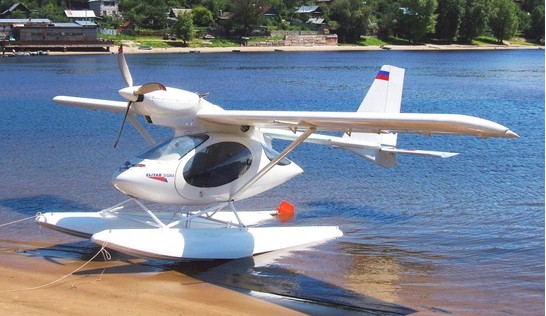
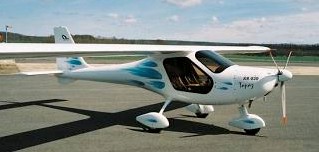
The Sigma 4 was designed for training, tourism and sport. The airplane was designed according to requirements of JAR VLA
Engine: Rotax 912 ULS Power: 100 hp Take-off weight: 544 kg Emty weight: 360 kg Max speed: 115 knts Cruise speed: 90 knts Minimal speed: 30 knts Rate of climb: 8 m/s Take off distance(nil wind): 70 m Landing distance (nil wind): 100 m Range: 700km Perfomance overload: +4-1 Flaps: electric
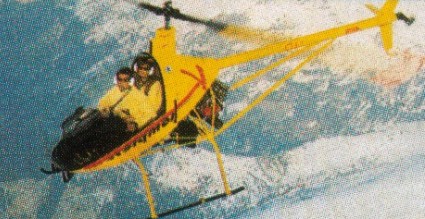
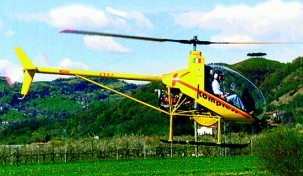
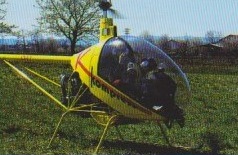
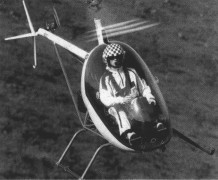
After 7 years of manufacturing and over 120 CH-7 ANGEL flying, Barbero brothers developed in 1996/97 the CH-7 KOMPRESS project, double seat tandem, double control, suitable for training. The Kompress has one-plus-one tandem seating, and a welded 4130 steel tube frame with composite body enclosure.
CH-7 Kompress
Tail boom and skids are of aluminum alloy. Manufactured in Italy.
CH-7 Kompress Engine: Rotax 914, 115 hp Rotor span: 7 m Blade area: 0.18 sq.m MAUW: 450 kg Empty weight: 250 kg Fuel capacity: 40 lt Max speed: 208 kph Cruise speed: 165 kph Minimum speed: 0 kph Climb rate: 7.5 m/s Seats: 2 Fuel consumption: 20 lt/hr
CH-7 Kompress Engine: 115 hp Rotax 914 turbo Rotor Blades: Composite Tail rotor: metal Cruise: 160 km/h Top Speed: 209 km/h Empty Weight: 245 kg Useful Load: 205 kg Gross Weight: 450 kg Seats: 2
CH-7 Kompress Charlie Engine; Rotax 914 Turbo, 115 hp Gross weight AeCI regulation; Kg 450 Empty weight; Kg 275 Useful load; Kg 205 Fuel capacity; 60 l. / 19 l.aux. Rate climb; 7,5 m./sec. In-ground effect hover; 3500 m. Out-of-ground effect hover; 2500 m. Service ceiling; m. 5000 Max fuel range; 480 Km/3 h. Cruise speed; 160 Km/h. Never exceed speed; 209 Km/h. Seats; 2
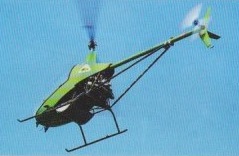
A single seat enclosed helicopter that was originated by Augusto Cicare in 1973. Welded 4130 steel tube frame with composite enclosure. Tail boom and skids are of aluminium alloy. Manufactured in Turin, Italy.
The flight qualities were improved by fitting 8 H 12 blades. It can be powered by a Rotax 912.
Engine: Rotax 582, 64 hp Rotor span: 6.5 m Blade area: 0.18 sq.m MAUW: 360 kg Empty weight: 205 kg Fuel capacity: 40 lt Max speed: 140 kph Cruise speed: 136 kph Minimum speed: 0 kph Climb rate: 10 m/s Seats: 1 Fuel consumption: 13 lt/hr
CH-7 Engine: 65 hp Rotax 582. Rotor blades: Composite 19 ft Metal tail rotor: 40 in Speed max: 86 mph. Cruise: 68 mph. Range: 205 sm. ROC: 1200 fpm. Service ceiling: 11,000 ft. Fuel cap: 10 USG. Weight empty: 374 lbs. Gross: 682 lbs. Height: 6.75 ft. Length: 23 ft. Disk span: 19 ft. Landing gear: skids. Seats: 1
Engine: 80 hp Rotax 582. Rotor blades: Composite 19 ft Metal tail rotor: 40 in Speed max: 100 mph. Cruise: 80 mph. Range: 170 sm. ROC: 1900 fpm. Service ceiling: 11,000 ft. Fuel cap: 10 USG. Weight empty: 451 lbs. Gross: 792 lbs. Height: 6.75 ft. Length: 23 ft. Disk span: 19 ft. Landing gear: skids. Seats: 1
The Elias TA-1 was a 1920s American biplane training aircraft built by Elias. Only three aircraft were built for evaluation by the United States Army Air Service. The TA-1 (a United States military designation Trainer Aircooled No. 1) was designed to meet a United States Army requirement for a training aircraft for the air service. The TA-1 was a conventional two-seat biplane.
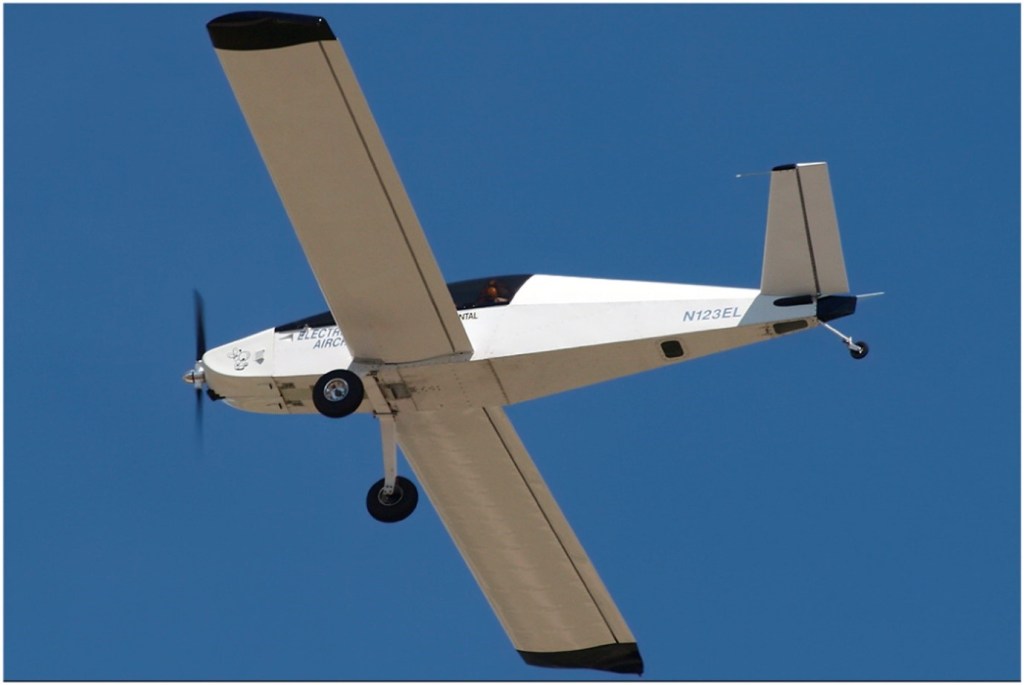
ElectraFlyer-C flown at Oshkosh AirVenture, August 2008.
In 2008 was the debut of the ElectraFlyer-C at the Experimental Aircraft Association AirVenture in Oshkosh. This all-electric, single passenger aircraft, fitted with a custom-built lithium polymer battery pack was able to cruise at 70 mile/h for 1–1/2 to 2 h and charged in as little as 2 hours.
The ElectraFlyer-C was designed and built as a prototype and proof of concept for economical electric flight.
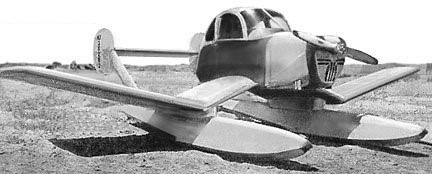
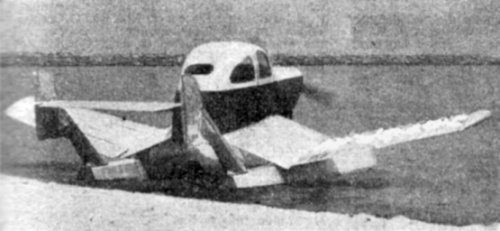
Dewey Eldred’s Flyer’s Dream NX36282 was a very original prototype floatplane designed by Dewey Eldred and Sol Fingerhut. Built in 1946 in Willoughby, Ohio, it featured an automobile-like nacelle mounted on top of a 30-ft span W-shaped wing placed in lowermost position. Its tail was mounted at the end of twin-booms extending attached to the rear of the floats. It used a 125 hp engine and first flew June 4, 1946.
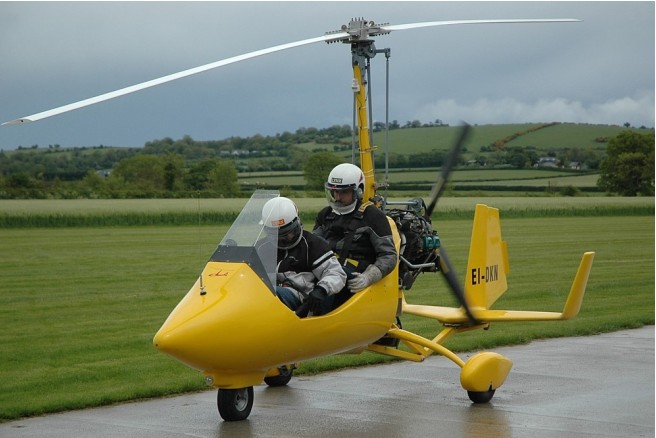
The main frame is made with stainless steel tubes and sheets cut with CNC laser machinery and welded by aeronautic welding in a TIG atmosphere. The main frame is designed and tested to support 5 Gs loads with maximum weight at takeoff. The rotor control system is duplicated to be able to pilot from both seats. Like the frame, it is made of stainless steel. All of the gyro points are mounted on stainless steel ball bearings with ZZ protection. The two joysticks consist of a “top gun” type stick with rotor trim controls and radio button (ptt) controls. The rotor head consists of parts tooled with a CNC machine. The parts are made of stainless steel, high strength steel and 7075 T6 hard aluminium. The bolts used are ISO certified. The autogyro’s cabin is manufactured in carbon fibre and epoxy resin composite materials. The 08 model’s cabin is equipped with two windscreens. The tail unit is manufactured in carbon fibre and epoxy resin. The tail unit’s frame design has been tested to the limit by Spain’s Civil Aviation Department and has shown its strength at speeds of up to 210 Km/hr. The ELA rotor is manufactured in a combination of aluminium and fibreglass with epoxy resin. The blade can support traction loads of up to 26,000 Kg, whereas the top flight load does not exceed 6,500 Kg. Standard Equipment for ELA 08 includes altímeter, airspeed, vertical speed, compass, engine and rotor rpm, cht, oil temperature, oil pressure, fuel pressure, trim position indicator, hour counter, “top gun” stick in front and back positions, mechanical prerotator, pneumatic rotor brake with parking system, pneumatic trim, back compartment glove box, wheel spats, landing light, 72 litre fuel tank, carbon fibre propeller, aluminium and carbon fibre rotor blades, carbon fibre cockpit, wheel spats and tail plane, front wheel cover, and stone guard. Optional extras include egt, strobe light, manifold pressure, propeller spinner painted, rear instrumental panel with airspeed indicator, engine rpm, rotor rpm, altimeter, and fuel pressure.
R-100 Engine; ROTAX 912 UL Empty weight; 237 kg Maximum Take-off Weight; 550 kg Total Payload; 306 kg Range; 500 km Min Speed at Level Flight; 30 km/h Cruise Speed; 140 km/h Take Off Distance – 1 person; 30 m Take Off Distance – 2 persons; 80 m Rate of Climb – 1 person; 7 m/s Rate of Climb – 2 persons; 5 m/s
R-115 Engine; ROTAX 914 UL Empty weight; 244 kg Maximum Take-off Weight; 550 kg Total Payload; 306 kg Range; 500 km Min Speed at Level Flight; 30 km/h Cruise Speed; 150 km/h Take Off Distance – 1 person; 20 m Take Off Distance – 2 persons; 50 m Rate of Climb – 1 person; >10 m/s Rate of Climb – 2 persons; 8 m/s
The main frame is made with stainless steel tubes and sheets cut with CNC laser machinery and welded by aeronautic welding in a TIG atmosphere. The main frame is designed and tested to support 5 Gs loads with maximum weight at takeoff. The rotor control system is dual to be able to pilot from both seats. Like the frame, it is made of stainless steel. All of the gyro points are mounted on stainless steel ball bearings with ZZ protection. The two joysticks consist of a “top gun” type stick with rotor trim controls and radio button (ptt) controls. The rotor head consists of parts tooled with a CNC machine. The parts are made of stainless steel, high strength steel and 7075 T6 hard aluminium. The bolts used are ISO certified, which guarantees their reliability and standardization. The rotor head houses the advanced pre-rotator and trim systems that are characteristic features of our autogyro. The autogyro’s cabin is manufactured in carbon fibre and epoxy resin using state-of-the-art techniques for composite materials. Our plant has the right facilities for using advanced techniques, including air-conditioned cabins, curing furnaces and humidity control systems. The 07 model’s cabin is equipped with a windscreen to protect the front seat. The tail unit is manufactured in carbon fibre and epoxy resin. The tail unit’s frame design has been tested to the limit by Spain’s Civil Aviation Department and has shown its strength at speeds of up to 210 Km/hr. The ELA rotor is manufactured in a combination of aluminium and fibreglass with epoxy resin. The rotor blades are manufactured yjr ELA plant and which has been certified by the Spanish Civil Aviation Department. The certification tests have proved that the blade can support traction loads of up to 26,000 Kg, whereas the top flight load does not exceed 6,500 Kg. Standard equipment for the ELA 07 includes altímeter, airspeed, vertical speed, compass, engine and rotor rpm, cht, oil temperature, oil pressure, fuel pressure, trim position indicator, fuel level, hour counter, mechanical prerotator, pneumatic rotor brake with parking system, pneumatic trim, landing light, 72 liters fuel tank, carbon fibre propeller, carbon fibre cockpit and tail planes, aluminium and carbon fibre rotor blades, front wheel cover stone guard . Optional extras include EGT, wheel spats, strobe light, manifold pressure, and dual controls.
Engine; ROTAX 912 ULS Empty weight; 237 kg Max Take-off Weight; 550 kg Total Payload; 313 kg Range; 500 km Min Speed at Level Flight; 30 km/h Cruise Speed; 140 km/h Rate of Climb; 5-7 m/s Take Off Distance; 30-80 m