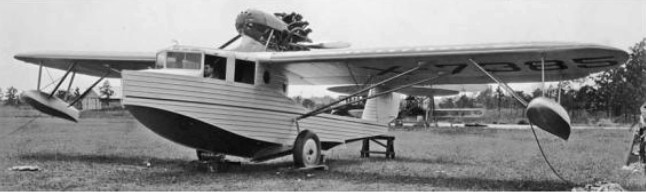
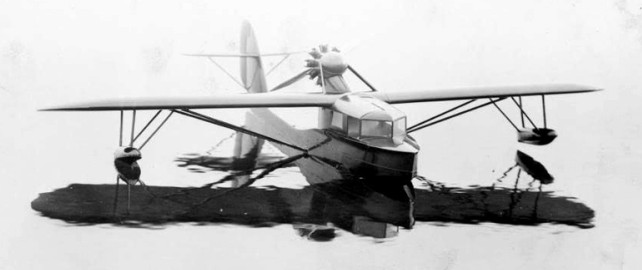
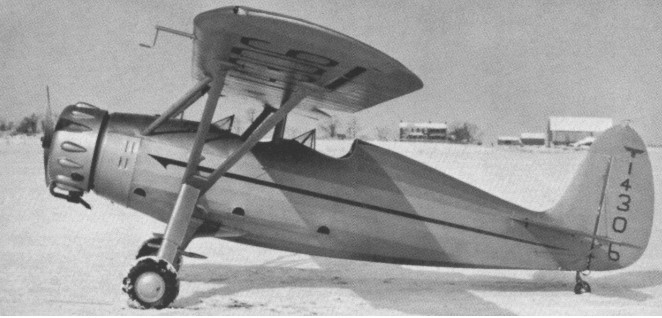
The Fairchild FB-3 (Flying Boat number 3) was an all-metal flying boat designed by Arthur Stelb and developed by the new Fairchild Metal Boat Division of the Fairchild Aircraft Corporation. The prototype was built at Fairchild’s Farmingdale, Long Island facility. The FB-3 was an amphibious high-wing strut-braced monoplane with retractable landing gear, powered by a high pylon mounted pusher configuration radial engine. The two-step hull provided floatation with two outboard floats for stability. The wings used metal spars and ribs with fabric covering. The interior was well finished for its time.
The prototype aircraft (NX7385) was test flown in 1929 but did go into production.
Fairchild FB-3 Engine: 1 × Pratt & Whitney Wasp R-1340, 420 hp (310 kW) Wingspan: 52 ft (16 m) Length: 41 ft (12 m) Maximum speed: 113 kn; 209 km/h (130 mph) Cruise speed: 100 kn; 185 km/h (115 mph) Seats: 4
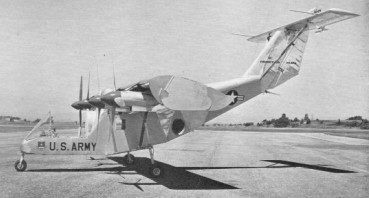
Another deflected slipstream type, similar in principle to the Ryan VZ 3, the Fairchild M 224 achieved less success. It was a two seat high-wing monoplane with a single 1,024 hp General Electric YT58 GE 2 turboshaft engine driving four propellers each of 8 ft 5 in diameter. The wing had 50 per cent chord flaps and endplates. For vertical take off, it was intended to operate at a ground angle of 30 degrees. Control in the hover was by means of small tail fans above the T tailplane for pitch and yaw, and by differential pitch on the outer propellers for roll. Tethered trials with the VZ 5 (56 6940) began on November 18th, 1959, but no free flights were made.
Towards the end of the Second World War the US Navy set out to issue specifications for a replacement for the basic and primary aircraft trainers that were used during the war. These specifications were released to industry on 26 April 1945 by the Bureau of Aeronautics (BuAer).
Three companies entered designs – Temco entered the T-35 Buckaroo, adapted from the Globe Swift, Beechcraft entered the T-34 Mentor, a tandem seat adaptation of the Bonanza and Fairchild chief engineer, Armand Thiebolt, entered a custom-designed aircraft that had the Navy designation XNQ and the later USAF designation T-31.
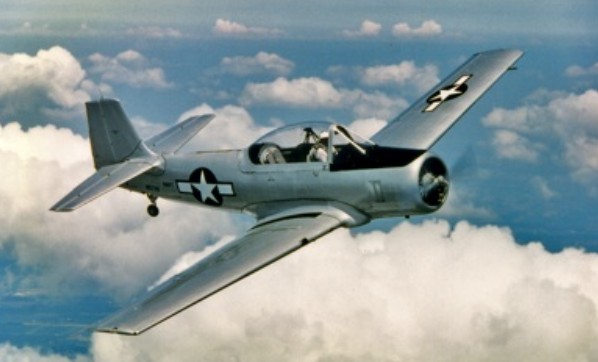
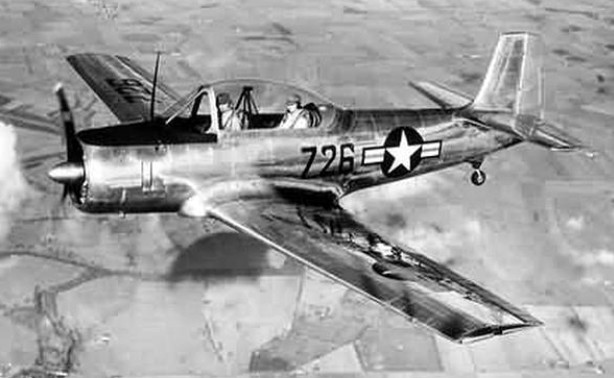
The Fairchild XNQ (T-31) (Model M-92) was the fastest primary trainer to date. The Model M-92 featured a controllable pitch propeller, flaps, electronically operated retractable landing gear and all-metal skin with fabric-covered rudder, ailerons and elevators.
Its unobstructed, one-piece bubble canopy provided instructors and students seated in tandem with all-round visibility, and its cockpit instruments were arranged to match those found in a 600 mph jet fighter or a 5,000-mile, long-range patrol plane. To help students recognize the instruments, the landing gear handle was in the shape of a tiny landing gear wheel, and the flap handle was shaped like the airfoil of a flap.
The Fairchild XNQ-1/T-31 was designed in 1945. The first of three constructed made its maiden flight in 1946. Of the three XNQs/T-31s, one was destroyed for structural testing, and one was destroyed in a landing accident.
Two prototypes were flown as XNQ-1 [75725/75726]. Registered with a civilian tail number N5726, the first XNQ, built at Fairchild’s Hagerstown, Maryland, plant, made its first flight there on 10 February 1947 with Fairchild’s chief test pilot, Richard Hansen, at the controls. The 20-minute maiden flight was uneventful and showed only some simple rework of the aileron tabs were necessary. After a series of company test flights, the XNQ was delivered to the US Navy at Anacostia, Washington for formal evaluation. After an initial series of flights in the Washington DC area, the flight test program continued at NAS Patuxent River after which the aircraft returned to Fairchild to prepare it for evaluation by the USAF as the T-31.
The third ship built, s/n 75726, was first flown on February 10, 1947. On its first flight, the test pilot forget to lower the landing gear. The second aircraft (BuNo. 75726) with a larger stabilizer was evaluated by the USAF in 1949 as a replacement for the AT-6, being selected on 24 March 1949 as a primary trainer. Designed to be acrobatic to teach pilots basic maneuvers, such as stalls, spins, rolls and dive pullouts, Fairchild received a contract for 100 aircraft as the model 129, USAF designation T-31. However, the order was cancelled later in 1949, in favor of the Beech T-34 Mentor.
In November 1948, it was pointed out that normal procurement channels had not been followed, and Beech requested a fly-off competition even before the YT-34 was test flown. On March 17, 1949, the Chairman of the Evaluation Board voted the XNQ-1 first, the T-34 second, and the T-35 third. In September of 1947, the USAF requested XNQ procurement as follows:
January 1950 – 50 April 1950 – 114 July 1950 – 176
The influence of the Korean War, politics, and the tricycle gear were factors leading to the eventual selection of the T-34.
Delivered to the U.S. Navy in 1947 for trials, they were rejected. Tests had revealed problems with exhaust fumes leaking back into the cockpit. The first prototype was subsequently to receive a number of engine upgrades, first powered with 320 hp Lycoming R-680-13, then finally with an inline 350 hp Lycoming GSO-580. The aircraft was destroyed in a crash in 1950.
Both XNQs as T-31s were flown to Randolph AFB outside of San Antonio, Texas, for their formal USAF evaluation in a fly-off with both the Beech and Temco candidates. At the time the USAF also considered the De Havilland Canada DHC-1 Chipmunk as well as the British Boulton Paul Balliol, but both were quickly eliminated from consideration, leaving Fairchild, Beech, and Temco remaining in the USAF evaluation. Like the US Navy, the USAF selected the Beech T-34 Mentor, again, its tricycle landing gear layout being one of its strong points. It was the second rejection of the Fairchild design. The aircraft was passed on to the US Navy where it was flown by student test pilots at the US Navy’s Test Pilot School at NAS Patuxent River and after a gear up landing that resulted in only minor damage in 1953, the Navy declared the unique aircraft surplus to its needs after it had only amassed just over 1,000 flight hours.
Fairchild dropped plans to develop the design as the company concentrated on other production contracts, including the Fairchild C-119. The second aircraft, privately owned, was still on the civil register on 15 January 2006 and airworthy.
The wing commander for the National Capital Wing of the Civil Air Patrol arranged to take ownership of the XNQ and in October 1953 the aircraft was repaired at NAS Patuxent River before being flown to a small airfield south of Alexandria, Virginia where it was stationed for the next 2 years, only clocking 12 flight hours in that time period. Part of the problem with the XNQ wasn’t its performance or handling, but that its wingspan was just over a foot too wide for the standard 40-foot hangar at the airfield and it ended up spending most of its time outdoors which adversely affected its condition. In 1955 the aircraft was ferried to Rockville, Maryland, but again, was stored outdoors which resulted in further deterioration. When that small airfield was closed, the Fairchild was abandoned in situ.
John St. Clair, the operations officer of the Congressional Squadron of the Civil Air Patrol, trucked aircraft to his home 8 miles away to try and save it given its unique history. He later assumed formal ownership of the aircraft to keep it from going to the junkyard. Fast forward to 1978, the aircraft is still on the St. Clair farm in rural Maryland and Armand Thiebolt’s son visited John St. Clair and asked about purchasing the aircraft, the deal of which fell through. Later, Robert Taylor, the founder of the Antique Airplane Association, asked St. Clair if he would donate the XNQ to a museum, which he agreed to and a crew from the association trucked what was left of the aircraft to Waco, Texas with plans of restoring her to flight status. The history of the XNQ took a new turn after its arrival in Waco when general aviation pilot Don Pellegrino and his wife were weathered in at the airport and he found the XNQ in storage in a hangar and approached Taylor about purchasing the aircraft.
While negotiations proceeded, the aircraft was moved to Oklahoma City in 1982 but still no restoration work had started. At a fly-in in Iowa, Taylor approached Pellegrino and told him “Make me an offer I can’t refuse” and with that, Pellegrino become the XNQ’s new owner for $800. In September that year Pellegrino trucked the aircraft to his farm in Iowa and began restoration work in earnest.
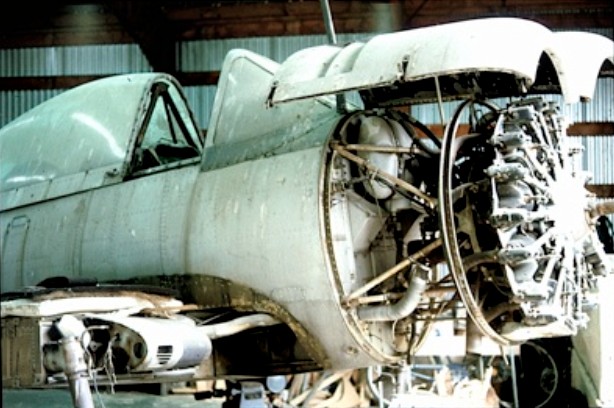
Ten years were spent rebuilding the aircraft in an Iowa barn. The rebuilding process involved re-skinning the bottoms of the center section, the wings, the horizontal stabilizer, and the cowling. Needless to say, numerous “small” parts were also rebuilt. The Lycoming R-680-13 engine and all the instruments needed to be replaced. Having been exposed to the climate and moves from Maryland to Texas and Oklahoma, and finally Iowa, the basic airframe was hurting but rebuildable.
After ten years of working on it in his free time, the XNQ made its second maiden flight on 1 June 1992, the first time the aircraft had flown since 1955. Pellegrino flew the 25 FAA-required hours of flight testing himself and since then he has since moved to Rhome, Texas, just outside of the Dallas-Fort Worth area and has flown the XNQ to airshows around the country. She still has her same tail number of N5726.
Engine: 1 × Lycoming R-680-13 radial, 238 kW (320 hp) Wingspan: 12.4 m (40 ft 8 in) Length: 8.3 m (27 ft 3 in) Height: 2.7 m (8 ft 10 in) Empty weight: 1,338 kg (2,974 lb) Gross weight: 1,754 kg (3,898 lb) Fuel: 80 USG Maximum speed: 282 km/h (175 mph) Cruise: 135-140 mph Range: 1,537 km (955 miles) Service ceiling: 4,880 m (16,000 ft) Crew: two, pilot and instructor
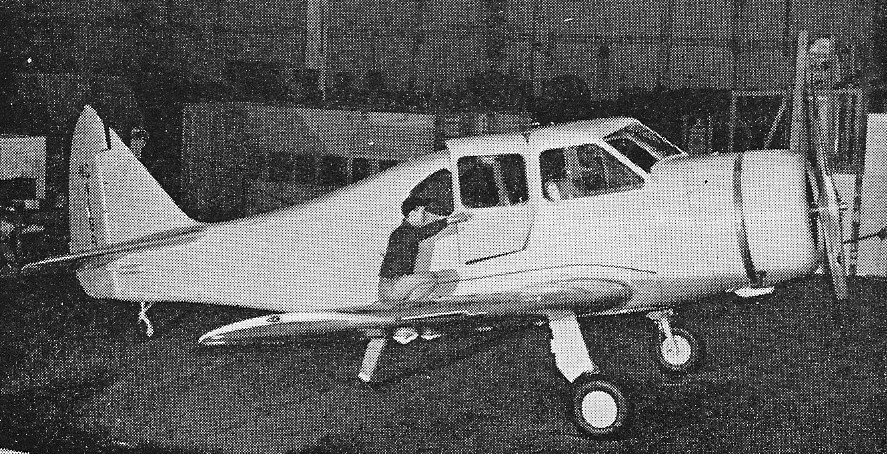
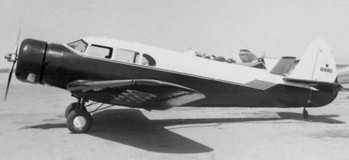
Immediately after WW2 Fairchild turned to the personal aircraft market. Described as a PT-23 trainer with a four-seat cabin fitted immediately aft of the trainer’s rear seat. The PT-23 wings and centre section were utilised, as well as the same engine and mount, but an NACA cowling was installed and a constant speed airscrew fitted.
The undercarriage was similar to that of the T-6 Texan.
The resulting M.84C was certified but only one prototype was built.
The sole M.84C was turned over to one of the schools in Hagerstown, Maryland, where it was used as an instructional item until finally broken up.
M.84C Engine: 220 hp Continental W-670-6N MAUW: 3300 lb Fuel capacity: 48 USG Max speed: 175 mph Cruise: 150 mph Range: 450 mi
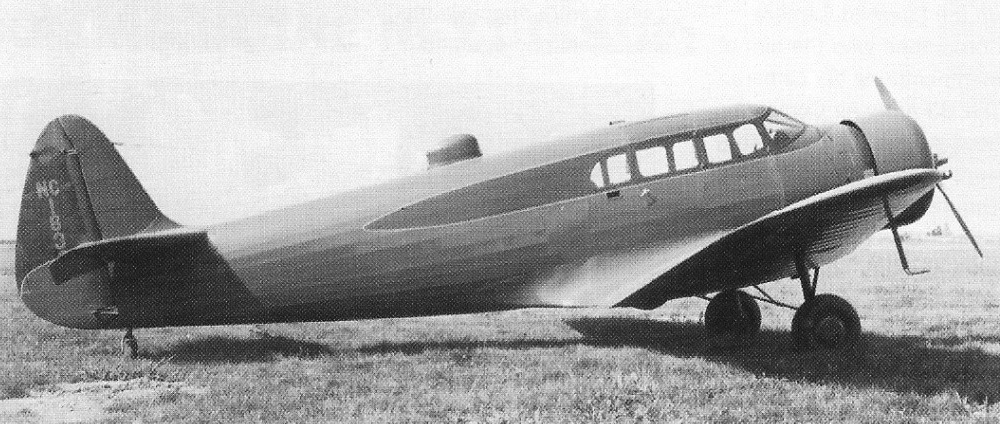
During 1935-36 Fairchild Aircraft Ltd in Canada continued development of the Super 71, leading to the larger ten-seat Fairchild 82, with a more conventional enclosed cockpit for two pilots, seated side by side forward of the wing giving much improved vision. It was a braced high-wing monoplane with a braced tail unit, tail-wheel landing gear (optionally replaceable by floats or skis) and powered by a Pratt & Whitney Wasp radial engine. Only about 12 Fairchild 82s were built, four were exported and the remainder operated by Canadian airlines.
Engine; 1 x Pratt & Whitney S3H1 Wasp, 410kW Max take-off weight; 2869 kg / 6325 lb Empty weight; 1630 kg / 3594 lb Wingspan; 15.54 m / 50 ft 12 in Length; 11.25 m / 36 ft 11 in Wing area; 31.86 sq.m / 342.94 sq ft Max. speed; 249 km/h / 155 mph Cruise speed; 227 km/h / 141 mph Ceiling; 5335 m / 17500 ft Range; 1054 km / 655 miles
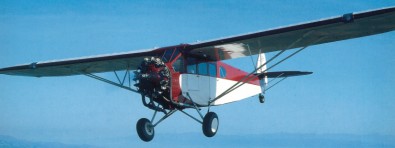
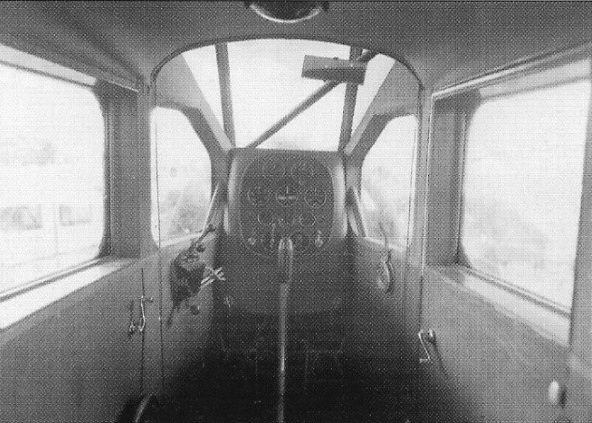
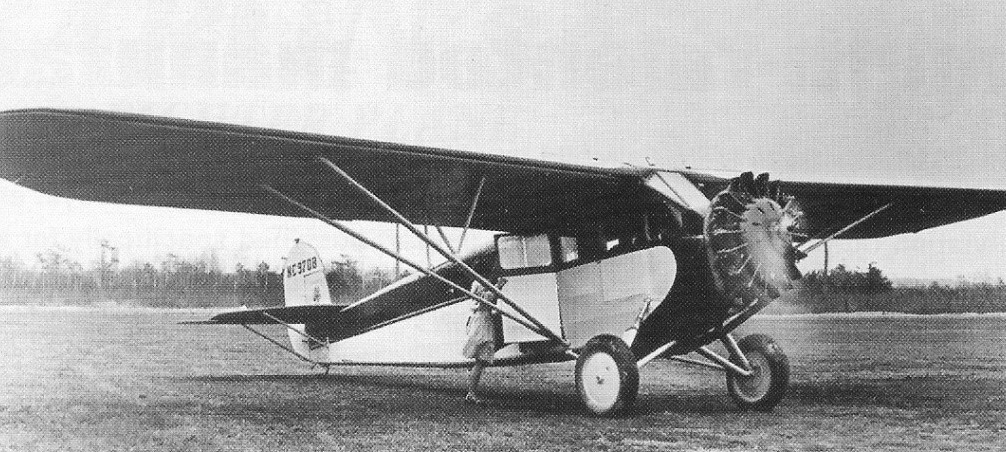
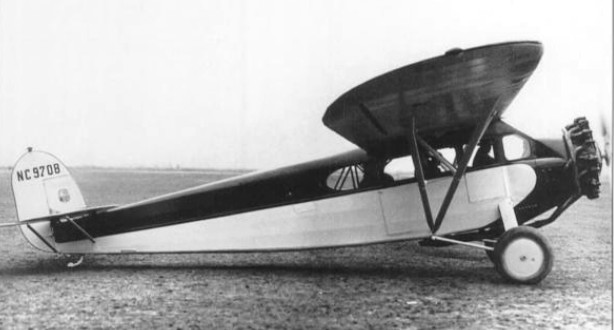
Basically an updated version of the Fairchild FC-2W2, the Fairchild 71 incorporated many improvements that resulted from experience with the FC-2 and its variants. Providing seating for a pilot and six passengers, it was powered by a 313kW Pratt & Whitney Wasp 9-cylinder radial engine. First flown in 1929, the Fairchild 71 was built in small numbers from 1929 until 1930, when it was replaced in production by the Fairchild 71A. This differed primarily by having a few degrees of sweepback on the wings, and it introduced a number of refinements to the interior. All Fairchild 71s are of mixed construction with wooden wings and steel-tube fuselage structures.
Though civil operators acquired most of the Fairchild 71s and 71As, the US Army acquired one for evaluation as a light transport under the designation XC-8; dedicated later for photographic work it was redesignated XF-1. Eight service-test aircraft were ordered under the designation YF-1, and all nine were later redesignated C-8. Six production Fairchild 71As were then bought by the US Army with the designation F-1A, later redesignated C-8A The US Navy also acquired a single example for service test under the designation XJ2Q-1, later redesignated R2Q-1.
In 1930 a Canadian branch of the company was established at Longueuil, Quebec, as Fairchild Aircraft Ltd. In addition to providing support for approximately 70 Fairchild aircraft operating in Canada, it began producing the Fairchild 71 for the Canadian Department of National Defence. These aircraft differed from standard by the removal of the features introduced for passenger comfort and were equipped specifically for aerial photography. A commercial Fairchild 71-C was built and marketed later and was available also as the Fairchild 71-CM with a metal-skinned fuselage.
In the mid-1930s Kreider-Reisner built the Fairchild 22 two-seat open-cockpit monoplane and the Fairchild 24 cabin type, also producing the Fairchild 71 amphibian.
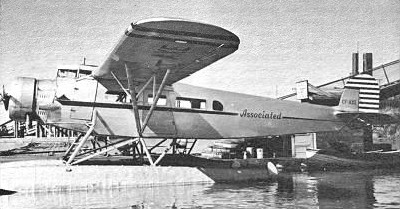
The model 71 could be readily fitted with floats, skis or wheels. Its standard range was between 750 and 800 nautical miles, depending on whether it was on floats or skis/wheels. Twenty one model 71s were built. With a view to meeting Canadian requirements for a freight carrier of greater capacity than the standard Fairchild 71, the Fairchild Super 71 floatplane was developed in 1934. Of slightly greater span, it had also a longer and entirely new oval-section fuselage of light alloy construction. The pilot was given a cockpit on the upper surface of the fuselage, to the rear of the 13-foot cabin, with a somewhat restricted forward view between the top of the fuselage and the undersurface of the wing. The cabin could accommodate eight passengers, but the seats were easily removable to create an uncluttered cargo space. Large cargo doors were inset in the port side of the cabin and a passenger door to starboard, the entire accommodation being heated and ventilated. Power was provided by a Pratt & Whitney Wasp radial engine enclosed completely in a low-drag cowling. In 1936, the Royal Canadian Air Force bought two the two Super 71Ps – a modified version fitted with a forward mounted cockpit – for use as photo-survey aircraft. They did not prove successful. One of them was destroyed in August 1937, and the second machine was struck off strength in April 1940.
71-C Engine: One Pratt & Whitney R 1340 1 Wasp, 420 hp. Prop: 2 blade. Wing span: 50 ft 0 in (15.24 m). Length: 32 ft 10 in (10.00 m) Height: 10 ft 6 in Wing area: 335 sq ft (31.12 sq.m). Gross weight: 5,500 lb (2495 kg). Max speed: 129 mph (208 km/h) at 5,000 ft (1525 m). Cruise: 95-100 kt. Landing speed: 55 mph Initial climb rate: 900 fpm Range: 900 miles (1,450 km). Service ceiling: 17,000 ft Accommodation: Crew of 1 / 6 passengers, or equivalent mail or freight load. Fuel capacity: 160 USgal
Super 71 Engine: 1 x Pratt & Whitney Wasp, 388kW Max take-off weight: 3175 kg / 7000 lb Empty weight: 1544 kg / 3404 lb Wingspan: 17.68 m / 58 ft 0 in Wing area: 36.24 sq.m / 390.08 sq ft Max. speed: 249 km/h / 155 mph Cruise speed: 209 km/h / 130 mph Range: 1314 km / 817 miles
The Fairchild M-62 first flew in March 1939 and was used by the USAAF as a primary trainer. Between February 1940 and May 1944, some 8,000 aircraft were produced in the United States, Canada and Brazil.
M.62A
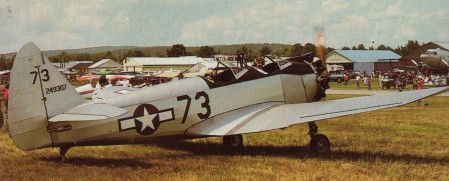
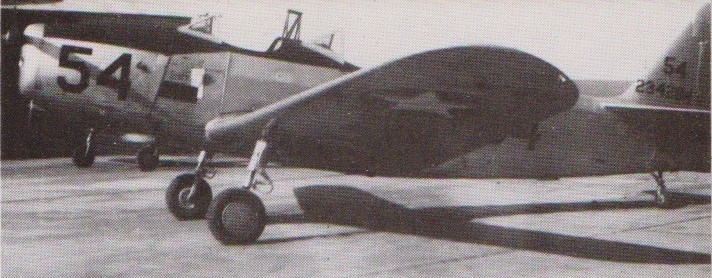
The PT-19 basic trainer was the military version of the M-62. The aeroplane was ordered in 1940 as the PT-19 with open cockpits and the 130.5-kW (175-hp) Ranger L-440-1 inline. These 270 aircraft proved to be only the beginning of a veritable flood, for next came 3,703 PT-19As with minor improvements and the 149-kW (200-hp) L-440-3 engine, and 917 PT-19B blind-flying trainers with a hooded front cockpit. Sales commenced in 1940 but so many orders resulted in licence production. Airframe production out-stripped engines and the Continental R-670 was substituted in 1942 resulting in the PT-23; the PT-23A was the blind-flying equivalent of which 261 were built.
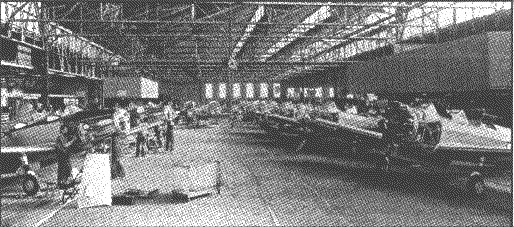
The St. Louis Aircraft Corporation built 44 Fairchild PT 19 and 306 PT 23. The Army gave St. Louis Aircraft production contracts for the Fairchild designed PT-19 trainer. During 1942-44, St. Louis Aircraft built and delivered 350 of these primary trainers, in two versions: the PT-19A, with a Ranger in-line engine, and PT-23/PT-23A, with a Continental radial. These trainers were all test-flown at St. Louis Aircraft’s own flying field, adjacent to the St. Louis Car factory on North Broadway in St. Louis.
Fairchild PT-19A (left) and PT-23A (right) trainers in St. Louis Aircraft factory, 1944
PT-19s were operated by Civilian Pilot Training schools throughout the war in conjunction with the Army Air Force, the principal user.
The RCAF adopted the PT-23 and PT-26 as the Cornell, built by Fleet Aircraft Ltd, Toronto. country Fleet Aircraft Company of Canada built 1642 Cornells under license, and they were designated either as PT-23s or PT-26s. The latter were distinguished by their cold-weather, enclosed canopy. The RCAF selected the Cornell as a successor to the Tiger Moth and Fleet Finch. The RCAF first flew Cornells in 1940 and retired the last one in 1947.
The more advanced PT-26 was fitted with an enclosed heated cockpit and IF instruments. 1,727 of this type were built in PT-26, PT-26A and PT-26B variants.
Two developments of the Fairchild M-62s appeared in the 1960s. One was the Funk F-23 built at Broken Arrow in Oklahoma and first flown in 1962, and the other was the Weatherly WM62C. An overall total of 7260 were eventually constructed by mid-1944.
Fairchild PT 19 A Cornell Engine : Ranger L-440-C5, 197 hp Length : 27.723 ft / 8.45 m Height : 7.612 ft / 2.32 m Wingspan : 35.991 ft / 10.97 m Wing area : 199.995 sqft / 18.58 sq.m Max take off weight : 2736.4 lbs / 1241.0 kg Weight empty : 2022.0 lbs / 917.0 kg Max. speed : 106 kts / 196 km/h Cruising speed : 88 kts / 163 km/h Service ceiling : 13205 ft / 4025 m Wing load : 13.74 lb/sq.ft / 67.00 kg/sq.m Range : 348 nm / 644 km
PT-23 Engine: Continental R-670-4, 220 hp.
PT-23A Engine: 1 x Continental R-670-4, -5 or-11, 164kW (240hp). Span: 10.97m (36ft ). Length: 7.9m (25ft 11 in) Max TO weight: 1111 kg (2,450 lb) Max speed: 128 mph at sea level. Operational range: 330 miles.
First introduced in 1936, the F-45 was a five-seat cabin monoplane intended as a high-performance personal transport aircraft. Primarily used as an executive aircraft, it was built with a mixed construction that made use of a fabric-covered steel-tube fuselage and a wooden outer wing section.
While the prototype was powered by a 220 hp Jacobs radial engine, subsequent production models received the 370 hp, seven-cylinder Wright Whirlwind radial engine. Many re-engined versions are still in active service powered by 450 hp Pratt & Whitney Wasp Juniors and 475 hp Wright Whirlwinds. Original Model 45s were capable of cruising at 164 mph at 75% power and 8,000 feet. Accommodations provided for two at the controls and three on a cross-seat in the back of the cab. A door on each side of the cabin made for easy entry.
Two Model 45-80 Sikanis were built, first flown 1937.
Engine: 370 hp Wright Whirlwind Gross weight: 4,000 lbs Empty weight: 2,474 lbs Fuel capacity: 90US gal Top speed: 170 mph Cruise speed: 164 mph Stall speed: 49 mph Initial climb rate: 1,140 fpm Range: 840 nm Service ceiling: 19,000 ft. Seats: 5
The mounting sales of the Fairchild 22 Model C7A induced the company to produce what was basically an enclosed cabin version of that aircraft. To achieve this, the configuration was changed to that of a braced high-wing monoplane, the resulting cabin seating two side-by-side. Other changes included the introduction of a tailwheel, and the initial Fairchild 24 Model C8 was powered by a 71kW A.C.E. Cirrus (licence-built) Hi-Ace 4-cyclinder inverted inline engine and first flew in 1932.
Fairchild’s 24R first appeared in 1939 and was produced for the civilian aircraft market until the United States entered World War II. Certificated during April 1932, only 10 examples of the basic Fairchild 24 Model C8 were produced.
The type certificate for the Fairchild 24 C8-A was issued on 1 September 1933. At least 25 examples of the C8-A were produced by the Kreider-Reisner Aircraft Co.
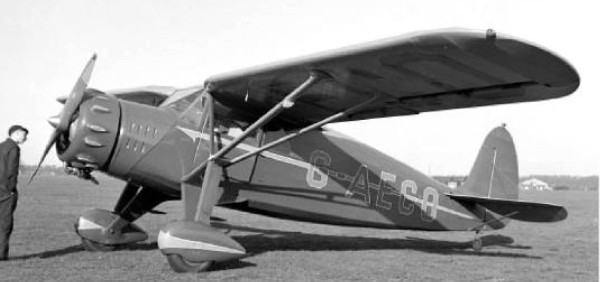
Fairchild 24 C.8C G-AECO – 8 March 1936
In 1937 production of the four-seat F-24J began. This was built with the 145 hp Warner Super-Scarab radial and the 165 hp Ranger R-690-D3 inline engines. In 1938, the similar Ranger-powered F-24K appeared to be followed in 1939 by the F-24R-0 with the Ranger engine and F-24W-9 with the Warner.
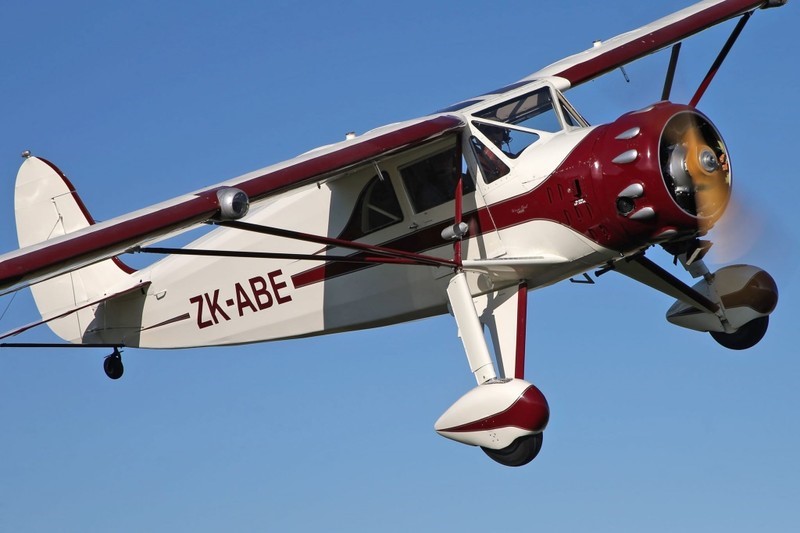
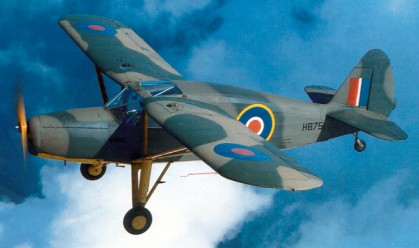
In 1941, the United States Army Air Force contracted for a utility transport and communications version Warner R-500-1 F-24W-41, to be known as the UC-61 Forwarder. Under Lend-Lease arrangements, of the 163 built, about 161 of these aircraft served with the Royal Air Force and the Air Transport Auxiliary (ATA) ferry organisation, under the name Argus. The Argus I had a 145 hp Warner Super Scarab engine; the Argus II had a 165 hp Super Scarab engine, and the Argus III had a 175 hp inverted in-line engine.
The UC-61A was similar, the USAAF retaining 148 of the 412 built.
UC-61A
As an innovative concept, the aircraft was available with two powerplants, Warner’s Scarab and Fairchild’s in-house 200 hp Ranger series in the F24 C8D, E and F. Initially the 1932 model Fairchild 24 C8B used a Warner 125 hp radial engine, and the Fairchild 24 C8C used the Warner 145 hp radial. American Cirrus III and Menasco Pirate inline engines were also occasionally used in some earlier Fairchild 24s. Later models such as the 24Ws upgraded to the 165 hp Warner Super Scarab.
1934 Fairchild F 24C-8-C 145hp Warner
In 1942, production of the F-24R was shifted to a military version, which was designated UC-61K. The F-24R is equipped with a 175 hp, six-cylinder, air-cooled Ranger engine that delivers a near 120 mph cruise speed for more than 600 miles. Other versions of the F-24 were powered by a 145 hp or 165 hp Warner Super Scarab radial, 200 hp inline Ranger and 450 hp Pratt & Whitney Wasp Junior.
Temco built the 24-R46 and 24-W46 versions of the Fairchild 24-R9 and 24-W9.
Turns while taxiing are accomplished through the use of a steerable tailwheel and construction of the F-24 is a steel-tube fuselage, heavily faired to shape with formers and spruce longerons. Wings are 66 inch chord, wooden with fabric covering. Most variants were available with optional float or ski landing gear. The Army’s World War II version, the UC 61. Twenty-nine Fairchild 24K ‘short nosed” 24s were delivered with 165 horsepower Rangers.
Fairchild 24R Argus III
Production of the commercial models F-24W-46 and F-24R-46 was resumed after the war.
1934 Fairchild F 24C-8-C Engine: 145hp Warner Cruise speed: 100 mph Fuel burn: approx 36 l/hr
24 C8F Ranger
24-G Engine; 1 x Warner Super Scarab 50, 108kW Max take-off weight; 1089 kg / 2401 lb Empty weight; 669 kg / 1475 lb Wingspan; 11.07 m / 36 ft 4 in Length; 7.26 m / 23 ft 10 in Height; 2.24 m / 7 ft 4 in Wing area; 16.09 sq.m / 173.19 sq ft Max. speed; 209 km/h / 130 mph Cruise speed; 190 km/h / 118 mph Ceiling; 5030 m / 16500 ft Range; 764 km / 475 miles
24K Engine: Ranger, 165 hp.
24 R40 Engine: Ranger, 165 hp
F-24W Engine; 1 x Warner
24 W40 Engine: Warner Super Scarab, 145 hp
Fairchild 24 W41 Argus Engine: Warner Super Scarab, 145 hp Wingspan : 36.319 ft / 11.07 m Wing area : 173.193 sqft / 16.09 sqm Length: 23.819 ft / 7.26 m Height: 7.349 ft / 2.24 m Max take off weight : 2401.2 lb / 1089.0 kg Weight empty : 1475.1 lb / 669.0 kg Wing load : 13.94 lb/sq.ft / 68.00 kg/sq.m Top speed: 145 mph Cruise: 125 mph Range: 720 mi Service ceiling: 16,000 ft
24 W41A / C-61 Engine: Warner Super Scarab, 145 hp
C-61 Argus Wingspan: 36ft. Engine: Ranger, 175 hp Gross wt: 2,562 lb Empty wt: 1,863 lb Wing area: 193.6 sq.ft Wing loading: 14.7 lb/sq.ft. Dihedral: 2.5 degree. Airfoil: N 2. Tread: 9 feet, 3 in. Elevator span: 12 feet, 15/8 in. Cruise: 105-120 mph. ROC: 750 fpm. Useful load: 699 lb. Fuel cap: 60 USG. Vmax: 133mph. Vne: 185 mph. Vs (clean): 57mph Vs full flap: 53mph. Takeoff to 50 ft: 1,100 ft. Landing 50ft: 1,000. Range: 600 mile. Ceiling: 14,000 ft.
Engine: 145 hp Warner Scarab Gross weight: 1,750 lbs Empty weight: 1,102 lb Top speed: 133 mph Cruise speed: 115 mph Initial climb rate: 900 fpm Service ceiling: 20,000 ft Range 350 nm Seats: 2
Argus II Engine: 165 hp Warner R-500 Super-Scarab 165 Wingspan: 36 ft 4 in Length: 23 ft 9 in Height: 7 ft 7.5 in Wing area: 193.3 in Empty weight: 1613 lb Loaded weight: 2562 lb Max speed: 132 mph Cruise 75%: 117 mph ROC: 700 fpm Range: 640 mi
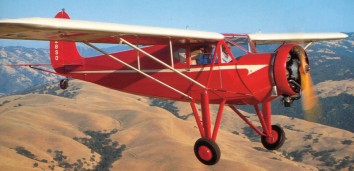
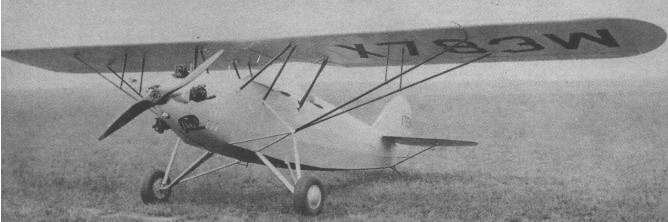
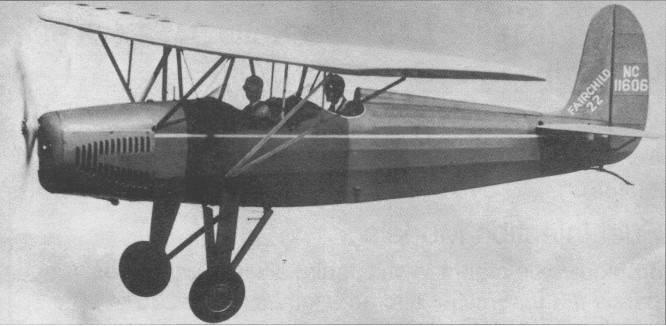
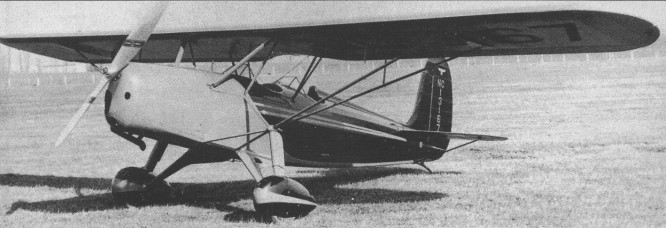
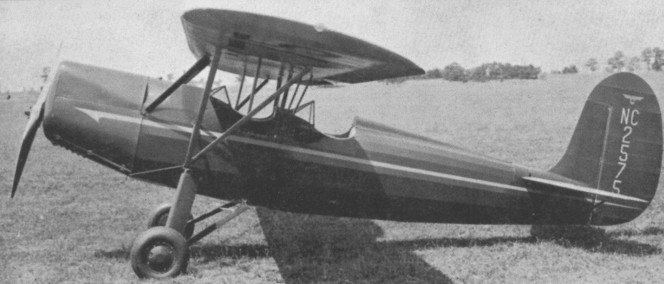
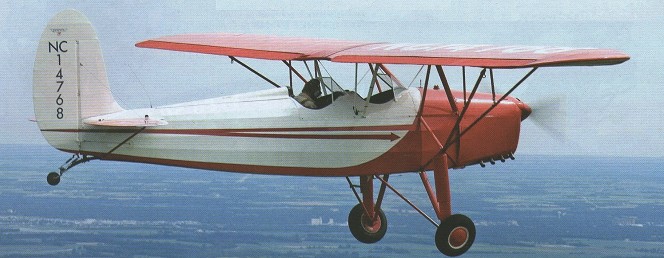
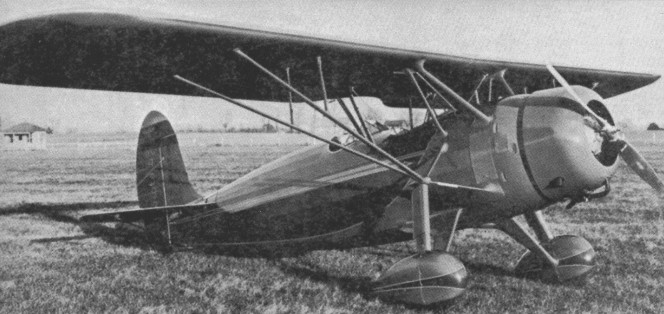
The Kreider-Reisner Division of Fairchild produced this tandem two-seat parasol monoplane in 1931. The F 22 was a parasol winged monoplane, generally being cheaper to build and therefore to buy, even if performance was sacrificed for economy.
The prototype of the new model C-7, X783W, was initially powered by the 80 hp Armstrong Siddeley Genet engine before this was replaced by the inline 75 hp Rover engine, complemented by, a more aerodynamic tail group.
Fairchild F 22 C7A, NC11000 powered by the 75hp Rover
The basic aircraft featured a fabric covered, welded steel tube, truss type fuselage which accommodated a tandem seating arrangement with provision for dual controls. The slender wing featured two spruce spars and truss type ribs and was braced internally with steel tie rods. External bracing was accomplished with sloping Vee streamlined steel struts to the apices of the two steel tube pyramids on the sides of the fuselage, to which were attached the legs of the fixed undercarriage. The Rover engine in the C-7 produced a reasonable performance. Maximum speed was 107 mph (172 km/h), ceiling 10,000 ft (3048 m) and range 350 miles (563km or 4 hours flying time). 12 examples were built at the Fairchild Aviation Corp, Hagerstown, MD and they remained popular even with the advent of the more powerful examples.
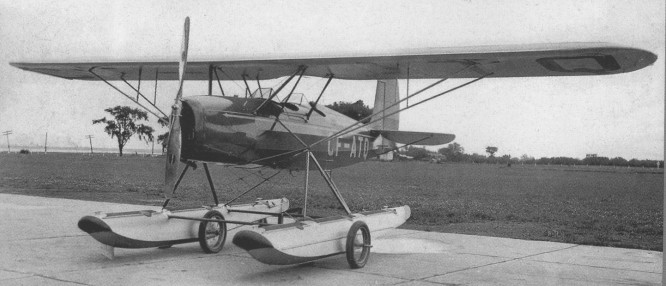
The C-7A was the first to improve the power of the F 22 and was fitted with a Cirrus Hi-Drive 4 cylinder inverted inline engine, built under licence from Cirrus Aero Engines at Croydon. It provided 20 hp more than its predecessor without altering the lines of the type, and began production during 1935. Several were exported offshore and the aircraft was further developed as a seaplane. Around 60 examples being manufactured fitted with Edo floats, a metal propeller, hand crank-inertia engine starter and navigation lights.
The G7B was specially developed for the more strenuous requirements of the advanced pilot and was powered by the new 4 cylinder ‘Pirate’ inverted inline which produced 125 hp for a maximum speed of 125 mph (201 kph), a ceiling of 18,000ft (5486 m) and a range of some 400 miles (644 kms). Price was still reasonable at US$3,400 from the factory. There were a few refinements over the C-7A – these including streamlined ‘sport type’ landing gear, bucket seats fitted for a parachute pack and the instrument panels were mounted on rubber. The optional one or two piece wing was now fitted with a leading edge spoiler strip to eliminate float and provided a stall warning as a useful bonus. The wing has I box spars and 14 ribs each, with the same plan shape and profile as the F 24, and a 66 inch chord.
F 22C-7B, Menasco Pirate 172 hp
Only one example of the C-7C was built, in 1933, powered by a Wright-Gipsy L-320 engine with a 21 USG fuel tank, for operation in Canada before the C-7D was introduced.
The F22-C7B was powered by a Menasco 125 Super Pirate engine.
F22 C7-D Wright-Gypsy 90 hp
Built during the depression the D model was introduced as the cheapest model available. The C-7D was powered by the 4 cylinder Wright-Gipsy 90 hp upright engine. This necessitated a subtle redesign of the cowl, it being higher in front of the cockpit. Maximum speed was 112 mph (180 kp h) and it had a cruising range, using 6 gallons per hour, of 320 miles (515 km). 21 were manufactured, priced at US$ 2,475 from the factory.
F22 C7DM
The fitting of the 125 hp Warner Scarab radial engine began with the C-7E and his changed the profile considerably with the fuselage contoured to match the frontal profile of the radial. Around a dozen being built.
F22 C7E
The engine was replaced with the improved ‘Super Scarab’ of 145 hp on the C7F. It is thought that only around nine examples were completed.
With pilots requests for engine starters (rather than propping by hand), radios and other comforts,’ Fairchild designed the 22C7G to accommodate this and still remain true to the sport plane ethos. This model featured a completely new wing, which not only supported the greater weight of the aircraft, but enhanced manoeuvrability and had the strength to withstand unrestricted acrobatics. Strutted together into several rigid sections the slightly contoured fuselage was very strong, and the whole airframe was capable of + 11G and –9G.
F22 C7G
The aircraft had an acceptable but unspectacular performance, attaining a maximum speed of 135 mph (217 km/h), a service ceiling of 16,000 feet (4877 m) and cruising range of 500 miles (804 km).
Production of the F 22 struggled through until the end of the Depression, with the market beginning to improve potential customers turned their attention toward higher performance machines and the comfort of enclosed cockpits. This spelt the end for the F 22, production halting after 127 of all models were built. Fairchild then turned its attention the Fairchild F 24.
C-7 Prototype X783W Engine: 80 hp Armstrong Siddeley Genet
F 22 C7A Engine: 75hp Rover Maximum speed: 107 mph (172 km/h) Ceiling: 10,000 ft (3048 m) Range 350 miles (563km) Endurance: 4 hr
F-22 C7A Engine: American Cirrus Hi-Drive, 95 hp
F-22 C7B Engine: Menasco 125 Pirate, 172 hp Maximum speed: 125 mph (201 kph) Ceiling: 18,000ft (5486 m) Range: 400 miles (644 kms) Price: US$3,400
F 22C7C Engine: Wright-Gipsy L-320 Fuel capacity: 21 USG
F22-C7D Engine; Wright-Gipsy L-320, 90 hp Wing span; 32 ft 10 in Length; 21 ft 8 in Maximum speed: 112 mph (180 kp h) Load; 558 lb Fuel capacity; 21 USG Cruising range: 320 miles (515 km) Fuel burn: 6 USGPH ATC 503 Priced: US$ 2,475
F22 C-7E Engine: 125 hp Warner Scarab Wing span: 32 ft 10 in Length: 22 ft Height: 8 ft Empty weight: 1102 lb Loaded weight: 1750 lb Max speed: 128 mph Cruise: 110 mph ROC: 700 fpm Service ceiling: 18,000 ft Range: 50 mi
F22 C7F Engine: Warner Super Scarab, 145 hp Gross weight: 1,750 lbs Empty weight: 1,102 lb Top speed: 133 mph Cruise speed: 115 mph Initial climb rate: 900 fpm Service ceiling: 20,000 ft Range: 350 nm Seats: 2
22C7G Load limits: + 11G / –9G Maximum speed: 135 mph (217 km/h) Service ceiling: 16,000 feet (4877 m) Cruising range: 500 miles (804 km).