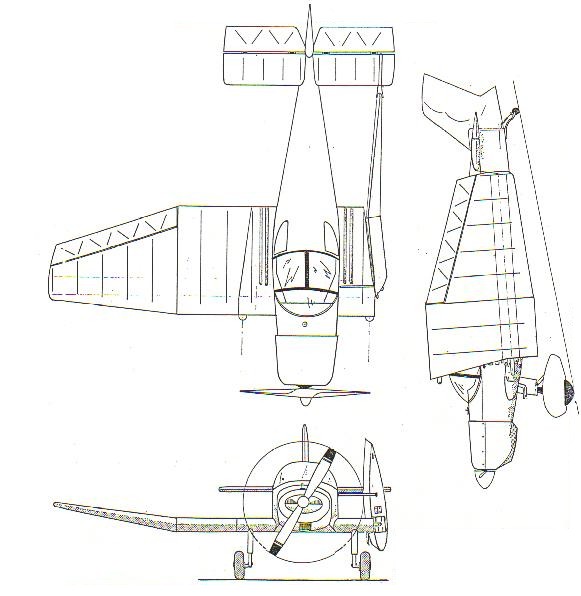
The Farman MF.1 was a cellular biplane with a 20m / 66 ft wingspan, powered by a 40 hp REP engine.
In 1911, piloted by Fourny, it beat the world record for flight duration with a flight of 2 hr 1 min 29 sec.
The Farman MF.1 was a cellular biplane with a 20m / 66 ft wingspan, powered by a 40 hp REP engine.
In 1911, piloted by Fourny, it beat the world record for flight duration with a flight of 2 hr 1 min 29 sec.
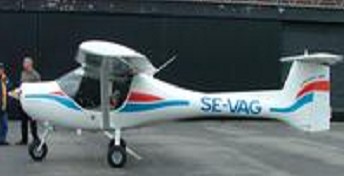
Modern two seat microlight aircraft that are unique for its very good aerodynamics, excellent flight qualities and a high economy of operation.
Carefully designed shape of the fuselage that is made of glassfibre laminate and its high quality surface provide minimum air resistance and minimum sensibility to side wind. The wings, as well as the tail plane are of metal construction covered in part with fabrics. The centre section of the wing is welded from steel tubes.
Aircraft have a uniquely spacious cabin, which guarantees comfort namely in long cross-country flights.
The position of the control stick between the seats makes getting in and out very comfortable. Large surface organic glass cover of the cabin offers a very good view.
The Allegro is equipped with a Verner engine but can also take a Rotax 582.

LSA America took over the construction of the European-introduced Allegro LSA. The composite/aluminum Allegro comes in three versions: Classic Trainer, Voyager and Executive. It’s full-fuel payload is 580 pounds. Prices 2012: $89,000 (Classic Trainer); $94,000 (Voyager); $99,000 (Executive).
Stall: 35 kt / 40 mph / 65 kmh
Cruise: 86 kt / 99 mph / 160 kmh
VNE: 119 kt / 137 mph / 220 kmh
Empty Weight: 285 kg / 628 lbs
MTOW Weight: 450 kg / 992 lbs
Climb Ratio: 1000 ft/min / 5 m/s
Glide Ratio: 1:12
Take-off distance (50ft obstacle): 820 ft / 250 m
Landing distance (50ft obstacle): 720 ft / 220 m
Allegro
Engine: Werner 1400, 80 hp
Wing span: 10.6 m
Wing area: 15.2 sq.m
MAUW: 450 kg
Empty weight: 260 kg
Fuel capacity: 50 lt
Max speed: 162 kph
Cruise speed: 130 kph
Minimum speed: 50 kph
Certification: vVz
Seats: 2

The Comper Scamp or Fly was not completed and Capt. Gerard Fane, a supporter of Comper, redesigned the design with was in 1940 build and flown in 1941, the Fane F.1/40.
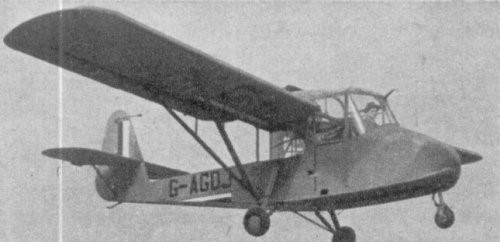
The Fane F.1/40 was a 1940s British Air Observation Post aircraft design by Captain Gerald Fane’s Fane Aircraft Company. The Comper Scamp or Fly was not completed and Capt. Gerard Fane, a supporter of Comper, redesigned the design to Air Ministry specification F.1/40. The Scamp had been designed by Nicholas Comper as a two-seater but he had not built it but redesigned it as a single seater, the Comper Fly. Fane took the Scamp design and reworked it as the F.1. It was of pusher configuration with a high wing set behind the pilot.

A single example of the Fane F1 (later f1/40), registered G.AGDJ, serial number T1788 was flown and tested by the Air Ministry at Heston Aerodrome on 21 March 1941.

It was in competition with the General Aircraft GAL.47 but neither were selected for service use. In September 1941 the F.1/40 was registered G-AGDJ as the Fane F1 to the builders, but was scrapped sometime during the war.

Engine: 1 × Continental A-80, 80 hp (60 kW)
Wingspan: 37 ft 0 in (11.28 m)
Length: 23 ft 5 in (7.14 m)
Max takeoff weight: 1,500 lb (680 kg)
Crew: 2

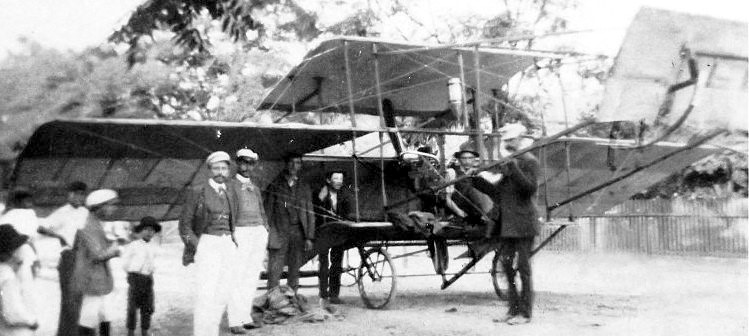
Károly Faludi (1872-1974), more known as an actor and singer later in his life, built two airplanes, powered by a 25 hp three-cylinder engine. One was a monoplane and one was a biplane, both with a raised central wing surface. They both crashed at their first test flights in Nagikanizsa in southwest Hungary, the first in the summer and second in October of 1910.

The 1909 Faludy III biplane was designed and built by Karoly Faludy in Hungary.
Span: 25’7″
Length: 22’8″
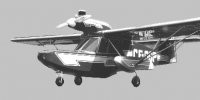
The Falconar Teal was a two-seat homebuilt, amphibious airplane designed by Chris Falconar of Edmonton, Alberta, Canada.
The Teal was based on the two- or three-seat AMF Maranda, and was built mostly of wood. It featured strut-braced high wing, with “W” configuration struts running from the wing roots, down to stabilizing floats (which also contained the main wheels), then back up the wings near 70% span; cruciform tail; two pilots seated side by side under the wing; access to the cockpit by side doors; tricycle undercarriage with the main wheels retracting into stabilizing floats only about 25% of the wing span. The nosewheel retracted into the bow and was covered by two conventional (side-hinged) doors. A rarity among flying boats was its engine location in a nacelle, above the wing, with the propeller rotating immediately in front of the windscreen.
The Teal was first flown in December 1967.
From the 1970s to the 1990s plans were sold by Falconar Aviation of Edmonton (downtown municipal airport). A handful were built by amateur aircraft constructors (aka homebuilders) in Canada and the United States. Most were powered by certified Lycoming or Continental engines.
Engine: 1 × Lycoming O-320-B2A, 160 hp (120 kW)
Wingspan: 33 ft 0 in (10.06 m)
Wing area: 160 sq ft (15 sq,m)
Airfoil: NACA 4412 (modified)
Aspect ratio: 6.6:1
Length: 24 ft 6 in (7.47 m)
Height: 7 ft 10 in (2.39 m)
Empty weight: 1,050 lb (476 kg)
Max takeoff weight: 1,500 lb (680 kg)
Maximum speed: 130 mph (210 km/h, 110 kn)
Cruise speed: 125 mph (201 km/h, 109 kn) (max cruise)
Stall speed: 37 mph (60 km/h, 32 kn)
Never exceed speed: 185 mph (298 km/h, 161 kn)
Range: 450 mi (720 km, 390 nmi) standard fuel
Ferry range: 700 mi (1,100 km, 610 nmi)
Service ceiling: 16,400 ft (5,000 m)
Rate of climb: 1,100 ft/min (5.6 m/s)
Crew: 1
Capacity: 1 passenger
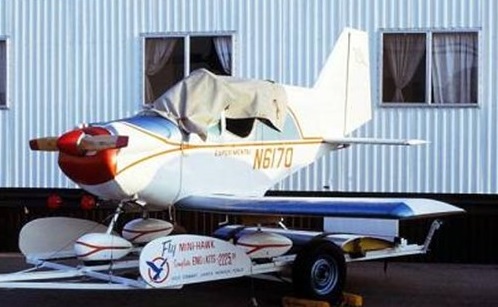
The Falconar Minihawk is a Canadian amateur-built aircraft, produced by Falconar Avia. The aircraft is supplied as a kit (US$11,600 kit only, less engine, 1998) or plans for amateur construction.
The aircraft features a cantilever low-wing, a two-seats-in-side-by-side configuration enclosed cockpit under a sliding canopy, fixed tricycle landing gear or, optionally, conventional landing gear, and a single engine in tractor configuration.
The Minihawk is made from wood, with its flying surfaces covered in doped aircraft fabric. The aircraft’s recommended engine power range is 65 to 100 hp (48 to 75 kW) and standard engines used include the 100 hp (75 kW) Continental O-200 four-stroke powerplant. Construction time from the supplied kit is estimated as 1500 hours.
Even though a prototype was constructed, by November 2012 no examples were registered in its home country with Transport Canada.
On June 30, 2019, Falconar Avia Inc closed for business and assets dissolved. The Master Sets (Original Drawings, Plans, Info Kits, Documentation) sold included the F-9, F-10, F-11A, E, and E2, F-12A, and Minihawk Series to Manna Aviation
Minihawk
Engine: 1 × Continental O-200, 100 hp (75 kW)
Propellers: 2-bladed metal
Length: 18 ft 0 in (5.49 m)
Wingspan: 25 ft 6 in (7.77 m)
Wing area: 106 sq ft (9.8 m2)
Empty weight: 645 lb (293 kg)
Gross weight: 1,070 lb (485 kg)
Fuel capacity: 15 U.S. gallons (57 L; 12 imp gal)
Maximum speed: 128 mph (206 km/h; 111 kn)
Cruise speed: 115 mph (100 kn; 185 km/h)
Stall speed: 50 mph (43 kn; 80 km/h) flaps down
Range: 570 mi (495 nmi; 917 km)
Rate of climb: 1,350 ft/min (6.9 m/s)
Wing loading: 10.0 lb/sq ft (49 kg/m2)
Crew: one
Capacity: one passenger
Cockpit Width: 40 in (102 cm)
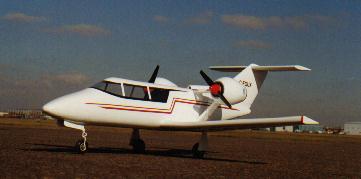
The MASTER X has been in conceptual development for a number of years. It was conceived to be a different kind of home built aircraft seating two in tandem. The philosophy of being different is consistent with earlier designs.
STOL (short take-off & landing) like performance, combined with the retractable landing gear for maximum efficiency and powerful twin engines mounted on pods aft of the cabin or a single engine in fuselage with belt-driven props.
Wing span: 30 ft.
Wing area: 127 sq.ft
Gross weight: 1450 lbs.
Cruise speed: 135 mph
Range: 740 mi.
Stall: 45 mph
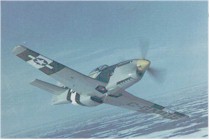
A 2/3 scale P-51 Mustang with a basic structure of all wood with fiberglass cloth and HIPEC® on the exterior. All ribs, bulkheads and most parts shown full size in professionally drawn plans. Construction manuals included. Features include jettisonable canopy, removable fiberglass belly scoop, electric or manual flaps, and electric or manual tailwheel retract. The basic plan set (450 sq ft of plans – 13 lbs) includes general construction manual on gluing, scarfing, wood protection and finishing, weight & balance forms, material list, bulletins to date, fin & stab fairings drawings.
In 2000 Falconar Avia produced supplemental plans for a P-51B two-seater. The new plans depict the turtle-deck and canopy otherwise it is identical to the basic two-seater.
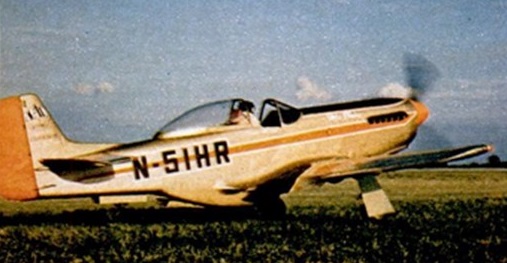
The turtle-deck structure involves elliptical cross-section skin formers. Then the double-curvature skin section is a fibreglass and resin composite piece. The turtle-deck sides are simple skins of 1.5-2mm birch ply, covered in 2 oz fibreglass cloth.
In 2010 SAL 2/3 Scale P51 (two tandem seating) plans cost US$670, and 2/3 Scale P51 (single seat) US$480.
On June 30, 2019, Falconar Avia Inc closed for business and assets dissolved. The Master Sets (Original Drawings, Plans, Info Kits, Documentation) were available for sale and full transfer of rights included the 2/3 Mustang P51 and P51 T for $20,000 USD.
Engine: Ranger 6-440-C5.
HP range: 175-260.
Speed max: 258 mph.
Height: 7 ft.
Length: 22.5 ft.
Wing span: 24.8 ft.
Wing area: 110 sq.ft.
Fuel cap: 36 USG.
Weight empty: 1420 lb
Gross: 1985 lb
Vne: 258 mph
Cruise: 170 mph.
Range: 575 sm.
Stall: 60 mph.
ROC: 1850 fpm.
Landing dist: 700 ft.
TO dist: 700 ft.
Service ceiling: 17,400 ft.
Seats: 1-2.
Cockpit with: 24 in
Landing gear: retractable tail wheel.
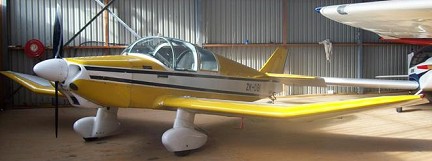
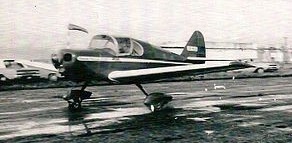
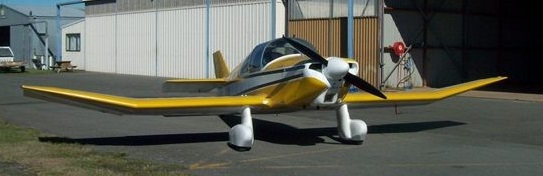
The Falcon Avia F9, F10, F11 and F12 series are derived from famous Jodel D9 and D11 from France – Cockpits larger, simplified fittings, shoulder harness, safer stall.
The F12 plans have step by step manuals, full size layouts for ribs, bulkheads and small parts. Built of wood and plywood for ease of construction, no expensive or unique tools are required. The are a minimum of metal fittings – under 32 fittings assemblies. Equipped with maintenance free Delrin bearings and stainless steel hardware for control surfaces, the wing and tail easily removable.
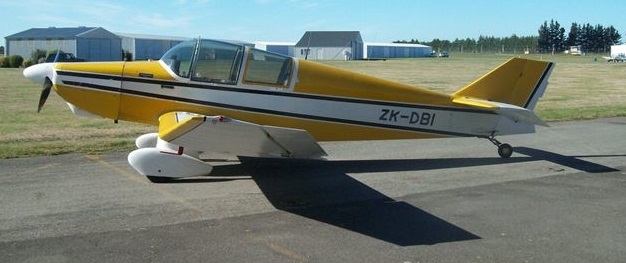
This aircraft is basically a beefed-up Jodel design constructed from plans redrawn in Canada by Falconar Aircraft. A more powerful engine of up to 200 hp can be fitted, but the main distinguishing feature is its rather chopped-looking sloping tailplane and rudder.
The F12A “CRUISER” is slightly larger than the F11A for more comfort and third seat option. For Lycoming and similar engines 125 to 200 hp.
Options include flaps, vertical coil spring main landing gear, tri gear, auxiliary tanks, 3 piece folding wing, and floats.
In 2010 F Series plans for the F12A cost US$220.00.
On June 30, 2019, Falconar Avia Inc closed for business and assets dissolved. The Master Sets (Original Drawings, Plans, Info Kits, Documentation) sold included the F-9, F-10, F-11A, E, and E2, F-12A, and Minihawk Series to Manna Aviation
F-12A
Engine: Lycoming O-320, 150 hp.
HP range: 100-180.
Vne: 185 mph.
Cruise: 160 mph.
Range: 560 sm.
Stall: 41 mph.
ROC: 1100 fpm.
Take-off dist: 300 ft.
Landing dist: 500 ft.
Service ceiling: 17,000 ft.
Fuel cap: 22 USG.
Weight empty: 898 lbs.
Gross: 1800 lbs.
Height: 6.3 ft.
Length: 22.5 ft.
Wing span: 28 ft.
Wing area: 140 sq.ft.
Seats: 2-3.
Landing gear: nose or tailwheel.
F-12A
Engine: Lycoming O-235, 115 hp.
Cruise: 120 mph.
Climb: 1000 fpm.
Span, 27ft 6ins
Length, 23ft
Empty weight: 800lbs
MTOW: 1500 lbs
Seats: 2.
Fuel burn @ cruise: 24 lt/hr.
Cockpit width: 44 in
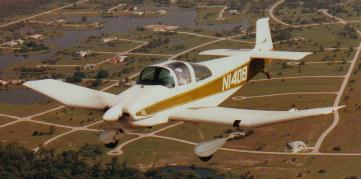
The Falcon Avia F9, F10, F11 and F12 series are derived from famous Jodel D9 and D11 from France – Cockpits larger, simplified fittings, shoulder harness, safer stall.
The F11 plans have step by step manuals, full size layouts for ribs, bulkheads and small parts. Built of wood and plywood for ease of construction, no expensive or unique tools are required. The are a minimum of metal fittings – under 32 fittings assemblies. Equipped with maintenance free Delrin bearings and stainless steel hardware for control surfaces, the wing and tail easily removable.
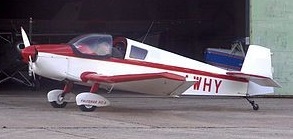
The F11A “SPORTY” is an easy to build, side-by-side 2 seater for Continental engines 65 to 100 hp.
Options include flaps, vertical coil spring main landing gear, tri gear, auxiliary tanks, 3 piece folding wing, and floats. The F-11A has a building time of 2000 4000 hours.
The F-11E has a reduced gross weight for lightweight 2 and 4 stroke engines 50 to 100 hp.
In 2010 F Series plans for the F11A cost US$200.00, and the F11E plans US$225.00.
The F11A Sporty is LSA legal.
On June 30, 2019, Falconar Avia Inc closed for business and assets dissolved. The Master Sets (Original Drawings, Plans, Info Kits, Documentation) sold included the F-9, F-10, F-11A, E, and E2, F-12A, and Minihawk Series to Manna Aviation
F-11A
Engine: Continental, 85 hp
HP range: 65-100
Height: 6.3 ft
Length: 22 ft
Wing span: 27.25 ft
Wing area: 138 sq.ft
Fuel cap: 17 USG
Weight empty: 715 lb
Gross: 1300 lb
Vne: 185 mph
Speed max: 135 mph
Cruise: 120 mph
Range: 546 sm
Stall: 35 mph
ROC: 800 fpm
Take-off dist: 250 ft
Landing dist: 300 ft
Service ceiling: 14,000 ft
Seats: 2
Landing gear: tail wheel
Take off distance: 250ft
Landing distance: 300ft
F-11A Sporty
Vne: 185 mph
Cruise: 120 mph
Stall: 35 mph
Range: 546 sm
Rate of climb: 800 fpm
Takeoff dist: 250 ft
Landing dist: 300 ft
Engine: Continental C-85, 85 hp
HP range: 60-130
Fuel capacity: 17 USG
Empty weight: 715 lb
Gross weight: 1300 lb
Length: 22 ft
Wing span: 27.3 ft
Wing area: 138 sq.ft
Cockpit width: 40 in
Landing gear: nose or tail
Seats: 2
F-11E
Vne: 140 mph
Cruise: 100 mph
Stall: 42 mph
Range: 640 sm
Rate of climb: 900 fpm
Takeoff dist: 260 ft
Landing dist: 250 ft
Engine: VW, 50 hp
HP range: 50-100
Fuel capacity: 17 USG
Empty weight: 600 lb
Gross weight: 1050 lb
Length: 21 ft
Wing span: 28 ft
Wing area: 140 sq.ft
Seats: 2
Cockpit width: 40 in
Landing gear: Tailwheel