Farman F.480 Alizé
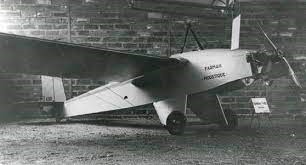
Shortly after the end of World War I, Farman introduced a low powered single seat monoplane for sport and tourism. It flew for the first time in May 1919 and was named the Moustique (in English, Mosquito). A little later, aircraft of this kind became known in the United Kingdom as motor gliders, the subjects of the first Lympne Trials of 1923. In 1922 one Aviette, without its engine, had already won prizes at a national glider competition. Three months before the Lympne Trials several Aviettes competed in an equivalent French meeting for moto-aviettes at Buc. The design was revived, over 17 years after its first appearance, as the F 450 Moustique and was one of the aircraft purchased by the French government as part of l’Aviation Populaire programme.
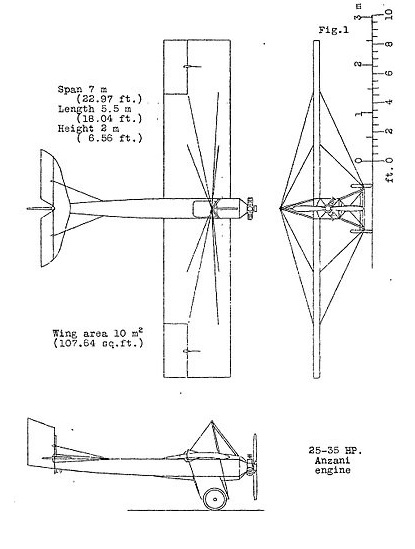
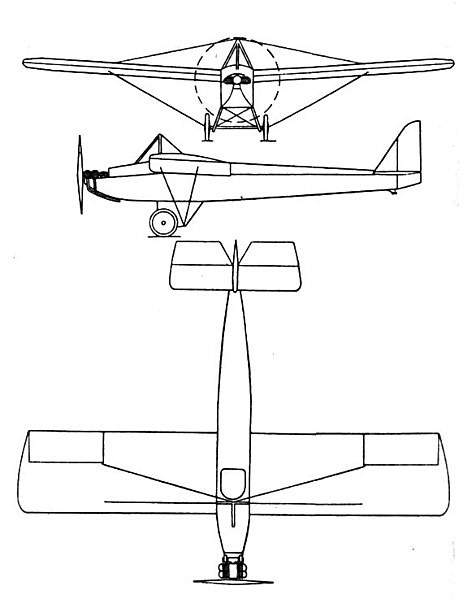
The original Moustique, later known as the Moustique I, was a shoulder wing monoplane. The wing was rectangular in plan, fabric covered and was wired braced from above and below. The upper wires were attached to a king post protruding from the raised, curved decking ahead of the cockpit and lower wires went to the undercarriage structure. The wings carried full span ailerons.
Behind the cockpit the fuselage, which reached up only to the pilot’s waist, was slender. It was square sectioned and covered with thin plywood. The parallel chord horizontal tail had separate elevators with the deep rudder moving between them. These surfaces were fabric covered and the rudder was round topped; there was no fixed fin. The undercarriage consisted of two parallel spruce panels mounted on the fuselage, bearing two mainwheels on a single axle. This first aircraft was powered by a 30 hp (22 kW) flat twin ABC Scorpion engine.
The first Moustique flew in May 1919, but by the following year its span had been reduced from 7.65 m to 5.0 m (from 25 ft 1 in to 16 ft 5 in), saving a little weight, and was known as the HF 206 or the HF206 Moustique I. No other Moustique had so short a span.
In 1922 a glider version called the Aviette had flown. This had an extended span of 10.50 m (34 ft 5 in) and an unladen weight of only 43 kg. It also had a deeper fuselage, allowing the pilot to sit with his head just clear of the upper surface, and a new upper wing bracing system with the bracing wires attached to the top of a tall, three post pylon, just in front of the pilot. It also had a reshaped rudder with a linear, rising top. It was the only Moustique type glider, but the fuselage, wing bracing and rudder modifications were carried forward into all later variants.
In 1923 three powered Aviettes were entered for the competition at Buc, Yvelines. All had an 18 hp (13 kW) engines but one aircraft had a 3-cylinder radial Salmson 3 Ad and the other two, 4-cylinder inline Sergant As.
The Moustique II or F 21 of 1924 was powered by a 35 hp (26 kW) 3-cylinder Anzani 3 A2 radial and had a wing with a span of 8.20 m (26 ft 11 in), fitted with short span ailerons. Two took part in the 1924 Tour de France.
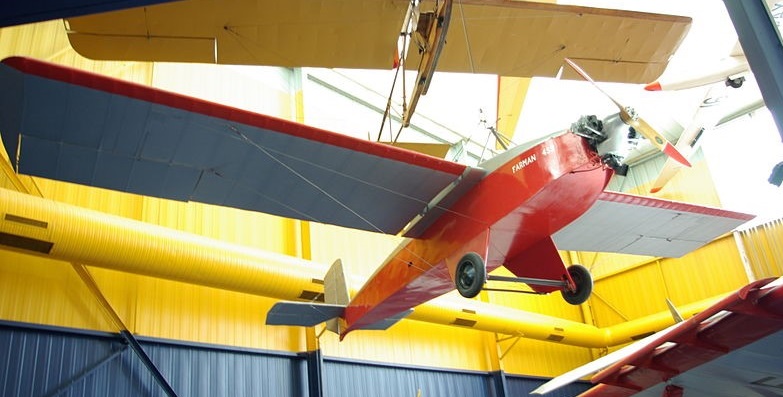
In the mid-1930s there was a government-driven revival of interest in low cost flying with the introduction of the Aviation Populaire programme. In response, Farman relaunched the Moustique with a slightly shorter span of 8.07 m (26 ft 6 in) and a longer fuselage. It first flew in December 1935. The first five prototypes were designated F 450 Moustique. The first was initially powered by a 35 hp (26 kW) Poinsard 2 Ca flat twin engine; later it, like the others had Mengin engines of the same type and power. A visual difference between this and earlier Moustiques was the presence of a normal fin, carrying a round-topped rudder. The production version, the F 451 Moustique, had a 25 hp (19 kW) AVA 4A-00 flat-four two-stroke. This variant was produced in much greater numbers (46) than any other Moustique.
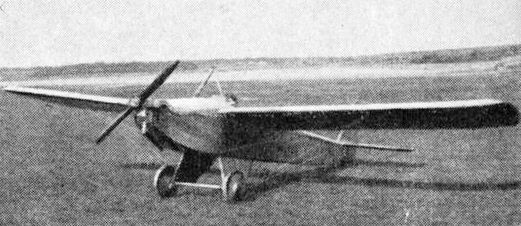
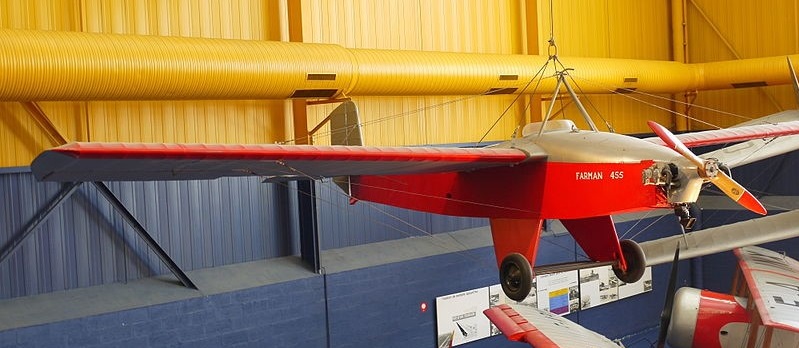
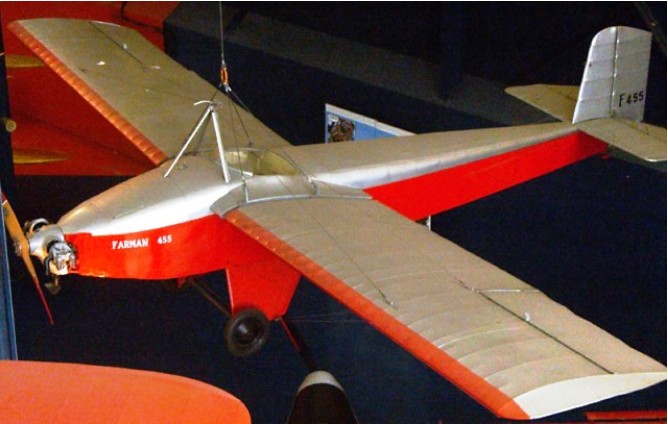
The last Moustique development was the two seat F 455 Super Moustique, initially called the Moustique III, which first flew in 1936. Its span was increased by 1.65 m (5 ft 5 in) and it had a more powerful 35 hp (26 kW) Mengin 2 A-01 engine. Only one was built; its performance in the climb was poor. The light aircraft section of the Farman works was shut down when the company was nationalised in March 1937.
During the early 1920s Farman entered Moustiques into several competitions. In August 1922 the first national French glider meeting, the Congrės expérimental d’aviation sans moteur, organised by the Association of French Flyers (AFF) and partly government-funded, was held in Combegrasse, Puy-de-Dôme. Farman entered two aircraft, the Aviette glider and a biplane (a de-motorised Farman FF 65); overall there were 17 contestants. The Aviette, piloted by Lois Bossoutrot, won several prizes in the competition between catapult-launched gliders, achieving the lowest sinking speed, the greatest altitude (80 m or 262 ft) and longest over-launch site duration of 3 min 30 s. The Aviette was placed second in the distance-covered contest, flying 5.28 km (3.28 mi). Over the fortnight-long event, the Aviette was in the air for 48 min 25 s.
In July 1923, three powered Aviettes competed at Buc, Yvelines for the Grand Prix de Motoaviette against eighteen other entrants. The competition was open to all aircraft with a maximum takeoff weight of less than 250 kg (551 pounds). There was a 125,000 FF prize for the fastest flight of 30 laps around a 10-kilometer (6.21-mile) course. The winner was Lucien Coupet in the Salmson-powered Aviette, covering 310 kilometers (192.5 miles) in 4 hours 37 minutes 19 seconds. No other aircraft could overcome the wind and rain.
A year later, Farman entered two MF 21 Moustique IIs into the Tour de France, an eight-stage contest organised by the AFF. Initial elimination trials in bad weather reduced the 15 entrants to a starting group of three for the Tour proper. The MF 21 flown by Maurice Drouhin was the only survivor by the end of the second stage, and he was declared the winner, having covered 1,807 km (1,123 mi) in 20 hr 40 min 27 s. Drouhin also won the Prix Solex, worth 50,000 FF in April 1925, flying the Salmson-powered Aviette. This required a flight from Paris to Rouen (about 120 kilometres or 75 miles) using less than 3 kg (6.6 lb) of petrol and oil.
In 1938 the first F 450 was used to test-fly a device called a gouvernes autoptères, invented by Marcel Granoli. Its purpose was to provide automatic lateral and longitudinal stability in the event of a momentary sideslip. The test showed only limited success.
Thirty-six of the 46 production F 451 Moustiques were bought by the state under their Aviation Populaire programme, intended to bring people from all walks of life into aviation and make pilots of them. Other F 451s were bought by individuals, partly attracted by the low costs: the aircraft sold at just under 20,000 FF. To make the Moustique attractive to the hunting fraternity, Farman advertised an optional rear locker “for the transport of a dog.”
Variants:
Moustique
Later Moustique I, one only.
Engine: Anzani, 25-30 hp
Wingspan: 7.65 m / 25 ft 1 in
Wing area: 10 sq.m / 107.64 sq.ft
Length: 5.5 m / 18.04 ft
Height: 2 m / 6.56 ft
HF 206
The original Moustique with wings cropped to a 5.0 m (16 ft 5 in) span.
Aviette
4 built with Salmson or Sergant engines. 10.50 m (34 ft 5 in) span. One converted to glider for Combegrasse competition. 3 entered for the competition at Buc
F 21 Moustique II
2 built with Anzani engines. 8.20 m (26 ft 11 in) span. Entered into Tour de France.
F 450 Moustique
1936 revival. 5 built with Poinsard or Mengin engines. 8.07 m (26 ft 6 in) span.
F 451 Moustique
Production version of F 450; 46 built
Engine: 1 × Ava 4A-00, 19 kW (25 hp)
Propeller: 2-bladed wooden Merville Srs.639
Wingspan: 8.07 m (26 ft 6 in)
Wing area: 10.50 m2 (113.0 sq ft)
Length: 6.40 m (21 ft 0 in)
Height: 1.90 m (6 ft 3 in)
Empty weight: 151 kg (333 lb)
Gross weight: 285 kg (628 lb)
Maximum speed: 130 km/h (81 mph, 70 kn)
Range: 350 km (220 mi, 190 nmi)
Capacity: 1
F 455 Super Moustique
Initially known as the Moustique III. Two side-by-side seat, dual control version. 1 built with Mengin engine. 9.72 m (31 ft 11 in) span.

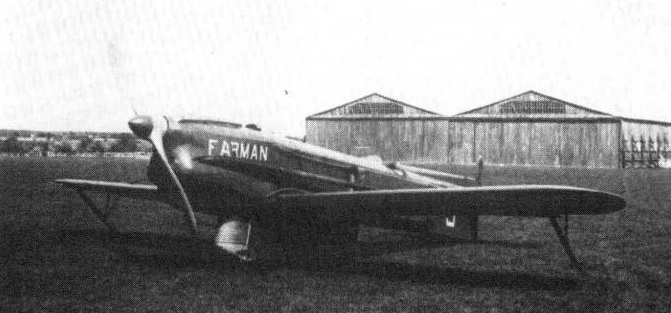

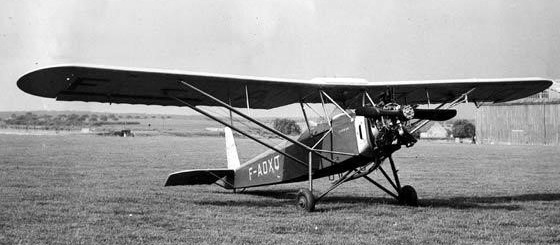
The Farman F.230 and its derivatives were a family of light touring aircraft first flown in France in 1930. They were low-wing cantilever monoplanes of conventional configuration, with fixed tailskid undercarriage and two open cockpits in tandem. The thick-section wing used on these designs was a distinguishing feature.
During the course of the 1930s decade, aircraft of this family held various world records in their class for speed, altitude, duration, and distance; the F.356 model alone held no fewer than 18 such records.
Typical of these exploits was Marcel Lalouette and Jean de Permangle’s long-distance flight on 12 January 1931, where they flew an F.231 from Istres, France, to Villa Cisneros, in colonial West Africa during which they covered 2,700 km (1,690 mi) in 22 hours and set a new distance record. In another feat, Jean Réginensi and André Bailly set three world airspeed records in October 1933 (over 100 km, 500 km, and 1,000 km) flying a F.239.
A Farman F.231 was featured in the Cigars of the Pharaoh, the fourth volume of The Adventures of Tintin comics series by Belgian cartoonist Hergé.
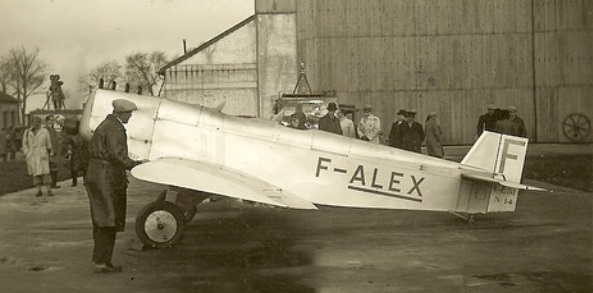
One of the first version with the Salmson 9ad 40 hp engine was flown by the then famous French aviator Lena Bernstein.
One of the F.231 flown by Marcel and Jean de Lalouett Permangl on January 12, 1931 broke the world distance record by flying 2700 km in 22 hours.
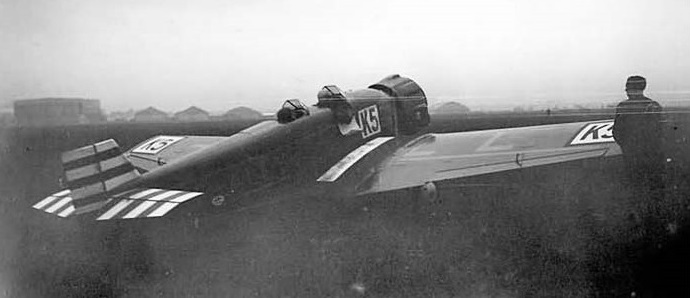
A float equipped F.231 crashed in 1931 while trying to break the world record and the F.239 (1 Pobjoy R) piloted by Jean Redzhinensi and Andre Baylli, set three world speed records for light aircraft.
The Spanish Republican Air Force operated F.354.

Variants:
F.230 – initial version with Salmson 9Ad engine, (11 built)
F.230bis – conversion of F.230 (1 converted)
F.231 – version with Renault 4Pb engine (47 built)
F.231bis – seaplane version of F.231 (1 converted)
F.232 – version with Michel IV-AT3 engine (4 built)
F.233 – version with de Havilland Gipsy I engine (1 built)
F.234 – version with Salmson 7Ac engine (16 built)
F.235 – version with Hispano-Suiza 6Pa engine (1 built)
F.236 – version with Salmson 9Ad engine (4 built)
F.237 – similar to the F.235, but powered by a 100-hp (75-kW) Renault engine.
F.238 – version with de Havilland Gipsy III engine (1 built)
F.239 – version with Pobjoy R engine (1 built)
F.350 – version with Renault 4Pb engine (2 built, plus 4 converted from F.231)
F.351 – version with Renault 4Pb engine and enclosed cabin (1 built, plus 1 converted from F.231)
F.352 – version with Salmson 7Ac engine (1 built, plus 1 converted from F.234)
F.352H – seaplane version of F.352 (1 built, plus 1 converted from F.234)
F.353 – version with de Havilland Gipsy III engine (1 built)
F.354 – version with de Havilland Gipsy I engine (1 built)
F.355 – version with Renault 4Pdi engine (1 built)
F.356 – version with Renault 4Pc engine (1 built)
F.357 – version with Renault 4Pdi engine (1 built)
F.358 – version with Hispano-Suiza 6Pa engine (1 built)
F.359 – version with de Havilland Gipsy III engine (1 built)
F.360 – version with Salmson 9Ad engine (1 built)
F.361 – version with Salmson 9Adr engine (2 converted from F.236)
Specifications:
F.230
Engine: Salmson 9Ad , 40 hp
Wingspan: 10.8 m
Length: 5.58 m
Take-off weight: 445 kg
Top speed: 150 km / h
Range: 450 km
F.230bis
Engine: Salmson 9Ad , 40 hp
Wingspan: 10.31 m
F.231
Engine: 1 × Renault 4Pb, 71 kW (95 hp)
Length: 6.13 m (20 ft 1 in)
Wingspan: 9.14 m (30 ft 0 in)
Height: 2.13 m (7 ft 0 in)
Wing area: 15.8 m2 (170 ft2)
Empty weight: 411 kg (906 lb)
Gross weight: 678 kg (1,495 lb)
Maximum speed: 186 km/h (116 mph)
Range: 450 km (280 miles)
Service ceiling: 5,000 m (16,400 ft)
Crew: One pilot
Capacity: 1 passenger
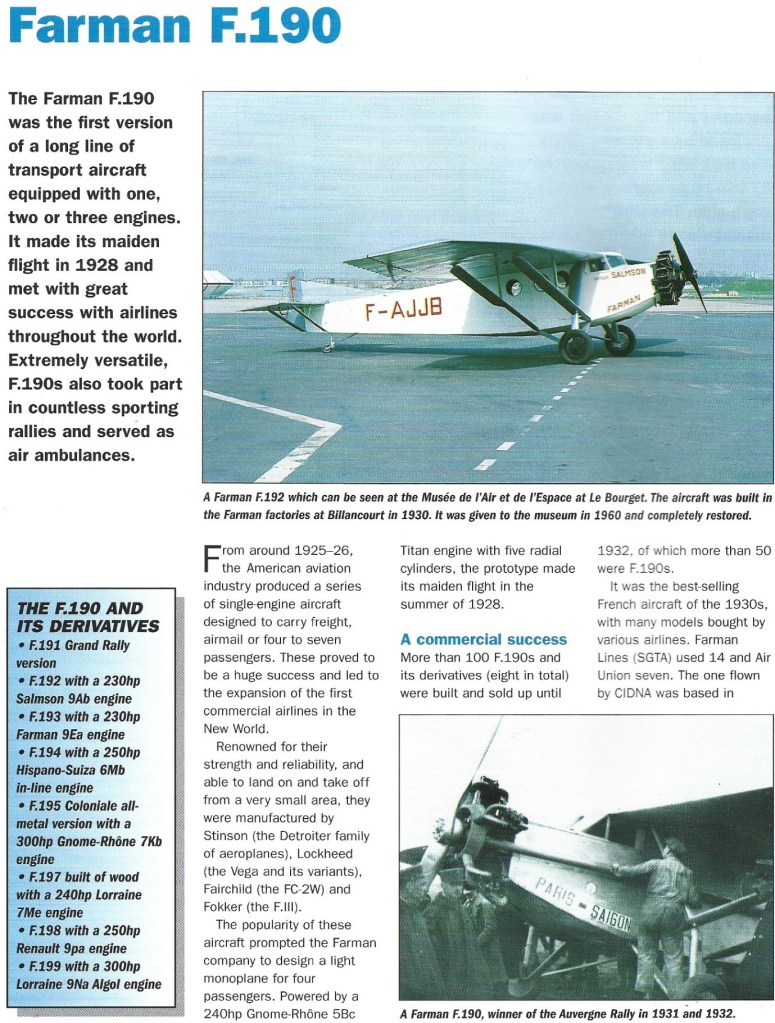
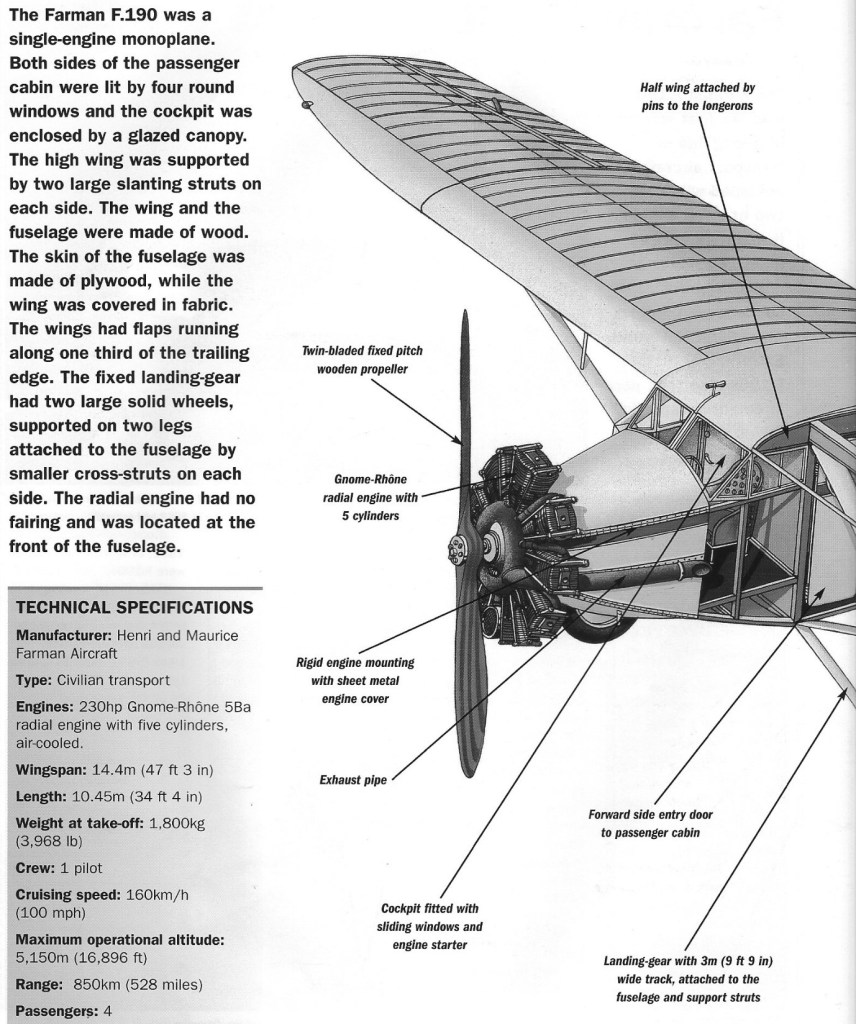
Farman F.190 Article
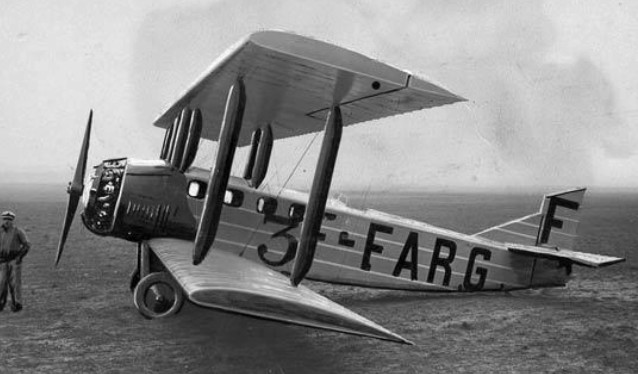
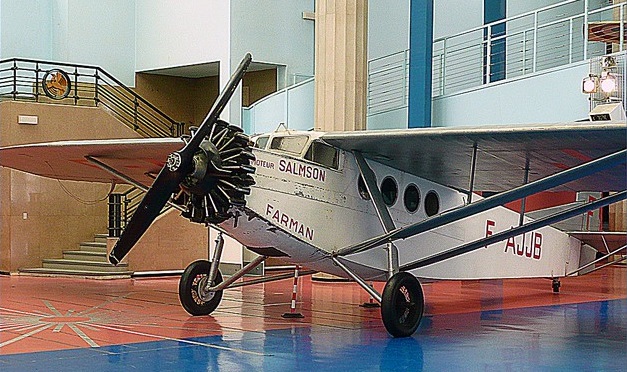
The Farman F.90 passenger transport first flew in 1921. It was a single engine, single bay biplane with unstaggered, rectangular wings and ailerons on the upper wings only. The interplane gap was large, with the upper plane held high above the fuselage by a set of four vertical centre section struts. The interplane struts were also simple parallel pairs. Its tailplane and elevators were fixed to the top of the fuselage; it had a triangular fin and a rudder with a tip at the same angle but vertically displaced, producing a nick in the leading edge.
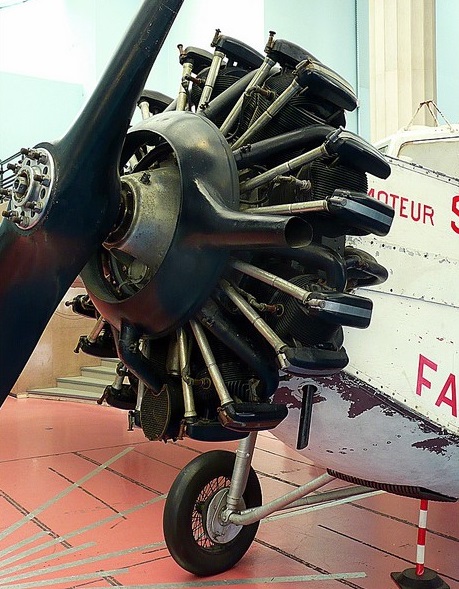
The F.90 was initially powered by a 260 hp (194 kW) Salmson AZ 9 9-cylinder radial engine, neatly enclosed in a short nose. The fuselage was deep and flat sided, though with a slightly rounded decking. The passenger compartment, with four small windows on each side, began near the wing leading edge and stretched aft a little beyond the trailing edge. The pilot had an open cockpit behind the cabin with a clear forward view under the high wing. The F.90 had a conventional undercarriage with single mainwheels under the wing leading edges and a rear skid.
Flight trials began in 1921, conducted by Farman pilots Lucien Coupet and Jules Landry. By 1923 the Salmson radials had been updated from the mark AZ to CM for its appearance the Zenith Cup competition of that year. It was re-engined again, this time with 380 hp (283 kW) Bristol Jupiters, for the same competition in 1926. This change came with a new type number, F.91. Only one F.90/1 was built.
The F.90/1 won several Cups but no orders. It won the 1922 Grand Prix de Paris, the only single engine aircraft amongst five competitors, where it was flown by Louis Boussoutrot and his mechanic, Henri Carol. This contest included a 600 km (370 mi) circuit, which the F.90 completed at an average speed of 144.4 km/h (89.7 mph), and rewarded Farman with FF 80,000 and a statuette.
It appeared in the Zenith Cup, a fuel consumption competition funded by the Société du Carburateur Zenith, twice, winning it both times. This competition required the contestants to make out and return flights from Paris to Lyon and back on successive, prescribed days. The round trip distance was 770 km (480 mi). The winner was the aircraft that used the least fuel for the load it carried, measured by the ratio of weight of fuel used to weight of useful load. In 1923 there were nine entrants, though three were non-starters. On 21-22 July 1923, fitted with its new Salmson CM 9 engines and flown by Boussoutrot, it won with a fuel to load ratio of 0.475, well ahead of the 0.616 of the runner-up, a Potez VIII A two-seater.
Three years later, on 3-4 July, the same machine, now the F.91 with Bristol Jupiters and Bristol Triplex carburettors, was one of seven competitors. The Farman, flown by Maurice Drouhin, won again with a much improved fuel to load ratio of 0.253, though the runner-up, a Caudron was close behind at 0.256. Each win gained Farman the Cup plus the first prize of FF 30,000; in 1926 at least the winning pilot also got FF 3,000.
Only the one example was ever built.
F. 90
Engine: 1 × Salmson AZ 9, 190 kW (260 hp)
Propellers: 2-bladed
Wingspan: 14.03 m (46 ft 0 in)
Wing area: 66.80 m2 (719.0 sq ft)
Length: 9.30 m (30 ft 6 in)
Height: 3.86 m (12 ft 8 in)
Empty weight: 1,100 kg (2,425 lb)
Gross weight: 2,350 kg (5,181 lb)
Maximum speed: 180 km/h (112 mph; 97 kn)
Range: 70 km (43 mi; 38 nmi)
Crew: 1
Capacity: 6 passengers
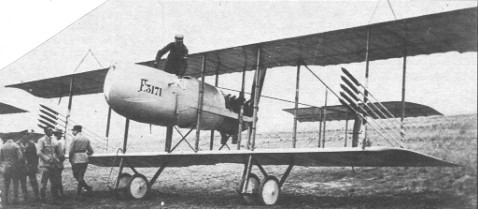
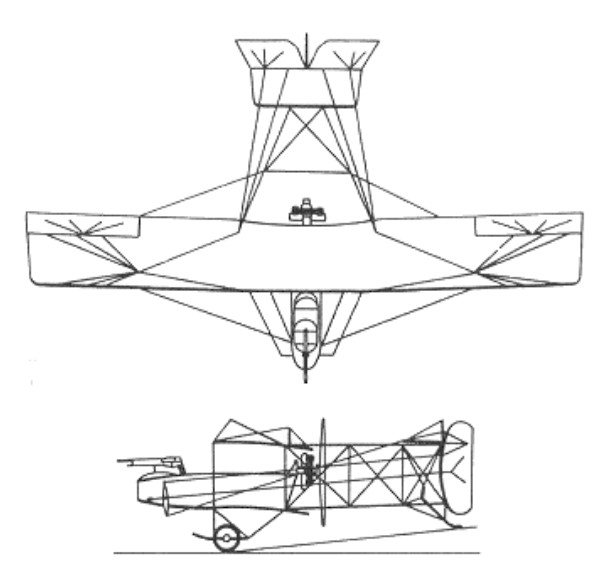
The last important pusher type produced by Henry and Maurice Farman was the F.40 and F.41 reconnaissance bombers, produced by the brothers’ new joint company at the end of 1915.
It derived from the F.30, the F.40 was a more refined aircraft, again with the gunner in the nose with a Hotchkiss or Lewis and the pilot seated behind. The usual engine was the 160 hp Renault V 8. The F.41 had a shorter span, less powerful Renault engine and reduced performance. The F.40 and 41 were used in large numbers by the Aviation Militaire, equipping 47 escadrilles on the Western Front and in Macedonia. Even in 1916 they were no match for enemy scouts, and many were lost. By 1917, they were used mainly by night, and continued in use until the Bre.XIV became available in numbers late in that year.
A few F.40s (F.40P) were armed with Le Prieu rockets and used against balloons.
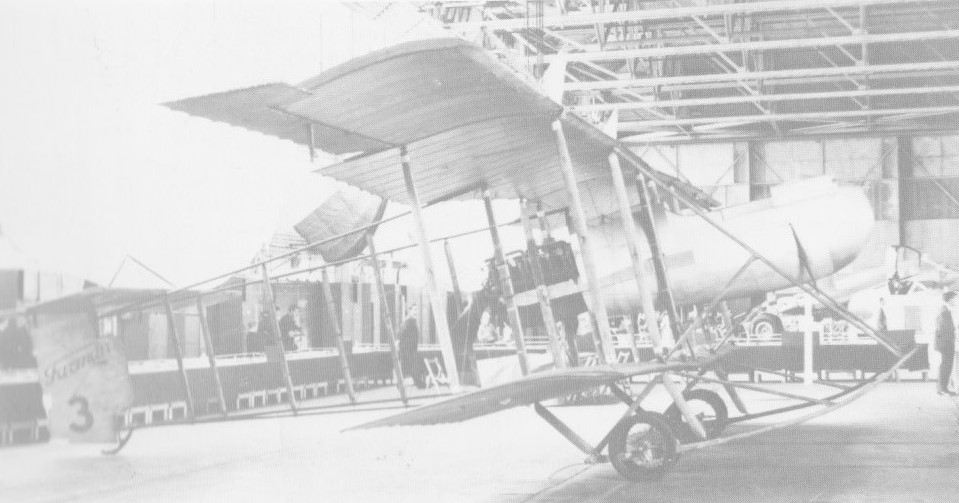
F.40
Engine: Renault, 130 hp
Span: 17.60 m (57 ft 10 in)
Length: 9.25 m (30 ft 4 in)
Gross weight: 1120 kg (2470 lb)
Maximum speed: 135 km/h (84 mph)
Most of the F.30 were built under licence in Russia, though the French Aviation Militaire may also have used small numbers of the F.30B 2 type (B 2=bomber, two seats) with the 260 hp Canton Unne (Salmson) radial. The Russian model usually had the 160 hp version of this engine.
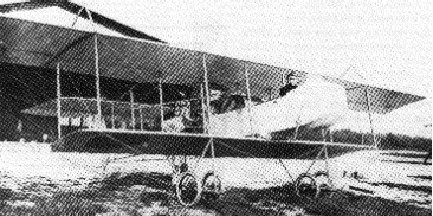
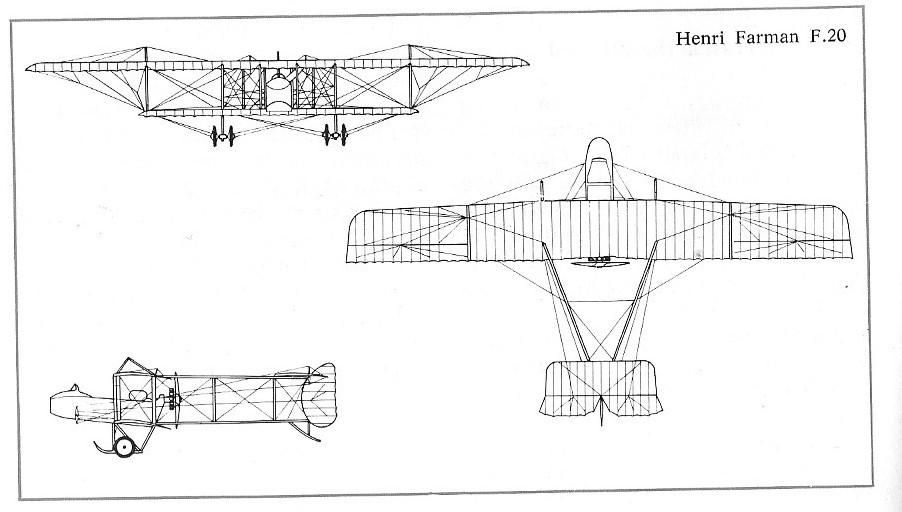
The two-seat H.F.20 was in service with the French and Belgian military in 1913 and was basically a refined “Shorthorn”, with a 59.6kW Gnome rotary engine driving a pusher propeller. With the outbreak of World War I the type was used also by the British air services for scouting and light bombing but achieved only marginal success as a reconnaissance type and then trainer.
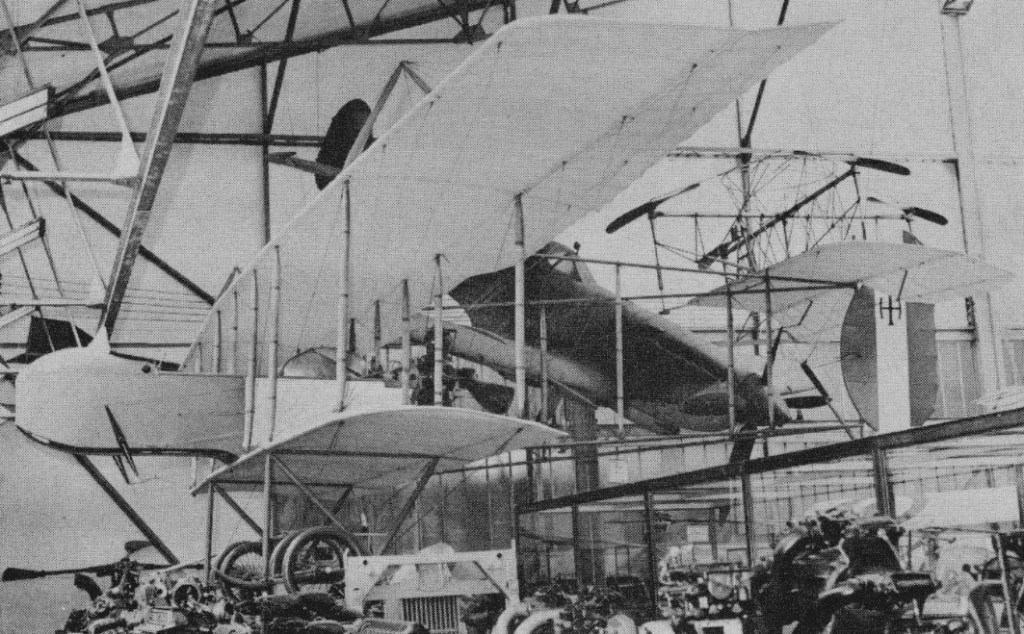
By substituting the Gnome for a Le Rhone engine of similar power it was hoped to extend the aircraft’s capabilities, but the resulting H.F.21 was obsolete. In a final attempt to rectify the tremendous lack of power the H.F.27 was developed with a 104.3kW or 119kW Canton-Unne engine – as fitted to the equally light but far more successful early Voisin types. The resulting aircraft was sufficiently promising to be deployed on secondary war fronts.
Engine: 1 x Gnome, 59kW
Max take-off weight: 660 kg / 1455 lb
Empty weight: 360 kg / 794 lb
Wingspan: 14.0 m / 45 ft 11 in
Length: 8.3 m / 27 ft 3 in
Height: 3.2 m / 10 ft 6 in
Wing area: 35.0 sq.m / 376.74 sq ft
Max. speed: 110 km/h / 68 mph
Ceiling: 315 m / 1050 ft
Range w/max.fuel: 250 km / 155 miles
Armament: 1 machine-guns
Crew: 2
HF.20
Engine: Gnome 7A. 80 hp
Wingspan: 44 ft 10 in / 15.54 m
Length: 27 ft 9 in / 8.79 m
Height: 10 ft / 3.1 m
Weight: 1565 lb / 710 kg
Max speed: 65 mph / 100 kph at SL
Ceiling: 9022 ft / 2750 m
Endurance: 3 hr 20 min
Armament: 1 x mg
Crew: 2