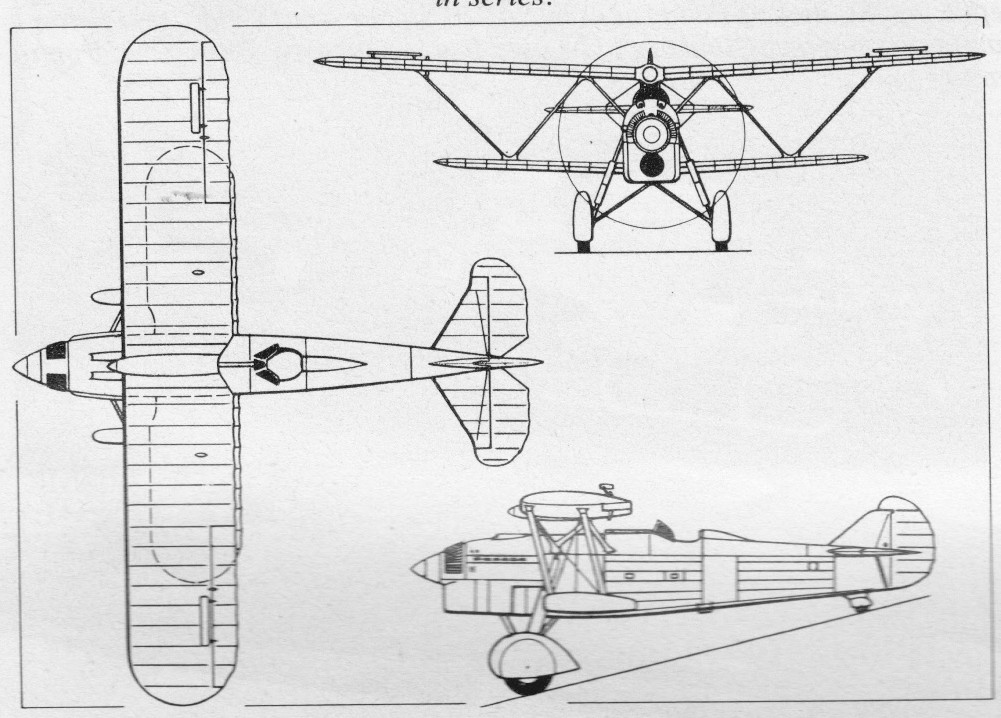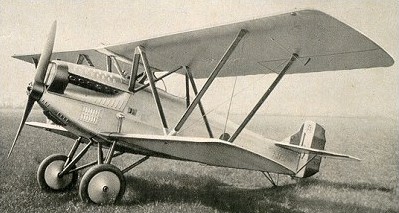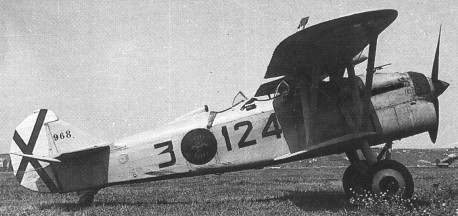
Fiat CR.32 / Hispano HA-132-1 Chirri

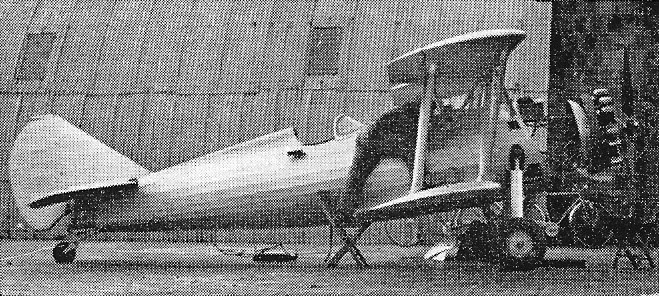
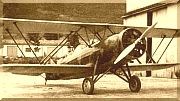
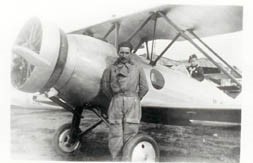
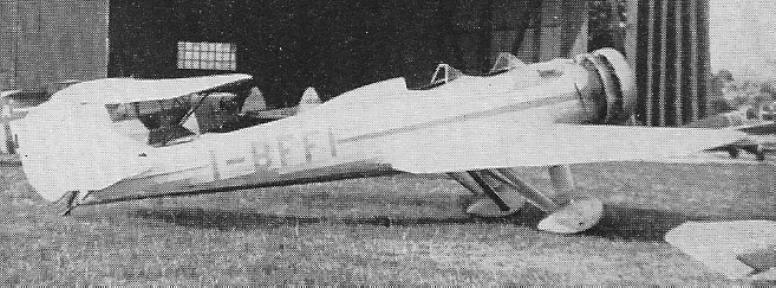
Italy’s most important fighter of the late 1930s, the CR32 biplane was first flown in August 1933 as a development of the CR30 using the same type of metal/fabric-covered all-metal structure and Warren-type interplane bracing but with smaller overall dimensions plus improved performance and agility, and Fiat A 30 RA engine.

First flown on 28 April 1933, the initial production series of 24 was supplied to China. Between March 1934 and February 1936, 282 CR.32s were delivered to the Regia Aeronautica and this fighter first saw active service in the Spanish Civil War with the Aviacion del Tercio in August 1936.

Fiat CR.32 Article

The CR.32 was numerically and operationally the most important fighter fielded by the Nationalists and their Italian allies in the Spanish Civil War, and the first 12 examples reached Nationalist units in Morocco as early as August 1936. A total of 377 of this type were sent to Spain, where they equipped the Nationalists’ 2-G-3 and 3-G-3 fighter units as well as five Italian gruppi. The CR.32 was faster in level flight and in the dive than the 1-15, and was also better armed when there arrived the CR.32bis and CR.32ter with heavier machine-guns; and by comparison with the -16 the CR.32 was more agile and more heavily armed. By a judicious use of tactics, therefore, Nationalist and Italian pilots were generally able to prevail over the Republican fighters.

The initial CR.32 delivered in 1935 had the 447-kW (600-hp) Fiat A.30 RAbis engine and two 7.7-mm (0.303-in) machine-guns, and these 350 aircraft were followed by 283 examples of the CR.32bis close-support version.

The CR.32bis had the improved 600 hp A 30 Rabis engine, two 12.7 mm and two 7.7-mm (0.303-in) machine-guns

Forty-five similar examples were supplied to Austria and 52 to Hungary (who eventually acquired 38 from Austria).

Next came 150 examples of an improved CR32, the CR.32ter for the Regia Aeronautica in July-December 1937, with revised landing gear and improved equipment, and the final aircraft here 337 CR.32quater fighters essentially similar to the CR.32ter but with a lightened structure and updated equipment.
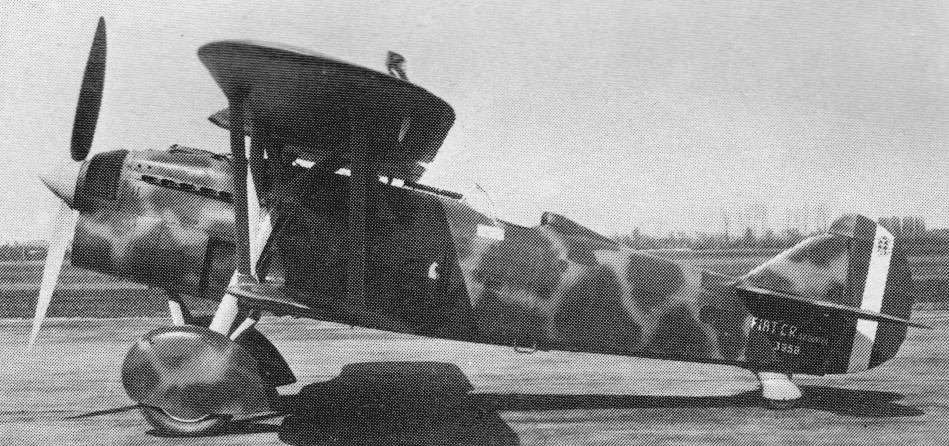
CR.32quarer

Examples similar to the V were purchased by Paraguay (5) and Venezuela (9).

It was used in the early months of World War II in Greece and East Africa.

Hispano Aviacion SA manufactured over 100 Fiat CR. 32quater biplane fighter as the HA-132-1 Chirri between 1938- 1942. Forty of these later converted as two-seters.

Production of the CR.32 totalled 1211 aircraft.

FIAT CR 32 Chirri
Engine: FIAT A.30 RAbis, 592 hp / 440kW
Length: 24.442 ft / 7.45 m
Height: 8.629 ft / 2.63 m
Wingspan upper: 31.168 ft / 9.5 m
Wingspan lower: 6.2 m / 20 ft 4 in
Wing area: 237.884 sqft / 22.100 sq.m
Max take off weight: 4079.3 lb / 1850.0 kg
Weight empty: 2921.6 lb / 1325.0 kg
Max. speed: 202 kts / 375 km/h / 233 mph
Service ceiling: 28871 ft / 8800 m
Wing loading: 17.22 lb/sq.ft / 84.0 kg/sq.m
Range: 367 nm / 680 km
Crew: 1
Armament: 2x MG 7,7mm Breda-SAFAT

CR.32bis
Engine: l x Fiat A.30 RAbis, 447 kW (600 hp).
Span: 9.50m (3lft 2.25in).
Length: 7.47m (24ft 6in)
Normal T/O weight: 1975 kg (14,350 lb).
Max speed: 224 mph at 9,845 ft.
Operational range: 466 miles.
Armament: 2 x 12.7-mm (0.5-in) and two 7.7-mm (0.303-in) mg plus 100 kg (220 lb) of bombs

CR.32ter
Engine: l x Fiat A.30 RA bis, 447kW (600 hp).
Span: 9.50m (31ft 2in).
Length: 7.45m (24ft 5.25 in).
Height: 2.63m / 8 ft 7.5 in
Wing area: 22.10 sq.m / 237.88 sq.ft
Empty weight: 3205 lb / 1454 kg
Max T/O weight: 1915kg (4,222 lb).
Max speed: 295 mph / 330 kph at SL / 220 mph at 9840 ft. / 3000 m
Time to 3280ft / 1000m: 1.58min
Operational range: 485 m / 780 km at 196 mph / 315 kph
Armament: 2 x 12.7-mm (0.5-in) mg plus bombs

CR.32quater
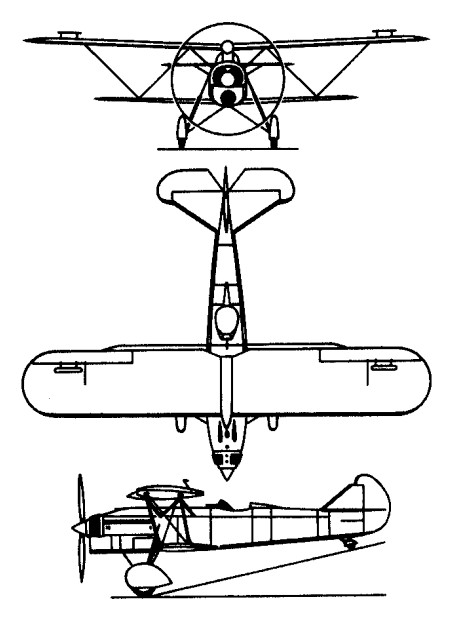
CR.32quater

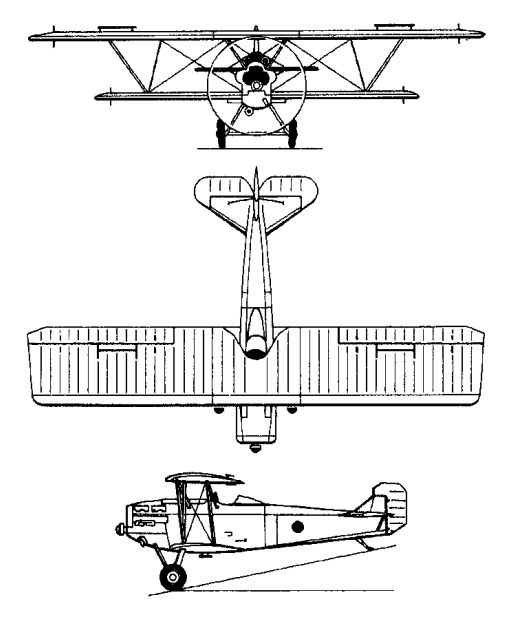
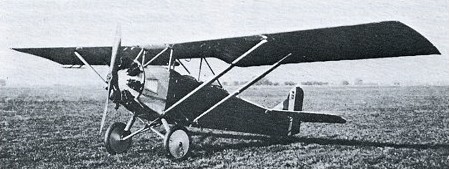
Fiat CR.20

The first prototype flew in July 19, 1926.

Engine: 1 x FIAT A.20, 295kW
Max take-off weight: 1400 kg / 3086 lb
Empty weight: 940 kg / 2072 lb
Wingspan: 9.8 m / 32 ft 2 in
Length: 6.6 m / 21 ft 8 in
Height: 2.7 m / 8 ft 10 in
Wing area: 25.8 sq.m / 277.71 sq ft
Max. Speed: 280 km/h / 174 mph
Ceiling: 7900 m / 25900 ft
Range w/max.fuel: 600 km / 373 miles
Armament: 4 machine-guns
Crew: 1

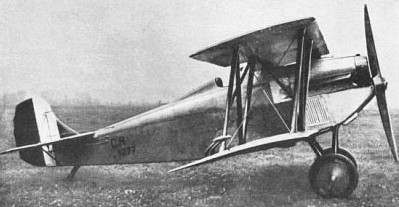
Fiat CR.1 / CR.2 / CR.5 / CR.10

Two prototypes of the Fiat CR.1 biplane fighter, designed by Celestino Rosatelli, were flown in 1923, and the type was selected for large- scale production for the newly formed Regia Aeronautica.
First deliveries of an eventual 240 production aircraft, designated CR.1, began in 1925.
During the 1930s many Italian CR.1s were given more powerful Isotta Fraschini engines, and these were to continue in service until 1937.
Nine aircraft were exported to Latvia. The Fiat CR.2, CR.5 and CR. 10 were variants of the basic aircraft fitted with different engines, usually on an experimental basis.

Fiat CR.1
Engine: 1 x 300hp Hispano-Suiza 42 8-cylinder
Take-off weight: 1154 kg / 2544 lb
Wingspan: 8.95 m / 29 ft 4 in
Length: 6.16 m / 20 ft 3 in
Height: 2.40 m / 7 ft 10 in
Max. Speed: 272 km/h / 169 mph
Ceiling: 7450 m / 24450 ft
Armament: 2 x 7.7mm machine guns

Fiat G.8

The Fiat G.8 was a military utility aircraft produced in Italy in the mid-1930s. Its design and production were undertaken at the CMASA works in Pisa which became part of Fiat in 1930, hence the type is sometimes referred to as the CMASA G.8 or Fiat-CMASA G.8.

Designed by Giuseppe Gabrielli, it was a conventional biplane design with staggered wings of unequal span braced by struts arranged in a Warren truss. The pilot and a single passenger (or instructor) sat in tandem open cockpits, and the aircraft was fitted with fixed tailskid undercarriage with divided main units.

The prototype first flew on 24 February 1934, sixty more of these aircraft were purchased by the Regia Aeronautica and used for liaison and training duties. They were retired in 1950.

Powerplant: 1 × Fiat A.54, 99 kW (135 hp)
Wingspan: 8.76 m (28 ft 9 in)
Wing area: 18.9 m2 (203 sq ft)
Length: 7.00 m (23 ft 0 in)
Height: 2.50 m (8 ft 2 in)
Empty weight: 560 kg (1,230 lb)
Gross weight: 840 kg (1,850 lb)
Maximum speed: 212 km/h (132 mph, 115 kn)
Range: 925 km (575 mi, 500 nmi)
Service ceiling: 5,200 m (17,100 ft)
Crew: one, pilot
Capacity: one passenger

Fiat G.5

G.5bis

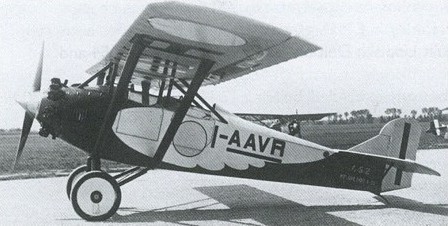
The Fiat G.5 tandem two-seat touring and training monoplane was produced in 1933 in two versions, the G.5 with a 140 hp Fiat A.54 radial engine, and the G.5bis with a 205 hp Fiat A.70 radial.

The prototype G.5 was powered by a 142 hp Fiat A.60 four cylinder inverted inline engine. The wing structure was entirely wood and the fuselage a welded steel-tube structure. Dual controls were fitted and the aircraft is fully aerobatic.

The G.5 was also produced as a three-seater.

G.5
Engine: 140 hp Fiat A.54

G.5bis
Engine: 205 hp Fiat A.70
Max speed: 143 mph
Cruise: 126 mph
Ceiling: 18,900 ft
Range: 478 mi
Empty weight: 1280 lb
Loaded weight: 1898 lb
Wing span: 34 ft 1.5 in
Length: 25 ft 9 in
Height: 7 ft 11.75 in

Fiat AS.1 / AS.2 / TR.1

AS.1

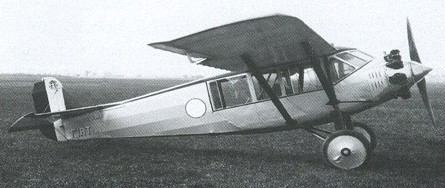
The Fiat AS.1 was a light touring aircraft developed in Italy in the late 1920s. It was a basic and conventional design: a parasol wing monoplane with tailskid undercarriage and seating for two in tandem open cockpits. The type proved extremely popular, and the production run would eventually extend to over 500 machines, with roughly half of these purchased by the Regia Aeronautica as trainers and liaison aircraft. Construction was of wood throughout, covered by plywood, fabric, and (around the nose) metal. A later development, designated TR.1 featured a metal structure instead.

TR.1

AS.1s were used successfully in a number of competitions and record-breaking events. In August 1929, they participated in the Challenge 1929 international contest, and in January 1930, an AS.1 piloted by Renato Donati with mechanic Gino Capannini was used to set endurance, distance, and altitude records in its class (29 hr 4 min 14 sec, 2,746.2 km/1,706.4 mi, and 6,782 m/22,251 ft respectively). On 28 December 1932, Furio Niclot and Mariano Lanciani used a specially-engined example to set the seaplane altitude record in its class (7,362 m/24,154 ft), then swapping wheels for pontoons, the same aircraft went on to set the equivalent landplane record two days later (9,282 m/30,453 ft). Long-distance feats included flights from Rome to Mogadishu and Vercelli to Tokyo (both by Francis Lombardi and Gino Capannini) and an aerial circumnavigation of Africa (27,600 km/17,150 miles) in 54 days by Francis Lombardi, Count Lodovico Mazzotti, and Mario Rasini).

AS.2

Variants

AS.1 – initial version with Fiat A.50 engine
AS.1 Idro – floatplane version
AS.1 Sci – ski-equipped version
AS.2 – version with strengthened structure and Fiat A.50S engine
TR.1 – version with metal structure and enclosed cabin

AS.1
Engine: 1 × Fiat A.50, 67 kW (90 hp)
Length: 6.10 m (20 ft 0 in)
Wingspan: 10.40 m (34 ft 2 in)
Height: 2.53 m (8 ft 4 in)
Wing area: 17.5 sq.m (188 sq.ft)
Empty weight: 450 kg (990 lb)
Gross weight: 690 kg (1,520 lb)
Maximum speed: 158 km/h (98 mph)
Range: 1,000 km (621 miles)
Service ceiling: 6,800 m (22,310 ft)
Crew: 1, pilot
Capacity: 1 passenger

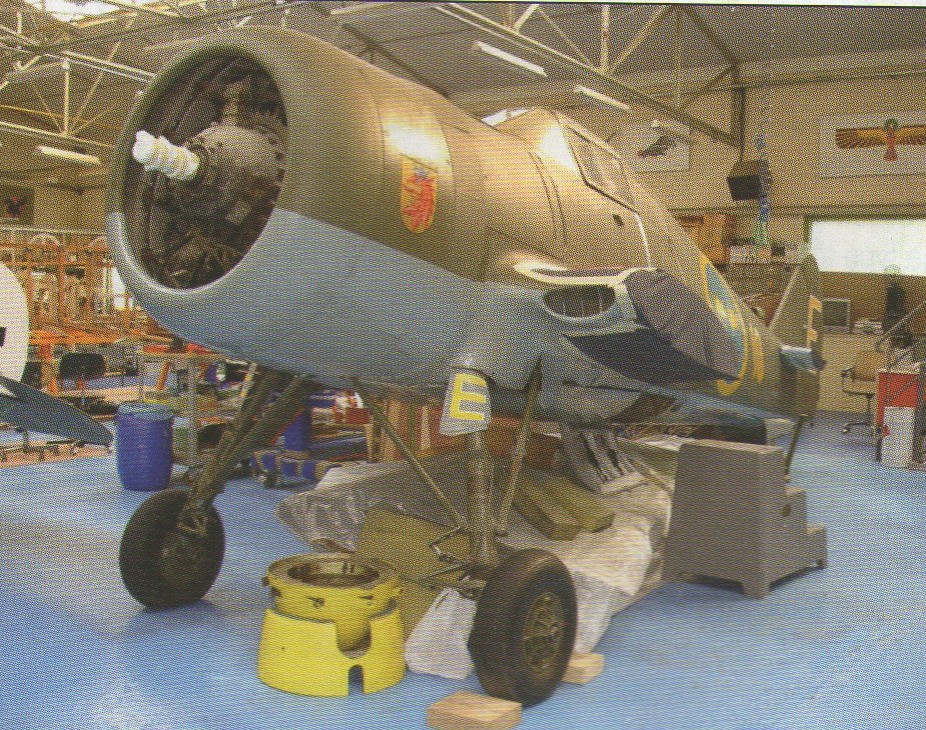
FFVS J-22

In 1939-1940, the Swedish air force had only a single fighter wing, equipped with 50-60 Gloster Gladiators with the Swedish designation J 8 (J = Jakt, interceptor or fighter). The government decided to equip two new wings and a total of 264 fighters of the types Seversky Republic EP-1 and Vultee Vanguard 48C 1 were ordered in the USA. 60 of the 120 EP-1s were delivered via Petsamo and were given the Swedish designation J 9. In July 1940 all export of fighters from the USA was stopped by a US Government embargo.
An indigenous fighter design was required, but with SAAB busy producing its B17 bomber, Flygforvaitninggens Verkstad (FFVS) was formed and designer Bo Lundberg was appointed to design a machine using non-strategic materials.
The air force chief instructed the aircraft designer Bo Lundberg to start planning for a Swedish made fighter. Lundberg had been in charge of the Swedish Air Commission in USA and before that chief designer of Götaverken’s aircraft division during the time they designed the GP 8 bomber which competed with SAAB 18 and the cancelled GP 9 fighter.
When Lundberg returned to Sweden at the end of 1940, he had already started planning for the new fighter. Requirements was that it should use the same engine as EP-1, STWC-3, a Swedish made Pratt and Whitney Twin Wasp, should be small and light, be made of components that could be made by a large number of subcontractors. The project was designated P 22 and a temporary air force branch was instituted to run the project, Flygförvaltningens Verkstad i Stockholm (FFVS).
The aircraft was from the outset designed for the Pratt&Whitney Twin Wasp, an American engine not available to Sweden. Even worse, the Severskies using the same engine had been delivered without spare engines so the shortage was really acute!
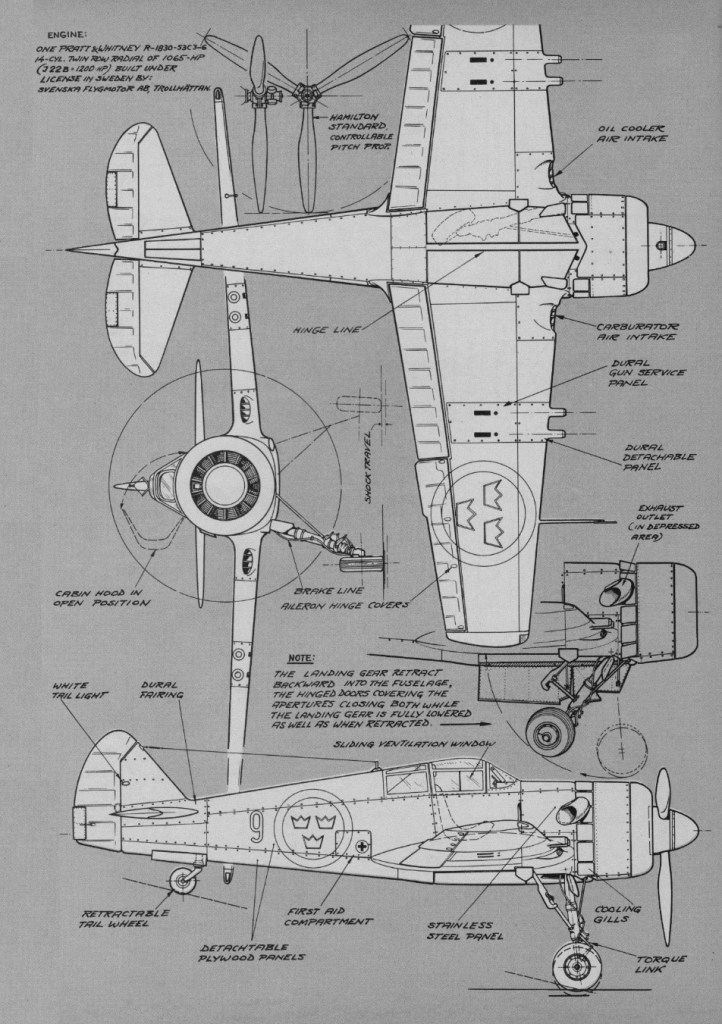
However, Flygmotor at Trollhättan started an ambitious programme to copy an original Pratt&Whitney Twin Wasp engine – without any drawings or material data at all. Working hard, they almost managed to meet the schedule. In 1942, to compensate for the lag in the engine project, Sweden managed to purchase a batch of 100 engines from the French Vichy regime via Germany. The Swedish-made engines, designated STWC-3, proved very good. One of them was still flying in the late 1980s, now mounted in one of the Swedish Airforce’s last flying C-47s.
Since the GV GP 9 was designed to use aluminum, it couldn’t be used as a basis for the new fighter, but its landing gear where the wheels were rotated as the were retracted back into the fuselage was used. The landing gear was made to accept skis, but as the air force’s ability to clear snow off runways had improved, they never were fitted on J 22.
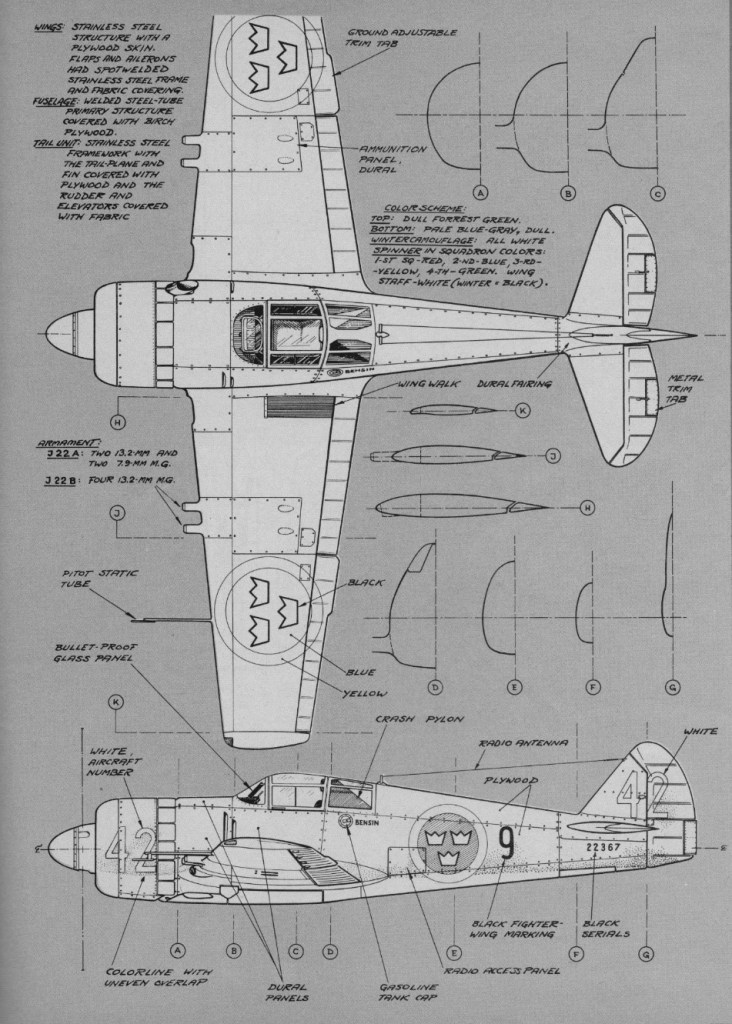
Since a wooden wing couldn’t be made strong enough if it was made thin enough for a fast fighter, so the aircraft was made of steel tubing covered with moulded birch plywood.
The windshield was made either of 6 mm laminated Gemax or acrylic. The center part was 60 mm thick for ballistic protection.
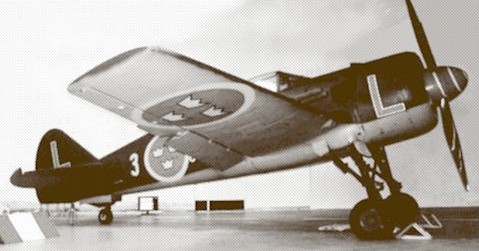
The first prototype of the aircraft which was to be designated J 22 was built in the workshop of Flygtekniska Försöksanstalten (FFA) near Bromma airport, and first flew on September 20,1942, and deliveries began to F9 at Gothenburg in September 1943.
Both protypes crashed, one probably due to oxygen starvation of the pilot, the other due to engine failure during landing.
Of the 17000 component parts, 12000 were made at 500 subcontractors all over Sweden, with final assembly in a hangar at Bromma, except for the final 18 which were assembled at the air force central workshop at Arboga (CVA), which was set up in 1944 to be the central maintenance facility.

198 aircraft were built and delivered 1943-46. Of these the first 143 were of the version J 22A and the rest J 22B. The only difference between them was that J 22A was armed with two 13.2 mm and two 8 mm guns in the wings, and J 22B with four 13.2 mm guns. The sight was a fixed reflex sight.
The J 22 was a light and very manoeuvrable aircraft with good acceleration but when it entered service it was no match for the fighters then current. Tests were made against the P-51 after the war and even if the J 22 could hold its own for a while, especially with a skilled pilot, there is no doubt that the Mustang was the better fighter by a safe margin.
In 1945 J 22A was redesignated J 22-1, J 22B into J 22-2 and S 22 became S 22-3. The last ones were retired in 1952.
Nine J 22A were converted into reconnaissance aircraft in 1946 and redesignated S 22 (S = Spaning, reconnaissance) and converted back into fighters in 1947.

Engine: STWC-3, 1065 hp
Span: 10 m
Length: 7.8 m
Height: 3.6 m
Wing area: 16 sq.m
Empty weight: 2020 kg
Combat weight: 2835 kg
Fuel load:525 litres
Max speed: 575 km/h
Cruise speed: 440 km/h
Landing speed: 140 km/h
Range: 1270 km
Endurance: 2.9 h
Max altitude: 9300 m
Armament: 2 x 13.2 mm + 2 x 8 mm guns or 4 x 13.2 mm

J22B
J22B

FFV-Aerotech BA.14 Starling

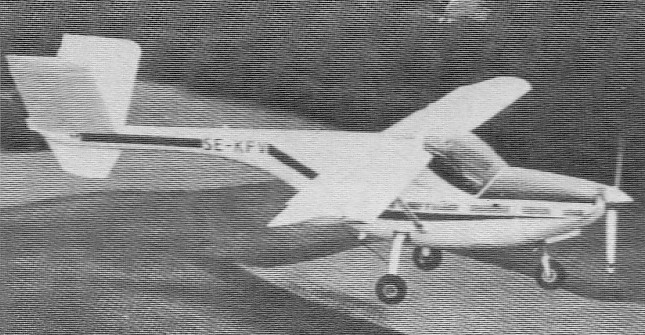
Construction of the BA-14 Starling recreational trainer, designed by Bjorn Andreasson, began 1987.

First flying on 25 August 1988, the BA-14 SE-KFV was the result of a partnership between MFI and FFV Aerotech. The two seat BA-14 is powered by a 115hp Lycoming O-235 and is almost wholly of composite construction, one of its purposes being to allow FFV Aerotech to gain additional experience in the design of primary structure, production, testing and certification with this type of material.

It became a joint venture project between MFI and FFV Aerotech, but later redesigned by MFI to FAR Pt 23A. Development delayed by other work, but resumption of flight testing apparently still awaited.

Engine : Lycoming O 235, 85 hp
Length : 21.654 ft / 6.6 m
Height : 8.858 ft / 2.7 m
Wingspan : 37.402 ft / 11.4 m
Wing area : 122.71 sq.ft / 11.4 sq.m
Max take off weight : 1797.1 lb / 815.0 kg
Weight empty : 1058.4 lb / 480.0 kg
Max. weight carried : 716.6 lb / 325.0 kg
Max. speed : 124 kt / 230 km/h
Landing speed : 40 kt / 75 km/h
Cruising speed : 103 kt / 190 km/h
Initial climb rate : 590.55 ft/min / 3.0 m/s
Service ceiling : 11155 ft / 3400 m
Wing load : 14.56 lb/sq.ft / 71.0 kg/sq.m
Range : 346 nm / 640 km
Crew : 2

FFA FFA-2000

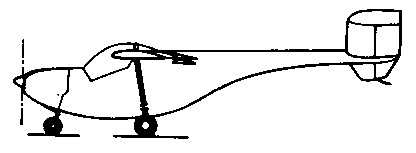
The FFA Flugzeugwerke FFA-2000 was built for the Swissair training school to replace Piaggio P-149s. After starting studies in 1986, FFA began full development testing of a 10 ft / 3 m span model in the FAF wind-tunnel at Emmen was followed by the decision in February 1988 to build two prototypes, and the Swissair order for eight aircraft was placed on 25 April.

The FFA-2000 is largely of composite construction, using a wing designed in Germany by Gyroflug-FFT.

FFT / Gesellschaft Fur Flugzeug- Und Faserverbund-Technologie Mbh took over development of FFA-2000 trainer from FFA, becoming Eurotrainer 2000A.

Engine: Porsche PFM 3200, 217 hp
Seats: 2

FFA AS.202 Bravo

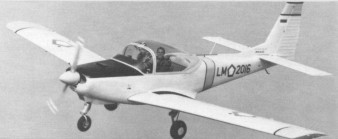
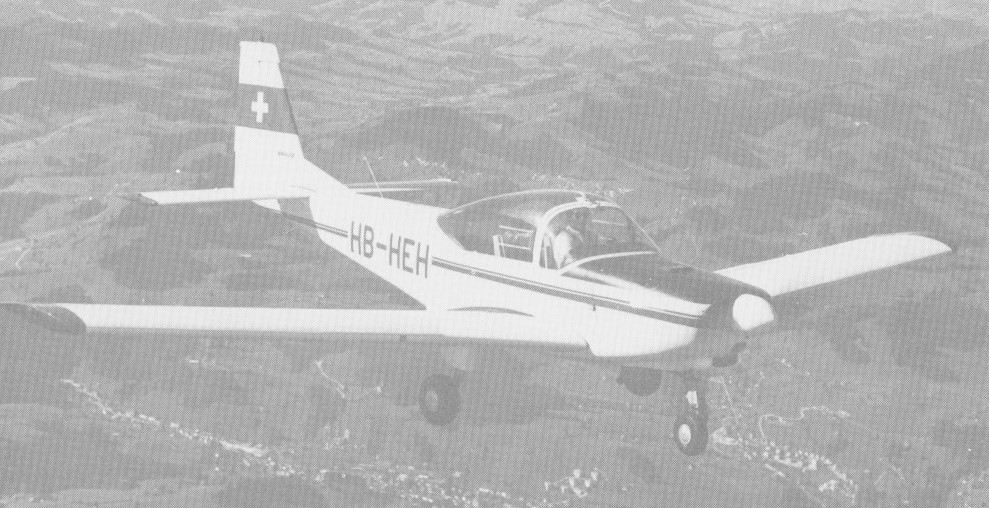
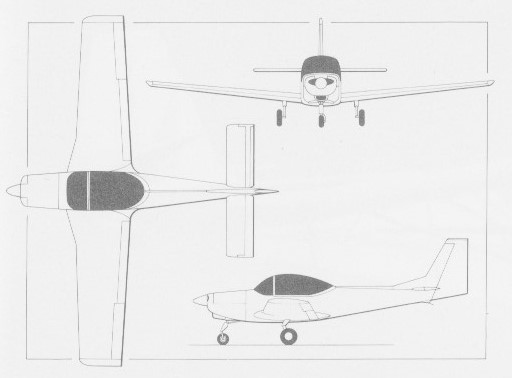
The Bravo first flew in March 1969, with a 112kW engine, as the 202/15. After completing an agreement with SIAI-Marchetti to produce the AS.202 Bravo, the Swiss developed the AS.202/18A. This suffix indicated its uprated 180-hp (134-kW) Lycoming engine and full aerobatic capability. The Swiss company Flug- und Fahrzeugwerke AG Altenrhein flew the first example (HB-HEY) of the AS.202/18A, a two/three-seat aerobatic development of the Italian SIAI-Marchetti AS.202 Bravo on 22 August 1974. These were followed by the 195kW 202/26 in 1978. Civilian and military operators have bought 166 Bravos up to 1987.

FFA AS.202 Bravo Article

AS.202/15
Engine: Lycoming O-320-E2A, 150 hp
Wingspan: 31 ft 11.75 in / 9.75 m
Length: 24 ft 7.25 in / 7.50 m
Empty weight: 1388 lb / 630 kg
Max payload: 595 lb / 270 kg
Max cruise 75% 8000ft/2440m: 114 kt / 131 mph / 211 kph
ROC SL: 633 fpm / 193 m/min
Service ceiling: 14.000 ft / 4265 m
Max range: 498 nm / 574 mi / 925 km
Seats: 2
Cabin length: 7 ft 0.5 in / 2.15 m
Cabin width: 3 ft 4.25 in / 1.02 m
Cabin height: 3 ft 7.25 in / 1.10 m
Rear baggage: 220 lb / 100 kg

AS.202 Bravo
Engine: 1 x Lycoming AEIO-540, 195 kW.
Span: 9.8 m.
Length: 7.5 m.
Wing area: 13.9 sq.m.
Empty wt: 795 kg.
MTOW: 1200 kg.
Warload: 195 kg.
Max speed: 265 kph.
Initial ROC: 360 m / min.
Ceiling: 5700 m.
T/O run: 185 m.
Ldg run: 210 m.
Fuel internal: 160 lt.
Range: 850 km.

FFA AS 202 / 18A Bravo
Length: 24.606 ft / 7.5 m
Height: 9.186 ft / 2.8 m
Wingspan : 32.152 ft / 9.8 m
Wing area : 149.62 sqft / 13.9 sq.m
Max take off weight : 2381.4 lb / 1080.0 kg
Weight empty : 1565.6 lb / 710.0 kg
Max. weight carried : 815.9 lb / 370.0 kg
Max. speed : 130 kts / 241 km/h
Landing speed : 49 kts / 90 km/h
Cruising speed : 110 kts / 203 km/h
Initial climb rate : 787.40 ft/min / 4.00 m/s
Service ceiling : 16995 ft / 5180 m
Wing load : 15.99 lbs/sq.ft / 78.00 kg/sq.m
Range : 616 nm / 1140 km
Engine :
Lycoming AEIO 360 B1F, 132 hp
Crew : 2

AS 202-18A-3 Bravo

AS.202/26 Bravo
Engine: 1 x Lycoming AEIO-540, 195 kW.
Span: 9.8 m.
Length: 7.5 m.
Wing area: 13.9 sq.m.
Empty wt: 795 kg.
MTOW: 1200 kg.
Warload: 195 kg.
Max speed: 265 kph.
Initial ROC: 360 m / min.
Ceiling: 5700 m.
T/O run: 185 m.
Ldg run: 210 m.
Fuel internal: 160 lt.
Range: 850 km.