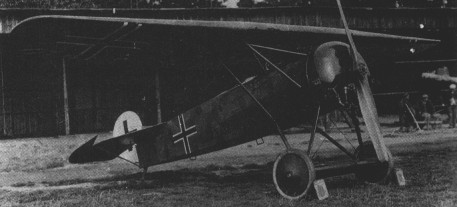
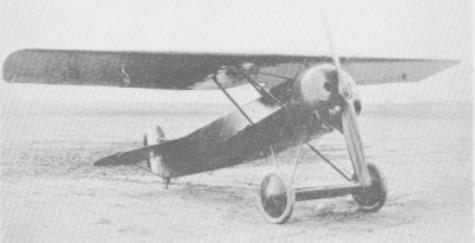
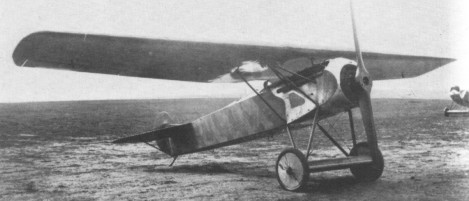
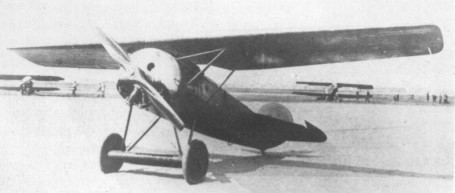
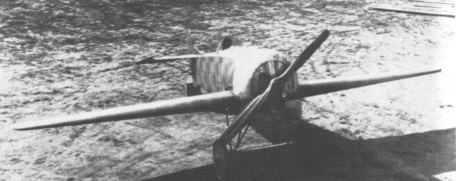
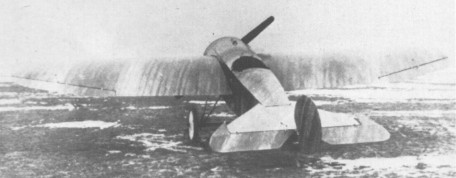
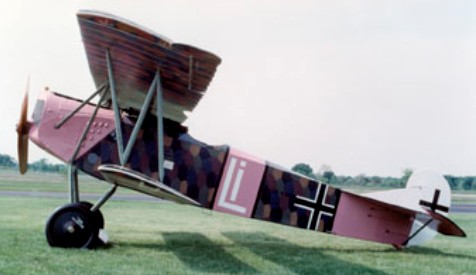
In service the E.V regarded with some suspicion after engine lubrication and wing structural problems, but after these had been eradicated the fighter re-entered production as the D VIII and became very popular. The re-designated V.III did not return to service until October 1918. Only a small number of aircraft reached operational units before the end of World War I. The D VIII parasol monoplane introduced Fokker cantilever wing and had no external bracing wires. The plane was somewhat under powered with the original 110 hp Oberursal Rotary; and explains why the 160 Gnome Rotary was the prefered powerplant (after the war concluded). That said the aircraft was a highly respected machine.
The Fokker D.VIII has the distinction of recording the last air kill in the First World War and was often referred to as ‘the Flying Razor’ by the Allies. It is estimated that about 300 were produced.
In June 1918, during the second D-¬Flugzeug Weitbewerb competition, for aeroplanes with a rotary engine, Fokker came second with the V.26 prototype with the fuselage and empennage of the D VI married to a rotary engine and parasol wing of thick-section cantilever construction and plywood-covered wooden structure, supported above the fuselage on each side by a forward tripod of short struts and an aft single long strut. In the trials the type displayed such excellent take-off, climb and agility characteristics that it was ordered straight into production as the E.V. Powered by the 110 h.p. Le Rhone engine, the E.V arrived at the Front in July 1918, but fatal accidents quickly occurred due to wing failure. The investigation of these accidents and the necessary constructional changes meant that the aeroplane, redesig¬nated, V.III, did not return to service until October 1918.
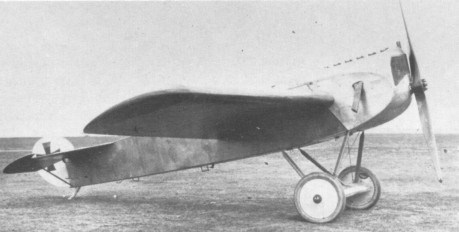
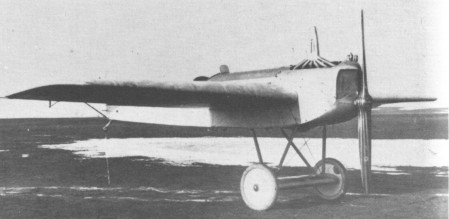
The V. 25 was a low wing monoplane. As Director of the Junkers-Fokker factories, Fokker had flown the Junkers D.I fighter, and ordered Platz to build a similar aeroplane. The 110 h.p. Oberursel engine, however, was not powerful enough.
The V.20 was a larger version of the V.17, with a 160 h.p. Mercedes engine. Platz built the aeroplane in five and a half days just before the competi¬tion in January 1918, but its performance was disappointing.
The V.17 with 110 hp Oberursel or Le Rhone engine. This modern looking fighter was Platz’s first monoplane, but owing to the low powered engine its performance was mediocre.
To compete in Germany’s first single-seat fighter competition during January 1918, Fokker produced its V 11 prototype (with 30 other aircraft including six Fokker types), which used many Dr I structural and design features in a biplane layout with a 119-kW (160-hp) Mercedes DIII inline engine. The V.11 prototype revealed the need for a longer fuselage and fixed fin in addition to the coma shaped rudder before entering. The type displayed sparkling performance and agility, and the D VII production model began to enter service in April, initially with the DIII engine but later with the BMW III for improved performance at altitude.
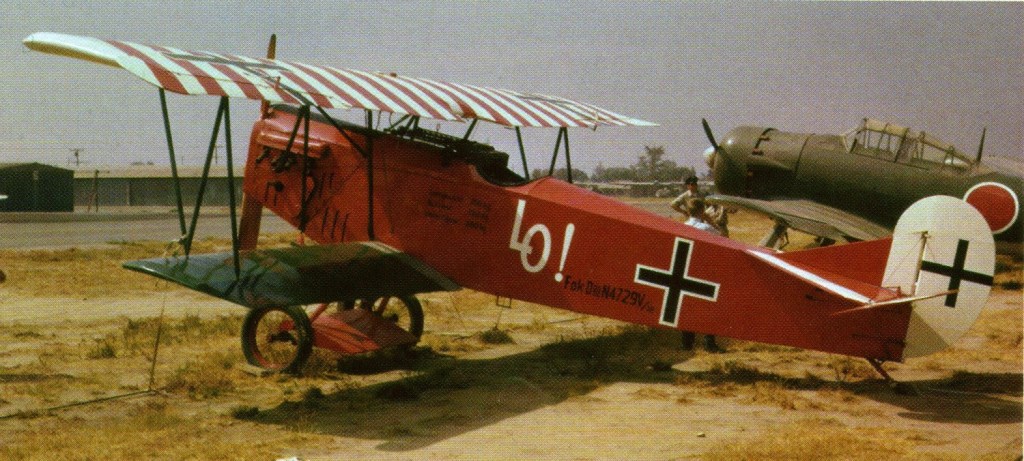
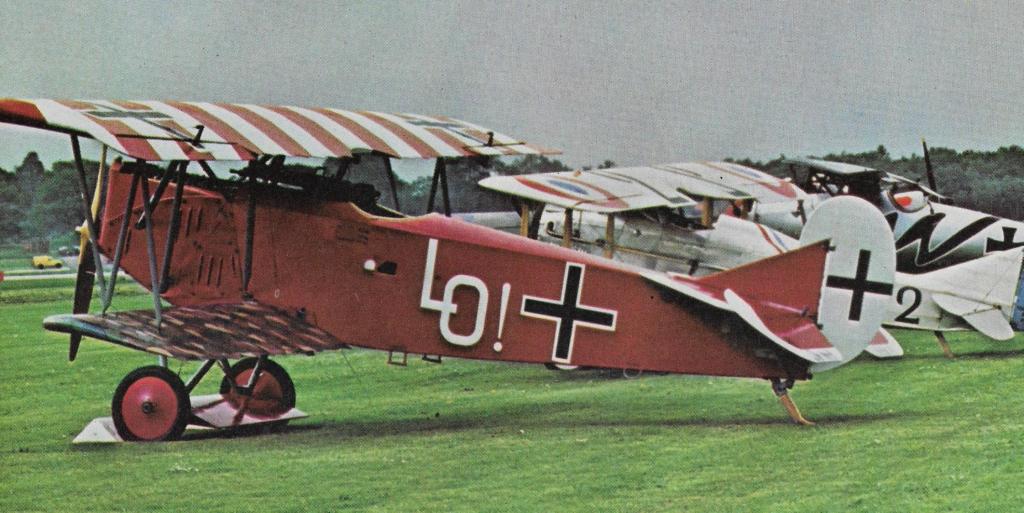
The D.VII is a single-bay biplane, without bracing wires, two-spar wooden wings, with plywood leading-edges and wire trailing edges. Ailerons were on the top wing only. The welded steel-tube fuselage and tail unit, and wings were all fabric covered. An aerofoil lifting surface was between the wheels.
First flying in January 1018 the D.VII was the most successful fighter of World War One. Fokker won an order for 400 machines during the fighter competition of January 1918. The V.11, prototype of the D.VII only just met the deadline, and Fokker had had no opportunity to test it, so he was obliged to do this whilst demonstrating it during the meeting.
Its longitudinal stability apparently left much to be desired, and the aircraft would spin at the slightest provocation. Fokker flew the fighter as sharp as a razor, and no one noticed its short comings, but he was afraid that the front line pilots who were going to fly it in the contest would break their necks in it, and so spoil his chances.
On the Saturday he phoned Schwerin and ordered two of his best welders to come over, and the three men worked secretly throughout the night. By Sunday afternoon 60cm had been inserted in the fuselage, and the rudder had been enlarged.
Fokker quickly made a test flight, just before the manufacturers were forbidden to enter the field. The aeroplane was no longer dangerous, but the tail controls were still very sensitive. Fokker handed the machine over to the competition committee and left the field.
The in-line engine winner was the Fokker D.VII. The success lay in its handling characteristics. Fokker received an order for 400 aircraft. To meet the demand for the new fighter the D.VII was put into mass production at three different factories, Albatros, Fokker’s chief competitor, built the D.VII under license at two. Ironically, Albatros built more D.VIIs than the primary contractor and the Albatros product was of higher quality.
Forty-five German fighter units received these agile machines from April 1918, but it is doubtful that all were completely re-equipped.
The first examples reaching von Richthofen’s squadron at the Front in April 1918. In August 1918, it contributed the major part of the 565 victories scored by the German Air Force, which compared with 217 in April, the month before it entered service. A light-grey two seat D. VII was a personal present from Fokker to Ver’steegh.
One D VII was used by the newly established Czechoslovak Air Forces at the Cheb Training School from 1918.
Czechoslovak D VII
By the end of World War I more than 700 D VIIs had been delivered, and the type won enormous approval and respect from German and Allied pilots for its agility as well as its good performance and handling even at high altitude. Another important feature was its capacity to hang on its propeller, allowing pilots to fire upward when other fighters would have stalled and entered a spin. There were many variants, none produced in quantity. The Allies ordered the Germans to hand over all Fokker D.VII fighters. It was the only type to be specifically mentioned in the Armistice Agreement. More than 100 were smuggled out of Germany, to prevent their seizure by the Allies.
D.VII Engine: One 160 hp Mercedes D.III Propeller: two blade. Span upper: 29 ft 4 in Span lower: 22 ft 10 in Length: 22 ft 9.75 in (6.95m). Height: 9 ft. 3 in. Wing area: 220.66 sq ft (20.50 sq.m). Wing chord (upper): 5 ft 3 in. Weight empty 1.540 lb. Gross weight: 1,984 lb (900 kg). Max speed: 120 mph at SL Max speed: 117 mph (189 km/h) at 3,280 ft (1,000 m). Endurance: 1 hr 30 min. Service ceiling: 18,000 ft Armament: 2 x Spandau mg Crew: 1.
D VII Engine: 1 x BMW III, 138kW (185 hp). Span: 8.90m (29ft 2.5 in) Length: 6.95m (22ft 9.5in) Height: 9 ft. 3 in. Wing chord (upper): 5 ft 3 in. Weight empty 1.540 lb. Max T/O weight: 880 kg (1,940 lb). Max speed: 124 mph at 3,280 ft. Operational endurance: 1 hr 30 min. Wing area: 236 sq. ft. Ceiling 21,000 ft. Seats: 1 Armament: 2 x 7.92-mm (0.312-in) LMG 08/15 mg.
Fokker D.VII Engine: BMW IIIa, 185 hp Span upper: 29 ft 4 in Span lower: 22 ft 10 in Wing area: 221.4 sq.ft / 20.50 m Length: 22 ft 11.5 in / 6.954 m Height: 9 ft 2.5 in / 2.75 m Empty weight: 1477 lb / 670 kg MTOW: 2112 lb / 960 kg Max speed: 124 mph at SL Max speed: 117 mph / 187 kph at 3280 ft / 1000 m Climb to 16,405 ft / 5000m: 16 min 0 sec Service ceiling: 22,965 ft / 7000 m Endurance: 1 hr 30 min Armament: 2 x 7.92 mm / 0.312 in Spandau mg Crew: 1
Fokker / Albatros Werke D.VII Engine: 160-horsepower Mercedes D.IIIa Propeller: Overall diameter approximately 110 in. Chord approximately 9 in. Hub diameter approximately 9 in. 8 bolt holes Wingspan: 8.9 m (29 ft 4 in) Length: 7.0 m (23 ft) Height: 2.8 m (9 ft 3 in) Weight: Empty, 700 kg (1,540 lb) Gross, 878 kg (1,936 lb) Seats: 1
D VII Engine: Austro-Daimler, 210 hp Span upper: 29 ft 4 in Span lower: 22 ft 10 in Wing area: 236 sq.ft Length: 25 ft Height: 9 ft 3 in Empty weight: 685 kg Max speed: 135 mph at SL Service ceiling: 6700 m Endurance: 2 hrs Armament: two synchronized Spandau machine guns Crew: 1