Folland Fo.139 Midge

The Midge and Gnat were designed by W.E.W. “Teddy” Petter. Petter had grown suspicious of the trend towards bigger and more expensive combat aircraft, and he felt that a small, simple fighter would offer the advantages of low purchase and operational costs. New lightweight turbojet engines were being developed that would be able to power such small fighters.

Petter became managing director of Folland Aircraft and in 1951, using company funds, he began work on his lightweight fighter concept, which was designated the “Fo-141 Gnat”. The Gnat was to be powered by a Bristol BE-22 Saturn turbojet with 3,800 lbf (16.9 kN 1,724 kgp) thrust. However, the Saturn was cancelled, and so Petter’s unarmed proof-of-concept demonstrator for the Gnat was powered by the less powerful Armstrong Siddeley Viper 101 with 1,640 lbf (7.3 kN / 744 kgp) thrust.

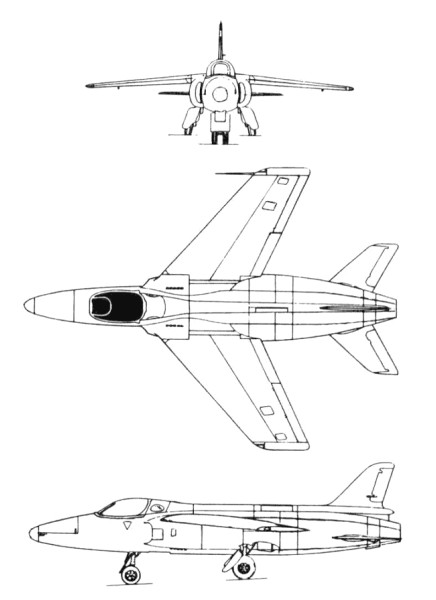
The Midge features hydraulically powered “flaperons”, main gear that could be used as airbrakes, and a one-piece canopy that hinged over an inner armoured windscreen.
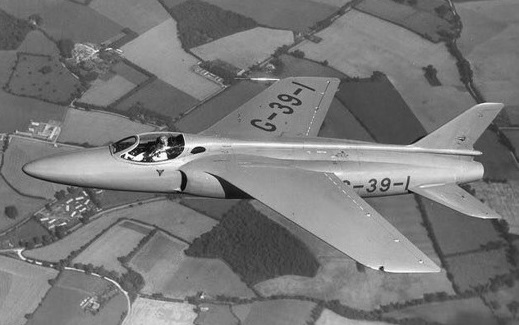
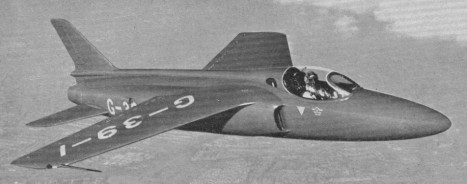
The demonstrator was designated Fo-139 “Midge”. The Midge, serial number G-39-1, first flew on 11 August 1954 from Boscombe Down, Wiltshire, with Teddy Tennant at the controls.

Despite the low powered engine, the little jet could break Mach 1 in a dive and was very agile. The wings contains no guns, undercarriage or fuel tanks.

The Midge was evaluated by pilots from Canada, India, Jordan, New Zealand, and the US Air Force, and had performed a total of 220 flights when it was destroyed in a fatal crash on 26 September 1955, with a Swiss pilot at the controls. However, the Midge had demonstrated that Petter’s lightweight fighter concept had much going for it. Folland went on to develop a full-scale Gnat prototype, also using company funds.

Original film footage of the Midge can be seen in the 1956 British science fiction film “Satellite in the Sky”. The Midge portrays a fictional jet fighter used to test an experimental rocket fuel.

Fo.139
Engine: 1 x Armstrong Siddeley Viper 101, 1,640 lbf / 744kg
Max take-off weight: 2041 kg / 4500 lb
Wingspan: 6.3 m / 20 ft 8 in
Length: 8.76 m / 28 ft 9 in
Height: 2.82 m / 9 ft 3 in
Wing area: 11.61 sq.m / 124.97 sq ft
Sweep back: 40 deg
Aspect ratio 3.3.
Undercarriage track: 5 ft.1 in.
Max. speed: 966 km/h / 600 mph
Service ceiling: 12190 m / 40000 ft
Crew: 1
Fokker and von Daum 1910 Eindecker

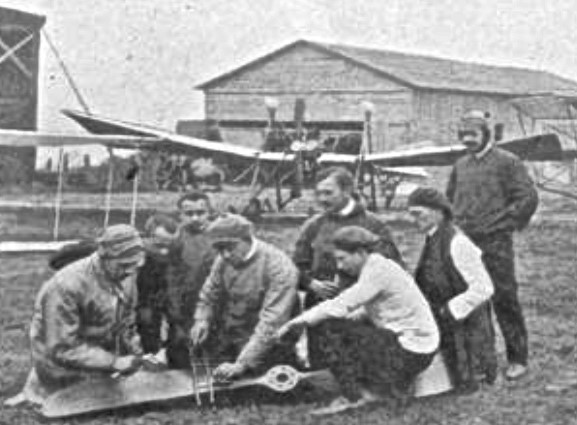
This monoplane was built at the “Erste Deutsche Automobil-Fachschule, Abteilung Flugtechnik” at Zalbach near Mainz, Germany, where Anthony Fokker was student. Depending on whose research you trust, this monoplane was either designed and built by Fokker and another student, Franz von Daum, with help from the engineers of the school, or taken over as an unfinished project by Fokker and von Daum. The monoplane which was finished in October 1910, with von Daum bringing most of the money and a 50 hp Argus engine. It was tested by Fokker, and first hop made in December 1910. Later, von Daum damaged it beyond repair. Again, depending on who you trust, Fokker and von Daum decided to build a new monoplane, this time designed with much help from Goedecker and built at the Goedecker plant, this machine being the first Fokker Spinne, or the machine was finished at the Goedecker plant and actually became the first “Spinne”.

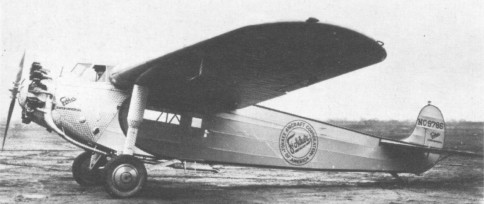
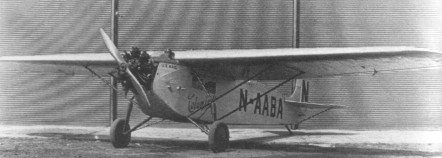
Fokker Super Universal

The Super Universal was an enlarged Universal with an enclosed cockpit and improved undercarriage, built in 1927.
The Japan Air Transport Company imported ten Super Universal aircraft in 1929. Later the type was built under license by the Japanese Nakajima Company, the first Japanese built machine being delivered in March 1931. A total of 47 was built up to October 1936.

Fokker S-4

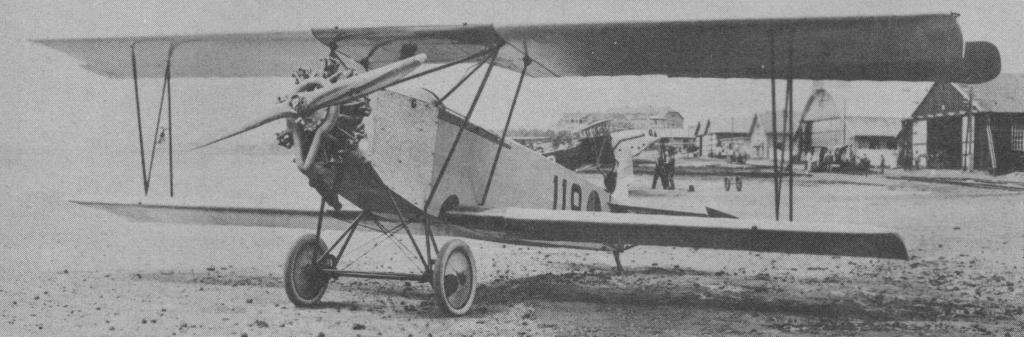
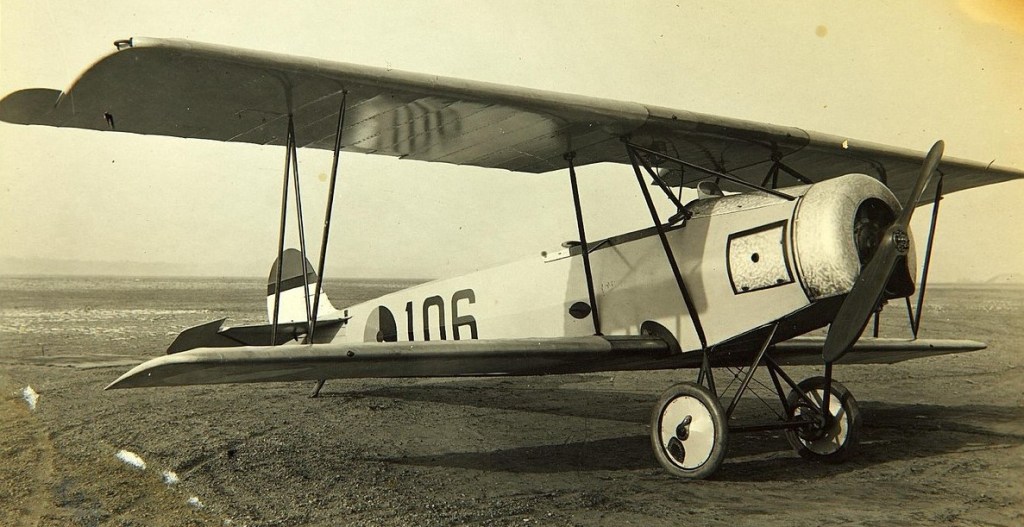
The Fokker S.IV was a military trainer aircraft produced in the Netherlands in the mid-1920s. It was a conventional, single-bay biplane with staggered wings of unequal span braced with N-struts, essentially a radial-engined development of the S.III. The pilot and instructor sat in tandem, open cockpits and the undercarriage was of fixed, tailskid type with a cross-axle between the main units.

The Royal Netherlands Army Aviation Group purchased 30 examples and used them right up to the German invasion of the Netherlands in 1940. On 14 May that year, a few surviving S.IVs escaped to France alongside some S.IX trainers, but never flew again.

The S.IV could be powered by a variety of engines in the 75–97 kW (100–130 hp) range, including 110 hp (82 kW) Siemens-Halske Sh 11, 110 hp (82 kW) Le Rhône 9J, 130 hp (97 kW) Bristol Lucifer, 130 hp (97 kW) Armstrong-Siddeley Mongoose, 110 hp (82 kW) Oberursel UR.II or the 130 hp (97 kW) Clerget 9B.

Fokker S.IV
Powerplant: 1 × Le Rhône 9J, 82 kW (110 hp)
Propeller: 2-bladed fixed pitch
Wingspan: 11.17 m (36 ft 8 in)
Wing area: 27.55 m2 (296.5 sq ft)
Length: 8.55 m (28 ft 1 in)
Height: 3.15 m (10 ft 4 in)
Empty weight: 650 kg (1,433 lb)
Gross weight: 1,000 kg (2,205 lb)
Maximum speed: 160 km/h (99 mph, 86 kn)
Stall speed: 65 km/h (40 mph, 35 kn)
Service ceiling: 4,000 m (13,000 ft)
Time to altitude: 1,000 m (3,300 ft) in 6 minutes
Wing loading: 36.29 kg/m2 (7.43 lb/sq ft)
Power/mass: 0.0830 kW/kg (0.0505 hp/lb)
Crew: 2

Fokker S.14

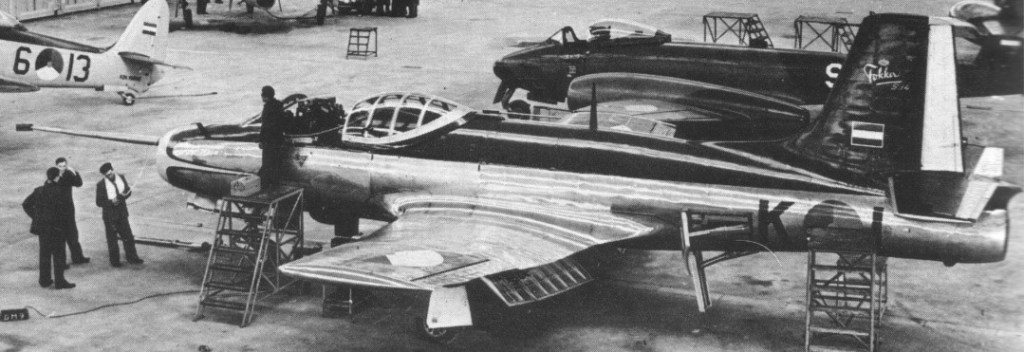
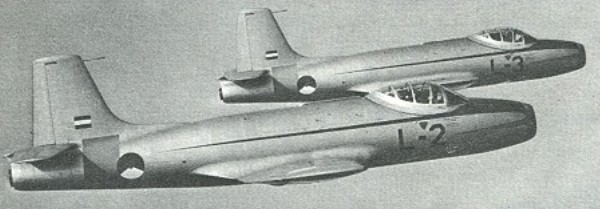
The Fokker S.14 Mach-Trainer secured its place in aviation history by being the first Fokker-designed jet aircraft, the first jet-propelled trainer designed as such, and the first aircraft of its type to enter production.
The low-wing all-metal S.14 was powered by a Rolls-Royce Derwent turbojet with a bifurcated inlet in the nose. The outlet was in the extreme tail, aft of the horizontal tail surfaces, which were set somewhat aft of the fin and rudder. The nosewheel of the tricycle landing gear retracted forwards into the underside of the nose while the main units retracted inwards into the undersides of the wings. Pupil and instructor were seated side-by-side under a short, broad raised canopy set well forward on the circular-section fuselage. Martin-Baker ejector seats were standard.

Fokker S.14 Article

Test pilot Gerben Sonderman made the first test flight on 19 May 1951 from Schiphol. On a second flight during the same day the landing gear failed and the prototype was damaged in the subsequent belly-landing. However, the aircraft was repaired and displayed at the 1951 Paris Salon in June of that year.

A series of 20 S.14s was ordered by the Royal Dutch air arm, the Koninklike Luchtmacht, the first being flown initially on 15 January 1955. The prototype bore the serial K-1 and was powered by a Derwent V engine, while the production machines were serialled from L-1 to L-20 and had Derwent VIIIs. The S.14s served at four air stations: Twenthe, Ypenburg, Gilze-Rijen and Soesterberg. Aircraft L-4 was demonstrated in the USA during 1955, but crashed on 20 October that year at Hagerstown, Maryland, killing Gerben Sonderman. Aircraft L-8 took part in the London-Paris air race, known as the Arch to Arc since it started at Marble Arch and ended at the Arc de Triomphe. The last two S.14s were withdrawn from Dutch service on 29 March 1965. Serialled L-17 and L-19, they are preserved at the Museums at Schiphol and Soesterberg respectively.

The original K-1 prototype was re-engined with a 2313kg thrust Rolls-Royce Nene 3 engine in 1953 and given the specially selected civil registration PH-XIV on 24 October 1960. It was then used by the Lucht en Ruuimtevaart Laboratorium (Dutch National Aeronautical and Space Laboratory) until scrapped on 4 March 1966.

S.14 was a promising aircraft, and the American Fairchild factory bought the rights for licensed production, but as a result of the MDAP military aid programme many countries were provided with the Lockheed T.33, a two seat version of the F. 80 jet fighter.

Fifty S.14s were to be built in Brazil, but production was cancelled.

Engine: 1 x Rolls-Royce Derwent VIII turbojet, 1575kg / 3,470 lbst
Max take-off weight: 5350 kg / 11795 lb
Loaded weight: 3765 kg / 8300 lb
Wingspan: 12.00 m / 39 ft 4 in
Length: 13.30 m / 43 ft 8 in
Height: 4.70 m / 15 ft 5 in
Wing area: 31.80 sq.m / 342.29 sq ft
Max. speed: 730 km/h / 454 mph
Cruise speed: 570 km/h / 354 mph
Ceiling: 11200 m / 36750 ft
Range: 965 km / 600 miles

Fokker F.25 Promotor

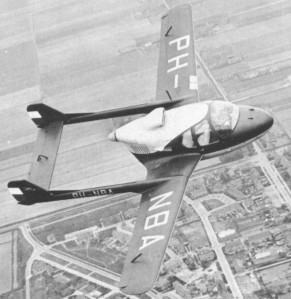
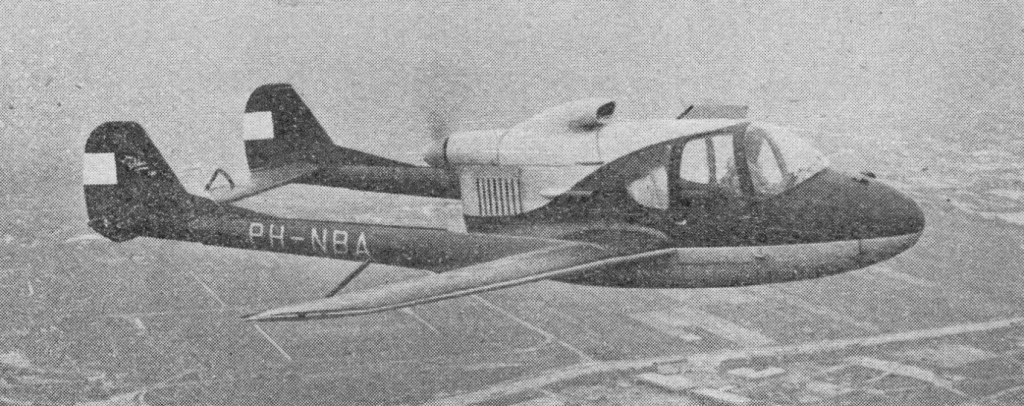
The F.25 Promotor business aircraft, of which 100 were ordered by Frits Diepen on May 16th 1946 for his air taxi company and sales purposes. was exhibited at the first post war Paris Air Show in November 1946 and, after modification to improve its performance, made a demonstration tour of Europe. The press praised the aircraft, but the sales were disappointing. The F.25 received its Certificate of Airworthiness in 1947, but only 21 were built, and not all of these flew.
This four seat business aircraft was designed to the order of Diepen, who acquired the worldwide selling rights.
On October 20th, the prototype F.25 Pro¬motor made its maiden flight.
Six where sold to a Spanish air-taxi firm. Due to never quite totally solved vibration problems with the lengthened propshaft, they achieved limited success and were soon taking out of service.
The production version had elongated tailplanes and a higher air intake.

1948

Although 20 F.25 aircraft were constructed, sales were disappointing as it could not compete in cost with thousands of surplus aircraft on the market following the war.

Engine: Lycoming O-435 190 hp
Wingspan 12.00 m
Length 8.50 m
Max. speed 227 km/h
Max take off weight 1.425 kg

Fokker S.11 Instructor / T.21 / Aermacchi M.416

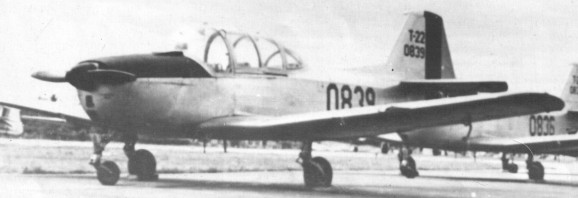
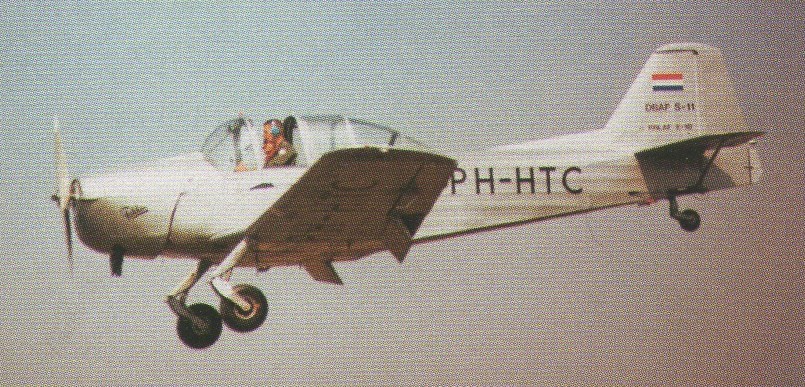
In 1946, just after World War II, Fokker started design studies for a lowwing primairy trainer with a fixed tailwheel undercarriage. Soon the Luchtstrijdkrachten (LSK) and Frits Diepen participated in the development of the Fokker S-11. On 8 October 1946, Frits Diepen Vliegtuig NV (FDV.NV) ordered 100 aircraft of the type for resale. 41 went to the Israeli Air Force. On 18 December 1947, the prototype of the Fokker S.11 (PH-NBE c/n 6187) flew first, powered by a 190 hp Lycoming O-435-A six-cylinder air-cooled engine. On 12 March 1948, the second prototype of the Fokker S-11 (PH-NBF c/n 6188) flew first. During testing it was found that some aerodynamic changes had to be made to improve the handling of the aircraft. Both prototypes were modified in 1948 and were used as demonstrators until PH-NBF crashed in Sweden on 16 June 1949. After the loss of the second prototype, the first prototype was broken up and the registration was cancelled on 10 May 1950.

Article

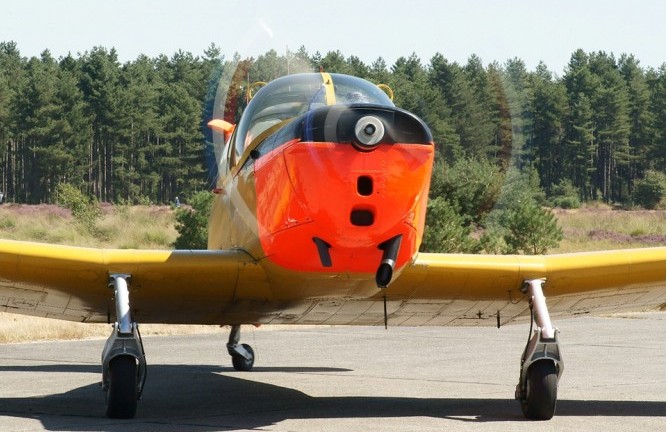
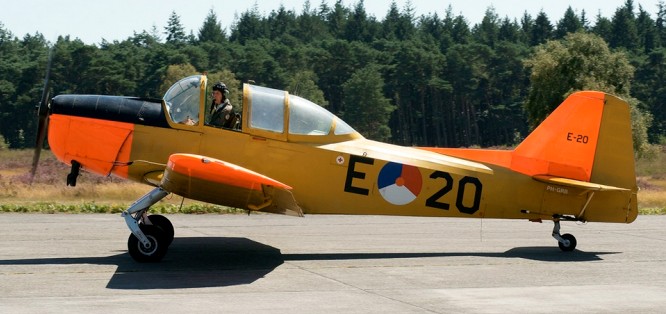
The construction of the Fokker S-11 was improved and the aircraft entered production. The LSK ordered 39 aircraft and in 1950 the first Fokker S.11-1 Instructors entered service with the Koninklijke Luchtmacht (former LSK). The Fokker S.11-1 served with the Koninklijke Luchtmacht (Royal Netherlands Air Force) first with the EVO at Woensdrecht AFB. In 1968 the EVO (Elementaire Vlieger Opleiding) moved to Gilze-Rijen AFB. Next to the Royal Netherlands Air Force, the Fokker S.11 was delivered to the air arms of Brazil, Israel and Italy.
Until production of the Fokker S-11 in the Netherlands ended in 1953 a total of 101 aircraft were built.

Next to the Dutch production, the Fokker S.11 was manufactured under licence by Aermacchi in Italy as the Macchi M.416 and by Fokker Industria Aeronautica SA / Fabrica do Galeao in in Rio de Janeiro, Brazil, designated T.21. Macchi, together with IMAM, built 180 of them. 100 were constructed for the Brazilian Air Force.

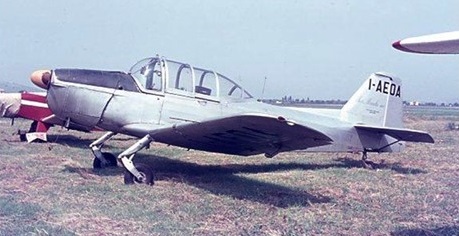
Aermacchi M.416 (courtesy Franco Zanaboni)

Gallery