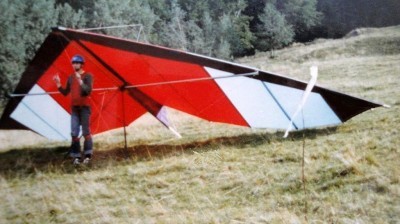
Fuseri-Miller Ortoelicottero

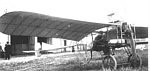
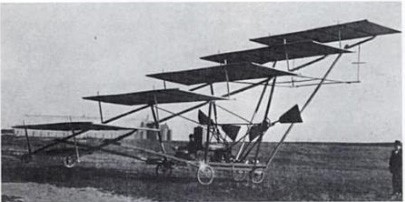
Italian ornithopter, designed by Dr. Fuseri, a pharmacist living in the small town of Fossano in the province of Piemonte, and built by Franz Miller, one of Italy’s first aeronautical engineers, as a contractor. In 1908 the firm “Società anonima italiana per l’esperimento dell’ortoelicottero Fuseri” was formed in Fossano and construction of the aircraft was initiated in 1909 by the factory of Miller in Torino where it was never flown and unlikely to have ever been tried. This sort of machine (VTOL) is along the lines of the somewhat later machines of deCazes where it is named a Hélicoplane, just as the Fuseri Ortoelicottero, a mix of helicopter (vertical take-off and landing) and aeroplane.

Funk F-23

A developments of the Fairchild M-62s appeared in the 1960s, the Funk F-23 built at Broken Arrow in Oklahoma and first flown in 1962. Eleven production aircraft were built around the PT-19 fuselage and powered by the 240-hp W670M Continental. A further three were built with 275-hp R-755 Jacobs engines.
In May 1970 Cosmic Aircraft Corp acquired all rights in manufacture of F-23 single-seat agricultural monoplane, produced previously by D. D. Funk Aviation Company Inc. Two models: F-23A (Continental radial) and F-23B (Jacobs radial). Production ceased 1975.

Funk A / Funk B / Akron Aircraft Co Model B

Funk B

The first plane or Funk model ‘A’ was powered by and inverted and converted flat head four cylinder ingine.

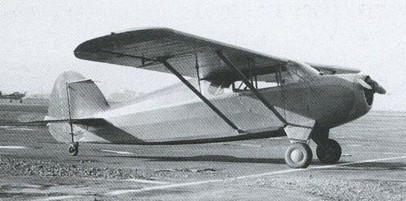
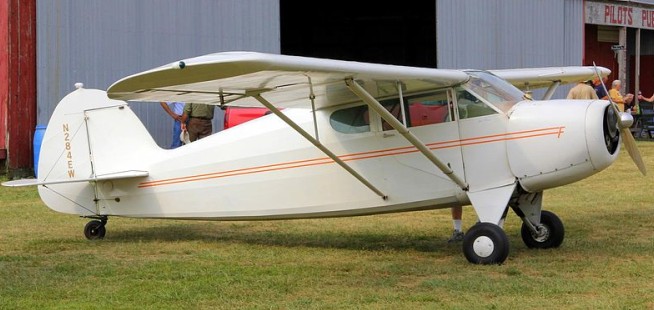
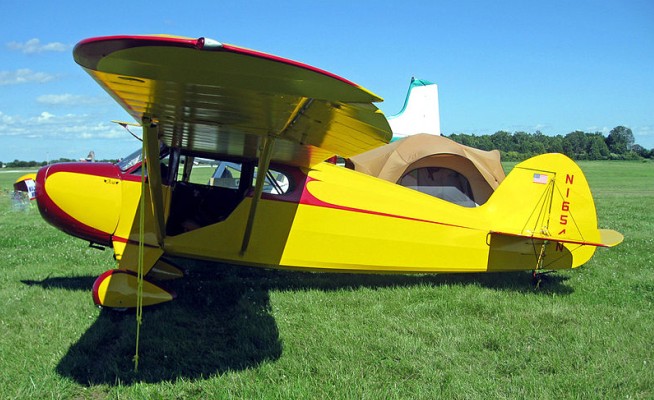
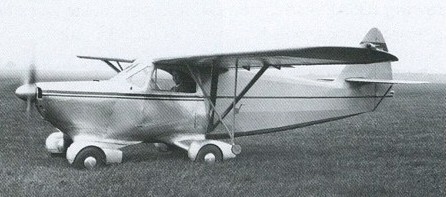
The Funk Model B was a 1930s American two-seat cabin monoplane designed by Howard and Joe Funk. Originally built by the Akron Aircraft Company later renamed Funk Aircraft Company.

The Model B was the first powered aircraft designed by brothers Howard and Joe Funk, whose previous experience was in homebuilt gliders and sailplanes. Similar in appearance to a Piper Cub, their Model B was a strut-braced high-wing monoplane with a conventional tail unit and fixed tailwheel landing gear. The design uses mixed construction with fabric covered wooden wings and a welded steel-tube fuselage. The aircraft was powered by the brothers’ own Model E engine developed from a Ford “B” motor-car engine. The prototype first flew in late 1933.

When the test flights proved to be successful the brothers formed the Akron Aircraft Company in 1939 to build the Funk B. After production began, the engine was changed to a 75hp (56 kW) Lycoming GO-145-C2 horizontally-opposed four-cylinder engine and was re-designated the Model B-75-L.

Funk B75L

In 1941 the company moved from Akron to Kansas and the company was renamed the Funk Aircraft Company. Production was stopped during the Second World War and one aircraft was impressed into service in 1942 with the United States Army Air Corps as the UC-92.

After the war in 1946 production was resumed using a Continental C85-12 engine and the aircraft was redesignated the Model B-85-C and named the Bee. It did not sell well and production was halted in 1948. 380 aircraft of all variants had been built.

Funk B85C

Variants:
Model B
Prototype and initial production aircraft with Funk E engine.

Model B-75-L
Pre-war production aircraft with a 75hp (56 kW) Lycoming GO-145-C2 piston engine.

Model B-85-C Bee
Post-war production aircraft with a Continental C85-12 engine.

UC-92
Army designation for one impressed Model B-75-L (s/n 42-79548).

Specifications:
B-85-C
Engine: 1 × Continental C85-12, 85 hp (63 kW)
Propeller: 2-bladed Lewis fixed pitch
Wingspan: 35 ft 0 in (10.67 m)
Length: 20 ft 1 in (6.12 m)
Height: 6 ft 1 in (1.85 m)
Wing area: 169 sq ft (15.7 sq.m)
Airfoil: NACA 4412
Empty weight: 890 lb (404 kg)
Gross weight: 1,350 lb (612 kg)
Fuel capacity: 20 US gal (76 l; 17 imp gal)
Maximum speed: 115 mph (185 km/h; 100 kn) at sea level
Cruise speed: 100 mph (87 kn; 161 km/h)
Range: 350 mi (304 nmi; 563 km) with 30 minutes reserve
Service ceiling: 15,000 ft (4,572 m)
Rate of climb: 800 ft/min (4.1 m/s)
Take-off run: 348 ft (107 m)
Crew: 2

Fünfdecker Himmelsleiter

Built and demonstrated at Flugplatz Johnannisthal in 1911, but apparently did not fly. Later, the machine was modified, and it appears questionable whether the revision flew either. The secretive Merx Fünfdecker had “Himmelsleiter” (sky ladder) built and kept in its shed – hidden from prying eyes. When the first flight test was to take place, it turned out that the apparatus was higher than the door and could not be pulled out of the shed. Also known as the Mehrdecker-Versuchsflugzeug von J. Merx, (multiplane-experimental).

Fulton FA-2 Airphibian / FA-3 Airphibian / Continental Inc Airphibian / FA-2 / FA-3

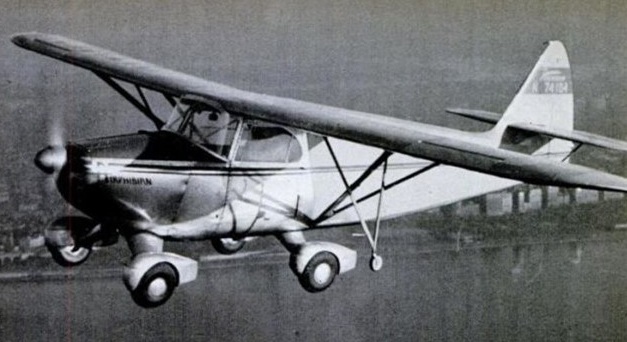
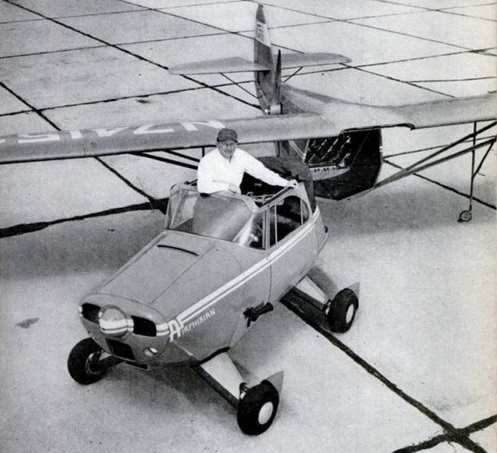
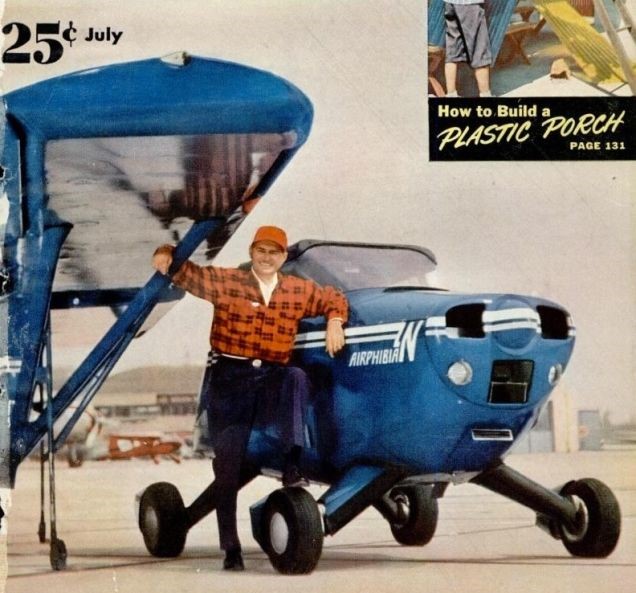
Robert Edison Fulton, an engineer of Danbury, Connecticut, in 1946 built a roadable aircraft which entered production, albeit only in very limited numbers, as the first fully licensed flying automobile in the United States.

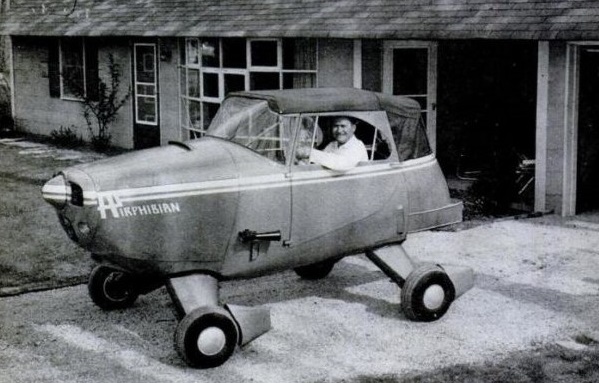
His Airphibian was a four wheeled, two seat, high wing monoplane with a removable airframe which could be rolled away on its own retractable wheels after disconnection, leaving an aluminium bodied soft top coupe car.
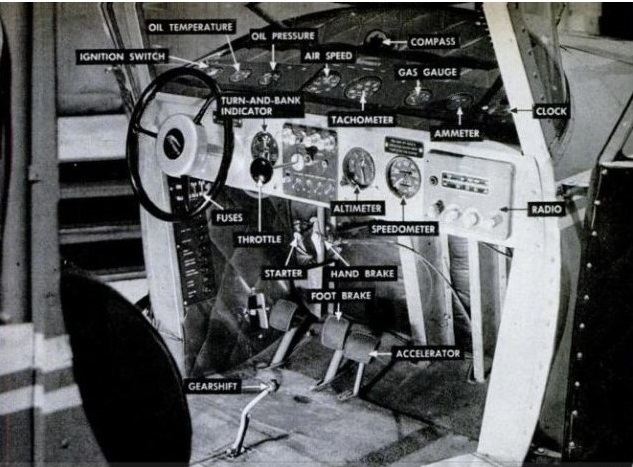
Fulton used a 165 hp Franklin aero-engine for air and road drive, with automatic hook up of all flying controls. The aircraft’s rudder pedals became brake and accelerator in the car, while landing lights doubled as headlamps. A safety device prevented the engine starting with the propeller installed unless all flying controls were connected and locked.
The airphibian was used extensively on business and pleasure trips.

The prototype Airphibian flew on November 7,1946, and was certificated in December 1950 as the Fulton Model FA-2 Airphibian. A production model, designated FA-3, appeared in 1954.

Life magazine published a photo story of a flying visit to the theatre by the Fultons, who flew 100 km (62 miles) from their Connecticut home to New York’s La Guardia Airport at 180 kph (110 mph), unhitched the aircraft portion and drove across town to Broadway, all in less than an hour. A fabric top was buttoned from the windscreen for driving in bad weather.

So successful was the Airphibian that Fulton announced in 1949 that he would build production versions for sale at $7000 to $9000 each. ‘It flew fine,’ a test pilot reported during the Airphibian’s certification trials, ‘and it drove well, too, but it just didn’t perform in the air because of all that weight and drag.’ By 1950 the first three Airphibians had been driven over 322,000 km (200,000 miles) and made more than 6000 car/plane transformations. In all eight were built before Robert Fulton sold the rights to the design to private investors who never pursued it.

The Fulton FA-3 Airphibian two-place, powered by a 160 hp Franklin engine featured improvements including cantilever wings and outrigger wheels, which support the wings when detached, which retract. They were fixed in previous types.

Fulton FA-3 Airphibian

Fulmar Tiger / Bold / Jumbo

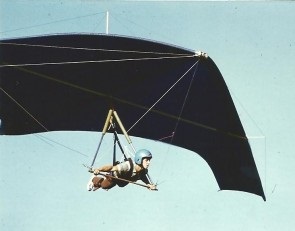
A tandem two seat single engined flex wing aircraft with weight shift control. Rogallo wing with keel pocket. Pilot suspended below wing in trike unit, using bar to control pitch and yaw/roll by altering relative positions of trike unit and wing. Wing braced from above by kingpost and cables, from below by cables; floating cross tube construction with 85% double surface not enclosing cross tube; pre¬formed ribs. Undercarriage has three wheels in tricycle formation; no suspension on any wheels. Push right go left nosewheel steering independent from yaw control. Optional brake on nosewheel. Aluminium tube trike unit, without pod. Engine mounted below wing driving pusher propeller.
This two seater trike unit was originally called the Tiger and is available with two different wings: the Bold wing, in production since 1981, and the more recent Jumbo wing. In April 1983, the complete assembly was renamed Jumbo. Our data refers to the later version.
The wing is foldable into a package 16.4 x 1. 3 x 1. 0 ft (5. 00 x 0. 40 x 0. 30 m) and the trike unit folds down to 6. 1 x 2.3 x 2.3 ft (2. 10 x 0. 70 x 0.70 m).

Jumbo
Length overall 13.2 ft, 4.00 m.
Height overall 9.1 ft, 3.00m.
Wing span 34.5ft, 10.50m.
Nose angle 130 deg.
Total wing area 205 sq.ft, 19.0 sq.m.
Wing aspect ratio 5.8/1.
Wheelbase 5.1 ft, 1.80 m.
Nosewheel diameter overall 12 inch, 30 cm.
Main wheels diameter overall 16 inch, 40 cm.
Engine: Hirth 2701R.
Max power 43hp at 6750rpm.
Propeller diameter and pitch 59 x 28 inch, 1.50 x 0.70 m.
Toothed belt reduction, ratio 2.6/1.
Max static thrust 265 lb, 120 kg.
Power per unit area 0.21 hp/sq.ft, 2.3hp/sq.m.
Fuel capacity 4.0 US gal, 3.3 Imp gal, 15.0 litre in main tank; 7.9 US gal, 6.6 Imp gal, 30.0 litre in reserve.
Empty weight 287 lb, 130kg.
Max take off weight 707 lb, 320kg.
Payload 420 lb, 190 kg.
Max wing loading 3.45 lb/sq.ft, 16.8kg/sq.m.
Max power loading 16.4 lb/hp, 7.4 kg/hp.
Max level speed 50 mph, 80 kph.
Never exceed speed 62 mph, 100 kph.
Max cruising speed 44 mph, 70 kph.
Economic cruising speed 40mph, 65kph.
Stalling speed 22 mph, 35 kph.
Max climb rate at sea level 500 ft/min, 2.5 m/s.
Min sink rate 344ft/min, 1.75m/s.
Take off distance 82ft, 25m.
Landing distance 66 ft, 20 m.
Service ceiling 6560 ft, 2000 m.
Range at average cruising speed 62 mile, 100km.

Fulmar Trident

Single seat single engined flex wing aircraft with weight shift control. Rogallo wing with keel pocket. Pilot suspended below wing in trike unit, using bar to control pitch and yaw/roll by altering relative positions of trike unit and wing. Wing braced from above by kingpost and cables, from below by cables; floating cross tube construction with 50% double surface enclosing cross tube; pre-formed ribs. Undercarriage has three wheels in tricycle formation; no suspension on any wheels. Push right go left nosewheel steering independent from yaw control. Optional brake on nosewheel. Aluminium tube trike unit, without pod. Engine mounted below wing driving pusher propeller.
The single seater Trident trike, which incorporates a Rival 183 ft’ (17.0 m2) sail, is the basic model of the Fulmar range. The Trident entry in the London to Paris in September 1982 was one of the most noticeable, not because of the quality of the pilots and the performance of the aircraft, though these were above reproach, but because the sponsor of the Fulmar team, Dior, had decorated the left wing of the Trident with ‘Jules’ logo in large letters. This has earned this single seater the ‘Macho Jules’ nickname throughout most of Europe. The aircraft is offered ready built with a Hirth F 263R engine without reduction drive. This trike is also available with the same engine but fitted with a 2.611 reduction drive.

Length overall 12.6 ft, 3.80 m.
Height overall 9.2ft, 2.80m.
Wing span 34.5ft, 10.50m.
Nose angle 130 deg.
Total wing area 183 sq.ft 17.0 sq.m.
Wing aspect ratio 6.5/1.
Wheel track 5.1 ft, 1.80 m.
Wheelbase 5.5 ft, 1.66 m.
Nose¬wheel diameter overall 12 inch, 30 cm.
Main wheels diameter overall 12 inch, 30 cm.
Engine: Hirth 293 cc engine.
Max power 23 hp at 3800 rpm.
Propeller diameter and pitch 59 x 22 inch, 1.50 x 0.55 m.
V belt reduction, ratio 2.6/1.
Max static thrust 155 lb, 70 kg.
Power per unit area 0.13 hp/sq.ft, 1.4hp/sq.m,
Fuel capacity 2.6 US gal, 2.2 Imp gal, 10.0 litre in main tank; 4.0 US gal, 3.3 Imp gal, 15.0 litre in reserve.
Empty weight 243 lb, 110kg.
Max take off weight 464 lb, 210kg.
Payload 221 lb, 100 kg..
Max wing loading 2.53 lb/sq.ft, 12.4 kg/sq.m.
Max power loading 20.2 lb/hp, 9.1kg/hp.
Max level speed 44 mph, 70 kph.
Never exceed speed 50 mph, 80 kph.
Max cruising speed 37 mph, 60 kph.
Economic cruising speed 32mph, 52kph.
Stalling speed 22 mph, 35 kph.
Max climb rate at sea level 400 ft/min, 2.0 m/sec.
Min sink rate 344 ft/min at 30 mph, 1.7 m/s at 48 kph.
Take¬off distance 100 ft, 30 m.
Landing distance 65 ft, 20 m.
Service ceiling 6560 ft, 2000 m.
Range at average cruising speed 50 mile, 80km.
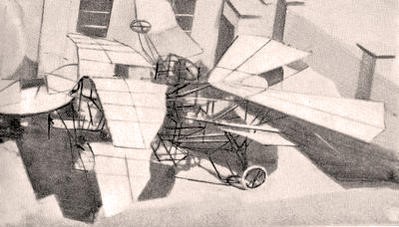
Fulmar HP-16 Héron

Single seat single engined high wing mono¬plane with two axis control. Wing has unswept leading and trailing edges, and constant chord; cruciform tail. Pitch control by eleva¬tor on tail; yaw control by fin mounted rudder; control inputs through stick for pitch/yaw/roll. Wing braced from below by struts; single surface. Undercarriage has three wheels in tricycle formation; no suspension on any wheels. Push right go left nosewheel steering indepen¬dent from yaw control. Optional brake on nosewheel. Aluminium tube framework, without pod. Engine mounted below wing driving pusher propeller.
The MP 16 Heron was designed by Pierangelo Mez¬zapesa, the driving force behind Fulmar. The prototype made its first flight on the 1 February 1983, and became available from April 1983 with two engine options: Sachs 330cc (see per¬formance characteristics below) or Hirth F 263R of 383 cc, which develops at 3900 rpm, an equivalent power (23 hp) to the Sachs. Despite the solidity of its tubular structure, the MP 16 Heron is foldable for transport on a road trailer, its space requirement then being 16.5 x 5.9 x 5.9 ft (5 x 1.74 x 1.75 m). A side by¬side two seater version is at the design stage.

Length overall 16.5 ft, 5.00 m.
Height overall 6.7ft, 2.00m.
Wing span 32.1ft, 10.0m.
Constant chord 4.7ft, 1.40m.
Dihedral 5 deg.
Sweepback 0 deg.
Tailplane span 8.2 ft, 2.50 m.
Total wing area 151 sq.ft, 14.0 sq.m.
Fin area 5.4 sq.ft, 0.50 sq.m.
Rudder area 14.0 sq.ft, 1.30 sq.m.
Tailplane area 13.5 sq.ft, 1.25 sq.m.
Total elevator area 9.2 sq.ft, 0.85 sq.m.
Wing aspect ratio 7.1/1.
Wheel track 5.9ft, 1.75m.
Nosewheel dia¬meter overall 12 inch, 30cm.
Main wheels diameter overall 16 inch, 40cm.
Engine: Sachs SA 340 engine.
Max power 22hp at 5250rpm.
Propeller diameter and pitch 41 x 18 inch, 1.05 x 0.46 m.
No reduction.
Max static thrust 155 lb, 70 kg.
Power per unit area 0.15hp/sq.ft, 1.6hp/sq.m.
Fuel capacity 2.6 US gal, 2.2 Imp gal, 10.0 litre in main tank; 5.3 US ga1, 4.4 Imp gal, 20.0 litre in reserve.
Empty weight 1991b, 90kg.
Max take off weight 419 lb, 190kg.
Payload 220 lb, 100kg.
Max wing loading 2.78 lb/sq.ft, 13.6 kg/sq.m.
Max power loading 19.1 lb/hp, 8.63 kg/hp.
Load factors design; +6.0, 3.0 ultimate.
Max level speed 44 mph, 70 kph.
Never exceed speed 50 mph, 80kph.
Max cruising speed 37mph, 60kph.
Economic cruising speed 34mph, 55kph.
Stalling speed 20 mph, 32 kph.
Max climb rate at sea level 300 ft/min, 1.5 m/s.
Min sink rate 400 ft/min at 31 mph, 2.0 m/s at 50 kph.
Best glide ratio with power off 7/1 at 34 mph, 55kph.
Take off distance 115 ft, 35 m.
Land¬ing distance 66 ft, 20 m.
Service ceiling 6560 ft, 2000 m.
Range at average cruising speed 50 mile, 80km.