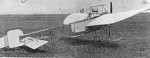
The 1911 Grapperon monoplane designed and built by Grapperon in France.
The 1911 Grapperon monoplane designed and built by Grapperon in France.
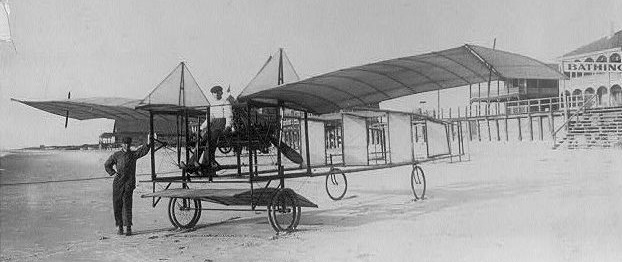
Rudolph R. Grant, who later became Chairman of the Technical Board of the Aeronautic Society of America and Charles Oliver Morse of Norfolk, VA, were busy to develop a mechanism for automatic directional and lateral stability in aeroplanes, an interesting device with air pressure spring-loaded wings and counter-wise adjusted incidence of the small lower wing. The Virginia I monoplane was their first, built in the summer of 1910. It proved to be a stable flyer, that in spring 1911 was tested as a hydroplane in the Willoughby Bay, just North of Norfolk. It might have been the first motor aeroplane built in Virginia.
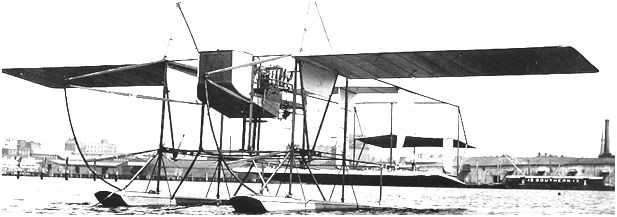
Built in the USA, R. R. Grant’s Aerostable hydroplane of 1913 featured a device whereby the angle of incidence could be changed while in flight. The operator turned a small wheel when changing or adjusting for the proper angle. The wing framework was built of white ash and steel tubing covered with Goodrich alumina cloth. The floats were of the catamaran type, each two ft wide by 21 ft long. Each pontoon was divided into five watertight compartments.
Engine: Emerson two-cycle, 100 hp
Wingspan: 42 ft
Length: 41 ft
Weight: 1600 lb
Mr R.H. Grant is known to have built and flown a single-seat, similar to a BAC Drone, powered by a 390cc A.B.C. engine from his English Electric Wren G-EBNV, post-era. It was flown from Dumfries Gliding Club field, UK.
It is possible Mr Grant also built some aircraft pre-war.
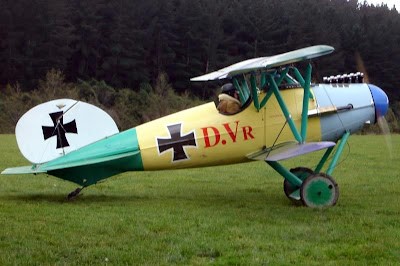
Tom Grant designed and built his 3/4 scale Albatross D V replica from his own plans over about 14 years, which included a building time of around three and a half years.
The fuselage was built up from white pine carvel planking (a boat building technique), with a lightweight fibreglass finish. The wings are of standard spruce spars and ribs with fabric covering. The engine is a 4 cylinder Toyota 480E from a Corolla.
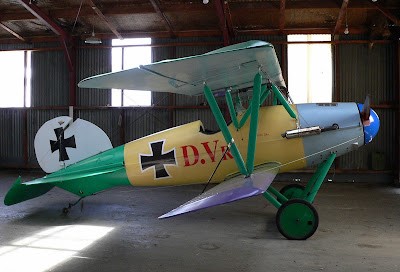
ZK-DVR (c/n TG01) was registered to Tom Grant of Dunedin on 8 November 2007. Tom says that it flies just like it is supposed to, and he had flown around 50 hours.
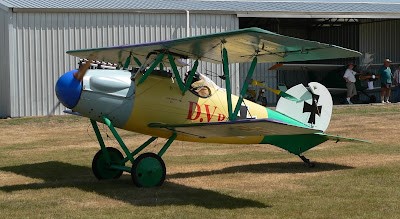
On 26 October 2015 it was reported;
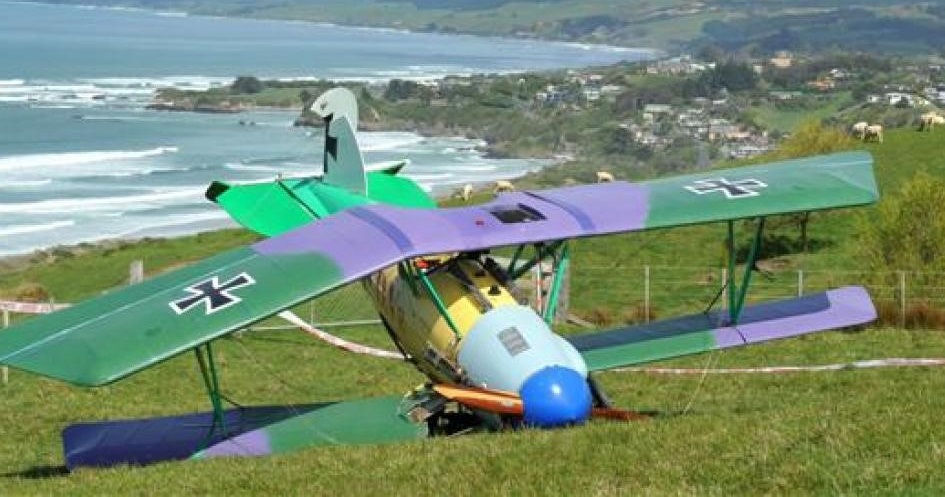
Witnesses to the emergency landing of a replica World War 1 fighter heard the plane coughing before a loud ”boom” gave way to silence as it descended on to a ridge high above Ocean View on Saturday.
Police lauded the quick-thinking pilot for his ”perfect” emergency landing of the three-quarter Albatros D.Va replica on farmland above Brighton Rd about 10.50am.
The pilot, Tom Grant (87), was fine despite the plane hitting a fence on a ridge about 100m above Brighton Rd during the emergency landing, his wife, Jeanette, said.
”It was a controlled landing. He just caught the top of the wire as he came in,” she said.
”He got a tiny bump on his nose … but he’s fine.”
It appeared the landing buckled the plane’s wheels and damaged the right wing and undercarriage.
The plane, which Mr Grant built, was salvageable and would be ”next winter’s project”, Mrs Grant said.
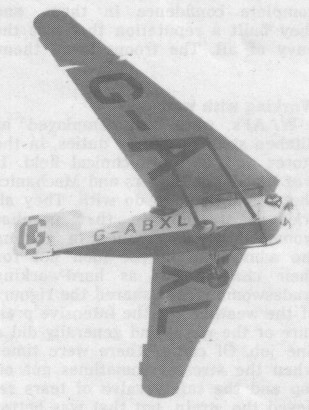
Designed in 1926 by R.F.T. and R.J.T.Granger and C.H.Latimer-Needham, the Archaeopteryx was built over the next four year at Attenborough, Notts. With a parasol configuration it retains a normal fin and rudder.
Granger Archaeopteryx G-ABXL, ailerons taking up the entire wing tips pivoting from a central point.
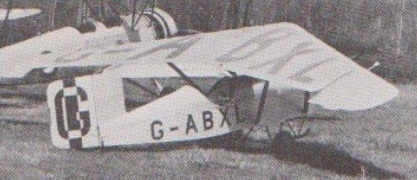
First flown in October 1930, it was flown regularly on short trial hops, mainly from Tollerton, Notts, before being officially registered on 3 June 1932 as G-ABXL cn 3A. The sole example built survived until stored through the war years at Chilwell, and after the war was presented to the Shuttleworth Trust.
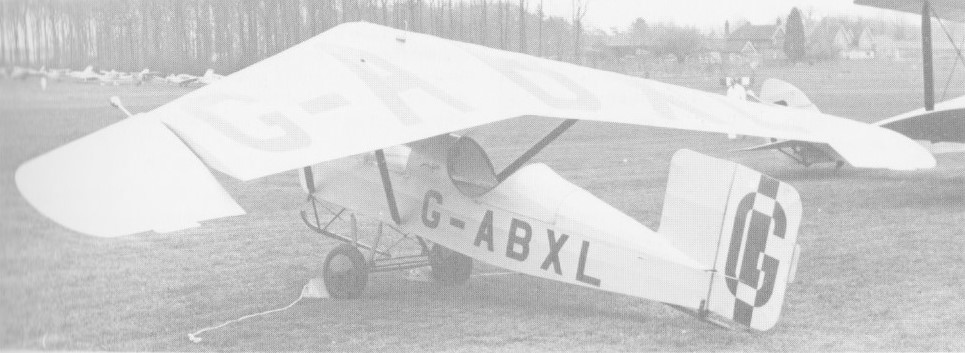
It was restored to flying condition in 1971 and flown from Old Warden since.
Engine: Bristol Cherub I, 32 hp
Wingspan: 27 ft 6 in
Length: 15 ft
AUW: 612 lb
Max speed: 95 mph
The 1909 Grandjean monoplane was designed and built by Rene Grandjean in Switzerland.
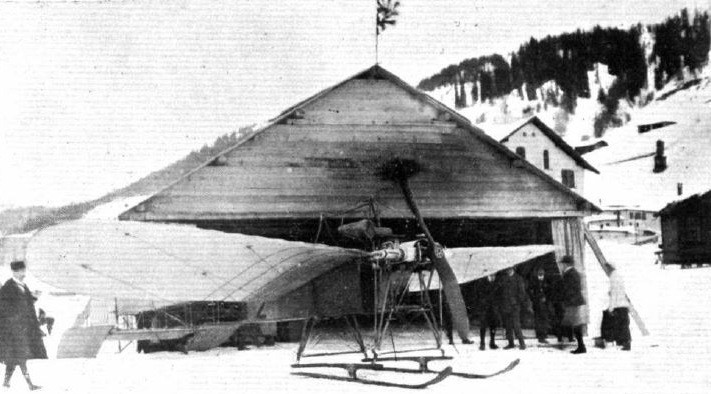
In December 1911 René Grandjean was invited at Davos to fly and here he got the idea to build a ski undercarriage. On 2 February 1912 he made the first take off and landing on skis in Switzerland. His self-built Blériot-like plane was powered by an opposed four-cylinder Oerlikon engine.
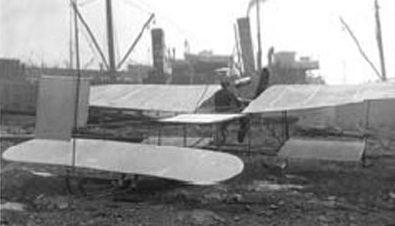
Constructed by engineer Einar Lilloe Gran, the first motorised airplane in Norway had a wing span of 10 meters and cost 12,000 kroner to build. Powered by a 30 hp 2-cylinder Darracq motor, the monoplane was originally put on display in Oslo during March 1910, and then taken to Ringerike where several attempts to get the machine airborne were made, but without any significant results.
The 1913 Gramaticescu monoplane was designed by G. Gramaticescu (who died before the plane was finished) in Romania, and built by M. Herbster in France.
Span: 27’11”
Length: 23′
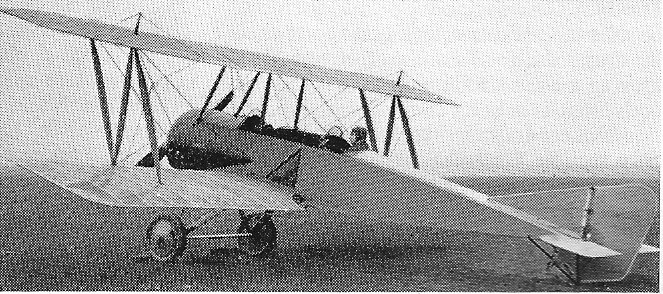
Appearing in 1914, the Grahame-White Military Biplane was designed by J.D. North as a conversion of the floatplane produced to take part in the Circuit of Britain seaplane race.
Powered by a 100 hp Monosoupupe-Gnome engine, it was damaged during a practise flight and, as the 1914-18 War prevented the seaplane race from being flown, it was rebuilt as a military landplane. It was not adopted for production.
Engine: 100 hp Monosoupupe-Gnome
Wingspan: 27 ft 10 in
Length: 26 ft 6 in
Max speed: 80 mph
Landing speed: 42 mph

