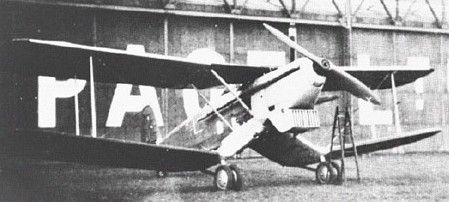
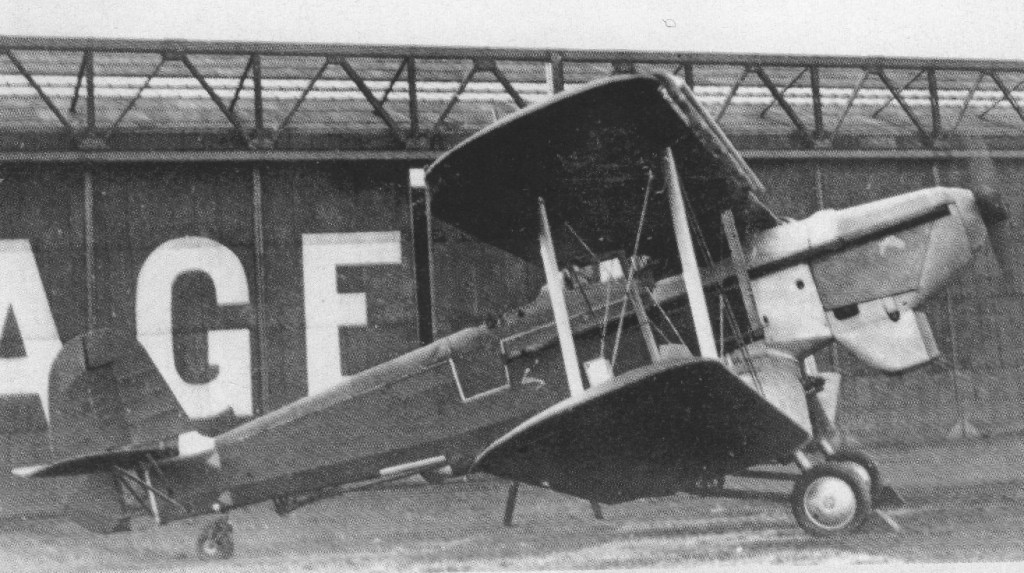
The HP46 was designed to specification M.1/30 for a two seat shipborne torpedo bomber. Powered by an 825 hp Rolls Royce Buzzard III, the HP 46 first flew on 25 October 1932.
The company spent more than £36,000, on the HP46, nearly twice the contract price, but it only flew 5 hr 30 min and was condemned as too dangerous for deck flying. In April 1936 it left Radlett by road for farnborough and was never seen again.
Engine: 1 x 825hp Rolls-Royce Buzzard IIIS Wingspan: 15.24 m / 50 ft 0 in Length: 12.01 m / 39 ft 5 in Wing area: 60.94 sq.m / 655.95 sq ft Max take-off weight: 4812 kg / 10609 lb Empty weight: 2838 kg / 6257 lb Max. speed: 225 km/h / 140 mph Armament: 2 x 7.7mm machine-guns, 1000kg of bombs or a torpedo Crew: 2
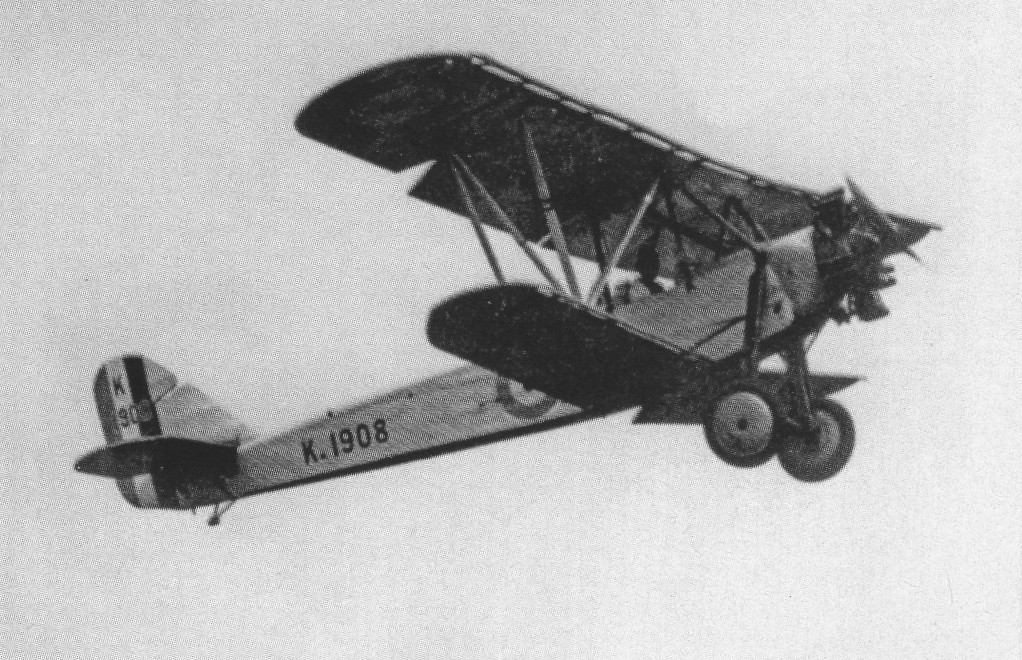
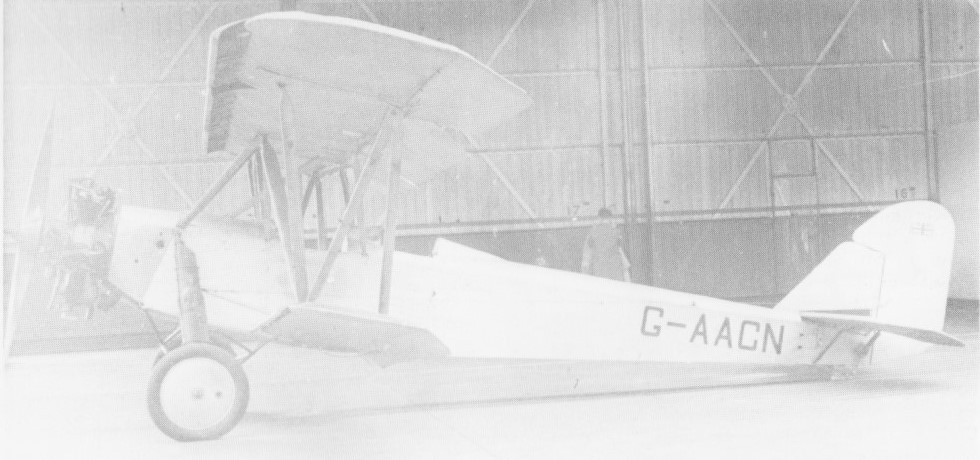
Built to compete in the 1929 Daniel Guggenheim International Safe Aircraft Competition in the USA, the HP.39 Gugnuno was fitted with full span handley page slots and flaps for high angles of attack. Registered G-AACN, the HP.39 was one of only two machines to pass the preliminary tests in the competition, but lost to the Curtiss Tanager. It was then tested at RAE Farnborough as K1908, and became a regular performer at air displays. In 1934 it was presented to the Science Museum, and now resides at Wroughton.
Engine: Armstrong Siddeley Mongoose II, 155 hp Wingspan: 40 ft Length: 26 ft 9 in AUW: 2150 lb Mas speed: 113 mph Min speed: 34 mph
Intended as a Hawker Horsley and Fairey Fawn replacement, the sole Type H (HP.34) Hare high altitude day bomber underwent numerous modifications and engine changes. First flown on 24 February 1928 it underwent official tests at Martlesham Heath in July 1929 powered by a Bristol Jupiter VIII radial and two blade propeller, after being fitted with a divided undercarriage to allow carriage of a torpedo. Two 620 lb bombs were carried beneath the wings.
In 1932 J8622 was sold to a private buyer, registered G-ACEL, and moved to Hanworth, but it never flew again. Its remains were scrapped in 1937.
Engine: 1 x 450hp Gnome-Rhone Jupiter Max take-off weight: 2607 kg / 5747 lb Empty weight: 1485 kg / 3274 lb Wingspan: 15.24 m / 50 ft 0 in Length: 9.80 m / 32 ft 2 in Wing area: 42.18 sq.m / 454.02 sq ft Max. speed: 224 km/h / 139 mph Ceiling: 5029 m / 16500 ft Armament: 2 x 7.7mm machine-guns, 2 x 250kg bombs or a torpedo Crew: 2
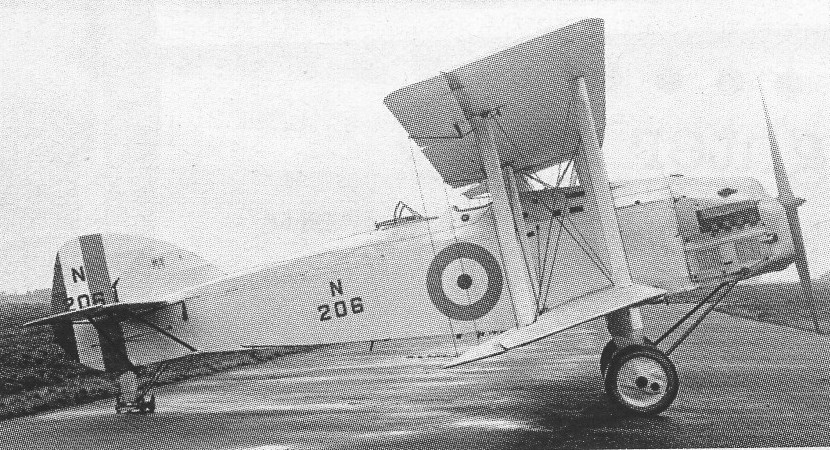
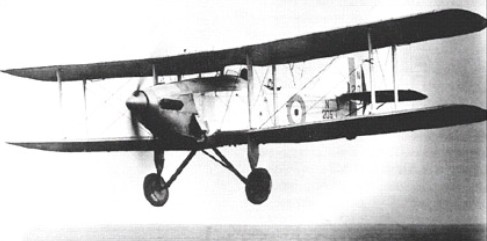
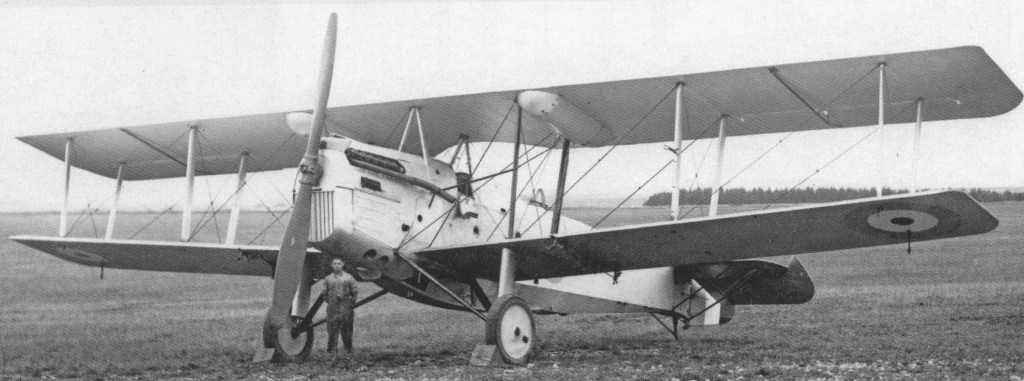
Two prototypes of the HP.31 Harrow were ordered as competition for a two seat fleet torpedo bomber/reconnaissance aircraft to replace the Blackburn Dart under specification 21/23. In their initial form a 470 hp Napier Lion was installed.
As a result of experiments with the second machine, N206, the first, N205, was rebuilt as the Harrow Mk.II, initially with a 630 hp Lion XI and then a slightly more powerful Lion XA. These engines had rear mounted carburettors which allowed an improved nose profile.
Harrow Mk.II
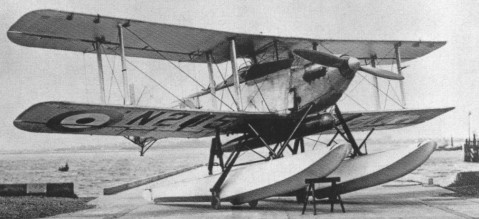
Following trials at Martlesham Heath in landplane configuration, N206 was fitted with floats in March 1928 followed by trials at the Marine Aircraft Experimental Establishment at Felixstowe, and was demonstrated to the Finnish and Argentinian air attaches. It was eventually written off as unfit for RAF service as a seaplane. The competition was won by the Blacburn Ripon in June 1927. Experiments continued towards a revised Harrow.
H.P.31 Mark I Engine: 1 x 470hp Napier Lion V 12 Max take-off weight: 3242 kg / 7147 lb Empty weight: 1998 kg / 4405 lb Wingspan: 13.41 m / 43 ft 12 in Length: 10.29 m / 33 ft 9 in Wing area: 52.30 sq.m / 562.95 sq ft Max. speed: 171 km/h / 106 mph Ceiling: 2652 m / 8700 ft Range: 708 km / 440 miles Armament: 1 x Lewis gun, 1 torpedo or 3 x 235kg bombs
Air ministry specification D of R4B (later revised as 26/23) for a single engined long range bomber led Handley Page to produce the 60 ft span C/7 (HP.28) Handcross, with a Rolls Royce Condor III. The pilot was located high under the cabane, with the prone bomb aimer’s position beneath him. There was a Lewis gun on a scarff ring in the mid-upper position and another in the fuselage underneath and behind the prone position. The pilot had a fixed forward firing Vickers gun. The 550 lb bombload was recessed into the left side for the fuselage belly faring. The first of three built, J7498, first flew on December 6, 1924, but the Hawker Horsley won a production order.
Engine: Rolls Royce Condor III Wing span: 60 ft Crew: 2
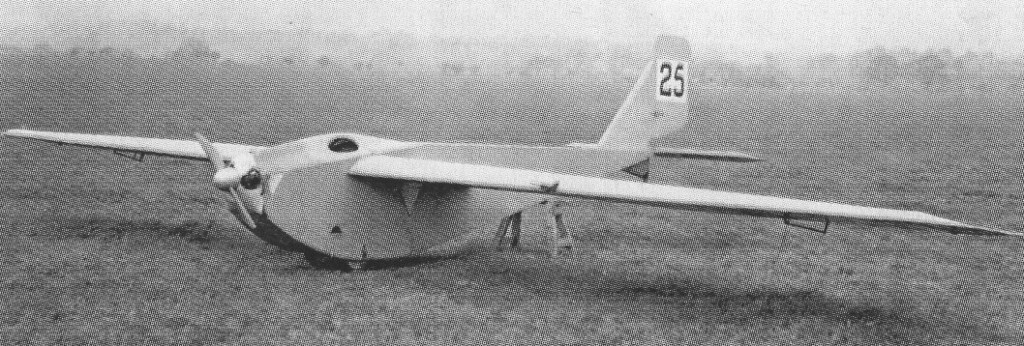
In 1923, the HP.22/23 motor glider was designed by W.H.Sayers, three were entered for the Lympne light aeroplane competitions of that year. In an attempt to improve the HP.22/23 performance, Harold Boultbee lowered the wing to a shoulder position, increased its incidence, faired the 397cc ABC into the nose, moved the wheels forward, and put a hinged lid over the cockpit. The second machine, No.25, managed to fly nearly three laps of the Lympne course at full throttle on 11 October 1923, piloted by Gordon Olley, but loss of power forced its retirement. On a second attempt on 13 October, No.25 was blown to the ground after take-off and its wing was smashed. The third machine was not ready in time.
Three prototypes, first flown on 6 December 1924. No production.
Engine: 1 x 650hp Rolls-Royce Condor III Max take-off weight: 3405 kg / 7507 lb Empty weight: 2368 kg / 5221 lb Wingspan: 18.29 m / 60 ft 0 in Length: 12.19 m / 39 ft 12 in Wing area: 73.21 sq.m / 788.03 sq ft Max. speed: 193 km/h / 120 mph Ceiling: 5867 m / 19250 ft Range: 805 km / 500 miles Armament: 3 x 7.7mm machine-guns, 1 x 250kg or 2 x 100kg bombs Crew: 2-3
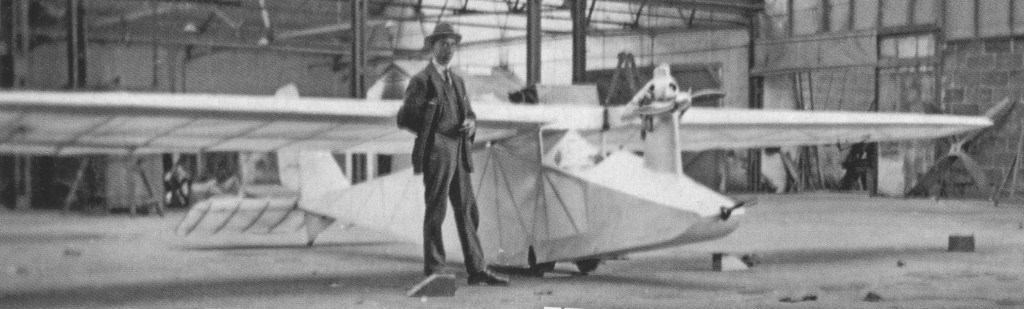
In 1923, the HP.22/23 motor glider was designed by W.H.Sayers, three were entered for the Lympne light aeroplane competitions of that year. The first, No.23, was initially powered by a pylon mounted air cooled 397cc ABC flat twin. It failed to fly, even when repowered with a 500 cc Douglas. Attempted catapult launches by four men pulling a rubber cord also failed and No.23 was scratched from the competition.
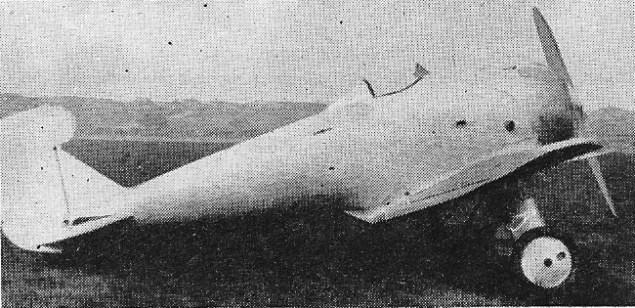
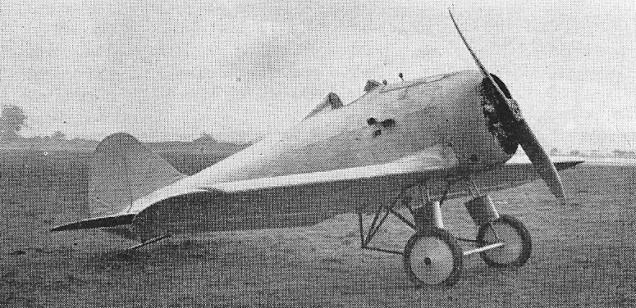
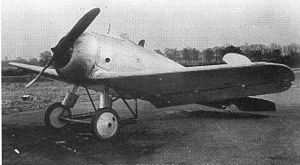
In 1921 the United States Navy drew up a specification for a single-seat fighter aircraft capable of operating either as a landplane from its aircraft carriers or from the water as a seaplane, seeking designs from both American and European companies. The British aircraft manufacturer Handley Page, which had recently developed the leading edge slot, realised use of slots and flaps could allow a high-speed monoplane to fly at the low speeds needed for carrier operations with a much higher wing loading than a normal biplane, and decided to develop an aircraft to meet this requirement.
The resulting design, given the Handley Page designation Type S (and later retrospectively known as the H.P.21) was a small, low-wing cantilever monoplane, with full-span leading edge slots and full-span slotted flaps. The airframe was a plywood monocoque, with the fuselage capable of being broken into two sections for storage on board ship. It had a tailwheel undercarriage that could be replaced by two floats. Although designed to use engines of up to 400 hp (298 kW), the prototypes were fitted with a much less powerful surplus Bentley BR2 rotary engine.
The US Navy placed an order for three prototypes, designated HPS-1 (Handley Page Scout) in the contemporary US Navy designation system. The first prototype flew on 7 September 1923, but proved to have poor handling, with the rudder proving to be ineffective. The second prototype was built with its wings fitted with six degrees of dihedral, flying in February 1924. It had much improved handling, and showed good speed at low level. However, when undergoing full load trials for the US Navy at Martlesham Heath, it was wrecked when its undercarriage collapsed on landing, and the US Navy cancelled the contract, with the third prototype, intended to be a floatplane, not completed.
Powerplant: 1 × Bentley BR2, 230 hp (170 kW) Propeller 2-bladed fixed-pitch Wingspan: 29 ft 3 in (8.92 m) Wing area: 114.5 sq ft (10.64 m2) Length: 21 ft 5.5 in (6.541 m) Height: 9 ft 7 in (2.92 m) Empty weight: 1,320 lb (599 kg) Max takeoff weight: 2,030 lb (921 kg) Maximum speed: 146.5 mph (235.8 km/h, 127.3 kn) Stall speed: 44 mph (71 km/h, 38 kn) Endurance: 3 hours Service ceiling: 21,000 ft (6,400 m) Rate of climb: 1,800 ft/min (9.1 m/s) Crew: 1 Armament: Provision for 2× .30 in (7.62 mm) Marlin machine guns
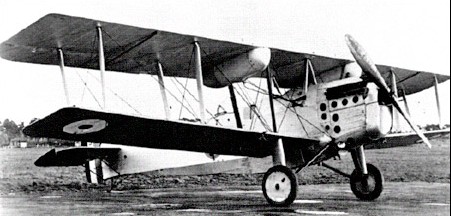
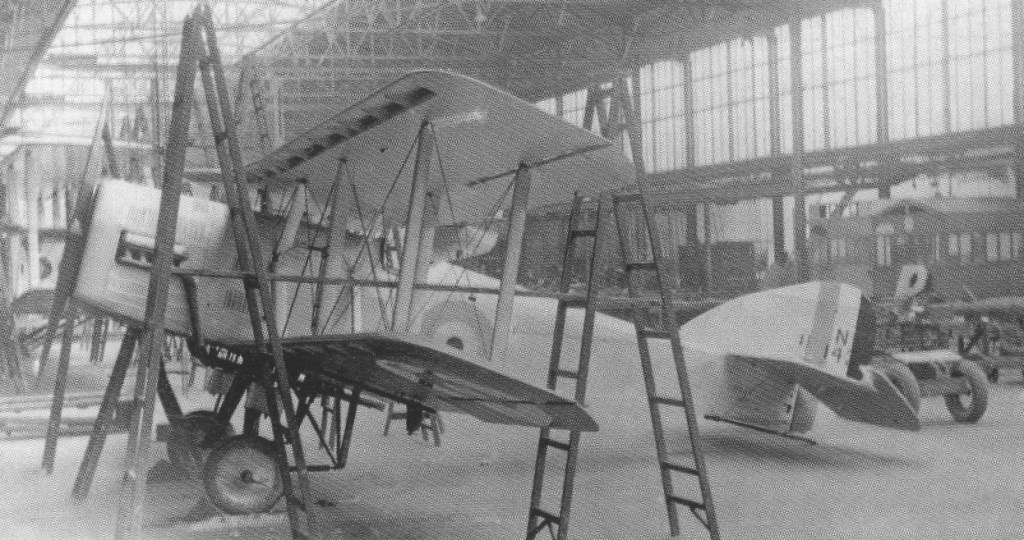
In response to specification 3/20 for a single seat deck landing torpedo carrier Handley Page built the HP.19 Hanley. The all wood Hanley had folding wings with full span leading edge slats and a divided undercarriage to fit a torpedo. Three were powered by a 450 hp Napier Lion IIB, the first, N143, first flew on 3 January 1922. Despite extensive modification trying to improve performance, the type did not enter production. Two, one prototype and one new airframe were supplied to Russia.