Tandem two-seat cabin monoplane
1 engine
Howard NH-1
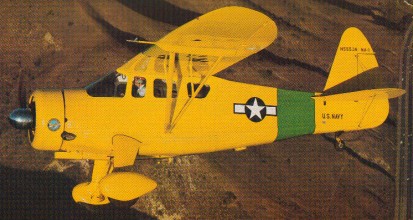
US Navy instrument trainer.
Howard DGA-15
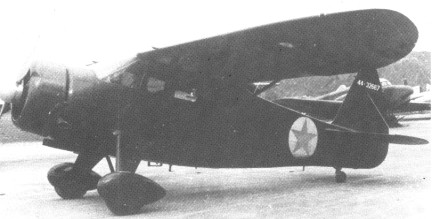
The DGA-6 Mister Mulligan design was developed through several models into the Howard DGA-15 five-seat cabin monoplane which served with the U.S. Navy in transport, instrument trainer and ambulance roles during the Second World War.
The last DGA-15 came off the Howard assembly line in 1943.
Howard DGA-8
Howard was planning the DGA 8 five place cabin airplane, one of the first truly classy personal transportation airplanes. By now, Israel was not only designing and building them but flight testing them as well. He says that to this day, there has never been an AD issued for his DGA 8.
Howard DGA-6 Mister Mulligan
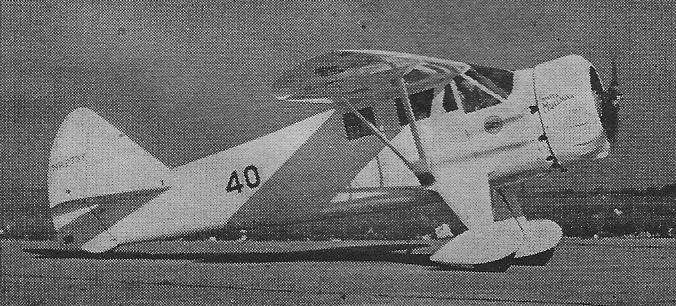
In 1933, Benjamin Odell Howard, a pilot for United Air Lines, decided that he wanted to get into the corporate airplane business. To do it, he chose to design and build a fast four place machine to win the Bendix Trophy cross country race. This would both bring the plane instant notoriety and give him prize money to help defray the cost of development. He enlisted the help of a promising young engineer named Gordon Israel in designing Mister Mulligan, a high wing, strut braced cabin monoplane. Benny Howard had discovered the magic of supercharging and high altitude flight. In 1935, he and Israel flew Mister Mulligan at 20,000 feet and above from Los Angeles to Cleveland and won the Bendix race at an average speed of 238.7 mph.
With DGA-6 Mister Mulligan Howard won all three major American racing titles in 1935, and this design was developed through several models into the Howard DGA-15.
Howard DGA-5 Mike
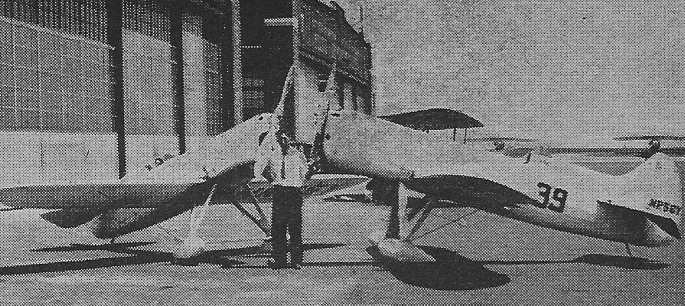
1938
Howard DGA-4 Ike

1938
Howard DGA-3 Pete
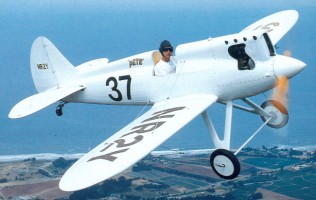
An original 1930 race aircraft, built for the U.S. National Air Races.
Pete, a closed course racer with a compar¬atively small 318 cubic inch 90 horsepower Wright Gypsy. Gordon Israel handled the structural design of the airframe and assembled it as well. Its success can be measured by its win¬ning five firsts and two thirds at its first out¬ing, in 1930. And the two third place finishes came in the 1,000 inch and unlimited dis¬placement classes.
The DGA-3 Pete racer, was succeeded by DGA-4 Ike and DGA-5 Mike.
Engine: Curtiss Wright Gipsy, 90 hp.
Max speed: 168 mph.
Hovey Whing-Ding
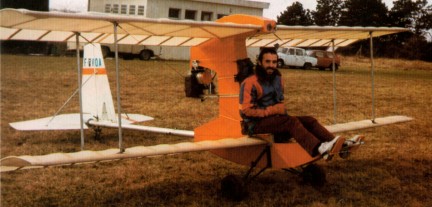
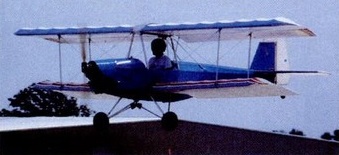
Single seat single engined biplane with conventional three axis control. Wings have un¬swept leading and trailing edges, and constant chord, conventional tail. Pitch control by elevator on tail; yaw control by fin mounted rudder; roll control by full span ailerons on each wing; control inputs through stick for pitch/roll and bar for yaw. Wing braced by struts, and transverse X cables; wing profile Hovey 10; double surface. Tail surfaces of plywood-reinforced foam core. Undercarriage has three wheels in tail dragger formation. Fiberglass-covered laminated fir suspension on main wheels. Push right go right tailwheel steering connected to yaw control. Mahogany plywood closed-box fuselage, without pod, 3” aluminum tube tail boom foam filled for stiffness. Fuselage accommodates seat, rudder bar, standard controls and wing spar sockets. Engine mounted between wings driving pusher propeller.
Bob Hovey started to design the Whing Ding in October 1970 and at the same time he started to build the prototype. The result was that it accomplished its first flight in February 1971, only five months later.
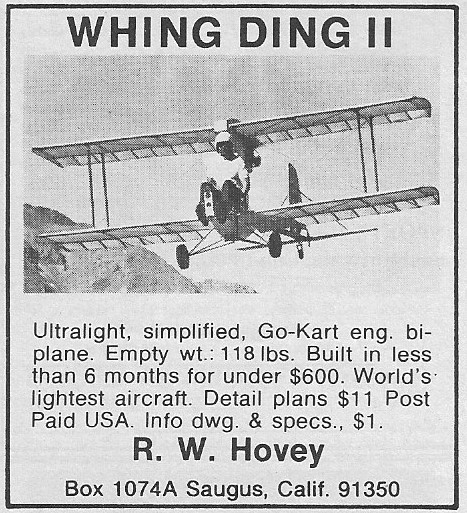
Bob’s objective was to design a single seater which was easy to build in minimum time, offering the qualities of a STOL aircraft (short take off and landing), and quickly demountable to fit on to its specially designed road trailer. This 15-hp, 300-pound gross-weight biplane is the ultimate in lightness and simplicity. The tail surfaces are constructed from ½-inch thick Styrofoam art-board faced with high strength kraft paper on both sides, with the critical areas reinforced with 1/8-inch plywood gussets. The tail boom is a 3-inch aluminum pipe filled with foam to resist buckling. The fuselage is basically a 6-inch wide box of plywood filled with foam that serves as an engine mount and a mast support for the wings. The prop is belt-driven from a 15-hp McCulloch two-cycle go-kart engine. The wings have two spars and are fabric covered. The prototype established a record for light aircraft, with an empty weight of less than 121 lb (55 kg), but its designer had to abandon the original design of the tail structure which was made from polyurethane foam covered in kraft paper.
The wing section is an in house design, the Hovey 10, and the two wings are of equal span, staggered by 4O and having 1 O of dihedral. Their structure is a twin spar design in wood, using tubular metal ribs and with a polyurethane foam leading edge, the covering being fabric. The fuselage has a pine frame with mahogany plywood cladding and is filled with polyurethane foam. The pilot sits in front in the open air and leans back on a pylon which joins the two wings and also carries engine. The wings on each side are joined by two straight struts and rigged with two flying and landing wires in an X configuration on each half wing. Construction of the Ding requires around 400 hr.
Engine: McCulloch MC-¬101AA, 12.5 hp at 8000 rpm.
Propeller diameter 48 inch, 1.22m.
No reduction.
Power per unit area 0.13 hp/sq.ft, 1.4 hp/sq.m.
Fuel capacity 0.5 US gal, 0.4 Imp gal, 2.0 litre.
Length overall 13.0 ft, 3.96 m.
Height overall 5.33ft, 1.62m.
Wing span 17.0ft, 5.18m.
Dihedral 1 deg.
Sweepback 0 deg.
Total wing area 98 sq.ft, 9.1sq.m.
Wing aspect ratio 2.9/1.
Empty weight 122 lb, 55kg.
Max take off weight 310 lb, 140kg.
Payload 188 lb, 85kg.
Max wing loading 3.16 lb/sq.ft, 15.4kg/sq.m.
Max power loading 24.8 lb/hp, 11.2kg/hp.
Max level speed 50mph, 80kph.
Never exceed speed 60mph, 97 kph.
Max cruising speed 40 mph, 64 kph.
Stalling speed 26 mph, 42 kph.
Max climb rate at sea level 100ft/min, 0.5m/s.
Take off distance 250 ft, 75 m.
Landing distance 150 ft, 45 m.
Service ceiling 4000 ft, 1220 m.
Range at average cruising speed 20 mile, 32 km.
Hp range: 8-15
Length: 13 ft
Wingspan: 17 ft
Wingarea: 98 sq.ft
Empty weight: 122 lb
Gross weight; 310 lb
Fuel capacity: 1 USG
Top speed: 45 mph
Cruise: 35 mph
Stall: 28 mph
Range: 28 nm
ROC: 200 fpm
TO dist: 250 ft
Landing dist: 100 ft
Service ceiling: 2000 ft
Seats: 1
Landing gear: tailwheel
Engine: McCulloch, 12 hp
Hp range: 8-15
Length: 13 ft
Wingspan: 17 ft
Wingarea: 98 sq.ft
Empty weight: 123 lb
Gross weight: 310 lb
Fuel capacity: 3 USG
Cruise: 35 mph
Stall: 24 mph
ROC: 200 fpm
TO dist: 250 ft
Landing dist: 100 ft
Seats: 1
Landing gear: tailwheel
LSA: yes
Hovey Delta Hawk
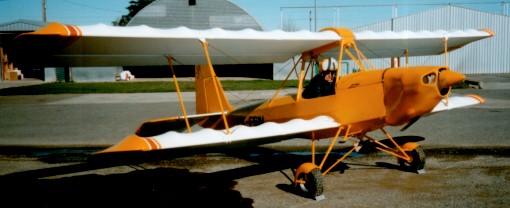
The Delta Hawk is all pop-riveted aluminum tube construction covered with light weight dacron. Full span aileron with three-axis controls.
In 1984 the 40 hp Hovey Delta Hawk was sold as plans, $80, plans plus material kit, or fully assembled for $9250.
Gross Wt. 446 lb.
Empty Wt. 248 lb.
Fuel capaci¬ty 3 USG.
Wingspan 24ft.
Engine Kawasaki 440
Reduction 2.25/1.
Cruise 45 mph.
Stall 27 mph.
Climb rate 700 ft

