A small helicopter, it can be stored in a single car garage, can be built in any home workshop with simple tools. It has full cyclic, full collective, tail rotor pedals, twist grip throttle and is capable of vertical take-off and landing – a VTOL helicopter. The Indian is capable of hovering, forward, backward with sideward flight and autorotation. A homebuilt helicopter using “off-the-shelf components” it can be built as an ultralight helicopter. It is constructed with bolt together 4130 chromoly steel tubing frame (and 6061-T6 aluminum tubing) and could be built for under $8,000 including engine using off-the-shelf components. The build time was estimated at 300-800 hours depending on ability.
Dual carb, dual CDI 50-65 hp engine, 2 cycle, two cylinder inline, fan cooled Compact Radial, Rotax or Hirth aircraft engines – recommended A 55hp+ motorcycle engine with mount or other engine may be used Main rotor blades are NACA 0012 – 21′ x 8″ 425 RPM Tail rotor blades are NACA 0012 – 36″ x 3.5″ 3000 RPM Empty weight – 254 lbs Gross weight – 525 lbs Useful payload – 273 lbs Length – 15′ 9″ Width – 7′ Height – 7′ 6″ Cruise speed – 63 mph Top speed – 75 mph Ceiling – 9000′ Fuel – 5 gallons/1.25 hrs Range – 100 miles
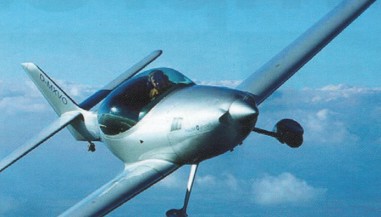
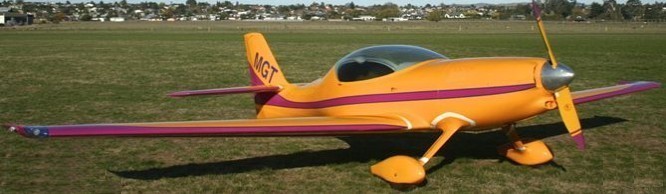
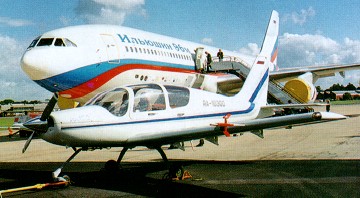
The Impulse 100 took three development and 1600 hours of flight testing (the prototype completing 1200 hours) Tested safe load factors were +-5,6G with a safety margin of 1,725. Kit quality control is achieved by vacuum bagging every individual composite piece. The cockpit has adjustable seats and unobstructed view through the canopy. Power is by a Jabiru 3300 engine consuming automotive fuel.
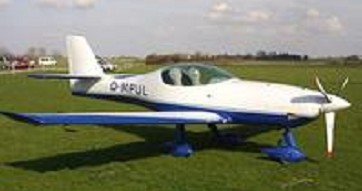
The Carbon Fibre, German Kit Plane comes with dual controls & brakes, landing light, wingtip strobes, and electric flaps.
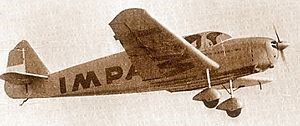
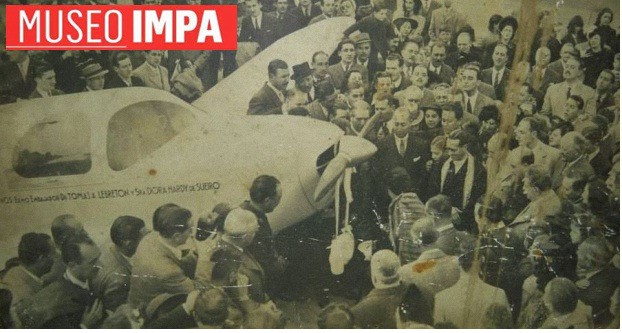
The IMPA Tu-Sa, (IMPA – Industrias Metalúrgicas y Plasticas Argentinas S.A.), or Impa Tu-Sa-O, was a civil trainer developed in Argentina in the 1940s for aeroclub use. It was a conventional, low-wing monoplane with wide-track fixed tailwheel undercarriage. Frst flown on 17 April 1943, approximately 25 were built as LF-1 during 1943-1944. Derived directly from the RR-11, the Tu-Sa (or Tu-Sa-O) initially had the same 65hp Lycoming O-145-B2 engine but that was later upgraded to a 80hp Continental.
In service, the aircraft demonstrated a number of serious and fundamental design flaws that led to a series of accidents and pilots joking that Tu-Sa stood for Todo Un Sarcófago Aéreo (“Altogether an aerial coffin”). When it became apparent that the defects could not be corrected without a complete redesign of the aircraft, they were withdrawn from use.
IMPA products included a prototype RR-11 two-seat cantilever low-wing cabin monoplane. The sole example of this was built in 1942 by its designer Alfredo Davinz Ferrer.
The initiative had come from the founder of IMPA, Eng. Jose Mario Sueiro, who amidst the backdrop of the Second World War, decided to enter the aviation industry. Davins Alfredo Ferrer designed the RR-1 and oversaw its construction that took place in the 4th floor of the factory
IMPA workers not only developed the body of the plane, but the instruments: speedometers, tachometers, compasses, etc. It was noted that there was no way out to the street, a neighbor recalling they even broke one of the walls of the factory to remove.
Sueiro made the maiden flight of July 25, 1942 at the airfield of Pacheco, accompanied by sr. Ciro Comi, which made headlines in major Argentine newspapers. The event was attended by members of the company; national authorities, as the director of Military Industries, Colonel Savio and the director of Civil Aviation, Dr. Samuel Bosch; and the president of the UIA, Luis Colombo.
Lycoming O-145-B2, 65 hp Wingspan: 11.05 m Length: 7.42 m Wing area: 13 m² Maximum ceiling: 5,000 m Maximum speed 162 km / h Power performance speed: 155 km / h Cruising speed: 143 km / h Endurance: 5 hr
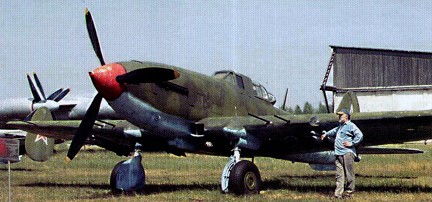
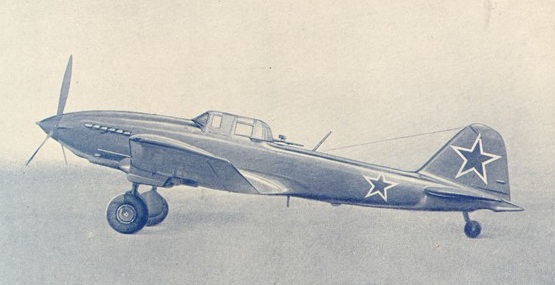
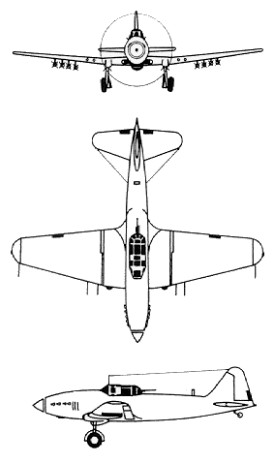
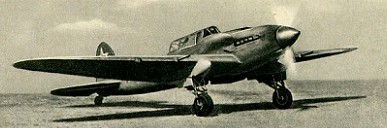
To provide a replacement for the II-2 Shturmovik (ground-attack aircraft), the llyushin design bureau developed two different prototypes in 1943. The Il-8 and Il-10. The Il-10M attack aircraft was created after a proposal by the Soviet Air Force Marshal Pavel Zhigarev.
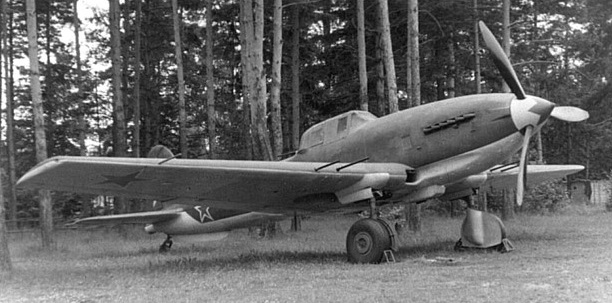
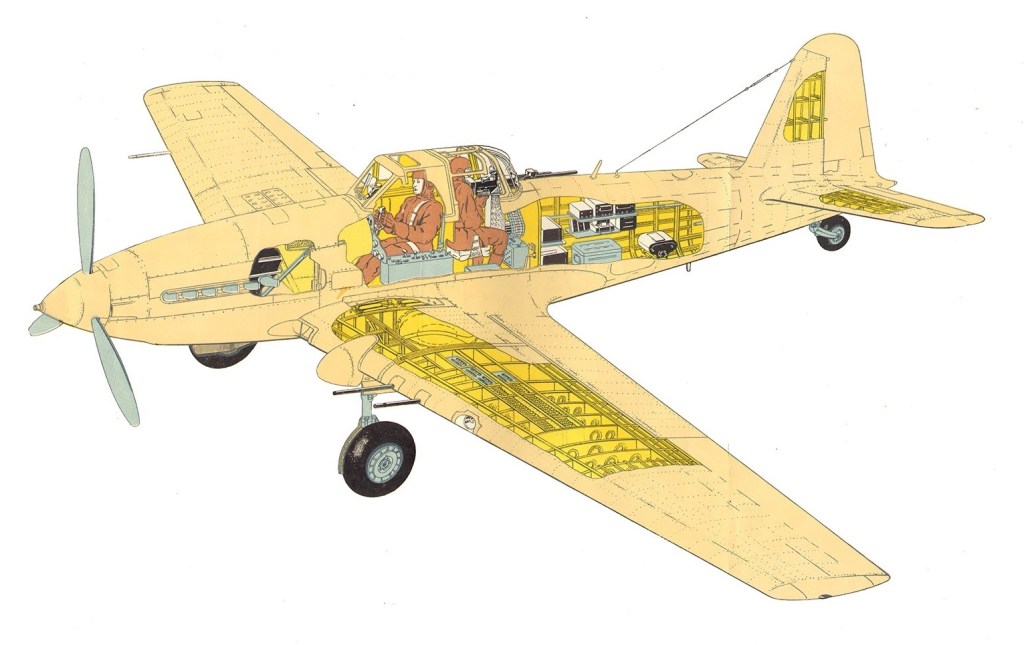
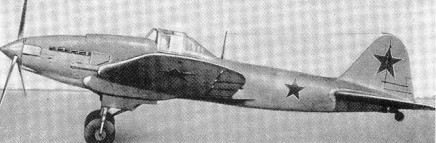
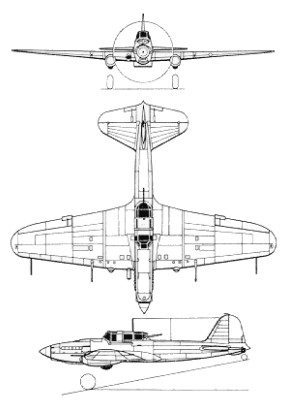
The II-8 was rejected by the Council of Ministers in favour of the contemporary llyushin Il-10 M, which first flew on 2 July 1951, piloted by Ilyushin’s chief test pilot V. Kokkinaki. The Il-10 was a completely new design of all-metal construction and improved aerodynamic form. It provided better crew accommodation, the gunner seated with his back to the pilot in an enlarged cockpit, and both crew members were located within the protective armoured shell. Revised main landing gear units retracted within the wing, eliminating the large landing gear fairings of the II-2 and requiring only small fairings over the pivoting mechanism.
Early favourable reports of the prototype test programme led to a batch of pre-series machines, quantity production being initiated in August 1944, with evaluation in operational regiments starting two months later. The type was used first in operations in February 1945 and by that spring output reached a peak. Many regiments re-equipped with the Il-10 before the German surrender, and a considerable number took part in the brief but large-scale operations against the Japanese in Manchuria and Korea during August 1945.
Production of the Il-10 continued post-war with Soviet factories building 4,966 machines, the last leaving the production lines in 1955. Additionally, ll-10s were also built at the Czech Avia factory, under the designations B-33 and CB-33, the CB-33 being the equivalent of the II-10U trainer variant. Czech production finished in 1954 when over 1,200 examples had been completed.
From 1951 onwards Soviet production had concentrated on the II-10M which featured an entirely new wing of revised planform and deeper aerofoil section, a slightly lengthened fuselage, modified landing gear with increased track, increased fuel capacity, and significantly improved armament. However a lot of equipment that the designers had planned to install on the new machine needed numerous improvements, and so production of the Il-10M started only in 1953. There were 146 aircraft built.
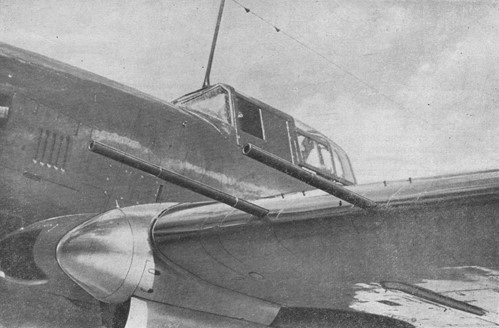
The Shturmovik was armed with four wing-mounted 23-mm NR-23 cannons, plus one 20-mm B-20-EN cannon installed in the VU-9M rear turret. The normal ammunition load was 600 shells for the NR-23’s and 150 shells for the rear gun.
Aside the cannon armament the aircraft could carry 400 kg of bombs and up to 600 kg in an overloaded configuration. The bombs were loaded into two bomb bays and on external BD-2 mounts fitted under the fuselage in front of the bomb bays. Additionally the Il-10M could be equipped with BD-3 bomb mounts on the wing hardpoints.
Alternatively, the new machine was able to mount four launch tubes on wing pylons that were capable of shooting unguided rockets.
The aircraft was quite heavily armored for its time. The plating varied from 4 to 16 mm near the rear armored wall. The armor protected all of the main parts of the aircraft’s power plant, control elements and crew cabin.
The Il-10M was powered by the AM-42 engine which was capable of producing 1750hp and fitted with a 3.6m diameter, three-bladed AV-5L-24 propeller.
The pilots who flew these machines noted a significant increase in controllability and stability in flight over the Il-10. Nevertheless the Il-10M didn’t get a chance to see combat. It was not ready for the conflict in Korea, while later conflicts were dominated by jet-powered aviation.
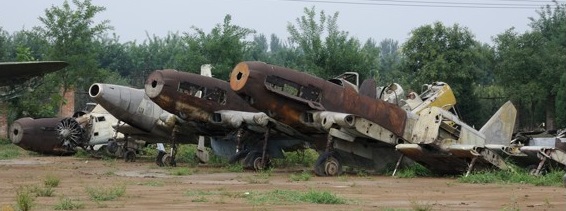
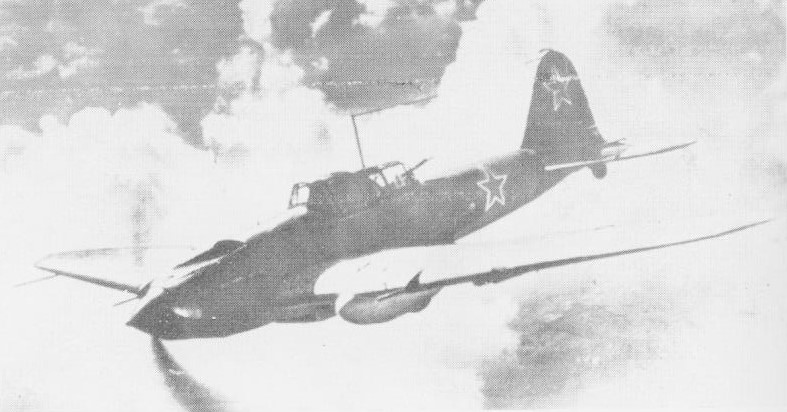
The Il-10 formed the sole equipment of Soviet assault units for a number of years and was also used widely by Warsaw Pact countries. Other Communist countries to employ the type included North Korea in the opening stages of the Korean War in 1950. Losses were heavy and the type was obsolete but, Il-10s remained in service with the Soviet V-VS until 1956 and with various satellite air arms for several years longer. For some time after that they were flown as gunnery trainers but they were decommissioned in April 1956 and all the crews were reassigned for further training on jet aircraft. most had been scrapped by the mid-1960s.
The Il-10 had been tested with a ZhRD-1 auxiliary rocket engine in the rear fuselage to provide short-term performance boost, but this modification was not adopted. The llyushin bureau strove to develop later shturmovik designs, including the II-20 single-seater and the Il-40 with twin turbojets, but official encouragement was minimal.
The Il-10M became the last mass-produced piston-powered attack aircraft designed by the Ilyushin design bureau.
Engine: 1 x AM-42, 1470kW / 1973 hp Max take-off weight: 6335 kg / 13966 lb Empty weight: 4680 kg / 10318 lb Wingspan: 13.4 m / 43 ft 12 in Length: 11.1 m / 36 ft 5 in Height: 4.3 m / 14 ft 1 in Wing area: 30.0 sq.m / 322.92 sq ft Max. speed: 302 kt / 560 km/h / 348 mph Cruise speed: 370 km/h / 230 mph Service ceiling: 7000 m / 22950 ft Range w/max.fuel: 830 km / 516 miles Range w/max.payload: 420 km / 261 miles Crew: 2 Armament: 5 machine-guns, 6 missiles, 600kg of bombs
To provide a replacement for the II-2 Shturmovik (ground-attack aircraft), the llyushin design bureau developed two different prototypes in 1943. The Il-8 bore a close resemblance to the II-2, but was powered by a more powerful AM-42 engine, and had new wings, horizontal tail surfaces and landing gear married to a late-production Il-2 fuselage. Test-flown in April 1944, the II-8 was rejected in favour of the contemporary llyushin Il-10, which began its test flight programme in that month.
The Ilyushin Il-2 origin dates back to the mid-thirties, within the Soviet military criteria of having air support for the operations of the ground forces.
In 1935 a requirement was launched to obtain a ground attack aircraft that was protected, or more specifically a BSh (Bronirovanyi Shturmovik, armored attack aircraft). Finally Sergei Ilyushin’s team was the one that around 1938 developed the Il-2 that was going to be able to perform the functions required.
Two prototypes were developed a few months apart, the two-seater TsKB-55, also designated BSh-2 (from Bronirovanni Shturmovik, armoured attacker) by the air force that first flew on October 2, 1939, and the single-seater TsKB-57, which replaced the radio operator with an additional fuel tank. They were equipped with AM-35 and AM-38 engines respectively, with 1,350 and 1,600hp. of power, heavily armed with 20mm ShVAK cannons, machine guns, bombs and rockets and protected with more than 700 kg of armour.
On 12 October 1940 the TsKB-57 took to the air with the more powerful 967kW M-38 engine. This improved machine led to the IL-2 which was just getting into service when the Germans invaded in June 1941.
Serial production was prepared in factories in Moscow, Fili and Voronezh, but when only the first 250 examples had been delivered, the German invasion occurred on June 22, 1941.
The factories in Fili and Voronezh were moved to Kuybishyev, which became the center of production under pressing pressure from the Kremlin to make the model available in mass quantities.
Armament of the original IL-2 was two 20mm ShVAK and two 7.62mm ShKAS guns firing ahead, plus eight 82mm rockets and four 100kg bombs. The need for rear protection resulted in a second crew member being added to man a rear gun, usually a 12.7mm BS, and the forward guns were changed to the hard-hitting 20 or 37mm VYa, and sometimes two of each, in 1942. Bomb load went up to 600kg, including PTAB armour-piercing bombs. The Shturmovik’s weapons could pierce all German armoured vehicles, even the Tiger tank being vulnerable when attacked from the rear.
Il-2I
The aircraft was redesignated Il-2M with the new 1,750hp AM-38F engine, also increasing the armour up to 950 kgs. A new modification was also introduced, which consisted of converting the radio operator into a tail gunner, handling a 12.7mm UBT heavy machine gun, entering into action as of October 1942 under the designation Il-2M3, which was to be finally the main production version.
The Il-2m3 two seat version had a uniform armoured shell entire forward fuselage, with rear fuselage and wings of plywood and other light materials. They carry two 37mm cannon.
In 1943, the Poles were the first foreign operators of the Il-2, followed by the Czechs, Bulgarians, and Yugoslavs.
By the time the Ilyushin Il-10, an improved variant, went into production in August 1944, 36,163 Il-2 Shturmoviks had been delivered. In the postwar period, significant quantities were delivered to China, North Korea, and both Poland and Czechoslovakia produced improvements on the models, adapting them to their requirements. He received the nickname or code name “Bark” by NATO.
The IL-2 remained in operational service in the Soviet Union and with the Air Forces of Czechoslovakia and Poland into the 1950s.
Output averaged 1,200 per month during most of World War II, to give a total of approximately 36,000. When the IL-10 developed version is added the total is reported to amount to 42,330.
Variants:
TsKB-55: two-seater prototype.
BSh-2: designation of the TsKB-55 in the V-VS.
TsKB-57: single-seat prototype.
Il-2: production model of the TsKB-57 (1941).
Il-2M: single-seat production model with improved armament and engine.
Il-2M3: variant similar to the Il-2M but with a tail machine gunner.
Il-2T: torpedo version for the Soviet Navy with the capacity to carry a 533mm torpedo.
Il-2U or U-Il-2: trainer version with double control.
Engine: 1 x Mikulin AM-38F V-12, 1300kW / 1770 hp Wingspan: 14.6 m / 47 ft 11 in Length: 11.6 m / 38 ft 1 in Wing area: 38.5 sq.m / 414.41 sq ft Max take-off weight: 5360 kg / 11817 lb Empty weight: 4200 kg / 9259 lb Max. speed: 430 km/h / 267 mph at 6560 ft Cruise speed: 320 km/h / 199 mph Ceiling: 6000 m / 19700 ft Range w/max.fuel: 800 km / 497 miles Range w/max.payload: 600 km / 373 miles Armament: 2 x 23mm machine-guns, 3 machine-guns, 400-600kg external Crew: 1-2
l-2M3 Power plant: Mikulin AM-38F, 1,720hp Wingspan: 14.60 m Wing area: 38.50 sq.m Length: 11.65 m Height: 4.17m Empty weight: 4,520 kg Maximum takeoff weight: 6,360 kg Maximum operating speed: 410 km/h (255 mph; 221 kt) Service ceiling: 4,530 m (14,862 ft) Service ceiling: 4,530 m Range: 770 km Wing loading: 160 kg/sq.m Power/weight: 0.21 kW/kg Crew: 2 Armament: 2 x VYa-23 23mm mg, 150 rounds per gun, 1 x Berezin UBT 12.7mm machine gun, 150 rounds, 2 x 7.62mm ShKAS machine guns, 750 rounds per gun Bombload: 50 kg, 100 kg or 200 kg internal Hard points: 4 / 600 kg total for 2 x Cannon or 2x RS-82 and RS-132 Rockets