The Technological Research Institute constituted the technical base on which Companhia Aeronáutica Paulista emerged. It was the Paulistinha project, passed on to Companhia Aeronáutica Paulista (CPA) together with the Planalto plane that generated the first royalties paid to the IPT.
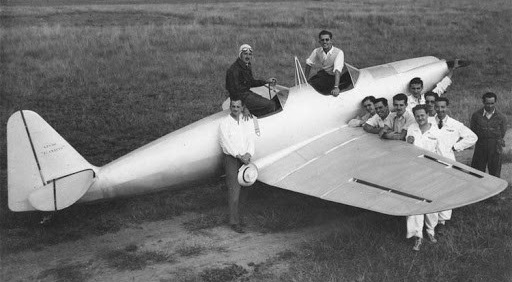
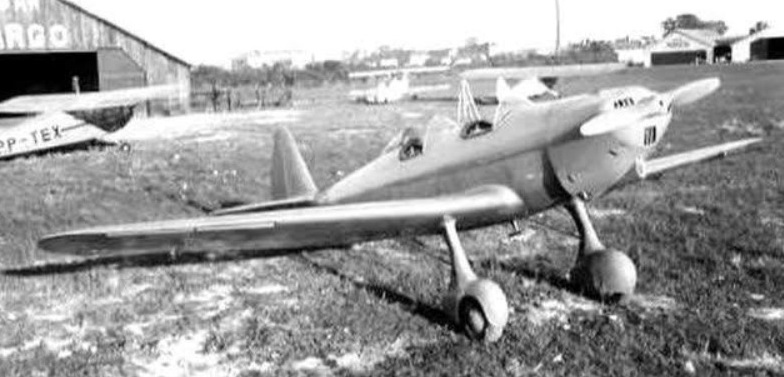
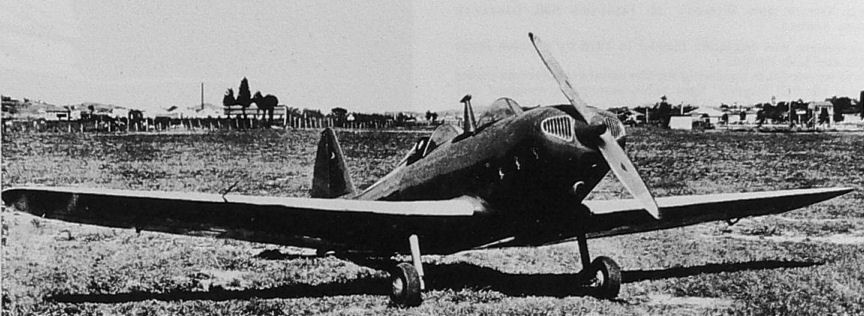
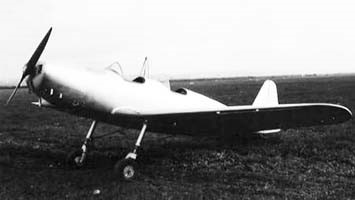
The IPT-4 was designed by Clay Presgrave do Amaral of Instituto de Pesquisas Tecnológicas (IPT). The project had been initiated under the designation IPT-4 and although the design work had been contracted to CAP, IPT insisted on a wing profile of its own choosing that led to serious stability problems in the final product. It was a low-wing single-engine, for pilot training. The structure was made of wood, with plywood and canvas coverings. It was equipped with a 90-horsepower Franklin engine. The pilot and instructor in tandem open cockpits with fixed tailwheel undercarriage.
CAP-1
Clay do Amaral was part of the first board of the Companhia Aeronáutica Paulista, and IPT-4 became CAP-1, called Planalto.
CAP-1
First flying in June 1942 (prototype registration PP-TFW), successful test of the aircraft made it possible to sign a contract for the production of 20 aircraft. Since the institute did not have its own production facilities, the contract was handed over to Companhia Aeronautica Paulista (CAP). As a result, production aircraft were already produced under the designation CAP-1 Planalto.
CAP-1
The CAP-3 replaced the CAP-1’s Franklin 4AC engine with a de Havilland Gipsy with double its power in the mid-40s, but the stability problems remained unaddressed until CAP engineer Oswaldo Fadigas redesigned the wing in the CAP-6. The firm attempted to sell this latter type to the Ministry of Aeronautics, but succeeded only in selling conversion kits for the existing CAP-1s and -3s in the military’s inventory.
IPT-4 Planalto Engine: Franklin 4AC-199-B3, 90 hp Seats: 2
CAP-1 Engine: Franklin 4AC-199-B3, 67 kW (90 hp) Wingspan: 8.6 m (28 ft 3 in) Wing area: 12 sq.m (130 sq ft) Aspect ratio: 6.16:1 Length: 6.4 m (21 ft 0 in) Height: 2.6 m (8 ft 6 in) Empty weight: 335 kg (739 lb) Gross weight: 570 kg (1,257 lb) Cruise speed: 155 km/h (96 mph, 84 kn) Stall speed: 85 km/h (53 mph, 46 kn) Endurance: 2.5 hours Crew: 2
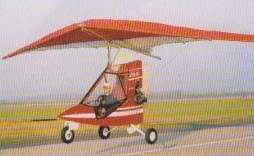
This stick-controlled all-enclosed topless winged prototype was designed to evaluate wing performance by measuring deflection of the trike unit in relation to its drag.
Empty weight: 170 kg Wing span: 10.2 m Wing area: 15 sq.m Fuel capacity: 20-60 lt Engine: Rotax 503, 52 hp MAUW: 360 kg Seats: 2 Max speed: 150 kph Cruise speed: 120 kph Minimum speed: 60 kph Climb rate: 6 m/s Fuel consumption: 10 lt/hr Price (1998): 45 000 PLZ
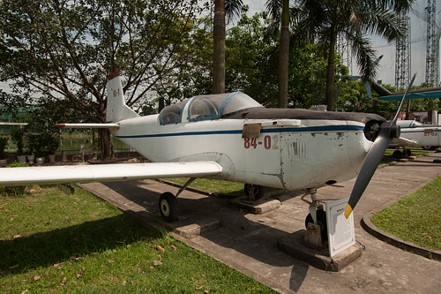
The Ministry of Defense and the High Command of Vietnamese Air Force assigned the Institute for Aviation Military Technology to manufacture the HL-1 trainer in January 1981.
The HL-1 was designed based on the Pilatus P3 of Switzerland, Zlin 526 of former Czechoslovakia and Yak 18 of the former USSR.
The more powerful Super Sport, with an 110 hp Warner Scarab engine, established an American altitude record on October 25,1929, and a world speed record for light aircraft on February 12,1930.
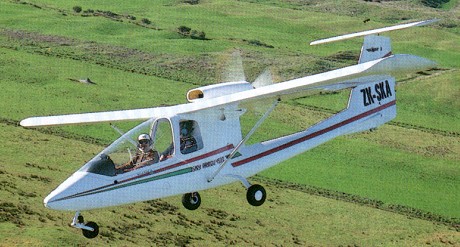
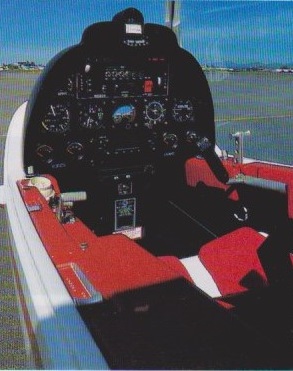
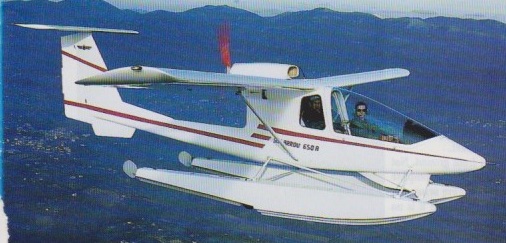
The Sky Arrow is based on the earlier, remotely piloted drones, the Rondine. The development of the proven airframe (with certification originally funded by the Italian government) into a series of sporting sircraft was undertaken, producing the Sky Arrow. Guiseppe Archangeli made the first flight of the Sky Arrow from Ponzano, near Rome, on 13 July 1992. On that flight the prototype was fitted with the original metal wings, and it required only a 2 degree change in the tailplane incidence and minor mods to the controls. To meet the civilian market demands and regulations, the Sky Arrow has been modified from the original concept, with the initial design studies being wind tunnel tested at the University. The original metal wings have been substituted with an all composite version. The Sky Arrow 450T is a single-engine aircraft with vertically staggered tandem seats and dual controls. The instrument panel is located ahead of the front seat, and all the instruments are arranged to allow visibility from the rear seat, which is elevated somewhat in relation to the front seat. However, wing flaps, dual electronic switches and cabin heat can only be operated from the front seat. Operable from both seats are the brakes, trim, mixture control and carburettor air control.
The high wings are braced and rectangular in shape, and are made of a carbon-fibre sandwich with kevlar reinforcement, while the struts are constructed of alu¬minium and steel. The Sky Arrow 450 T wings are the as as the P92. The fuselage and empennage are made from carbon-fibre and kevlar. Landing gear is a fixed tricycle-type constructed of multilayered carbon-fibre and rubber shock absorbers for the nose gear. Load factor limits at a planned maximum all up weight of 450kg are +3.8G/-1.9G, with an ultimate strength of +7.6G/-3.8G before breakage occurs. The aeroplane is powered by an 80 hp four-stroke Rotax 912 engine, coupled by means of a reduction gear¬box with a ratio of 1:227 driving a two-bladed propeller. The airframe is fully manufactured with composite materials (kevlar and carbon sandwich). The high-wing tandem configuration provides excellent visibility of over 300degrees. The Sky Arrow is fitted with either a Rotax 912 or 914 engine. The aircraft is offered to homebuilder enthusiasts as a kit which meets the FAA 49/51 percent rule. The Sky Arrow kit is composed of 10 subkits which can be bought separately and incrementally.
The Sky Arrow 450 and 650 are the same aircraft available as certified and ultralight versions. Easily converted to wheels, floats or amphibian, the 650TC is certified to JAR/VLA standard. Both the 450T ULM and 650T kit are built to that standard.
In 2014, the Sky Arrow 600 was manufactured by Italian maker Magnaghi. Base price 2014: $87,000 (Sky Arrow); $100,000 (loaded with SkyView 10-inch EFIS for limited time).
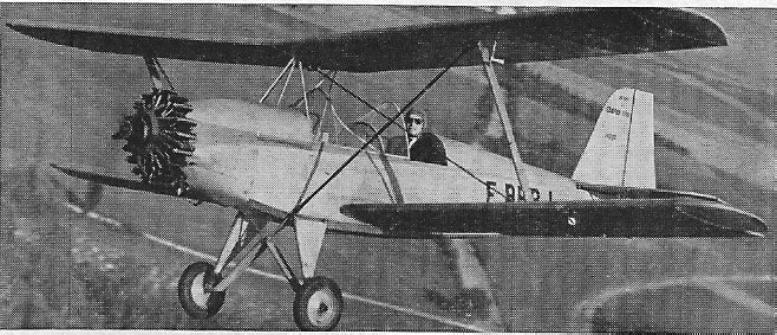
The Aero 110 fuselage has a fabric covered steel-tube framework and powered by a 45 hp Salmson 9ADB radial air-cooled engine.
A Single-bay staggered biplane, upper and lower wings are of equal span and chord. A hinged panel in the upper wing provides access to the front cockpit. Full dual controls are fitted.
Produced by the Societe Indraero and flown for the first time on 1 May 1950, the Aero 110 was produced for the Service de l’Aviation Legre et Sportive (S.A.L.S.).
Engine: 45 hp Salmson 9ADB Wing span: 24 ft 11 in Length: 18 ft 4 in Empty weight: 594 lb Loaded weight: 1000 lb Max speed: 81 mph Cruise: 71.4 mph
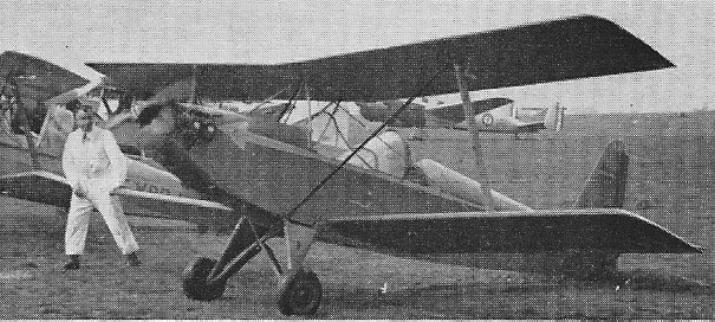
Developed by the Societe Indraero and first flown in 1953, the Aero 101 was designed by MM. Chapeau and Blanchet as a light tandem two-seat training biplane for the Service de l’Aviation Legre et Sportive (S.A.L.S.), and an initial production batch of thirteen was built.
Derived from the Aero 110, it differs by being all-wood construction, a tail wheel and brakes. Powered by a 75 hp Minie 4 DC-32 engine, the tandem open cockpits are fitted with dual controls.
Engine: 75 hp Minie 4 DC-32 Wing span: 24 ft 11 in Length: 18 ft 4 in Max speed: 108.6 mph Cruise: 93 mph ROC: 630 fpm