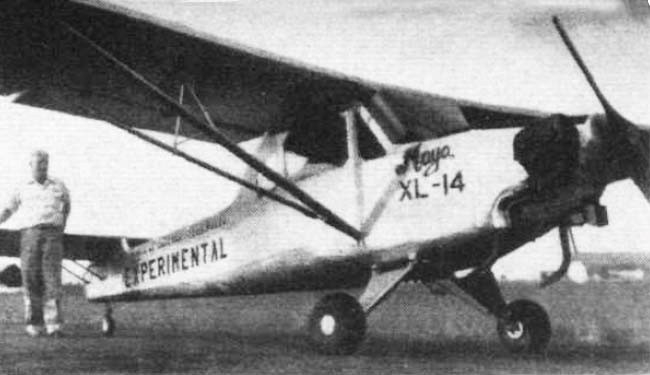
In the early 1950s in the Republic of the Philippines, the Institute of Science and Technology (I.S.T., previously known as the Bureau of Science) designed at least three different prototypes, both to investigate the scope for local aircraft design and production and to examine the use of indigenous materials in their construction. One such material of interest was Wobex (Woven bamboo experimental), a reinforced woven bamboo.
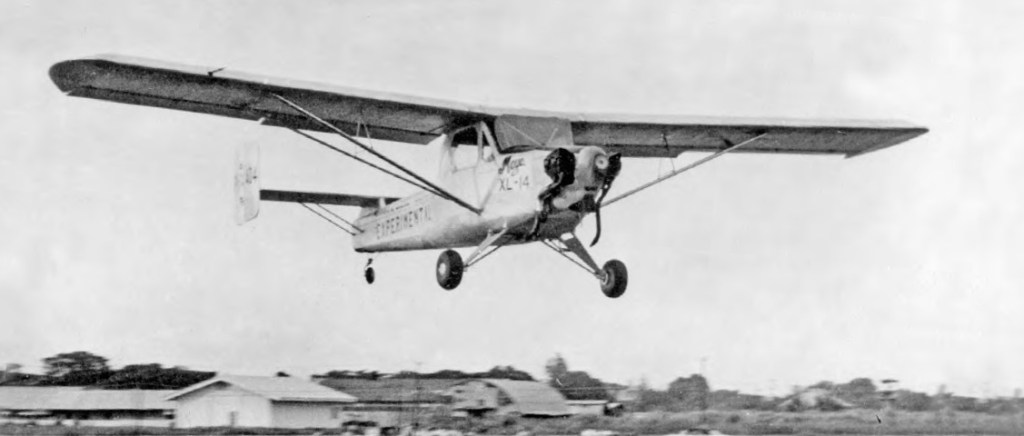
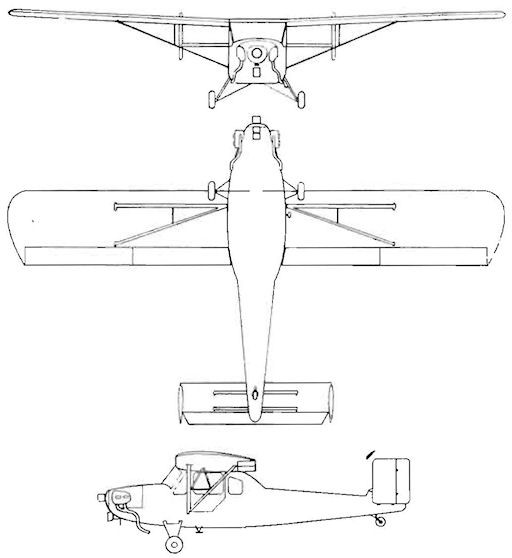
Designed by Antonio J. de Leon, the XL-14 Maya (until 1995 the Maya was the national bird of the Philippines) was the first of this series of prototypes. It was a single-engine, high-wing monoplane of standard layout except for its twin tail. The wing had constant chord and was built around two parallel, solid spars and wooden ribs. The leading edges were covered and reinforced with Wobex and the rest of the wing was fabric covered. The centre section was integral with the cabin top and the outer wings were braced on each side with V struts from the wing spars to the lower fuselage. Ailerons and slotted flaps were fitted. It had a strut braced tailplane, set slightly above the fuselage top on a short pylon. The tailplane carried almost rectangular endplate fins and rudders. The tail structure was wooden with fabric covering.
The Maya, bearing its experimental category registration PI-X-104 on its fins, had a semi-monocoque fuselage with wooden stringers and Wobex mat covering. The cabin stood above the rear fuselage line, enclosing side-by-side seats with a third, occasional seat, or luggage space, behind. In front a 75 kW (100 hp) Lycoming flat four engine, with cylinder-heads exposed, drove a two-blade propeller. It had a conventional undercarriage, with each mainwheel mounted on V-struts and half axles hinged to the fuselage central underside via rubber shock absorbers. The fixed tailwheel was steerable.
The date of the Maya’s first flight is not known, though the aircraft was complete by May 1955 and a later design, the XL-15 Tagak was being flight tested by October 1954. Only one Maya was built, for although it was described as being suitable for agricultural use and for utility and observation work, its function was always as a constructional material experimental aircraft.
Engine: 1 × Lycoming O-235-2, 75 kW (100 hp) Propeller: 2-bladed wooden, fixed pitch Wingspan: 10.24 m (33 ft 7 in) Wing area: 16.0 sq,m (172 sq ft) Length: 6.30 m (20 ft 8 in) Height: 2.40 m (7 ft 10 in) tail up Empty weight: 510 kg (1,124 lb) Gross weight: 780 kg (1,720 lb) Fuel capacity: 68 L (15 Imp gal, 18 US gal) Maximum speed: 184 km/h (114 mph, 99 kn) Cruise speed: 150 km/h (93 mph, 81 kn) Range: 480 km (300 mi, 260 nmi) Service ceiling: 3,820 m (12,530 ft) Rate of climb: 3.6 m/s (710 ft/min) initial Capacity: 2/3 (3rd passenger under 50kg (110 lb))
Issoire, part of the groupe Siren, acquired a license from Eiri Avion to build the 15 m. self- launching Finnish PIK 20E designed by Pekka Tammi and M.Moniot. The Pik 30 is a self- launching 17 m. development which first flew in 1984. It has the capability of being flown as a 15 m. sailplane or, with tip extensions, with 17 m. span. The PIK 30 has a mast mounted manually actuated retractable engine. Construction of the wings and tail surfaces: GFRP sandwich with PVC core; carbon fiber spar caps and cockpit sides: GFRP monocoque structure reinforced with ribs of carbon fiber.
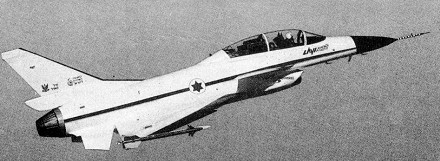
The Lavi, a single-engined canard delta with a chin intake, is similar in appearance to the F-16 but is smaller. A 91.7kN Pratt & Whitney PW1120 turbojet is used, and the aircraft has a quadruplex digital fly-by-wire control system which allows relaxed stability. The cockpit is built around three multifunction colour CRT displays and a wide-angle headup display. The new Elta multimode pulse-Doppler radar, developed from the earlier EL/M-2021B, will include track-while-scan capability in air-to-air mode, and terrain avoidance/ground mapping in air-to-surface mode. Composite materials are used extensively in the airframe, and account for 22 per cent of the structure by weight. Grumman designed and developed the wings, and will also build the first eight sets before production transfers to Israel.
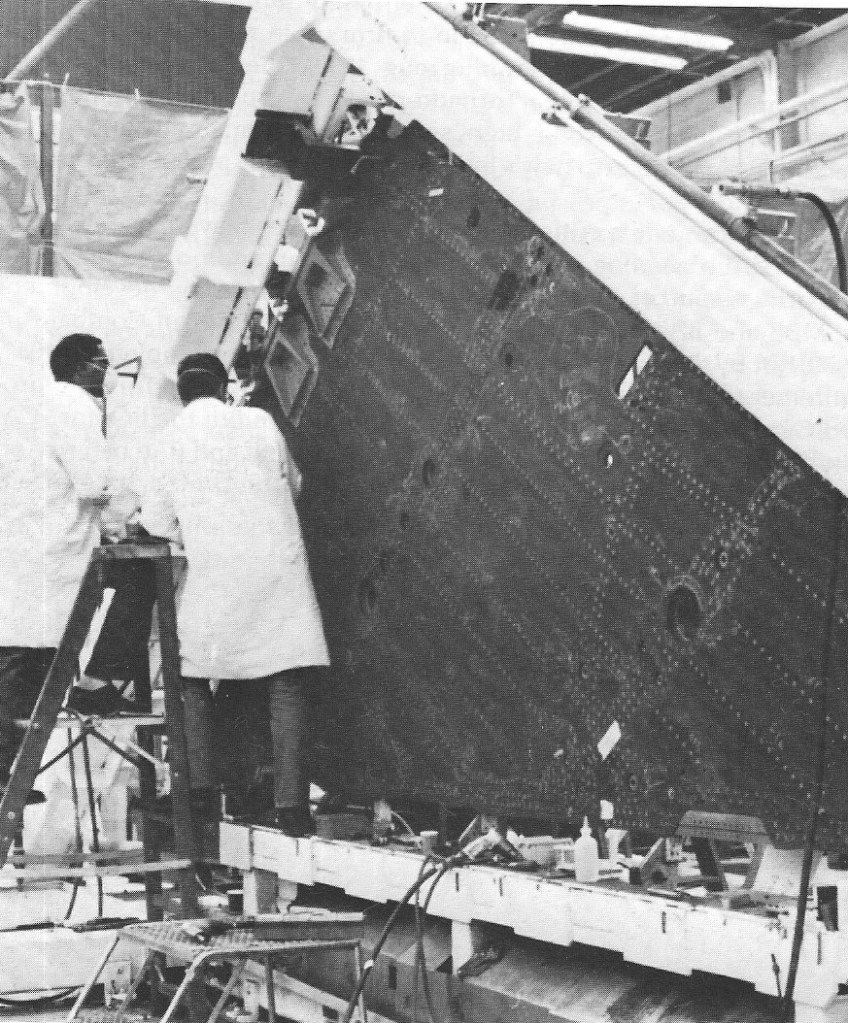
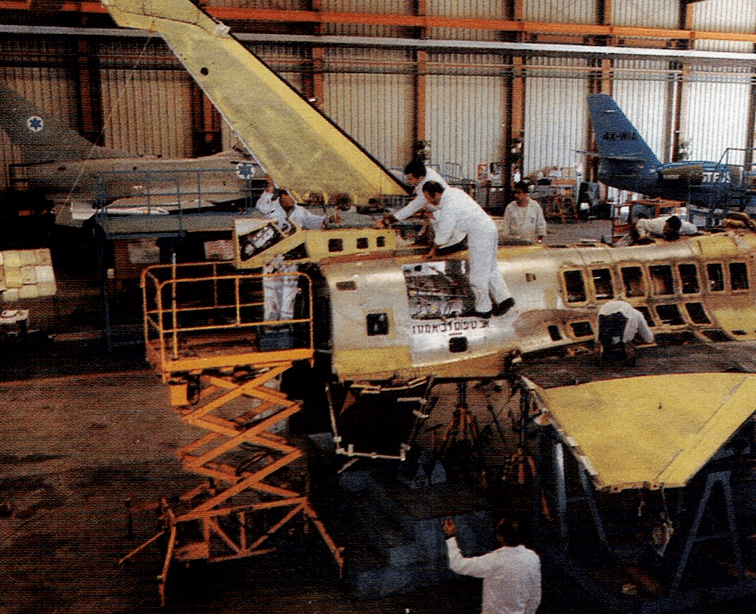
The Lavi carbon-fibre wing has mechanical fasteners to secure the skins to the ribs and spars. While composite skins can be bonded together it is necessary to make at least one skin removable for internal access.
Grumman building Lavi wings
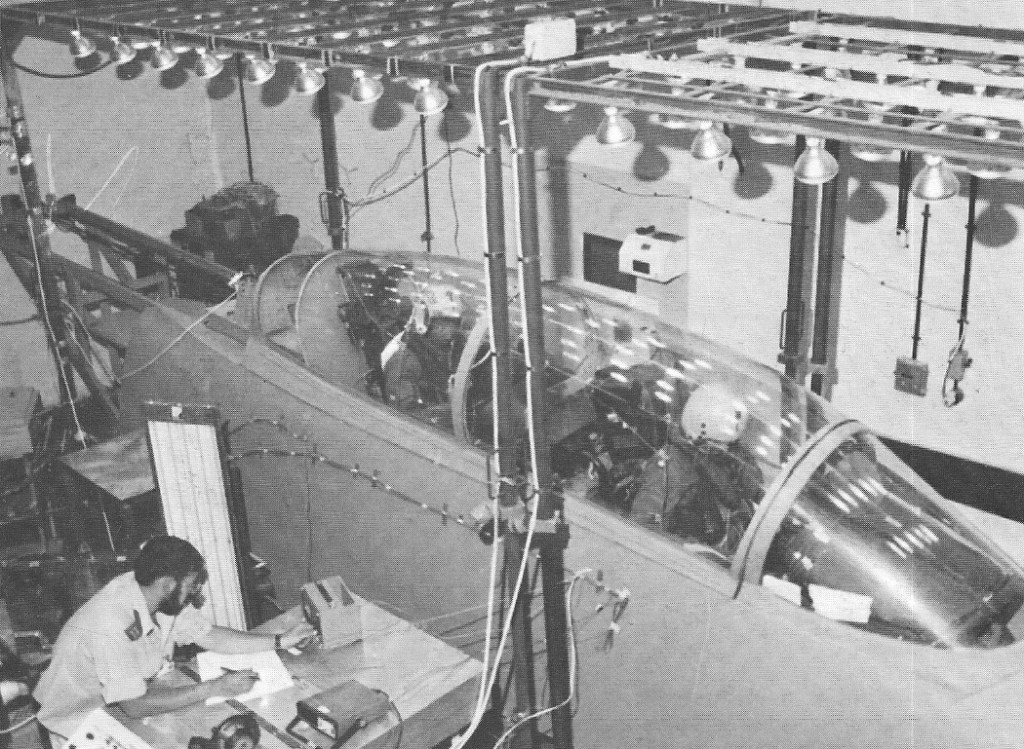
A special rig using a cockpit mock-up was designed to test the fighters air conditioning system.
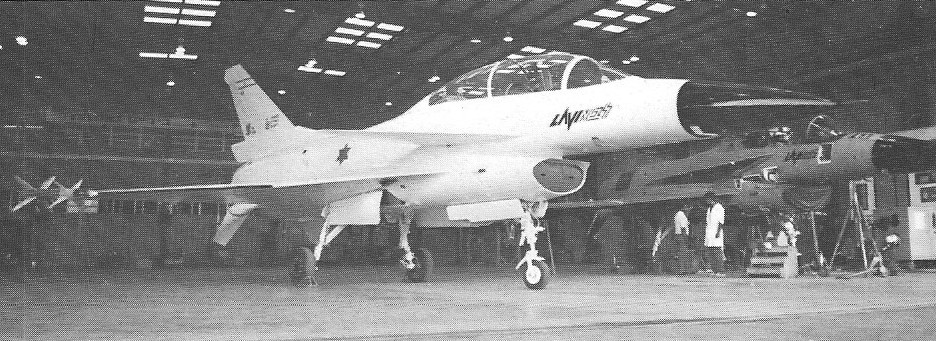
A second prototype flew on March 30, 1987. The first prototype, which flew on December 31, 1986, and the second aircraft are both two-seaters, while the remaining four development aircraft were to be single-seaters.
The Lavi’s delta wing spans 28 ft 7 in and its empty weight is 15,305 lb, but it can take-off for a long range mission at a weight of 42,000 lb, ie. 175% of its empty weight.
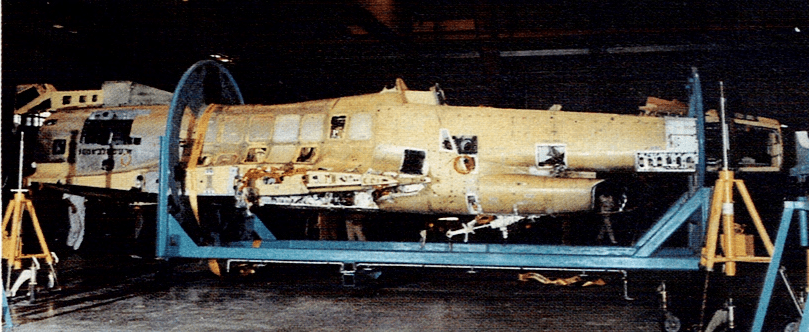
The first six full-scale development aircraft were built on production tooling even with the future not entirely certain.
The program was ultimately cancelled in August 1987, the constructed prototypes went on to see a serviceable life as technology demonstrators for various other flight programs to test avionics and applicable flight systems. It is believed that Israeli involvement in the Chinese program culminated in a similar-looking airframe with multirole capability in the J-10.
Lavi Engine: 1 x P&W PW1120. Installed thrust (dry / reheat): 60 / 92 kN. Span: 8.8 m. Length: 14.6 m. Wing area: 33.05 sq.m. MTOW: 19,300+ kg. Warload: 7257+ kg. Max speed: 1.8 Mach. TO run: 305 m. Combat radius lo-lo-lo: 1110 km. Fuel internal: 3330 lt. Air refuel: Yes. Armament: 1 x 30 mm Hard points: 11 + 2 wing tips.
IAI Lavi B Engine: Pratt & Whitney PW1120, 89958 N / 9170 kp Length: 47.9 ft / 14.6 m Height: 15.748 ft / 4.8 m Wingspan: 28.871 ft / 8.8 m Wing area: 355.212 sq.ft / 33.0 sq.m Max take off weight: 42512.4 lb / 19280.0 kg Weight empty: 19845.0 lb / 9000.0 kg Max. weight carried: 2205.0 lb / 1000.0 kg Max. speed: 800 kts / 1482 km/h Cruising speed: 538 kts / 997 km/h Wing loading: 119.72 lb/sq.ft / 584.0 kg/sq.m Range: 2300 nm / 4260 km Fuel capacity: 880 gal / 3330 lt Crew: 1 Armament: 1x MK 30mm, 2720 kg ext.
The next stage after the Nesher was to go into production with a substantially improved aircraft with a largely new propulsion system, modified air¬frame and totally replanned weapon aiming, navigation and other electronic systems. The selected engine was the General Electric J79, of modified GE 17 subtype, rated at 8120 kg (17900 lb) with maximum afterburning. This required larger inlet ducts, a modified engine bay with ram air inlet at the front of a new dorsal spine, and a wider but sharply cutback rear fuselage. Other changes visible externally include a completely new nose with enlarged and flattened underside, completely new cockpit, strengthened landing gear with increased oleo stroke, and rearranged external panels and hatches. Inside, the systems and equipment are considerably altered, the main changes being increased fuel capacity and totally dissimilar weapon control and aiming systems. Elta Electronics, an IAI subsidiary, has used a Singer-Kearfon licence, clearly indicative of an inertial system.
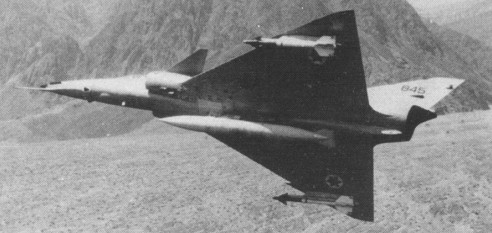
Following testing of J79 engines in an Israeli air force Mirage IIIB the first Kfir (Lion Cub) flew in 1974, and two were publicly shown at Lod airport in April 1975. Compared to the French Mirage III and Mirage 5 it has a more powerful engine, bigger engine air intakes, a longer nose, revised cockpit, Israeli avionics and systems and a fin air inlet located at the lower front end of the fin. The first production versions were designated Kfir-C1. Two Heyl Ha’Avir (Israeli air force) squadrons were equipped with this initial model, which retains the original armament of two 30 mm (1.18 in) DEFA cannon. Seven hardpoints can carry a wide range of external stores for interception, attack or reconnaissance missions, including Shafrir AAMs, Luz, Maverick or Hobos ASMs, Shrike antiradar missiles (ARMs), concrete dibber penetra¬tors, cluster bombs, ECM pods, multi sensor reconnaissance pods, or tanks.
A modestly successful fighter with ground-attack capability, 27 aircraft were built.
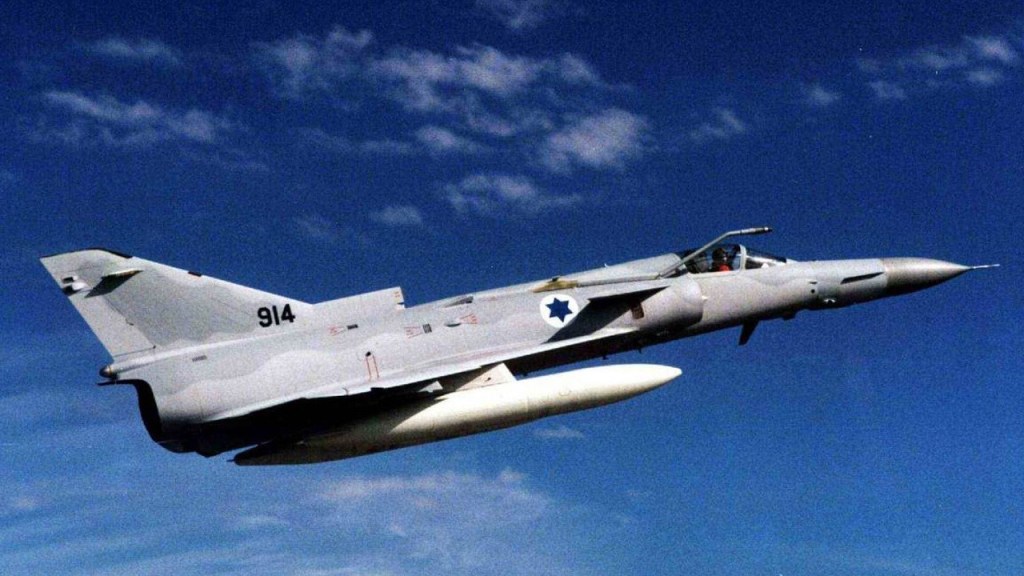
On July 20, 1976, at the Heyl Ha’Avir base at Hatzerim, Negev, IAI gave the first public display of the definitive production version, the Kfir-C2. Basically unchanged, this has three important aerodynamic improvements. A fixed canard surface, much larger than the ‘moustache’ retractable canards of the Mirage Milan, and slightly swept back, is fitted high on each inlet completely out of the pilot’s field of view. Along each side of the tip of the nose is a small strake, which induces a vortex at high angles of attack. At about 60% of the semispan is a dog tooth, the leading edge from there to the tip being extended in chord and drooped in a conical¬ camber arrangement. These changes are claimed to transform the flight capabilities to a new high level, with much tighter sustained turns, better handling (especially at overload weights), reduced low level gust response, flatter and slower approach, better takeoff, reduced field length and greater weapon ¬carrying capability. New avionics were introduced, including a new ranging radar, twin-computer flight control system, multi-mode navigation and weapons delivery system, central air data computer and HUD. By mid 1978 about 150 Kfirs of all types had been built, with output still running at more than two per month. At least some of the early aircraft have been brought up to C2 standard. Ecuador’s attempt to buy 24 Kfirs was vetoed by the US Government, and IAI has since been seeking an alternative engine.
The two seat TC2 entered production in February 1981. Two-seat Kfir-TC2 trainers feature a lengthened and lowered nose for improved view. The longer nose houses the avionics displaced from the C2’s spine and is fitted with small vortex-generating strakes.
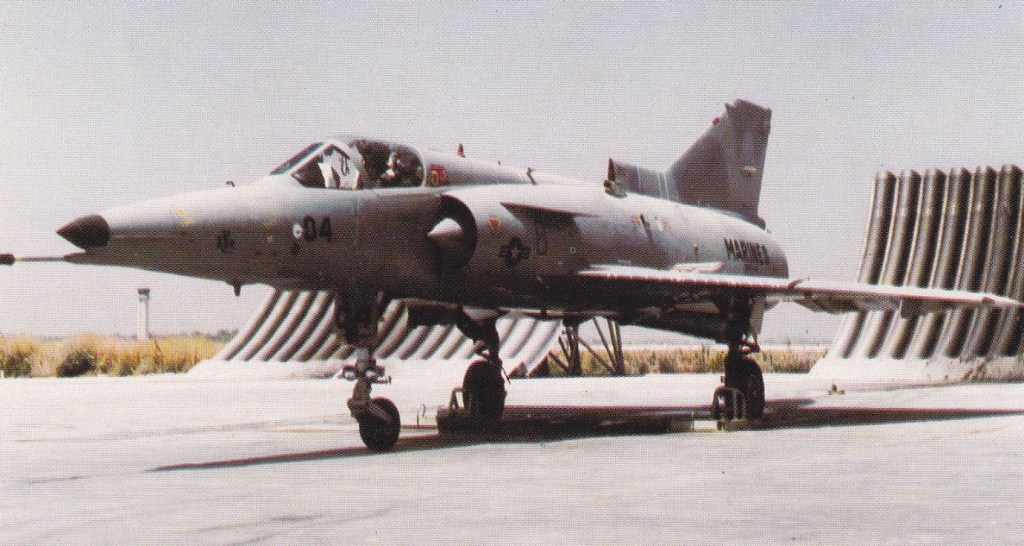
In 1985 the US Navy agreed a three-year lease of 12 Kfirs designated F-21As, for use as agressor aircraft pending the delivery of F-l6Ns. The USMC followed suit in 1986, with the lease of 13 Kfirs to fulfil a similar role. IAI is retrofit Kfirs from C2 to C7 standard. The C1s were modified adding narrow-span canard foreplanes above each air intake and a small rectangular strake either side of the nose behind the ranging radar. These additions greatly improved its combat manoeuvrability and slow speed handling. Production of the latest Kfir-C7 advancd the two-seat TC7 began in 1983, and these are now the standard models. Externally similar to the earlier Kfir-C2, the C7 has an uprated J79-J1E engine giving a 4.4kN increase in augmented thrust, allowing a 1,540kg increase in maximum take-off weight. Thrust-to-weight ratio and combat radius are also improved. Avionics are upgraded with a new hands-on throttle-and-stick (Hotas) weapons delivery and navigation system, and a stores management/delivery system which is able to cope with smart weapons. The C7 has two additional hardpoints for the increased payload.
Kfir-C2/TC2 aircraft were upgraded to C7/TC7 standard. The C7 has a specially adapted version of the J79-GEJ1E with some 1,000 lb (454 kg) more afterburning thrust. The type has two extra hardpoints below the intake ducts and a number of advanced features including capability for the carriage and use of smart weapons, Elta EL/M-2021B pulse-Dopplar radar, a revised cockpit with more sophisticated electronics and HOTAS (Hands On Throttel And Stick) controls and provision for inflight-refueling. Maximum take-off weight is increased by 3,395 lb (1,540 kg), but combat radius and thrust-to-weight ratio are improved to a marked degree. The principal Electronic Countermeasures (ECM) system is the Elta EL/L-8202 advanced self-protection jammer.
The upgrade to Kfir-C10 standardwas developed for export. It features a new Elta EL/M-2032 multimode radar, capability to use a HMD (Helmet Mounted Display) and Python IV air-to-air missiles and two 127x177mm Multi-Function Displays produced by Astronautics.
IAI built 212 Kfirs, with 40 early Kfir-1s (many updated to Kfir-C1 spec), about 12 Kifr-TC2 trainers, and the rest Kfir-C2s.
Kfir C7
The principal users were Israel, Colombia, Ecuador, and USA.
As the F-21A, two types of Kfir served with USMC VMFT-401 “Agressor” Sqn, Yuma, Arizona, for dissimilar air combat maneuver training.
F-21A of USMC VMFT-401 “Agressor” Sqn, Yuma, Arizona
The Young Lion was deployed with a squadron of the Israeli Air Force in 1974 and 1975. Then, more aerial units were added to the Kfir. The jet shot down a Syrian MiG-21 in 1979 with an Israeli Shafrir 2 missile. That was the first Israeli home-built missile.
Meanwhile, the Israelis acquired the F-15 and F-16 fighters for aerial combat roles, and the Kfir was more aligned with the ground attack role.
Israel’s Kfir
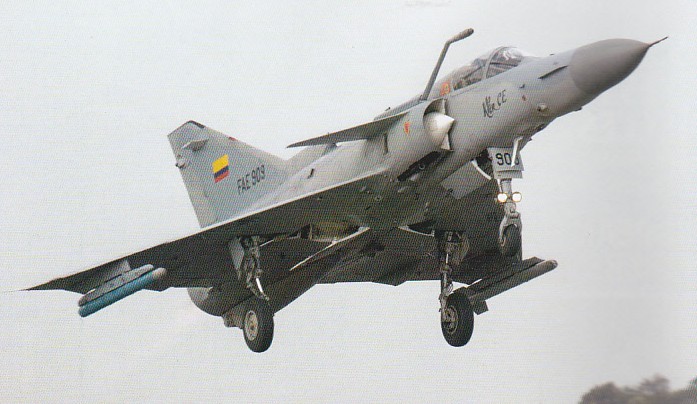
The Kfir was also exported to Ecuador, where the warbirds shot down three Peruvian airplanes in the 1990s.
Sri Lanka also used the Young Lion during its counterinsurgency against the Tamil Tigers. Five Kfirs are still in service with the Sri Lankan Air Force in 2025.
In Israel, the Young Lions were finally replaced by the F-16s and F-15s.
The Israelis have almost phased out all foreign support for Kfirs in Colombia. Final work with the Colombians will be completed in 2025. Israel had helped Sri Lanka update the Kfir in 2017 with new radars and Python air-to-air missiles.
Kfir C-2 Engine: 1 x General Electric J79-GE-J1E, 17,900 lb / 8119 kg thrust Span: 8.22 m (27 ft) Canard span: 12 ftt 3 in / 3.73 m Length: 15.55 m (51 ft) Height: 14 ft 11.25 in / 4.55 m Wing area: 374.6 sq.ft / 34.80 sq.m Canard area: 17.87 sq.ft / 1.66 sq.m Empty weight: 16,060 lb / 7285 kg Gross weight: 35,714 lb / 16,200 kg Maximum speed: over 2335 km/h (1450 mph, Mach 2.2). Range: 428 mi / 690 km Ceiling: 58,000+ ft / 17,580+ m T/O run: 1450 m. Ldg run: 1280 m. Armament: 2 x 30mm DEFA 552/553 cannon Bombload: 12,731 lb / 5775 kg Seats: 1
Kfir C-7 Engine: 1 x General Electric J79-J1E afterburning turbojet 83.40 kN (18,750 lb st) Installed thrust (dry / reheat): 52.9 / 83.3 kN. Span: 8.22m (26 ft 11½ in) Length: 15.65m (51 ft 4.25¼ in) Height: 4.55m (14 ft 11.25in) Wing area: 34.46 sq.m / 392.47 sq.ft Empty, equipped weight: 7285 kg (16,060 lb) MTOW: 16,500 kg (36,376 lb) Warload: 6085 kg / 13,415 lb Max level speed at 10975m (36,000 ft): Mach 2.3 / 2440 km/h (1516 mph) Time to height: 5min 10 sec to 15,000 m. Service ceiling: 17680m (58,000 ft) Combat radius hi-lo-hi: 1185 km. Fuel internal: 3240 lt. Air refuel: Yes. Armament: 2 x 30 mm DEFA 553 / 140 rounds per gun, 6085 kg (13,415 lb) ordnance Hard points: 9.
When the French government placed an embargo on export of strategic items to Israel in 1967, including a batch of 50 Mirage 5 fighter/attack aircraft built to Israel’s specification and already paid for, the Israeli government realized it had to seek self sufficiency in combat aircraft. As a first step it authorized Israel Aircraft Industries (IAI), whose headquarters were at Lod airport, to build a close copy of the Mirage but with IAI and other locally produced equipment and electronics. The first Nesher (Eagle) flew in September 1969. IAI built 61 Nesher / Daggers, with 51 single-seaters and 10 two-seat Nesher-Ts.
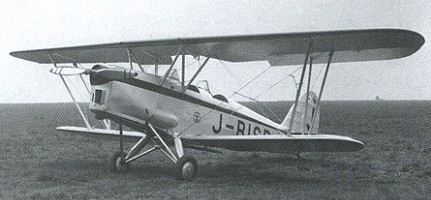
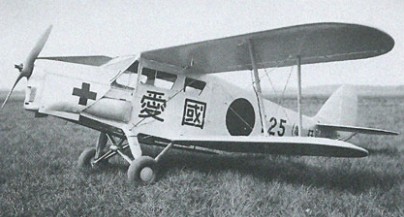
Ishikawajima Aircraft Company built small batches of R-1/-2/-3/-5 trainers and light ambulance (later designated KKY). The KKY with 130hp Cirrus replaced by 150hp Ha-12 or Kamikaze radial was developed as the KS-I.
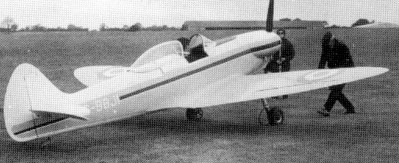
Construction of the 60% replica of the World War 2 Spitfire was begun by John Isaacs in 1969 at Southampton. Wood and fabric construction. Powered by a Rolls-Royce/Continental O-200-A engine, the prototype, c/n.2, later registered G-BBJI PFA.27-10055, first flew in early 1975.