Kamov AK

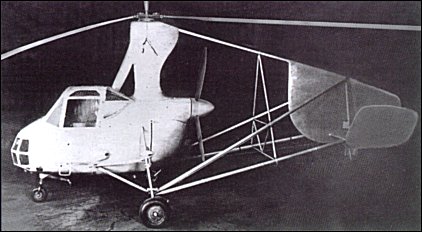
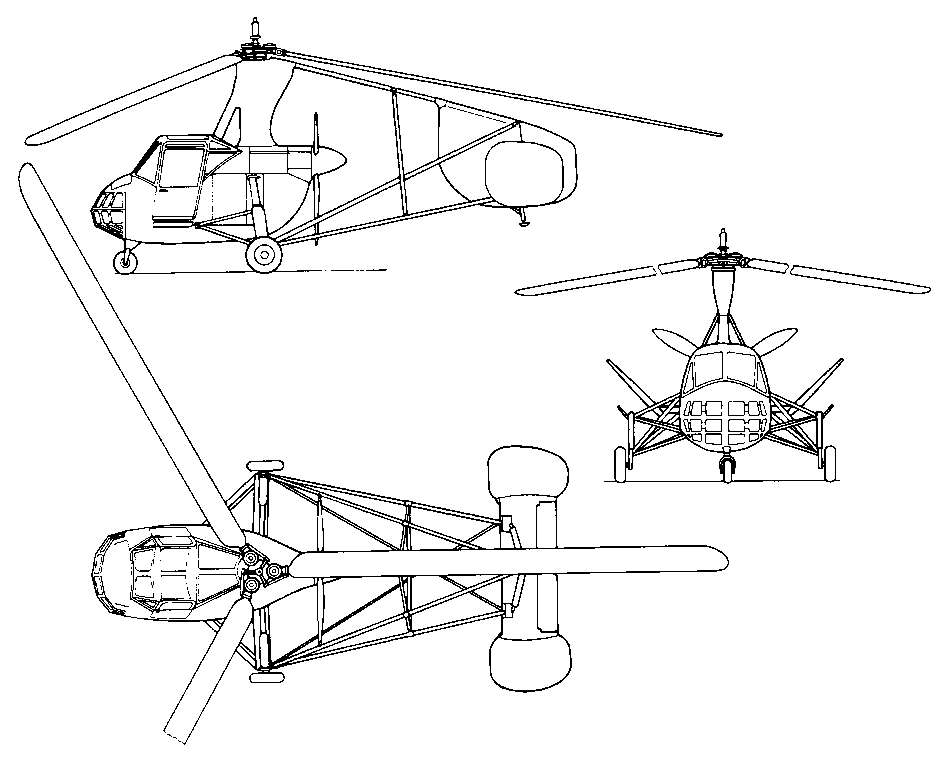
Kamov took job of chief designer in factory at Smolensk opened 1939 to make production autogyros (beginning with A-7-Za). Kamov obtained permission to build a side-by-side observation machine with side doors. The AK was fitted with tricycle gear, a single fin rudder on struts from rotor head and main gears, and no wings.
Work was delayed by evacuation in July 1941 but work restarted at a new facility in Lake Baikal region in 1942. The project was abandoned 1943 because of termination of interest by VVS.

AK
Engine: 1 x MV-6
Rotor diameter: 13.5m
Loaded weight: 1317kg
Empty weight: 1026kg
Max speed: 176km/h
Ceiling: 4,700m
Kamov A-7

This autogyro designed by Kamov was considerably more stream-lined than its predecessors. The rotor had three blades, the fuselage was completely covered by a light alloy skin and the landing gear was streamlined.
A later version, the A-7-3, which had two small fins below the stabilizer, was used during the last war for some observation missions.
Kamov created the only (in the World) armed autogyro (A-7-3) that saw (limited) combat action.

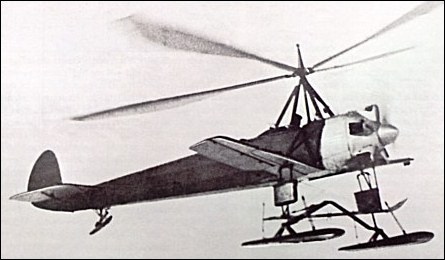
Kamov-Skrzhinski KASKR-2

A major reconstruction of the KaSkr-1 with much more powerful cowled engine resulted in the KaSkr -2. Other minor changes included a rudder of better shape.
First flown in 1930, it was operated on skis in the winter of 1930-31. Pilot D.A.Koshits had flown the KaSkr-2 on 90 occasions by late 1931.
The KaSkr-2 led to the 2-EA and A-4 at CAHI.

KaSkr-2
Engine: Gnome-Rhone Titan 5-cylinder radial, 168kW / 230 hp
Rotor diameter: 12m
Length: 9m
Loaded weight: 1100kg
Empty weight: 865kg
Speed: 110km/h
Ceiling: 450m
Endurance: 28min

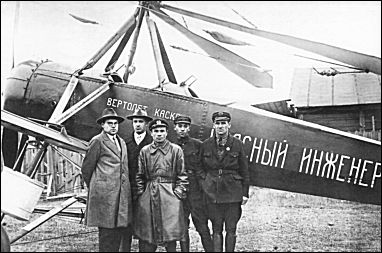
Kamov-Skrzhinski KaSkr-I / Krasny Inzhener

KaSkr-1

Designated from Kamov and N.K.Skrzhinskii, autogyro Krasnyi Inzhyener (Red Engineeer) was based on the Cierva C.8 using an Avro 504 (U-1) fuselage, landing gear and most of flight controls. The original rotor had four braced blades, and small wings were fitted. The first ground running test was 1 Sept 29. The rotor began to spin, but the control system proved ineffective and was subjected to major changes. The U-1 rudder was changed for a larger surface, then the torque of the engine/propeller almost overturned machine. This was rectified by hanging an 8kg weight under the right wingtip. Test pilot I.V.Mikheyev was unable to fly aircraft because of a lack of power. The KaSkr-1 was rebuilt as the KaSkr-2.

KASKR-1
Engine: 1 x M-2, 90kW / 100 hp
Rotor diameter: 12m
Fuselage length: 8.8m
Max take-off weight: 950kg
Empty weight: 750kg
Max speed: 90km/h
Operating ceiling: 15-25m
Endurance: 1.5hr
Crew: 1

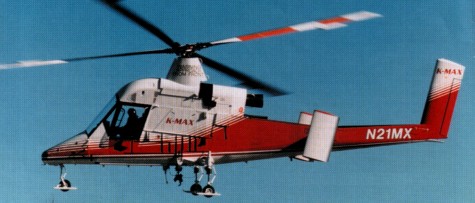
Kaman K-1200 / K-MAX

First flew on 23 December 1991. Certification and initial deliveries took place in 1994. Using intermeshing main rotors, no tail rotor is required.

Kaman K-1200 / K-MAX Article

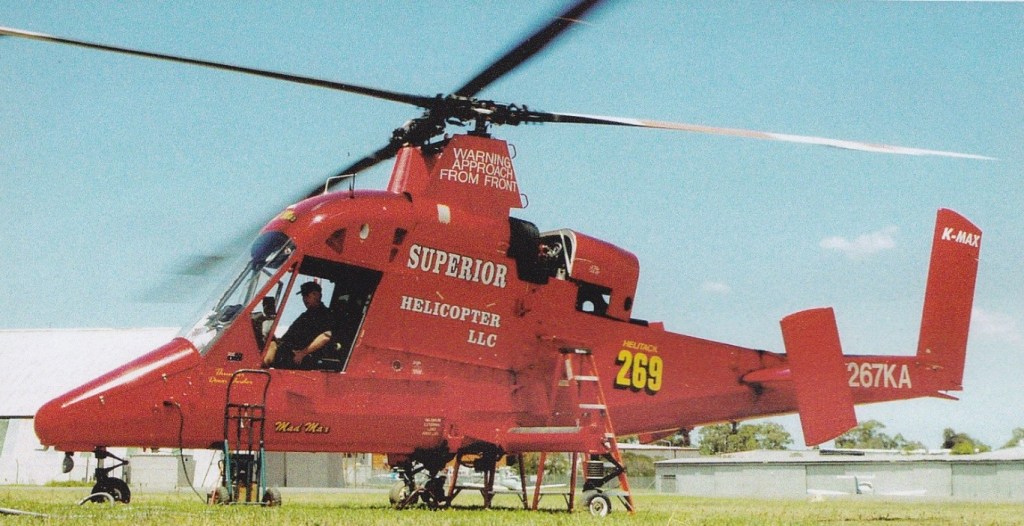
K-Max N267KA

By July 1997, 23 K-Max had been built. Overall, the fleet had accumulated 26,000 hrs, with the highest time example reaching 4000 hr since delivery in October 1994. The production rate was six per year.

Kaman K-Max
Engine: Textron Lycoming T 5317 A1, 1479 shp
Instant pwr: 1118 kW.
Length: 51.837 ft / 15.8 m
Height: 13.583 ft / 4.14 m
Rotor diameter: 48.228 ft / 14.7 m
Max take off weight: 11501.3 lb / 5216.0 kg
Weight empty: 4701.1 lb / 2132.0 kg
Payload: 2722 kg
Max. speed: 100 kts / 185 kph
Max cruise: 100 kts
Service ceiling: 25000 ft / 7620 m
Crew: 1
Payload: max 2700kg ext.

Kaman H-43 Huskie

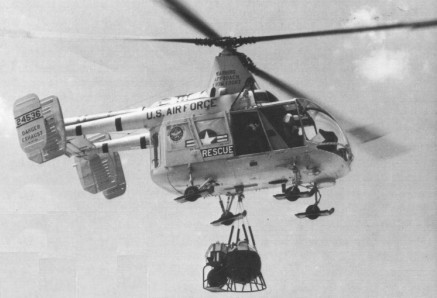
The engine of the HH-43F Huskie drives twin inter-meshing rotors that cross above the fuselage. It has a tail and large, rear-facing fuselage door.

Kaman H-43 Huskie Article

The H-43 was designed extremely compact because it’s inter-meshing rotors. Between 1958 and 1965 some 365 were built.

By late 1960s well over 200 H-43 Huskie turbine-powered rescue helicopters were serving with the USAF.

Kaman HH 43 B Husky
Engine: Lycoming T53-L-1B, 848 shp
Length: 25.164 ft / 7.67 m
Height: 12.598 ft / 3.84 m
Rotor diameter: 47.014 ft / 14.33 m
Max take off weight: 9161.8 lb / 4155.0 kg
Max. speed: 104 kts / 193 kph
Service ceiling: 25000 ft / 7620 m
Range: 240 nm / 445 km
Crew: 1+8

HH-43F
Engine: Lycoming T53-L-11A turboshaft, 1150 hp.
Crew. 2.

Kaman HTK-1

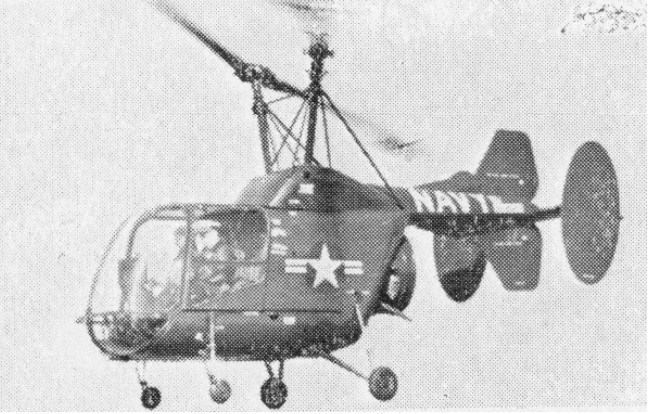
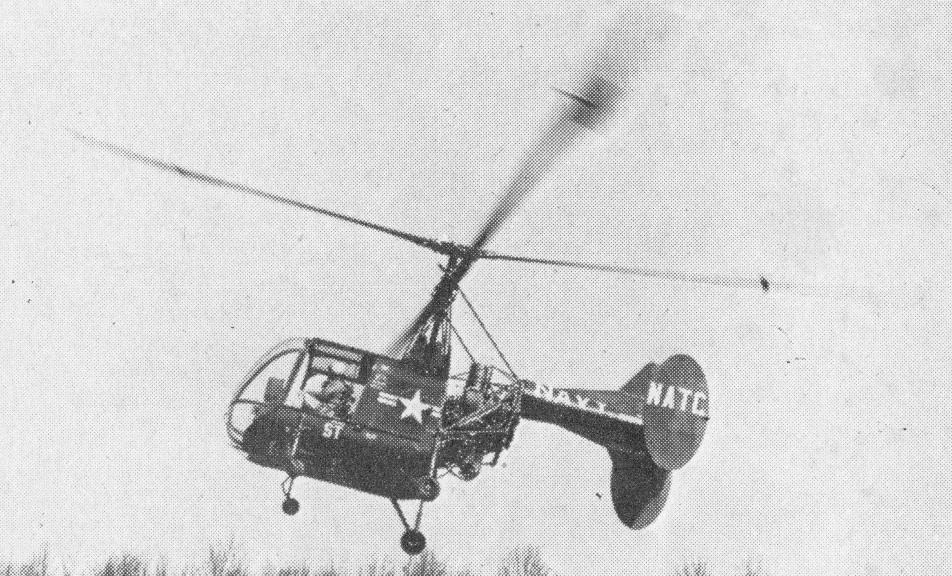
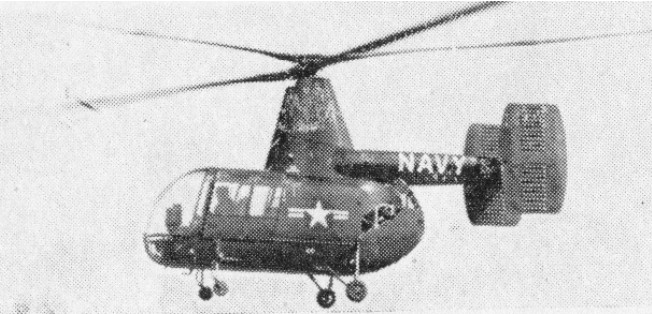
Ordered into production for the U.S. Navy at the same time as the HOK-1“off the drawing board “, the HTK-1 also uses the Kaman system of inter-meshing rotors, controlled through servo flaps.

The HTK-1 was delivered to the U.S. Navy as trainer/ambulance, and also adopted as remote-controlled drone. For ambulance work it can carry a stretcher and medical attendant in its cabin, and two casualties on Stokes litters externally, one on each side.

One HTK-1 has been fitted experimentally with two Boeing T50 gas turbines.

Boeing YT-50-BO-1 powered

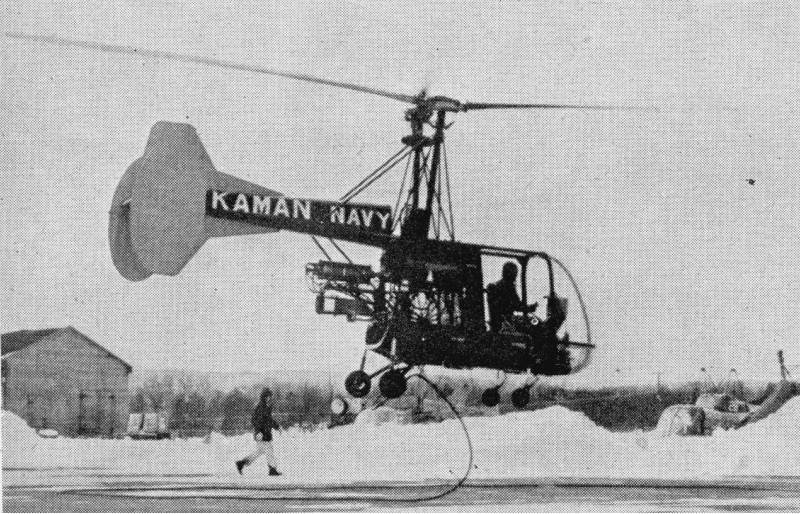
During 1958, Kaman completed a research project in which this HTK-1 was flown on electric power. The 240 hp Lycoming engine was replaced by an electric motor of equivalent power, connected to a ground power source by cable.

HTK-1 electric
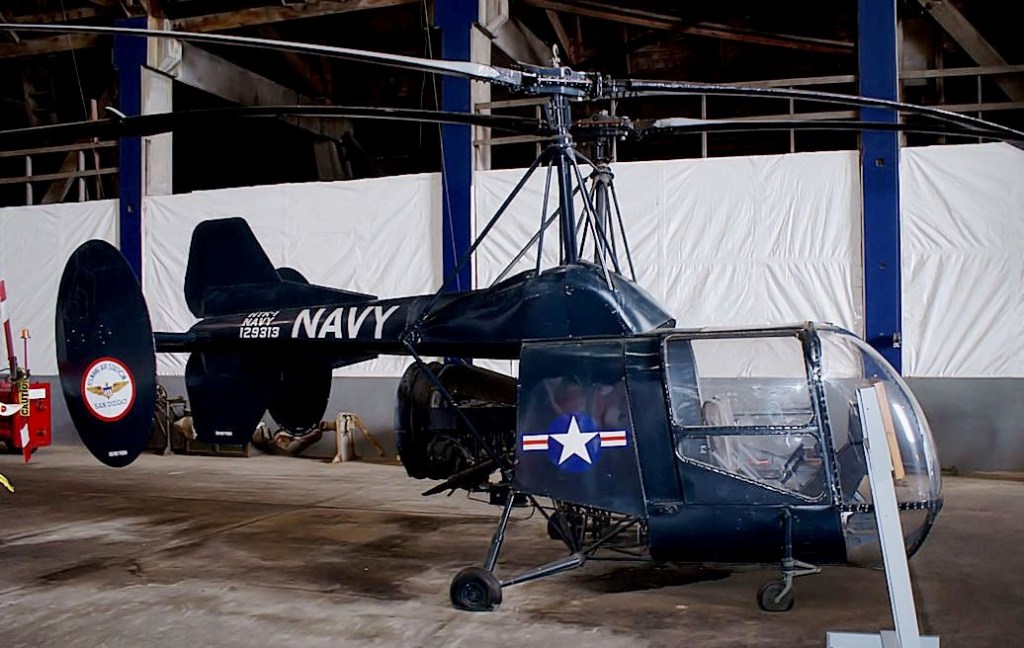
HTK-1 Huskie BuNo. 129313 C/N 422

Twenty-nine HTK-1s were built between 1951 and 1953. Powered by a 240 hp Lycoming O-435-4 piston engine, they served with the Navy at Pensacola until 1957.

HTK-1 Huskie BuNo. 129313 C/N 422

Engine: 235 h.p. Lycoming O-435-4
Rotor dia.: 40 ft
Fuselage length: 23 ft
Max Weight: 2,750 lb
Max. Speed: 75 mph
Ceiling: 10,000 ft
Typical range: 194 miles at 70 mph with full load
Seats: 3

Kaman HOK-1

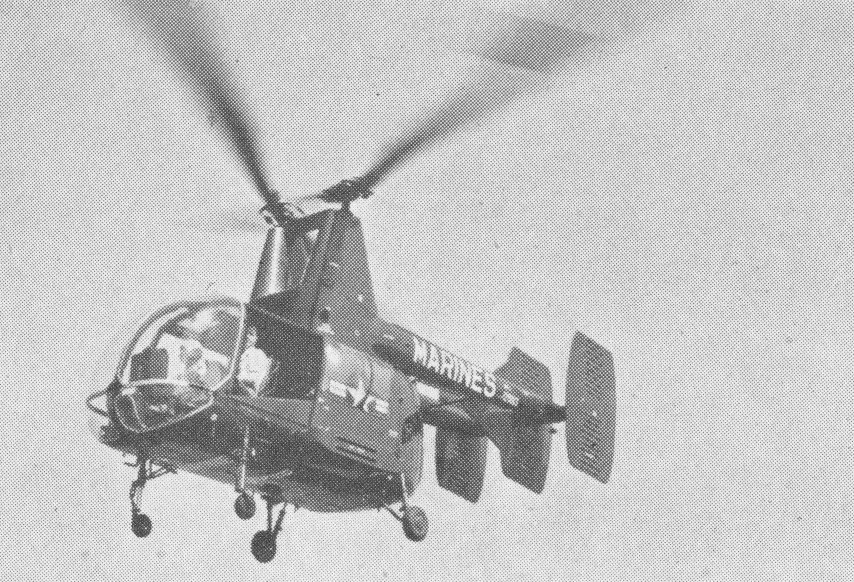
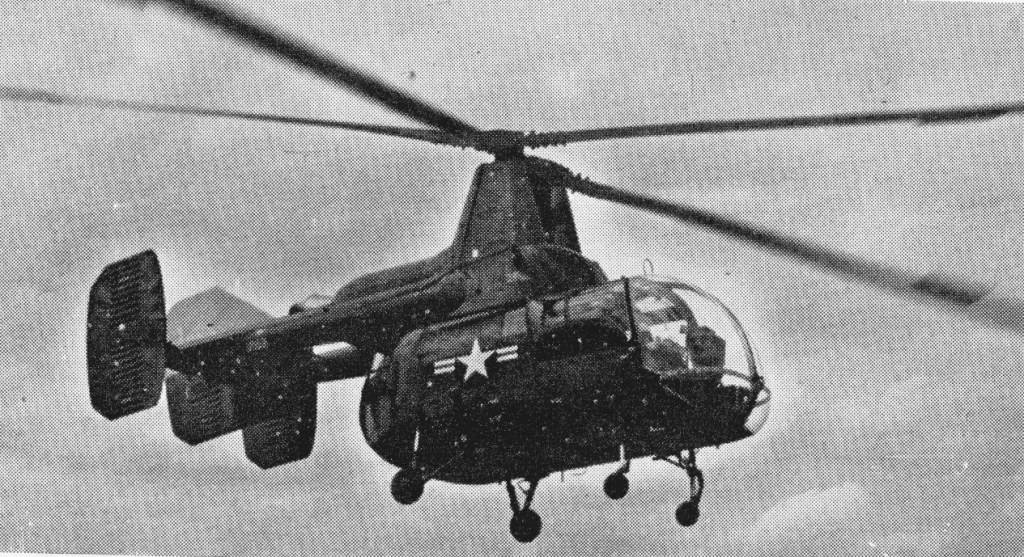
Following evaluation of the Kaman K-225, the US Navy chose the HOK-1 design as best of several submitted in competition for a liaison helicopter. Using the same rotor systems as the K-225, the HOK-1 was put into production off the drawing-board and delivered in quantity to the U.S. Navy and Marines during 1950s. It normally carries four people; but as an ambulance will accommodate two stretcher patients and one sitting patient or medical orderly, in addition to the pilot. Stretcher loading is through the nose, as on the HTK-1.

In service with the U.S. Navy in 1955 as a 4-seat liaison and casualty evacuation helicopter.

As part of a general development programme, several piston-engined helicopters, such as this Kaman HOK-1, were re-engined with gas turbines.

Engine: 800 hp Pratt & Whitney R1340-48
Rotor dia.: 46 ft.
Max Weight: 3,500 lb.
Seats: 4

Kaman K-225 / YH-22

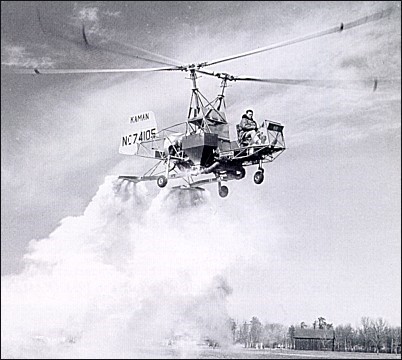
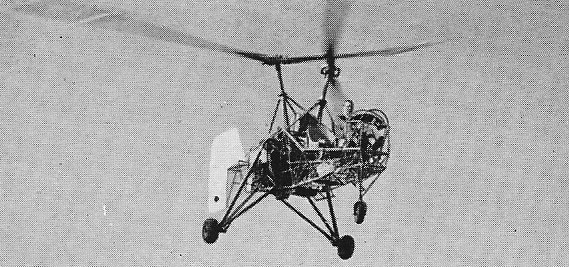
A progressive development of the K-125A and K-190 of 1947 and 1948, Kaman’s second helicopter, the K-225, first flew on 10 December 1951.Kaman put the K-225 into limited production in 1949 as the YH-22.

The K-225 is powered by a 225 hp Lycoming O-435.

Certified by the CAA, there were eleven K-225s produced and they were used in the crop-dusting role.

As a single-seat crop duster, the K-225 was supplied to the Turkish Department of Agriculture.

Testing by the U.S. Navy influenced the award of contracts for the HOK-1 and HTK-1 to the company.

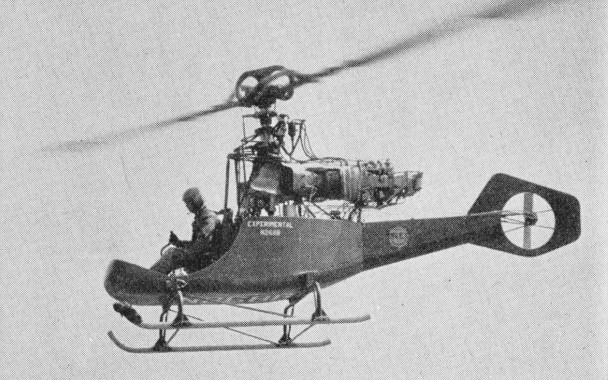
Under U.S. Navy contract, Kaman fitted a 175-h.p. Boeing YT-50 gas-turbine engine to a K-225, and this was the first helicopter, with turbine-driven rotors, flying on 10 December 1951.

Engine: 225 hp Lycoming O-435
Rotor diameter: 38 ft
Fuselage length: 23 ft
Height: 11 ft 6 in
Empty weight: 1800 lb
Loaded weight: 2700 lb
Max speed: 73 mph
Cruise: 65 mph
ROC: 1000 fpm
Ceiling: 12,000 ft
Range: 194 mi at 65 mph
Seats: 3