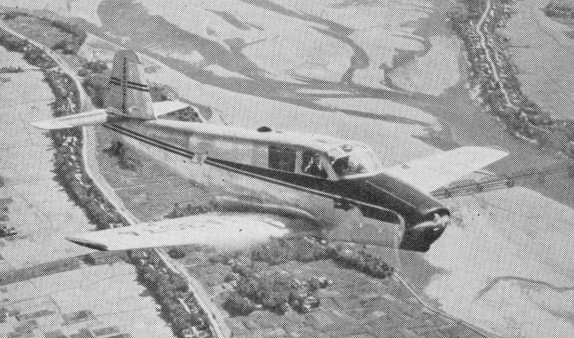
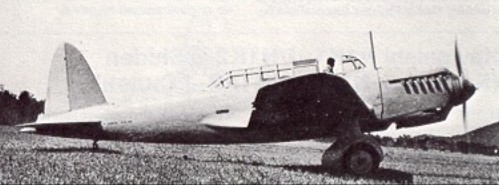
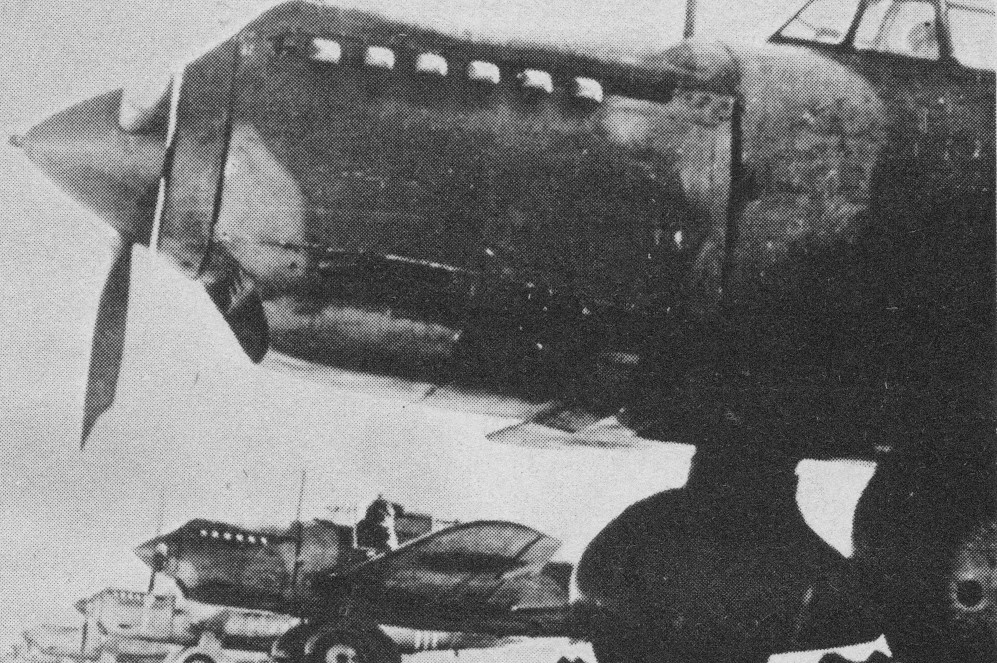
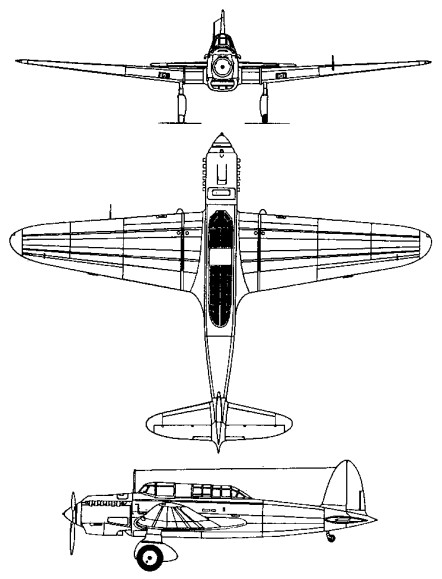
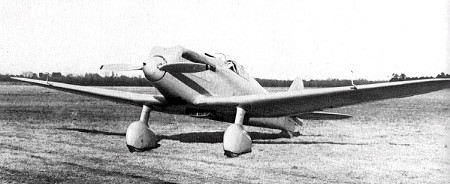
The Kawasaki KAL-1 was the first post-war all-metal aircraft of Japanese design. Flown for the first time on 21 July 1953, the KAL-1 was built by the Kawasaki Gifu works and powered by a 260 hp Lycoming GO-435-C-2 engine. Two prototypes were completed.
Designed as a four-seat liaison aircraft for the Japanese Air Self-Defence Force, the KAT-1 tandem two-seat basic trainer employs a similar wing and tail assembly.
Engine: 260 hp Lycoming GO-435-C-2 Wing span: 34 ft 1.5 in Wing area: 196 sq.ft Length: 29 ft 6 in Height: 8 ft 2.5 in Empty weight: 2022 lb Loaded weight: 3230 lb Max speed: 174 mph Cruise speed: 167.5 mph Service ceiling: 19,700 ft Max range: 1000 mi
The Japanese Army was faced with the prospect of having 270 Ki-61-II airframes sitting around waiting for installation of their Ha-140 liquid-cooled engines.
The Ha-140 engine had proven to be totally unreliable, and, to make matters worse, the Akashi factory manufacturing the Ha-140 had been destroyed in a B-29 raid. Since Japan desperately needed aircraft capable of intercepting the B-29, in November of 1944 the Ministry of Munitions instructed Kawasaki to install a different powerplant in the 275 Ki-61-II airframes gathering dust in the Kagamigahara factory in an attempt to get as many aircraft in the air as possible.
Kawasaki settled on the 1500 hp Mitsubishi Ha-112-II fourteen-cylinder double-row radial engine. This engine had established a standard of easy maintenance and reliable service, however, the Ha-112 was a radial engine, and, with a diameter of four feet, the installation of this engine in a fuselage only 33 inches wide provided a major challenge. The Kawasaki concern was guided in its work by being able to study the engine mount in an imported Focke-Wulf Fw 190A, an example in which a wide radial engine had been successfully installed in an airframe with a narrow width. In addition, the same Mitsubishi Ha-112 radial engine had been successfully installed in the Aichi-built D4Y3 (Allied code name JUDY) dive bomber, earlier versions of which had been powered by a liquid-cooled engine.
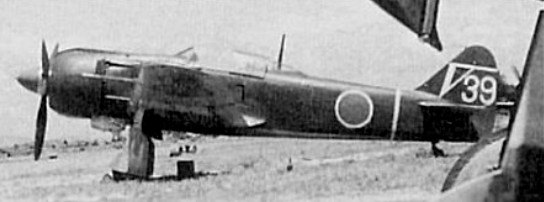
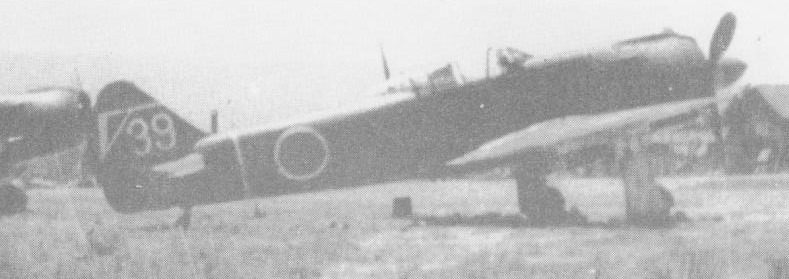
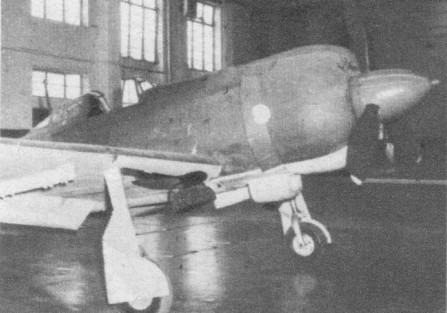
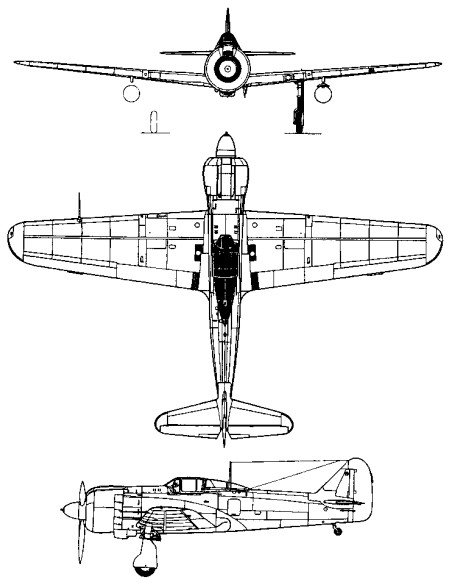
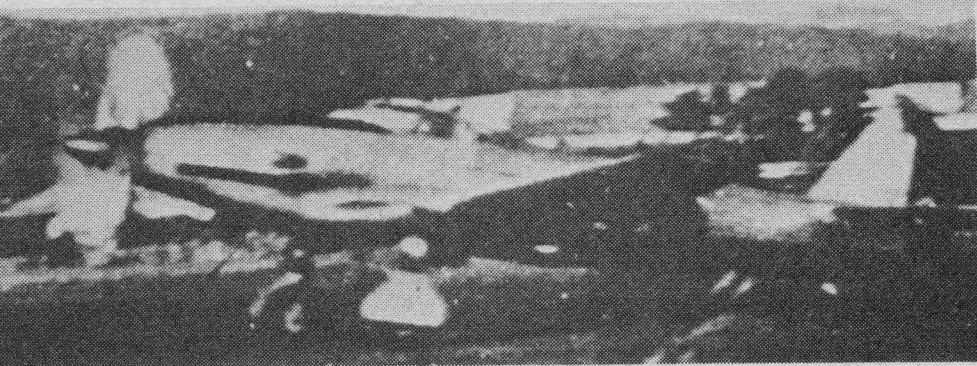
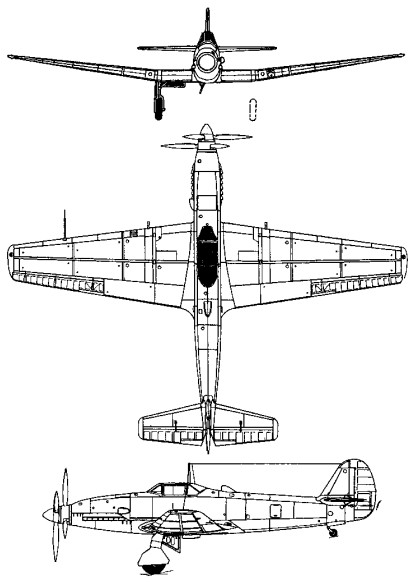
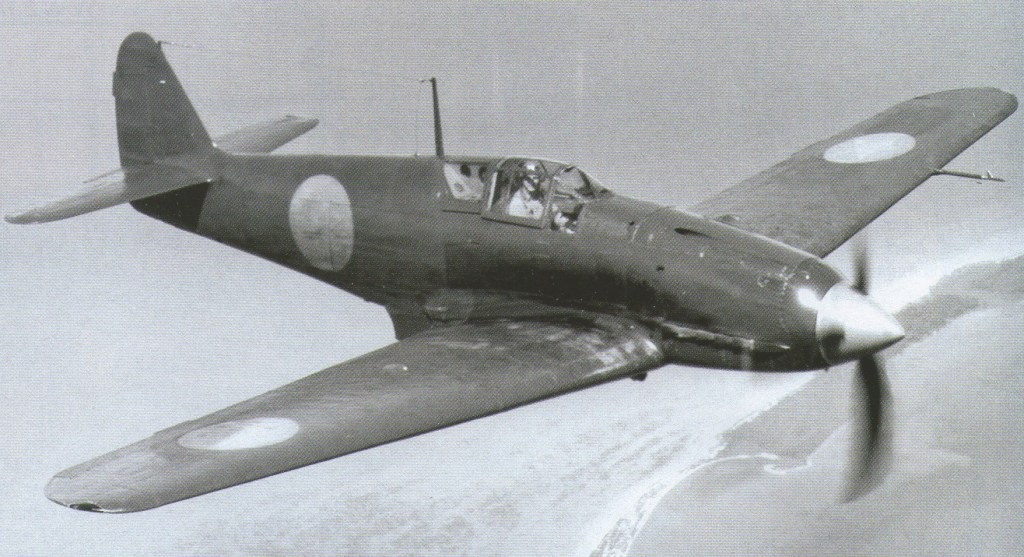
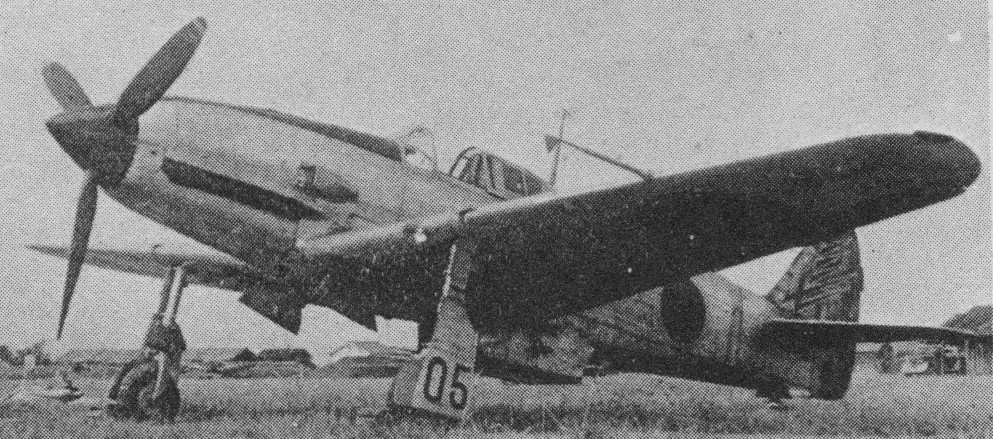
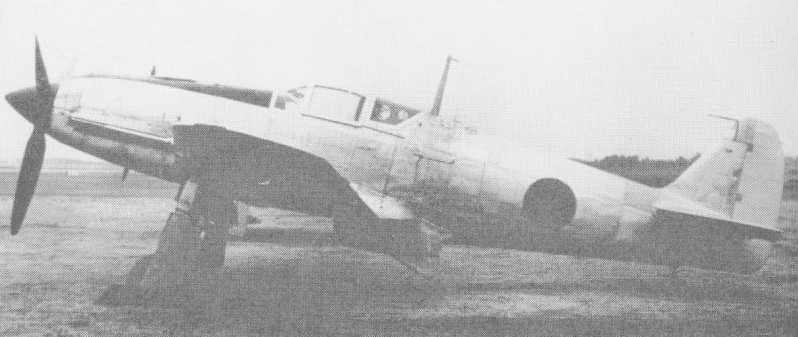
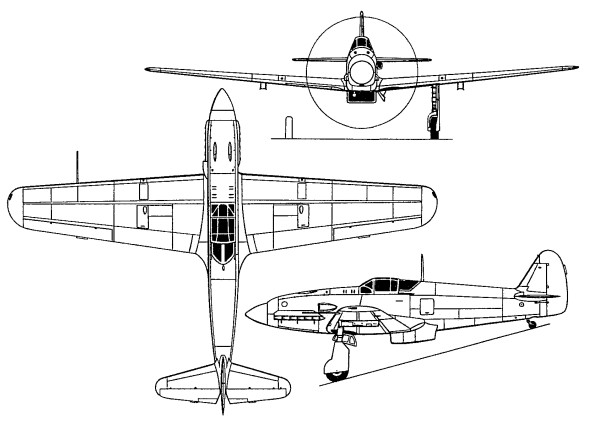
Kawasaki’s design team converted three airframes to serve as prototypes, installing a Mitsubishi Ha-112-II engine which had the same power output as the unreliable Ha-140. The new project was sufficiently different from the Ki-61 Hien that it was assigned a new Kitai number: Ki-100.
The first Ki-100 prototype aircraft made its first flight on February 1, 1945. The results of the flight testing exceeded everyone’s expectations. The Ki-100 was about 600 pounds lighter than its Ki-61-II predecessor. Maneuverability and handling were markedly improved due to the lower wing and power loading.
Although the maximum speed of the Ki-100 was slightly lower than that of the Ki-61-II because of the higher drag exerted by the radial engine, this performance could be reliably attained because of the better reliability of the Ha-112 engine. The design was ordered into immediate production as the Army Type 5 Fighter Model 1A (Ki-100-Ia). The first Type 5 fighters (Ki-100-Ia) were direct conversions of existing Ki-61-II airframes. 271 airframes were converted between March and May 1945, and were immediately delivered to operational units.
The Ki.100 also had provision for carrying two 550 lb bombs externally.
In combat, the Ki-100-Ia proved to be an excellent fighter, especially at low altitudes. It possessed a definite ascendancy over the Grumman F6F Hellcat. In one encounter over Okinawa, a Ki-100-equipped unit destroyed 14 F6F Hellcat fighters without loss to themselves. When the Ki-100 encountered the P-51D Mustang at low or medium altitudes over Japan, it was able to meet the American fighter on more or less equal terms. The outcome of P-51D vs Ki-100 battles was usually determined by piloting skill or by numerical advantage rather than by the relative merits of the two fighter types. However, at altitudes above 26,000 feet, the maneuverability of the Ki-100 began to fall off rather severely and the fighter was at a relative disadvantage in intercepting the high-flying B-29. With the Ki-100 proving such a success, it was decided to initiate production of this aircraft, the resulting Ki-100-Ib differing only by having the cutdown rear fuselage and all-round-view canopy that had been designed for the proposed Ki-61-III.
The first Ki-100-Ib fighters were built at the Kagamigahara and Ichinomiya Kawasaki factories in May of 1945, but production was severely hampered by the continual Allied bombing. Plans had been made to produce 200 fighters per month, but the Ichinomiya plant was forced to shut down in July 1945 after having built only 12 aircraft, and the Kagamigahara plant had its production severely curtailed by aerial attacks. By the time of the Japanese surrender, only 118 Ki-100-Ib aircraft had been delivered.
Ki.100-1b
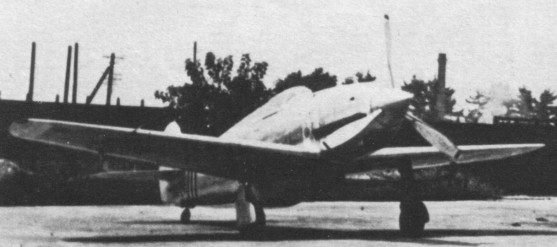
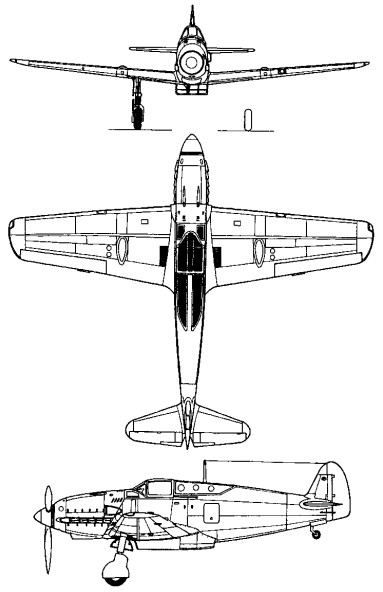
In an attempt to improve the high-altitude performance, the Ki-100-II version was evolved. It was powered by a 1500 hp Mitsubishi Ha-112-II Ru with a turbosupercharger and water-methanol injection to boost power for short intervals. Because of a lack of space, the turbosupercharger had to be mounted underneath the engine without provision for an intercooler and its associated ducting, with air being ducted directly from the compressor to the carburetor. It first flew in May 1945. The lack of an intercooler limited the high-altitude performance of the Ki-100-II, and the turbosupercharger added 600 pounds to the weight, which reduced maximum speed by 15 mph at 10,000 feet. However, the boosted high-altitude power enabled a maximum speed of 367 mph to be be reached at 32,800 feet (the cruising altitude of the B-29 during daylight operations). It had been planned to begin production of the Ki-100-II in September of 1945, but only three prototypes of this high-altitude interceptor had been produced by the time of the Japanese surrender.
A total of 396 Ki-100s were built, including 275 Ki-61-II conversions, 118 Ki-100-Ib production aircraft built from scratch, and three Ki-100-II prototypes. Most of them were assigned to the defense of the home islands, operating from Chofu and Yokkaichi from the spring of 1945. At the end of the war, two Ki-100-Ibs were shipped to the USA for evaluation. The Ki-100 never had a separate Allied code name assigned to it.
Ki-100-I Engine: 1 x Mitsubishi Ha-112-II, 1125kW Max take-off weight: 3495 kg / 7705 lb Empty weight: 2525 kg / 5567 lb Wingspan: 12 m / 39 ft 4 in Length: 8.82 m / 28 ft 11 in Height: 3.75 m / 12 ft 4 in Wing area: 20 sq.m / 215.28 sq ft Max. speed: 580 km/h / 360 mph Cruise speed: 400 km/h / 249 mph Ceiling: 11000 m / 36100 ft Range w/max.fuel: 2200 km / 1367 miles Range w/max.payload: 1400 km / 870 miles Armament: 2 x 20mm cannons, 2 x 12.7mm machine-guns Crew: 1
Kawasaki Ki-100-Ia Army Type 5 Fighter Model 1a Engine: 1 x Mitsubishi [Ha-33] 62 or Ha-112-II, 1500 hp Takeoff, 1350 hp at 6560 ft, 1250 hp at 19,030 ft Wingspan: 34 ft 4 7/16 in Length: 28 feet 11 1/4 in Height: 12 feet 3 5/8 in Wing area: 215.3 sq.ft Empty weight: 5567 lb Loaded weight: 7705 pounds. Max speed: 360 mph at 19,685 ft / 332 mph at 32,810 ft. Time to 16,405 ft: 6 min. Service ceiling: 36,090 ft. Maximum range: 1367 miles. Armament: Two fuselage-mounted 20-mm Ho 5 cannon and two wing- mounted 12.7 mm machine guns.
Ki 100 1b Engine: 1,500 hp Mitsubishi Ha.112 11. Wing span: 39 ft 4.25 in (12m). Length: 28 ft 11.25 in (8.82 m). Height: 12 ft 3.75 in (3.75 m). Wing area, 215.278 sq.ft (20 sq.m). Empty wt: 5,567 lb (2 525 kg). Loaded wt: 7,705 lb (3 495 kg). Max speeds of 317 mph (510 kph) at 3,280 ft (1 000 m), 352 mph (567 kph) at 16,400 ft (5 000 m), 360 mph (580 kph) at 19,685 ft (6 000 m), and 332 mph (535 kph) at 32,800 ft (10000 m). Climb to 16,400 ft (5 000 m): in 6 min, 26,250 ft (8 000 m): 11.5 min, 32,800 ft (10 000 m): 20 min. Service ceiling: 36,090 ft (11000 m). Cruising speed: 248 mph (400 kph) at 13,123 ft (4 000 m). Armament: two 20 mm Ho.5 cannon and two 12.7¬mm Type 103 machine guns.
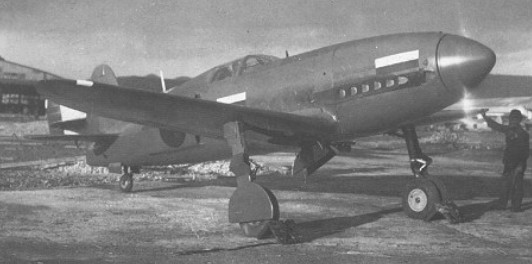
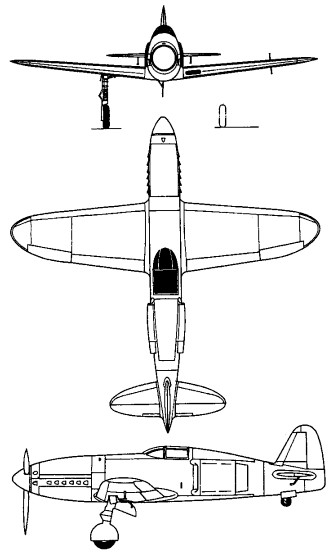
Ki-78 Engine: 1 x Deimler-Benz DB-601A, 880kW Wingspan: 8 m / 26 ft 3 in Length: 8.1 m / 26 ft 7 in Height: 3.07 m / 10 ft 1 in Wing area: 11 sq.m / 118.40 sq ft Max take-off weight: 2300 kg / 5071 lb Empty weight: 1930 kg / 4255 lb Max. speed: 700 km/h / 435 mph Ceiling: 8000 m / 26250 ft Range: 600 km / 373 miles Crew: 1
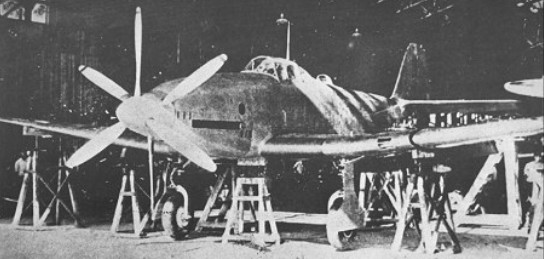
The Kawasaki Ki 64 experimental fighter had two engines in tandem driving separate propellers. The first prototype flew in December 1943.
The type did not entered production.
The Allied code name was ‘Rob’.
Ki-64 Engine: 1 x Kawasaki Ha-201, 1760kW Wingspan: 13.5 m / 44 ft 3 in Length: 11.03 m / 36 ft 2 in Height: 4.25 m / 13 ft 11 in Wing area: 28 sq.m / 301.39 sq ft Max take-off weight: 5100 kg / 11244 lb Empty weight: 4050 kg / 8929 lb Max. Speed: 690 km/h / 429 mph Ceiling: 12000 m / 39350 ft Range: 1000 km / 621 miles Armament: 4 x 20mm cannons Crew: 1
The Ki-61’s designers, Takeo Doi and Shin Owada, had worked under the German Richard Vogt, and in December 1940 they were instructed to go ahead with the Ki-61, and one year later the prototype was flown. Powered by an inverted V-12 inline engine, the Kawasaki Ha-40 being in effect a lightweight Daimler-Benz DB 601A built under licence.
The first of 12 Ki.61 prototypes was flown in December 1941 and went into production shortly afterwards.
The first production Ki-61-I fighters were deployed operationally in April 1943 when the 68th and 78th Sentais arrived in New Guinea. Named Hien (Swallow) in service (and codenamed ‘Tony’ by the Allies), the new aircraft proved popular with its pilots. Being well-armed and armoured, the type was a match for opposing American fighters. Its armament (of four 12.7-mm machine-guns) proved inadequate to knock down enemy bombers, and the Ki-61 I-hei(c) was introduced with a pair of Mauser MG151 20-mm cannon in the nose, these being replaced in a small number of Ki-61 I-tei(d) fighters by two Japanese built 30-mm cannon. The Ki-61-I and Ki-61-I KAI remained in production until 1945, but in 1944 they were joined in service by the Ki-61-II with more powerful Kawasaki Ha- 140 engine (producing 1500 hp / 1119-kW); with a top speed of 610km/h this would have been an excellent fighter but for constant engine problems; yet when fully serviceable the Ki-61-II was one of the few Japanese fighters fully able to combat the Boeing B-29 at its normal operating altitude, particularly when armed with four 20-mm cannon. The Ki-61-II featured a larger wing and modified cockpit canopy. Engine difficulties limited the number completed to eight.
A complete redisgn was undertaken for the Ki.61-IIKai, and 99 of these were built as Ki.61-IIa and –IIb.
The Ki-61-III project, featuring a cut-down rear fuselage with an all-round visin cockpit canopy, did not achieve production, being superseded by the Ki.100.
Excluding prototypes and development aircraft, production totalled 1,380 Ki-61-Is, 1,274 Ki- 61-I KAIs and 374 Ki-61-Ils.
Subtypes:
Ki61I-ko(a) 2X7.7mm 2X12.7mm Ki61I-otsu(b) 4X12.7mm Ki61I-hei(c) 2X12.7mm (nose) 2X20mm (MG151/20 imported by submarine from Germany) Ki61I-tei(d) 2X20mm Ho-5 nose guns 2X12.7mm wing guns (also called Ki61I-kai, this had a longer fuselage and additional fuselage tank).
Ki.61-Ic Engine: Kawasaki Ha.40 Type 2, 1175 hp Wingspan: 39 ft 4 in Length: 29 ft 4 in Height: 12 ft 1.75 in Empty weight: 5798 lb Loaded weight: 7650 lb Max speed: 348 mph at 16,400 ft Service ceiling: 32,800 ft Max range: 1185 mi Armament: 2 x 20 mm cannon, 2 x 12.5mm mg Bomb load: 2 x 550 lb Crew: 1
Ki-61-II KAIa Crew: 1 Engine: 1 x Kawasaki Ha-140, 1125kW Max take-off weight: 3780-3825 kg / 8334 – 8433 lb Empty weight: 2840 kg / 6261 lb Wingspan: 12 m / 39 ft 4 in Length: 9.16 m / 30 ft 1 in Height: 3.7 m / 12 ft 2 in Wing area: 20 sq.m / 215.28 sq ft Max. speed: 610 km/h / 379 mph Cruise speed: 400 km/h / 249 mph Ceiling: 11000 m / 36100 ft Range w/max.fuel: 1600 km / 994 miles Range w/max.payload: 1100 km / 684 miles Armament: 2 x 20mm cannons, 2 x 12.7mm machine-guns, 2 x 250kg bombs
Ki-61-II Max speed: 423 mph @ 28,000 ft Initial climb: 3,425 fpm Time to 20,000 ft: 6.6 minutes Max range: 2,120 miles
In February 1940 Kawasaki were instructed to commence work on a heavy intercepter fighter design using the German Daimler Benz DB 601A in¬line liquid cooled engine, for which the firm had already obtained manufacturing rights. The specification for the Ki 60 was issued at the same time as that for the Ki 61, but was given priority as it was intended to be superior in speed, climb rate and armament. At that time the army’s standard fighter was the radial engined Nakajima Ki 27 which had good manoeuvrability rather than speed and was thus the antithesis of the Ki 60 concept. The Ki 60 was developed by a design partnership of Takeo Doi and Sin Owada, the first prototype flying in March 1941. It was a low wing all metal cantilever monoplane with a short fuselage of rather humped appearance. The main wheels retracted inwards to lie entirely within the wing profile, and the tail wheel was also retractable. The wings and horizontal tailplane had straight taper. With the 1100 hp DB 601A engine a top speed of 550 km/h (342 mph) was attained, less than the designers’ estimates. Armament was four 20 mm (0.79 in) cannon, two in the wings and two fuselage mounted.
The second prototype was modified to have increased wing area, a cleaner engine cowling and a slightly lighter structure. The increase in speed of only 10 km/h (6 mph) was disappointing, but the landing speed was reduced. A third and final prototype was built, with a smoother cowling, but only another 10 km/h in top speed was gained and Ki 60 development was cancelled in favour of the Ki 61.
Ki-60 Engine: 1 x Deimler-Benz DB 601A, 860kW Wingspan: 10.5 m / 34 ft 5 in Length: 8.47 m / 27 ft 9 in Height: 3.7 m / 12 ft 2 in Wing area: 16.2 sq.m / 174.38 sq ft Empty weight: 2150 kg / 4740 lb Max take-off weight: 2750 kg / 6063 lb Max. speed: 560 km/h / 348 mph Ceiling: 10000 m / 32800 ft Armament: 2 x 12.7mm machine-guns, 2 x 20mm cannons Crew: 1
Kawasaki proposed a 708kW / 950 hp Ha 9 IIb water-cooled engine of its own design in 1936 for the new Ki 32 light bomber, a mid wing all metal cantilever monoplane. A wooden mock up was constructed in the summer of 1936, followed by eight prototypes, the first of which flew in March 1937. There were problems with the engine, and development was protracted, but the Kawasaki design team of Imashi and Ota was rewarded in July 1938 with a production contract. Its wide-track fixed cantilever undercarriage featured open-sided wheel fairings. Wing and tail surfaces were finely tapered. The two-man crew were accommodated beneath a long raised canopy. Armament comprised one fixed cowling 7.7mm Type 89 machine-gun and another of the same type on a flexible mounting operated by the observer. An internal bomb bay accommodated a 300kg offensive load, supplemented by 150kg of bombs on external racks. Designated Army Type 98 Light Bomber, the Ki 32 entered service late in 1938 to supplement the Mitsubishi Ki 30.
Apart from prototypes, Kawasaki delivered 846 Ki 32s up to May 1940. They flew with considerable success with seven operational Sentais (groups) in China, where they made many low level sorties, particularly in the campaigns to capture the cities of Hangchow and Wuchang during 1938 39. They equipped two operational Sentais during the fierce fighting over the Khalkin Gol and Nomonhan on the border of Manchuria and Outer Mongolia against Soviet ground and air units in 1939.
Ki 32s were still in the army’s first line inventory when Japan attacked Pearl Harbor, and were prominent in the heavy attacks on Hong Kong which preceded the British surrender of Hong Kong in December 1941, but during 1942 they were nearly all relegated to training duties. The type received the Allied codename Mary. Armament and bombload were identical with that of Ki 30. Like its Mitsubishi contemporary the Ki 32 carried its normal bombload internally in a fuselage bomb bay.
Ki-32 Engine: 1 x Kawasaki Ha-9-IIb, 640kW Span: 15m (49 ft3 in) Length: 11.64m (38ft2 in) Height: 2.9 m (9 ft 6 in) Wing area: 34.0 sq.m (365.97 sq ft) Max take-off weight: 3539-3762 kg (7802-8294 lb) Empty weight: 2349 kg (5179 lb) Maximum speed: 423 km/h (263 mph) Cruise speed: 300 km/h (186 mph) Ceiling: 8920 m (29250 ft) Range w/max.fuel: 1960 km (1218 miles) Range w/max.payload: 1300 km (808 miles) Armament: 2 x 7.7mm machine-guns, 300-350kg of bombs Crew: 2
The Ki-28 was Kawasaki’s competitor for a replacement fighter in 1935 for the Japanese Army Air Force (JAAF). Conpeting against the Mitsubishi Ki-33 and the Nakajima Ki-27, all three aircraft were low wing monoplane design and similar in performance but the Ki-27 won due to its manoeuverability. The Ki-28 was powered by an 800 hp Kawasaki Ha-9-IIa liquid cooled engine.
Ki-28 Engine 1 x Kawasaki Ha-9-IIa 800hp 12 cyl Length 12 m. Wingspan 7.9 m Wing area 19 sq.m Height 2.6 m Empty weight 1420 kg Max Take off Weight 1760 kg Max Speed 485 km/hr. Range 1000 km. Ceiling 11000 m Crew 1.
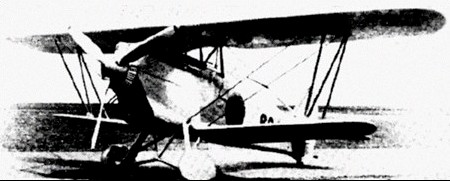
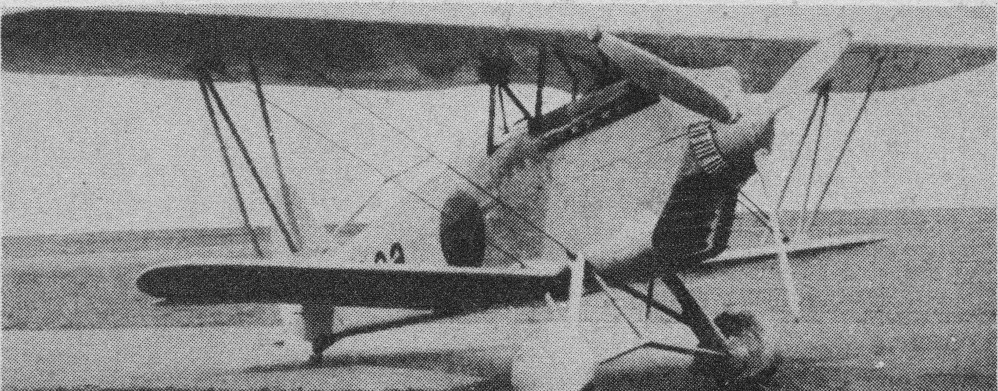
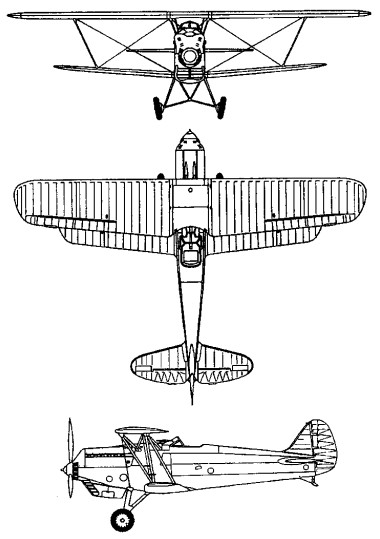
The single seat Ki-10 was Kawasaki’s second attempt to evolve a replacement for the Japanese army air force’s Type 92 Intercepter Fighter. The first had been the Ki 5 monoplane which proved to have a performance and manoeuvrability below that specified by the army air force. A fighter competition was held in 1934 to evaluate new designs from Kawasaki, Mitsubishi and Nakajima, designated Ki 10, Ki-8 and Ki 11 respectively. This time the manoeuvrability of the Kawasaki design won the day, and it was ordered into production as the Army Type 95 Fighter. It proved to be the last biplane combat aircraft to serve with the army air force.
Designed by Takeo Doi (who had succeeded Richard Vogt as Kawasaki’s chief designer), the Ki 10 closely resembled the earlier Type 92 in appearance, but powered by an 850 hp Kawasaki Ha 9 11a 12 cylinder V type engine. The first of four prototypes was flown in the spring of 1935, and production aircraft were based on the third prototype which had a three blade metal propeller, and a flush riveted light alloy skin over the forward fuselage. The Ki-10 was selected in competition with Nakajima’s Ki-11 low-wing monoplane, the Japanese Army preferring the Ki-10 biplane’s manoeuvrability to its opponent’s slightly superior speed.
Production Ki-10-1 aircraft were powered by the 633kW Kawasaki Ha-9-IIa liquid-cooled engines, and 300 built between December 1935 and October 1937 went into service as the Army Type 95 Fighter. The biplane wings of unequal span were braced by N-struts and with ailerons on the upper wing only. The divided undercarriage had wheel spats. The all-metal structure was alloy sheet and fabric-covered. Armament was two synchronised 7.7mm Type 89 machine-guns.
The improved Type 95 Model 2, flown in prototype form in May 1936, differed primarily in having slightly larger wings of 10.02 m (32 ft 10 in) span, a fuselage lengthened to 7.55 m (24 ft 9 in), and a gross weight increased to 1740 kg (3836 lb), and vertical tail surfaces of greater area. The powerplant and performance remained es¬sentially unchanged, but stability was greatly improved and the service ceiling was increased from 10 000 m (32,810 ft) to 11500 m (37,730 ft). This version was built between June 1937 and December 1938, 280 completed.
Standard armament of both models was a pair of 7.7 mm (0.303 in) Type 89 machine guns mounted in the upper engine decking.
Over the period in which they were in service Ki 10s equipped seven, different Rentais (wings) and six other Sentais (corps) of the army air force. They operated in China, Formosa, Korea, and Manchuria, as well as at home bases, before and during the Second World War. By the time that conflict began, however, most Ki 10s (codenamed Perry by the Allies) had been reallocated to training or other second line duties.
One Ki-¬10 1 Kai and two Ki 10 11 Kai prototypes appeared in 1936 and 1937 respectively, embodying aerodynamic, structural and powerplant improvements, but neither of these models entered production.
Ki¬-10 Prototype Engine: 850 hp Kawasaki Ha 9 11a Seats: 1 No built: 4
Ki¬-10 Type 95 Fighter 1 Engine: 633kW Kawasaki Ha-9-IIa Span: 9.55 m (31 ft 4 in) Length: 7.2 m (23 ft 7 in) Gross weight: 1650 kg (3638 1b) Maximum speed: 400 km/h (249 mph) Service ceiling: 10 000 m (32,810 ft) Seats: 1 Armament: 2 x 7.7mm Type 89 machine-guns No built: 300
Ki¬-10 Type 95 Fighter 2 Engine: 633kW Kawasaki Ha-9-IIa Wingspan: 10.02 m (32 ft 10 in) Length: 7.55 m (24 ft 9 in), Height: 3.0 m / 9 ft 10 in Wing area: 23.0 sq.m / 247.57 sq ft Empty weight: 1360 kg / 2998 lb Max take-off weight: 1740 kg (3836 lb) Max. speed: 400 km/h / 249 mph Service ceiling 11500 m (37,730 ft) Range: 1100 km / 684 miles Seats: 1 Armament: 2 x 7.7mm Type 89 machine-guns No built: 280