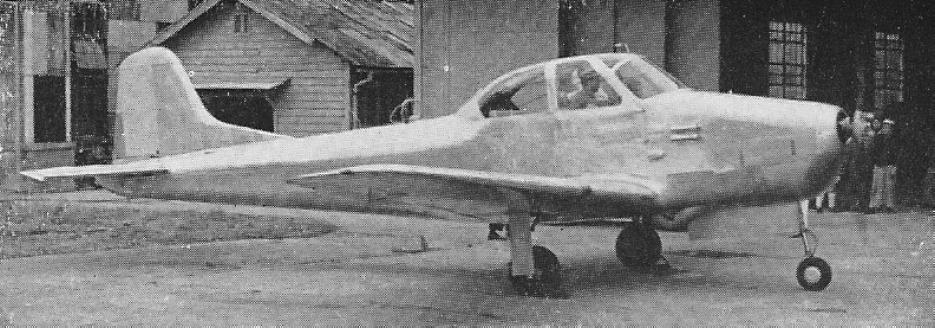
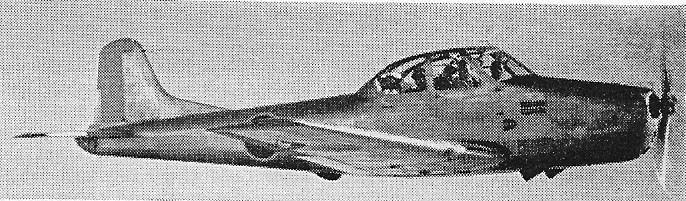
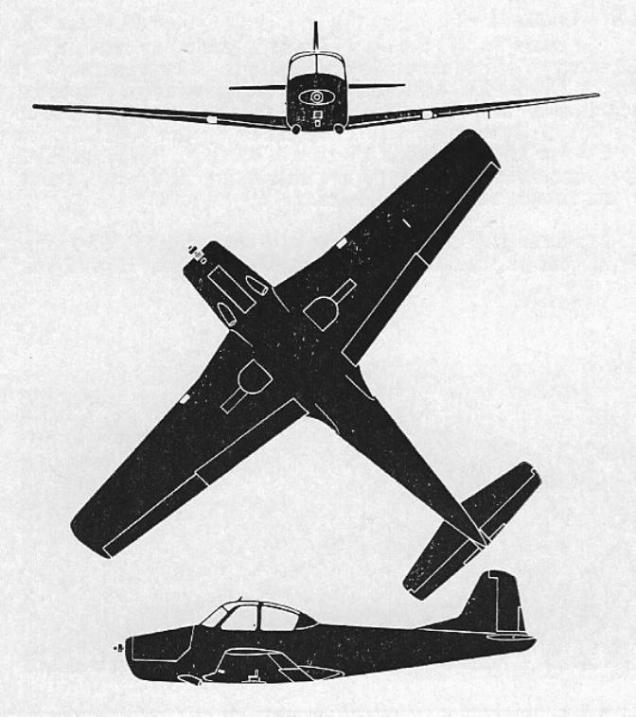
Keleher Lark-IK-1

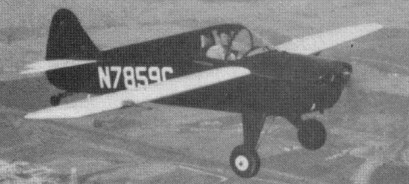
The Lark is an enclosed cabin cockpit midwing monoplane. This single-seat taildragger is relatively unusual with its strut-braced mid-wing configuration. The fuselage is of steel-tube construction, and the wing uses wood spars and ribs. The whole aircraft is fabric covered. Engines vary from 65 to 100 hp.

Gross Wt. 855 lb
Empty Wt. 555 lb
Fuel capacity 12 USG
Wingspan 23 ft
Length 17 ft
Top 135 mph.
Cruise 122 mph
Stall 55 mph
Climb rate 1000 fpm
Takeoff run 550 ft
Landing roll 700 ft
Range 300 miles

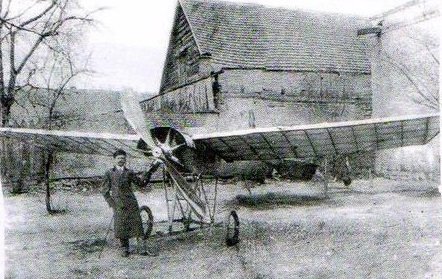
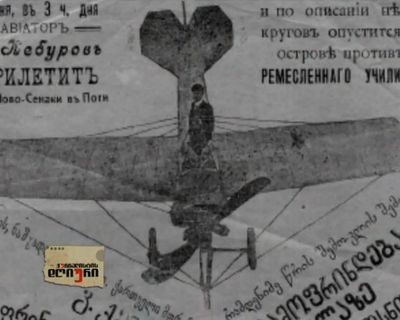
Kébouroff-Vasiliev 1912 Monoplane

Vissarion Kébouroff

The second monoplane design of Kébouroff and Vasiliev, built in 1912 in Georgia (part of Russia). In 1910 Vissarion Kébouroff took flying lessons from Blériot at his flying school in Pau, France where he obtained a brevet from the Aero Club de France. On his return to Russia he brought back two Blériot monoplanes which he flew there frequently. As these machines were rapidly worn out and in need of repair, Kébouroff worked together with Alexander Vasiliev to design and built a new monoplane to replace the aging Blériots. Kébouroff and Vasiliev actually built a pair, where the second (1912) is given as the same construction as the first but fitted with a 50 hp Gnôme rotary engine. Later a third monoplane was built by the two which was designed somewhat along the lines of the Nieuport IV monoplane.

Keane HKL-27

Designed by Horace Keane, the HKL-27 was a short-lived redesign of the Aeromarine Klemm AKL-26. A two place, open cockpit, low wing monoplane, the wood frame work was fabric covered.

Five were produced at $1800 around 1929.

Engine: Ford V-8, 82hp
Wing span: 36’8″
Length: 23’4″
Useful load: 650 lb
Max speed: 112 ph
Cruise: 94 mph
Stall: 47 mph
Range: 450 mi
Ceiling: 12,000′

Kazurov-Poluchkine-Rusakov Chtyvnoplat (Hybrid)

A single seat single engined high wing monoplane with hybrid control circa 1983. Wing has unswept leading and trailing edges, and constant chord. Yaw control by rudder. Control inputs through weight shift for pitch/yaw/roll.
The Chtyvnoplat appears from the very sketchy information available to be a Russian equivalent of the Quicksilver E. It differs from the Eipper-formance machine in that the pilot lays prone, but the control system is similar, being primarily weight shift but assisted by a rudder. The high rectangular wing has a large dihedral and a single boom supports the tail, the whole structure being supported in flight by a web of cables of considerable density.
The claimed glide ratio is 15 17/1.

Length overall 17.1ft, 5.20m.
Wing span 31.5 ft, 9.60 m.
Constant chord 4.8 ft, 1.46 m.
Total wing area 151 sq.ft, 14.0 sq.m.
Wing aspect ratio 6.5/1.

Kazan Aktay / White Colt

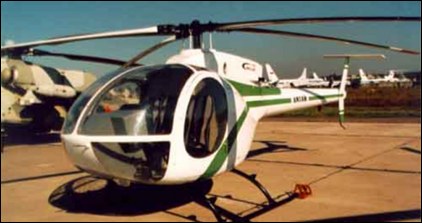
Work beginning in 1996, the project was revealed at the Moscow Air Show, on 19 August 1997, with display of a mockup. A second engineering mockup was built in 1998. Kazan decided in mid-2001 to begin building a prototype to fly in 2003.

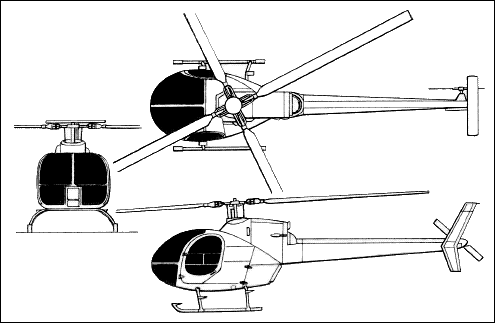
Intended for light transport, patrol, medical evacuation and training, certification was to be to FAR Pt 27. A conventional pod and boom configuration with T tail, semi-articulated three-blade main rotor, tapered blades on production version. The max (emergency) rotation speed is 2,586 rpm. A rotor brake is standard but no provision for folding. A Krasnyy Oktyabr VR-10 main gearbox, rated for 216kW, receives an engine input of 6,000 rpm. A XP-10 gearbox is fitted for the two-blade tail rotor.
Extensive use of composites is made throughout, including main rotor blades.
The landing gear is a conventional, non-retractable skids on arched support tubes, with spring shock absorbtion.
Power is by one 201kW VAZ-4265 rotary engine mounted above the cabin and behind the gearbox and operating on 92/93 grade petrol. Rpm control is manual. Fuel capacity is 300 litres. A refuelling point is on the left side. Oil capacity 20 litres.

The pilot and two passengers, all side by side, in individual seats, have a forward-hinged door each side. Twin clamshell doors are at the rear of the pod, below the tailboom, provideding access to the flat freight floor. One casualty stretcher can be loaded through rear doors when a passenger seat is removed. Alternative access via door on starboard side. Optional, rear-facing seat in luggage bay. Optional heating and air conditioning.
The electrical system with accumulator and M-16 generator has a max rating of 16kW. Anti-icing is fitted for the main rotor blades.

Engine: 1 x 201kW VAZ-4265 rotary
Max take-off weight: 1050kg
Payload: 300kg
Empty weight: 2402kg
Max speed: 190km/h
Cruising speed: 155km/h
Hovering ceiling, OGE: 1300m
Service ceiling: 4700m
Range with 300kg payload: 100km
Range with 190kg payload: 600km
Max endurance: 6h
Crew: 1
Passengers: 2
Kayaba “Ka”-Go / Ka-1 / Ka-2

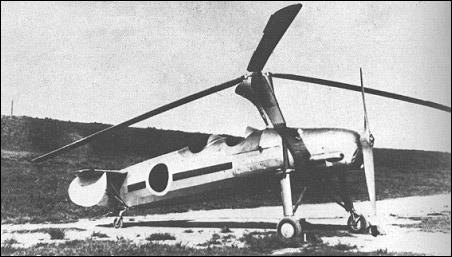
In 1939 the Imperial Japanese Army imported a Kellet KD-1A single-engined two-seat autogyro as an artillery spotter. Powered by a 225hp Jacobs L-4M4 seven-cylinder air-cooled radial, the KD-1A featured an advanced version of the Kellet direct control rotor system. Shortly after its arrival in Japan, the aircraft was seriously damaged during flight trials at low speeds. The Kellet KD-1A had been damaged beyond repair, but the Japanese Army delivered the wreck to K.K. Kayaba Seisakusho (Kayaba Industrial Co Ltd), a small company doing autogyro research, with instructions to develop a similar machine.
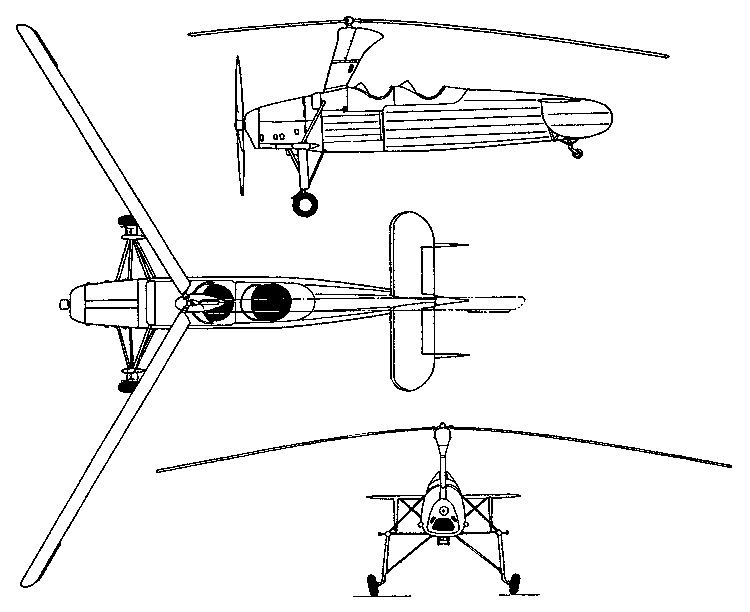
The Kayaba engineering team developed a two-seat observation autogyro based on the Kellet KD-1A but modified to Japanese production standards, designated Ka-1.
The Ka-1 was powered by a 240hp Kobe eight-cylinder inverted-vee air-cooled (licence version of the German Argus Argus As 10c) engine driving a two-blade propeller, and had a three-blade rotor. Completed in May 1941 at the Sendai (Miyagi Prefecture) plant of Kayaba, the first Ka-1 made its maiden flight at Tamagawa on 26 May, 1941.
During its flight test programme the Ka-1 performed remarkably well, demonstrating its ability to take-off after running only 30m in still air. By running the engine at full power and holding the nose 15 deg up, the Ka-1 could hover and could also execute a full 360 deg turn while hovering. As maintenance in the field appeared to present less difficulty than anticipated the aircraft was placed in production for service with artillery units.
Eventually some two hundred and forty aircraft of this type were built.

A small number of Ka-ls were modified for operation from naval craft as anti-submarine patrol aircraft. As the load-carrying capability of the standard two-seat Ka-1 was too limited, the carrier-borne Ka-ls were operated as single-seaters and carried two 60kg bombs or depth-charges. In this role the Ka-ls operated over Japanese coastal waters and particularly over the Tsugara and Korean channels.
The Kayaba Ka-1 autogyro was the first armed autogyro/helicopter to have been used operationally.

At least one of these aircraft, the Ka-1 KAI, was tested with powder rockets on the rotor tips in an attempt to improve its load-carrying capability while another aircraft was fitted with a 240hp Jacobs L-4MA-7 seven-cylinder air-cooled radial. With Jacobs engine the type became the Ka-2.

Kayaba Ka-1
Engine: 1 x Kobe/Argus As 10c, 180kW / 240 hp
Main rotor diameter: 12.2m
Max take-off weight: 1170kg
Empty weight: 775kg
Max speed: 165km/h
Cruising speed: 115km/h
Ceiling: 3500m
Range: 280km
Armament: 2 x 60kg depth charges

Kay Autogyro

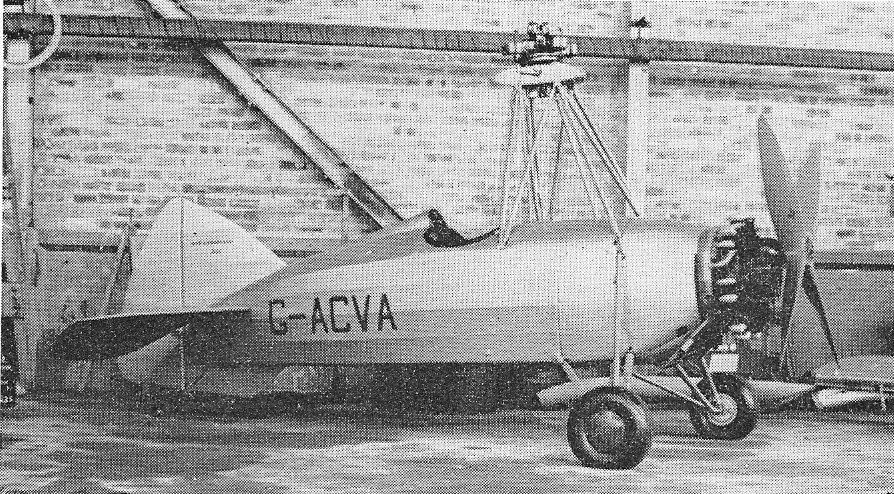
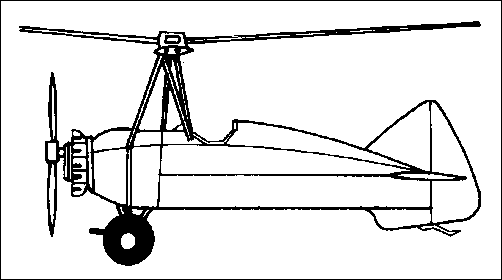
The only Kay Gyroplane constructed, G-ACVA, was designed by D. Kay and constructed by Oddin, Bradbury and Cull Ltd of Eastleigh, Hants.

Kay Autogyro Article

Power was a 75 hp Pobjoy, and chief feature of the machine was the positive control of lift by variable incidence of the rotor blades while in flight. Lateral control could be obtained by rocking the rotor spindle, while fore and aft control was by a hinged tailplane and normal elevators.

Engine: 75hp Pobjoy
Rotor diameter: 22 ft
Overall length: 17 ft 11 in
Height: 7 ft 8 in

Kawasaki KAL-2

The Kawasaki KAL-2, deigned and built by the Kawasaki-Gifu division of the Kawasaki Aircraft Company, was produced in 1955 as a development of the KAL-1 ns KAT-1.

Of all-metal construction, the KAL-2 seats four.

KAL-2 no.2

An initial order for two was placed by the Japanese Air Self-Defence Force.

Engine: Lycoming GO-435-C2B, 260 hp
Span: 39 ft 0.5 in
Wing area: 206.66 sq.ft
Length: 28 ft 8.5 in
Height: 9 ft 6 in
Empty weight: 2315 lb
Loaded weight: 3527 lb
Max speed: 183 mph at 7742 ft
Cruise: 112 mph
Range: 994 mi
Seats: 4

Kawasaki KH-4 / KHR-1

At the beginning of the sixties, Kawasaki began to develop a version of the three-seat Bell Model 47G-3B, with a stretched cabin to make room for two rows of seats.
Powered by a 201kW Lycoming TVO-435-B1A air-cooled engine, the first KH-4 flew in August 1962 and received Japanese type approval on 9 November of that year.
Apart from changes to the cabin to accommodate extra passenger, and new supercharged engine, the KH-4 had a new instrument layout, modified control system and larger fuel capacity.
The engine retained was a 270hp Lycoming TVO-435-B1A or -D1A.
By the beginning of 1972, 193 of the Kawasaki KH-4 had been built, 19 of which were assigned to the Japanese Army, 23 to the Thai armed forces, four to the South Korean armed forces and one to the Philippines.
A total of 338 built for civil and military customers between 1960 and 1975.
An experimental variant of the KH-4 was the KHR-1 which was modified to test a three-blade rigid rotor system. This aircraft flew for the first time on 26 April, 1968.

KH-4
Rotor diameter: 11.32m
Length overall: 13.30m
Length of fuselage: 9.93m
Height overall: 2.84m
Empty weight: 816kg
Maximum take-off weight weight: 1293kg
Maximum level speed: 169km/h
Cruising speed: 140km/h
Service ceiling: 5640m
Hover ceiling in ground effect: 5485m
Maximum range: 400km