The type number F.K.59 has been used for three Koolhoven designs: a two-engined float plane, an open two-seat sports plane and a single engined military biplane developed from the F.K.52. Of these three aircraft it was the single engined biplane that made it to production as Koolhoven F.K.59, first flown in 1940. It was the last Koolhoven design in production.
Other sources mostly show a photo of the two-engined float plane as F.K.59, but this was just a mock-up, not an actual aircraft, neither a prototype.
1 engine
Koolhoven FK.58
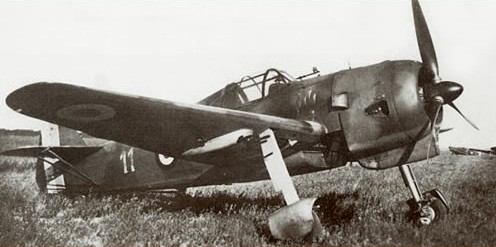
Dutch single seat fighter aircraft. The NV Koolhoven Vliegtuigen of Waalhaven, near Rotterdam, built the prototype F.K.58 within two months of completion of the design, and it flew for the first time on July 17, 1938, bearing the civil registration PH ATO. Designed by Dr Erich Schatzki, formerly of Fokker, to meet a French requirement, the F.K.58 had plywood covered wooden wings and fixed tail surfaces; a metal and fabric-covered steel tube fuselage; and metal framed fabric covered wing and tail control surfaces. A total of 450 litres (99 Imperial gallons) of fuel was carried internally, and the 1080 hp Hispano Suiza 14Aa 14 cylinder two row radial engine gave it a top speed of 483 km/h (300 mph).
This prototype was demonstrated to the French authorities at the Centre d’Essais du Materiel Aeden at Villacoublay on October 10, 1938, and an order for 50 aircraft followed in January 1939. Intended for use by the Armee de l’Air in French Indo China, they were to be powered by, 1030 hp GnomeRhone 14N39 14 cylinder radials and designated F.K.58A. Deliveries began in mid June 1939, and 17 were delivered within the next three months, of which the first four retained the Hispano Suiza powerplant, the other 13 being F.K.58As. However, due to inadequate production facilities, the small Koolhoven factory was not able to complete the French order. The construction of 10 French F.K.58As was sub contracted to SABCA in Belgium, but although the airframes had been completed when Germany invaded that country in 1940, their Gnome Rhone engines had not been delivered from France.
Following the first flight of a second Hispano powered prototype (PH AVA) on February 14, 1939, the Netherlands government in the following month ordered 36 F.K.58s, to be powered by 1080 hp Bristol Taurus III engines; but here again engine supply problems intervened, and Koolhoven was unable to complete any of the order for the Luchtvaartafdeling (Dutch air force). The production line and the second prototype were destroyed in a Luftwaffe air attack, the first prototype having already been lost in a crash in January 1940.
Thus the only operational F.K.58s were those supplied to the Armee de l’Air. Armed with four 7.5 mm (0.29 in) FN Browning machine guns, in two underwing fairings outboard of the main undercarriage legs, most of them were deployed by patrouilles de protection in May 1940, in defence of such towns as Aulnat, Caen, Clermont Ferrand, Cognac and La Rochelle. For a short time, they were among the Luftwaffe’s most cosmopolitan opponents, for these Dutch fighters with French engines and Belgian guns were often flown by Polish pilots.
F.K.58A
Span: 10.97 m (36 ft)
Length: 8.68 m (28 ft 51 in)
Gross weight: 2750 kg (6065 lb)
Maximum speed: 475 km/h (295 mph).
Koolhoven F.K.56

Military advanced trainer and scout, 1937
Koolhoven F.K.55
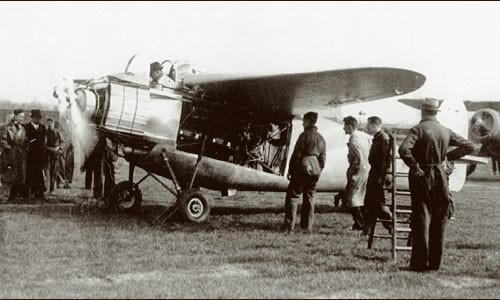
The prototype of the F.K.55 was a contra propelled fighter with many innovations.
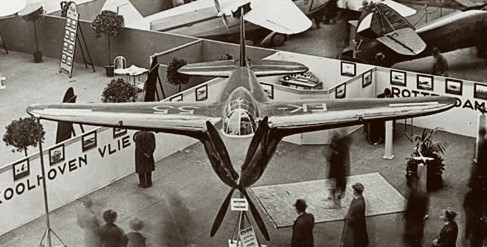
A high performance fighter with retractable gear, the F.K55 was one of the highlights at the Paris Air Salon of 1936.
A second test flight prototype had been build and flown, but the project was delayed because priority was given to more conventional fighters.
Koolhoven F.K.54
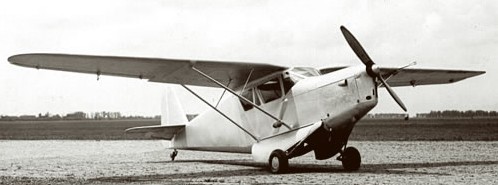
Executive plane, first Koolhoven with retractable gear, 1937
Koolhoven F.K.53 ‘Junior’
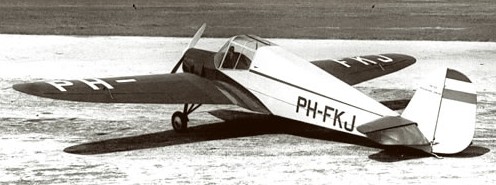
Light private plane with side by side seats, 1936
Koolhoven FK.52
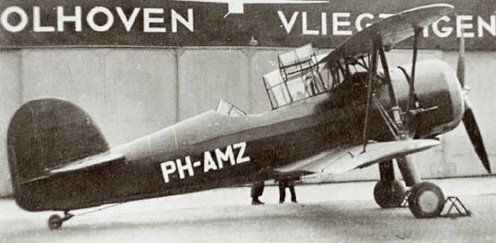
Dutch two-seat fighter bomber/reconnaissance air¬craft. Of similar appearance to the British Gladiator, the F.K.52 biplane had a fully¬ transparent framed canopy over the two cockpits, and a Bristol Mercury radial engine driving a three blade wooden propeller, and cantilever undercarriage. It was intended as a multi purpose successor to the Fokker C.V D, but no Dutch production orders were forthcoming.
The prototype flew on February 9, 1937, with a 645 hp Mercury VIS, but subsequent aircraft (four or five others were built) had an 840 hp Mercury VIII. Two 20 mm (0.79 in) cannon were mounted in the upper wing, one or two 7.7 mm (0.303 in) machine guns could be fired from the openable rear cockpit win¬dows, and up to 115 kg (253.5 lb) of bombs could be carried under the fuselage.
With a speed of 230 mph in the reconnaissance fighter role, the Republicans ordered five of the type in 1939, but none was delivered.
Four F.K.52s were in Holland when the country was invaded on May 10, 1940, of which two were broken up during that year. The other two were supplied to the Finnish air force in January 1940, with whose TLeLv 36 (Ground Liaison Squadron 36) they served as trainer/observation aircraft during the Winter War of 1940 41 and its ‘continuation’ in 1941 43.
FK.52
Engine: Bristol Mercury VIII, 619-kW (830-hp).
Span: 9.80m(32ft 1¾ in)
Length: 8.35m(27 ft 4¾ in)
Gross weight: 2500 kg (5510 1b)
Maximum speed: 370 km/h (230 mph).
Koolhoven FK.51
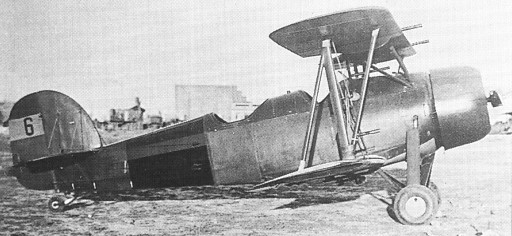
This two seat biplane had tandem open cockpits, with dual controls; it was armed with two 7.7 mm (0.303 in) for¬ward firing machine guns in the upper wing, a third movable 7.7 mm (0.303 in) gun in the rear cockpit, and provision for under¬fuselage bomb racks. A vertical camera was mounted in the floor of the rear cockpit. Usual powerplant was a 350 hp Armstrong Siddeley Cheetah IX radial engine, but some F.K.51s had 270 hp Cheetah V, 450 hp Pratt & Whitney Wasp, or (those for Spain) 400 hp Armstrong Siddeley Jaguar engines; the F.K.51 bis (for Spain) had a 450 hp Wright Whirlwind.
The LVA (Dutch army air service) ordered 53 in 1937, later increasing its order. In all, some 130 140 F.K.51s were built, of which 28 F.K.51/51bis were supplied to Spain during the civil war. When Holland was invaded in May 1940, the 2nd Air Regiment possessed 16 observation F.K.51s. Others were used by the Dutch East Indies army air service for reconnaissance and coastal/maritime patrol during 1941 42.
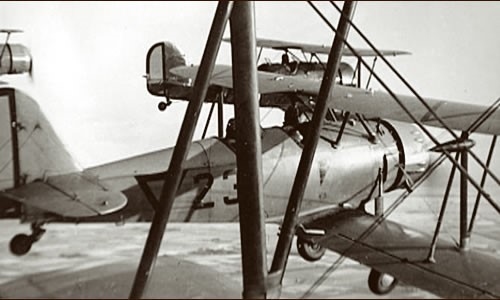
The FK.51 basic trainer first flew in May 1935. The type was ordered for the Dutch and Netherlands East Indian air forces. With a more powerful engine the type offered a combination of advanced training and limited combat capabilities, and during 1936 was ordered to the extent of 28 aircraft by the Republicans. These were delivered as 11 FK.51 aircraft with the 298-kW (400-hp) Armstrong Siddeley Jaguar VA radial and 17 FK.51bis aircraft with the 336-kW (450-hp) Wright R-975-E radial: some were used as night-flying trainers, but most served as night-fighters and reconnaissance aircraft with two fixed and one trainable machine-guns.
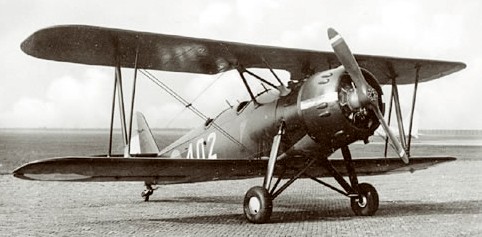
FK.51
Span: 9m (29ft 6.25 in).
Length: 7.85m (25 ft 9in).
Engine: 1 x Armstrong Siddeley Jaguar VA, 298kW (400 hp).
Armament: provision for 3 x 7.7-mm (0.303-in) mg.
Max T/O weight: 1450kg (3,197 lb).
Max speed: 155 mph at 7,545ft.
Operational range: 513 miles.
FK.51bis
Engine: Wright R-975-E, 336-kW (450-hp).
Koolhoven F.K.47
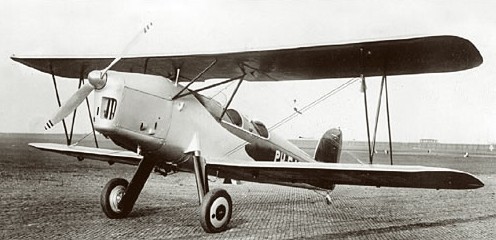
Private plane and trainer, 1933
Koolhoven F.K.46
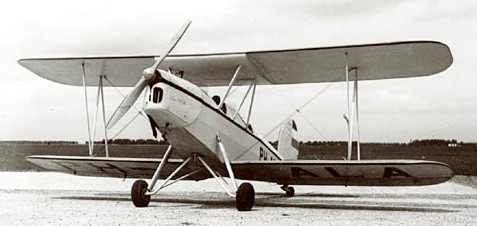
Trainer, 1930

