La Bottegga dell Aquilone TL 22 Prince

Totally faired in but tubular under the skin. The TL 22 is made in the Czech Republic and equipped with a Rotax 582, though it can be orderd with other power units.

Empty weight: 170 kg
Wing span: 10.38 m
Wing area: 10 sq.m
Fuel capacity: 30 lt
Engine: Rotax 582, 65 hp
MAUW: 400 kg
Seats: 2
Max speed: 120 kph
Cruise speed: 110 kph
Minimum speed: 55 kph
Climb rate: 7 m/s
Fuel consumption: 13 lt/hr
Price (1998): 28 000 000 L

Labahn Hitchiker

The Hitchiker is the third ultralight design from Robert Labahn and it is designed for cross-country and short field operations. With a rigid wooden wing sporting full span flaperons having both positive and negative selling, the light weight Hitchiker easily fits the bill. The pilot’s seating is reclining, glider like, to present the smallest possible frontal area. A streamlined pod will be fitted in the colder months for pilot protection.

Engine: Rotax 277 geared drive.
Prop: 127 cm x 96cm pitch.
Wing span: 8.05 m.
Weight: 100 kgs.
Fuel capacity: 27 ltr.
Econ cruise speed: 43 kts.
Stall: 23 kts.
Construction time: Ready to fly.

Kyushu Q3W1 Nankai

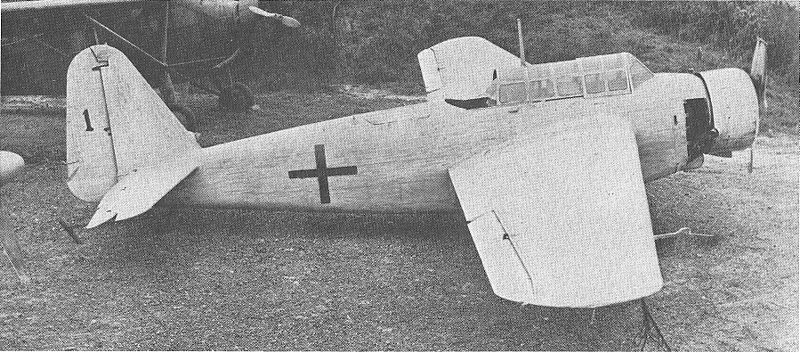
The K11W served as the basis for the Q3W1 Nankai (南海, “South Sea”) anti-submarine patrol aircraft.

The Q3W1 retained the basic layout of the K11W2, with a circular fuselage and large wing with a straight trailing edge and tapered leading edge. It carried a crew of two with the remaining space allocated for anti-submarine warfare equipment. A single prototype was produced, and made its maiden flight in January 1945. This first flight ended with a wheels-up landing, and after that work on the project was suspended and didn’t resume before the end of the war.

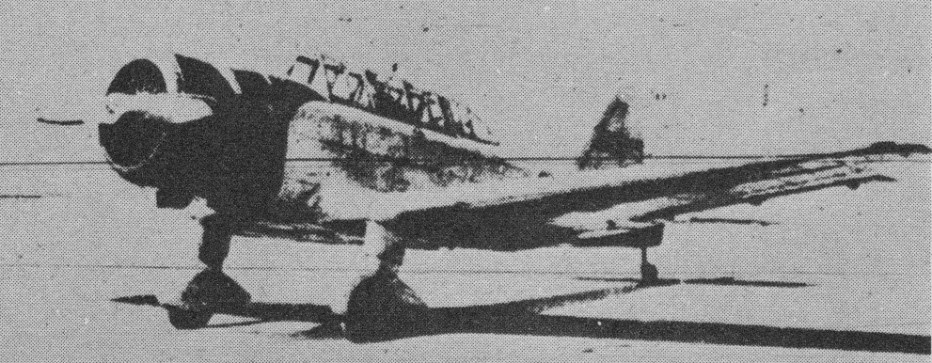
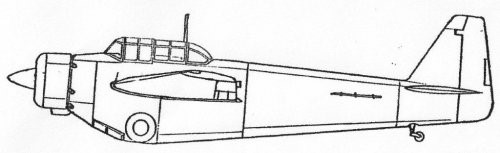
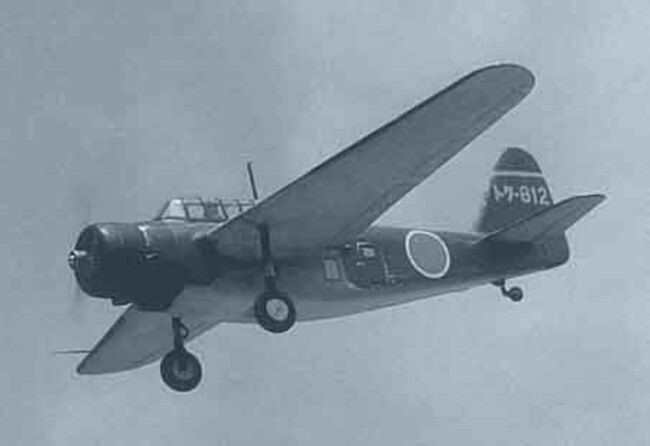
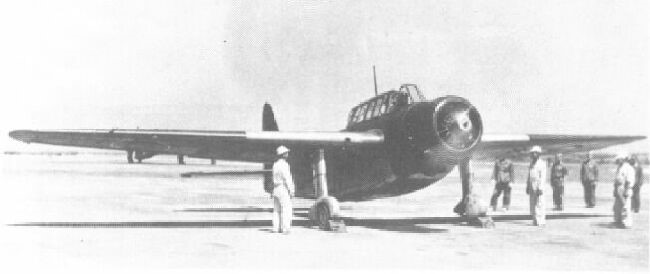
Kyushu K11W Shiragiku / White Crysanthemum

The Kyūshū K11W Shiragiku (白菊, “White Chrysanthemum”) made by the Kyūshū Aircraft Company, was a land-based bombing trainer aircraft which served in the Imperial Japanese Navy Air Service in the latter years of World War II. As indicated by its Japanese designation, “training aircraft for on-board work” (機上作業練習機, kijō sagyō renshū-ki), it was designed to train crews in operating equipment for bombing, navigation, and communication, as well as navigation techniques.

The Kyūshū K11W had a mid-wing layout, the crew consisting of a pilot and gunner/radio operator sitting in line under the canopy and the trainee bombardier, trainee navigator, and instructor in the lower fuselage beneath the wing.

The K11W1 was a basic bomber crew trainer, of all-metal construction with fabric-covered control surfaces.

The K11W2 was a anti-submarine warfare and transport version of all-wood construction.

A total of 798 K11Ws were manufactured, including a small number of K11W2 ASW and transport aircraft alongside the K11W1 trainer variant. These aircraft were also used in kamikaze mission during the last stages of the Pacific War.

The K11W served as the basis for the Q3W1 Nankai (南海, “South Sea”) anti-submarine patrol aircraft.

K11W1
Powerplant: 1 × Hitachi GK2B Amakaze 21, 384 kW (515 hp)
Wingspan: 14.98 m (49 ft 2 in)
Wing area: 30.5 sq m (328 sq ft)
Length: 10.24 m (33 ft 7 in)
Height: 3.93 m (12 ft 11 in)
Empty weight: 1,677 kg (3,697 lb)
Gross weight: 2,640 kg (5,820 lb)
Maximum speed: 230 km/h (140 mph, 120 kn) at 1,700 m (5,577 ft)
Cruise speed: 175 km/h (109 mph, 94 kn) at 1,000 m (3,281 ft)
Range: 1,760 km (1,090 mi, 950 nmi)
Service ceiling: 5,620 m (18,440 ft)
Time to altitude: 3,000 m (9,843 ft) in 19 min 35 sec
Crew: 5
Armament: 1 × 7.7 mm rear-firing machine gun
Bombload 2 × 30 kg (66 lb) bombs, or 1 × 250 kg (550 lb) bomb on kamikaze missions
Kyushu J7W Shinden

J7W1

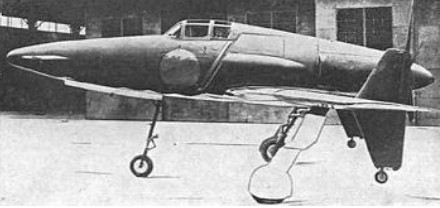
Towards the end of World War II the Japanese developed a canard fighter design which was the only such aircraft ever ordered into mass production. The machine was conceived in 1943 by Captain Masaoki Tsuruno, an Imperial Japanese Navy technical officer, who planned a jet powered high performance interceptor to counter the growing effectiveness of American air power in the Pacific. Three glider prototypes were built by the Dai lchi Kaigun Koku Gijitsusho (First Naval Air Technical Arsenal). They performed well, so in 1944 the Kyushu Hikoki company was commissioned to finalize the interceptor design. The Kyushu J7W Shinden (Magnificent Lightning) was powered by the 2130 hp Mitsubishi MK9D radial engine mounted amidships driving a six bladed pusher propeller through a long transmission shaft. It was armed with four 30 mm cannon and a projected maximum speed 0f 750 kph (466 mph) and a maximum operating altitude 0f 12,000 m (39,370 ft). The Japanese Navy ordered the Shinden into mass production long before the first prototype was ready. Nakajinia and Kyushu tooled up for but the first prototype did not fly until 3 August 1945, 12 days before the Japanese surrender.

Speed: 466 mph
Range: 528 miles
Crew: 1
Armament: 4 x 30mm cannon
Bombload: 4 x 66 lb or 132 lb bombs

Kysor 1950 monoplane

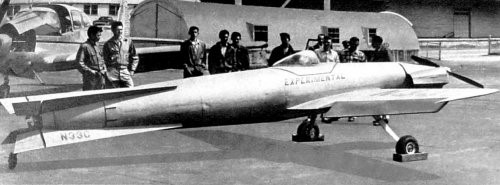
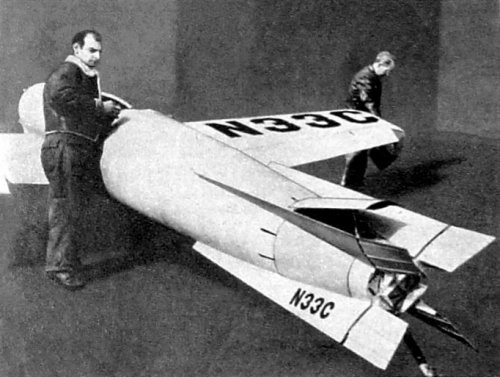
Cliff Kysor’s torpedo-shaped plane of 1950 had tail controls built flush with fuselage. The conventional elevators and rudder were eliminated to minimize air drag and permit greater speed. The four control surfaces at the top, bottom and sides of the tail section, were operated by a stick and by rudder pedals. Small tabs at the trailing edge of the fins were used only to trim the aircraft.

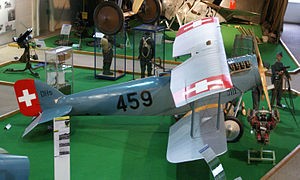
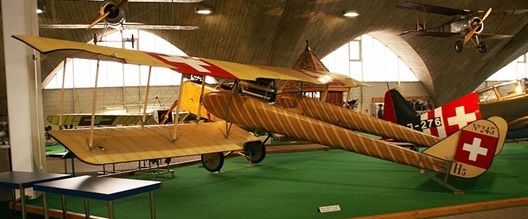
K+W Häfeli DH-5

Häfeli DH-5

The Häfeli DH-5 was a two-seat reconnaissance aircraft designed by August Häfeli. It was a single-bay biplane of wood and fabric construction. The aircraft was powered by a 180 hp (134 kW) LFW I engine produced by the Swiss Locomotive and Machine Works.

Built by the aircraft department of the Federal Construction Works (Eidgenoessische Konstruktionswerkstaette, K + W) at Thun, Switzerland, test flying of the prototype commenced in March 1919 and 39 were ordered. Some aircraft were later modified with Handley Page slats.

A second batch of 20 aircraft were powered by a 200 hp (149 kW) LFW II engine. A further batch of 20 aircraft designated the DH-5A used the LFW III engine.

The DH-5 entered service in 1922 with the Swiss Air Force and was not withdrawn from service until 1940.

Variants

DH-5
Initial production version with either the LFW I or LFW II engine.

DH-5A
Version with a 220 hp (164 kw) LFW III engines, survivors were modified at Thun in 1932 with Handley Page slats and changes to allow crew to wear parachutes.

DH-5X
Trials aircraft powered by a Hispano-Suiza HS-42 (8Fb) engine imported from France. The aircraft was not ordered into production due lack of availability of the engines and the DH-5X crashed in 1933.

DH-5A
Engine: 1 × LFW III, 220 hp (164 kW)
Wingspan: 39 ft 4½ in (12 m)
Wing area: 338 ft² (31.40 m²)
Length: 24 ft 11¼ in (7.60 m)
Height: 10 ft 2 in (3.10 m)
Empty weight: 1,894 lb (859 kg)
Max takeoff weight: 2,802 lb (1271 kg)
Maximum speed: 112 mph (180 km/h)
Range: 298 miles (480 km)
Service ceiling: 18,375 ft (5600 m)
Armament:
one fixed forward-facing machine-gun
one pivoted machine-gin in the rear cockpit
Crew: two

K+W Häfeli DH-1

In 1915 the Federal Construction Works (Eidgenoessische Konstruktionswerkstaette, K+W) set up their aircraft department at Thun, Switzerland and employed August Häfeli as chief engineer. Häfeli had previously designed the AGO C.I and AGO C.II, German reconnaissance biplanes. His first design was the Häfeli DH-1, similar in concept to his designs for AGO Flugzeugwerke.

The DH-1 reconnaissance biplane was a three-bay biplane of wood and fabric construction, it had a fuselage pod with tandem seating for the two-man crew and twin booms mounting the tail. The DH-1 was powered by an Argus As II engine built under licence by Buhler Brothers Limited. Six aircraft were built for the Swiss Air Force.

Six DH-1s were built during 1916 but within a year three had been destroyed in accidents. The survivors were withdrawn from service in 1919 and scrapped.

Engine: 1 × Argus As II, 120 hp (89 kW)
Wingspan: 42 ft 0 in (12.80 m)
Wing area: 409.04 ft² (38 m²)
Length: 28 ft 11¼in (8.82 m)
Height: 9 ft 10 in (3 m)
Empty weight: 1,653 lb (750 kg)
Max. takeoff weight: 2,480 lb (1125 kg)
Maximum speed: 78mph (126 km/h)
Range: 155 miles (250 km)
Service ceiling: 9,840 ft (3000 m)
Crew: two
Armament: one 0.293 in (7.45 mm) machine-gun

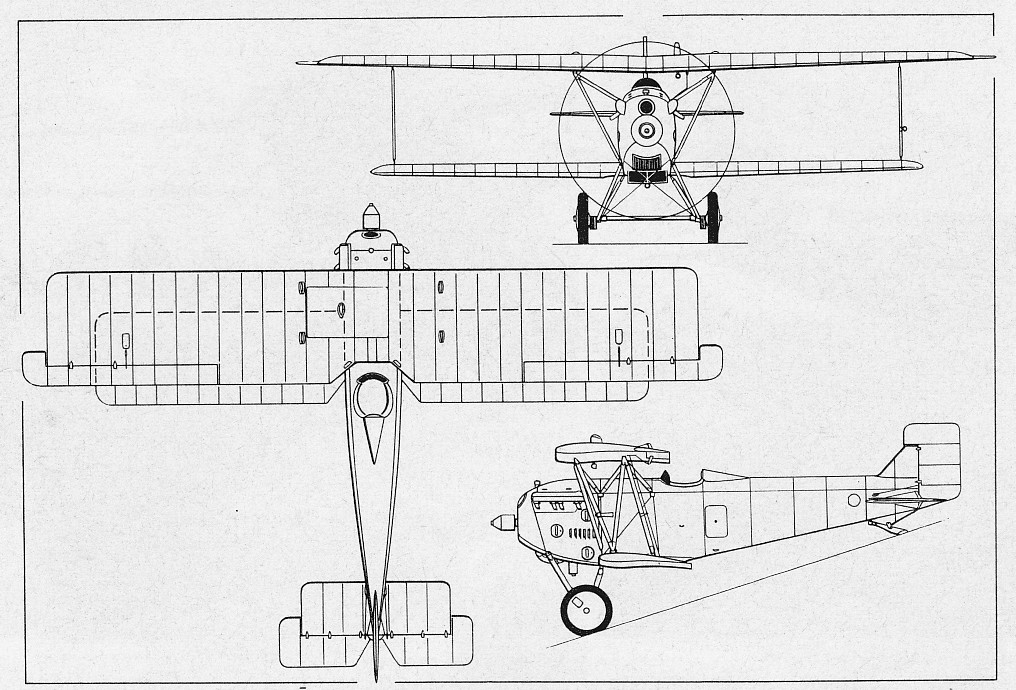
K+W MA-7 Militar-Apparat / Häfeli MA-7

The Militär-Apparat MA-7, also known as the Häfeli MA-7 and K & W MA-7, was a prototype fighter designed by August Häfeli in Switzerland. It flew in two different engine configurations, neither of which were deemed satisfactory and so the type did not enter series production. However, on 23 April 1926, test pilot Max Cartier did achieve a Swiss record for flying at an altitude of 9,800 metres (32,200 feet) above sea level.

Designed by August Häfeli in response to a Swiss Air Force requirement for an indigenous fighter design, the MA-7 was a biplane of fabric-covered wood construction with N-shaped wing struts like its predecessor the Fokker D.VI of 1918. Ailerons were installed only on the upper wing, which also contained an auxiliary gravity fuel tank. Power was provided by a 300 hp (220 kW) Hispano-Suiza 8Fb HS42 V-8 liquid-cooled engine manufactured in Switzerland under license. The aircraft was built by K & W in 1925 and handed over for trials in February 1926.

The prototype was returned to the manufacturer in April 1926 due to unsatisfactory flight characteristics and performance. K & W responded with the installation of an indigenous 400 hp (300 kW) LFW-12 X-1 engine. This, however, proved too large and heavy for the frame and entire MA-7 project was subsequently discontinued. The Swiss Air Force procured the French Dewoitine D.1 as their replacement fighter instead.

Powerplant: 1 × Hispano-Suiza 8Fb HS-42 V8, , 220 kW (300 hp)
Wingspan: 9.91 m (32 ft 6 in)
Wing area: 23.75 m2 (255.6 sq ft)
Length: 6.61 m (21 ft 8 in)
Height: 2.79 m (9 ft 2 in)
Empty weight: 843 kg (1,858 lb)
Gross weight: 1,213 kg (2,674 lb)
Maximum speed: 235 km/h (146 mph, 127 kn)
Cruise speed: 255 km/h (158 mph, 138 kn) (econ cruise)
Range: 300 km (190 mi, 160 nmi)
Service ceiling: 7,600 m (24,900 ft)
Rate of climb: 9.2 m/s (1,810 ft/min)
Crew: One