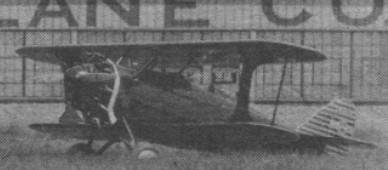
The Laird Speed Wing was built with a wire-cinched, riveted, steel tube fuselage. Laird offered this aircraft for sale to those who wanted a custom-built airplane.
Engine: Wright, 220 hp.
The Laird Speed Wing was built with a wire-cinched, riveted, steel tube fuselage. Laird offered this aircraft for sale to those who wanted a custom-built airplane.
Engine: Wright, 220 hp.
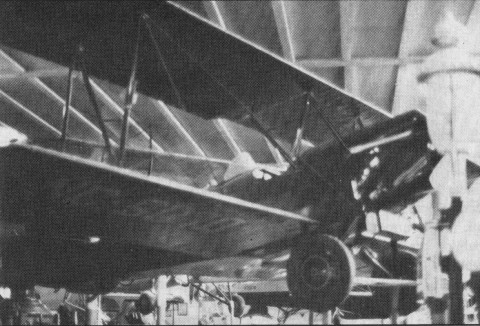
The Burke Moellendick Laird partnership of Wichita began work, and in April 1920 the first Laird Swal-low rolled out of the hangar. In April 1920, Matty Laird (builder of the Swallow) first tested his three place OX 5 biplane built in a shed in Wichita. The plane earned the nickname “Swallow” from one of the Wichita hotel men who witnessed the flight, commenting, “It flies like a swal¬low:’ The Laird Swallow became the first commercial, not military, plane offered for sale in the United States.
The company that became United Airlines began its early air operations fly¬ing a Laird Swallow.
Production went from two planes a month to four. After 43 Laird Swallows had been sold, Matty Laird quit and went back to Chi¬cago to resume business as the E.M. Laird Airplane Company.
Jake Moellendick re¬named his plant the Swallow Airplane Manufacturing Company.
First product of the Swallow Aircraft Co was Model 1924 Swallow Commercial three seater (a refined Laird Swallow). Type was successful, especially in Middle West, and improved progressively.
On April 6,1926 a Swallow biplane (modified New Swallow type, called Swallow Mail plane) made inaugural flight for Varney Air Lines (later part of United Air Lines) marking significant advance in U.S. air transport.
The 1927 Swallow featured a 90 hp Curtiss OX-5 engine, an adjustable stabiliser, 2.5in trim via a cockpit lever and carried ATC 21.
Swallow Commercial of 1928 offered with various engines; Swallow Special 3-seater had Axelson engine. In 1930s company developed Swallow Coupe light cabin monoplane.
Engine: Curtiss OX-5, 90 hp
Prop: Brewster 8 ft 4 in
Wingspan: 32 ft 8 in
Length: 23 ft
Wing chord: 5 ft
Height: 8 ft 4 in
Empty weight: 1469 lb
Useful load: 731 lb
Top speed: 100 mph
Cruise speed: 60 mph
Landing speed: 35 mph
ROC: 600 fpm
Ceiling: 12,000 ft
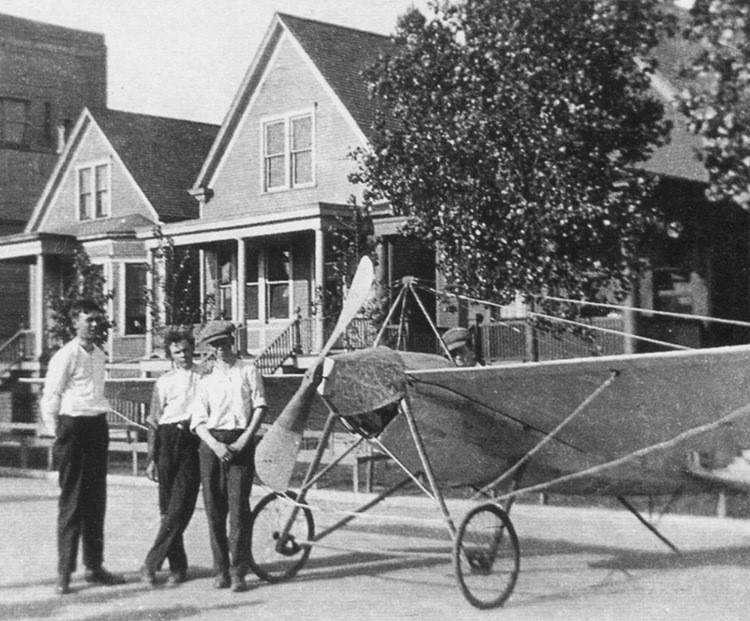
At age 17, Matty Laird’s first design would be a monoplane powered with an engine designed by Harry Wells. The two worked on their separate projects month after month in high school night classes. Matty’s airframe progressed, but Harry Wells was never able to devise a reliable valve mechanism for his engine. Thus Matty was left with an engineless airplane.
A Chicago machinist named Hofer offered him a 12 horsepower engine for $150. After several months of revamping his plane to accept the Hofer engine, Laird took his little single seat monoplane out to Cicero Field. To his surprise, up it came about 15 feet.
He had a very light airplane and a little too much speed, and somewhere in the series of bounces that followed, he crossed the controls and wound up on his back.
A 1998 scratch-built replication of the Culver Cadet with steel-tube fuselage (that “STF” in the model name) and fiberglass cowling. The specs were similar. Plans were offered to home-builders for $230.
One prototype was built, N48TY.
Engine: Continental O-200, 100hp
Seats: 2
Undercarriage: retractable
A 1928 five place cabin biplane. One was built, N6792, c/n C-7.
Engine: Menasco-Salmson
Wingspan: 33’4″
Length: 20’6″
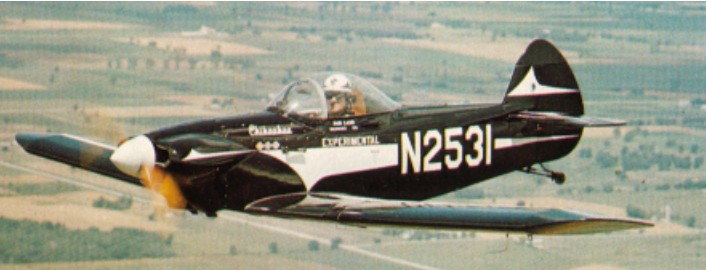
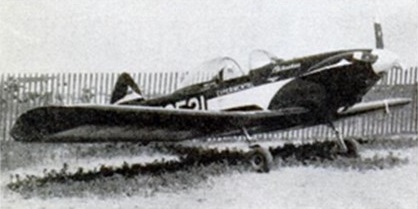
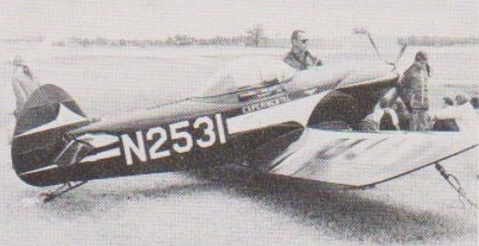
Built by Robert Ladd in 1967, the Taylor Chihuahua single place, enclosed low wing monoplane, was developed from the British John Taylor monoplane. One was built, N2531, was first flown in September 1967.
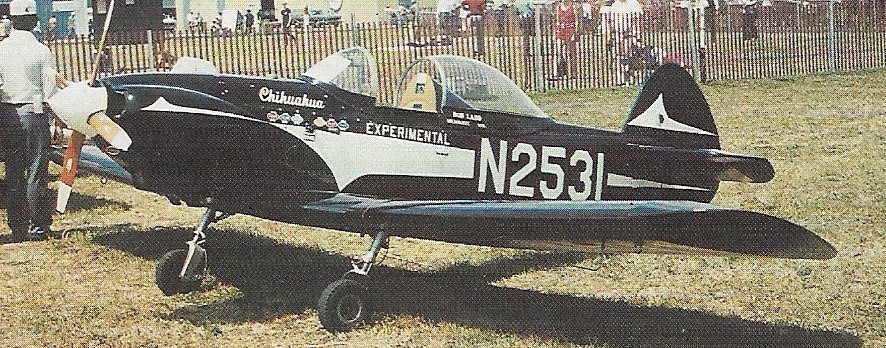
Engine: 53hp VW
Wingspan: 21’0″
Length: 15’6″
Cruise speed: 118 mph
Stall: 60 mph
Range: 250 mi
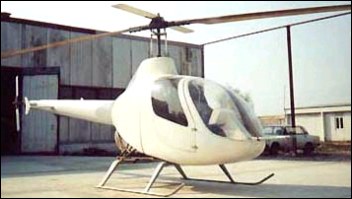
This light helicopter was built and flown in 2001 by the Lada Land company based in Tolyatti, Russia.
Lada Land VM-01
Engine: 1 x 170hp VAZ-416 piston
Main rotor diameter: 9.00m
Tail rotor diameter: 1.56m
Max take-off weight: 890kg
Payload: 300kg
Cruising speed: 140km/h
Rate of climb: 240m/min
Ceiling: 3000m
Range: 330km
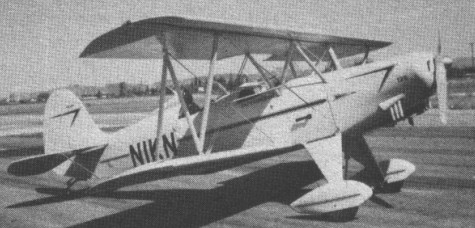
The LACO-125 is a sturdy two-seat biplane that is easy to fly yet very agile. To aid the builder, there are no castings, forgings or other difficult-to-build or obtain parts. The fuselage is a Warren truss type of chrome-moly tubing with wood formers and stringers. The wings are conventional two-spar construction with wood ribs and chrome-moly fittings for strength. This homebuilt derives its designation from the use of a 125-hp Continental in the prototype which is interchangeable with the 145-hp engine. The weight distribution of the LACO-125 is such that larger four-cylinder powerplants can be substituted.
The first, N1KN, was flown on 29 May 1977.
LACO-125
Engine Continental C-125, 125-hp
Wingspan: 22’9”
Length: 19’6”
Gross Wt: 1400 lb
Empty Wt: 860 lb
Fuel capacity: 24 USG
Top speed: 124 mph
Cruise: 113 mph
Stall: 56 mph
Climb rate: 900 fpm
Range: 325 miles
Seats: 2
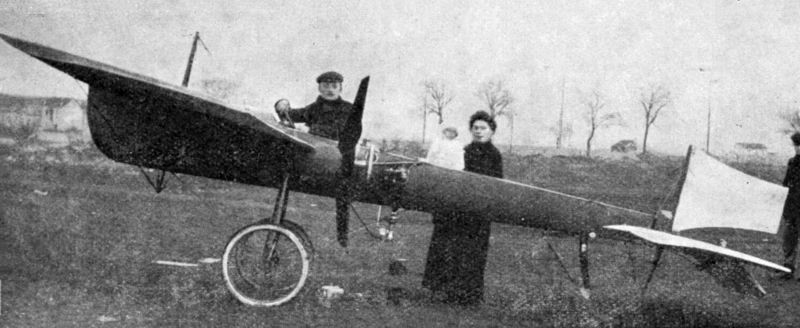
The first design of Adolphe-Étienne Lachassagne was this 1912-1913 tandem wing monoplane. The front and the tail wings could be adjusted. The two propellers were fitted at the trailing edge of the front wing, and were adjustable together with the wing. The engine was mounted in the fuselage and drove the two propellers via a rod. As Lachassagne had no funds to acquire a new and powerful engine he had to do with second hand engines. Lachassagne started to study a new aeroplane with tandem wings. The AL-2 airplane was never built in full size, only as a model. He was creative inventor and kept developing and building variable wing profile aircraft at least up to WW2. He also tried to develop a small affordable “peoples airplane”.
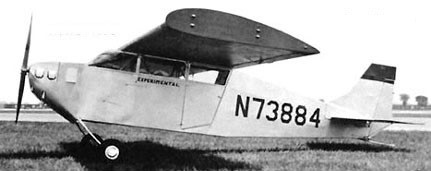
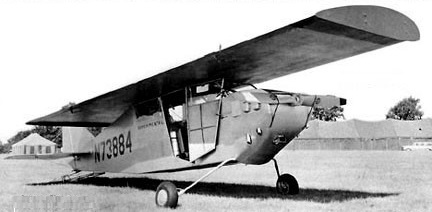
Built by Joseph L Lacey in 1962, the the two place Lacey M-10 had a pivoting unbraced wing stowed fore-and-aft for trailing or hangaring. One was built, N73884, first flying on 7/6/62.
The Lacey is one of the simplest designs for the homebuilder to construct. In the words of its designer, “There are no com¬pound curves and very few simple ones. The wing has no wash-in, no washout, no dihedral, and no incidence angle (the bottom is flat, and fits flat on top of the fuselage). It has no taper, no slots, no flaps, no spoilers, no wingtips, no struts, no wires, no braces, no spars.” The two-place, towable Lacey is propelled by a 90-hp Continental.
One M-10 VW Twin was built, N187LH, in 1968.
M-10
Engine: 95hp Continental C-90
Wingspan: 20’0″
Length: 19’6″
Gross Wt. 1118 lb
Empty Wt. 638 lb
Fuel capacity 20 USG
Useful load: 400 lb
Top speed: 140 mph
Cruise speed: 120 mph
Stall: 38 mph
Climb rate: 1000 fpm
Ceiling: 25,000′
Range: 440 miles
Takeoff run: 600 ft
Landing roll: 600 ft
Seats: 2
M-10 VW Twin
Engine: 2 x 40hp VW
Wing span: 20’0″
Length: 19’6″
Seats: 2

