A 1924 transport, was like the Laté XIV except 1 x 400 hp Lorraine 12D, 1 built
Carried 4 passengers, with the pilot’s cockpit above the engine.
1 engine
Latécoère Laté 14
A 1924 parasol-wing monoplane transport, 1 x 300 hp Renault 12Fe, 1 built
Completely different design (built for comparison with original Laté XIV)
Latécoère Laté XIV
A 1923 high-wing monoplane transport, 1 x 300 hp Renault 12Fe, 1 built
Cantilever monoplane designed to be more efficient than Bre.14 and Laté 8
Single-seat cockpit positioned directly above engine, ahead of leading edge
Latécoère Laté 12
A 1922 single-engined transport/COIN
Latécoère Late 8
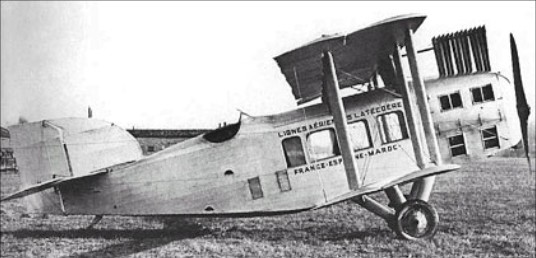
In 1922 the Late 8 prototype was flown. A six-passenger biplane with a single 300 hp / 224kW Renault 12Fe engine, the Late 8 transport was based on the Breguet 14, with a rear cockpit and of steel-tube fuselage construction.
It is believed that the Late 8 was used on Lignes Aeriennes Latecoere’s France-Spain-Moroccan services.
Engine: 223kW Renault
Max take-off weight: 2270 kg / 5005 lb
Empty weight: 1500 kg / 3307 lb
Wingspan: 12.60 m / 41 ft 4 in
Length: 8.60 m / 28 ft 3 in
Height: 3.40 m / 11 ft 2 in
Wing area: 46.25 sq.m / 497.83 sq ft
Max. speed: 160 km/h / 99 mph
Cruise speed: 122 km/h / 76 mph
Ceiling: 3500 m / 11500 ft
Range: 500 km / 311 miles
Passengers: 6
Latécoère Late 4
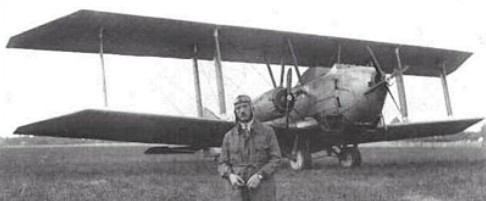
Designed by Marcel Moine and P.G.Latécoère, the Latécoère 4 (referred to in the initial contract as the Latécoère IV) was the company’s first multi-engined aircraft, the result of a decision that passenger aircraft needed to be designed form scratch rather than modified from military machines. It was a three-engined, two bay biplane with accommodation for 16 passengers. Its wings had neither stagger nor sweep, but had an unusually large interplane gap. The lower wing, which carried dihedral was fixed to the lower fuselage with a thick wing root, but the upper one was high above the fuselage at its centre, supported by pairs of N form cabane struts. The interplane struts were streamlined and broad in chord, made from duralumin; there was a pair of these struts marking the inner bay but a single strut outboard. The wings, made of wood and fabric covered were of constant chord over most of the span, but final sections where the leading edges swept back produced triangular tips. There were balanced ailerons on both upper and lower planes.
The fuselage in contrast was made of metal. The central Salmson water-cooled radial was mounted in the nose with rectangular radiators mounted on the fuselage forward of and just above the lower wing. The outer engines were also fuselage mounted, each having pairs of struts to the upper fuselage longeron and to the lower ones via the wing roots. Thus they were positioned a little above the lower wing, near to the centre of the inner bay in neatly faired nacelles with circular radiators at the front. The underlying fuselage structure was rectangular in cross-section aft of the leading edge, but faired at its sides and top into a rounder shape. It was deepest between the wings and gave the aircraft a somewhat short, fat look. The pilot sat just forward of the wings, high up and well above the central motor line, with a god view. Below and forward of him were positions for a radio operator and an engineer. The passenger cabin, entered via a port side door had tables, armchairs and sliding windows for thirteen, with another three places accessed forward via a 500 mm wide corridor.
The tail unit was quite complicated with a biplane arrangement of tailplanes and elevators. One of the tailplanes could be adjusted in incidence in flight to trim the aircraft. There was a central fin and rudder rising above the upper tailplane, which had a cut-out to allow the rudder to move, and there were two outboard vertical surfaces, again moving in cut-outs, to assist stability. These latter could be turned in flight to offset asymmetric engine-out forces. The undercarriage was narrow track, with pairs of mainwheels on both sides mounted vertically to the wing and cross braced, with a tailwheel at the rear.
The first flight was made in May 1920, when the aircraft was powered by three identical Salmson 9 Z engines of about 255 hp (190 kW), piloted by Pierre Beauté. The Laté 4 proved hard to control and it crashed on landing at Francazal, injuring its crew. It was rebuilt, though without its passenger cabin windows. It also gained a two-row Salmson 18 Z central engine of double the power of the 9 Zs retained outboard. The central engine drove a four-bladed wooden propeller and the outer pair two-bladed ones. The open cockpit was turned into an enclosed cabin with a corridor aft. It appeared in this form at the Salon d’Aéronautique in December 1921, but did not fly again until some major changes had been made. These included the replacement of the single outboard interplane struts by double ones, an exchange of the rectangular central engine radiators for tubular Lamblin ones and the addition of a substantial additional pair of wheels placed vertically below the engine bulkhead to prevent nose-overs. All engines now drove four-bladed propellers. In this form the Laté 4 flew, piloted by Gronin on 6 September 1922. The aircraft was still unstable and unready to try the intended Toulouse-Casablanca route. On 14 October the aircraft was caught by a gust and crashed, seriously injuring Gronin and his engineer Franck. At this point the civil aircraft was abandoned. In early 1921 a decision had already been made to submit the second Latécoère 4 as a bomber; it became the Latécoère 5.
Initial specifications
Engine: 3 × Salmson 9 Z, 190 kW / 255 hp
Wingspan: 24.65 m (80 ft 10½ in)
Length: 14.54 m (47 ft 8 in)
Height: 6.25 m (20 ft 6 in)
Wing area: 158 sq.m
Empty weight: 3,615 kg (7,970 lb)
Gross weight: 8,340 kg (18,387 lb)
Maximum speed: 200 km/h (125 mph)
Range: 1,100 km (688 miles)
Crew: 3
Passengers: 15
Engine: 1 x 550hp Salmson 18CM + 2 x 260hp Salmson 9Z
Max take-off weight: 8340 kg / 18387 lb
Empty weight: 3615 kg / 7970 lb
Wingspan: 24.80 m / 81 ft 4 in
Length: 14.80 m / 48 ft 7 in
Height: 6.25 m / 20 ft 6 in
Wing area: 158.00 sq.m / 1700.70 sq ft
Max. speed: 180 km/h / 112 mph
Cruise speed: 148 km/h / 92 mph
Range: 1100 km / 684 miles
Crew: 2
Passengers: 10
Latécoère Late 3
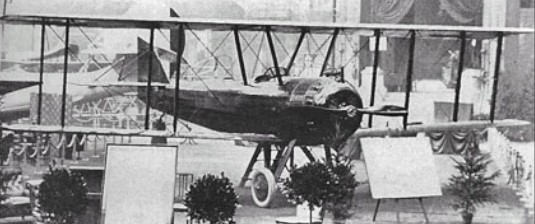
In 1919 there appeared the Late 3 biplane postal aircraft, shown at the 1919 Paris Salon.
A revised Salmsom 2 by Marcel Moine, with redesigned shorter metal fuselage.
One was built for Aéropostale, went to Ligne France Espagne Maroc.
Engine: 1 x Salmson 8Z, 260hp
Max take-off weight: 1670 kg / 3682 lb
Empty weight: 930 kg / 2050 lb
Wingspan: 12.85 m / 42 ft 2 in
Length: 8.25 m / 27 ft 1 in
Height: 3.40 m / 11 ft 2 in
Wing area: 46.25 sq.m / 497.83 sq ft
Max. speed: 170 km/h / 106 mph
Cruise speed: 159 km/h / 99 mph
Range: 600 km / 373 miles
Crew: 2
Lataste Gyroscopique
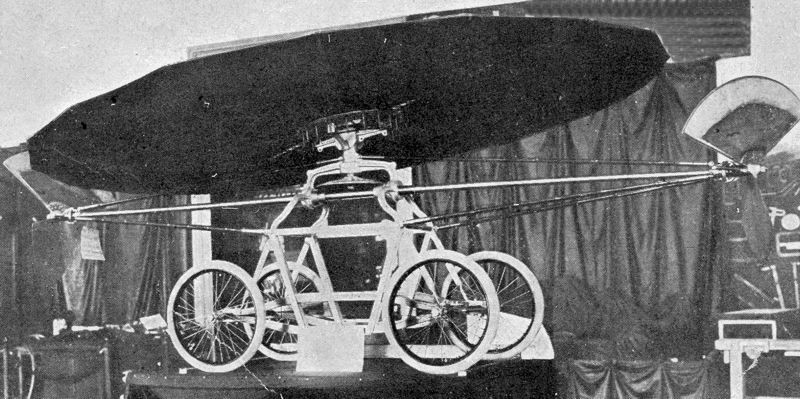
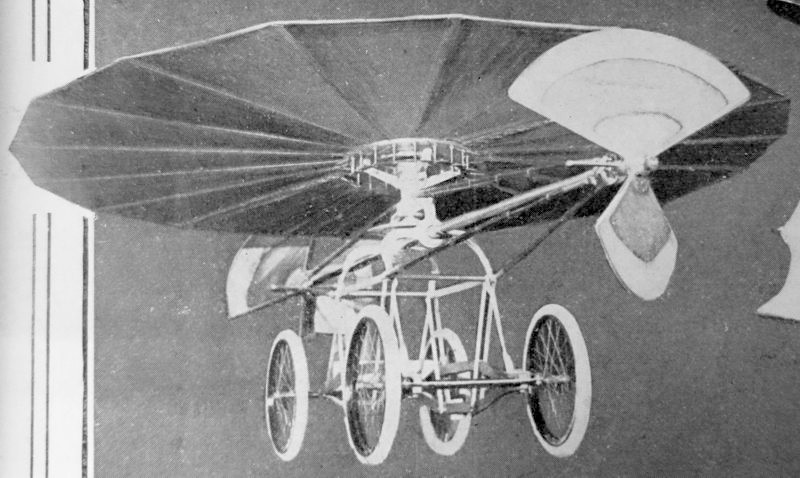
The 1909 French Lataste Aeroplane Gyroscopique was constructed of metal and the circular top wing was covered with fabric. It featured a long, uncovered, tapered frame with a propeller at each end; each propeller had two semicircular blades like sections of Archimedean screws, and turned the same way. Above the frame was the flat rotating, circular wing surface, probably mounted on a swivel joint. This surface and the propellers were driven through a long horizontal propeller shaft and planetary gears; the shaft ran through a cylindrical fuel tank inside the fuselage. The machine was mounted on four wheels, with the pilot sitting between them holding on to a steering wheel, which probably controlled the rotating winged surface high above him.
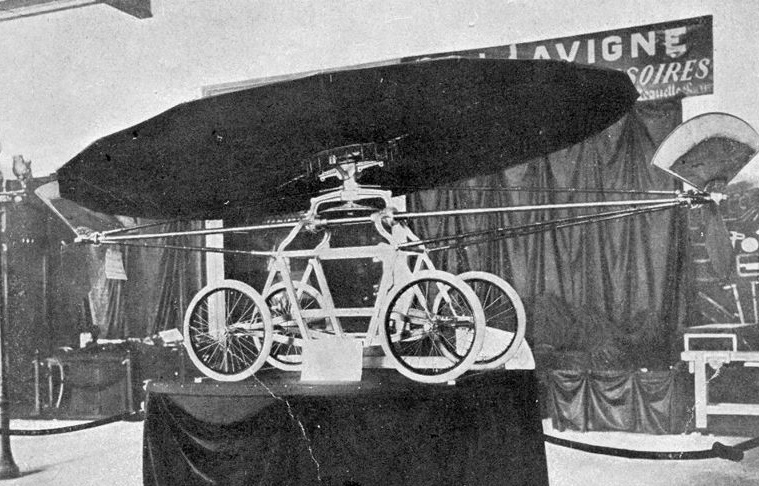
The photo shows a model of machine, which was displayed at the first Paris Salon Aéronautique in December 1908.
Letai I
The 1910 Letai I biplane was designed and built by Sandor, Lajos and Andras Letai in Hungary.
Engine: Dedics 25HP 2cyl V
Span: 37’9″
Length: 27’9″
Weight empty: 352 lbs
Speed: 31 mph
Lasley Sport
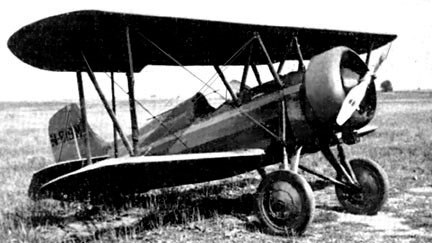
Lasley Sport N819N is one of the original Roza creations of the early ’30s, and it was acquired by Franklin Aircraft Co, who modified it a prototype for their Sport 90. It was purchased by Lasley c.1935. who built and installed Peyton Autry-designed wings, then sold it to Lloyd Gabriel. After a crash, it was rebuilt in 1953, reportedly with 125hp Continental, then crashed to destruction in 1957 while buzzing a house.
Engine: Velie M-5, later 90hp Lambert and 65hp Continental
Wingspan: 20’0″
Length: 18’0″
Useful load: 300 lb
Max speed: 110 mph
Cruise: 100 mph
Stall: 45 mph
Range: 300 ceiling (est): 11,000′
Seats: 1

