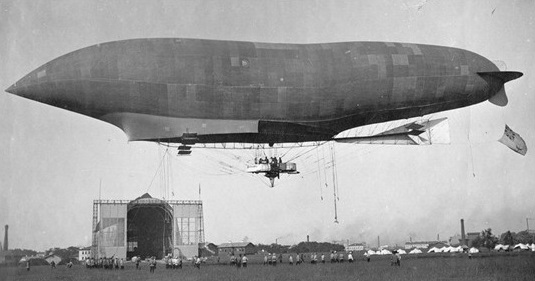
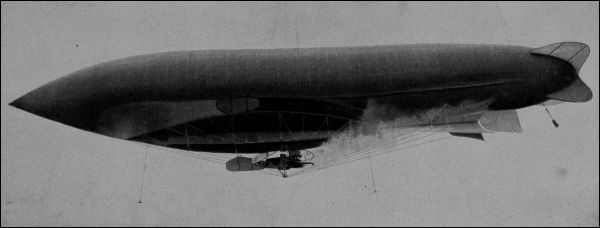
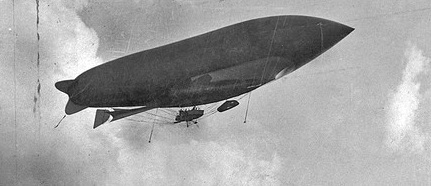
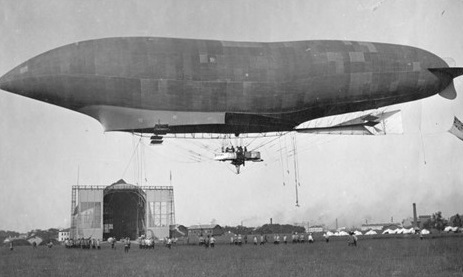
Lebaudy La Republic / Swan

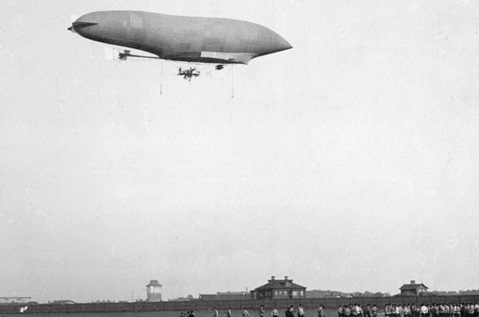
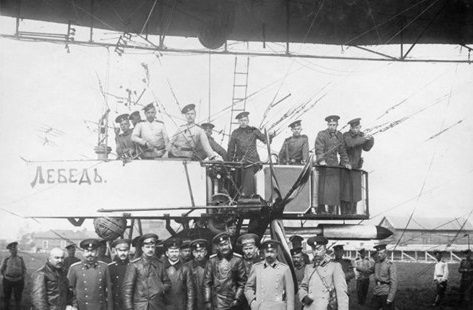
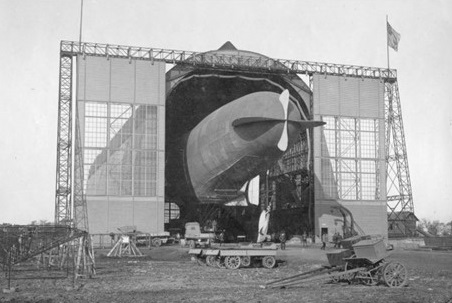
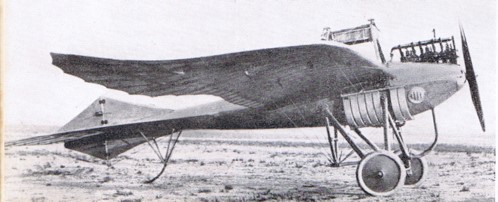
Built in 1908, it was the first airship which the Russian War Department ordered abroad (in 1909), and named “The Swan”. The airship perfected the overall suitability for the role of airships in the fighting. The results were disappointing as in the case of air defense, airships of the attacking force quickly transformed into a huge target. The airship was assigned only the role of reconnaissance.

The semi-rigid La République crashed in September 1909 and all four crew members were killed.

Engine: 2 x Panhard, 64 hp
Length: 200.131 ft / 61.0 m
Width of hull: 33.793 ft / 10.3 m
Contained volume: 184724 cu.ft / 5230 cu.m
Max speed: 24 kts / 45 km/h

Lebedj / Swan
Envelope volume: 3700 cu.m
Length: 61,4 m
Diameter: 11,1 m
Engine: 68 hp

Leading Edge Air Foil / LEAF Trike

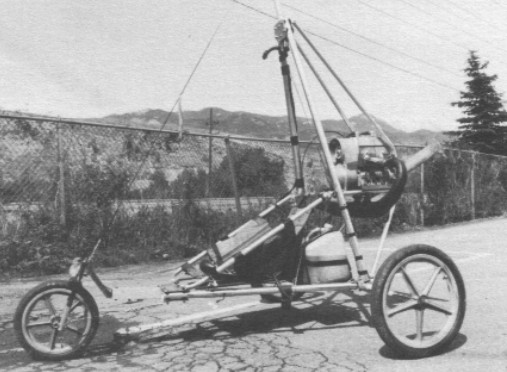
Single seat single engined flex wing aircraft with weight shift control. Rogallo wing. Pilot suspended below wing in trike unit, using bar to control pitch and yaw/roll by altering relative positions of trike unit and wing. Undercarriage has three wheels in tricycle formation; suspension on nosewheel and glass fibre suspension on main wheels. Push-¬right go left nosewheel steering independent from yaw control. No brakes. Aluminium ¬tube trike unit, without pod. Engine mounted below wing driving pusher propeller.
This single seat, single ¬engine trike unit uses a double pole structure, stiffened by the tubes forming the side supports of the seat, and is adaptable to fit most weight shift hang gliders.
The combination of glass fibre laminate suspension on the main wheels and large wheel diameters should guarantee it remark¬able all terrain performance. Previously powered by a Cuyuna 430D or 430R 30hp engine with a 2/1 reduction drive, it was later offered with the type ULII 02 35hp engine from the same company, still with a 2/1 reduction drive. The Leaf is easy to rig and when folded it measures 8.0 x 5.7 x 3.7ft (2.44 x 1.70 x 1.09m). Price was $2495 built in 1982.

Trike unit
Engine: Cuyuna ULII 02, 35hp.
Propeller diameter and pitch 54×27 inch, 1.37 x 0.69 m.
Reduction ratio 2.0/1.
Max static thrust 165 lb, 75 kg.
Fuel capacity 5.0 US gal, 4.2 Imp gal, 18.9 litre.
Length overall 7.4ft, 2.26m.
Height overall 8.3 ft, 2.51 m.
Width 5.6 ft, 1.70 m.
Wheelbase 5.1 ft, 1.55 in.
Nosewheel diameter overall 16 inch, 40 cm.
Main wheels diameter overall 20 inch, 51 cm.
Empty weight 149 lb, 67 kg.
Payload 250 lb, 113 kg.
Max level speed 45 mph, 72 kph.
Max cruising speed 32 mph, 51 kph.
Stalling speed 24 mph, 39 kph.

Leach Calypso

Centre mounted joy stick, rudder pedals, nosewheel steerable through rudder pedals.
Construction: Aluminium, Dacron.

Engine: Cuyuna ULII-02 (429cc) 35hp.
Static thrust: 225 lbs.
Empty wt: 278 lbs.
Wing span: 33ft.
Wing area: 160 sq.ft.
Height: 6 ft 7 in.
Length: 19ft.
Fuel cap; 5 USG.
Max wt: 500 lbs.
Stall speed: 27 mph.
Max speed: 63 mph.
Vne: 88 mph.
Climb rate: 800 fpm @ 32 mph.
Design limit: +6, -4g.
Glide ratio: 9-1.
Wing loading: 3.13 lbs/sq.ft.
Power loading: 14.19 lbs/hp.

Lea Kestrel Kermit

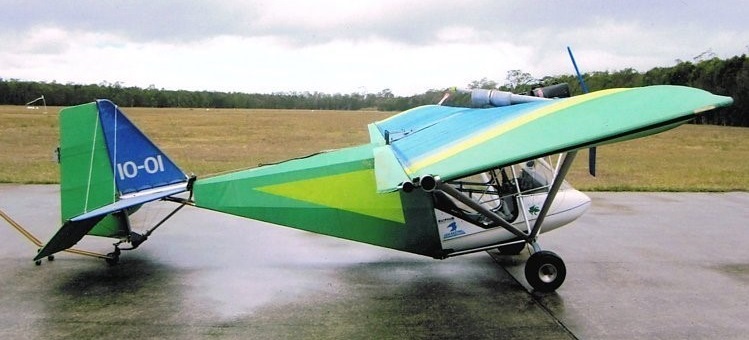
Lea Kestrel Kermit 10-001 C/N 1

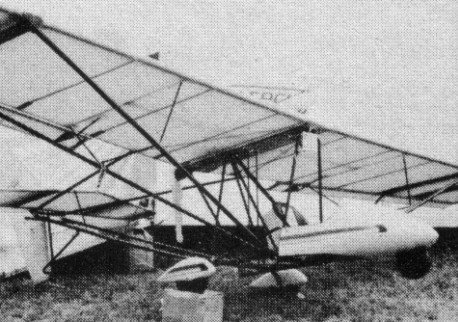
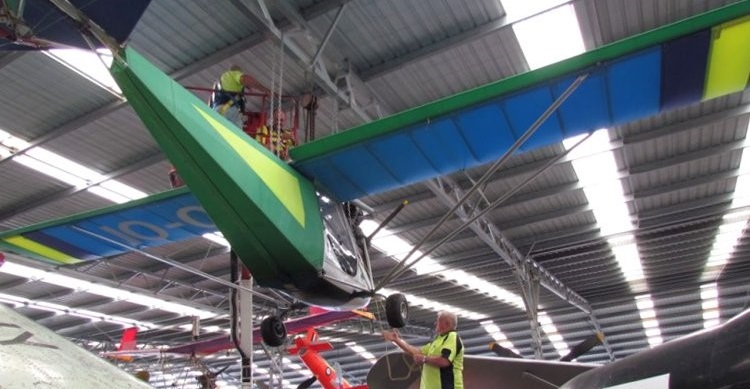
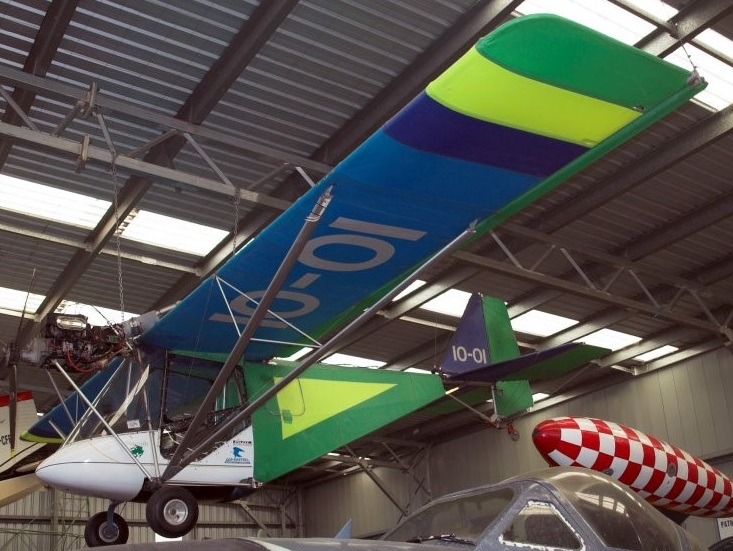
The design and production of the ultralight Kestrel was the product of the efforts of Cec Lea, one of the pioneers of ultralight aircraft design and construction in Australia. A single seat, high wing, tractor engine aircraft it first appeared about 1990 and a number of examples were registered in the 95.10 registration series as late as mid-2000.

Lea Kestrel Kermit 10-001 C/N 1

Lea sold both completed aircraft and kits for owner construction. All were powered by the Austrian Rotax 503 engine and many, if not all, were fitted with a Brolga three blade carbon/glass composite propeller. Some 16 Kestrels were built.

Lea Kestrel Kermit 10-001 C/N 1

Lea Kestrel Kermit
Engine: Rotax 503, 37kW (50hp)
Cruising Speed: 100km/hr / 67mph
Range: 280km / 175mile

Lazarow LAZ-7 / LAZ-7M

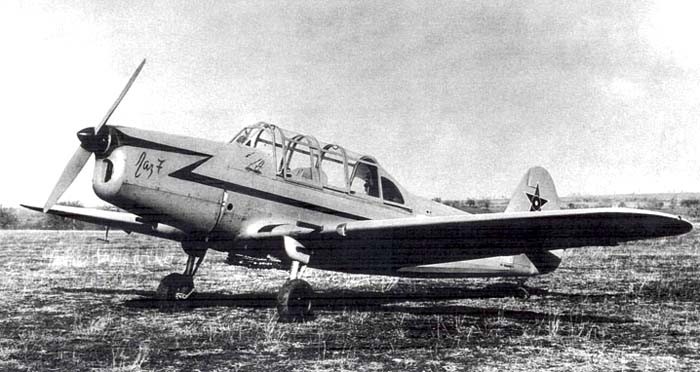
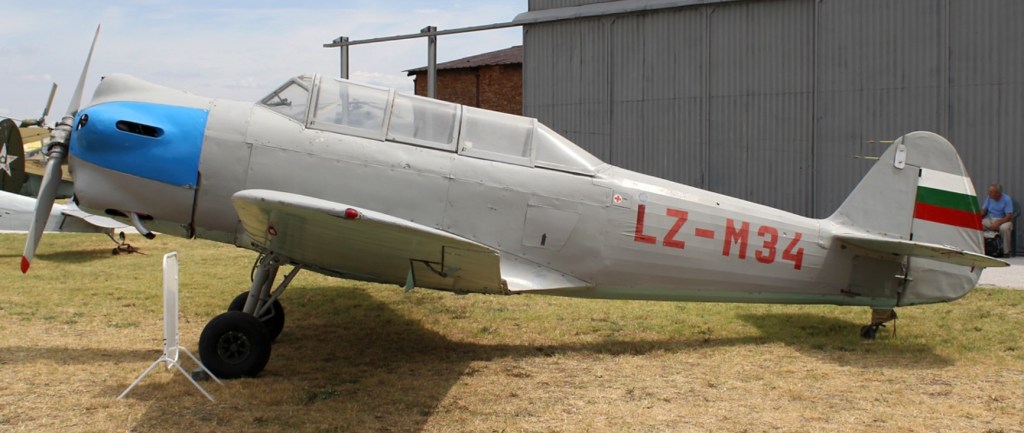
The prototype of the Bulgarian LAZ-7 two-seat primary trainer of 1946 was the first post-war design to be built in Bulgaria. The LAZ-7 was matched against the Yugoslavian Aero 2.

Both the LAZ-7 and Aero 2S were powered by the Czech 160 hp Walter Minor 6-III and in the eliminating trials the LAZ-7 was successful. The decision was taken to build the LAZ-7 in series production at the Bulgarian State Aircraft Works, and to replace the Walter engine with a Russian-designed M-11FR radial driving a controllable pitch, two blade Visch V-501 prop.

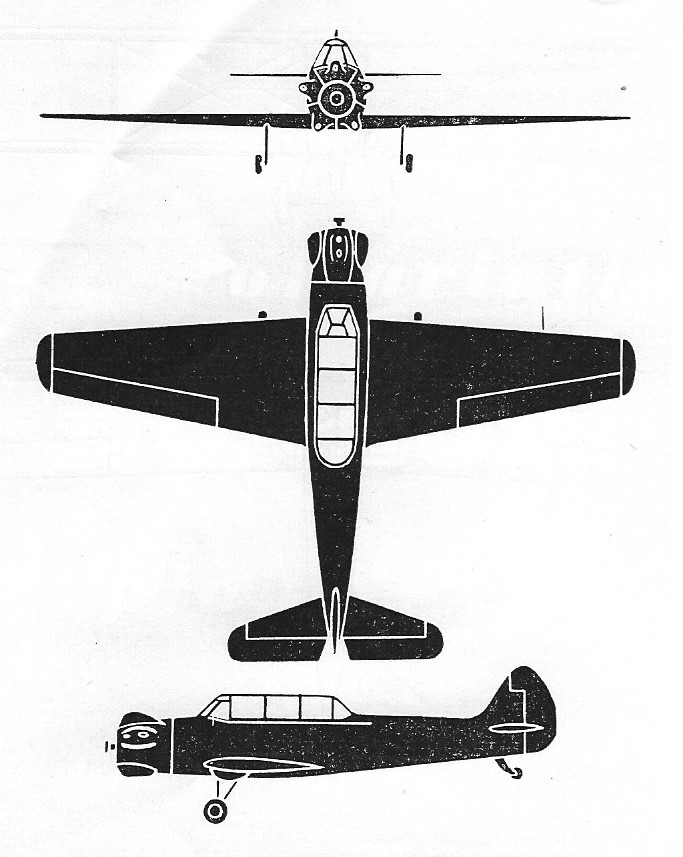
The LAZ-7M production type fuselage construction is of welded steel tube and wood, and covered with fabric. Both the wing and tailplane are fully cantilever, of mixed wood and metal construction, and fabric covered. No flaps are fitted. Both the main undercarriage and tailwheel are fixed.

LAZ-7
Engine: 160 hp Walter Minor 6-III

LAZ-7M
Engine: M-11FR
Prop: controllable pitch, two blade Visch V-501
Max speed: 149 mph
Cruise: 133 mph
AUW: 2039 lb
Landing speed: 53 mph
Service ceiling: 17,220 ft
Range: 525 mi
Endurance: 3 hr 56 min
Time to 3280 ft: 4 mn 47 sec

Lawrence Aeriator

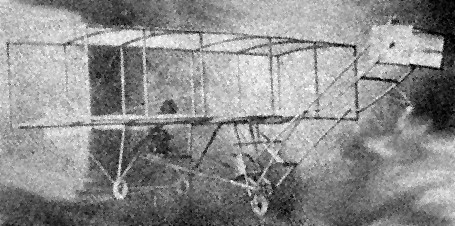
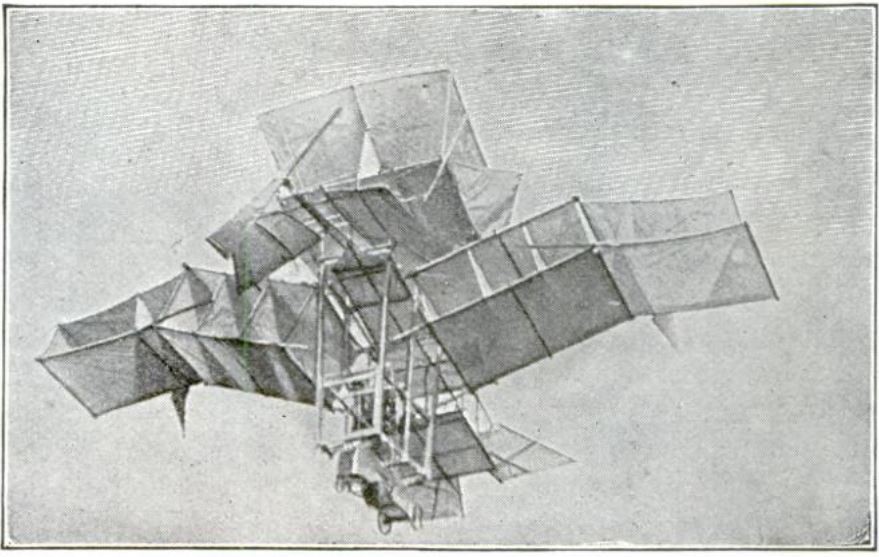
Little is known about this complicated machine, which was designed by George A. Lawrence of Sayre, Pennsylvania. It was claimed to have flown during secret tests, first on 1 October 1907, and then on 11 October. It’s not clear if it was crewed or not, however the inventor said he had plans to build a larger machine, which would be powered by a 60 hp engine and capable of carrying three people. In 1908, Lawrence entered into a business relationship with Gustave Whitehead and formed the Whitehead Motor Works.

Lavochkin La-190

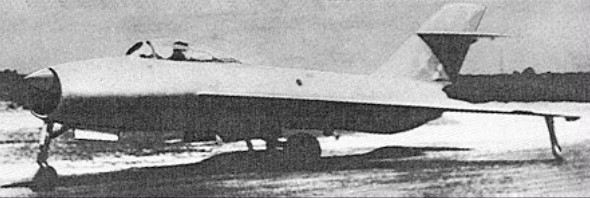
The La-190 was conceived to meet the October 1948 demand of Yosif Stalin for the “fastest fighter in the world”. Other contenders were the I-350, progenitor of the MiG-19, and the Yak-1000, which, in the event, was to be abandoned before flight testing. The requirement called for use of the new Lyulka AL-5 turbojet which had an initial rating of 4600kg.

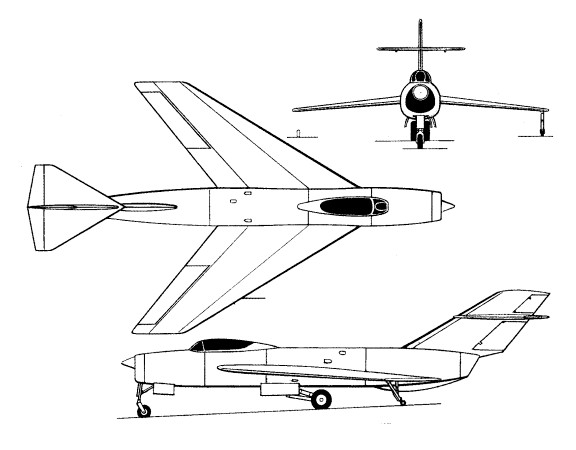
The La-190 featured wings swept at 55 degrees and a delta tailplane located about three-fifths of the way up the broad-chord vertical tail. Equipped with a bicycle-type main undercarriage members with wingtip outrigger stabilising wheels, and an armament of two 37mm N-37 cannon. Integral fuel tankage occupying virtually the entire interspar box of the 6.1% thickness wing which featured machined upper and lower skins. All control surfaces were powered by irreversible actuators.

Although planned originally as a day fighter, the prototype was completed in limited all-weather form with a radar radome in the upper portion of the nose inlet.

The sole prototype La-190 was completed in February 1951. The AL-5 engine offered less thrust than predicted and its unreliability led to cancellation of the development programme after only eight flights.

A speed of 1190km/h at 5000m, or Mach1.03, was attained in level flight during one test in March 1951.

Engine: Lyulka AL-5 turbojet, 4600kg
Max take-off weight: 9257 kg / 20408 lb
Empty weight: 7315 kg / 16127 lb
Wingspan: 9.90 m / 32 ft 6 in
Length: 16.35 m / 53 ft 8 in
Wing area: 38.93 sq.m / 419.04 sq ft
Max. speed: 1190 km/h / 739 mph
Range: 1150 km / 715 miles