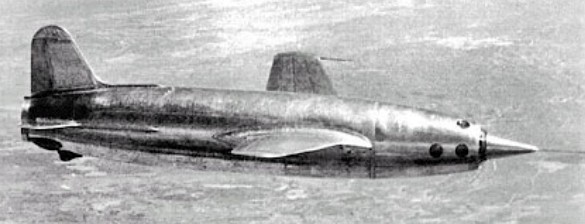
Rene Leduc in France had worked for many years on the development of a ramjet engine for aircraft propulsion. Known technically as an aero-thermo-dynamic-duct or athodyd, which has no major rotating components, a ramjet relies upon air being forced into an intake which is designed to ensure that the air loses kinetic energy but gains pressure energy as it passes through a diverging duct en route to a combustion chamber. There, burning fuel increases the total energy, causing the expanding gases to accelerate to atmosphere via an outlet venturi. Leduc’s first success had come in 1935 with a small but practical engine developing 4kg of thrust. It was not until after the end of World War II that Leduc was able to continue his experiments, building first the Leduc 0.10 with a tubular double-skinned fuselage in which the inner shell contained the pilot’s cockpit, surrounded by an outer shell which formed the inlet duct to the ramjet engine at the rear of the pilot’s position. First tested as a glider in October 1947, the Leduc 0.10 was carried on struts above a Sud-Est SE.161 Languedoc ‘motherplane’ which released it at appropriate altitude. The first powered flight was made on 21 April 1949, the SE.161 accelerating the Leduc 0.10 to a speed of approximately 322km/h to achieve the right pressure conditions for the ramjet to ignite and sustain power. During the first flight, of 12 minutes duration, a speed of 680km/h was attained on half power. The aircraft was flown subsequently on half power at a speed of 805km/h. The ramjet delivering 4409-lb (2000-kg) thrust, reached Mach 0.84. Two more examples were built, the first an identical 0.10, the other differing only by having two wingtip-mounted turbojet engines to accelerate the aircraft to the ignition speed of the ramjets. This last aircraft was designated 0.16.
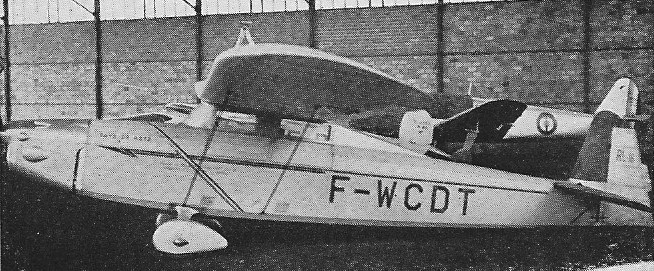
The RL-16 two-seat monoplane, designed by R. Leduc for high altitude flight, gained the light plane altitude record on 13 June 1949 at 25,551 ft.
For long distance, the RL-16 can supplement its fou wing fuel tanks with four fuselage tanks, raising the total the 132 Imp.Gal.
Engine: Zundapp, 50 hp Wingspan: 41 ft 11.75 in Wing area: 172.223 sq.ft Length: 42 ft Empty weight: 562 lb Loaded weight: 1764 lb Max speed: 110 mph Cruise: 90 mph Max range: 4163 mi Endurance: 47 hr 30 min Ceiling: 28,871 ft
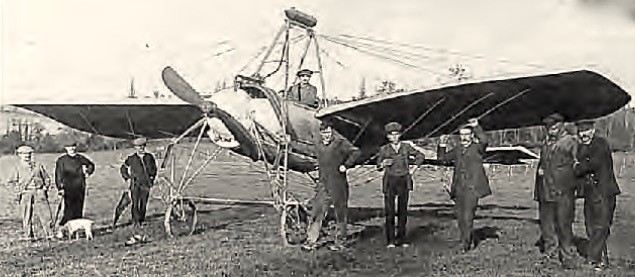
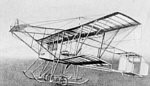
Doctor Baron William Le Clère of Mareuil in Perogord, France, was passionate about mechanics. He had experimented with model airplanes, but wanted a real one. He entrusted the construction to Bertrand Gonthier, founder of the house Gonthier and Nouhaud. The plane was completed in 1911. It was transported by rail to Ribérac on October 20, 1911 and was reassembled in the grounds near the station, where they had built a hangar near the field where the experiments were to take place. The 500-kg plane had an elongated tapered fuselage with a total length of 10 meters, At the end, a triangular canvas represented the shape of a bird’s tail in full flight. The plane only travelled some 50 metres before standing on its nose. Disappointed, Le Clère gave up his plans, but kept the engine of his airplane until his death, in Arcachon in 1927.
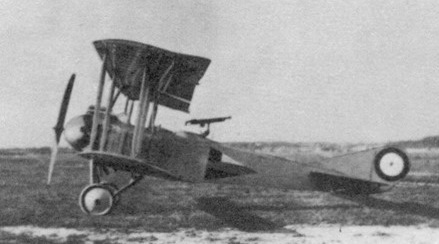
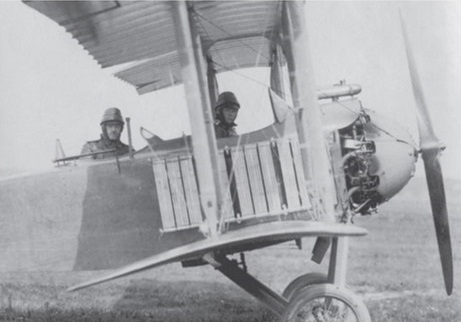
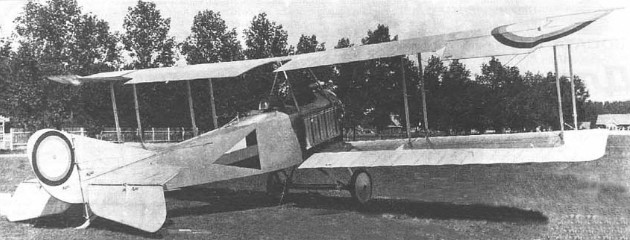
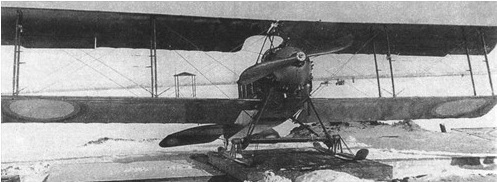
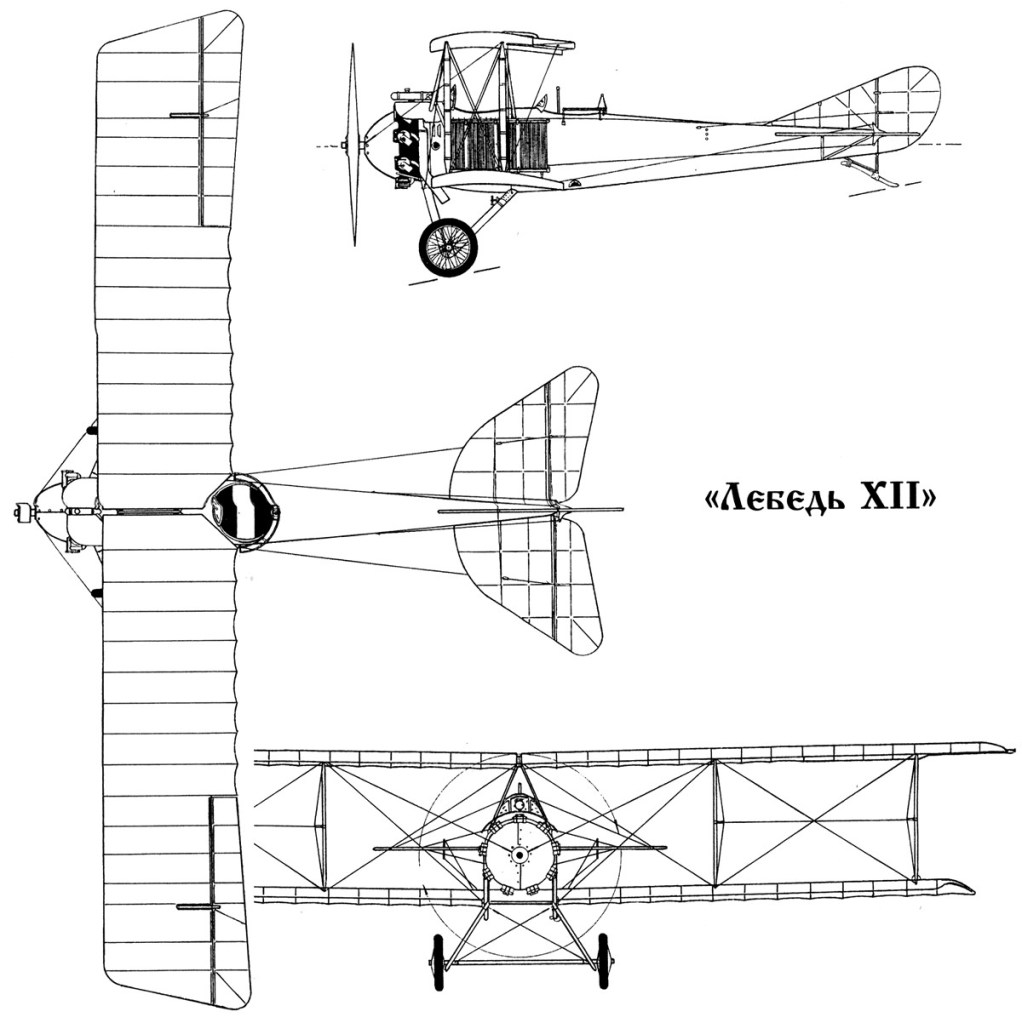
The Lebed XII was a Russian military reconnaissance aircraft produced during the First World War for the Imperial Russian Air Force. It was one of the few domestically designed aircraft to see production in Russia during the war, but was based on designs and techniques learned from Lebed’s rebuilding of captured German types. The fuselage was a plywood structure of rectangular cross-section with seating for the pilot and observer in tandem, open cockpits. The wings were built around a pine spar and covered in fabric, and the empennage (tail assembly) was of welded steel tube with fabric covering.
Test flights commenced on 28 December 1915, but were interrupted by bad weather in St Petersburg, where the Lebed factory was located. Testing was therefore moved to Kiev, and then to the Anatra factory at Odessa on 11–15 February 1916. Grand Duke Alexander Mikhailovich ordered 400 aircraft on February 23, but the final contract on 19 April was for 225 aircraft, 245 sets of spare parts and 10 static airframes for a total of 5,153,500 rubles.
Before production began, a number of handling difficulties noted by the test pilots were being corrected in the design, along with a new set of problems caused by a change in powerplant. The prototypes had been flown with 97 kW (130 hp) engines, but the production contract called mostly for 112 kW (150 hp) engines, plus some machines equipped with 104 kW (140 hp) engines for training. These heavier powerplants shifted the aircraft’s centre of gravity, and the mountings for the engine and cooling system had to be revised before a final round of tests began in October. Serial production finally commenced in November and delivery to squadrons soon afterwards.
The Lebed XII started appearing on the front line in quantity in early 1917, but problems quickly became apparent. In particular, a number of engine fires and crashes due to structural defects led to deliveries of the type being suspended by mid-year while an investigation was held. Army test pilots concluded that the version with the more powerful engine was unfit for frontline service, and recommended that it be relegated to training use only, while the lower-power version was regarded as not even fit for training. Lebed disputed the findings, blaming the poor results on the inexperience of the test pilots and on poor weather while the tests were conducted. The Army therefore held a second inquiry. On 2 October 1917, this panel concluded that the type was obsolete and unfit for service, recommending that production be halted and the type withdrawn altogether. However, due to a shortage of aircraft, production continued into 1918, and eventually 214 of the original order were delivered.
The Lebed XII saw limited frontline service in the North and North-western parts of the front with Germany, equipping four air divisions of the 38th Corps, 5th Army. Aircraft delivered in the second half of 1917 went mostly to training units, however. These included the Imperial aviation school, the Gatchinskoy military flying school, the Odessa flying school, Kiev school for pilots and observers and the flying school of the Caucasus. Over 50 were supplied to the Navy’s school of air combat in Krasnoye Selo alone. Survivors were taken over from the Imperial Russian Air Force by the Soviet Air Force.
The Estonian Air Force operated one aircraft only.
Variants:
Lebed XII Main production type
Lebed XIIbis Two aircraft constructed with alternative engines – one with a Hispano-Suiza engine, the other with a Green
Lebed XIII High-speed version, anticipated to reach 150 km/h (94 mph). Planned for March 1916, but possibly not built.
Engine: 1 × Salmson, 115 kW (150 hp) Wingspan: 13.15 m (43 ft 2 in) Length: 7.96 m (26 ft 1 in) Height: 3.25 m (10 ft 8 in) Wing area: 42.0 m2 (452 ft2) Empty weight: 820 kg (1,800 lb) Gross weight: 1,350 kg (2,970 lb) Maximum speed: 135 km/h (84 mph) Endurance: 3 hours 0 min Service ceiling: 3,500 m (11,500 ft) Crew: Two, pilot and observer Armament: 1 × machine gun on flexible mount for observer Bombload: 220 lb / 90.7 kg
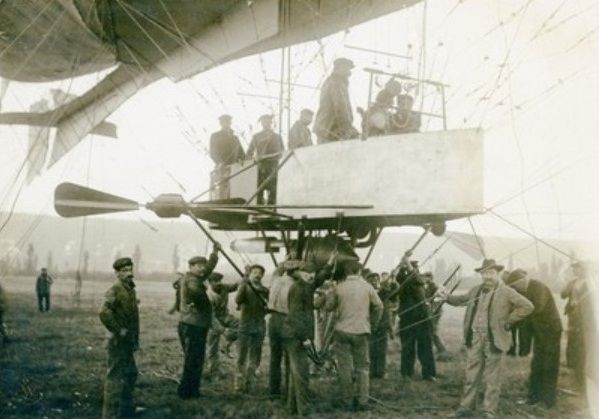
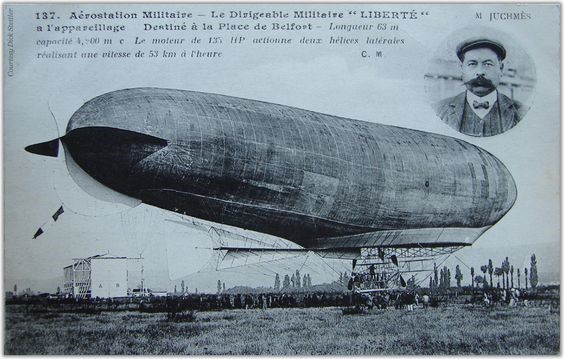
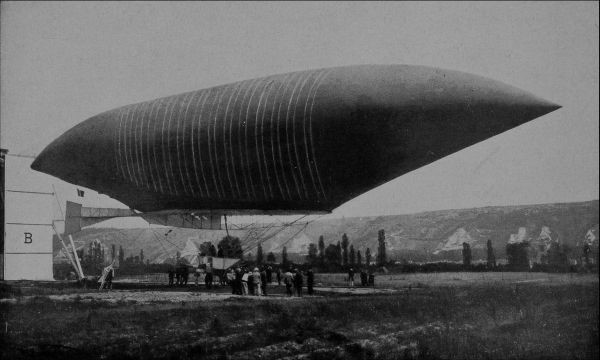
In 1909 Lebaudy produced two other vessels patterned after the République. The Russie and La Liberté, built respectively for Russia and France. The fourth designed dirigible, the Russie made her first voyage on May 29th, ascending 600 feet with eight passengers, and manoeuvring under perfect control. After her official trial, in June, she was sent to St. Petersburg, being the first dirigible furnished to a foreign government by a private concern.
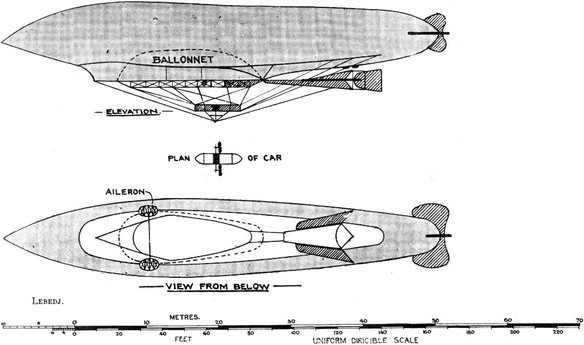
This dirigible was originally known as La Russie, and later renamed by the Russians as Lebedj, and was supposed to be an exact copy of the République.
Featuring a single Panhard-Levassor motor, twin propellers capable of 70 horsepower, the Lebedj dirigible had a volume of 3,800 cubic meters, and could achieve a speed of 49 kph.
Length: 61.2 m Beam: 10.9 m Volume: 3,800 m³ Engine: 1 x Panhard-Levassor, 70 hp Props: 2 Ballonet: 900 m Speed: 49 km/h
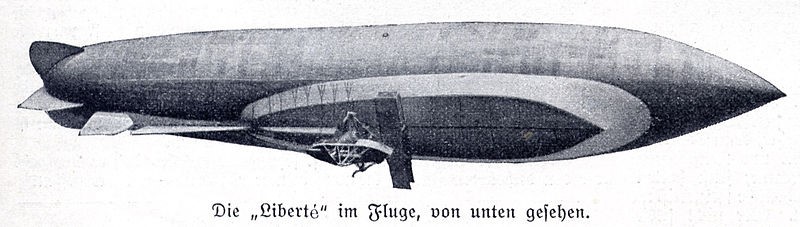
In 1909 Lebaudy produced two other vessels patterned after the République. The Russie and La Liberté, built respectively for Russia and France.
The Liberté was launched the last week in August and, after various practice and official tests, was accepted by the French government two months later. On a notable voyage, made on September 20th, she sailed ten hours with her Panhard motor constantly working.
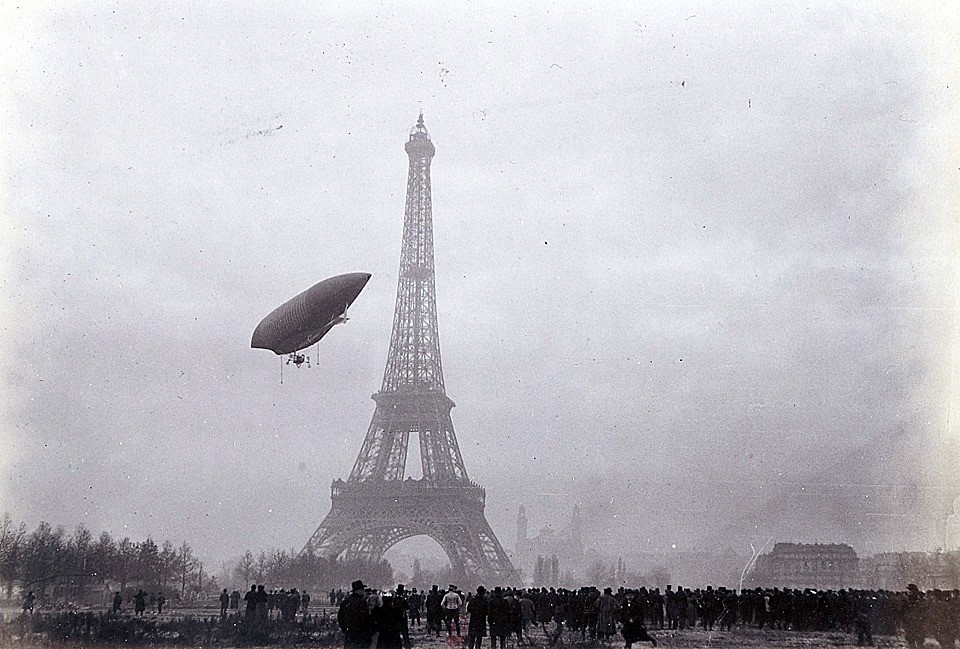
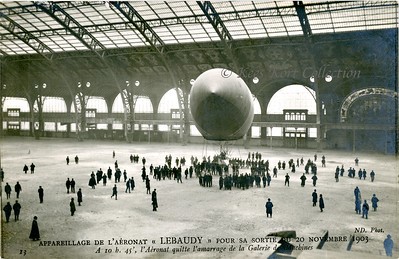
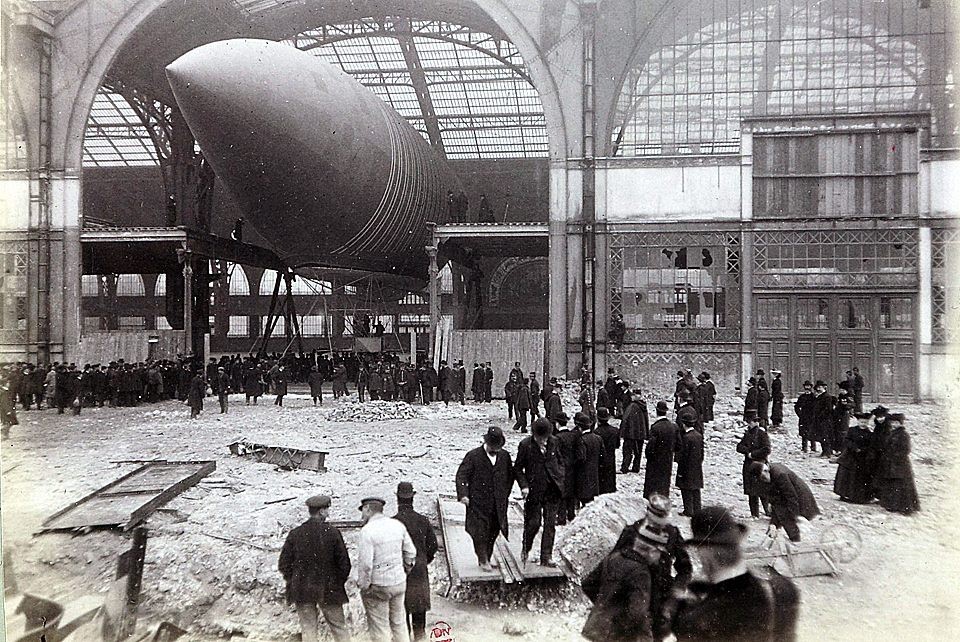
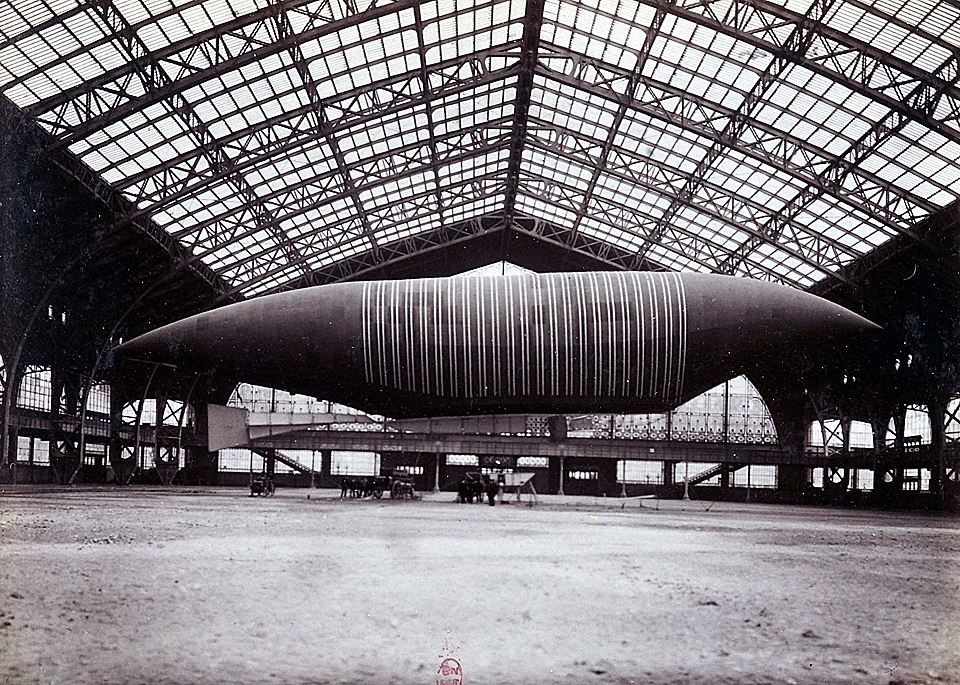
The company’s first airship, simply known as the Lebaudy, and dubbed by the French public “Le Jaune” (“The Yellow (One)”) because of the yellow colour of the lead chromate paint on its cloth exterior, was considered the most successful airship then in operation.
The Lebaudy Le Jaune (‘The Yellow’) dirigible was in the enormous Halles des Machines in Paris on 20 November 1903 in preparation for a flight over Paris. The flight got enormous publicity and a series of 30 (!) photographs / postcards were published to commemorate the event.
The Halle des Machines or Galerie des Machines was built specially for the Exposition Universelle in Paris of 1889. The Galerie des Machines had a span of 115 metres (377 ft) and height of 45 metres (148 ft). The whole building was demolished in 1910.
It had a 35 hp Daimler Mercedes engine driving two propellers. The ship was further improved on several trips, including one of 2 hours and 46 minutes. These activities continued in the following years, with the ship being rebuilt several times after crash landings in trees.