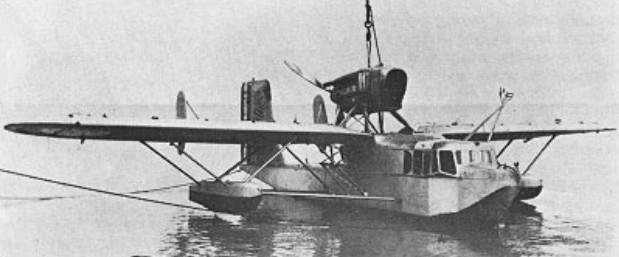
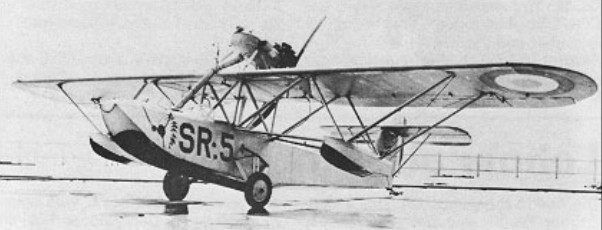
Lombardi LM-7

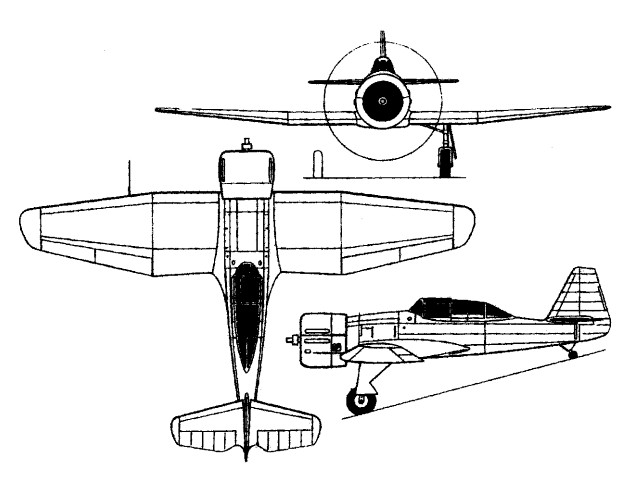
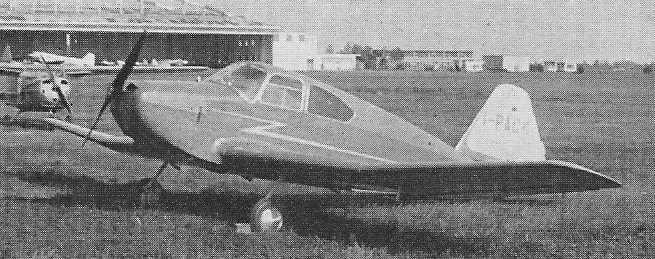
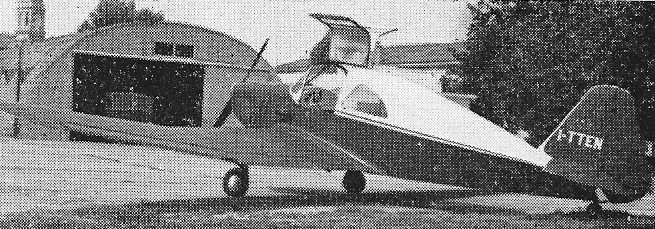
Derived from the L.M.5 Aviastar and designed by Pieraldo Mortara, the L.M.7 is a three-seat cabin monoplane of all-wood construction, the prototype was produced in 1949.

The L.M.7 was powered by a 60 hp C.N.A. D.4 engine and its cabin accommodated two side-by-side in front and a single seat behind.

I-TTEN

No production was undertaken as Lombardi & C. abandoned aircraft manufacture shortly after completion of the prototype.

Engine: 60 hp C.N.A. D.4
Wingspan: 38 ft 6 in
Wing area: 156.3 sq.ft
Length: 20 ft 10 in
Height: 6 ft 3 in
Empty weight: 770 lb
Loaded weight: 1386 lb
Max speed: 117 mph
Cruise: 103 mph
Climb to 3280 ft: 8 min 21 sec
Service ceiling: 12,530 ft
Range: 530 mi

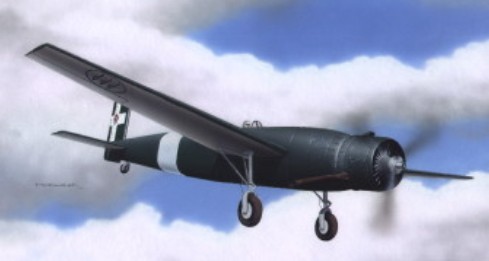
Lombarda AR / Assalto Radioguidato

With Italy’s entry into World War II, the forces were facing the fleet of British Royal Navy. To meet the operational threat, the ARP (Aircraft Radio Piloted) program was conceived, proposed by engineer and official of the RA, Ferdinando Raffaelli.

The project consisted in the adaptation of older three-engine Savoia-Marchetti SM79 bombers, equipping them with radio remote control which, abandoned by the crew with parachutes, was remotely piloted from a second aircraft following him, designated plane “P” (Pilot).

The ARP was used experimentally on 12 August 1942 , during the battle of mid-August , however during the flight a transmitter system failure occurred at P causing the loss of control of the bomber who, exhausted the fuel , crashed into the mountains of’ Algeria .

Despite the failure, the weapon system continued to enjoy the confidence of the military leaders who advised the development, with the request to abandon the use of large aircraft in favor of an aircraft specially designed for this purpose. Given the certainty of the loss of the equipment during the action, the specifications included using simple construction materials as possible strategic choice would limit the costs of implementation.

Lombard Aviation was contacted and in November 1942 was entered into a contract for the supply of a prototype and five copies amounting to £ 4,200,000. The project was designed and developed by engineers Ermenegildo Preti and Stelio Frati . In accordance with the specifications, the aircraft was simplicity, a single-engine monoplane wing, mainly wooden except in some details, the surfaces of the wings , the landing gear. The engine was based a Fiat A. 80 RC.41 radial from 1 000 hp (735 kW), surplus coming from the twin-engine Fiat BR20 .

The prototype , serial MM.75576 characterized by double-cockpit, and fixed landing gear, was flown for the first time on 13 June 1943 by test pilot Valzania from Venegono airfield. Subsequent tests confirmed the overall performance which proved better than anticipated. After the prototype was transferred to flight are the Upper Management Studies and Experiences of Guidonia for continued flight tests, the supply order was confirmed and then started mass production.

The pre-series aircraft, which was assigned the MM.75577, was completed in August 1943. The military authorities in Germany suspended the program and subsequently cancelled it. The five examples are all destroyed.

At the end of the conflict among documents confiscated by the Allies of World War II and returned to the Italian Government, was found a plan that reported a composition between an AR and a fighter Macchi MC202 similar to the configuration of the type Mistel developed by the Luftwaffe .

The aircraft was characterized by a structure made entirely of wood, with a fuselage cross-section oval sloping to tail, made a series of frames and panels covered with current heavy plywood , with a simple, basic cockpit, closed by a dome accessible through a trap door on the bottom and allowed the pilot to escape.
The integrated structure of the tank of fuel on the capacity of 700 L and the load compartment, respectively, positioned behind and below the passenger compartment near the center of gravity, the latter incorporating the two side by side attachment points for bombs to be dropped from 1000 kg.

The two spar monoplane wing tapering at the ends and with marked dihedral, ailerons, and no flaps.

The undercarriage was fixed, releasable by the pilot after take-off, that could be recovered and reused.

The power was provided by a 1000 hp (735 kW) Fiat A.80 RC.41, radial 18-cylinder twin row air-cooled with gearbox to cruise at 4100 m. The engine was enclosed in an NACA cowling, with a three-blade propeller.

The only offensive weapons were 1000 kg each.

Aeronautica Lombarda AR
Length: 14.10 m
Wingspan: 8.20 m
Height: 3.22 m
Fuel Capacity: 700 lt
Engine: 1 x Fiat A.80 RC.41, 1 000 hp (735 kW )
Armament: 2 x 1 000 kg Bombs
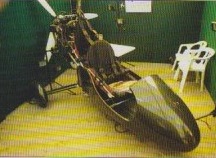
Lolo Pipistrel Spider

A trike of welded steel construction, power units options are the Rotax 503 or 912, and wings are 10, 1, or 15 sq.m.

Empty weight: 165 kg
Wing span: 11 m
Wing area: 13 sq.m
Fuel capacity: 42 lt
Certification: A
Engine: Rotax 582, 65 hp
MAUW: 400 kg
Seats: 2
Max speed: 100 kph
Cruise speed: 70 kph
Minimum speed: 42 kph
Climb rate: 8 m/s
Fuel consumption: 8 lt/hr
Price (1998): 250 000 AS

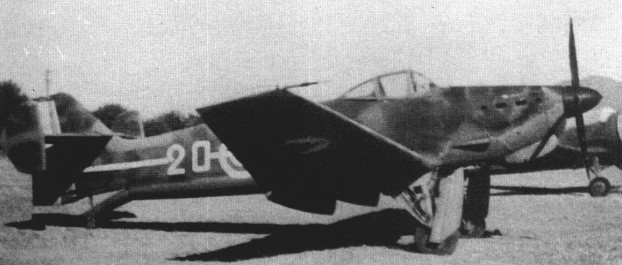
Loire-Nieuport LN.40 / LN.401 / LN.411

The LN.40 was evolved from the Nieuport 140 in response to a French naval requirement for a ship-borne dive-bomber, and emerged as a compact single-seater with inverted gull wings and a crutch to lever the single large bomb clear of the propeller before release. The prototype flew in June 1938, trials revealing the need for tail modifications. It was also decided to use the extended main landing gear legs as dive brakes, allowing the removal of the tail-mounted dive brakes. Some 42 LN.401 production aircraft were ordered, although only 23 or so had been delivered by the fall of France. The French Air Force also ordered 40 LN.411s, these having no arrester hook, wing-folding mechanism or flotation bags; again only about 23 had been delivered by the fall of France. After the Armistice SNCASO assembled another 24 LN.401s and LN.411s from components.

LN.401
Span: 14m (45ft 11.25 in).
Length: 9.75m (3l ft 11.75in).
Powerplant: l x Hispano-Suiza l2Xcrs, 515kW (690 hp)
Max TO weight: 2825 kg (6,228 lb).
Max speed: 236 mph at 13,125 ft.
Operational range: 746 miles.
Armament: 1 x 20-mm Hispano¬-Suiza cannon and two 7.5-mm (0.295-in) Darne mg plus provision for 1 x 225-kg (496-lb) bomb carried under the fuselage.

LN.411

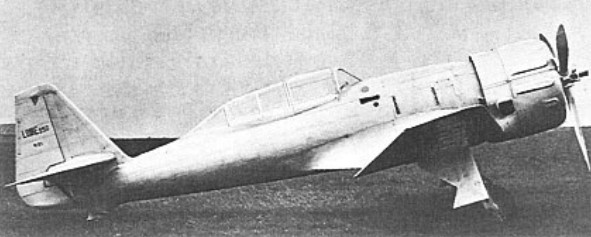
Loire 250

In 1934, the Service Technique issued an outline specification for a new single-seat fighter, all the contenders but one having all-metal stressed-skin monocoque structures with enclosed cockpits and retractable undercarriages. The structural exception was the MS 405.

The Loire 250 was powered by a 1000hp Hispano-Suiza 14Ha-79 two-row radial and was first flown on 27 September 1935 temporarily with a fixed-pitch two-bladed wooden propeller. Intended armament comprised two synchronised 20mm cannon and two 7.5mm machine guns, but trials with the Loire 250 proved disappointing from the outset, the prototype suffering serious drag problems. Various methods were applied to reduce drag, the vertical tail was redesigned to rectify a stability problem and a three-bladed variable-pitch propeller was fitted. Regardless the fighter proved incapable of attaining the max speed of “at least 485km/h” called for by the specification, and was eliminated from the contest at an early stage.

Engine: 1 x 1000hp Hispano-Suiza 14Ha-79 two-row radial
Max take off weight: 2200 kg / 4850 lb
Empty weight: 1500 kg
Wingspan: 10.80 m / 35 ft 5 in
Length: 7.81 m / 25 ft 7 in
Height: 3.72 m / 12 ft 2 in
Wing area: 16.30 sq.m / 175.45 sq ft
Max. speed: 480 km/h / 298 mph
Range: 875 km / 544 miles

Loire 210

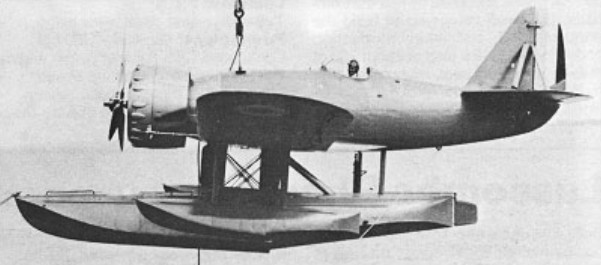
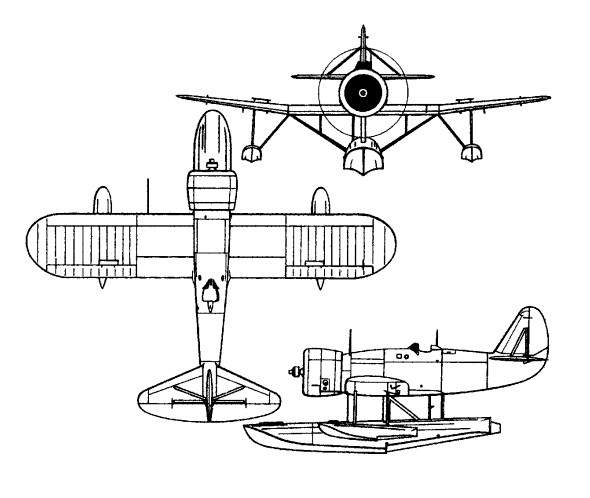
In 1933, the Marine Nationale formulated and issued a requirement for a modern float-equipped fighter that could be launched from the rotatable catapults of such cruisers as the Foch and the Richelieu.

Contenders were built by Loire, Bernard (H.52), Potez (452) and Romano (R-90).

The Loire 210, first flown on 21 March 1935, was of all-metal construction with metal skinning apart from the outboard sections of the wings which were fabric covered. Powered by a 720hp Hispano-Suiza 9Vbs nine-cylinder radial, the Loire 210 began official trials in June 1936.

A production order, which called for 20 aircraft, was not placed until 19 March 1937, the first series aircraft flying on 18 November 1938. The production model carried an armament of four wing-mounted 7.5mm Darne machine guns, two escadrilles forming with this fighter in August 1939. However, after several accidents resulting from wing structural failures, the remaining aircraft were withdrawn from service and their units disbanded.

Engine: 720hp Hispano-Suiza 9Vbs
Max take off weight: 2180 kg / 4806 lb
Empty weight: 1440 kg / 3175 lb
Wingspan: 11.79 m / 38 ft 8 in
Length: 9.51 m / 31 ft 2 in
Height: 3.80 m / 12 ft 6 in
Wing area: 20.30 sq.m / 218.51 sq ft
Max. speed: 299 km/h / 186 mph
Range: 750 km / 466 miles

Loire 130

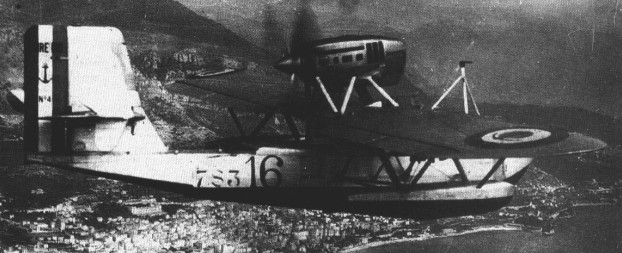
Designed in response to a 1933 French Navy requirement for an all-purpose seaplane capable of being catapult-launched, the three-seat Loire 130 prototype first flew in November 1934.

The trials programme was considerably slowed by the need to cure stability problems, and it was August 1936 before production orders were placed for the initial two versions, the Loire 130M (Metropole) and Loire 130C (Colonie) intended for metropolitan and colonial deployment respectively. The 130C being strengthened and equipped for use in tropical climates with a larger radiator. Power was a Hispano-Suiza engine mounted on struts over the hull.

The Loire 130 did not reach French navy escadrilles until 1938. By 1939 it equipped Escadrille 7S2 aboard the seaplane carrier Commandant Teste and 7S3 and 7S4 embarked on various capital ships and cruisers. Overseas the Loire 130 was with 8S2 at Fort-de-France, French Antilles, 8S3 in West Africa, and 8S4 in the Levant (now Lebanon).

In 1939-40 the type went on to equip several newly formed shore-based and shipborne units and also equipped Armee de I’Air units, including 1/CBS in French Indo-China (now Vietnam).
About 95 of the Loire 130s on order had been completed by the time of the June 1940 armistice with the Germans, but permission was given for 30 more of the type to be built under the auspices of the Vichy regime. All being used in the coastal role after the removal of catapults from all French ships in November 1942.

The last Loire 130 in flying condition, with Escadrille 8.S in Indo-China, was withdrawn and scrapped in late 1949.

Engine: 1 x Hispano-Suiza 12Xbrs V-12, 537kW / 720 hp
Max take off weight: 3396 kg / 7487 lb
Loaded weight: 2090 kg / 4608 lb
Wingspan: 16.00 m / 52 ft 6 in
Length: 11.30 m / 37 ft 1 in
Height: 3.85 m / 12 ft 8 in
Wing area: 40.10 sq.m / 431.63 sq ft
Max. speed: 226 km/h / 140 mph
Ceiling: 6000 m / 19700 ft
Operational range: 1100 km / 684 miles
Armament: 2 x 7.5mm Darne machine-guns, 2 x 75kg / 165 lb bombs
Seats: 3

Loire 50 / 501

A three-seat parasol-wing flying-boat for liaison or training duties, the Loire 50.01 prototype first flew on 7 September 1931. After being sunk in an accident it was recovered and on 24 March 1932 was flown as an amphibian, the two main wheels retracting to a horizontal position clear of the water. In summer 1933 its 172kW Salmson 9Ab radial was replaced by a 261kW Hispano-Suiza 9Qd radial, and it was then redesignated Loire 50bis.

Six series Loire 501 amphibians, closely resembling the Loire 50bis and retaining its crew arrangement, were delivered in 1935 to various sections de servitude (general-duty flights) at French naval air stations, the last surviving Loire 501 reported at Karouba (Bizerta, Tunisia) in August 1941.

Engine: 1 x Hispano-Suiza 9Qd radial, 261kW
Max take-off weight: 2150 kg / 4740 lb
Empty weight: 1385 kg / 3053 lb
Wingspan: 16.00 m / 52 ft 6 in
Length: 11.10 m / 36 ft 5 in
Height: 4.47 m / 14 ft 8 in
Wing area: 39.40 sq.m / 424.10 sq ft
Max. speed: 195 km/h / 121 mph
Ceiling: 4850 m / 15900 ft
Range: 1100 km / 684 miles