LoPresti Fury / SwiftThunder

In September 1990 it was reported the name SwiftThunder was adopted for the derivative of the SwiftFury offered to the USAF’s enhanced flight screening aircraft programme. The two aircraft differ only in the tricycle undercarriage on the Swift Thunder. A three-day evaluation of the SwiftFury prototype was being made during August 1990 at the Air Force Academy, Colorado Springs, with five sorties to be flown each day.

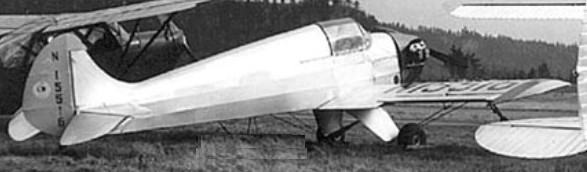
LoPresti Fury
Engine: Lycoming IO-360-A1B6, 200 hp @ 2700 @ SL
TBO: 2000 hrs
Fuel type: 100/100LL
Propeller type/diameter: Hartzell CS/76 in.
Landing gear type: Tri/Retr.
Max ramp weight: 2300 lb
Gross weight: 2300 lb
Max landing weight: 2300 lb
Empty weight: 1450 lb
Useful load: 850 lb
Payload, full fuel: 490 lb
Usable fuel (gals.): 60
Wingspan: 29 ft. 3 in.
Overall length: 22 ft. 6 in.
Height: 7 ft. 2 in.
Wing area: 138.6 sq. ft
Wing loading: 16.6 lbs./sq. ft
Power loading: 11.5 lbs./hp
Wheel base: 12 ft. 5 in.
Wheel track: 9 ft. 9 in.
Wheel size: 6.00 x 6 in
Seating capacity: 2
Cabin width: 44 in
Cabin height: 45 in
Baggage capacity: 200lb
Cruise speed 75% power @ 8,300 ft.: 182 kt
Cruise speed 65% power @ 8,300 ft.: 175 kt
Max range (w/ reserve) 55% power: 870 nm
Fuel consumption 75% power: 10.5 USgph
Fuel consumption 65% power: 9.1 USgph
Fuel consumption 55% power: 7.7 USgph
Stall speed (flaps up): 49 kt
Stall speed (flaps down): 44 kt
Best rate of climb: 1350 fpm
Service ceiling: 21,000 ft

López Jalisco

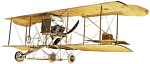
Designed, patented, built and flown in 1909 by Mexican aviation pioneer José Guadalupe Mejía López. During its first test on the plains of the Rosary in the city of Guadalajara, the aeroplane was pulled with a rope by an automobile and rose 4 meters before it collided with a cactus, although suffering only minor damage. López subsequently received a German-made engine of 35 hp and flew the machine a distance of 800 meters at a height of 2.5 meters, thus becoming the first Mexican to build and fly his own aircraft.

Long Wimpy

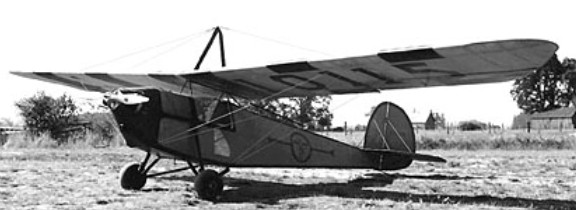
The Wimpy was designed and constructed in 1935 by Leslie Long at Cornelius, OR., USA. It had a welded-steel fuselage, tail feathers, and landing gear, and a wooden wing. It used external wire bracing, like the Fly Baby, except the flying wires attached to a bit of structure behind the tires rather than through the wheel hub.

Myron Buswell acquired the airplane in 1938 and made several modifications. The airplane left Oregon in 1957 when it was purchased by Roy Olson of San Diego, CA. Mr. Olson donated the airplane to OAHS in November 2005. Following acquisition of the original plans, OAHS Director Bill Austin began wing restoration for display.

An Oregon man named Tom Story, who built one just before World War II.

After the war, Story’s airplane was bought by another Oregon man named George Bogardus. Prior to the war, reaction against homebuilt aircraft had caused them to be banned in every state except Oregon. Bogardus wanted the CAA to implement a new certification category that would overrule the state limitations.

Bogardus modified the Story Wimpy, calling it Little Gee Bee. He successfully flew across the country several times, and his efforts helped lead to the introduction of the Experimental/Amateur-Built category.