At its Norwich factory built 12 Short 184 or Mann, Egerton Type A seaplanes, and from this developed own Type B seaplane powered by Sunbeam engine.
1 engine
Mann and Grimmer M.1
Seventeen-year old R. Mann designed M.1 two-seat fighter-reconnaissance biplane, built with assistance of R. P. Grimmer and test-flown at Hendon February 19,1915. Conventional radial engine, nose-mounted, but facing aft so that propeller shaft extending through fuselage drove interplane strut-mounted twin pusher propellers via chain drives. Wrecked November 16,1915, development discontinued.
Mamet 1911 monoplane
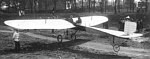
The 1911 Mamet 2-seater monoplane was designed and built by Julien Mamet in France.
Span: 39’4″
Weight empty: 1250 lb
MFI MFI-15
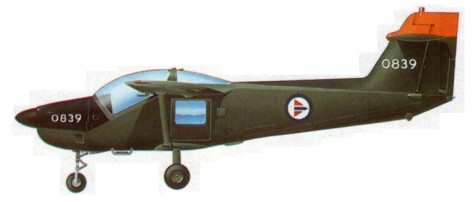
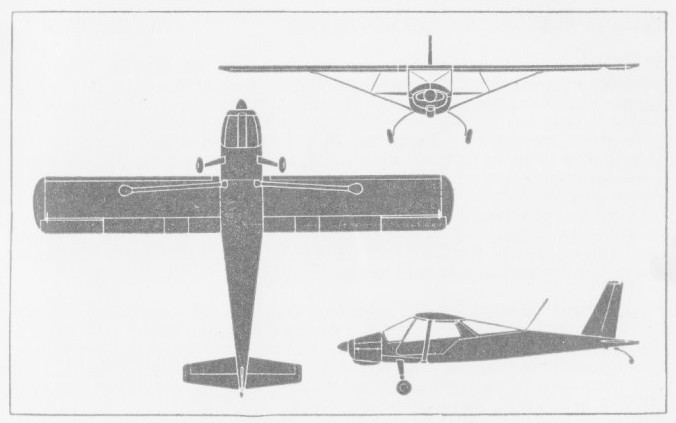
MFI had been developing an airplane for some time, for artillery spotting and liaison operations and training, and which made its maiden flight on 11 July 1969 (SE-301), promised to be ideal for both of these purposes. Designed by Bjorn Andreasson, the plane could easily be equipped either with a nose wheel (this version being known as the MFI-15A trainer) or with a tail wheel (the artillery spotting version designated MFI-15B). The Swedish Air Force decided to purchase the Beagle Bulldog while the MFI-15, later renamed Safari, test program was still in progress. The plane was converted into an efficient weapons carrier by increasing the engine power and making some structural modifications as the MFI-17.
MFI BA-12 Sländan
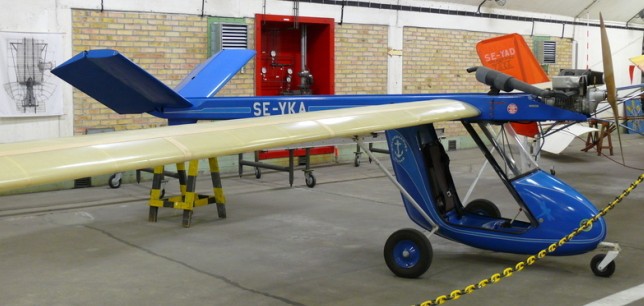
Designed and constructed by Bjorn Andreasson and Rudolf Abelin, the Malmö Flygindustri (MFI) BA-12 Sländan is a single seat ultralight of pod and high boom configuration and with a butterfly tail. Designed and built in Sweden in the 1980s, the Sländan (English: Dragonfly) was the first Swedish microlight apart from glider based types. It is built from composite materials, with a square section beam formed in two halves supporting the engine well ahead of the wing leading edge and extending aft continuously to the tail. The wings, rectangular in plan and with a high aspect ratio (10:1), are attached to the beam with dihedral of 1.5 degrees. Ailerons cover 30% of the trailing edge. The wing has two pressed spars, foam filled glass fibre ribs and Kevlar filled glass fibre sandwich skins. The butterfly tail surfaces are also rectangular and assisted by a short ventral fin with the same chord as the tailplane.
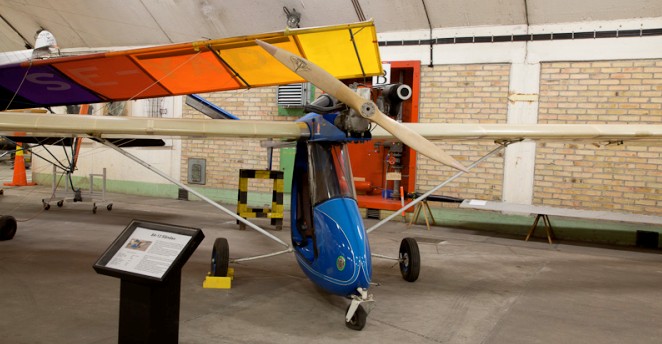
The round nosed, single seat cabin is formed from six bonded pieces and mounted on the boom with its windscreen at the wing leading edge, placing the pilot below the wing at about one quarter chord. The sides are normally open though complete enclosure is an option. On each side a forward leaning bracing strut runs from the lower rear cabin to the front wing spar. The Sländan has a short, fixed, tricycle undercarriage with a steerable nosewheel; the mainwheels, fitted with brakes, are mounted on straight steel cantilever legs from the lower fuselage. There is a protective tailskid on the tip of the underfin.
The prototype Sländan was initially powered by a (21 kW) (28 hp) König SD 570 4-cylinder two-stroke engine though there were plans to replace this with a Lotus Magnum 2.25 when this type became available. At least three examples have been fitted with Rotax engines.
The Sländan first flew in 1984 and by February 1985 MFI were assembling five more. It was agreed that later aircraft should be produced by the Royal Swedish Aero Club using MFI’s moulds and tools. It was intended to market the Sländan in both flyaway and kit form. At about the same time, in a collaboration between MFI and FFK Aerotech, Andreasson was developing a slightly larger, two seat version called the FFV Aerotech BA-14 Starling.
Three Rotax powered, Swedish registered Sländans appeared on the mid-2010 civil aircraft registers of Europe.
BA-12 Sländan
Engine: 1 × König SD 570, 21 kW (28 hp) at 4,200 rpm
Reduction: 1.7:1 toothed belt
Propeller: 3-bladed
Length: 5.20 m (17 ft 1 in)
Wingspan: 10.00 m (32 ft 10 in)
Height: 2.0 m (6 ft 7 in)
Wing area: 10.0 sq.m (108 sq ft)
Aspect ratio: 10.0
Airfoil: laminar type, 15% thickness to chord ratio
Empty weight: 135 kg (298 lb)
Max takeoff weight: 250 kg (551 lb)
Fuel capacity: 20.0 L (5.3 US gal, 4.4 Imp gal)
Maximum speed: 110 km/h (68 mph; 59 kn)
Cruising speed: 100 km/h (62 mph; 54 kn) maximum
Stall speed: 40 km/h (25 mph; 22 kn)
Never exceed speed: 118 km/h (73 mph; 64 kn)
Service ceiling: 1,220 m (4,003 ft) service
g limits: +4.4/-2.2 recommended
Rate of climb: 4.1 m/s (810 ft/min) maximum at sea level
Wing loading: 25.0 kg/m2 (5.1 lb/sq ft)
Power/mass: 8.4 W/kg (0.051 hp/lb)
Take-off distance: 50 m
Landing distance: 50 m
Crew: 1
MFI MFI-11
Malmo Forsknings & Innovations AB founded by Bjorn Andreasson, intended to put MFI-11 lightplane into production (first flown 1992) as modern version of MFI-9B, but program halted.
MFI MFI-10 Vipan

Employing formed honeycomb skins to carry virtually all structural loads in the external surface iof the airframe, the Vipan (Peewit) has no wing spar as such and features a continuous, one-piece cantilever undercarriage of glass-fibre reinforced plastic.
A four-seat cabin monoplane, the first prototype, powered by a 160 hp Lycoming O-320-B2B engine, flew on 25 February 1961.
Two further prototypes, with 180 hp Lycoming O-360 engines, were produced under a Swedish Army contract, the first flying on 27 June 1962.
MFI-10B
Engine: 180 hp Lycoming O-360-A1D
Wingspan: 35 ft 1.5 in
Length: 26 ft 1 in
Height: 6 ft 5 in
Wing area: 168.993 sq.ft
Empty weight: 1433 lb
Normal loaded weight: 2280 lb
MTOW: 2590 lb
Max speed: 142 mph at 7500 ft
ROC: 950 fpm
Range: 620 mi at 130 mph
Makhonine Mak-123
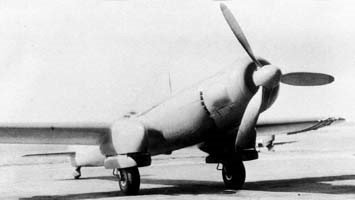
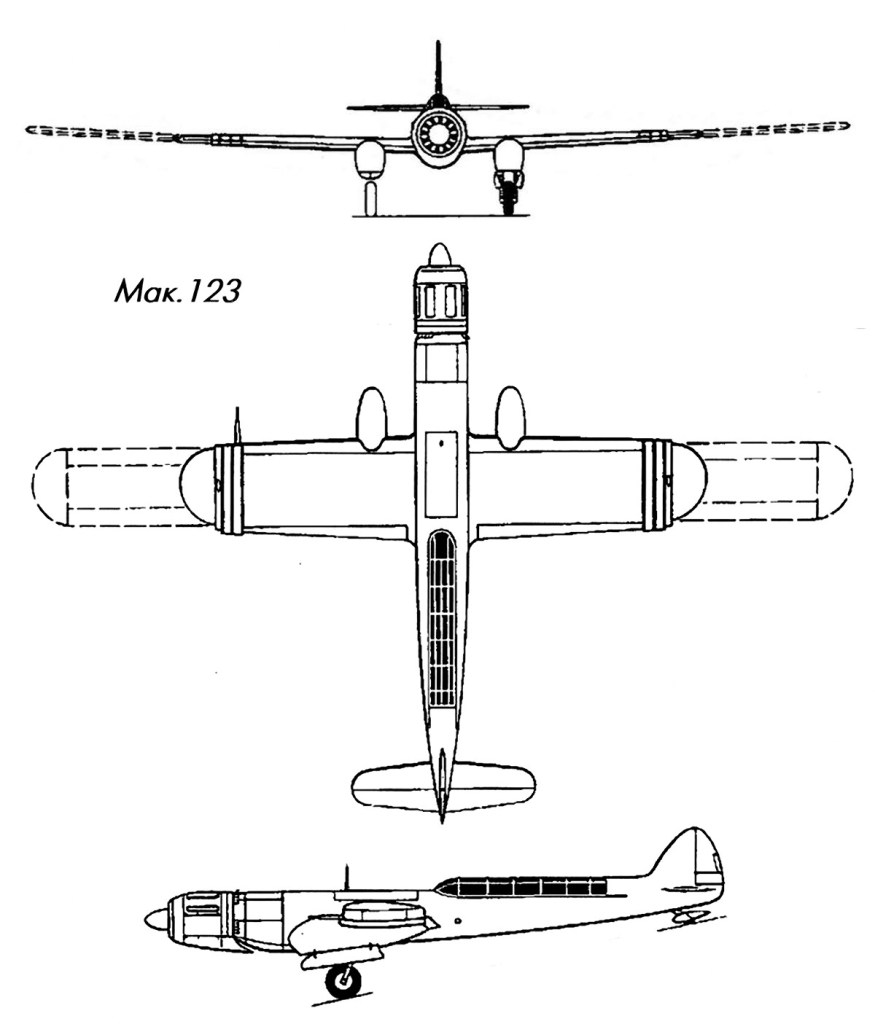
At the end of the war, Ivan Ivanovich Makhonin, with the support of the French Aviation Ministry, built in 1947 a 4-seat Mak.123 aircraft based on the same principles as his predecessors Mak.10 and Mak.101.
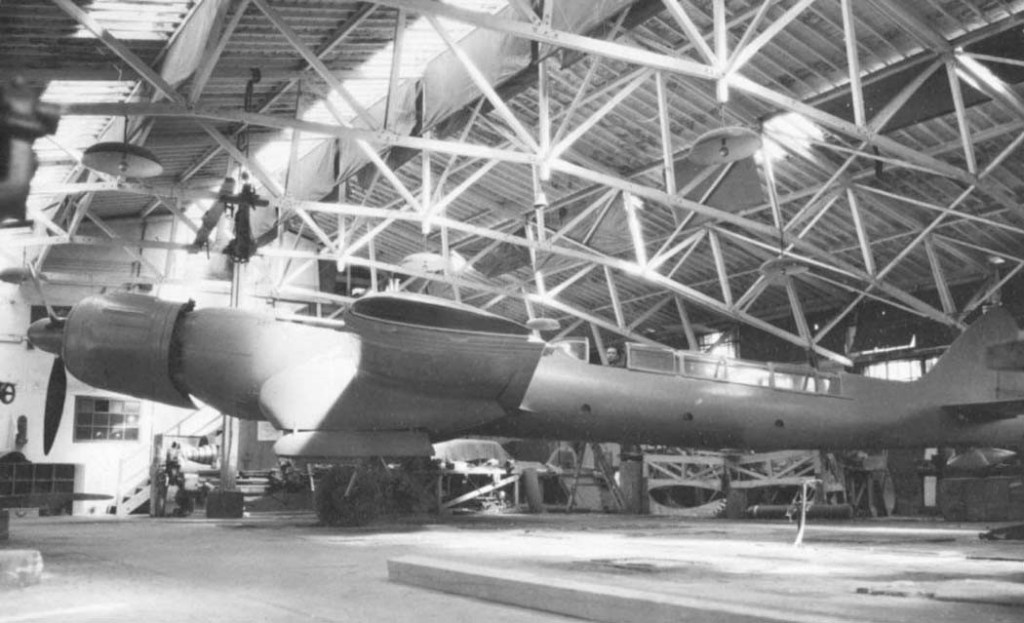
A device with a variable wing length (the wing length varied from 13 to 21 m, and the area from 20 to 36 sq.m) and a captured BMW 801 engine with a power of 1800 hp. tested in the same year.
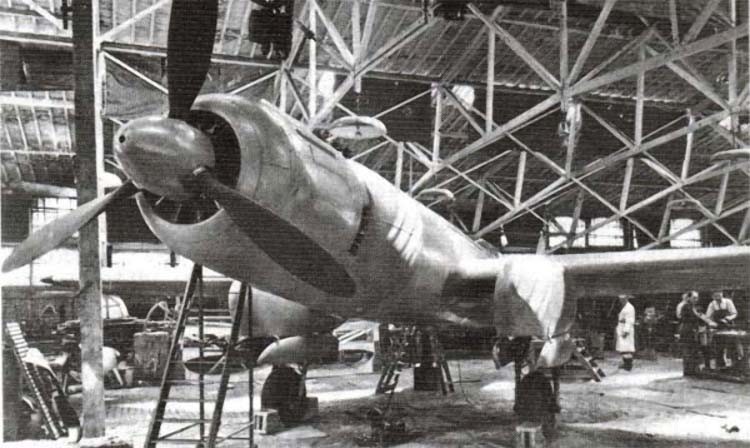
First flying in 1947, the original feature of the aircraft was the cabin with a tandem landing (one behind the other) of all four crew members.
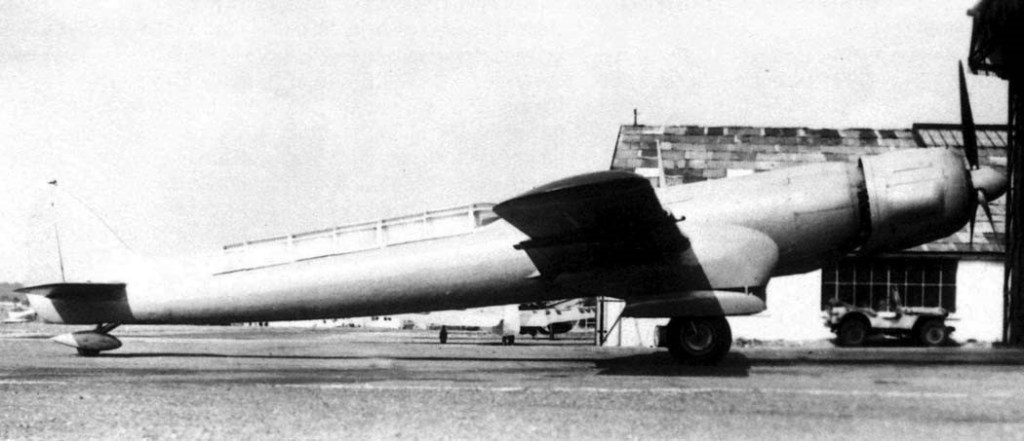
It was assumed that Mak.123 could become the base model for a promising reconnaissance aircraft, but the inventor failed to continue research and the project was terminated after it crashed and not re-built.
Engine: BMW 801, 1800 hp
Wingspan: 13.00 – 21.00 m
Wing area: 20.00 – 36.00 sq.m
Empty weight: 7000 kg
Normal take-off weight: 10,000 kg
Maximum speed: 300 km/h
Practical ceiling: 5500 m
Seats: 4
Makhonine Mak-10 / Mak-101

In the early 1930s several designers became interested in the possibility of changing the configuration of wings between take off and fast flight. Two routes were explored, the first primarily involving camber and hence lift coefficient reduction and the other a decrease of wing area by span reduction at high speed. The Makhonine Mak-10 of the second.
The Makhonine Mak-10, was a variable geometry research aircraft, built to investigate variable area / telescopic wings during 1931 in France. Details of the Mak-10 are sparse but its novel feature was a telescopic wing which increased the span for take-off by 8 m (26 ft 3 in) or 60% of its high-speed configuration. The outer panels retracted into the central ones, their inner ends supported on bearings rolling along one or more spars. The ends of the centre section were reinforced with cuffs. The wing apart, it was a conventional cantilever low wing monoplane, with twin open cockpits, the rear one sometimes faired in, and faired, fixed landing gear. It was powered by a 480 kW (644 hp), three bank, W-configuration, twelve-cylinder Lorraine 12Eb engine.

The first flight of the Mak-10 was on 11 August 1931 During four years of development the Mak-10 was re-engined with a 600 kW (800 hp) Gnome-Rhône 14K Mistral Major fourteen cylinder, two row radial engine which gave it a top speed of 380 km/h (240 mph) and the new designation Mak-101.
Mak-10
Engine: Lorraine 12Eb, 480 kW (644 hp)
Propeller: 2-blade
Wingspan: 13 m (42 ft 8 in) retracted
21 m (69 ft) extended
Wing area: 33 sq.m (230 sq ft) retracted
33 m2 (360 sq ft) extended
Gross weight: 5,000 kg (11,023 lb)
Maximum speed: 300 km/h (190 mph, 160 kn)
Crew: 2
Mak-101
Engine: Gnome-Rhône 14K Mistral Major, 600 kW (800 hp)
Propeller: 2-blade
Wingspan: 13 m (42 ft 8 in) retracted
21 m (69 ft) extended
Wing area: 21 m2 (230 sq ft) retracted
33 m2 (360 sq ft) extended
Top speed 380 km/h (240 mph)
Maire & Perrin 1909 Biplane
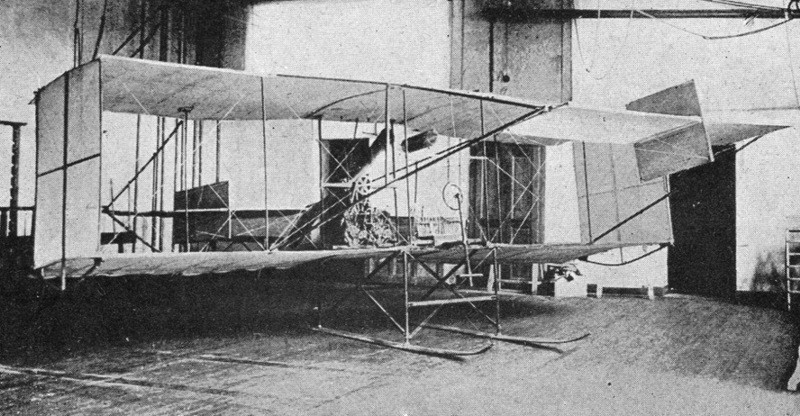
Mr. Maire and Mr. Perrin built in 1909 a biplane in Lausanne (Switzerland) powered by a 20 hp engine driving a pusher propeller. As the tests were to be performed on the snowy fields of Lausanne, skis were mounted as an undercarriage. There is no information about the flying capabilities of the machine.

