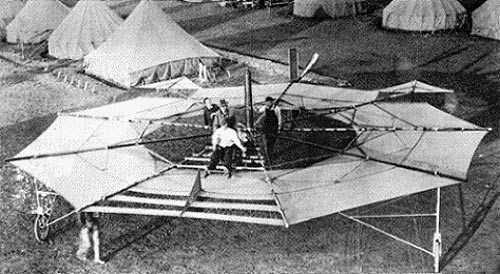
Harold F. McCormick, of the harvesting machine manufacturing business, and millionaire, John D. Rockfeller, Jr. decided, about September 1910, to support the aircraft design ideas of, a New York inventor, William S. Romme. In 1910 Romme had won a design contests first prize, for length of flight, stability and originality, with an unusual circular-shaped model monoplane. It was this model that Romme hoped to develop into a full-scale airplane and override the Wright patents on the airplane. McCormick and Rockfeller formed a corporation to exploit the Romme designs.
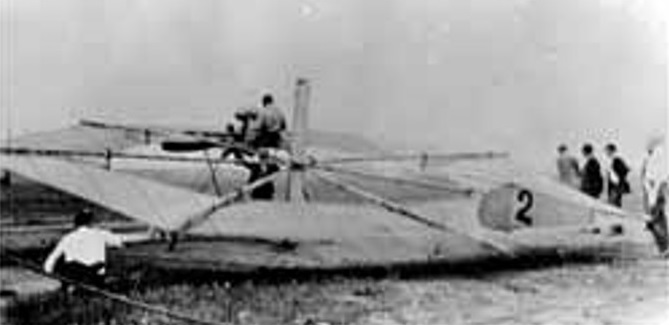
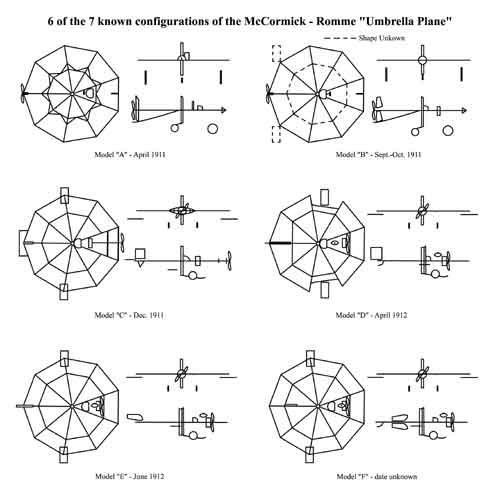
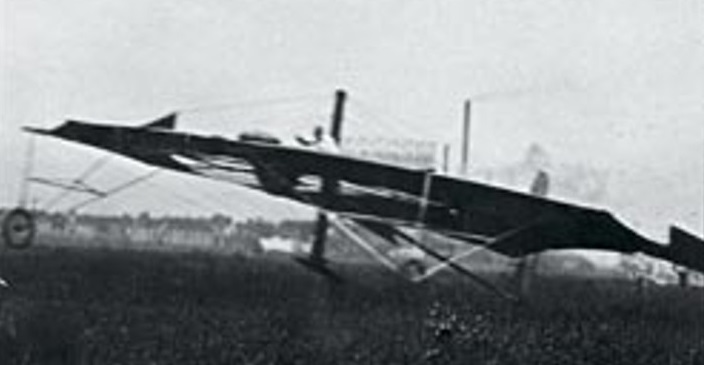
Because of shortcomings of the Wright machine, and the patents controlled by the Wright Brothers forced other designers to use radically different designs. One of these pioneer machines was the McCormick – Romme Cycloplane of 1911 with its spoked-wheel platform, stalky undercarriage, unprotected pilot at the center, and the propeller driven by long shaft from the centrally mounted engine. Like most early airplanes of these times, constant changes were made to correct problems. At least seven different configurations of the Cycloplane are known.
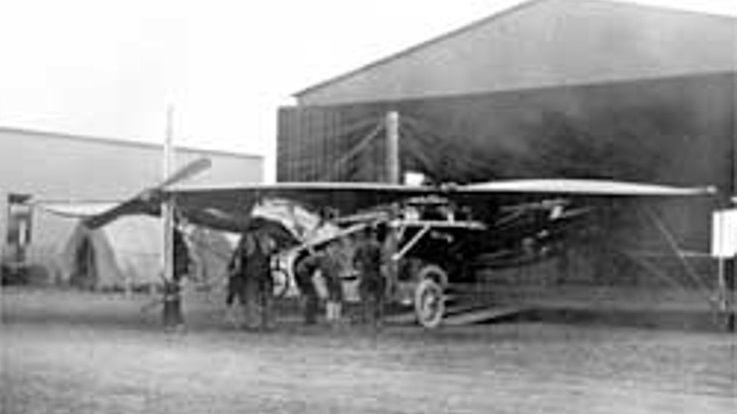
With McCormick’s financial backing work continued at Mineola, Long Island. The first monoplane was wrecked by wind in November 1910. Plans were immediately made to rebuild the plane in the south. In April 1911 a monoplane built in Belmont, New York and given some preliminary testing was now in San Antonio, Texas. While running the plane over the ground, it struck a rut, was turned over by the wind and badly damaged. Romme escaped without injury. Besides the McCormick – Romme contingent other civilians using the San Antonio flying area near Fort Sam Houston were the Max Lillie flying school from Chicago. Lillie’s mechanic and the McCormick – Romme group with the help of some soldiers, set the plane on a two-wheeled cart and returned it to its hangar. After this fiasco, little further progress seems to have been made, probably because of the wait for the Gnome engine. Meanwhile the Aero Club of Illinois completed a new 180-acre flying field at Cicero, just west of Chicago. The completion of this field and its facilities were all that was necessary for McCormick to move his experimental work to Chicago. It was here that the McCormick – Romme machine was referred to as the “Umbrella Airplane” in the Aero Magazine. While the monoplane had been reported as McCormick’s design, he recognized the need for skilled engineers and mechanics to convert his and Romme’s ideas into a practical airplane. He hired a young graduate of the Armour Institute, Sidney V. James. While he participated to some degree in all of the McCormick projects, he concentrated on the Mustard Plaster airplane concept, and specialized in propeller design and wrote extensively on the subject.
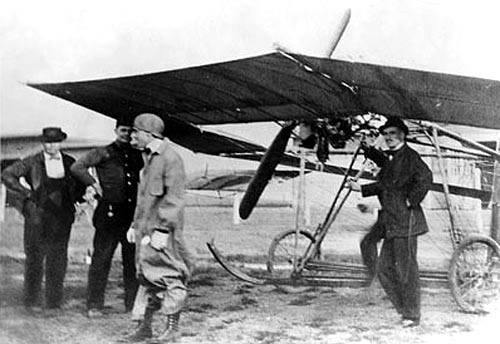
At the same time McCormick hired another engineer, fresh from the University of Pennsylvania, Chance Milton Vought. He guided the development of the Umbrella Plane through most of its entire career.
When the Cicero Flying field was officially opened on July 4, 1911, besides the McCormick monoplane (The Mustard Plaster) and the McCormick – Romme Umbrella Plane, eleven other airplanes were located here. By July 15, 1911, the two McCormick airplanes had their 50H.P. Gnome engines installed. On August 23,1911, Romme made the first successful flight in the Umbrella Plane, reaching a height of 15 feet. Between the Texas accident and the July flight the Umbrella Plane was rebuilt. While the appearance was not significantly changed the modifications were very important, control wise. Movable control surfaces were installed on each side at the rear of the circular wing, rudders with greater cord replaced the two tall narrow rudders, and the triangular center projections on the wing were removed. The pilot now sat with his back against the center post and his feet straddling the cylindrical cowling surrounding the Gnome engine.
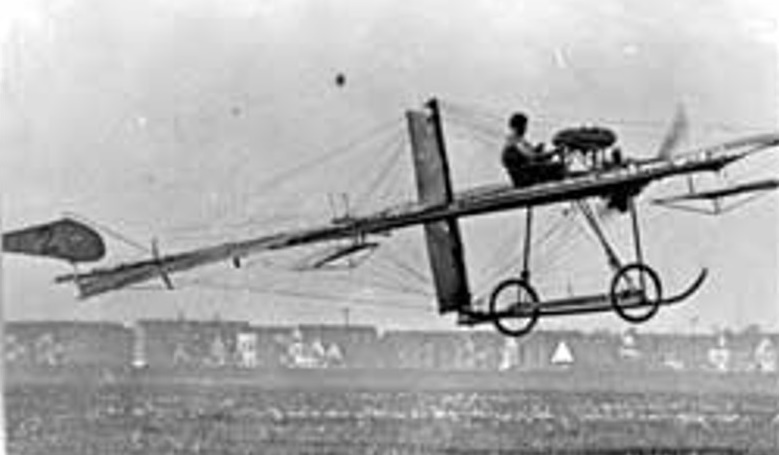
Experimentation continued until the fall of 1911, sometimes successfully. Problems continued with the Umbrella Plane. Exactly what Chance Vought’s contribution was, is hard to define but he was the principal engineering talent behind the work, with help from several skilled mechanics in McCormick’s organization.
In early 1912, the propeller was attached directly to the Gnome engine eliminating the long drive shaft, ribs were installed in some of the wing surfaces,ailerons were moved forward, the rudder was moved further aft, and the separate elevator was eliminated and replaced by warping the wing trailing edge. In April 1912, Andre Ruez, McCormick’s test pilot allowed the Gnome engine to reach full power and as the speed increased, lifted the plane off the ground in a short hop strait ahead. During the next few days Ruel climbed higher and made longer flights until he reached a height of 30 feet after scores of flights. Several minor changes were made and flights continued in 1912. The last change moved the rudder forward to a position behind the center post with an inverted duplicate on the same shaft below the plane. In March 1913, Max Lillie made several circuits of the Cicero field, in the Umbrella Plane, which attracted an immense interest of the spectators.
What eventually happened to the plane is unknown, but it was discarded in 1913. Vought, in an early 1913-newspaper interview, stated the umbrella plane was a “freak”, left the McCormick company and joined the Lillie organization.