Max Dätwyler & Co produced a modernised version of the Bucher Bu 131 Jungmann, known as the Lerche.
1 engine
MDC Max Dätwyler MDC-Trailer
Max Dätwyler & Co, based at Bleinbach-Leupenthal, produced in 1960 a glider-tug based on the Piper Super Cub, designated MDC-Trailer.
McWhirter Skyrider
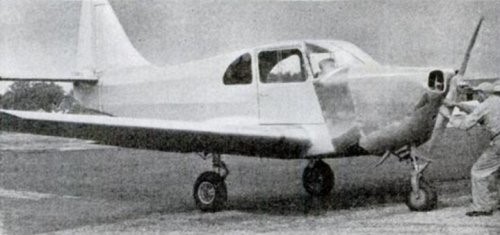
This light plane, registered NX40000, appeared around 1946 and was attributed to a McWhirter.
With wooden wings and fuselage, it was reportedly intended as flying ambulance and had a 185hp Continental E185 engine.
A picture may have appeared in the September 1946 issue of Popular Aviation.
McNair Mynah II
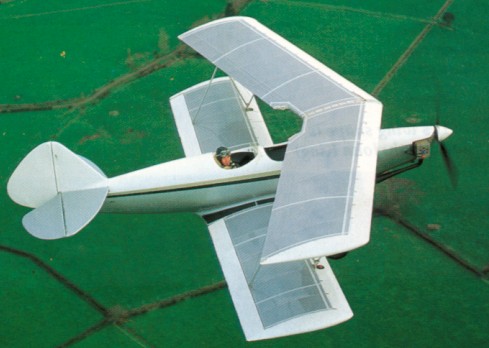
Wallace and Robert McNair started the Mynah II design in Septem¬ber 1988, intended right from the start for series production, a two seater at the top end of the microlight performance range. This aircraft had no commonality with the earlier single seat Mynah aircraft, although both were designed by Wallace and Robert McNair of Auckland, New Zealand.
The fuselage is a one piece moulded fibreglass unit, with integral verti¬cal fin and bottom wing fairings. Moulded in at construction time are wooden longerons, to which the engine mount is bolted at the firewall, and strength is added by the compound curves everywhere, the only straight surface being on the bottom be¬tween the wings. Bulkheads are located around the cockpits and form the structural unit on which the wings, struts, wires and fibreglass landing gear legs are mounted.
The wings, of Clark Y aerofoil, have folded aluminium channel extrusions for the spars, pressed aluminium ribs and Mylar covering, an aluminium leading edge, laced along the lead¬ing edge and each end, with the lacing covered by tips and leading edges, applied after covering. They have marked forward stagger, the bottom wing rear spar passing behind the rear seat and the top wings with a large amount of sweepback to keep the centre section well forward, clear of the front cockpit. Fuel tanks with a total capac¬ity of 50 litres are incorporated in the in¬board ends of the bottom wing leading edges.
Everything is designed around the 390 kg microlight category and standard 4G loading. Empty weight is 170 kg, allowing a pay¬load total of 220 kg, plenty for two occu¬pants, full fuel and a bit more. The Mynah II has a safe endurance of two and a half hours. Motive power is a two cylinder horizon¬tally opposed two stroke Arrow engine from Italy, pulling 65 hp at 6800 rpm, with the three blade carbon fibre propeller of 66 in diameter geared down at 2.77/1.
It was designed with an eye to production but this never eventuated.
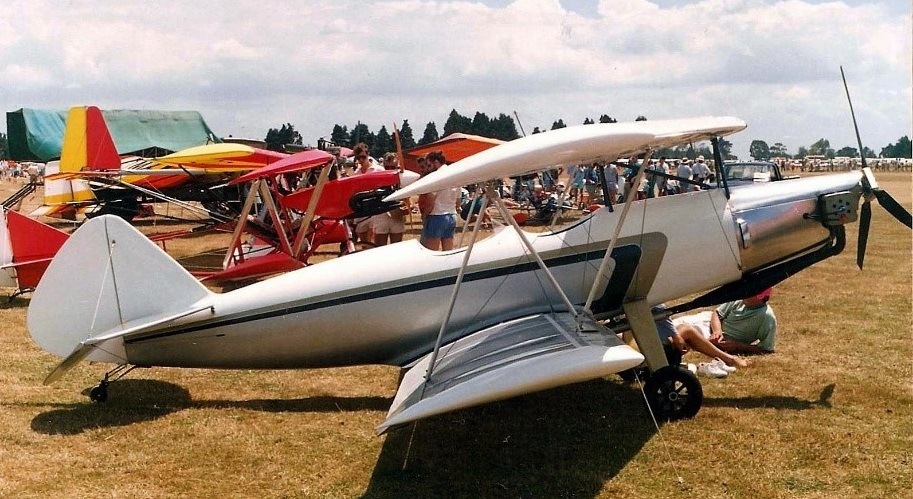
ZK-FWT (c/n 001/MAANZ/450) was built by the McNairs and also by Alan Stewart of Tuatapere, to whom the aircraft was first registered on 25/10/90. It flew well with a cruise of around 70 mph. Empty weight was around 220 Kg and MAUW was 449 Kg.
It was sold to RA Hansen of Huntly on 30/8/93. It is still registered and it is kept in a hangar at Glen Murray, although I believe it hasn’t flown for several years.
McNair Mynah
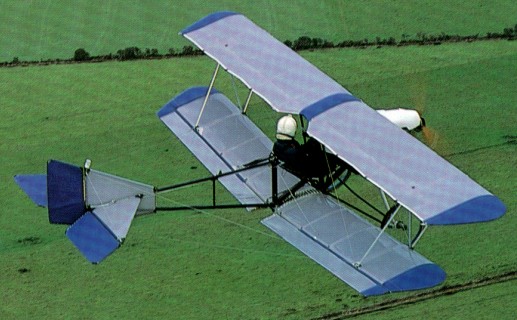
Designed and built by Wallace McNair, Auckland, NZ, and owing much to the Lincoln Sports design, the Mynah has a unique folding fuselage for transportation by trailer. The wings are therefore able to be permanently rigged while the wire bracing from the wing struts to the rear fuselage takes only a matter of minutes to rig. The engine is a two-cylinder “half-a-VW”.
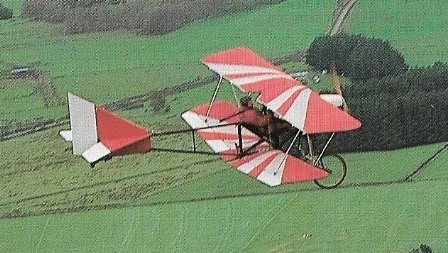
Hi I currently own the mcnair mynah pictured and one partialy built, mine has a rotax 447 engine although i have seen one with a 503 rotax. There were about 6 built and 3 in flying condition that i know of.
Michael Jones 13 December 1013
Engine: Kornatsu Zenoah, 40hp
Cruise: 50 mph
Stall: 20 mph
Engine: ½ VW
McKinnie 165
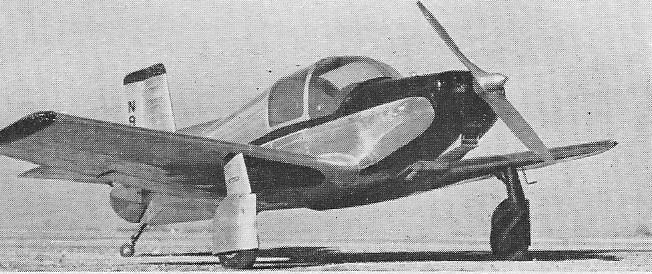
Transocean Air Lines subsidiary, Mckinnie Aircraft, developed the all-metal two-seat side-by-side McKinnie 165 with Franklin engine, first flown August 10,1952.
All structural components are of full cantilever construction and are fabricated from aluminium-clad sheet. The McKinnie 165 is fully aerobatic and dual controls are fitted.
Engine: 165 hp Franklin 6A4-165-B3
Wingspan: 23 ft 6 in
Length: 18 ft 3 in
Height: 7 ft
Empty weight: 1200 lb
Loaded weight: 1840 lb
Max speed: 175 mph at SL
Cruise: 160 mph
ROC: 1550 fpm
Range: 720 mi at 170mph at 8000 ft
Range: 1050 mi at 150mph
McHolland XPA-11
Patterned after the Piper PA-11 and J-3 series, the XPA-11 was designed by C. L. “Bud” McHolland.
Engine options include: Continental A-75, C-85 and 0-200
Registrations known: N11XP, N13XP and N14XP
McGuiness Windsong
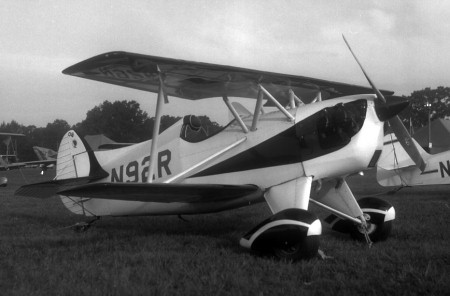
The single seat McGuiness Windsong was registered N92R circa 1961.
McGowan & Goguillot SE-5a
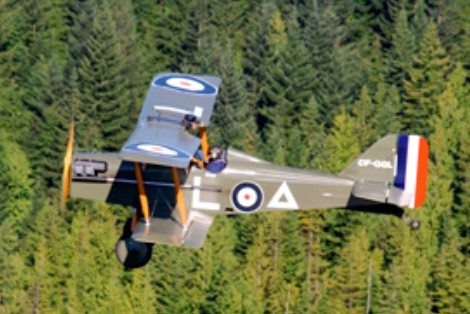
Dan McGowan and “Gogi” Goguillot of Yarrow, B.C., Canada, designed this 7/8 scale replica of the famous World War 1 British Fighter built by the Royal Aircraft Factory. While changes had to be made to accommodate a full size pilot, and an alternate engine chosen when designing the scaled down version as an amateur built sport plane, the replica does resemble the original. It is represented as a much modified, scaled down sport plane, and not a true replica of the original fighter.
Use of a modern 4 cylinder 85 hp Continental engine required a cowling to simulate the original water cooled 200 hp geared Hispano engine, but provides a practical solution for every day operation.
This airplane was built by Dan McGowan at Richmond, B.C. and was flown regularly since its construction in 1970, and was a regular participant in homebuilt flypasts at airshows. Donated to the Canadian Museum of Flight by Dr. Fred Hemming of Vancouver in 1983.
This aircraft was returned to flying condition by the Canadian Museum of Flight and since 1997 once again participated in airshows.
Serial 002, CF-QGL
Engine: Continental C-85, 85 hp
Cruise speed: 90 mph (145 km/h)
Empty weight: 790 lb (358 kg)
Loaded weight: 1,100 lb (499 kg)
Span: 22 ft 10 in (6.9 m)
Length: 14 ft 4 in (4.3 m)
Height: 7 ft 2 in (2.2 m)
McDowell 1909 monoplane
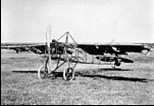
The 1909 McDowell monoplane was designed and built by McDowell, possibly in Canada.

