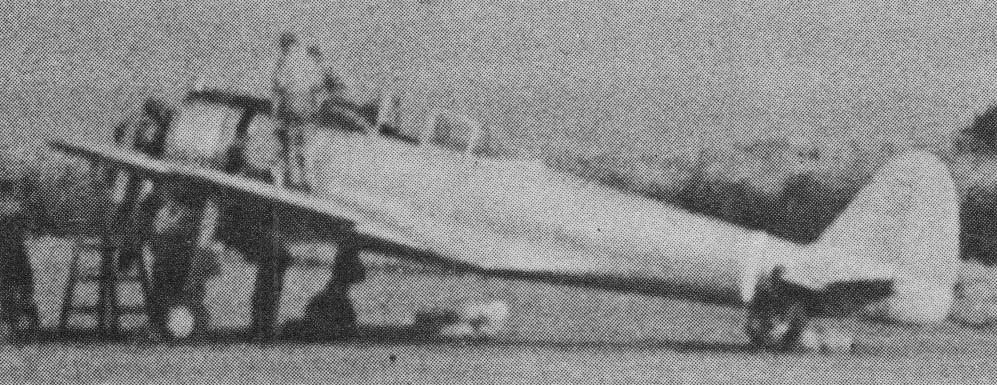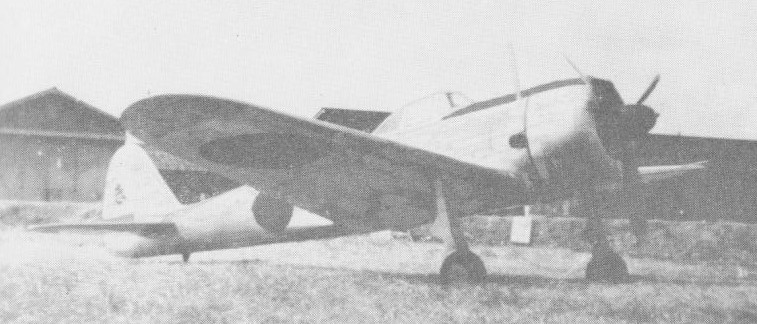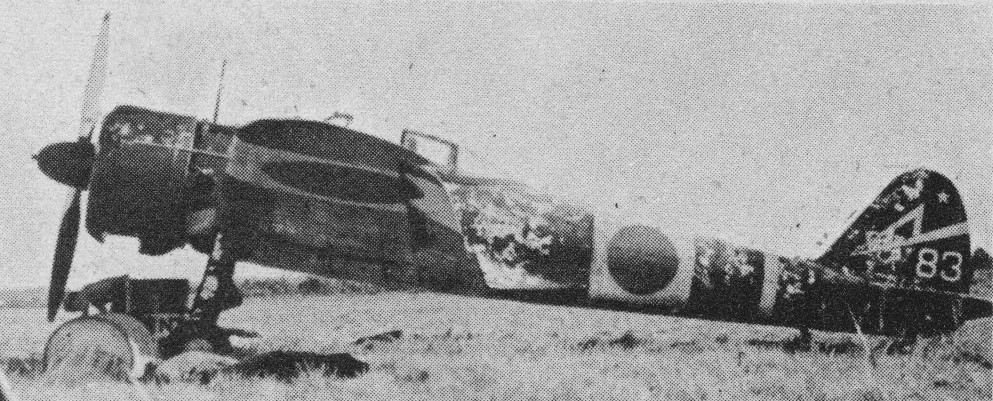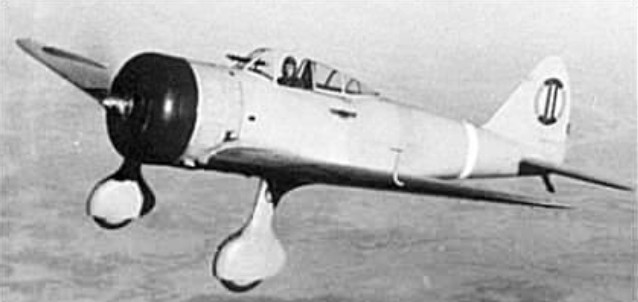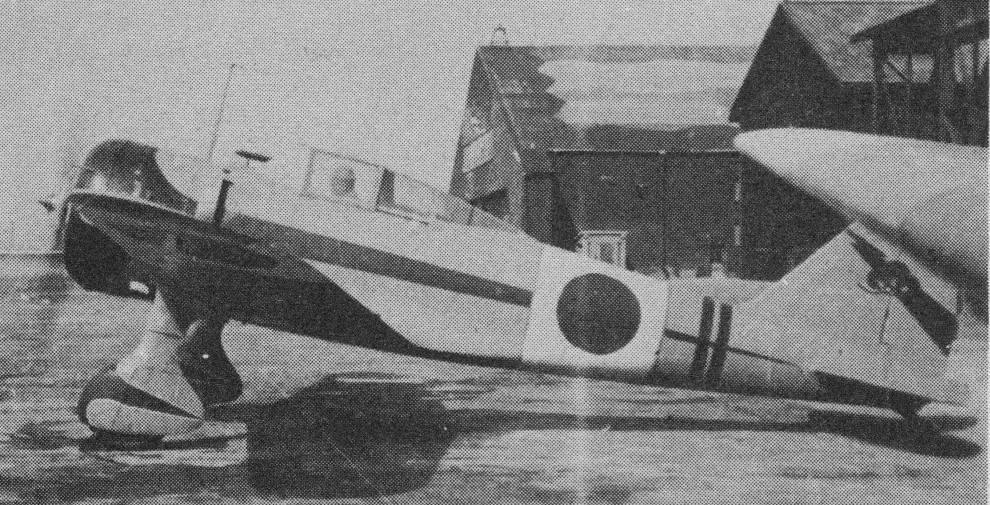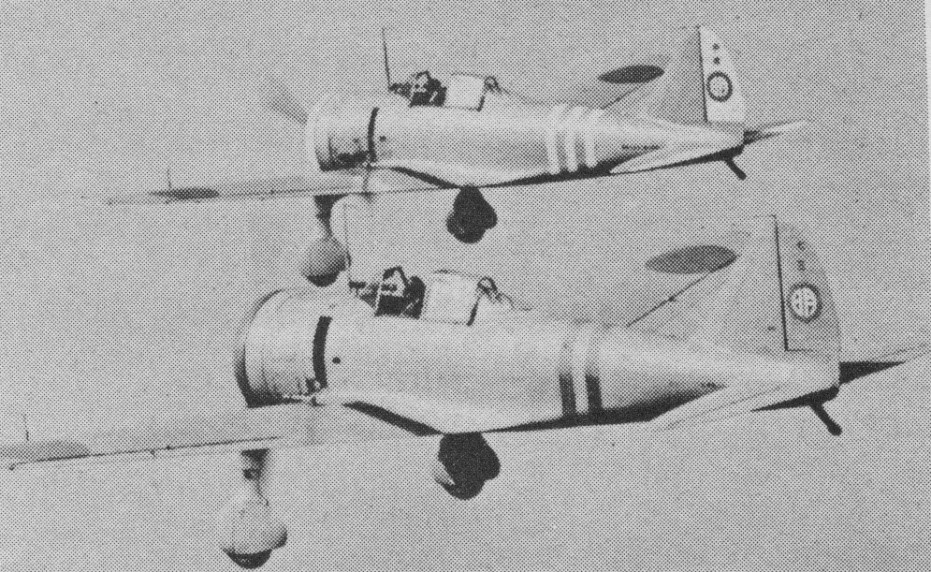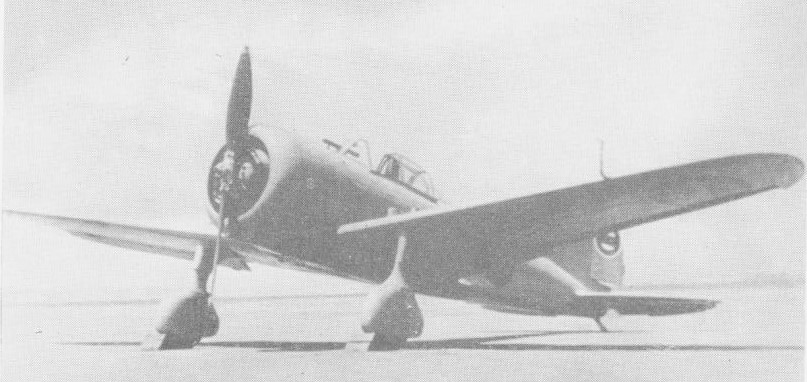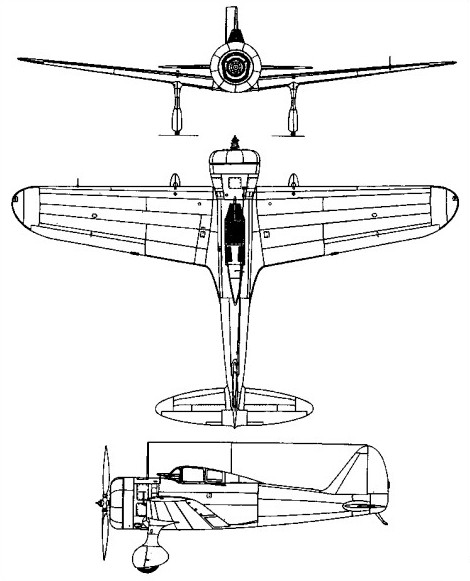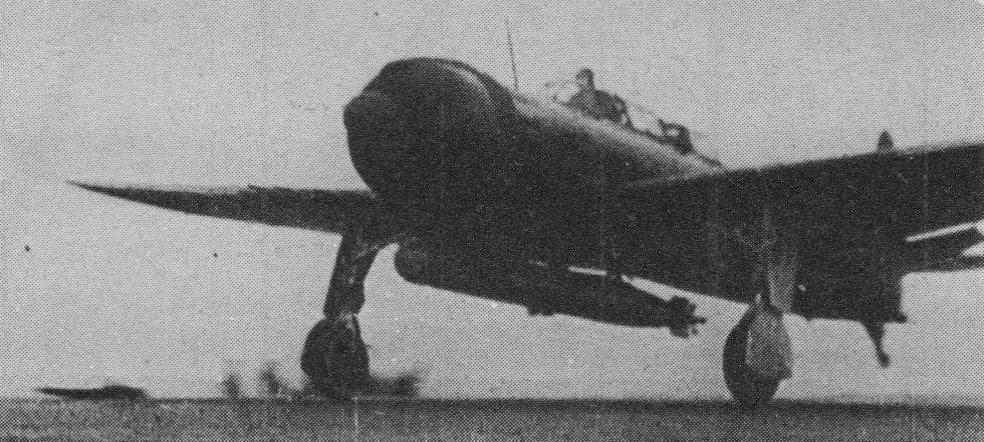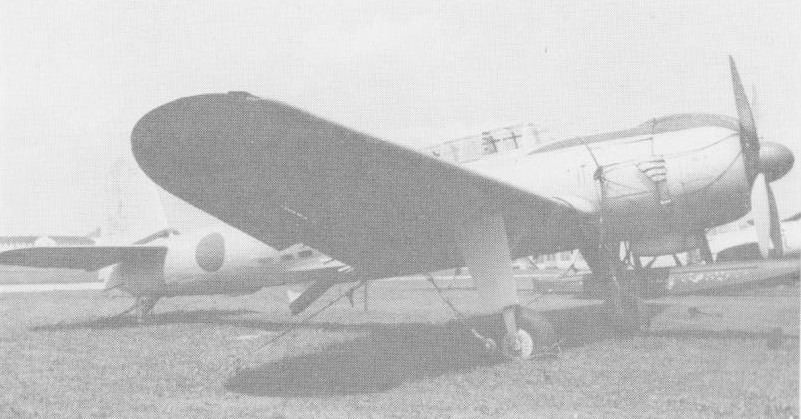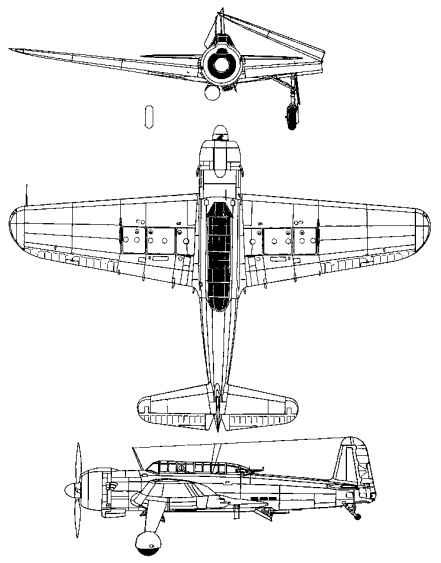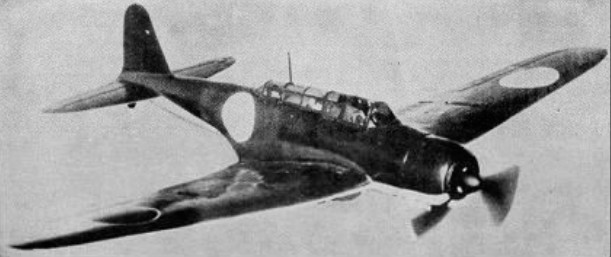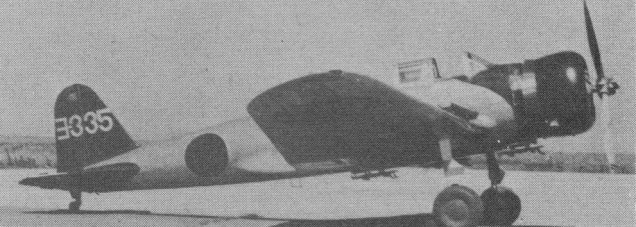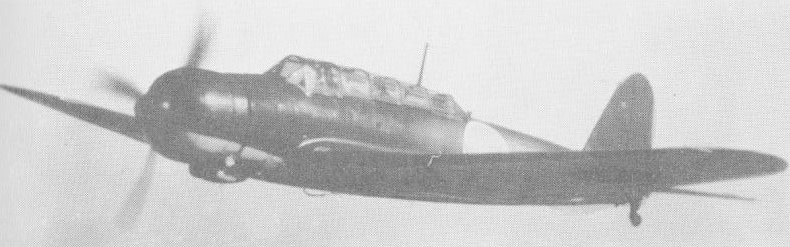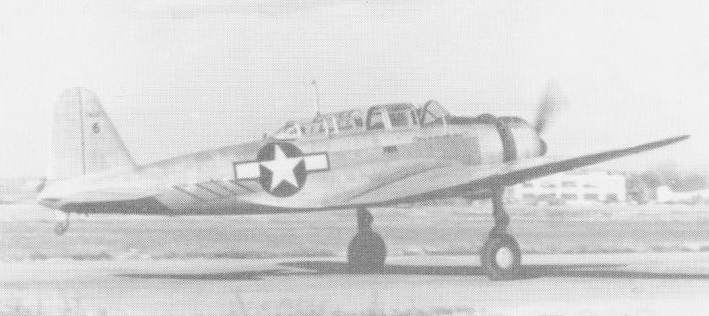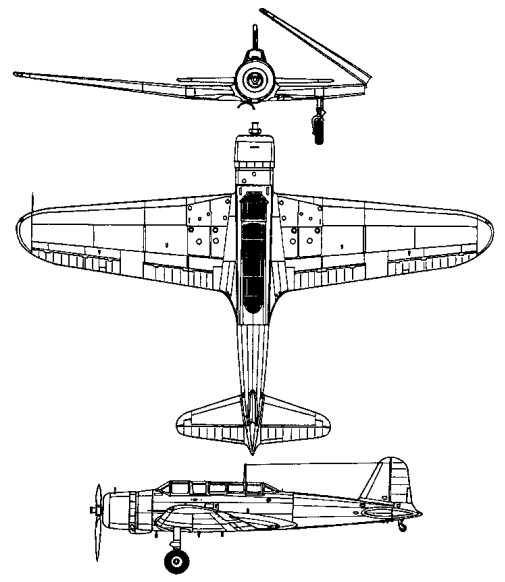
Nakajima Ki-44 Shoki

Emphasis up to 1939 had always been on manoeuvrability, but in that year a specifica¬tion was issued calling for a fighter which could reach 600 km/h (373 mph) at 4000 m (13100 ft), climbing to that height in no more than five minutes and armed with at least four machine guns. Nakujima’s design team, led by engineer Yasumi Koyama, had the first Ki 44 prototype in the air during August 1940.

Nakajima Ki-44 Shoki Article

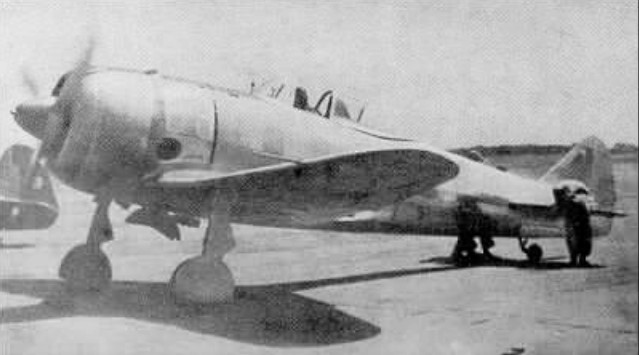
A low wing all metal cantilever monoplane, it had a deep forward fuselage tapering sharply to the tailplane, which had the fin and rudder set further back than the horizontal tail surfaces. The wing was built in three sections, with a broad centre section integral with the fuse¬lage. The undercarriage retracted inwards and the tail wheel was fully retractable. Metal stressed skin covering was employed on fuselage and wings. The combat flap intro¬duced in the Ki 43 was used on all Ki 44s built. Power was provided by a 14 cylinder two row 1250 hp Nakajima Ha 41 radial engine. Test flights were successful, although the small wing resulted in a high wing loading and a high landing speed. The Ki-44 prototypes incorporated the manoeuvring flaps that had been introduced on the Ki-43, and carried an armament of two 7.7mm and two 12.7mm machine-guns.

The first prototype was soon followed by two more, but the top speed and rate of climb were not up to specification. The super¬charger intake and cowl flaps were revised several times and every effort was made to reduce drag. Maximum speed rose to 616 km/h (383 mph) in a prototype flown without armament by chief test pilot Hayashi.

Seven service test aircraft were built and issued in September 1941 to a special operational evaluation unit, the 47th Dokuritsu Chutai (independent squadron), which flew the Ki 44 Shoki (Dragon Slayer), against the Chinese over Canton. The Ki-44 was involved in a series of comparative trials against Kawasaki’s Ki-60 prototype, based on use of the Daimler-Benz DB 601 engine, and an imported Messerschmitt Bf 109E. The Ki 44 was accepted for service in September 1942 as the Army Type 2 Single seat Fighter, which carried the same armament as the prototypes.
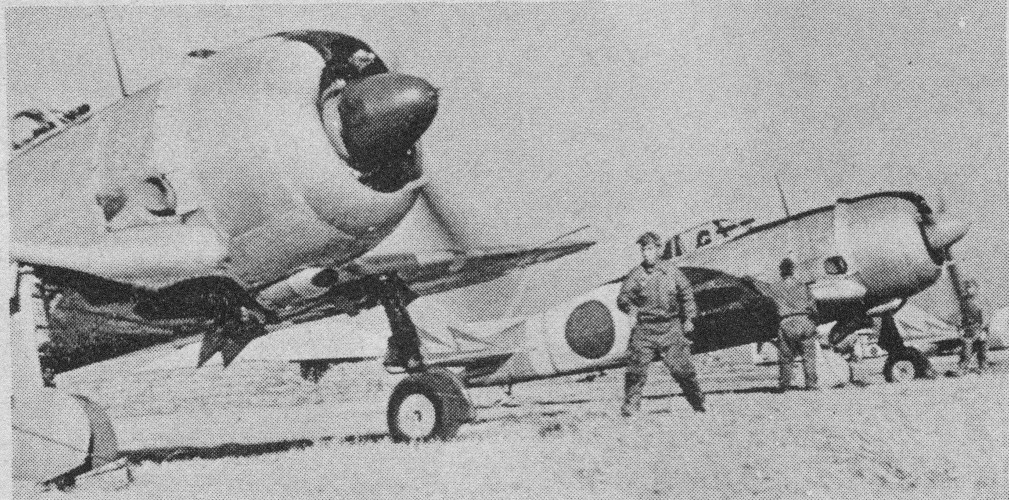
A total of 40 Ki 44 Is were built, including small numbers of the Ki-44-Ib, and the similar KI-44-Ic with some minor refinements. Closely resembling the preproduction aircraft, but with armament increased from two fuselage mounted 7.7 mm (0.303 in) Type 89 machine-guns and two wing mounted 12.7 mm (0.5 in) Ho 103 machine guns to four 12.7 mm weapons.

Pre-production and early production air¬raft were designated Model 1. Model 2 prototype and preproduction aircraft (eight in all) were built and tested during summer and autumn 1942. Powered by the 1520 hp Nakajima Ha 109 radial, they had limited pilot armour and fuel tank protection. There was provision for two drop tanks each with 125 litres (27.5 Imp gal) of fuel. Only small numbers of the Ki- 44-IIa were built, the variant being followed by the major production Ki-44-IIb.
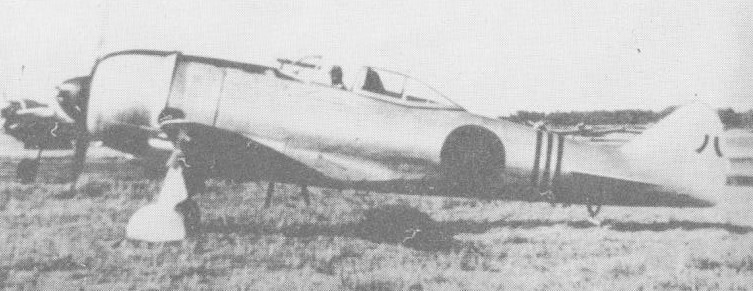
A number of the Ki 44 IIc version armed with four 20 mm (0.79 in) Ho 3 cannon in place of the 12.7 mm wing guns went into service later in the war. Only in late 1943 did Tojo (the Allied codename for the Ki 44) appear in quantity on the war fronts. Its impressive rate of dive and climb 5000 m (16 400 ft) was reached in just over four minutes made them especially suitable for target defence. The 85th and 87th Sentais for example, defended the strategically important oil refineries on Surnatra. Other Sentais were deployed in the Philip¬pines in a vain attempt to stem the US tide, or based at home where they had some success against Boeing B 29 Superfortress attacks.

The final variant, Ki 44 III had ejector ¬type thrust augmented exhaust stacks (fitted also to a few earlier machines) and was powered by a 1491kW / 2000 hp Nakajima Ha 145 18 ¬cylinder engine, an increased wing area and enlarged vertical tail surfaces. Armament was either four 20 mm Ho 5 cannon or two Ho 5s and two 37 mm (1.46 in) Ho 203s. Only evaluation aircraft were completed, and snags with the new engine caused development of the Ki 44¬-III to be abandoned.

When Japan surrendered, Ki 44s still equipped three Sentais and had established a fine reputation with pilots able to exploit their good qualities, while avoiding old style dogfights in which their inferior manoeuvra¬bility became apparent. Among a number of army air force aces who made their marks flying the Ki 44, perhaps the most outstand¬ing was Colonel Yukiyoshi Wakamatsu of the 85th Sentai. He had achieved at least 18 victories before he was shot down and killed in December 1944.

A total of 1225 aircraft, including prototypes, were built up to December 1944 when production was phased out in favour of the Ki 84.

Ki 44 I
Span: 9.45 m (31 ft)
Length: 8.75 m (28 ft 9 in)
Gross weight: 2550 kg (5622 lb)
Maxi¬mum speed: 580 km/h (360 mph).

Ki 44 II
Span: 9.45 m (31 ft)
Length: 8.78 m (28 ft 10 in)
Gross weight: 2764 kg (6093 lb)
Maxi¬mum speed: 605 km/h (376 mph).

Ki-44-IIb
Engine: 1 x Nakajima Ha-109 Type 2, 1133kW / 1520 hp
Max take-off weight: 2995 kg / 6603 lb
Empty weight: 2105 kg / 4641 lb
Wingspan: 9.45 m / 31 ft 0 in
Length: 8.8 m / 28 ft 10 in
Height: 3.25 m / 10 ft 8 in
Wing area: 15 sq.m / 161.46 sq ft
Max. speed: 605 km/h / 376 mph at 17,060 ft
Ceiling: 11200 m / 36750 ft
Range w/max.fuel: 1700 km / 1056 miles
Armament: 4 x 12.7mm machine-guns
Crew: 1
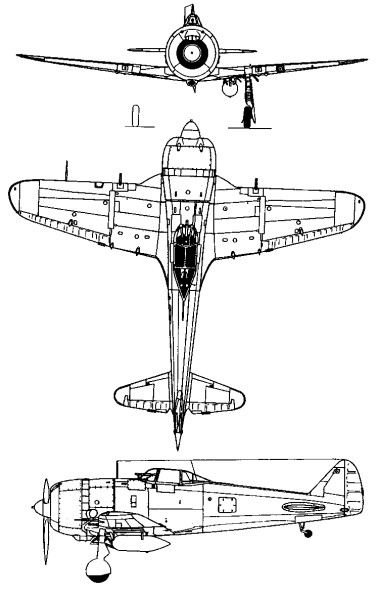
Nakajima Ki-44 Shoki / Tojo

Nakajima Ki-43 Hayabusa

Design work began on the Ki-43 in late 1937 with the Army instructing Nakajima to supersede the Type 97 Fighter Ki-27. The specifications were precise and within one year the first prototype was complete. Departing from the previous practice of selecting a suitable design by calling for competitive projects from two or more air¬craft firms, the specification was issued only to Nakajima, and required a fighter capable of reaching a maximum 500 km/h (311 mph), climbing to 5000 m (16 400 It) in five minutes, and having a range of at least 800 km (500 miles). At the same time the Ki 43 was to match Ki 27 in manoeuvrability. Two further 925 hp Nakajima Ha 25 radial engined prototypes were completed and test flown in 1939 and were ready for service trials. To meet the performance requirements further changes were still required to reduce the overall weight and improve maneuverability. The unique combat flaps were designed and handling of the aircraft was well reported on. To reduce the weight the retractable undercarriage was made from ground aluminum and the frame material changed to Alclad 24, a lighter alloy. It possessed neither armour nor self-sealing fuel tanks.

Nakajima Ki-43 Hayabusa Article

They met the army’s speed and climb requirements, but were heavy on the controls and in no way compared with the Ki 27 in manoeuvrability. Ten service test aircraft were accordingly built with various modifications incorporated in each. The development programme was successful and led to the first Ki 43 I production order. The fuselage had been redesigned with a reduced diameter, and changes were made to the tailplane and wings. Specially designed butterfly type combat flaps, tested on the service test machines, gave exceptional manoeuvrability, making the Ki 43 a formidable dogfight opponent a worthy successor to the Ki 27 with an exceptional rate of turn. Two service trials aircraft had been tested with the 1100 hp Ha105 radial, but initial production aircraft retained the Ha 25. Named Hayabusa (Peregrine Falcon) the Ki 43 went into service as the Army Type 1 Fighter. Some were produced as the Ki 43a with twin 7.7 mrn (0.303in) Type 89 machine guns. Others, which were designated Ki 43 Ib, had a 12.7 mm (0.54in) Ho 103 gun in place of one of the 7.7mm weapons.

Ki.43-I

Very little paint was applied to keep weight at a minimum and later on this was to see a large variety of colour schemes, as most Ki-43’s were sent to combat in bare aluminium, the individual units producing their own schemes of camouflage. Basic factory paint included internal corrosion protection, Hinomaru on the wings – after 1942 it became standard also on the fuselage – and the antiglare forward of the canopy. Most propellers were left bare or in dark brown prime. Individual units often colour coded the spinner and propeller to their unit colours.
In Spring 1940 the two bladed wooden propeller was replaced with a metal two bladed propeller, similar to a Hamilton Standard.

Production commenced in 1941 at Nakajimas Ota plant and the Ki-43-Ia reached fighter units some six months later. The first Sentais re equipped with Ki 43s, from August 1941, were the 59th and 64th. From the first day of the Pacific war against Britain and the United States, they were in action over Malaya and Burma, in support of invading Japanese land forces, and were codenamed Oscar by the Allies. Like its navy counterpart, the Mitsubishi A6M Zero, the Ki 43 acquired a reputation of supremacy in the first months of combat.

Some 40 army Ki 43 pilots claimed each to have destroyed at least ten enemy aircraft, and even discounting a proportion of these figures, this was a formidable score. In one encounter on December 22, 1941, aircraft of the 2nd Chutai, 64th Sentai, destroyed five Australian Brewster Buffaloes for the loss of one of their own number. Allied fighters caught in dogfights with experienced Japanese pilots had little chance. Early on, the Ki 43 Ic went into production, with two 12.7mm Ho 103 machine guns, but production of the Ic was terminated after 716 aircraft had appeared.

Five prototypes of the Ki 43 II (codenamed ‘Oscar’ by the Allies) flew in early 1942, and production began in November 1942 at Nakajima’s Ota factory. The weak wing structure of early aircraft had caused a number of crashes, and the new version had a strengthened wing of slightly reduced span. The new 858kW / 1150 hp Nakajima Ha 115 engine was installed, enclosed in a longer chord cowling incorporating the supercharger air intake, which increased the top speed to 530km/h. The armament of the Ki 43 1c was retained. The Ki 43 I was vul¬nerable once it was in an enemy’s sights, and to provide some protection the Ki 43 II had fuel tanks enclosed in rubber while 13 mm (0.51 in) armour protected the pilot’s head and back. The reinforced wings had racks for two 250 kg (550 1b) bombs or 200 litre (44¬Imp gal) drop tanks. Maximum speed was greatly improved without detriment to the aircraft’s flying qualities. Range with maxi¬mum internal fuel rose from 1200 km (750 miles) to 1620 km (1000 miles) in the Ki 43 II. With drop tanks, range rose to a remarkable 3000 km (1860 miles) at 400 km/h (248 mph) cruise speed. Further modifications in the Ki-¬43 IIb model were only minor. Three Ki 43 II Kai prototypes had ejector type engine exhaust stubs in place of the conventional collector ring of Ki 43 II. Deliveries to opera¬tional Sentais began in mid 1943.

The armament consisted of 2 x 7.7 mm Type 80 machine guns initially, later to be improved to 1 x 7.7mm and 1 x 12.7mm, each with 250 rounds. The Type 2 Ki-43 saw the armament with 2 x 12.7mm and the Type 3 with 2 x 20mm Ho-5 cannons replac¬ing the 12.7mm. Racks for two bombs of 250 kg each were found on the wings, however this fighter’s main disadvantage throughout combat was to be the inadequate armament.

The Ki-43-IIb entered mass production in November 1942, first with Nakajima and six months later with Tachikawa.

The 14 cylinder double row radial engine, with a round shaped oil cooler, was one of the superior engines created by Nakajima, namely Ha-25 Type 99 rated at 980 h.p and the later improved Ha-115 power plant with a two speed super¬charger and driving a three bladed propeller. The later Ha¬il 5 air intake was moved from under the cowling to its upper lip.

Final variant was the Ki-43-III with 917kW engine and a top speed of 576km/h, but relatively few examples reached operational units. Ten Ki 43 III prototypes were followed by production Ki 43 IIIa machines from Tachikawa, who had already joined the pro¬duction programme of Ki 43 IIs, allowing Nakajima to switch entirely to production of the Ki 84 Hayate. The Ki 43 III differed mainly in its 1230 hp Ha 115 II engine. The armament was still two 12.7 mm guns.

The final version was the Tachikawa-developed Ki.43-IIIb, the first and only version to include 20mm cannon in its armament, but only two of these had been completed by VJ day.

A captured Ki 43 II had been thoroughly tested and examined in Australia, and Allied pilots were given much valuable guidance on the aircraft’s weak points. This helped to alter the balance in favour of Allied aircraft. Early on, the 50th Sentai, flying over Burma, produced outstanding Ki 43 pilots, notably Sergeant Satoshi Anabuki who scored 50 kills in 18 months, and pilots Isamu Sasaki and Yukio Shimokawa who claimed 32 and 15 victories respectively. But as the war moved against Japan, Ki 43 losses began to soar as they were confronted by improved Allied fighters and better trained pilots. Tachikawa continued to produce the Ki 43 until the end of the war. Production of all versions from all manufacturers totalled 5919. Many Ki 43s remained in first line service until August 1945. Some Sentais operated them as fighter-¬bombers, while a number were expended in kamikaze attacks.

Second only in numbers to the Navy Zero, a total of 5,919 Ki-43s including 33 prototypes and trials aircraft, code named Oscar, were manufactured between 1938 and 1945. Tachikawa built 2529.

Ki 43 prototype
Engine: 925 hp Nakajima Ha 25

Ki 43 service trials
Engine: 1100 hp Ha¬105 radial

Ki 43 I / Army Type 1
Engine: 925 hp Nakajima Ha 25

Ki 43a
Engine: 925 hp Nakajima Ha 25
Armament: twin 7.7 mrn (0.303¬in) Type 89 machine guns. each with 250 rounds
Range internal fuel: 1200 km (750 miles)

Ki-43-1
Engine: Nakajima Ha-25, 990 hp.
Max speed: 495 km/h at 4,000m
Cruise: 320 km/h at 2,500m
Max range: 745 miles
Armament: 2 x 12.7mm mg

Ki 43 Ib
Engine: Nakajima Ha-25, 990 hp.
Range internal fuel: 1200 km (750 miles)
Armament: 1 x 7.7 mrn (0.303¬in) Type 89 machine gun, 1 x 12.7 mm (0.54in) Ho 103 gun

Ki 43 Ic
Engine: Nakajima Ha-25, 990 hp.
Span: 11.44 m (37 ft 6 in)
Length: 8.83 m (29 ft)
Gross weight: 2048 kg (4515 lb)
Maximum speed: 492 km/h (306 mph)
Range internal fuel: 1200 km (750 miles)
Armament: two 12.7¬mm Ho 103 machine guns

Ki 43 II
Engine: 858kW / 1150 hp Nakajima Ha 115
Top speed: 530km/h
Range internal fuel: 1200 km (750 miles)
Armament two 12.7¬mm Ho 103 machine guns

Ki 43 II
Engine: 858kW / 1150 hp Nakajima Ha 115
External load: two 250 kg (550 1b) bombs or 200 litre (44¬Imp gal) drop tanks
Range internal fuel: 1620 km (1000 miles)
Range w/drop tanks: 3000 km (1860 miles) at 400 km/h (248 mph)

Ki 43 IIb
Engine: 1 x Nakajima Ha-115, 858kW / 1130 hp
Span: 10.84 m (35 ft 7 in)
Length: 8.92 m (29 ft 3 in)
Height: 3.27 m / 10 ft 9 in
Wing area: 21.4 sq.m / 230.35 sq ft
Max take-off weight: 2590 kg / 5710 lb
Empty weight: 1910 kg / 4211 lb
Ceiling: 11200 m / 36750 ft
Range w/max.fuel: 3200 km / 1988 miles
Maximum speed: 530 km/h (329 mph) at 19,680 ft
Crew: 1
Armament: 2 x 12.7mm machine-guns, 2 x 250-kg bombs

Ki 43 II Kai

Ki-43-IIb

Ki-43-III
Engine 917kW / 1230 hp Sakae Ha 115 II
External: two 250 kg bombs
Top speed: 576km/h
Armament: 2 x 20mm Ho-5 cannons

Ki 43 IIIa
Engine 917kW / 1230 hp Sakae Ha 115 II
Armament: two 12.7 mm guns.
Max speed: 358 mph.

Nakajima Ki-43 Hayabusa / Oscar

Nakajima PA / Ki-11 / PE / Ki-27 / Type 97

Nakajima’s chief designer Yasumi Koyama had evolved an advanced single seat fighter from the company’s unsuccessful PA or Ki-11 low-wing monoplane prototype during 1934. While this private -venture low wing cantilever monoplane was still under development, Japanese army air headquarters issued a requirement to three major aircraft manufacturers, including Nakajima, for a similar aircraft in mid-1935. Nakajima responded with a single-seat monoplane fighter derived from the company’s Type P.E., which it had started to develop as a private venture.

The Ki 11 first flew in July 1936; the first prototype Ki 27, built to the official requirement, flew three months later. They differed only in detail, both being powered by a 650hp Nakajima Ha la radial engine and having a fixed, spatted cantilever single strut undercarriage. The Ki 27 had a redesigned and fully enclosed pilot’s cockpit canopy, and there were changes in the engine cowling, wheel spats and fin and rudder. A second Ki 27 prototype flew in December 1936, followed by ten pre-production aircraft. Different wing forms were tested and the Ki 27s were flown against rival prototypes Kawasaki’s Ki 28 and Mitsubishi’s Ki 33 developed from the navy A5M carrier fighter. Although achieving a maximum speed of’467 km/h (290 mph) at 4000 m (13 120 ft), it was still 15 km/h (10 mph) slower than the Ki 28 and took 28 seconds longer than its rival to reach 5000 m (16400 ft). The Ki 27 was nevertheless preferred to the Kawasaki fighter because of its outstanding manoeuvrability, due in part to the remarkable lightness of the structure and to the special aerofoil section developed by Koyama’s team.

Pre-production Ki 27s had a wing with span increased to 11.31 m (37 ft 1 in) which became standard on Ki 27a production aircraft. These appeared from December 1937 onwards, designated as the Army Type 97 Fighter. The standard engine was the Ha 1b developing 780 hp at 2900 m (9510 ft).

Nakajima Ki-27 Article

The original allied name assigned to the Ki.27 met in China by the CBI, “Abdul” was also called “Nate” by Col. MacCoy. The name Abdul was still caried in Naval recognition manual as late as February 1943. It was finally dropped in favour of the officially adopted “Nate”.

From spring 1938 Ki 27a fighters flew in northern China, and before the end of 1938 six Sentais (groups) newly established by the army were fully equipped with the Ki 27a. The Ki 27a model was, however, soon phased out of production in favour of Ki 27b, which had a wholly glazed pilot’s canopy and provision for two 130 litre (29 Imp gal) slipper type underwing drop tanks or four 25 kg (55 1b) bombs.

Ki.27a

Ki 27s were again in action in May 1939 when fighting broke out between Japanese and Soviet troops at Nomonhan along the border with Outer Mongolia. About 200 were ultimately engaged in full scale air battles with Soviet Polikarpov I 15bis biplanes and I 16 monoplanes. The Japanese acquitted themselves well in a most bloody conflict, and claimed many victories. The highest score of 58 enemy aircraft destroyed was claimed by Sergeant Shinobara of the 11th Sentai.

The poor state of the Allied air forces in the Far East in 1941 42 allowed Nakajima’s nimble fighter, despite its poor armament of twin synchronized 7.7 mm (0.303 in) Type 89 machine guns, to control the air over Burma, the Philippines and the Dutch East Indies. British, American, Australian and Dutch pilots all acquired a healthy respect for ‘Nate’, as the type was codenamed by the Allies, and they were careful to avoid getting entangled with it in an old style close dogfight. The Ki 27 achieved the distinction of shooting down the first Allied aircraft of the Pacific war, when an aircraft of the 1st Sentai destroyed a Consolidated Catalina flying boat of No 205 Squadron RAF while covering Japanese landings on the Malayan coast.

With the advent of newer types, Ki 27s were relegated to advanced training or home defence. In the latter role they were at a stroke rendered impotent when the Boeing B 29 Superfortress came on the scene, and as the war drew to a close, Ki 27s were adapted as suicide attackers, a number of their pilots sacrificing themselves while endeavouring to crash into enemy ships or land positions carrying a 500 kg (1100 lb) bombload.

Mansyu Kikoki Seizo K K (Manchurian Aeroplane Manufacturing Company), based in the Japanese puppet state, built 1379 Ki-27s at its Harbin factory as against 2020 built by Nakajima up to December 1942, when all production by the parent firm ceased. Production included two Ki 27 Kai prototypes, even lighter than the standard machine, which reached a maximum of 475 km/h (295 mph) during tests in summer 1940.

In 1942 Mansyu redesigned the Ki 27 as an advanced trainer which went into production the same year as the Army Type 2 Advanced trainer.

Ki-27a
Engine: 1 x Nakajima Ha-1b, 529kW
Max take-off weight: 1790 kg / 3946 lb
Empty weight: 1110 kg / 2447 lb
Wingspan: 11.31 m / 37 ft 1 in
Length: 7.53 m / 24 ft 8 in
Height: 3.25 m / 10 ft 8 in
Wing area: 18.55 sq.m / 199.67 sq ft
Max. speed: 470 km/h / 292 mph
Ceiling: 12250 m / 40200 ft
Range w/max.fuel: 625 km / 388 miles
Armament: 2 x 7.7mm machine-guns
Crew: 1
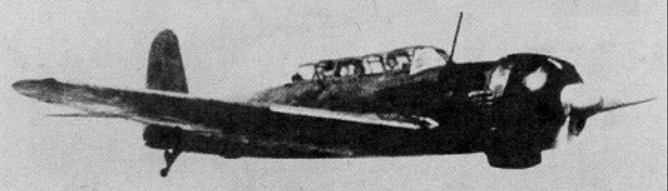
Ki-27b
Engine: Hitachi Ha-1b, 750 hp
Wing span: 11.31 m / 37 ft 1 in
Wing area: 18.56 m2
Length: 7.53 m / 24 ft 8 in
Height: 3.28 m / 9 ft 2 in
Empty weight: 1110 kg / 2447 lb
Loaded weight: 1547 kg / 3946 lb
Max speed: 470 km/h at 3500 m
Max speed: 286 mph at 16,400 ft
Time to 5000m: 5m 22s
Service ceiling: 12,250 m
Service Range: 627 km
Max range: 1100 km
Armament: 2 x 7,7-mm Type 89 machine guns
Crew: 1
Bombload: 220 lb

Nakajima Ki-27 NATE

Nakajima Ki-8

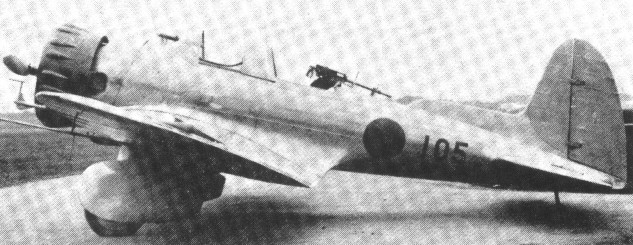
Although the Imperial Navy had discarded the two-seat fighter requirement that had resulted in the NAF-1 and -2, western developments in this category of aircraft stimulated some interest on the part of the Army to which, in 1933, Nakajima offered an advanced company-funded two-seat fighter project. Designed by Shigejiro Owada and Toshio Matsuda, and assigned the designation Ki-8 by the Army, the aircraft was an all-metal low-wing cantilever monoplane with a monocoque fuselage and spatted cantilever fixed under-carriage. Powered by a Nakajima Kotobuki 3 engine rated at 710 hp for take-off and carrying an armament of two fixed forward-firing 7,7-mm guns and one 7,7-mm gun on a flexible mount, the Ki-8 was conceptually advanced and five proto¬types were built between March 1934 and May 1935. Army evaluation revealed stability and other problems, and al¬though these were subsequently rectified, doubts concerning the practicability of the two-seat fighter concept led to the discontinuation of further development.

Nakajima YM / A4N / Type 95

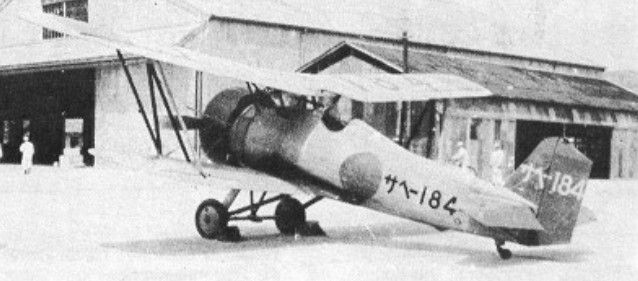
The 1930s Nakajima set to work to build a conventional single-seat biplane fighter. The resulting YM prototype being an unequal-span biplane of mixed construction and clearly owing much to the obsolescent A2N. Nevertheless, it was considered essential by the Navy until more modern types could be perfected and Nakajima was authorised to proceed with development of the biplane concept.

The resulting Navy Type 95 Carrier Fighter (Nakajima A4N1) had a divided landing gear designed to cope with carrier landings, a tailwheel instead of a tail-skid, and other minor changes. The increase in speed being due entirely to the more powerful Hikari engine.

Production totalled 221 between 1935 and 1937.

A4N1
Engine: 1 x Nakajima “Hikari”, 544kW
Wingspan: 10 m / 32 ft 10 in
Length: 6.64 m / 21 ft 9 in
Height: 3.07 m / 10 ft 1 in
Wing area: 22.89 sq.m / 246.39 sq ft
Max take-off weight: 1760 kg / 3880 lb
Loaded weight: 1276 kg / 2813 lb
Max. speed: 350 km/h / 217 mph
Ceiling: 7740 m / 25400 ft
Range: 845 km / 525 miles
Armament: 2 x 7.7 mm machine-guns, 120kg of bombs
Crew: 1

Nakajima Ki-4

Extensively test-flown in 1934, the Nakajima Ki-4 sesquiplane had divided landing gear with streamlined wheel spats, and accommodated pilot and observer in tandem open cockpits, the pilot just below a cut-out in the trailing edge of the upper wing. With twin forward firing 7.7¬mm (0.303 in) Type 89 machine guns in front of the pilot and single or twin guns on a ring mounting in the rear cockpit. With fewer guns, it could carry a 50 kg (110 lb) bombload and be used for ground attack or dive-bombing. The powerplant was a single 600 hp Nakajinia Ha 8 Hikari radial engine, fitted with an exhaust collector ring and driving a two blade propeller. Landing gear was nor¬mally of the twin mainwheel type, with a tail skid.

The Ki-4 went into production and service in 1935 to replace the earlier Kawasaki KDA 2 (Type 88), as the Army Type 94 Reconnaissance Aircraft Model 2 which dispensed with the wheel fairings and had a redesigned tail unit.

The Type 94 was used widely in China by the Japanese army on direct co-operation duties, in close support of the ground forces. The Japanese army tested two Ki-4s as seaplanes, one with twin floats and the other with one main and two stabilising floats. A landplane was used for flotation bag tests to check buoyancy in the event of an emergency put-down on water.

A total of 516 were built, some aircraft being licence-built by Tachikawa.

Ki-4 Type 94
Engine: 1 x Ha-8, 477kW
Span upper: 12 m (39 ft 4 in)
Span lower: 8.52 m (27 ft 11 in)
Length: 7.73 m (25 ft 4 in)
Gross weight: 2616 kg (5767 lb)
Maximum speed: 300 km/h (186 mph).
Armament: 4 x 7.7mm machine-guns, 50kg of bombs
Crew: 2

Nakajima B6N Tenzan

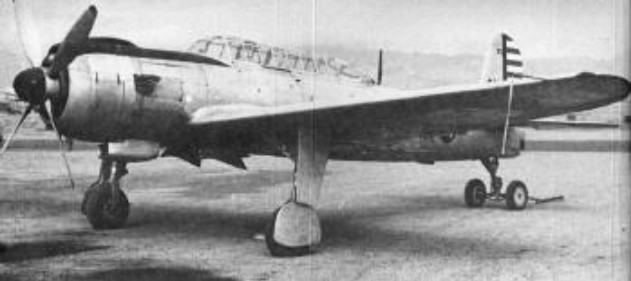
At a time when the triumphs of the B5N were still almost three years in the future, the Japanese navy issued a specification for a replacement, recognizing that only limited overall design improvement of the B5N could be achieved in the B5N2. Accordingly design went ahead in 1939 of the Nakajima B6N and, despite the Navy’s preference for the Mitsubishsi Kasei radial, a Nakajima Mamoru was selected for the prototype which flew on 14 March 1941, demonstrating several problems, notably the poor engine reliability. With the delay of 2 years, by 1943 the engine had improved to the point where serial production was allowed to start, but after only 133 B6N1s had been delivered the Navy ordered the switch to the 1,850 hp (1380 kW) Mitsubishi MK4T Kasei 25. The rest of the 1,268 B6N2s were Kasei powered.

B6N2

Superficially the B6N Tenzan (Heavenly Mountain) resembled the earlier aircraft, but the much increased power and torque of the big engine and four-blade propeller was found to impose considerable directional stability problems, demanding that the vertical tail surfaces be offset to one side. Flight trials dragged on, and were further delayed by troubles during carrier acceptance tests. Then Nakajima was ordered to stop production of the Mamoru engine, so modifications had to be introduced to suit installation of the Kasei.

In due course B6N1 aircraft (of which only 133 were built) were embarked in the carriers Shokaku, Taiho, Hiyo, Junyo and Zuikaku, and took part in the Battle of the Philippine Sea of June 1943, many being lost when the three Shokaku, Taiho, and Hiyo were sunk.

In that month production started of the slightly improved B6N2 (of which 1,133 were produced before the end of the war), but the heavy losses among Japanese carriers resulted in the ‘Jill’ being largely deployed ashore, particularly after the Battle of Leyte Gulf. Thereafter many BsNs were consigned to the kamikaze role.

B6N2

B6N2
Engine: 1 x Mitsubishi MK4T “Kasei-25”, 1850 hp
Wingspan: 14.9 m / 48 ft 11 in
Wing area: 37.2 sq.m / 400.42 sq ft
Length: 10.87 m / 35 ft 8 in
Height: 3.8 m / 12 ft 6 in
Empty weight: 3010 kg / 6636 lb
Max take-off weight: 5650 kg / 12456 lb
Max. speed: 480 km/h / 298 mph at 16,076 ft
Ceiling: 9040 m / 29650 ft
Service ceiling: 26,660 ft
Range w/max.fuel: 3045 km / 1892 miles
Armament: 1 x 13 mm, 2 x 7.9mm machine-guns
Bomb load: 1 x 1764 lb torpedo or 6 x 220 lb bombs
Crew: 3

Nakajima B6N Tenzan / JILL

Nakajima B5N

Designed to a 1935 requirement, and already in service for four years when Japan entered the war, the prototype B5N first flew in January 1937. A low-wing three-crew monoplane with inwards-retracting wide-track landing gear, powered by a 770 hp Hikari engine, and entered production as a 1000 hp Nakajima Sakae 11-powered light or torpedo-bomber. The following year production B5N1 aircraft were embarking in Japan’s carriers and shore-based units were deployed in China.

Nakajima B5N Article

In 1939 the improved B5N2 appeared with a more powerful Sakae 11 engine in a smaller cowling, although armament and bombload were unchanged, and this version remained in production until 1943.

Many were converted to B5N1-K trainers when production switched to B5N2.

When Japan attacked the USA the B5N2 had wholly replaced the B5N1 with operational units, and 144 B5N2s were involved in the attack on Pearl Harbour, and within the next 12 months aircraft of this type sank the American carriers USS Hornet, Lexington and Yorktown.

B5N2

Given the reporting name ‘Kate’ by the Allies, with its defensive armament of a single machine-gun and laden with a large bomb or torpedo, the B5N began to suffer very heavily, and although the type was fully committed during the Solomons campaign the survivors were withdrawn from combat after the Philippine battles of 1944.

Thereafter, on account of their excellent range, they were assigned to antisubmarine and maritime reconnaissance duties in areas beyond the range of Allied fighters. Production of all B5Ns reached 1,149.

B5N2

Gallery

Nakajima B5N1
Engine: 1 x 840 hp Nakajima Hikari 3
Prop: 3 blade Constant speed
Wingspan: 50 ft 11 in
Length: 33 ft 9.5 in
Height: 12 ft 1.5 in
Wing area: 405.8 sq.ft
Wing loading: 20.1 lb/sq.ft
Loaded weight: 4640 lb
Max weight: 8150 lb
Max speed: 229 mph at 6,500 ft
Cruise speed: 159 mph at 6500 ft
Climb to 10,000 ft: 8 min
Service ceiling; 24,280 ft
Normal range: 590 nm
Max range: 1220 nm

Nakajima B5N2
Engine: 1 x Nakajima NK1B “Sakae”, 746kW
Wingspan: 15.52 m / 50 ft 11 in
Length: 10.3 m / 33 ft 10 in
Height: 3.7 m / 12 ft 2 in
Wing area: 37.7 sq.m / 405.80 sq ft
Max take-off weight: 4100 kg / 9039 lb
Empty weight: 2279 kg / 5024 lb
Max. speed: 378 km/h / 235 mph
Ceiling: 8260 m / 27100 ft
Range w/max.fuel: 1990 km / 1237 miles
Armament: 1 x 7.7mm machine-guns, 800kg of bombs
Crew: 3

Nakajima B5N KATE

Nakajima NY / A2N / Type 90

A2N

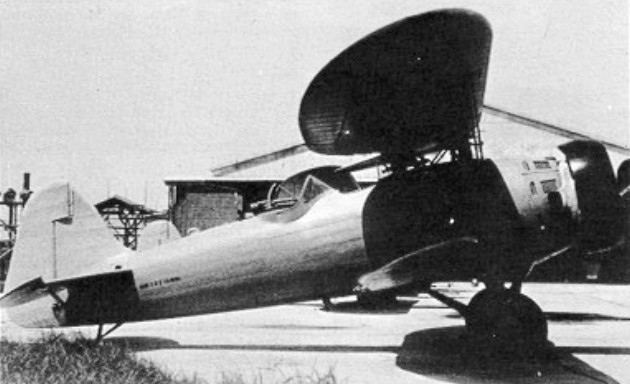
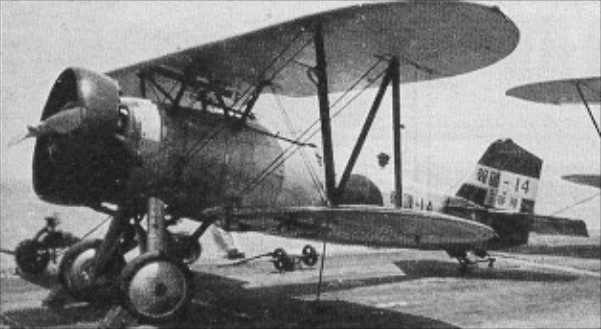
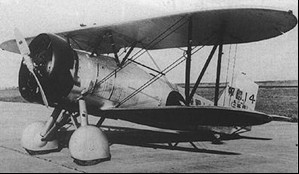
After importation in 1928 of a Boeing 69-B (F2B-1) by the Imperial Navy, and, in the following year, the fourth Boeing 100 (essentially similar to the F4B-l), the two aircraft were shown to industry as examples of the then-current US shipboard fighter technology. Nakajima, which had previous¬ly built the Gloster Gambet (A1N1-2) for the Imperial Navy, initiated development of a carrier fighter based broadly on the Boeing designs as a private venture. Responsibility for the fighter was assigned to Takao Yoshida and two prototypes powered by the Jupiter VI engine were completed in December 1929 and the NY prototype first flew in 1930.

It was an unequal-span single-seat fighter of biplane configuration, with divided fixed landing gear which had spatted wheel fairings discarded in later production aircraft. The A2N1 and A2N2 had lower wing dihedral only, whereas the A2N3 had dihedral on both wings. The twin-gun armament was installed in blast troughs on the lower sides of the fuselage in the A2N1, while later versions had them installed in the forward decking.

Type 90 type 2 Carrier Fighter

Evaluated by the Navy in the following year, these prototypes were rejected as they were considered to offer an insufficient improvement over the A1N1. Some redesign was undertaken by Jingo Kurihara, and, with a 580 hp Kotobuki 2 engine, a further prototype was completed in May 1931, the type being adopted by the Navy in April 1932 as the A2N1 (Type 90). With a fabric-covered metal fuselage and a similarly skinned wing of mixed construction, the A2N1 carried an armament of two 7,7-mm machine guns. The principal production version was the A2N2 (Type 90-II) with re¬arranged fuel tankage and armament, the A2N3 (Type 90-III) differing in having five degree of dihedral on the upper wing main panels. Series production was undertaken from 1932 until 1936 by both the parent company and Sasebo.

Production totalled 106, built between 1930 and 1935, and later 66 examples of the A3N1 two-seat training variant appeared, most being conversions of the single-seater. A2Ns from the carrier Kaga (2nd Carrier Division) flew on operations in the Shanghai area during the 1937 Sino-Japanese Incident.

A2N1
Engine: Nakajima Kotobuki 2, 580 hp / 433kW
Span: 30 ft 8.9 in (9,37 m).
Length: 20 ft 3.4 in (6,18 m).
Height: 9 ft 11 in (3,02 m).
Wing area: 212.49 sq ft (19,74 sq.m).
Empty weight: 2,304 lb (1 045 kg)
Loaded weight: 3,417 lb (1 550 kg).
Max speed: 182 mph (293 kph) at 9,845 ft (3000 m)
Endurance: 3 hrs.
Time to 9,845ft (3000m): 5.75 min.
Ceiling: 9000 m / 29550 ft
Range: 500 km / 311 miles
Armament: two 7,7-mm mg.
Crew: 1

A2N2

A2N3