Pre-1928 a three-place JN-4D was rebuilt as 285=3035 c/n 1.
1 engine
Northstar Viking
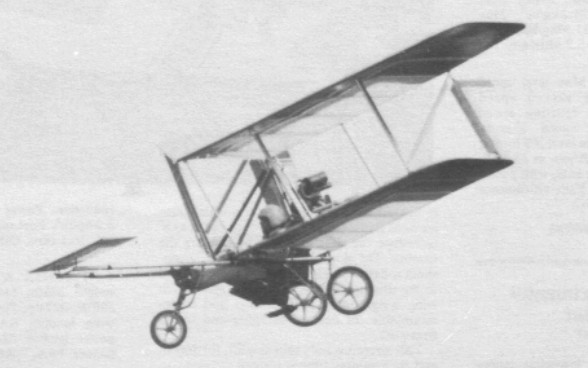
Single seat single engined biplane with two-axis control. Wings have swept back leading and trailing edges, and constant chord; no tail, canard wing. Pitch control by fully flying canard; yaw control by tip rudders between wings; no separate roll control; control inputs through stick for pitch and pedals for yaw. Wings braced by struts and transverse X cables; wing profile; double surface. Undercarriage has three wheels in tricycle formation; glass fibre suspension on main wheels. Push-right go left nosewheel steering independent from yaw control. Brake on nosewheel. Aluminium tube framework, without pod. Engine mounted between wings driving pusher propeller.
Shown at Sun ‘n’ Fun in March 1983 at Lakeland, Florida, the Viking is a variation on the famous Easy Riser theme.Whereas UFM of Kentucky has fitted the Easy Riser with a conventional tail giving rise to the Aeroplane (a 1983 model), Northstar had preferred a canard of variable incidence, thus acting as an elevator, for its Viking.
Designed for cross countries, it gives its pilot comfort and a large speed range. Its Kawasaki TA440 is equipped with an electric start, making it necessary to have a 12 V battery on board. The fuel tank is moulded into the seat back, whose structure is of glass fibre, and other nice touches include a twin blade ground adjustable variable-pitch propeller and a rudder bar which is adjustable according to the height of the pilot. Northstar supplies its Viking in kit form requiring 75 100 h for assembly at an introductory price (March 1983) of $5395. The kit does not require any special tools, assembly being largely with pop rivets.
Engine: Kawasaki TA440, 38.5hp at 6000rpm
Propeller 60 in / 1.52 m ground adjustable) inch
Micro V belt reduction, ratio 2.25/1
Max static thrust 235 lb, 107 kg
Power per unit area 0.22 hp/sq.ft, 2.4 hp/sq.m
Fuel capacity 5.0 US gal, 4.2 Imp gal, 18.9 litre
Wing span 32.0 ft, 9.75 m
Total area of main wings 170 sq.ft, 15.8 sq.m
Nosewheel diameter overall 16 inch, 41 cm
Main wheels diameter overall 20 inch, 51 cm
Empty weight 244 lb, 11.1kg
Max take off weight 502 lb, 228 kg
Payload 258 lb, 117 kg
Max wing loading 2.95 lb/sq.ft, 14.4 kg/sq.m
Max power loading 13.0 lb/hp, 5.9kg/hp
Load factors +5.0, 3.0 design
Max level speed 54 mph, 87 kph
Never exceed speed 55 mph, 88 kph
Max cruising speed 45 mph, 72 kph
Stalling speed 23 mph, 37 kph
Max climb rate at sea level 800 ft/min, 4.1 m/s
Best glide ratio with power off 7/1
Northrop/Northrup Special

The Northrop Special was built by Russ Northrop in 1952. Powered by an 85hp Continental C-85, he inverted gull-wing midget racer was competed into 1955, then was sold as N33N.
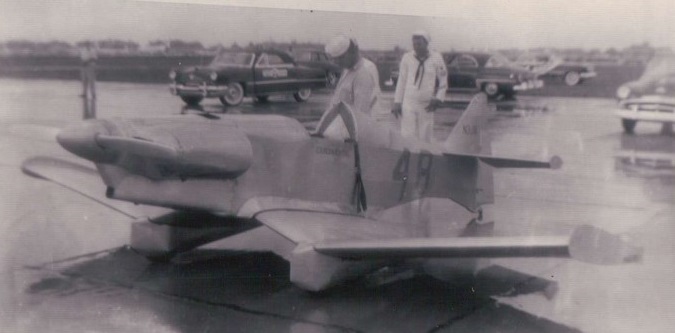
It is sometimes credited to Northrop Aviation, but there was no connection, and the spelling of Russell’s name is seen both ways.
Northrop T-X / 400

The consortium of Northrop Grumman and its subsidiary, Scaled Composites, along with BAE Systems, was among the most favoured teams to win the competition to replace hundreds of T-38 Talon trainers for the USAF under the T-X program.
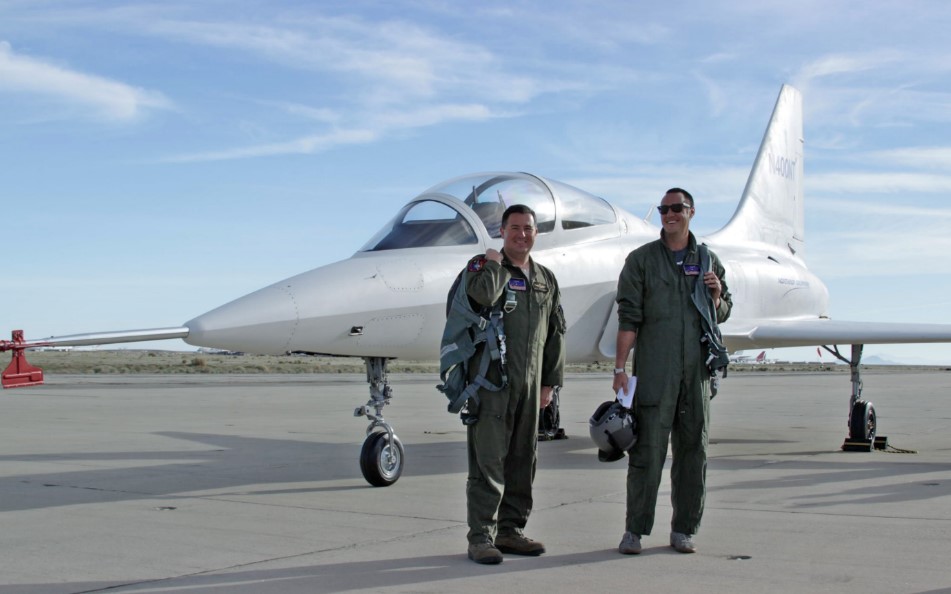
The Northrop Grumman and their teammates were progressing well with their T-X entrant, which received the in-house name Model 400. The jet was first spotted at Mojave Air And Space Port, where Scaled Composites calls home, in late August of 2016. The company made no comment on the prototype even as low quality photos of it taxiing hit the web. Not too long after it took to the skies, but still the only indication from Northrop Grumman that it existed was them stating that the Model 400 prototype would be officially unveiled in early 2017.
Originally, Northrop Grumman intended to run with an updated version of BAE System’s Hawk T2 trainer, but that idea was axed when it was clear that the 40-plus-year-old design would not meet the USAF’s performance requirements. Following this change in strategy, Northrop Grumman’s design process became especially secretive—although it was widely known that Scaled Composites, acquired by Northrop Grumman in 2007, would be heavily involved.
Dubbed the Model 400, the aircraft looks like a modernized, composite hybrid of the T-38 Talon and the F-20 Tigershark. It packs a single F404-GE-102D engine, a derivative of the same engine used in the F/A-18A/D, the JAS-39A/D (Volvo RM12), the F-117A, and India’s Tejas light fighter—as well as Lockheed’s T-X competitor, the T-50A.
The engine/airframe appears to lack an expanding nozzle usually indicative of an afterburning capability.
Ultimately, this design can potentially be pitched as an entirely new aircraft while still leveraging Northrop’s hugely successful T-38 Talon lineage.
Just around the time that the company was supposed to officially unveil their exciting new T-X contender, one that had been flying for some time at that, the company canned its participation in the T-X program entirely. The move was startling to say the least, with Northrop Grumman not only giving up the possible opportunity to build at least 350 new tactical jets—an opportunity that is becoming increasingly rare—but also giving up on 50 plus years of pilot training heritage.
A statement by Northrop Grumman reads:
“Northrop Grumman and its principal teammate BAE Systems have carefully examined the U.S. Air Force’s T-X Trainer requirements and acquisition strategy as stated in the final request for proposals issued on Dec. 30, 2016. The companies have decided not to submit a proposal for the T-X Trainer program, as it would not be in the best interest of the companies and their shareholders.”
Northrop HL-10
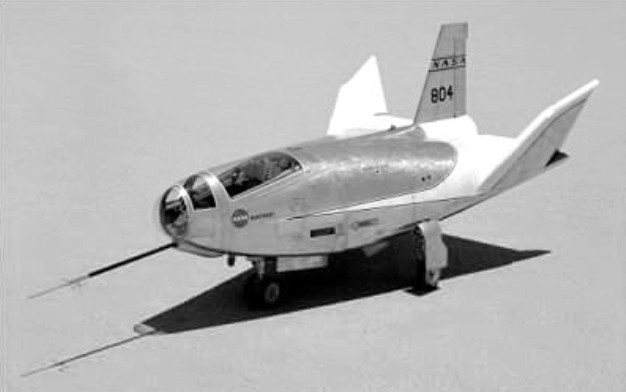
The USA also put considerable effort into the creation of lifting-body vehicles as the design precursors of manned re¬entry vehicles. These lifting-body vehicles were intended to prove the viability of wingless flying machines that could re-enter the atmosphere at hypersonic speed after orbital flight and fly back to their bases. The two main protagonists of such vehicles were Martin Marietta and Northrop, the former with the X-24, and the latter with the M2-F2 and HL-10. In mid-1964 the US National Aeronautics and Space Administration (NASA) contracted Northrop to produce the M2-F2 and HL-10. The HL-10 was similar to the M2-F2 in most respects other than the camber of its D-section lifting body. On the M2-F2 the flat and curved surfaces were on the top and bottom respectively, but on the HL-10 these positions were reversed.
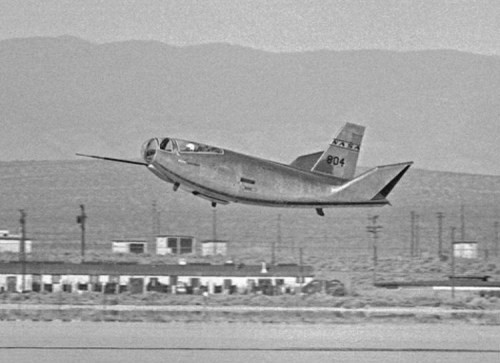
The HL-10, powered by the XLR-11 rocket engine, was dropped from beneath the wing of a Boeing B-52 on 22 December 1966. The first powered flight using rockets was made by the HL-10 from a B-52 on 13 November 1968.
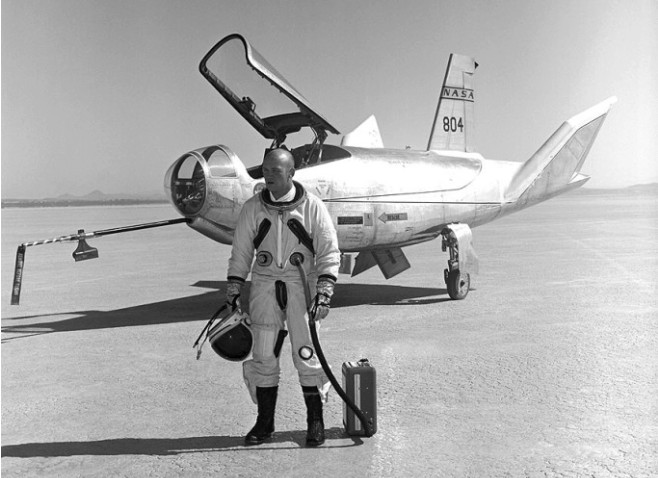
Engine: Thiokol (Reaction Motors) liquid-propellant rocket, 8,000 lb (3,630 kg) st
Max width: 15 ft 1 in (4.60 m) between fin tips
Length: 22 ft 2 in (6.76 m)
Planform area: 162 sq ft (15.05 sq.m)
Max launching wt: 9,400 lb (4,265 kg)
Max landing wt: 8,000 lb (3,630 kg)
Crew: 1
Max speed achieved: Mach 1.9
Max altitude achieved: 27430m

Northrop F-20 Tigershark / F-5G

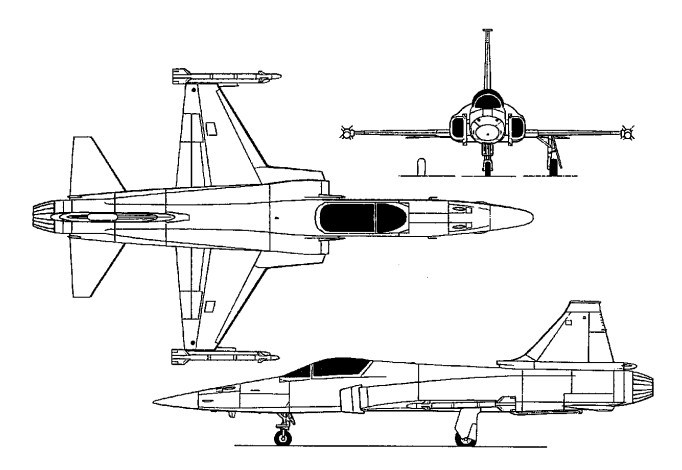
Initially known as the F-5G and officially redesignated F-20 in November 1982, the Tigershark single-seat tactical fighter was evolved as a company-funded development of the basic F-5E, having an 80% increase in engine thrust and only 21% increase in empty weight.

A much modified F-5E, the F-5G / F-20 has a General Electric F404-GE-100 low-bypass turbofan of 10,900 lb (4 943kg) dry thrust and 16,390 lb (7 433 kg) with afterburning, and an armament of two 20mm cannon and could carry up to 3175kg of ordnance on five stations. Three prototypes of the F-20, each embodying progressive improvements, were flown, these entering flight test on 30 August 1982, 26 August 1983 and 12 May 1984. A fourth prototype in the proposed fully-operational configuration was under construction when, following the October 1986 decision that an upgraded F-16A was to succeed F-4 and F-106 as the USAF’s air defence fighter, Northrop terminated further development of the F-20 and ceased marketing efforts.
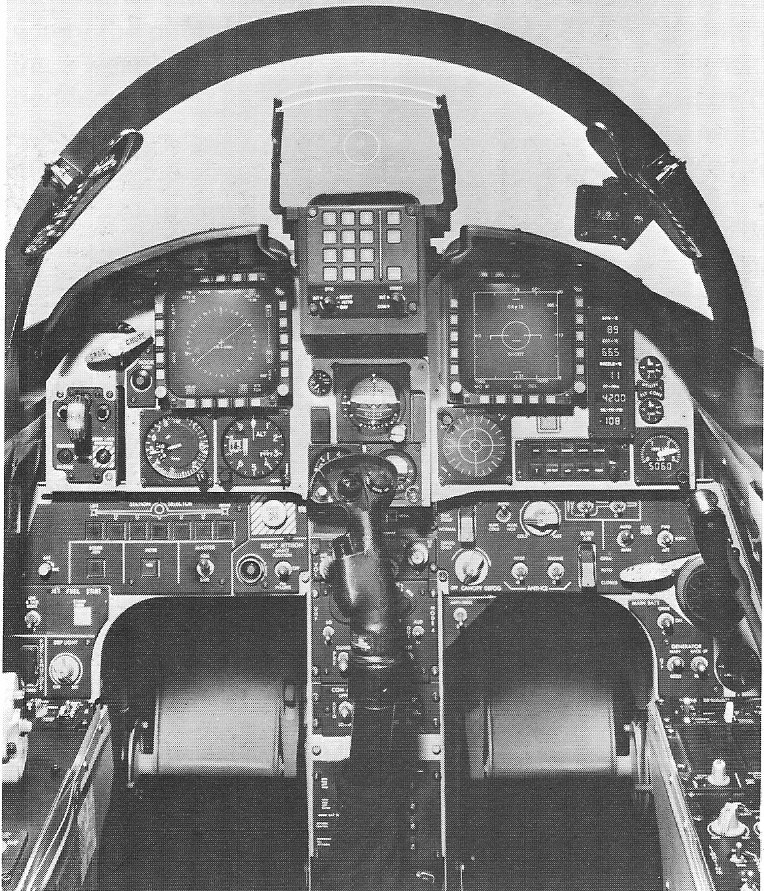

The danger of G-LOC was brought home when two of the three prototype F-20 crashed during demonstration routines killing their pilots only months apart. One was lost during a demonstration at Suwon, South Korea, in October 1984, and the other crashed at Goose Bay, Newfoundland, in May 1985, during practice for the Paris Air Show.
F-5G / F-20A Tigershark
General Electric F404-GE-100 turbofan, 10,900 lb (4 943kg) dry thrust / 16,390 lb (7433 kg) afterburning
Span: 7.70 m (25 ft 3 in)
Length: 14.38 m (47 ft 2 in)
Height: 4.22 m / 13 ft 10 in
Wing area: 186 sq ft (17,1 sq.m)
Empty weight: 11,220 lb (5 088 kg)
Loaded weight: 17,500 lb (7 936 kg)
Gross weight: 9379 kg (20 680 lb)
Wing loading: 94 lb/sq ft (464 kg/ sq.m)
Internal fuel: 4,440 lb (2 013 kg)
Maximum speed: 1489 km/h (925 mph)
Thrust/weight ratio: 0.94
Fuel fraction: 25.4 per cent
Range w/max.fuel: 2965 km / 1842 miles
Northrop MX-324 / MX-334
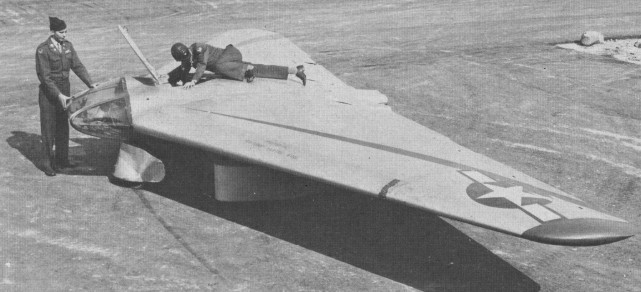
Northrop’s next flying wing project was the MX 324, planned as a research aircraft to pave the way for future flying wing fighters having jet propulsion. It was virtually a low speed glider at first, because no suitable jet power plant existed. It was also remarkably conventional, having ailerons, flaps /elevators, a minimal body and, later, a large wire braced fin. The first example had skids, and the towcar could not pull it off the ground. The second had a jettisonable trolley, which “was not a success.” The third had its own fixed tricycle landing gear, the main wheels having trousers and the nosewheel a spat. The nose leg was offset far to the left. This was because the centreline was occupied by the prone pilot, who had an interesting panel and control arrangement and rested his head in a cushioned sling inside the glass “bubble” nose. The span was about 28 feet.
Northrop went ahead with the project, under Don B Smith, in September 1942. An Army Air Force contract was awarded in January 1943 and John Myers flew the MX 324 as a glider on October 2, 1943.
By this time Northrop was talking with the infant Aerojet Engineering Corporation of Azusa, which had been formed to advance American rocketry. Their first engine planned for a manned aircraft was the XCAL 200. Though the single thrust chamber had but one thrust level, a mere 200 lb, the whole installation weighed 427 lb. This included a tank of monoethylaniline fuel, a tank of red fuming nitric acid oxidant, four gas bottles to feed the propellants, the thrust chamber and a lot of hydraulic and electric control systems. Most of it was still in bits during the first half of 1944. Early in June, the aircraft was trucked to Harper Dry Lake and static-fired on June 20. On June 22 the staked down machine was fired for the full burn time of five minutes. The next day company pilot Harry Crosby taxied under the thrust of the rocket, bringing out the need for “mods”. Finally, at dawn on July 5 Crosby smoothly rose into the cool sky on tow behind a P 38 Lightning. He cast off at 8,000 feet, paused for the tug to clear and then pressed the fire trigger on his miniature control column. It went perfectly.
The MX-334 flew under power for 3 minutes 30 seconds on 22 June 1944. On July 11 Crosby dived under power at about 350 mph to very low level before zooming up almost vertically to 6,000 feet. But the MX 324 was a bit of a dead end until new propulsion systems emerged.

Northrop N-2B / XP-56
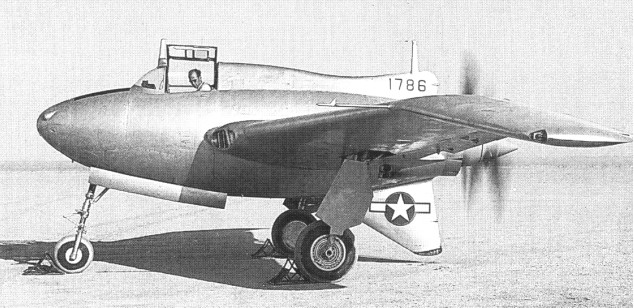
Northrop Aircraft Inc was invited to submit proposals for a new pursuit aircraft (in the R 40C informal Army competition), allotted the designation XP 56, for a single engined pusher. An informal competition initiated late in 1939, the winning contractors being Vultee (XP-54), Curtiss (XP-55) and Northrop (XP-56).
Northrop began to scheme the N 2B in August 1941. A wing very similar to the N-1M, though thinner, was selected for the fighter. On each trailing edge was a single, large elevon, combining the, functions of elevator and aileron. Above each tip was a hinged spoiler for creating drag for yaw control. The fuselage was just a minimal nacelle, with a ventral fin to keep the propeller from hitting the ground.
Armament was to comprise two M 2 20mm cannon and four 0.5in Brownings, grouped in the nose, although this was never fitted. Tricycle landing gear was inevitable, the mainwheels being housed in. the lee of the large ducts that served the engine. Power was provided by a 2,000hp Pratt & Whitney R-2800-29 Double Wasp 18-cylinder radial engine buried in the rear fuselage and driving contra-rotating pusher propellers. The canopy hinged to the right, and for emergency escape the pilot was to jettison not only the canopy but also the propeller, Pratt & Whitney designing a jettison system with explosive cord surrounding the gearbox. The propeller eventually used was a Curtiss, Electric contraprop, with two three blade units. The primary structure was entirely magnesium, welded by the company’s patented Heliarc process (which sur¬rounded the are with inert helium) perfected during construction of this aircraft.
As far as possible it was based on the experience gained with the N-1M. It even retained the down sloping wing tips, though the angle was not acute and the control system was of the latest type with bellows¬ opening split “trim rudders” (i.e., ailerons) used as single surfaces for lateral control and opened into upper and lower spoilers for making properly banked turns. The actuation of these surfaces was novel. Air was rammed in through a forward facing intake on each tip, taken through a duct and diverted by valves to pressurise the bellows when required. In straight and level flight the duct was open at both ends, creating little drag.
At first Northrop tried to stay as close as possible to the pure all wing concept, and planned for the pilot to lie prone, but when the Army began to talk about a prototype contract they made it clear they wanted a regular body with a conventional cockpit. Eventually they purchased two prototypes, ordered on 26 September 1940 and 13 February 1942 respectively, each having quite a fat body of symmetrical streamline form containing a 2,400 h.p. Pratt & Whitney R 2800 Double Wasp engine. Cooling the engine was, as in the N 1M, a major problem. Air was rammed in through large wing root intakes, ducted sharply in to the engine bay and allowed to escape past the baffled cylinders and out via the ejector assisted exhaust ducts. Cooling airflow was assisted by a high speed fan geared up from the engine, but to perfect the installation would have been a very large task. The unpressurised cockpit was immediately ahead of the engine, and the nose was planned for an eventual armament of two 20mm and four 0.50in guns. Elevators were fitted inboard of the tip droops, there was a large delta fin above and below the rear fuselage and the main wheels of the tricycle landing gear were housed in bays immediately behind the cooling ducts.
According to Northrop two prototypes were ordered on September 26, 1940, at a price of $411,000; other observers insist the second was not signed for until February 13, 1942. The first XP 56 was delayed by the decision of Pratt & Whitney to drop the X 1800. The R 2800 Double Wasp was already giving 2,000 h.p. while the, X 1800 did not look like maturing until after the war. The decision, was taken on, July 21, 1941, and Pratt & Whitney had to make a Double Wasp with concentric drive shafts and the jettison device (the R 2800 29), while Northrop had to rearrange, the, engine bay and central wing structure to pick up the big 18 cylinder radial and supply it with air, the latter augmented by a fan and discharged via gills ahead of the spinner. Another change was to alter the anhedral of the outer wing as a result of N-1M testing. Eventually the XP 56 emerged in March 1943. In April test pilot John Myers began taxiing tests and found directional stability unsatisfactory. Especially as speed was increased, the XP 56 by now for some – reason dubbed “The Black Bullet” tended to swerve violently, skidding the, tyres and rocking laterally. At least part of the trouble was due to the; brakes, and a new hydraulic brake system, was fitted to give smoother differential action.
After further cooling and system difficulties, the XP 56 first flew on September 30, 1943. It had been expected that the ventral fin added, to the contraprop side area would prove adequate for weathercock stability, but it was clear that directional stability was almost non existent. A larger upper fin was quickly added over the original, and from then on the handling seemed to be satisfactory. No photographs are known of the modified aircraft. In any case, USAAF 41 786 was soon written off. According to one set of writers it suffered a burst mainwheel tyre. According to another it suffered nose-wheel shimmy, leading to failure of the nose leg. For whichever reason, the aircraft somersaulted and was demolished. Myers broke his back, though his head was saved by the fact he habitually wore his polo helmet.
When the second aircraft, 42 38353, emerged the upper fin was even larger than on the modified No.1 aircraft. A further modification was that the, wingtips now carried bellows-type split ailerons for lateral and yaw control, replacing the upper and lower surface spoilers. Each tip was formed by a large venturi duct which normally sucked the split surfaces closed. For yaw control the surfaces were blown open by a bellows to which ram air from the tip duct was admitted via a diverter valve.
The second Bullet was flown by Harry Crosby from Hawthorne, on March 23, 1944. Though flight characteristics were better than for the first aircraft the engine did not deliver full power, the nosewheel would not lift off until an airspeed of 160 m.p.h. had been reached, and the flight was terminated after 7½ min. On the second flight, with gear retracted, the trim was normal but speeds were below prediction. So concerned were, Northrop at the failure to reach design speeds (the objective was 465 mph at 25,000ft), that they booked a place in the queue for the giant open jet wind tunnel of the NACA at Molfett Field. Meanwhile, testing continued, but on the tenth flight the pilot logged so many shortcomings that it was decided to discontinue further flying.
By this time the XP 56 had been outclassed by such conventional fighters as the P 51, and overtaken by the jet engine. In 1979 No 2 was still intact, held by the Smithsonian.
XP-56
Max take-off weight: 5148 kg / 11349 lb
Empty weight: 3946 kg / 8699 lb
Wingspan: 12.98 m / 42 ft 7 in
Length: 8.38 m / 27 ft 6 in
Height: 2.94 m / 9 ft 8 in
Wing area: 28.52 sq.m / 306.99 sq ft
Max. speed: 671 km/h / 417 mph
Range: 1062 km / 660 miles
Crew: 1

Northrop N-3PB

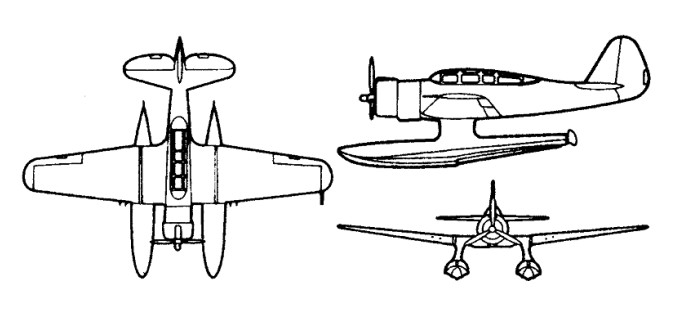
In 1940 Northrop received an order from a Norwegian Buying Commission for the design and construction of a single-engine monoplane patrol bomber with twin floats. The Norwegian order covered 24 aircraft, and in less than eight months the Northrop N-3PB prototype flew, on 1 November 1940, powered by an 895kW Wright Cyclone GR-1820 radial engine. It attained a speed of 414km/h and was then claimed to be the world’s fastest military seaplane.
Norway was invaded by the Germans shortly after the contract had been awarded, and the N-3PBs were delivered to a unit of the Royal Norwegian Naval Air Service, operating as an RAF unit from unimproved coastal sites in Iceland on anti-submarine patrol and convoy escort duties. All maintenance had to be performed in the open, often under extremely harsh environmental conditions, and during 19 months of 1941-42 several were lost during water landings in severe arctic weather, but there were no losses due to enemy action.
An aircraft was destroyed as late as 1965, in the collapse of a snow-laden hangar, but in the early 1980s an N-3PB was located and restored in Norwegian colours by the manufacturers.
Northrop FT-1 / FT-2 / BT-1 / BT-2
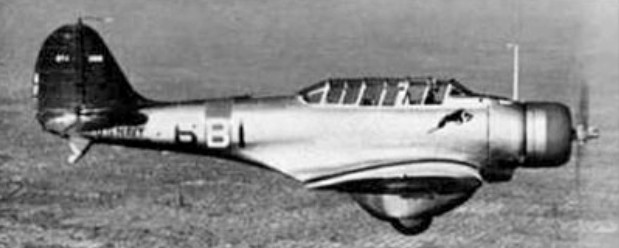
While Northrop was working on the YA-13/XA-16 developments of the Gamma, the company was also testing a scaled-down version for the US Navy under the designation Northrop XFT-1. This was one of two Northrop prototypes which failed to attract production orders, the other being the Type 3-A of 1935. Both were all-metal fighters, the XFT-1 with fixed landing gear being intended for the US Navy. Powered originally by a 466kW Wright XR-1510 radial, it was later re-engined, as the XFT-2, with a 485kW Pratt & Whitney R-1535, but crashed three months later, in July 1936.
The Northrop 3-A was a similar design for the US Army, but differed from the navy aircraft in having retractable landing gear and a modified canopy. Developed alongside these prototypes was the XBT-1, which had semi-retractable landing gear, and this entered production as the BT-1 torpedo-bomber, the first of 54 being delivered in April 1938. The BT-1 had a 615kW Pratt & Whitney R-1535 Twin Wasp Junior radial engine, but one aircraft was modified as the BT-2 to have revised landing gear and a 597kW Wright XR-1820 Cyclone. With other modifications this was to become the Douglas SBD Dauntless as the original Northrop Corporation had by then become the El Segundo Division of Douglas.

