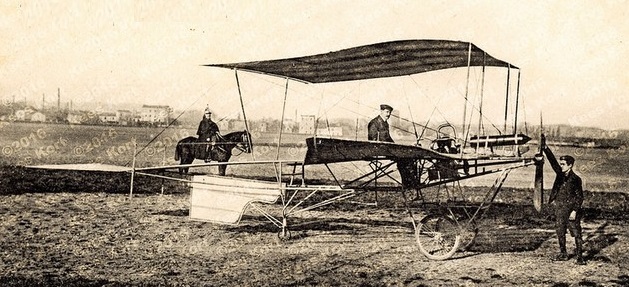
Obre No.1

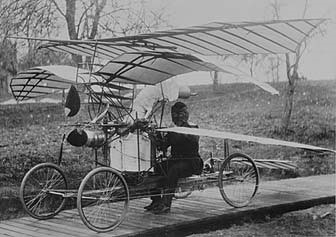
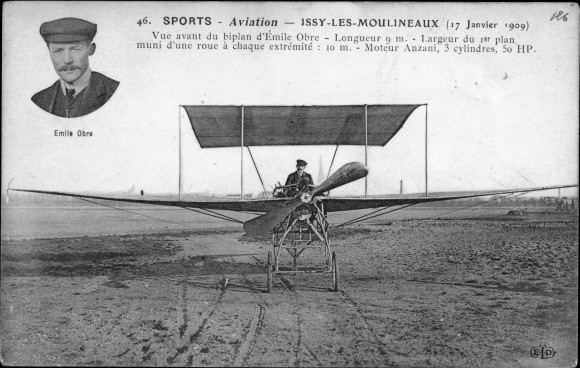
Émile Obre in his first biplane on the field Issy-les-Moulineaux, Paris, France, 1908

Émile Obre designed his biplane as a tractor with the Anzani 3-cylinder air cooled engine was fitted about 1,5 meter from the nose. The top wing consisted of a rectangular form with a special curve form. The span of the lower deck is 10 metres.
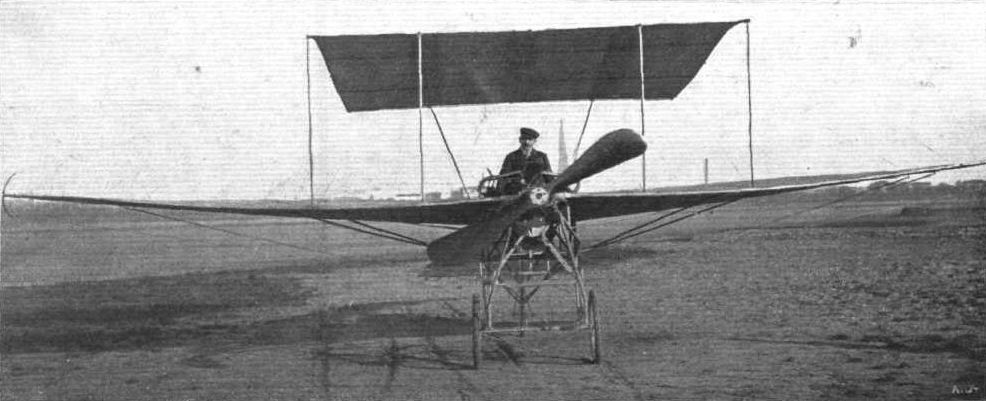
The power given (50 hp) for the 3-cylinder Anzani is very optimistic.

When testing the machine on 18 January 1909 at Issy-les-Moulineaux the machine crashed and was demolished. It was not repaired.

The machine was not a success but Obre went on and designed a completely new pusher biplane.
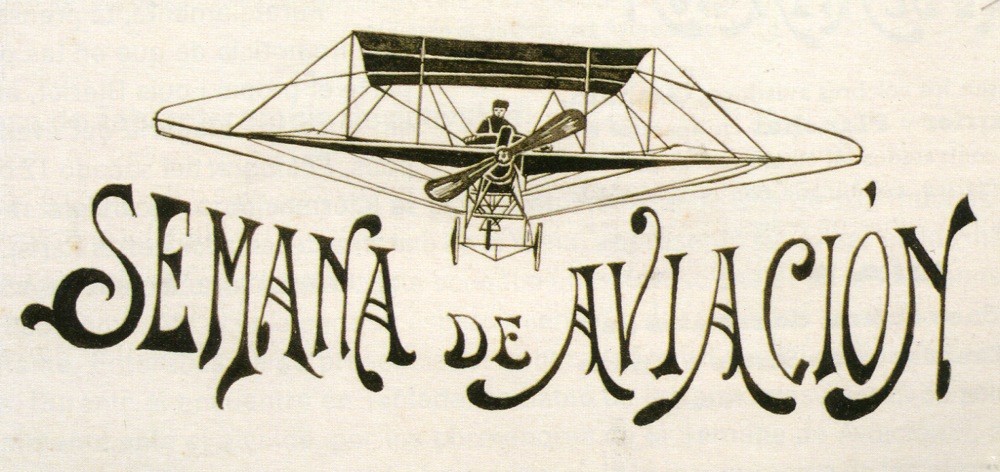
A drawing of the plane figured in a standing heading in “Flugsport” and in the logo of the 1910 Seville aviation week.
Nyberg Flugan / Fly

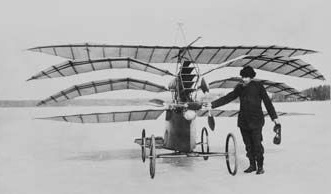
Carl Richard Nyberg (1858-1939) was a Swedish industrialist and the inventor of a successful blowtorch. He began work on this flying test-bed in 1897, with tests and alterations to the design of Flugan (The Fly) going on until around 1910. It had a wingspan of 5 meters, and the surface area of the wings was 13 m². It was powered by a steam engine heated by four of his blowtorches, producing 10 hp at 2000 rpm. The weight of the engine was 18 kg, giving a very good power-to-weight ratio for its time. The total weight of the plane was 80 kg, so the failure to fly was more related to poor propeller and wing technology. The challenge photo was probably taken in 1903 or later, when he started testing on the ice of the Baltic at his home on Lidingö outside Stockholm, rather than tethered around a circular board track in his garden.

NWT Spruce Coupe

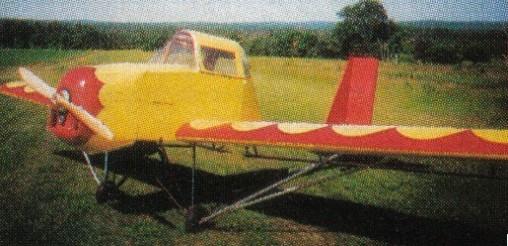
Fits Rotax or Kawasaki engines, and two wing lengths were available.

Top speed: 75 mph
Cruise: 60 mph
Stall: 35mph
Range: 80 sm
Rate of climb: 1200 fpm
Takeoff dist: 75 ft
Landing dist: 100 ft
Engine: Zenoah, 42 hp
HP range: 22-50
Fuel capacity: 6 USG
Empty weight: 300 lb
Gross weight: 600 lb
Height: 6 ft 3 in
Length: 16.9 ft
Wing span: 22 ft
Wing area: 88 sq.ft
Seats: 1
Landing gear: tailwheel

Nurtanio NU-85 / NU-90 Belalang

NU-90 Belalang

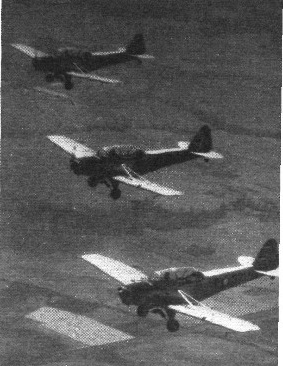
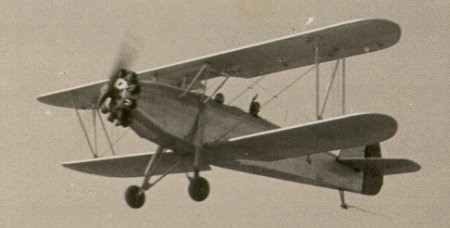
This aircraft is a low-wing conversion of the Piper Cub L-4J.
The prototype, designated NU-85, flew on April 17, 1958, and proved to be such an improvement over the original L-4J that the Indonesian Air Force was having all its L-4Js converted into Belalangs, with the production designation NU-90.
The programme was started in 1959 and the NU-90 became the standard primary trainer at the Air Force Flying School.

Engine: Continental C90-12F, 90 hp
Span: 31 ft l in
Length: 25 ft 3 in
Height: 6 ft 8 in
Wing area: 161.5 sq.ft
Gross weight: l,500 lb
Empty weight: l,038 lb
Max speed: 115 mph
Cruising speed: 90 mph
Max rate of climb at SL: 600 ft/min
Service ceilmg: 12,000 ft
TO run: 500 ft
Landing run: 400 ft
Range: 350 miles

Nurtanio NU-25 Kunang / NU-35 Kunang / Lipnur NU-25 Kunang / NU-35 Kunang

NU-25 Kunang

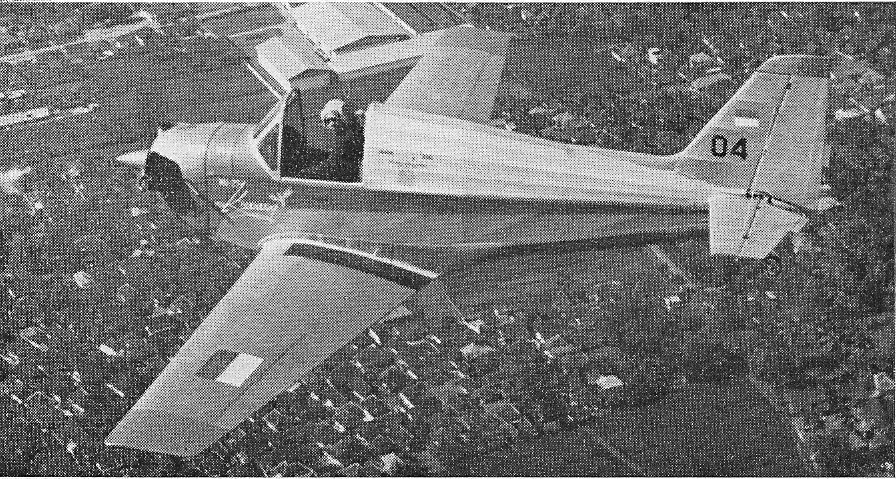
Development of the original NU-25 Kunang was started in 1957, to provide Indonesian flying clubs with an economical single-seat ultra-light trainer.
The original tapered wing, with fixed slots, was replaced by a constant-chord wing of 25 percent greater area during 1960. At the same time, the Volkswagen engine has been uprated from 25 to 35 h.p. and a cockpit canopy has been fitted. Now designated NU-35, the Kunang is of conventional wooden construction, with fabric covering.

NU-35 Kunang
Engine: Volkswagen, 35 hp
Span: 23 ft ll in
Height: 5 ft 11 in
Wing area: 102.6 sq.ft
Gross weight: 743 1b
Empty weight: 504 lb
Cruising speed: 80 mph
Max rate of climb at SL: 300 ft/min

NUD NU D.36

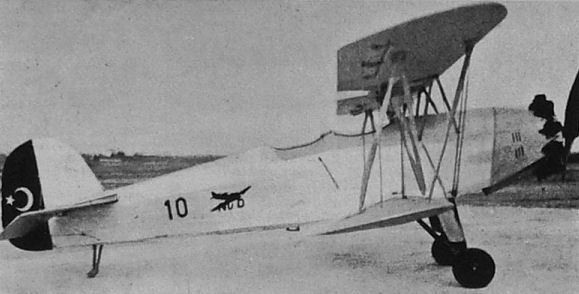
The Nuri Demirağ Nu D.36 was a 1930s Turkish two-seat training biplane built by the Nuri Demirağ Aircraft Works in Istanbul for the Turkish military.

The Nu D.36 is an unequal-span single-bay staggered biplane with a fixed conventional landing gear with a tailskid. It was powered by a 150 hp (112 kW) Walter Gemma I nine-cylinder radial engine. It had two open tandem cockpits for the pilot and trainee.

Engine: 1 × Walter Gemma I, 110 kW (150 hp)
Propeller: 2-bladed fixed pitch wooden propeller
Wingspan: 9.74 m (31 ft 11 in)
Wing area: 21.8 sq.m (235 sq ft)
Length: 7.3 m (23 ft 11 in)
Height: 2.44 m (8 ft 0 in)
Empty weight: 650 kg (1,433 lb)
Max takeoff weight: 1,000 kg (2,205 lb)
Maximum speed: 182 km/h (113 mph; 98 kn)
Range: 500 km (311 mi; 270 nmi)
Endurance: 3 hours 30 minutes
Service ceiling: 3,350 m (10,990 ft)
Time to altitude: 500 m (1,600 ft) in 2 minutes; 1,500 m (4,900 ft) in 10 minutes
Crew: 2

NST Schwarze Aerostar Chronos 12

Aerostar Chronos 12

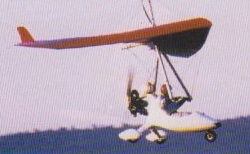
From the Czech Republic and designed by Norbert Schwarze, the engine is an American four stroke twin. A variety of wings can be fitted.

Aerostar Chronos 12
Empty weight: 90 kg
Wing span: 9.8 m
Wing area: 13.4 sq.m
Fuel capacity: 20 lt
Certification: Vz
Engine: NS 600, 30 hp
MAUW: 200 kg
Seats: 1
Max speed: 130 kph
Cruise speed: 90 kph
Minimum speed: 35 kph
Climb rate: 2.5 m/s
Fuel consumption: 4 lt/hr
Price (1998): 19 500 DM