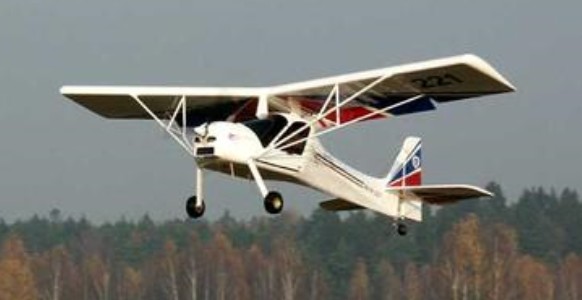
MAI-223 is a single-engine two seater semicantilever monoplane-parasol with non-retractable landing gear. Perfect controllability in all channels and an excellent pilot view from the cockpit make the plane extremely safe and pleasant for piloting. High thrust-to-weight ratio, high-lift device and landing gear with tail wheel allow to use airplane from short, unprepared runways. Floats and ski landing gear are enabled. Due to the folding wing airplane is very convenient for storage and transportation. 2009 Price: 27150 EURO
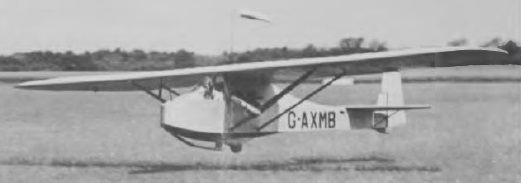
This powered converison of a T8 Tutor was made by E. W. Osbourn at Cranfield, Bedfordshire, in 1969 and was known as the Twin Cadet Mk 1. It was fitted with two 197cc Villiers 9E single-cylinder two-stroke engines mounted on the wing bracing struts and driving two small propellers just behind the pilot’s head. The prototype, G-AXMB (ex-VM590 and BGA 805) first flew with power on 20 September 1969. and received its Authorisation to Fly on 2 July 1970. It was later re-engined with a single 500cc Triumph T100 motorcycle engine mounted in the nose and first flew in this form as the Cadet Mk 2 at Cranfield on 22 January 1972, receiving its Authorisation to Fly on 6 June that year.
Twin Cadet Mk 1 Span: 38 ft 6 in Length: 20 ft 10.5 in Tare weight: 455 lb All-up weight: 657 lb Max speed: 60 mph (power on) Cruising speed: 40 mph (power on) Range: 100 miles
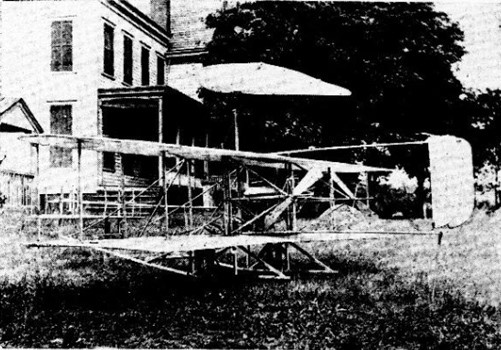
Washington DC man Harry Orme’s machine was generally similar to a Wright biplane, but differed in several respects. It was powered by an 8 hp 45 lb Belgian-made motor driving two propellers, with variable pitch. Over the top wing was a smaller “mushroom-shaped” wing on springs, capable of being distorted, and “intended to act as a bird’s tail does”, which Orme claimed would “prevent the sudden plunging of the aerial craft to the earth if any mishap occurs.” It didn’t help in December of 1908 when a loose wire got in the way of the propellers, breaking them, and ruining many support wires. The plane probably never flew again
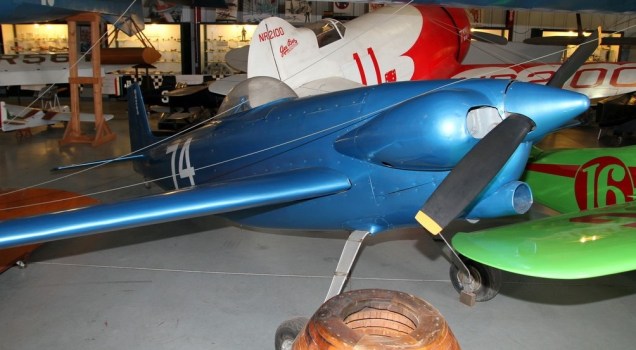
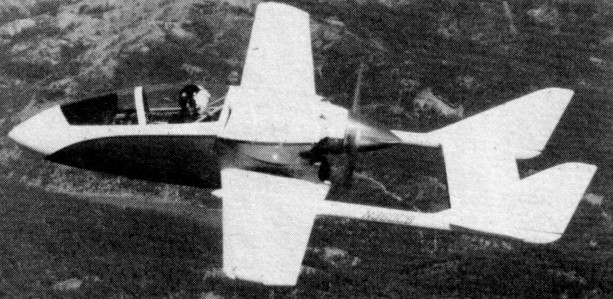
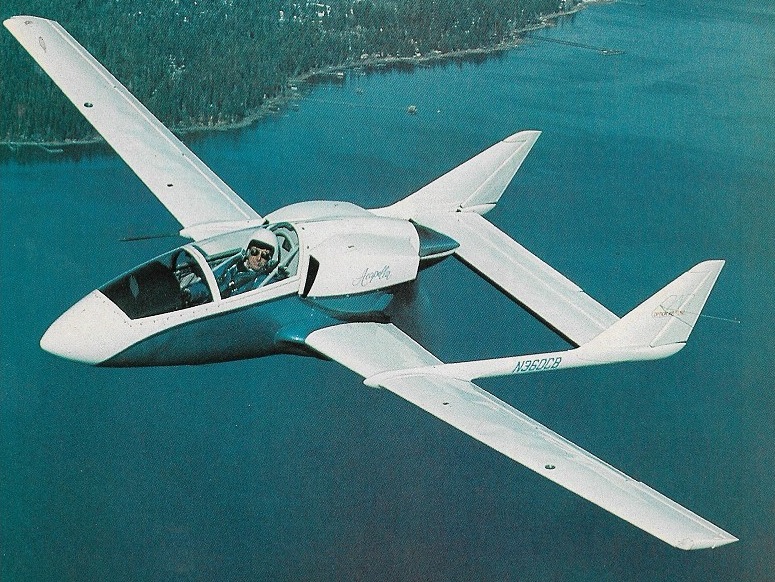
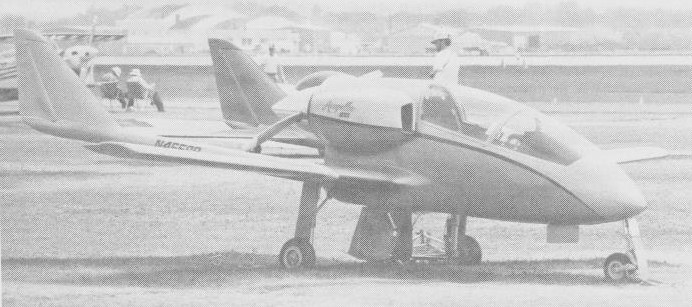
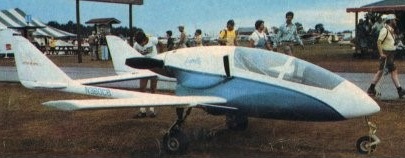
The Acapella is the creation of Carl O. Barlow, president of Option Air Reno, and sprung from his idea in 1977 to “re-do” the no longer available BD-5 design utilizing about 65 percent of the BD-5 hard¬ware including the fuselage from the firewall forward, the nosewheel, canopy and the short wings.
Design of the Acapella began in January 1978 and prototype construction started in June the same year. Registered N360CB, it achieved its first flight on June 6, 1980. After flying the prototype Acapella with both the short and long Bede wings, Barlow recommends using the long wings on the Acapella.
Production of kits began in June 1981, they include an engine mount, glass fiber cowling, new 8 ft (2.44 m) wing center section, tail booms, tail plane, elevator, main landing gear, many smaller components, and all necessary plans for the conversion. The prototype Acapella was powered originally by a 200 hp Avco Lycoming IO-360-A1B engine driving a Hartzell Q-Tip constant-speed pusher propeller, and in this form was known as Model 200-S.
It was re-engined subsequently with an 118 hp Avco Lycoming O-235 and fitted with longer-span wings to become the Model 100-L, with increased fuel capacity. The 200 series aircraft were not being made available to amateur constructors to build from plans or kits. This is because the majority of builders expressed interest in the smaller-engined Acapella 100-L, for which plans, kits and glass fiber components were available.
Work on a second prototype to carry a 118-hp Lycoming and a fixed-pitch propeller with a gross of about 1000 pounds was to be completed.
The Option Air Acapella N360CB crashed on July 28, 1982.
Option Air Acapella 100L N360CB
Only two aircraft were finished, the second one was registered N455CB on February 24, 1989, and it was this aircraft which was eventually donated to the EAA AirVenture Museum.
Gross Wt. 1350 lb Engine 200-hp Lycoming IO-360 Top speed 245 mph Cruise 214 mph Stall 81 mph Climb rate 1800 fpm Takeoff run 1000 ft Ceiling 26,500 ft
Single seat single engined high wing monoplane: no tall, canard wing. Pitch control by fully flying canard; yaw control by tip rudders. Wing braced from above by kingpost and cables, from below by cables. Undercarriage has three wheels in tricycle formation; bungee suspension on nosewheel and glass-fibre suspension on main wheels. Nosewheel steering. Optional brakes. Aluminium tube framework, without pod. Engine mounted below wing driving pusher propeller.
This machine was shown in prototype form in 1982 but since that time very little has been heard of its maker’s activities.
Engine: Cuyuna 430, 30 hp Propeller diameter and pitch 52 x 27 inch, 1.32 x 0.69 m Belt reduction, ratio 2.0/1 Nosewheel diameter overall 20 inch, 51 cm Main wheels diameter overall 20 inch, 51 cm
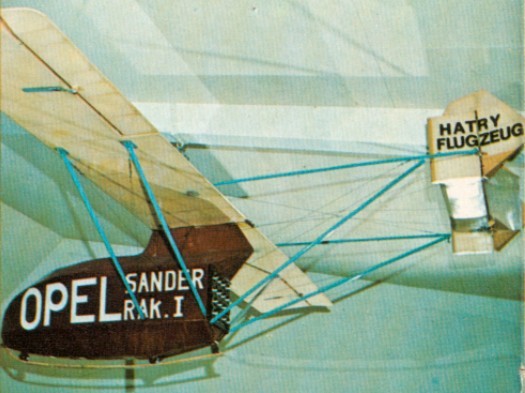
A number of designs were built with money provided to the VfR (Society for Space Travel) in Germany in the late 1920s, by the publicity ¬seeking automobile tycoon Fritz von Opel. First to fly was the tail-first Ente (duck) designed by Professor A M Lippisch, pilotd by Fitz Starrier, it made a rocket propelled flight of about 4,000 ft (1220 m) lasting some 70 seconds, on 11 June 1928. However, it was virtually uncontrollabe and made only two further tests.
Fritz von Opel had performed a number of publicity stunts involving rocket-powered cars for his Opel motor car company. Along with Friedrich Sander, a pyrotechnics manufacturer and Max Valier, a rocketry advocate, Opel concocted a scheme to attach two rockets to an Alexander Lippisch designed tail-less glider. In the summer of 1928, the three men brought the glider, called “Ente” to Wasserkuppe and hired Fritz Stammer to test it.
Two black powder rockets were attached to the skids on the underside of the fuselage. They were to be electronically fired from a switch in the cockpit. In order to adjust the center of gravity as the powder burned, a counterweight system was positioned under the floor. The rockets were timed to be fired one after the other to provide continuous thrust. Each rocket was intended to burn for about thirty seconds.
The Rak.1, designed by Hatry and flown by von Opel, took off from a raised track on 30 September 1929. After one false start, the rocket fired and the aircraft roared across the grassy field and into the air. Stammer reached an altitude of 1,500 meters (4,900 ft.), circled the mountain and landed safely. On the second flight, the team decided to fire both rockets simultaneously thereby doubling the thrust for a 30 seconds burn. At the instant of launch, one rocket fired, but the other one appeared to sputter and as the plane left the ground, it exploded. The blast tore holes in both wings and set them on fire. Amazingly, Stammer brought the burning aircraft back to ground from an altitude of about 65 feet and quickly abandoned it. The aircraft was a total loss, as was Fritz von Opel’s dream of rocket-powered gliders.
Powered by: Sixteen Sander solid fuel (powder) rockets, each of 55 lb (25 kg) thrust, mounted in four banks of four and fired in stages. Attained speed: 95 mph (153 kph). Distance flown: approx 5,000 ft (1,525m). Accommodation: Crew of 1.