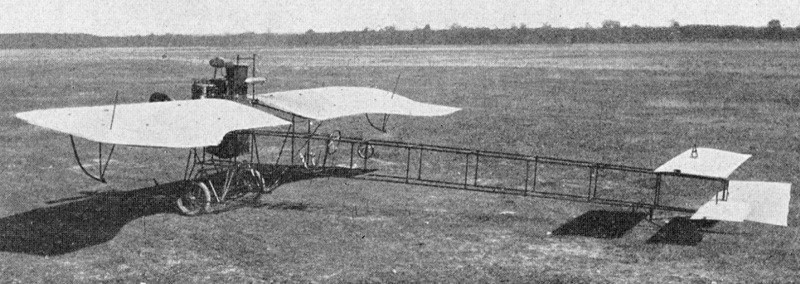
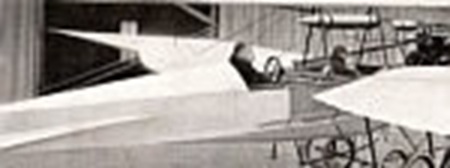
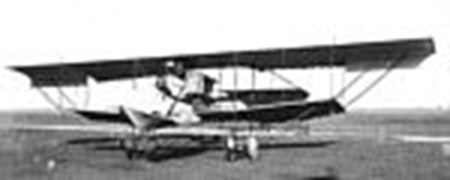
The Dr.Wittenstein “OWAM” (Oscar Wittenstein Aerodrom Milbertshofen) two-seater was built by Dr. Otto Wittenstein’s workshops at München/Milbertshofen, Germany. It was flown in 1911, powered by an 80/100 hp Argus. Oscar Wittenstein later designed a D.D. for Flugwerk Deutschland.
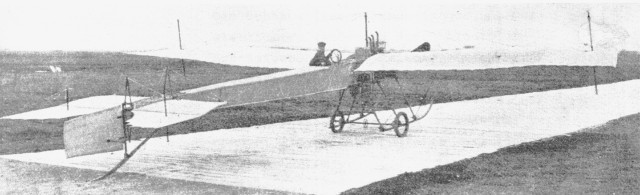
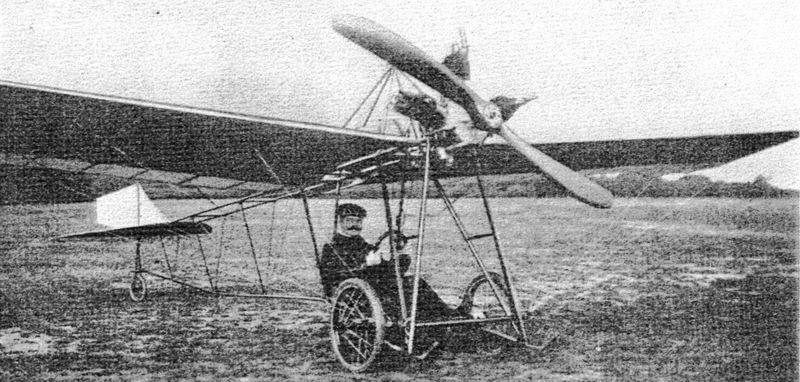
The first monoplane built by Gustav Otto in 1910, with the contemporary designation Otto-Eindecker. The engine of this single-seater was a 55 hp Daimler D4F, span 13 m, length 9.3 m. Dr. Alberti was a lawyer who financed some aeroplane designers.
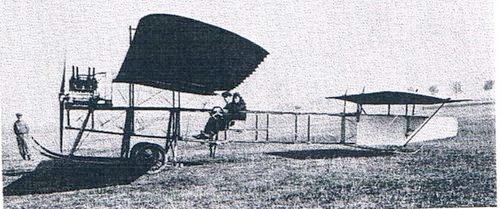
Built at the Puchheim airfield; one of the first Otto monoplanes. In all probability the later re-designed 1911 “Schule Doppeldecker,” thus converted from a tractor biplane into a monoplane.
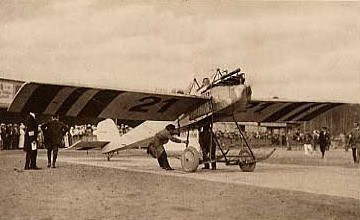
The Otto Eindecker, powered by a 100 hp Argus, won the 1913 “Rund um Berlin” race. It was designed by Hauptmann Wildt and flown in the competition by Anton Bayerlein and Lothar von Linsingen.
Reconnaissance and training aircraft, Germany, 1913
Engine: Argus As I, 99 hp Length: 34.449 ft / 10.5 m Height: 11.811 ft / 3.6 m Wingspan: 48.556 ft / 14.8 m Wing area: 484.38 sqft / 45.0 sq.m Cruising speed: 49 kts / 90 km/h Range: 162 nm / 300 km Crew: 2
Gustav Otto Flugmaschinenwerke built six M1912 two-seat biplane observation aircraft for the German Army in 1912. The aircraft was broadly similar to the French Caudron G series.
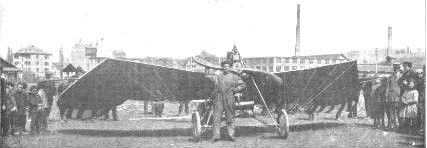
Ernst Ottenbacher (1884-1985) built his first (unsuccessful) monoplane in 1911, more or less a Blériot inspired machine. Later, he went to the Schulze flying school, where he got his flying licence (Nr. 336). He built then his second monoplane in 1912, a Schulze copy, and flew it at the Cannstadter Wasen, Germany.
Heinrich Ott and Schellenberg built their design in 1912 in Zürich Wiedicon (or Wiedikon), Switzerland. Ott is given as 18 years old at the time. The machine was a tractor design with a bird like wing construction. Large flaps (ailerons) are seen on the wings.
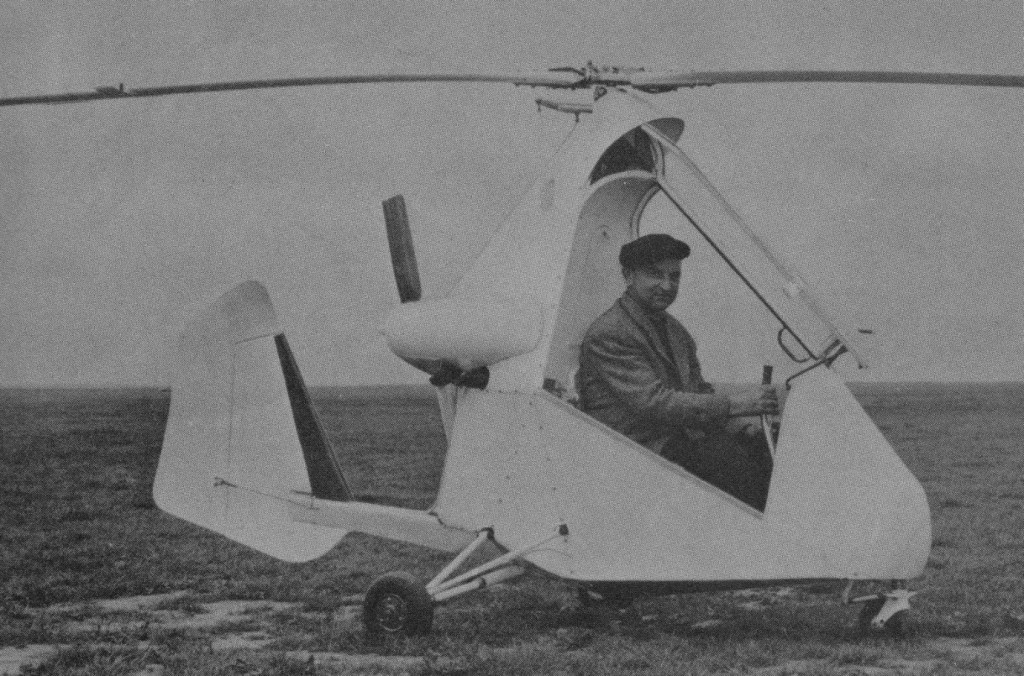
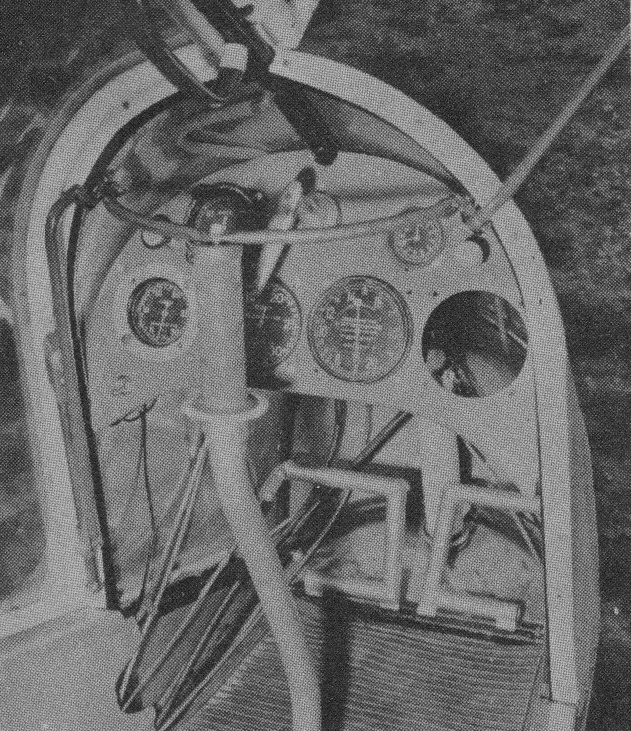
Francois Oslist designed and built a small autogiro, he called Microgiro, in 1964.
Rotor blades are formed from solid spruce, with an aluminium hub. The fuselage is steel tube with an aluminium skin. The tail is also tubular steel but with fabric cover.
Engine: McCulloch, 72 hp Rotor diameter: 20.6 ft Rotor chord: 7.8 in Fuselage length: 10.66 ft Hieght: 6.3 ft Landing gear tread: 54 in Landing gear track: 65 in Main wheel diameter: 9.5 in Nosewheel diameter: 6 in Empty weight: 330 lb MTOW: 550 lb
The BRO-23KR was designed by Bronis Oškinis and constructed by Česlovas Kisonas and K. Rinkevičius (the KR of the name) at the Kaunas hang gliding club.
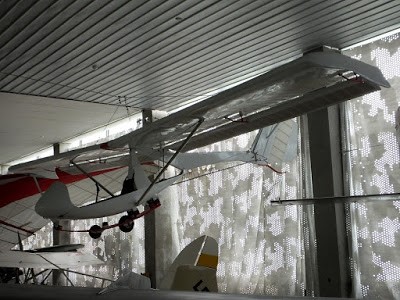
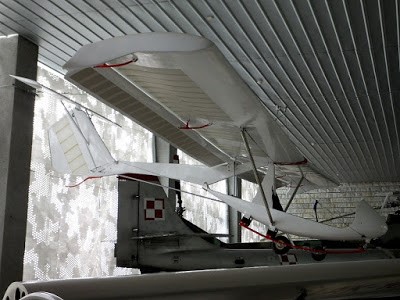
The BRO-23KR is a glassfibre aircraft with a strut and wire-braced high wing and a pod and boom fuselage with an open-sided cockpit and a T-tail. Its wing is rectangular in plan out to blunted and turned-down tips and both its single spar and ribs are formed from woven glassfibre. Three-ply glasscloth skin ahead of the spar forms a torsion resistant D-box. The narrow trailing edge of the wing was cast in epoxy with spanwise glassfibres and glasscloth covered. The whole wing was then covered with glued and thermally bonded, transparent polyethylene terephthalate film. It has narrow, full span, slotted ailerons, operating in co-ordination with rudder deflections and built in the same way as the wings. Single struts on each side brace the spar to the lower fuselage.
The fuselage of the BRO-23KR is formed from two GRP halves and attached to the wing centre-section. It has a long, shallow open cockpit which stretches back under the wing with the pilot in a reclined position. The tail unit, constructed in a similar way to the wing, has a highly swept, near-rectangular fin with a high aspect ratio horizontal tail mounted on its top. Its rather angular rudder, on a backward-leaning hinge, is large.
The BRO-23KR has very adaptable landing gear based on a landing skid sprung on five rubber blocks, which stretches nearly from the nose to just aft of the spar. The skid is wide enough to land on snow but can be fitted with a tyred wheel in summer. More unusual attachments include a set of introductory tricycle wheels and floats for landing on water. There is a long, self-sprung GRP landing skid under the tail.
It first flew in 1981.
Only two BRO-23KRs were constructed, the prototype and one built in 1984 by Panévežio Atsk. One took part in the 2nd World Championship, an Eastern European series gliding contest distinct from the FAI event, where it showed distinct improvements over earlier Soviet primary gliders. Both aircraft remained airworthy in 2015.
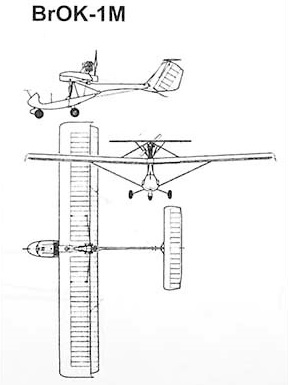
In 1982, Kišonas, Česlovas and Rinkevičius, K. (who had built the BrO-23KR glider) adapted a 25 HP engine on the BrO-23KR which thus became the BrOK-1M. The added K designates KIŠONASr.
BrOK-1M Garnys
In 1982 the prototype was motorized into the BROK-1M, with a largely uncowled, pusher configuration, 25 hp (19 kW) engine. Its installation, designed by Kišonas, placed it well above the rear part of the wing on forward and aft transverse V-struts from the central wing mountings, laterally braced on each side by a long strut out to the wing. It used the tricycle landing gear.
In 2009 one airframe remained in the Sport Aviation Museum in Kaunas.
Wingspan: 8.20 m (26 ft 11 in) Wing area: 10.40 sq.m (111.9 sq ft) Aspect ratio: 6.5 Airfoil: GA(W)-1 Length: 6.40 m (21 ft 0 in) Height: 2.2 m (7 ft 3 in) Empty weight: 83.5 kg (184 lb) Gross weight: 158.5 kg (349 lb) Maximum speed: 100 km/h (62 mph, 54 kn) smooth air Stall speed: 42 km/h (26 mph, 23 kn) Maximum glide ratio: 15 Min sink: 1.1 m / s (200 ft/min) Seats: 1