Peters Play Plane / National Aircraft Builders Corp (NABA) Sportster

Peters Play Plane NX10682

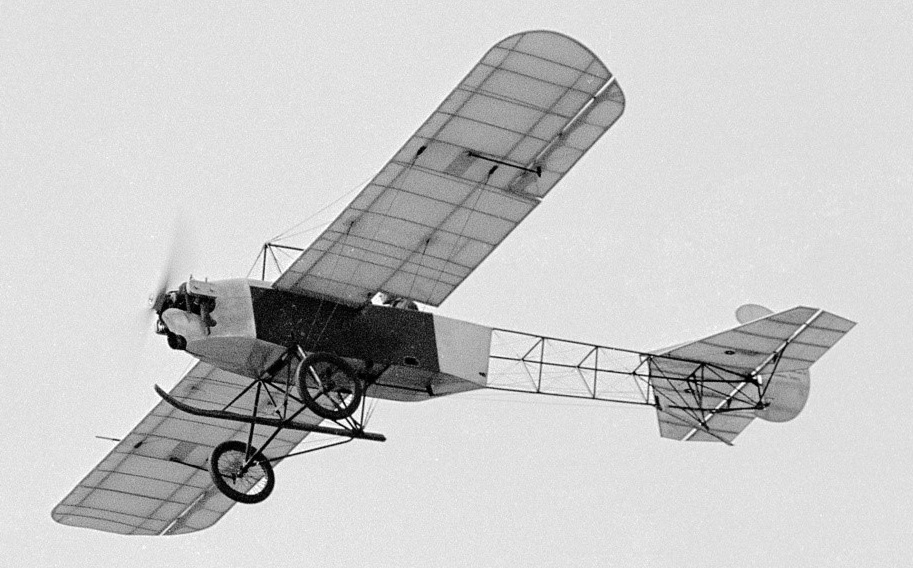
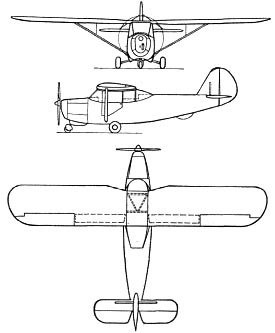
The 1932 Peters Aircraft Co Play Plane, or National Aircraft Builders Corp (NABA) Sportster was a single-place monoplane aimed at the lightplane home-builder market.

Originally powered by a 28hp Lawrance engine, by 1938 it had a 40hp Continental.

They were priced at $987, and $1,185 for a proposed two-place version. Two were built, NX10682 and NX15511 but unknown if any were built by others.

Peterborough Aero Club Guardian

A side-by-side two seat cabin monoplane with tricycle undercarriage designed by J.H.Payne and built by Peterborough Aero Club in 1939.

It was registered G-AFZT c/n G.1 and taken to Slingsby’s at Kirknymoorside for competition but was still not finished. The Guardian was to have been powered by a Cirrus I engine but was broken up soon after the war finished.

Span: 33.04 ft
Length: 23.04 ft

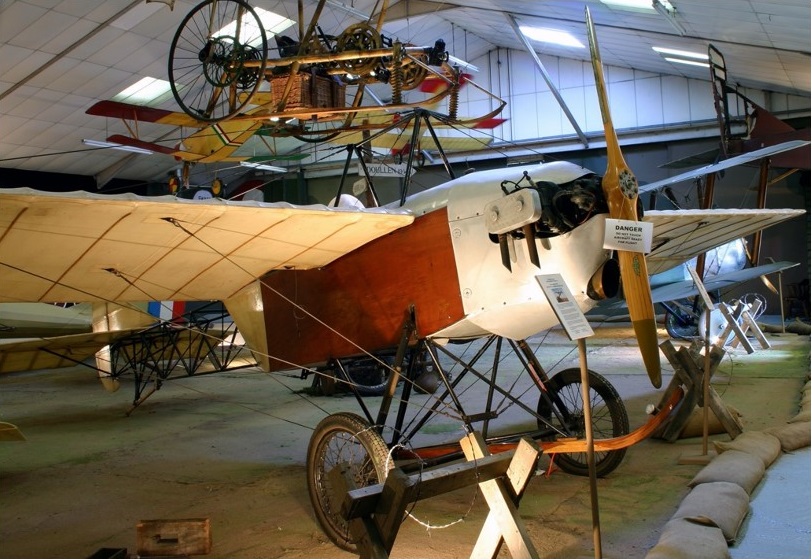
Pescara No.3 Helicopter

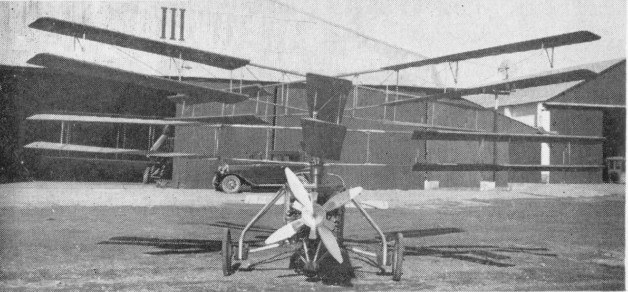
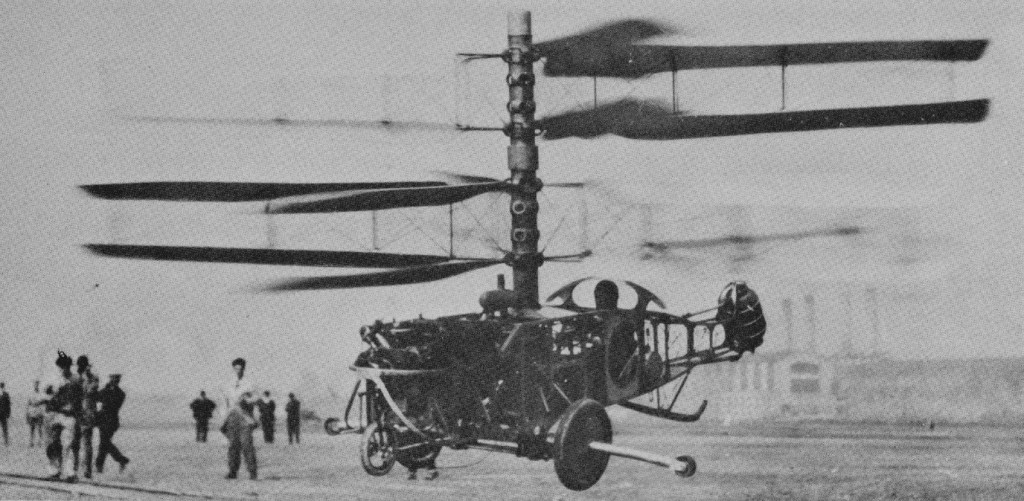
In 1919 the Marquis Raul Pateras de Pescara began trials with a series of helicopters leading to his 1924 biplane helicopter which had 16 rotorblades mounted co axially with both cyclic and collective pitch control. He flew it in France rather than his native Argentina, succeeding in directing its flight at a speed around 8 kph (13 mph) and 700 yards, making autorotative descents with the blades free¬wheeling.

2nd flight

The Pescara No.3 was flown backwards in 1924 on second flight. It later flew for 670 seconds.

By 1965 it was in reserve storage at the Musee de L’Air.

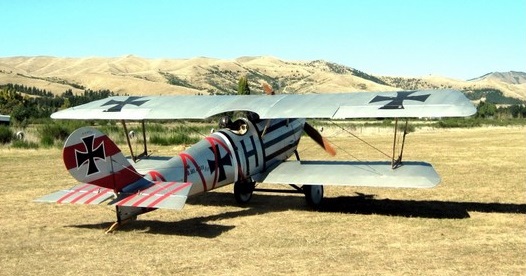
Personal Plane Services Pfalz D.III

20th Century Fox purchased the film rights of Jack D Hunter’s “The Blue Max” and the film was to be a multi-million dollar production, and the stars were to be the full sized reproductions of World War I fighters constructed for the film- two Pfalz D.III biplanes, two Fokker Dr.I triplanes, two S.E.5a scouts and three Fokker D.VII biplanes.

The reproductions had to be built in a hurry to meet the time frame for shooting and were constructed in different locations. One Pfalz D.III reproduction each was constructed by Personal Plane Services (G-ATIF, ZK-FLZ) and the other by the Hampshire Aero Club (reported as G-ATIJ and G-ATIG).

The availability of these aircraft would see them appearing in more movies. “Darling Lili” of 1970 was a vehicle for Rock Hudson and Julie Andrews.

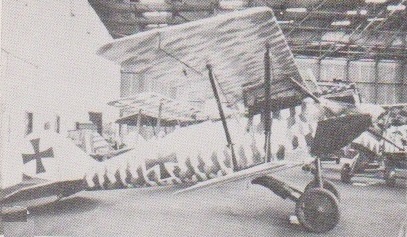
Personal Plane Services Ltd built Pfalz D.III

Serial number PPS/PFLZ/1 registered EI-ARC. After filming it was sold to the Fighting Air Command in USA.

EI-ARC at Baldonnel

Both of the Pfalz replicas and one Fokker D.VII now belong to New Zealand film director Peter Jackson’s 1914–18 Trust All three aircraft are kept in fully airworthy condition.

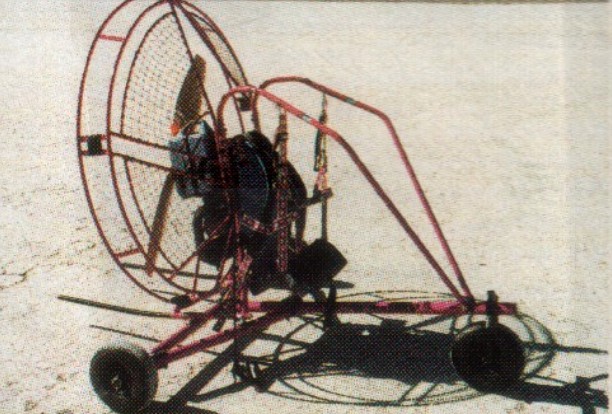
Personal Flight Sky-Bike

The Sky-Bike breaks down for easy transport and will fit into a car trunk.

Sky-Bike SR 210
Engine: Solo 210cc
Height: 3.9 ft
Empty weight: 45 lb
Fuel capacity: 1.7 USG
Cruise: 25 mph
Rate of climb: 400 fpm
Takeoff dist: 30 ft
Landing dist: 10 ft
Seats: 1

Sky-Bike ZR 250
Engine: Zenoah 250cc, 22 hp
Height: 4.7 ft
Empty weight: 80 lb
Fuel capacity: 1.7 USG
Cruise: 25 mph
Rate of climb: 600 fpm
Takeoff dist: 30 ft
Landing dist: 10 ft
Seats: 1-2

Sky-Bike ZR 250 B1
Engine: Zenoah 250cc, 22 hp
Height: 4.7 ft
Empty weight: 90 lb
Fuel capacity: 1.7 USG
Cruise: 25 mph
Rate of climb: 350 fpm
Takeoff dist: 40-50 ft
Landing dist: 10 ft
Seats: 2

Perman Parasol

This aircraft started off as a Mignet HM.14 Pou du Ciel (Flying Flea), and as such, was registered as G-ADZG (C of R 6568) on 16.12.35 with the c/no EGP/SS/56. However, the registration G-ADZG was not taken up.

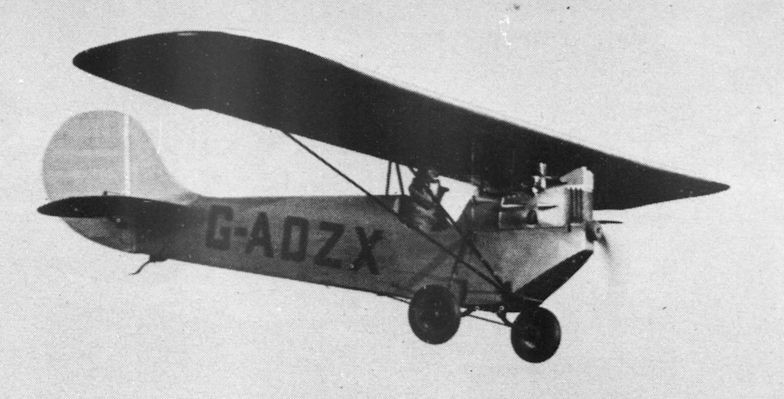
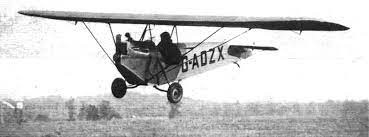
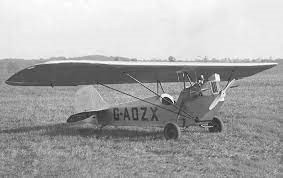
In 1936, together with Frank William Broughton, Perman developed a project for a small airplane called the Perman Parasol. Instead, the basic Flying Flea airframe was heavily modified and redesigned, and the aircraft was first registered (C of R 6593) on 2.5.36 as G-ADZX to E.G. Perman & Co, Gravesend Airport, Gravesend, Kent. The aircraft was described to the Air Ministry (per the aircraft’s record card) as a “Perman Parasol”. The Perman Parasol was a single seat ultra light monoplane, designed and built by E.S. Penman & Co Ltd. of London.

It was a single-seat parasol strut-wing monoplane powered by a Perman-Ford (Perman Poupower) engine with a claimed power of 32 hp with a two-bladed wooden propeller.

One only – G-ADZX – flew for the first time 23.5.36 (at Gravesend), powered by a 30 hp Perman-Ford engine, and flown by Mr A E Clouston.

Sold on for £175 and re-registered (C of R 6593) 13.10.36 to Airworthiness Ltd., Gravesend Airpoprt, Gravesend, Kent. According to the aircraft record card, they re-named the aircraft as a “Brown Pigeon” (“formerlly called Parasol”)

On the night of 31 July 1937, fire broke out in one of the hangars at Gravesend Airport. By the time it was extinguished, no fewer than five aircraft had been destroyed or damaged beyond economic repairThese were Blackburn Bluebird G-EBRF, two Robinson Redwings, G-ABDO and G-ABOK, DH60M Moth G-AAUH — and the one and only Perman Parasol, G-ADZX.

The blaze has been described elsewhere as “a firefighting exercise”. A local newspaper reported that “an aeroplane’s petrol tank exploded in a mysterious fire”. The airfield was also known as London East.

Written off (destroyed) by or on 31.7.37 when burnt out in a hangar fire at Gravesend Airport, Gravesend, Kent. Registration G-ADZX formally cancelled by the Air Ministry 31.12.38 due to “destruction or permanent withdrawl from use of aircraft”. The aircraft record card also noted “Census 1938”, which indicates that the cancellation was as a result on the Air Ministry’s 1938 Census into all surviving British-registered civilian aircraft.

The Perman Parasol was developed into the Perman Grasshopper.

Engine: Perman-Ford, 32 hp
Wingspan: 7.80 m
Wing area: 11.60 sq.m
Length: 4.75 m
Height: 1.80 m
Empty weight: 192 kg
Maximum takeoff weight: 272 kg
Maximum speed: 120 km/h
Cruise speed: 109 km/h
Range: 450 km
Crew: 1
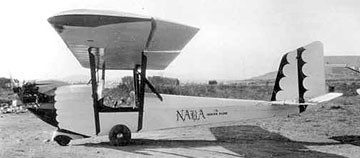
Perman Grasshopper / Broughton-Blayney Brawney

The rights to the Perman Grasshopper, a development of the Perman Parasol, were taken over by Broughton-Blayney and marketed as the Broughton-Blayney Brawney.

A single-seat parasol monoplane, three Broughton-Blayney Brawney were built at Hanworth;
G-AENM c/n BB/50 – written off 21 March 1937
G-AERF c/n BB/51 – written off 6 June 1937
G-AERG c/n BB/52 – withdrawn from use in 1937

Broughton-Blayney Brawney
Engine: Carden Ford
Wingspan: 25.06 ft
Length: 15.06 ft