Piasecki PV-2

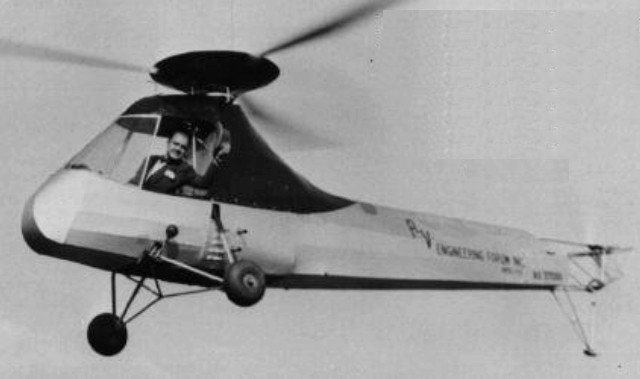
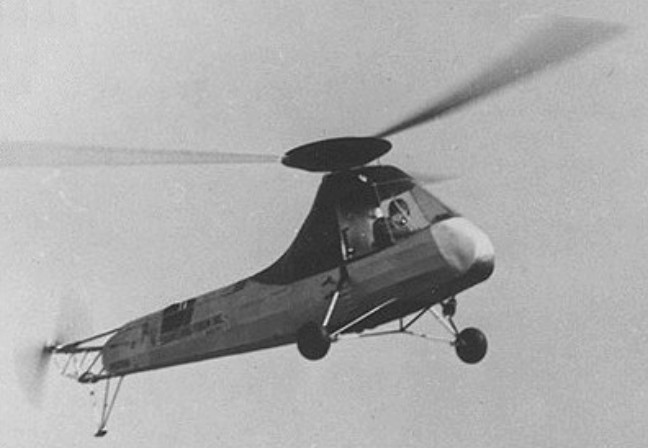
The PV.1 was an advanced design for its day with a tube and fabric fuselage and a tail-mounted anti-torque system involving an enclosed fan in the rear fuselage. This design did not fly but the single-seat PV.2 which took to the air in April 1943 was very similar – but with a conventional tail-mounted anti torque propeller. It was probably the first truly rigid rotor helicopter ever to fly.

There is room for one person (pilot), who sits in a conventional seat behind a rounded, glassed-in nose, similar to the front end of an early Aeronca light plane. The fuselage is fabric-covered. There are three blades. Two blades fold back like the wings on a fly to permit storage. Control of the PV-model has cyclic pitch control of its rotor blades. There is the conventional rudder-stick combination, rudder action manipulating a five-foot tail rotor similar to the vertical rotor on the XR-4. The PV-2 helicopter is powered with a four-cylinder, air-cooled Franklin engine, mounted with its crankshaft upright.

Piasecki himself was the pilot for the first flight, made on 11 April 1943. He flew the aircraft several times in public. Once he took off from the driveway of a private home in Falls Church, Virginia, and flew a short distance to a filling station, where he landed and spent an a ration stamp for three gallons of gasoline. The surprised attendant put in the gas, wiped off the helicopter’s windshield, and Piasecki took off again, heading for the golf course. A few minutes later he landed right beside the first tee, took his golf clubs out of the small baggage compartment, and proceeded to tee off for a game of golf.

It was then dropped because Piasecki turned his attention to the more ambitious field of large military helicopters; with the PV-3, he returned to the twin-rotor formula which had given rise to his earlier experiment.
Engine: 1 x 4-cylinder Franklin, 67kW / 90 hp
Main rotor diameter: 7.62m
Length blades folded: 6.7m
Height: 2.3 m
Width: 2.4 m
Take-off weight: 450kg
Empty weight: 340kg
Max speed: 160km/h
Cruising speed: 135km/h
Range: 240km
Endurance: 2hr
Crew: 1
Piasecki PV-1

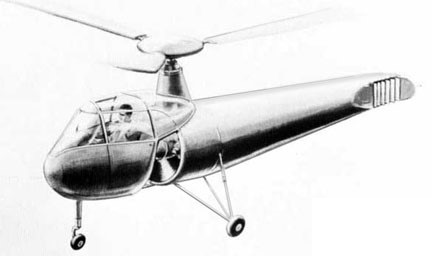
Piasecki PV-1 Concept art

PV-1 1940 – Frank Piasecki and his P-V Forum’s first design was to be a single-rotor helicopter with a fan-forced, anti-torque system blowing air through the tail cone, and turned by control vanes in the exit, predating the NOTAR* by several decades. PV-1 was not developed beyond the design stage due to high development risk at the early stage of helicopter design. *Acronym for “No Tail Rotor” technology whereby the tail rotor was replaced as anti-torque control by a swiveling exhaust duct at the end of a hollow tail boom.

Piaggio PD-4

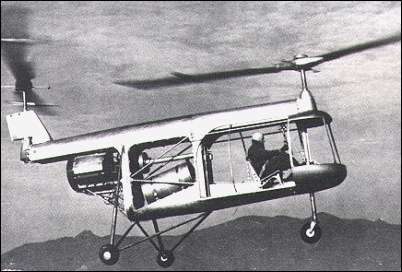
The P.D.4 was a four-seat helicopter with two rotors placed in tandem. Initially it had to be equipped with 450hp Alpha Romeo engine but then a 215hp Franklin was adopted.

The helicopter flew in the first half of 1952, demonstrating good handling characteristics although being seriously underpowered. In a wrong maneuver during a landing with lateral wind it was seriously damaged and wasn’t repaired.

PD.4
Engine: 1 x Franklin, 215hp
Rotor diameter: 9.0m
Loaded weight: 1400kg

Piaggio P.150

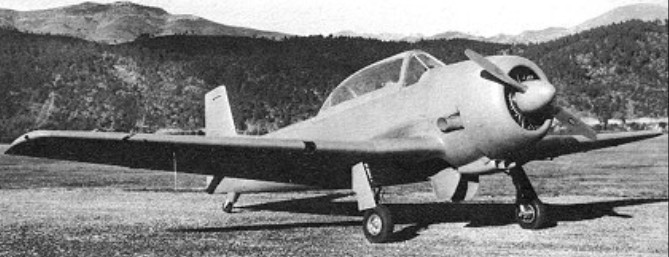
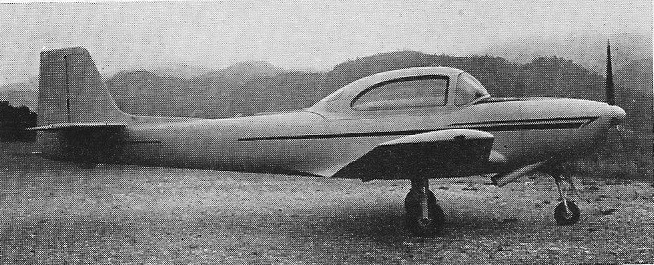
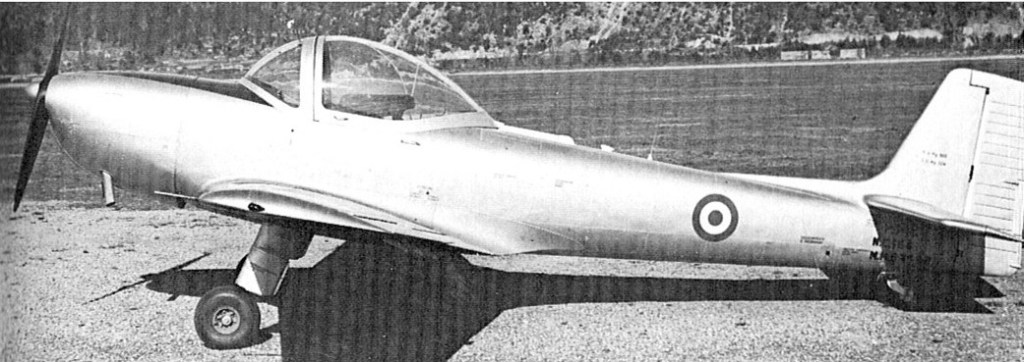
Built to compete against the Fiat G.49 and Macchi M.B.323 as a replacement for the North American T-6 used widely by the Aeronautics Militare Italians, the Piaggio P.150 made its first flight in November 1952. An all-metal cantilever low-wing monoplane with square cut wingtips and tailplane, the P.150 had wide-track inward-retracting main landing gear legs. Pupil and instructor were housed in tandem with dual controls, under a long glazed canopy. The original powerplant was a 447kW Pratt & Whitney Wasp R-1340-S3H1 radial engine, which gave a maximum speed of 380km/h. A later version was fitted with a geared Alvis Leonides engine, but the type was not considered suitable to be built in quantity for the Italian air arm.

Engine: 1 x Pratt & Whitney Wasp R-1340-S3H1, 447kW / 600 hp
Wingspan: 42 ft 4.5 in
Length: 30 ft 4 in
Height: 9 ft 2.5 in
Empty weight: 4277 lb
Loaded weight: 5600 lb
Max. speed: 380 km/h / 236 mph at 5000 ft
Cruise: 195 mph
ROC: 1663 fpm
Service ceiling: 25,200 ft
Range: 880 mi

Piaggio P.149

The Piaggio P.149 was a 4-seat touring development of the P.148 with many of the same structural components. A 2-seat side-by-side all metal trainer with a fixed tailwheel undercarriage.

Piaggio P.149 Article

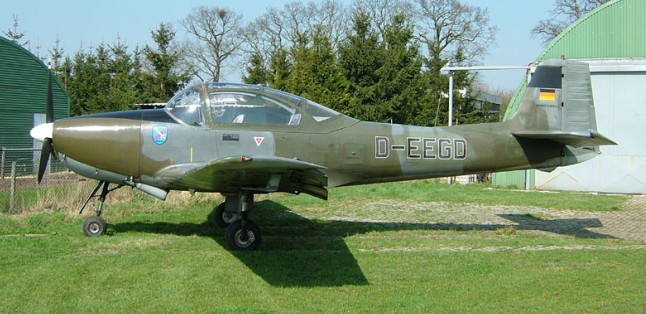
The prototype of the P.149 (I-PIAM c/n 171) with a 260 hp Avco Lycoming GO-435-C2 engine and a retractable tri-gear flew first on 19 June 1953. Two years later the P.149 was selected by the Federal German Air Force as a standard basic training and liaison monoplane.

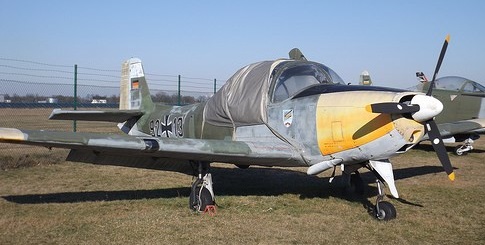
To meet their requirements a 2-seat military trainer version of the P.149 with glazed cabin roof, deeper rear fuselage and a 280 hp Lycoming GO-480 engine was developed, designated P.149-D. The Federal German Air Force (Luftwaffe der Bundesrepublik Deutschland) ordered 265 Piaggio P.149D for use as a 2-seat primary trainer and 5-seat liaison aircraft.

92+13 Piaggio P-149 D 309

Piaggio built 76, including one which was written off before delivery. Focke-Wulf built 190 under licence from Piaggio. The first Piaggio built P.149D (AS+401 c/n 250) was delivered to Memmingen Air Base in May 1957. In the mean time Focke-Wulf had started production in Bremen, Germany and delivered its first example in November 1957.

Accommodation was provided for five, reduced to two for aerobatic flying.

P.149D
Engine: 1 x Avco Lycoming GO-480, 201kW / 270hp
Prop: 3 blade constant speed
Wingspan: 11.12 m / 37 ft 6 in
Length: 8.8 m / 29 ft 10 in
Height: 2.9 m / 10 ft 6 in
Wing area: 18.85 sq.m / 202.90 sq ft
Empty weight: 1160 kg / 2557 lb
Max take-off weight: 1680 kg / 3704 lb
Max. speed: 305 km/h / 190 mph
Cruise: 165 mph
Ceiling: 6050 m / 19850 ft
Range: 1090 km / 677 miles

Piaggio P.148

In September 1950 Piaggio began development of the P.148 primary trainer and in less than six months the prototype had been certificated. Production examples became standard trainers with the Italian Air Force.

Piaggio P.148 Article

Engine: 1 x Avco Lycoming O-435-A, 142kW
Max take-off weight: 1280 kg / 2822 lb
Empty weight: 876 kg / 1931 lb
Wingspan: 11.12 m / 37 ft 6 in
Length: 8.44 m / 28 ft 8 in
Height: 2.4 m / 8 ft 10 in
Wing area: 18.85 sq.m / 202.90 sq ft
Max. speed: 234 km/h / 145 mph
Ceiling: 5000 m / 16400 ft
Range: 925 km / 575 miles

Piaggio P.148

Piaggio P.119

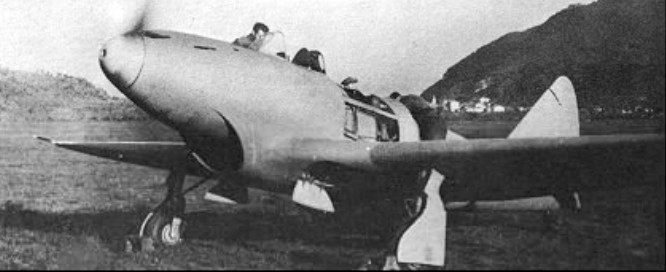
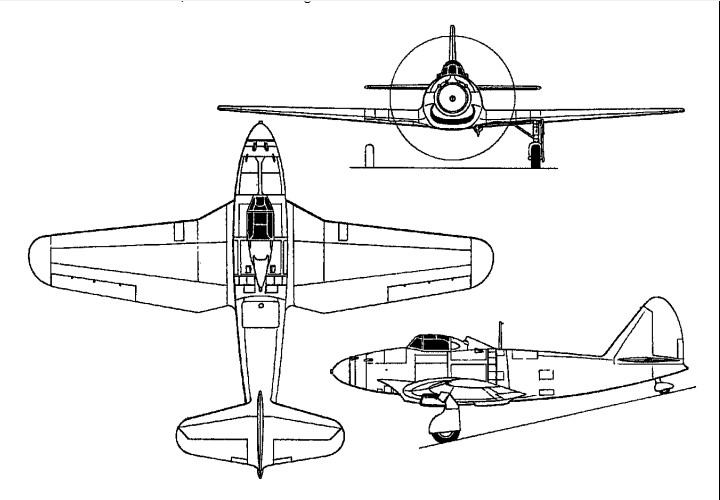
Flown for the first time on 19 December 1942 from the company’s Villanova d’AIbegna airfield, the Piaggio P.119 was an all-metal low-wing monoplane single-seat fighter with a slim fuselage. This was made possible by enclosing the 1230kW Piaggio P.XV RC.45 radial engine in the fuselage behind the pilot’s fully enclosed cockpit, the three-blade propeller being driven by an extension shaft. The clean lines were broken only by the engine air intake located beneath the fuselage, forward of the wing. It was intended to be re-engined with a RC50 of 1,650hp. Proposed armament was four nose-mounted 12.7mm machine-guns and one 20mm cannon firing through the propeller hub.

Piaggio P.119 Article

Test flights indicated a maximum speed of 620 km/h but the aircraft was plagued by engine vibration problems and after relatively slight damage suffered during a landing accident, on 2 August 1943, further development was abandoned and no attempt made to repair it.

Engine: 1 x Piaggio P.XV RC.45, 1230kW
Max. speed: 620 km/h
Armament: 1 x 20mm cannon, 4 x 12.7mm machine-guns

Piaggio P.8

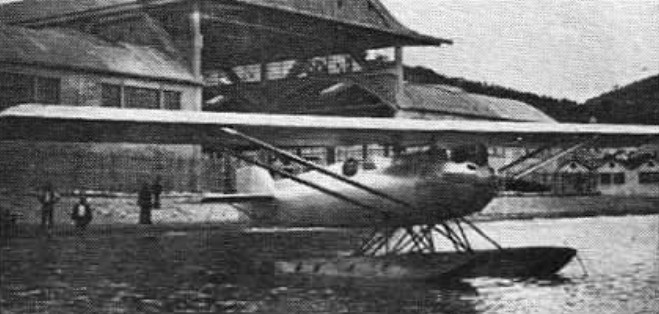
A parasol-wing single-seat floatplane, the small Piaggio P.8 reconnaissance aircraft of 1928 was intended, like its rival the Macchi M.53, to be stored in a cylindrical container aboard submarines of the large ‘Ettore Fieramosca’ class. It was designed to be assembled rapidly for deployment at sea on patrol or reconnaissance; after being recovered it could as easily be dismantled and re-stowed in its container. Powered by a 56kW Blackburn Cirrus II engine, it had a maximum speed of 135km/h.

Engine: 1 x Blackburn Cirrus II, 56kW
Max. speed: 135 km/h / 84 mph

Piaggio P.7 / Piaggio-Pegna P.c.7

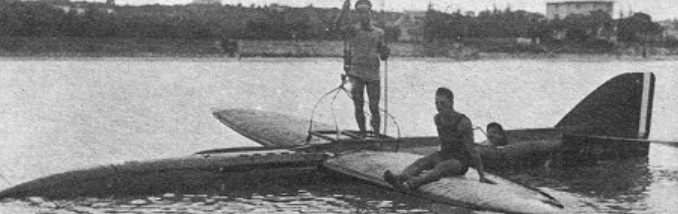
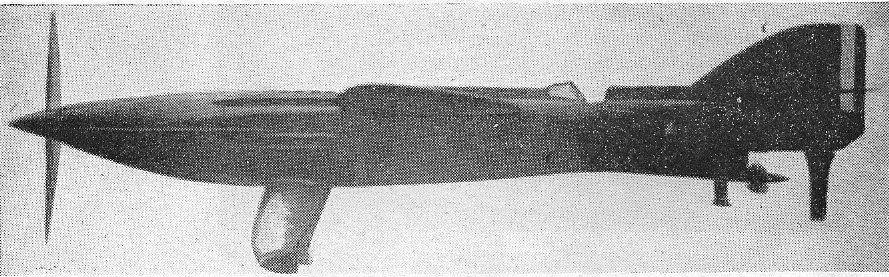
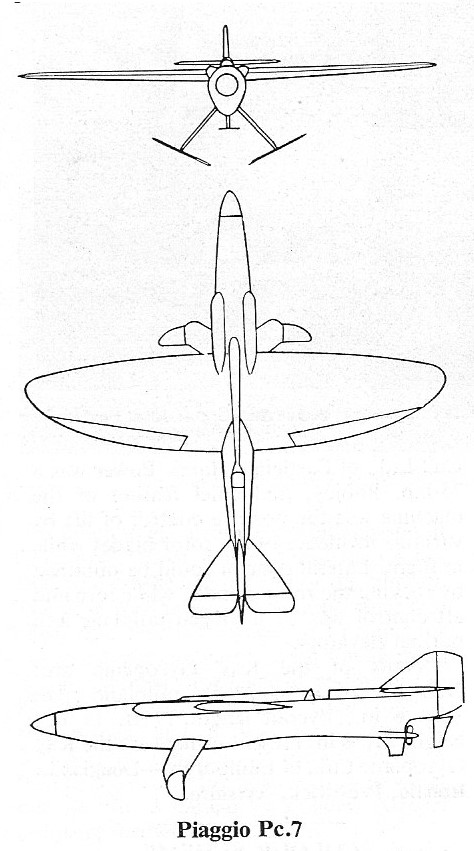
A truly remarkable design, the Piaggio P.7 or Piaggio-Pegna P.c.7 was built for the 1929 Schneider Trophy contest. A cantilever high-wing monoplane with long slender fuselage, it had twin hydrofoils instead of floats and was intended to float with the wing resting on the surface of the water. While water-borne it was to be driven by an ordinary marine propeller connected by a shaft and clutch to the rear of the 723kW Isotta Fraschini Special V.6 engine. Once sufficient speed had been attained to lift the aircraft on to the hydrofoils and the normal tractor propeller was clear of the water, this latter propeller would be clutched-in, the marine propeller disengaged, and a conventional take-off would follow.

In practice, problems with the respective clutches prevented the P.c.7 from ever taking off, and although water trials were conducted on Lake Garda by Dal Molin of the Italian Schneider team, the construction of a second aircraft was abandoned.

Engine: 1 x Isotta-Fraschini Special, 723kW / 850 hp
Wingspan: 28 ft 8.5 in
Length: 29 ft
Height: 8 ft
Empty weight: 3093 lb
Loaded weight: 3709 lb
Max take-off weight: 1738 kg / 3832 lb
Crew: 1

Piaggio P.6

In 1927 two parallel, designs were developed to meet an Italian naval requirement for a two-seat catapult-launched seaplane. One was a small flying-boat, the Piaggio P.6bis powered by a single 194kW Isotta Fraschini V.6 engine mounted between the wings and driving a pusher propeller; the other was the P.6 floatplane with a large central float, two wing-tip stabilising floats, and a 288kW A.20 engine in the nose. The two aircraft had identical wing structure, with rigid strut bracing, and each mounted a single defensive machine-gun, that of the flying-boat in the bow, and the floatplane’s in the rear cockpit.

The P.6ter of 1928 was similar to the P.6, but had an engine boosted to 306kW to provide a maximum speed of 195km/h. Wing span was 13.50m and maximum take-off weight 2360kg. A batch of 15 P.6ter floatplanes was built, and the type was used for a period aboard several Italian capital ships and cruisers.

P.6bis
Engine: 1 x 194kW Isotta Fraschini V.6

P.6
Engine: 1 x 288kW A.20

P.6ter
Engine: 1 x Fiat A.20, 306kW
Max take-off weight: 2360 kg / 5203 lb
Wingspan: 13.5 m / 44 ft 3 in
Max. speed: 195 km/h / 121 mph