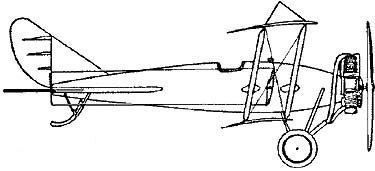
Two subsequent Pigeon aircraft were the I and much larger II, a three bladed prop biplane of which only three were made. They were used by N.A.T. in the early 1930’s.
1 engine
Pigeon Hollow Spar Co Model I
Two subsequent Pigeon aircraft were the I and much larger II, a three bladed prop biplane of which only three were made. They were used by N.A.T. in the early 1930’s.
Pigeon Hollow Spar Co Thomas-Pigeon

The Pigeon Hollow Spar Company also produced a flying boat called the Thomas-Pigeon about 1920. This hydroplane was built for Reginald deNoyes Thomas, a WWI naval aviator and director of the Thomas-Pigeon Aeroplane Corporation of Boston, Massachusetts.
The fuselage is spruce and ash ribboned all-wood construction with mahogany planking. This type of construction was said to insure safety, long life and reliability in all weather conditions.
The engine is mounted over the fuselage and below the upper wing. The only control is a joystick, and it may never have been completed.
The fuselage of which was located and purchased by Cole Palen, and reported in 1994 at “Yanks Air Museum in Chino.”
Pigeon-Fraser Albree Scout / Model 9 / Timson-Albree / SG
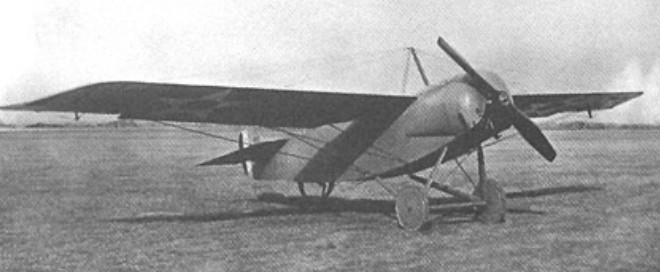
At a time when the biplane configuration had become the norm for single-seat fighting aircraft, George N Albree designed a single-seat shoulder-wing monoplane intended for use as a fighting scout. Ordered by U.S. Army April 17, 1917, two prototypes were delivered to the US Army Signal Corps by the Pigeon Hollow Spar Company in September 1917.
The aircraft was of wooden construction and powered by a 100 hp Gnome rotary engine. A unique design concept of the aircraft was that the “rudder” was not used for flight control, but only to compensate for engine torque. Also the Scout quite possibly was the very first aircraft design to invoke the use of an all ‘flying tail’ as the entire tail assembly was hinged behind the cockpit moving up and down for elevator control. It is believed to be the first aircraft to utilize a flat-bottomed airfoil, and uniquely designed spring-type wheels were used to provide shock absorption.
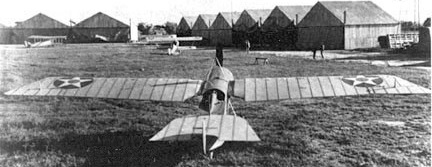
First aircraft Model SG- SC-#116 delivered in September 1917 and SG- SC #117 followed in November 1917. First flight: both were flown and successfully tested by contract pilots including Eddie Stinson, at Langley Field, VA. There were no official flights authorized to be made for the U.S. Army acceptance process.
The third Model SG order under the same contract was for a fuselage only, no engine to be provided and with instructions for it to be shipped to the Colt Arms Company, Hartford, CT. The SG fuselage was completed and shipped in the fall of 1917.
The two Model SGs for the Army had their SC Serial #s: high on the vertical stabilizer for #117, and lower for #116). U.S. Army standard aircraft wing star markings for 1917. The first pursuit aircraft contracted for by the United States.
The aircraft was intended to be fitted with a single machine gun, but no armament was ever provided and the Signal Corps considered the aircraft both unreliable and too slow. The fisrt aircraft was tested to destruction, while reportedly the second aircraft was test flown on behalf of the USASC, crashing on its first flight, killing the pilot. The USASC considered the aircraft both unreliable and too slow, consequently, no series production was undertaken.
A third unfinished aircraft was stored in the rafters of the Pigeon Company. It was bought by Cole Palen on November 15, 1961, and restored for display at the Old Rhinebeck Aerodrome Museum.
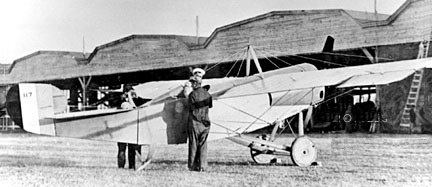
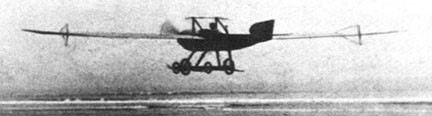
A Pigeon with 50hp Gnôme engine constructed by Roscoe P Timson and flown at Nahant Beach twice in 1916 by Clifford Webster of Lowell, a test pilot for Burgess Airplane Co.
Of the 4 built, of which 3 for US Army, but were not accepted after testing at McCook Field—one reportedly was a static test model, one crashed and burned in a test flight, one was put in storage by Pigeon Co, and info on the fourth is imprecise, but it could be Albree’s plane. Photos verify the existence of four aircraft, with two of them identified as c/n 9 and s/n 117.
Engine: 100 hp General Vehicle-Gnome rotary
Span: 37ft 11in (11.56 m)
Length: 24 ft (7.32 m)
Height: 8 ft 8.5 in (7.32 m)
Weight T/O: 1250 lb (557 kg)
Speed max: 103 mph (166 kmh)
Seats: 1
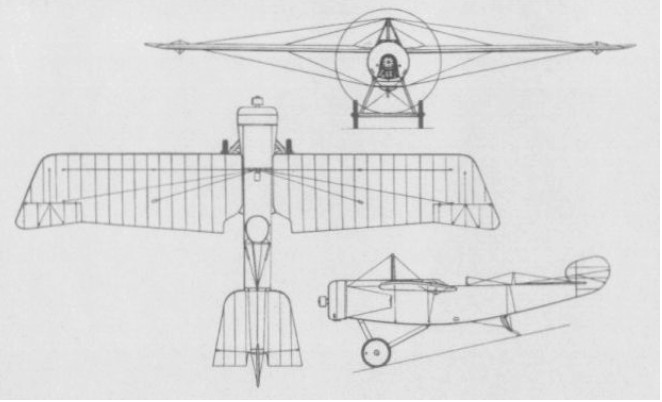
Piffard No. 2 biplane
The 1911 Piffard No. 2 biplane was designed and built by H. H. Piffard in the UK.
Span: 34′
Length: 31′
Weight all up: 850 lbs
Pietschker Taube

Monoplane designed by Alfred Pietschker who died flying it on 15 November, 1911.
Pietenpol Sky Scout
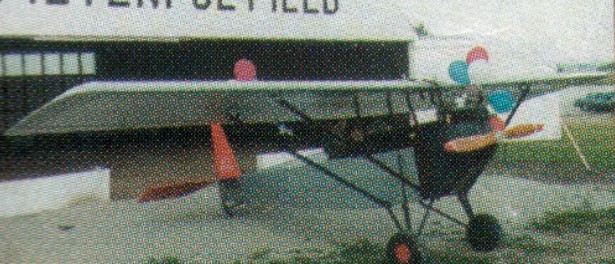
The 1931 Sky Scout was a slightly smaller version than Air Camper. The prototype was N10718.
In the late 1990s the two seat Air Camper and single seat Sky Scout designs are very much alive, with numerous examples still flying.
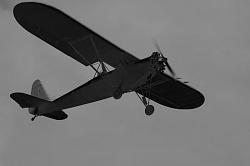
This Sky Scout was started by a 17 year old Alan Mogg, of Sydney, in 1936, but was not completed and flown until December 1940, mainly due to having to comply with the then Civil Aviation Board’s requirements. It was fitted with a Salmson AD9 engine which required the extended mount to bring the Cof G into limits and no doubt, brought about the larger fin and rudder.
Engine: Ford Model T, 20 hp
HP range: 20-40
Height: 6.5 ft
Length: 16.2 ft
Wing span: 27.25 ft
Wing area: 135 sq.ft
Fuel cap: 6 USG
Speed max: 62 mph
Cruise: 55 mph
Stall: 35 mph
ROC: 200 fpm
Take-off dist: 150 ft
Landing dist: 250 ft
Weight empty: 520 lb
Seats: 1
Landing gear: tail wheel

Pietenpol Air Camper
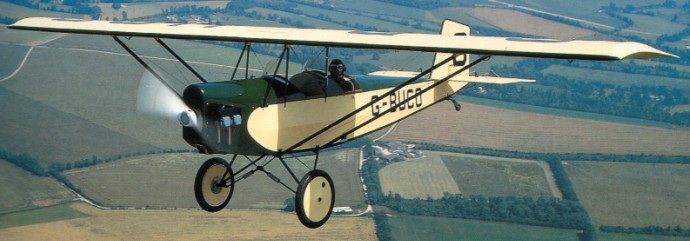
This popular design took to the air for the first time on May 29, 1929, from the rural Minnesota town of Cherry Grove. The brainchild of Bernard Harold Pietenpol, a self ¬taught mechanic and experimenter. It is a high wing two seat tandem open cockpit monoplane. The first, N12937, first flew on 20 April 1933.
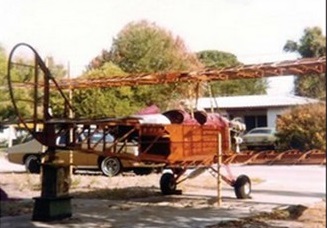
The do-it-yourself craze was just getting started as a Depression-born phenomenon when the Air Camper replaced the earlier primary glider as aviation’s favorite backyard building project. It was in 1930 that Modern Mechanics magazine featured the Ford Model A engine as the perfect powerplant for the little homebuilt. The two-seater open-cockpit monoplane is said to land like a Luscombe and handle like a J-3 Cub. In the late 1990s the two seat Air Camper and single seat Sky Scout designs are very much alive, with numerous examples still flying. Modern Air Campers are powered by Corvair, Lycom¬ing or Continental engines.
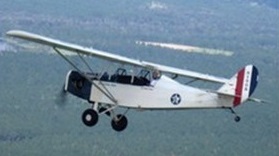
Ultralight Replica:
RagWing RW1 Ultra-Piet
Engine: Ford Model A, 40 hp
HP range: 40-125
Height: 6.5 ft
Length: 17.8 ft
Wing span: 29.5 ft
Wing area: 147.5 sq.ft
Weight empty: 620 lb
Gross: 1020 lb
Fuel cap: 18 USG
VNE: 90 kt / 104 mph / 167 kmh
Speed max: 90 mph
Cruise: 75 mph
Stall: 40 mph
ROC: 500 fpm
Take-off dist: 400 ft
Landing dist: 300 ft
Seats: 2
Landing gear: tail wheel
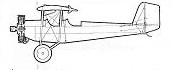
Pietenpol Aerial
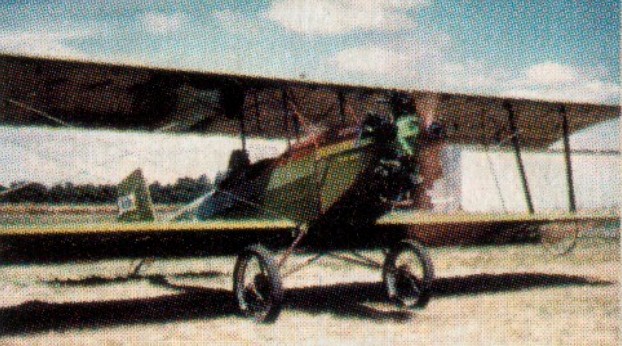
A biplane adaptation of the stock Air Camper. Designed by Chad Wille.
Engine: Continental O-300, 145 hp
HP range: 85-200
Height: 7 ft
Length: 19.5 ft
Wing span: 29.5 ft
Wing area: 250 sq.ft
Weight empty: 900 lb
Gross: 1400 lb
Fuel cap: 15 USG
Speed max: 105 mph
Cruise: 85 mph
Range: 150 sm
Stall: 36 mph
ROC: 1000 fpm
Take-off dist: 250 ft
Landing dist: 200 ft
Seats: 2
Landing gear: tail wheel
Pierce Aeroplane Co Sporting Tractor
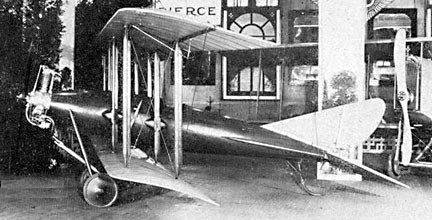
The 1916 Pierce Aeroplane Co Sporting Tractor single seat open cockpit biplane had an underslung lower wing and monocoque fuselage.
Engine: Lawrance L-4, 40hp
Wingspan: 26’0″
Length: 20’0″
Useful load: 250 lb
Seats: 1