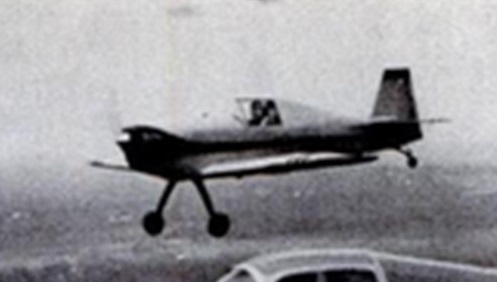
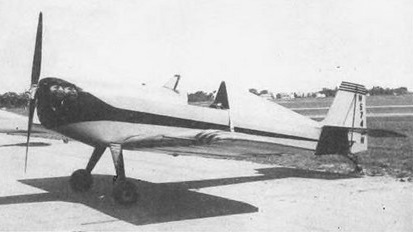
Curtis Pitts began designing the single-seat S 1 in 1942. The 55 hp prototype flew in September 1944, but was repowered with 90hp Franklin and sold to a cropduster, who reportedly was so hard of hearing that one time he didn’t hear the motor quit and crashed—no injury, but the plane was written-off.
A second Special, with 85hp Continental C-85, went to aerobat Betty Skelton in 1947 as Li’l Stinker (NX86401/N22E) (still active in 1975, displayed at NASM 2001).
Black Beauty (built by Pitts for Caro Bailey) started the trend toward more power by packing a 125 hp Lycoming O 290.

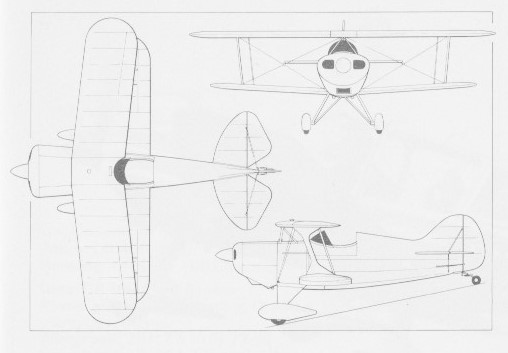
The Pitts Special is a single seat, open cockpit, fully aerobatic biplane. The fuselage is made up of a welded steel tube structure to which plywood formers and wooden stringers are fitted, the whole being fabric covered except for the aluminium front panels. Roth wings have solid spruce spars to which are fitted wooden ribs, each wing panel being internally and externally wire braced and fabric covered. The wings are set at 6 degrees sweep back at the quarter chord line, Frise type ailerons are fitted only to the lower wings, which have 3 degrees dihedral. Single faired interplane struts and N type cabane struts are fitted. The wing airfoil section is an M6.The main undercarriage is made up of welded steel tube and utilises rubber cord shock absorption. The tail wheel is steerable. A 16 Imperial gallon fuel tank is located immediately aft of the firewall. Engines of from 100-200 h.p. may be fitted.

The 1960 S1-C or Flatwing incorporated a semi-symmetrical airfoil and lower-wing ailerons with a Continental O-200 engine. The first S1-C was Pat Ledford’s (N8L) and the plans were drawn up as it was constructed. They were redrawn in the ’90s by Steen Aero Lab, incorporating many minor changes, one of which was the inclusion of the slightly-longer S1-S fuselage.
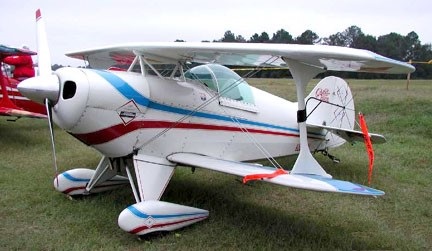
The S-1D is a four aileron version with a modified M-6 airfoil, completely certified. Kits and plans were marketed to home-builders.
The S1-E is an experimental, home-built version of the S1-S, with some crossover in names and parts provided by the factory between the -S and –E. An unknown number of S1-E became certified S1-S.
The S-1S model was first year built in 1974. The price in 1982 was $41,690 as a complete kit, or certified under FAA A8SO.
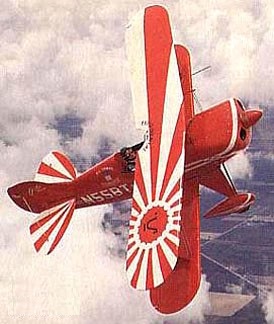
S1-S / Roundwing of 1973 was an S1-D with two different symmetrical airfoils on the upper and lower wings with four ailerons.
S1-S production continued until 1981, when its plans were released for home-builders. Any home-built S1-S predating 1981 was not a true S1-Ss.
S1-SS or Super Stinker Pitts Special used an airfoil and aileron setup derived from the S-1-11/-11B “Super Stinker” aircraft, which was not a Pitts Special nor was it an S1, but a new design meant for world championship aerobatic competition. S1-SS was offered by Steen Aero Lab since the ’90s as supplemental wing plans to fit onto any S1 fuselage.

The 1981 S-1T is a single-seater model which claims roll rates of up to 240 degrees/second. A certified version that superseded the S1-S, with a 200hp engine, constant-speed prop, and new aileron design. Pitts has sold more than 2500 sets of plans for the popular S-1T.

By 1998 the Pitts S-1 was marketed by Aviat Aircraft.
S1 Special
1945
Engine: 55hp Lycoming
Wingspan: 20’0″
Length: 18’3″
Seats: 1
S-1C
Engine: Lycoming IO-360-B4A, 180 hp
Speed max: 147 mph
Cruise: 143 mph
Range: 250 sm
Stall: 64 mph
ROC: 2600 fpm
Take-off dist: 300 ft
Landing dist: 600 ft
HP range: 125-200
Fuel cap: 20 USG
Weight empty: 720 lb
Gross: 1150 lb
Height: 6.25 ft
Length: 15.5 ft
Wing span: 17.33 ft
Wing area: 98 sq.ft
Seats: 1
Landing gear: tail wheel
Engine: Lycoming O-320, 150 hp
Cruise: 150 mph
ROC: 2650 fpm
Range: 300 sm
Span: 17 ft 5 in
Length: 15 ft 6 in
Empty wt: 720 lb
Max wt: 1050 lb
S-1C
Engine: 1 × Textron Lycoming AEIO-540-D4A5, 260 hp (194 kW)
Wingspan: 17 ft 4 in (5.28 m)
Length: 18 ft 9 in (5.71 m)
Maximum speed: 210 mph (338 kph)
Maximum range: 319 miles (513 km)
Service Ceiling: 21,000 ft (6,400 m)
S1-D
Enine: 180hp Lycoming IO-360B
Wingspan: 17’5″
Length: 15’6″
Useful load: 425 lb
Max speed: 145 mph
Cruise speed: 135 mph
Stall: 64 mph
Range: 230 mi
Ceiling: 22,000′
S-1S
First built: 1973
Engine: Lycoming AEIO-360-B4A, 180 hp
TBO: 2000 hr
Prop: Sensenich 2-blade, 72-in
Seats: 1
Length: 15.5 ft
Height: 6.3 ft
Wingspan: 17.3 ft
Wing area: 98.5 sq.ft
Maximum ramp weight: 1150 lb
Maximum takeoff weight: 1150 lb
Standard empty weight: 740 lb
Maximum useful load: 410 lb
Maximum landing weight: 1150 lb
Wing loading: 11.7 lbs/sq.ft
Power loading: 6.4 lbs/hp
Maximum usable fuel: 120 lb
Best rate of climb: 2500 fpm
Service ceiling: 18,000 ft
Maximum speed: 139 kt
75% cruise: 123 kt
55% cruise: 115 kt
Stalling speed: 56 kt
Turbulent-air penetration speed: 134 kt
Fixed tail wheel under carriage
Payload max fuel: 257 lb
Range max fuel/75% pwr: 148 nm/1.2 hr
Range max fuel / 55% pwr: 190 nm/ 1.7 hr
Min field length: 800 ft
Fuel cap: 114 lb
S-IT
Gross Wt. 1150 lb
Empty Wt. 830 lb
Fuel capacity 20 USG
Wing span 17’4”
Length 15’6”
Engine 200-hp AEIO-360-AE1
Top speed 185 mph
Cruise 175 mph
Stall 64 mph
Climb rate 2800 fpm
Aviat Aircraft Pitts S-1
Engine: Lycoming
Wing span: 5.27 m
Wing area: 9.06 sq.m
MAUW: 522 kg
Empty weight: 345 kg
Fuel capacity: 72 lt
Max speed: 222 kph
Cruise speed: 195 kph
Minimum speed: 100 kph
Climb rate: 12.5 m/s
Seats: 1
Fuel consumption: 35 lt/hr
Plan price (1998): US$250