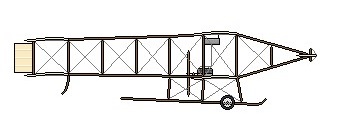
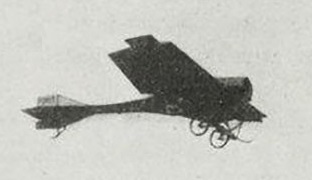
Emil Plage, son of the founder of Mechanical Works Plage & Laśkiewicz in Lublin (which, in independent Poland become one of major aircraft manufacturers) built in 1910 at Rumpler works in Berlin a biplane modeled after Farman aircraft. Unfortunately, during the first flight attempt the engine malfunctioned and aircraft crashed, although the designer/pilot was unhurt.
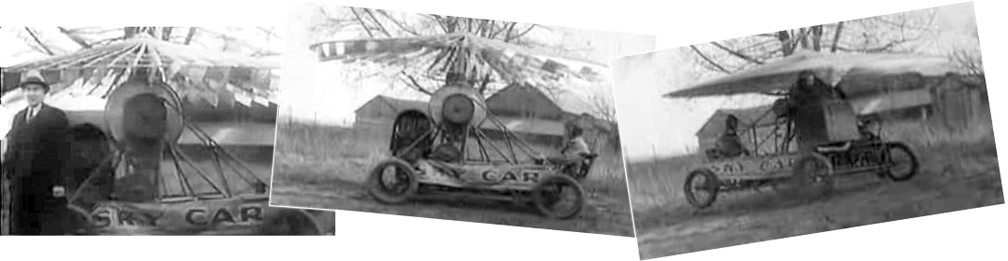
The 1928 Pitt Sky Car appears to be a helicopter with vibration designed into it (US patent #1,602,778). Each blade of the 60-blade rotor had a full-radius vane attached to it that was free to flap about its radial hinge. Rotation caused the drooping vanes to swing out, closing the space between blades and forming a solid rotor disk, the point being that the rotor was forced by the engine to reciprocate up and down. When the rotor went up the vanes were flung open, allowing the air to pass between the blades; when it then moved downwards, the vanes closed and a good portion of air was thrown downwards, thus supposedly creating a lifting force.
Motion pictures recorded a flight attempt in which it is seen jumping up and down but it is dubious if this was caused by downwash.
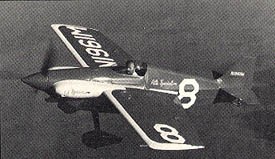
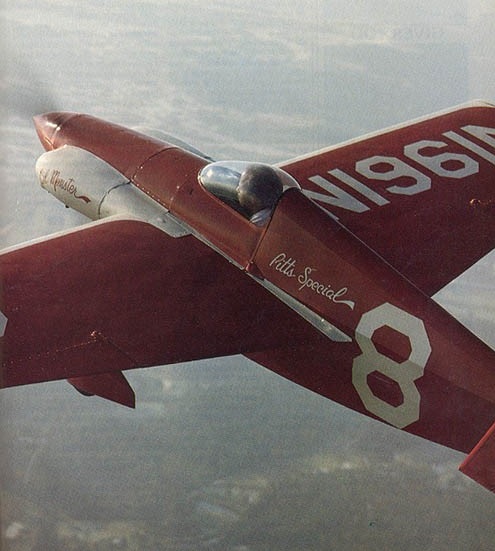
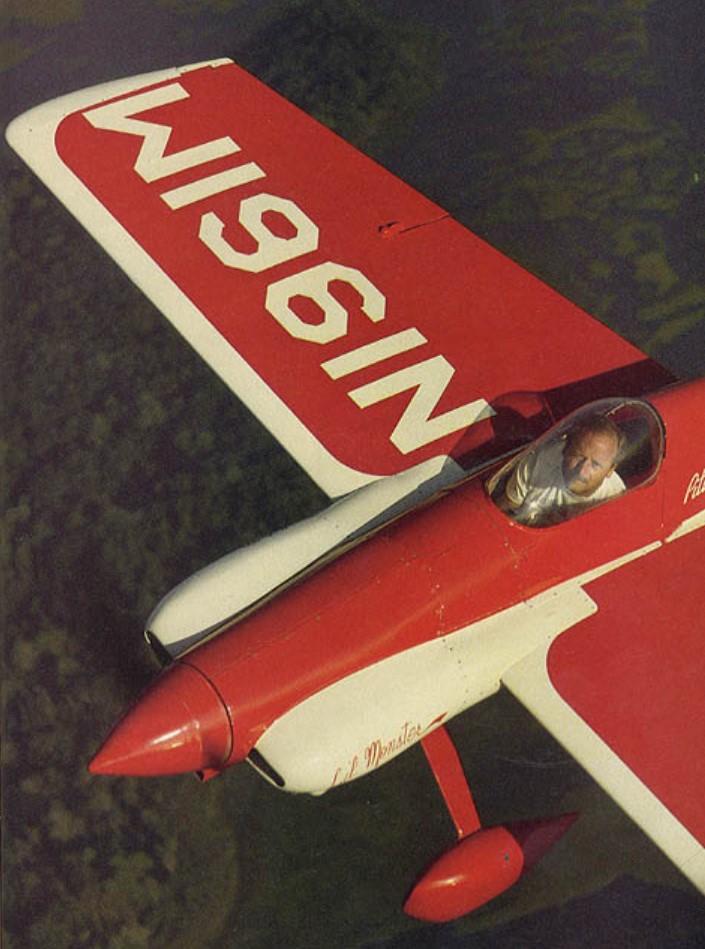
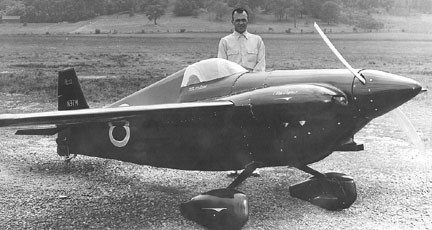
Curtis Pitts built “several” of the Goodyear-type racer. Possibly 7 or 8 including N97M Miss Dayton and N1961M Li’l Monster.
The Monster was built around 1947 or ’48 (even Curtis is unsure exactly when the plane was completed), and the aluminum wing, steel tube fuselage frame midget was designed around two things: The 190 cubic inch C-85 engine and the 5 ft 5 in Phil Quigley (the cockpit section was established by setting Phil up against the wall and chalk lofting his form!). Quigley was an accomplished race pilot and mechanic who did most of Curtis’s development testing and racing in the early 1950s. The Monster with Phil at the controls raced a bunch in the Goodyear events of the era with a modicum of success.
Probably, the plane was last raced at Cape May, New Jersey, during the disastrous 1971 air races. Fastest recorded lap speeds were just over 240 mph.\
After Curtis sold the aircraft, it passed through several hands before coming to rest in Oklahoma where James Dulin owned and flew the racer for almost 20 years. Detailed accounts of every Dulin flight accompanying the log books indicate nearly 400 hours logged in cross-country flights from Florida to California. Records also indicated two complete rebuilds as the result of almost identical hangar flooding instances. Clevenger subsequently acquired the Monster (autumn 1989) and set about restoring the craft to its current condition.
The Monster had been in storage in Oklahoma for almost 15 years before the airplane was hauled back to North Carolina.
The aircraft was restored.
With the aircraft fueled, I climbed in and over the wing, anxious to see how I’d fit in the Quigley-size cockpit. I slid my feet forward under the main spar while lowering myself down inside the 20-inch wide (!) fuselage. Something hung my feet up before I got my feet all the way in and I fumbled around unsuccessfully trying to get fitted into the cockpit. It suddenly dawned that there was no obstacle at all. I had run up against the rudder pedals! I didn’t think I’d actually fit but, once in with my knees up around my elbows and my back pressed hard against the rear spar carry through, I found I could reach the needed controls – barely. This is definitely an aircraft built for 15-minute flights. The much-advanced timing made starting difficult, but once started, the “hopped up” C-85 ran great – for about 30 seconds. We spent another 15 minutes propping before we got the engine running again. This time the engine ran for a whole minute before quitting. Back in the hangar we went and off came the cowling, carb and fuel lines. Cleaned and checked, we reinstalled the units as the sun set. We pushed the plane back outside and it purred like a kitten. Just enough for the little light left and a quick flight around the pattern. I taxied to the far end of the 3000 ft grass runway where I ran the engine at full power for a good minute before convincing myself it woud run well enough to continue as planned. The right mag checked a little rough but not bad and all else was in order. Lined up, I shoved the power in quickly and the C-85 responded well, gradually pulling the little racer faster and faster through the tall grass. The tail came up on its own at about 900 feet down the runway – just as we entered the lumpy midfield region. Directional control was easy, thanks to the “dew wet” grass and the little racer handled the rough ground quite nicely – that is until a large ground swell launched us into the air about three seconds too early. I wasn’t quite sure the wing would bite and, being unsure about the stall characteristics, elected to let the aircraft settle back to the runway to accelerate just a bit more. The next bump launched us again into the air – this time in good aerodynamic shape so we could continue. The aircraft accelerated low over the runway – the rpm steadily increasing with airspeed. Approaching the end of the runway, I started a slow climbing turn back overhead the field, now shrouded in the long shadows of dusk. Three minutes later I leveled at 4500 feet, just in time to catch a last glimpse of the sun setting behind the mountains to the west. A quick bit of slow flight revealed no bad habits and the stall, although unannounced, broke straight and clean down around 75 indicated. A mediocre flyby and chandelle set me up on downwind, trying to slow the plane to 90 – a good number for the first approach and landing. I turned base and found a full rudder sideslip necessary to keep the airplane from accelerating through 120. I had forgotten how clean some of these midgets are! Crossing the threshold low and flat, the airspeed hovered around 85-90. As the aircraft settled toward the grass, slight back pressure eased the descent and set the attitude at what I found was pretty close to three point. A little stick force reversal during the flare left me just a bit higher than I would have liked and the airplane shuddered its protest and dropped the last eight inches or so. The rollout was short (I guess about 800 feet) and easily controlled directionally. A relatively successful flight although a post flight inspection revealed excessive blowby through the number four exhaust valve. A “midnight plus” valve grinding exercise followed – only to be rewarded with an unsatisfactory engine run at one in the morning. The blowby was back, stronger than ever and we could only guess that the “seat” was the real problem but without the appropriate grinding stones and equipment we (against our better judgment) skipped the process. Wednesday morning with cylinder in hand we went off to the local valve grinding shop. Five hours later the cylinder was reinstalled. This time the compression checked out and two successful flights were undertaken – well, almost successful. The right mag was getting progressively worse and definitely not worth chancing a 2 1/2 hour trip south. The rest of the day was spent pouring through mag coils and condensers, trying to match the 20 year old mags. We were fortunate to find the appropriate replacement parts and managed one successful flight late in the evening. By unanimous agreement, we resolved to quit while ahead. The next morning dawned cool and clear. One of the truly CAVU days when even the weather briefer don’t have much to say. Fueled to capacity (22 gallons) and with baggage and pilot filling the cockpit, the Monster and I climbed lazily in the still morning air to 6500 feet. I set the power at what sounded about right and watched the airspeed needle settle on 160 mph. At this altitude the plane was truing almost 170. Fuel burn couldn’t be more than 6 1/2 gallon per hour, giving me almost three hours of endurance. I should be able to make the 350-mile trip to St. Augustine easily non-stop, although my butt was already offering serious objections. The 50-mile plus visibility eliminated navigation as a worry and left the fuel system was my only concern. It’s kind of an odd system: One fuselage tank (eight gallons) and two wing tanks (seven gallons apiece), each with their own on/off valve running to a single “T” at the gascolator. Only the fuselage tank has any sort of quantity gauge (a simple manometer). With all three valves open (you’d better hope you never have to reach them in flight) the fuel feeds pretty quickly from the main (fuselage) tank – until the head pressure equalizes in all three tanks. The fuel then feeds relatively equally from all three. Trouble is: If, for some reason, the wings don’t feed then you are left with about two gallons with which to divert. Not a whole lot to say the least. I’m still not sure how I reasoned this out or why it worked, but if I pitched the nose up 30 degrees for several seconds, the main refilled rapidly to about 3/4. The method worked several times so I accepted it as fact. With the fuel system under control and navigation almost too easy, I had a pleasant opportunity to just enjoy flying the aircraft. Response to control was definitely not as sharp as the Cassutt; softer, more relaxing really. Less deliberate and more gentle, well-harmonized and for sure more stable – particularly in yaw. The vertical surface (rudder and fin) act as one – probably because your feet are jammed hard against the rudder pedals. Aerodynamicists call this “stick fixed” stability (as opposed to stick free) and almost always makes for more stable response along that axis. This makes flying the airplane a whole lot less fatiguing on the long hauls. The Monster was rigged well in pitch and, as is often the case with airplanes of similar genre, no elevator trim is supplied or required. The truly enjoyable part of the flight lasted only 20 minutes or so, after which time my body decided it had had enough of this esoteric experience and began to object – vehemently! Never had I flown such an ergonomically uncomfortable airplane. Crammed fore and aft was bad enough but the narrowness of the cockpit allowed absolutely no twisting motion or side-to-side shifting. The plane’s only redeeming comfort feature was headroom. Unfortunately, the only way I found to take advantage of this was to PlO the aircraft through the sky, alternately lifting and lowering my scrunched self on and off the floorboards. The things I have to do to fly something different! I don’t think I would ever be so happy to see St. Augustine. Two hours and twenty minutes left me seriously numb and aching for days afterward. Somehow though, the look on Curtis’ face when he first saw the resurrected Monster made the effort seem not all that bad. In fact, the pain went away.
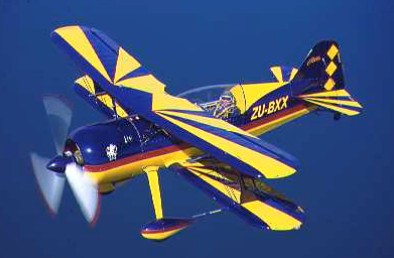
An aerobatic two place open cockpit biplane from Pitts constructed at Steen Aero Lab around 2002. Curtis Pitts, at age 90, was actively involved in its construction.
Engine: Vendenyev M14, 400hp Wing span (upper): 21’6″ Wing span (lower): 20’6″ Empty weight (est): 1500 lb Gross weight (est): 2250 lb Max speed est: 190 mph Cruise speed est: 180 mph Stall est: 57 mph Seats: 2
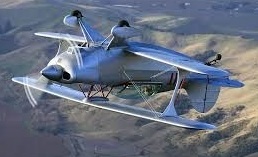
Designed by Curtis Pitts, the Pitts Model 12 is a 2 place fully aerobatic biplane designed specifically around the 360 HP (400hp) Russian built Vedeneyev M-14P (PF) radial.
In March 1996 the completed Pitts Model 12 was test flown and earned the nickname “Macho Stinker” as part of the long line of Pitts prototypes. The name “Bolshoi” is no longer used. Professional pilot, airshow performer, Ben Morphew performed all acro test flights in the model 12 and decided he wanted one and contacted the Kimballs at Jim Kimball Enterprises for them to provide some of the components.
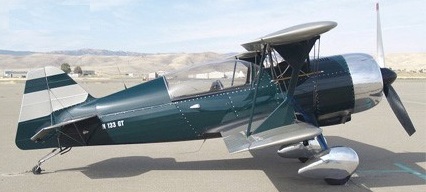
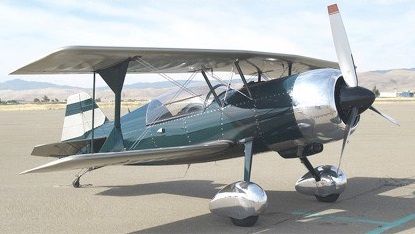
Pitts 12 N133GT
Marketed by Jim Kimball Enterprises in Zellwood FL in kit and component form. The Kimballs made their own modifications to Model 12, which was known as the HP performance version. The type was available as plans built, HP kit, or factory built Model 12S by Jim Kimball Enterprises.
All are two seat except the 12S, which is a single seater. All are tube and fabric, fully aerobatic, and powered by the M14P or M14PF engine.
In 1991 Curtis and a group of friends formed a new company, Aero Design Eleven, and he designed the Model 11-260. A single seat Lycoming powered aerobatic biplane incorporating all that has been learned including his “Aerodynamically Boosted Ailerons.” Construction of the model 11 then began.
In 1993 the prototype model 11 was completed by Curtis Pitts, Pat Ledford, Don Lovern, Bill Lancaster and Will Teft. The new airplane was dubbed “Super Stinker” in the tradition of many of the prototype designs Curtis created through the years.
S-1-11B Super Stinker Engine: IO-540, 250 hp Speed max: 205 mph Cruise: 187 mph Range: 350 sm Stall: 64 mph ROC: 3300 fpm Take-off dist: 300 ft Landing dist: 1200 ft HP range: 250-328 Fuel cap: 29 USG Weight empty: 1025 lb Gross: 1500 lb Height: 6 ft Length: 17.5 ft Wing span: 18 ft Wing area: 110 sq.ft Seats: 1 Roll sate: 360 deg/sec Landing gear: tail wheel
It was not until 1967 that Pitts introduced the two seat S 2A. Although similar to the S 1 in configuration and construction, the S 2A is slightly larger in overall dimensions and shares little commonality in components. In 1973, five 200 hp S 2As were supplied to a British aerobatic team sponsored by Rothmans Tobacco. Five more S 2As were later supplied to the Carling Black Label team in Toronto, Canada. And in mid 1976, the Peruvian Air Force announced an order for six S 2As, for “an unspecified training role.” The single seater’s popularity has been partially eclipsed by that of the two seat version, the S 2A, which went into production early in 1971, and of which nearly 140 have been sold by 1977.
Pitts S-2A N846
The S 2A is slightly larger in all dimensions than the S 1; no attempt was made at commonality of structure. A tandem two holer with a 200 hp Lycoming engine and a constant speed prop, it is not a tiny airplane. Both wings use symmetrical airfoil sections, the upper considerably thicker than the lower; they are set at an incidence that compromises between the requirements of upright and inverted flight, so that the airplane feels slightly nose high in cruise but comfortably level when inverted. The cockpits are fairly roomy, but the instrument panel is inches from your face, and the optical distortions caused by the edges of the compound curved windshields add to an already (and inevitably) cluttered view. Canopy hoods of plexiglass may be fitted, at the expense of intimacy with the air. The hoods reduce the unpleasant forward pressure of the wind on the rear seat pilot. The cockpit sides are high, blocking visibility, which in the landing disappears altogether. Any object carelessly dropped finds its way into the far end of the tail cone, there to interfere with the elevator controls.
1972 Pitts Special S2A
Besides its legendary ability to snap roll several times in succession with little loss of rate, the Pitts is notable for its willingness to be held in any attitude and yet to recover on command. As well as being a highly qualified aerobatic competitor, the S-2A is also ideally suited for advanced aerobatic instruction. It is a two-place aerobatic biplane that offers the student the opportunity to learn aerobatics under the supervision of an instructor.
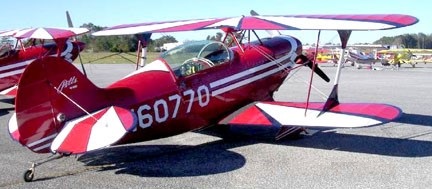
The S-2B is a two-place 260hp aircraft. Wings and landing gear moved forward 6 in to balance the larger engine.
Christen-Pitts S2-B N60770
The S-2E price in 1982 was $50,800 as a complete kit. Units delivered to June 1982: 75.
The S-2S is identical to the S-2A except for the forward fuselage which has been shortened 14 inches to accommodate the larger 285hp Lycoming IO 540 engine, with the wings nine inches further forward and a number of other differences such as symmetrical ailerons which increase roll rate over other Pitts by 60″/sec (Up to 240″/sec). In addition, the front cockpit has been eliminated, making it a single-place plane. The S-2S’s larger size makes it ideal for air show flying as well as aerobatic competition. Its cruising speed of 175 mph combined with its fuel capacity of 35 gallons also gives it excellent cross country capability. With a 5 lb/hp and thrust/weight ratio of almost 1:1, it can, for example, do three vertical rolls in full competition, climb 300ft/min in knifedge and hover for “three or four seconds” at the end of a vertical climb. Climb rate is around 3,000ft/min and its snap roll rate is something like 480o/sec, and other party tricks include the ability to pinwheel, which is a stall turn through 540 degrees.
The first S 2S received its certification in mid 1981. The S-2S price in 1982 was $56,550 as a complete kit. Units delivered to June 1982: 10.
1972 Pitts Special S2A
The S-2, S-2A, S-2B, and S-2S are certified under FAA A8SO.
The S2-S was not a Pitts product, but a single place experimental home-built.