Poberezny Little Audrey

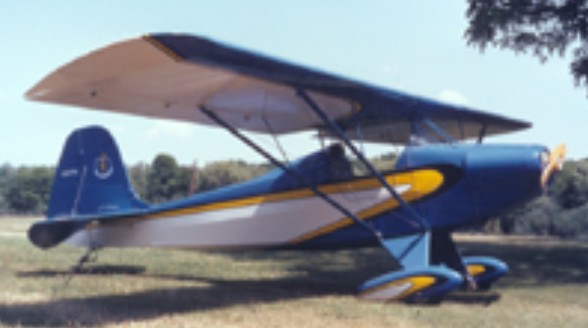
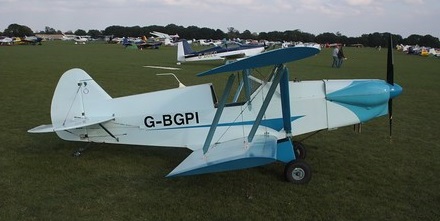
Little Audrey, built by Paul Poberezny, was derived from Benny Howard’s Pete racer, after rebuild as the Baker Pete / Special.

It was bought by EAA in 1953, and redesigned as Pober Little Audrey with a replica fuselage and Luscombe shoulder-wings. The original fuselage and tail, plus some miscellaneous parts, went into a rebuild of the 1930 configuration by Repeat Aircraft, Riverside CA.

Engine: Continental, 75 hp
Wing span: 18 ft
Weight: 800 lb
Top speed: 140 mph

Pober P-9 Pixie / Acro Sport Inc Pober Pixie

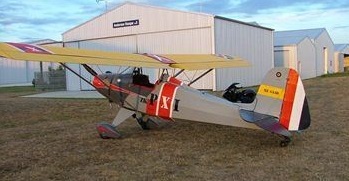
The single-seat Pober Pixie is another homebuilt designed by Paul Poberezny. It originally started as an effort to help pilots beat high operational costs and was designated Project Econoplane in 1974. Inspired by a Heath Parasol LN, the Pixie is a parasol monoplane powered by a Limbach VW engine rated at 50 to 75 hp. Full-span ailerons give excellent roll with little yaw on entry and recovery. This is a beginner’s project for construction, with highly detailed plans, and the cost level is low. Can be powered with a VW conversion or Continental A-65.

Pober P-9 Pixie Article

The fuselage is 4130 steel tube, wings are Sitka spruce, covering is with Stits Poly-fiber.

Gallery

Engine: VW, 55 hp
HP range: 50-75
Speed max: 133 mph
Cruise: 83 mph
Range: 290 sm
Stall: 30 mph
ROC: 500 fpm
Take-off dist: 300 ft
Landing dist: 300 ft
Service ceiling: 13,500 ft
Fuel cap: 12.3 USG
Weight empty: 543 lbs
Gross: 900 lbs
Height: 6.2 ft
Length: 17.25 ft
Wing span: 29.83 ft
Wing area: 134.2 sq.ft
Seats: 1
Landing gear: tail wheel

Acro Sport Inc Pober Pixie
Top speed: 130 mph
Cruise: 83 mph
Stall: 30 mph
Range: 290 nm
Rate of climb: 500 fpm
Takeoff dist: 300 ft
Landing dist: 300 ft
Service ceiling: 13,000 ft
Engine: Continental A-65, 65 hp
HP range: 50-75
Fuel capacity: 12.3 USG
Empty weight: 543 lb
Gross weight: 900 lb
Height: 6.2 ft
Length: 17.3 ft
Wing span: 29.8 ft
Wing area: 134.2 sq.ft
Seats: 1
Landing gear: tailwheel

P.M. & T. Honeybird

Single seat single engined high wing monoplane with conventional three axis control. Wing has unswept leading and trailing edges, and constant chord; conventional tail. Pitch control by elevator on tail; yaw control by fin mounted rudder; roll control by quarter-span spoilerons; control inputs through stick for pitch/roll and pedals for yaw. Wing braced from below by struts; wing profile NACA 23015; 100% double surface. Undercarriage has three wheels in tail dragger formation; suspension on tailwheel and axle flex/ rubber suspension on main wheels. Push right go right tailwheel steering connected to yaw control. Aluminium tube framework, with pod. Engine mounted below wing driving pusher propeller.

Pod made from Keviar/Carbon fibre. Composite construction wing uses aluminium tubing to British HT30TF specification, Styrofoam, and wood veneer covering.

The Honeybird is a sophisticated pod: it is non structural and is attached to an aluminium framework.

Although the Honeybird is a microlight by definition, it is being built under the aegis of the British homebuilders association, the PFA, whose engineering requirements insist on gravity rather than pumped fuel feed. The main fuel tank is therefore in the wing, with a reserve situated aft of the pilot.

The Honeybird is basically a homebuilt, which in 1982 had yet to make its first flight.

Engine: NGL WAE 342, 30hp at 6800rpm
Micro V belt reduction
Power per unit area 0.23 hp/sq.ft, 2.5 hp/sq.m
Fuel capacity 3.6 US gal, 3.0 Imp gal, 13.6 litre in main tank; 4.8 US gal, 4.0 Imp gal, 18.2 litre in reserve
Length overall 18.5 ft, 5.64 m
Height overall 6.5ft, 1.98m
Wing span 32.5ft, 9.91m
Constant chord 4.0ft, 1.22m
Dihedral 3 deg
Sweepback 0 deg
Tailplane span 7.0ft, 2.13 m
Fin height 4.0ft, 1.22m
Total wing area 130 sq.ft, 12.1 sq.m
Total spoileron area 3.0 sq.ft, 0.28 sq.m
Wing aspect ratio 8.1/1
Wheel track 7.0ft, 2.13m
Tailwheel diameter overall 4 inch, 10 cm
Main wheels diameter overall 12 inch, 30 cm
Empty weight 2601b, 118kg
Max take off weight 510 lb, 231kg
Payload 250 lb, 113kg
Max wing loading 3.92 lb/sq.ft, 19.1 kg/sq.m
Max power loading 17.0 lb/hp, 7.7kg/hp
Load factors +6.0 design
Never exceed speed 109mph, 175kph
Max cruising speed 68mph, 109kph
Stalling speed 34mph, 55 kph
Best glide ratio with power off 15/1

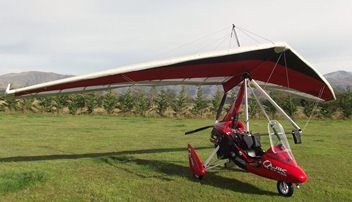
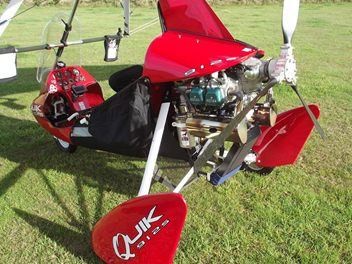
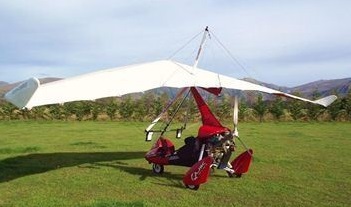
P&M Quik GT450

Full analogue panel with Hobbs, 12v power socket, and LED trim indicator.

Electric start
Hydraulic disc brakes
Low drag panniers
Electric pitch trim system
Stone catcher
Landing light
Heated bar grips
Flycom interface
Trike and prop covers

Span: 9.25 m
Wing Area: 13 sqm
Warp drive prop
Max straight/ level: 95 mph
VNE: 110 mph
Stall @ mtow: 38 mph
Loading: +6 -3 g
Seats: 2
Max seat load: 110kg each
Fuel capacity: 65 Ltr
Endurance: 4hr

Pliska 1912 Biplane

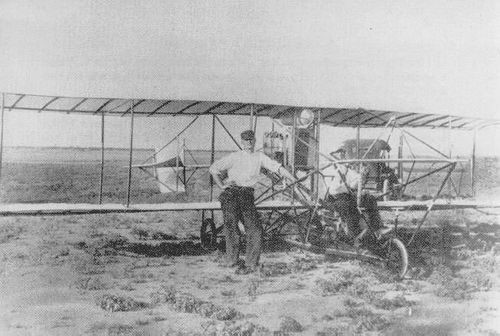
A Curtiss-pusher influenced design built by John V. Pliska and Gray Coggin of Midland, Texas; famed as being the first aeroplane to be built and flown in that state. In the photo, Pliska is on the left: his partner in the aviation project, Coggin, is in the pilot’s seat. Pliska was claimed to have been inspired by a Wright Flyer II (piloted by Robert G. Fowler) that landed in the area on November 19, 1911, and that he and Coggin carefully studied. It flew only once, but not very well, so was stored until rediscovery in 1962 and donation to a museum at Midland-Odessa airport and today is on exhibit at the Midland International Airport.

Engine: 50hp converted Roberts marine
Seats: 1

Pletnyov Zhuravlic

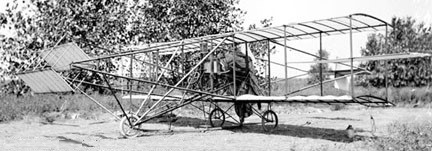
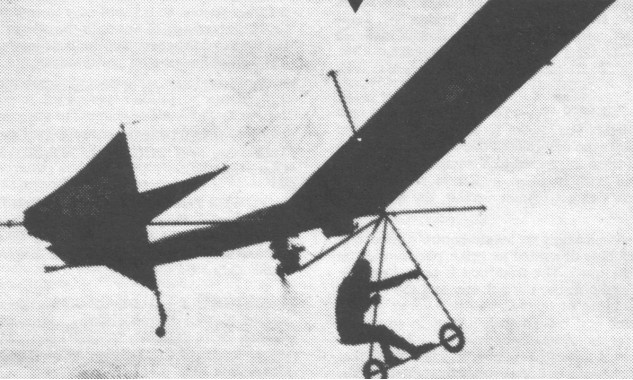
A single seat single engine, high wing mono¬plane with hybrid control circa 1983. Wing has unswept leading and trailing edges, and constant chord; cruciform tail. Pitch control by weight shift; yaw control by fully flying rudder; no separate roll control; control inputs through weight shift for pitch/yaw/roll. Wing braced from above by kingpost and cables, from below by cables; wing profile single ¬surface. Undercarriage has three wheels in tail dragger formation. Metal tube framework, without pod. Engine mounted below wing driving pusher propeller.

It appears to have a rudder to assist the weight-shift in yaw, a combination which is sufficient to class the Zhuravlic as a hybrid, but it is not clear whether a similar arrangement is used for pitch control or whether the pilot relies solely on weight shift for up/down control.

No details are given of the power unit, except that it is of 350 cc and is coupled to a two blade propeller.

Wing span 31.5 ft, 9.60 m
Engine: 350 cc
Empty weight 121 lb, 55 kg
Max level speed 37.5 mph, 60 kph
Best glide ratio with power off: 30/1
Take off distance 66ft, 20m
Landing distance 33ft, 10m
Service ceding 6600ft, 2000m