PWS 3

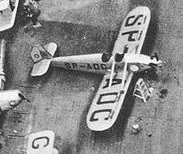
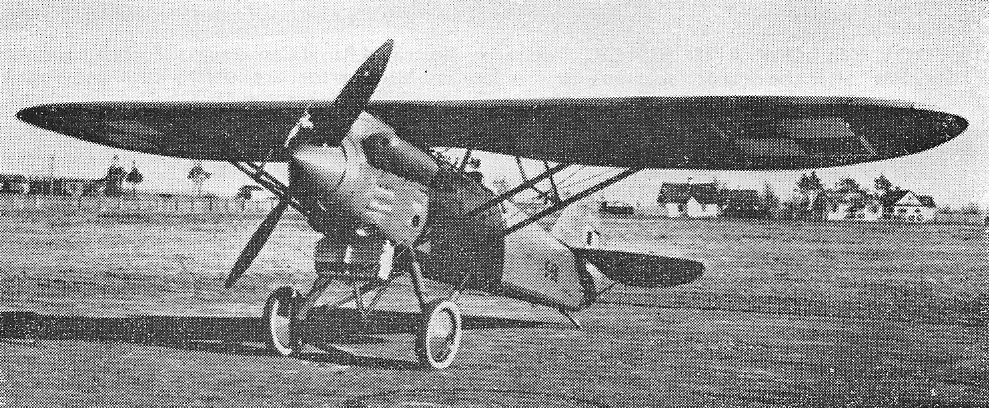
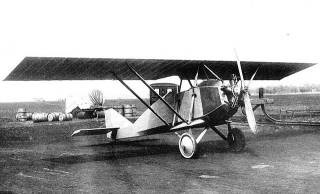
The PWS 3 was the first sports aircraft manufactured by the Polish aerospace industry not counting earlier amateur designs. It was designed by Stanislaw Cywinski in the PWS factory in 1927. The fuselage is built upon a bottom boom, what made possible changing of upper fuselage part with cockpits, and developing single-seater, two-seater or other specialized variants.

The PWS 3 was a two-seater parasol wing braced monoplane of wooden construction. The fuselage was built around a box-section wooden boom, with a superstructure of wooden laths, covered with plywood and fabric the front fairing of the aircraft in the rear. The engine compartment was covered with duralumin plating. The empennage was wooden, with a fixed surface, made of plywood and fabric on the control surfaces. The rectangular wooden wings had two spars and was covered with plywood in front and cloth in rear. Originally slotted ailerons on the whole wingspan, later to be shortened. The fuselage had a cockpit for two in tandem, with windscreens and dual controls. The chassis consisted of a fixed split axle conventional chassis, with a rear skid. Both main landing gear and wing struts were installed a small horizontal winglets at the bottom of the fuselage. Fuel in two tanks, 100 litres in total, in the Central section of the wing.

The 5-cylinder Walter NZ 60 radial air-cooled engine provides a nominal power of 60 HP and take-off power of 65 HP, driving a two-bladed wooden fixed pitch propeller. The cruise fuel consumption was 22 l / h.

Prototype 3 PVA designated 3B and issued registration number R-PWSS, was flown on May 20, 1927 in Biała Podlaska. After testing, the handling improved. In 1928, the aircraft underwent modifications, having a rounded tip rather than square, and less aileron.

It took part in the 1st competition of the Polish light aircraft from 6 to 9 October 1927, finishing in 2nd place.

Re-registered SP-ACJ in 1930.

Later it was bought by the Lopp paramilitary organization in Lublin and used for propaganda flights.

PWS 26

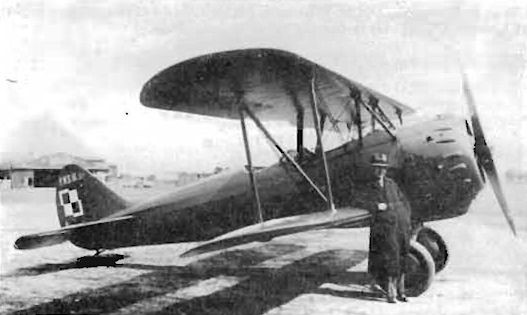
The PWS.26 was a two-seat advanced military trainer development of the PWS.16bis and PWS.18

The fact that only 36 PWS.26 trainers were assembled at SET Bucharest from ex Polish components, is only part of the story. The existence in 1942 and 1943 of this type in several schools wearing numbers in the 200 and even 300 series (the highest serial numbers known were 269 and 310, respectively) denotes, that actually many more PWS.26s existed in the ARR than the ten ex Polish Air Force PWS.26s (one later escaped to Bulgaria), the 27 supplied by Germans and those 36 assembled at the SET plants.

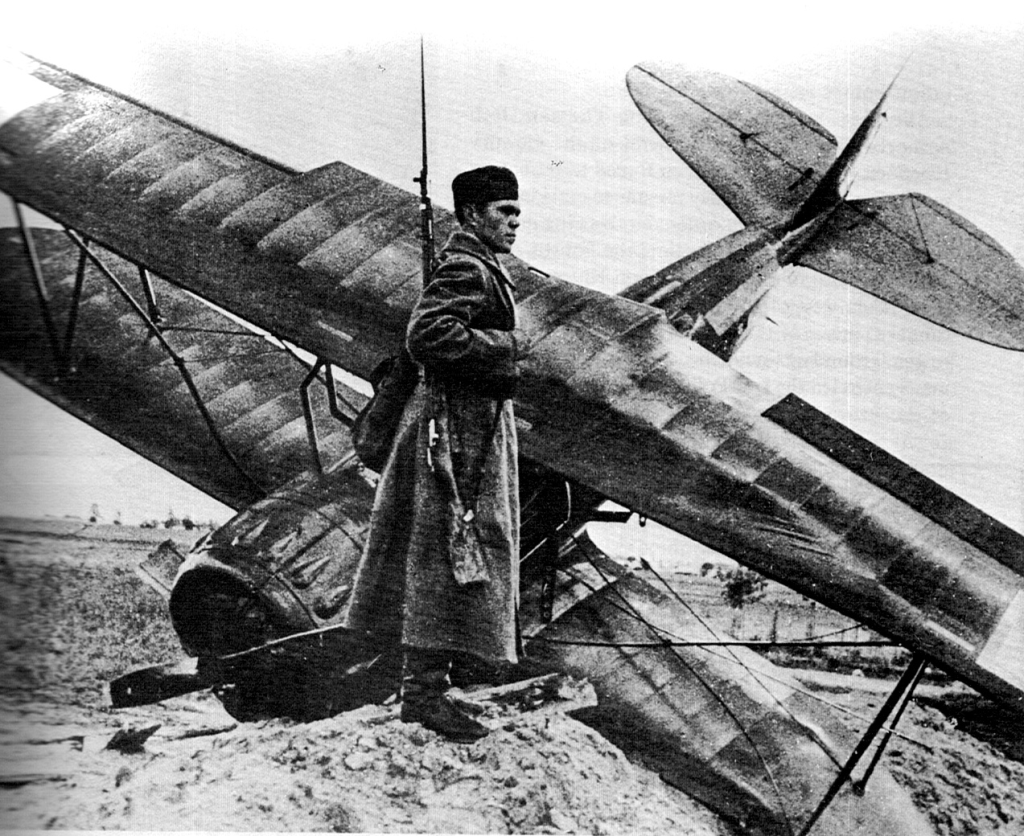
Rovno, eastern Poland

The bulk were operated by the Central Flying School at Deblin. Several were operated by the Luftwaffe.

Engine: 220 hp Avia-Wright Whirlwind
Max speed: 130 mph
AUW: 2420 lb
Time to 3400 ft: 4 min
Service ceiling: 14,400 ft
Armament: 1 x 7.7mm mg
Bombload: 2 x 25 lb
Span: 29 ft 9 in
Length: 22 ft 11 in
Height: 8 ft 10 in

PWS 24T

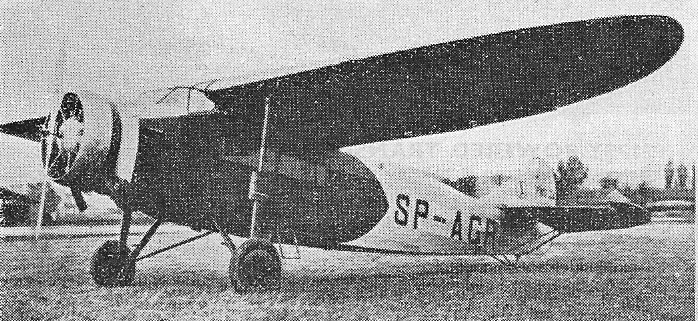
Designed to seat six passengers and crew, the PWS-24T was operated by LOT Polish airline on the feeder route from Warsaw to Posan.

First flown in 1931, the PWS-24T was initially powered by a 220 hp Skoda-Wright Whirlwind. Experience showed the Whirlwind-PWS 24T was under-powered and the engine was replaced by the 420 hp Pratt & Whitney Wasp Junior.

Performance was improved to give a cruising speed of 110 mph and maximum speed of 139.5 mph, for an AUW of 4800 lb. Service ceiling was 11,400 fpm.

Some PWS-24T retained the lower power Whirlwind and served as crew trainers and for aerial mapping duties undertaken by LOT on behalf of the Government.

PWS 18

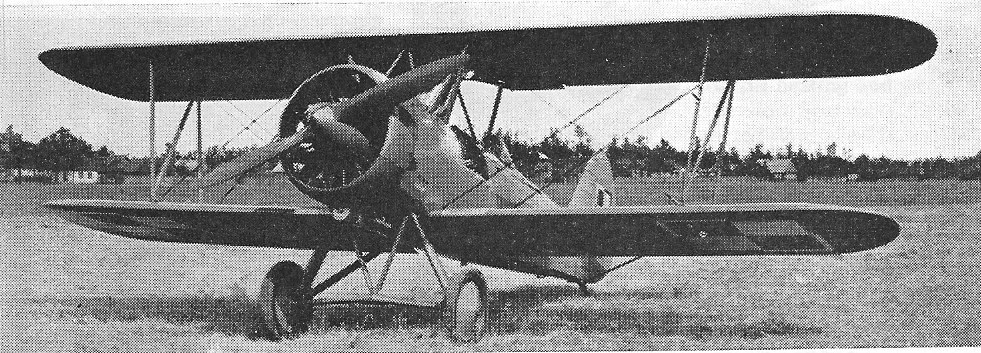
In April 1935, the Polish government, looking for an intermediate military trainer, bought two Avro 621 Tutor trainer aircraft. Production was ordered in the PWS (Podlaska Wytwórnia Samolotów – Podlasie Aircraft Factory). Negotiations began for licensed production in Poland but reached an impasse. Under the contract, the Polish Avro 621 were equipped with Bristol engines, and the engine production in Poland has not yet been established. When the license was obtained, there is a problem with the release of the licensed copies of the aircraft. As a result, both Avro 621 were sent to Podlaska Wytworna Samolotow (PWS) to review the design.

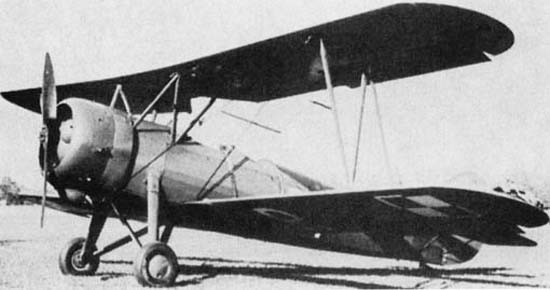
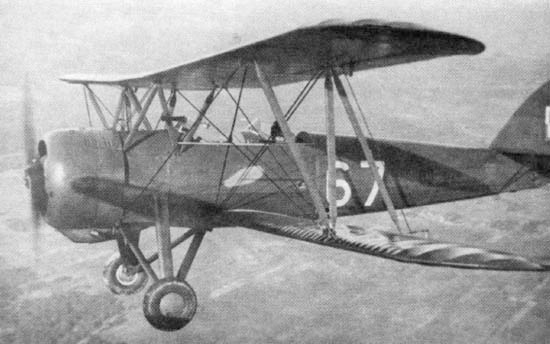
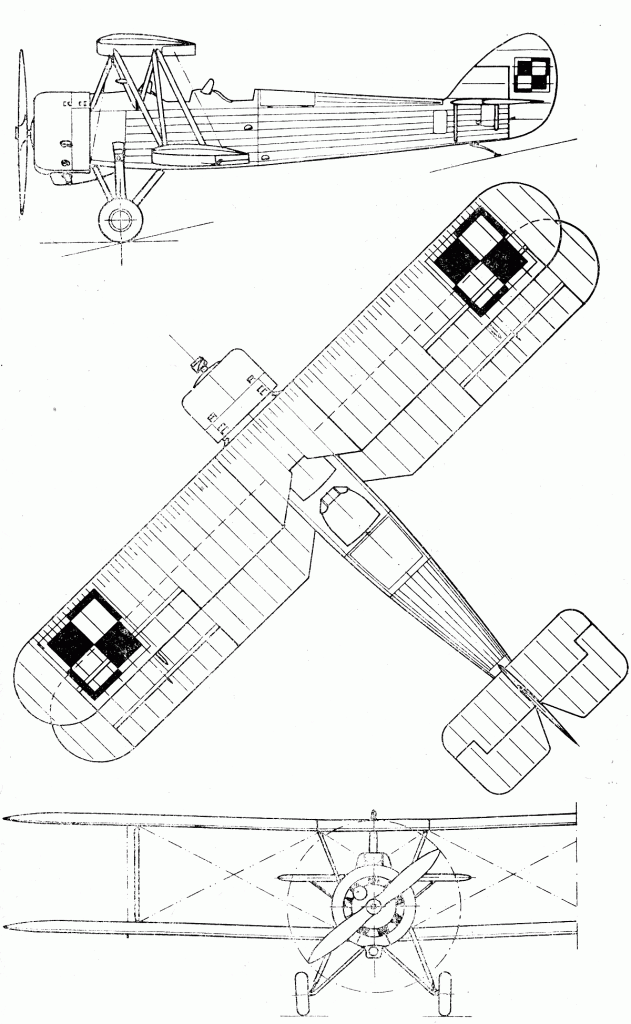
In 1935, Antoni Uszacki of the PWS modified the design, fitting it with a Wright Whirlwind engine, produced under licence in Poland. The new engine cowling was much longer than the previous Townend ring type, with a carburetor air intake below it. The wing construction was changed from metal to wooden, better fitted to PWS capabilities, and the rectangular wing tips were rounded. Also some other details were changed, such as a tailskid instead of a tailwheel.

A series of 40 aircraft was built in 1935-1936. They were assigned military numbers 80-1 to 80-40. Designated PWS 18, these machines differed only “cosmetic” improvements and American Wright J-5B “Cyclone” engines.

They were not produced in larger numbers because a successful indigenous Polish advanced trainer, the PWS-26, using the same engine, was designed and entered production.

PWS-18s were used in the Polish military aviation flight schools and training squadrons of the 4th Regiment in Torun, among others in Airforce Training Center in Dęblin, an NCO school for minors in Bydgoszcz and in training escadres of air regiments. None survived World War II.

Most of the aircraft survived until the outbreak of war, and for some time they have been used to provide communications between the Polish armies. Some PWS 18 were then captured by the Germans and used in flight schools Luftwaffe in Poland.

Gallery

Engine: 1 × Avia Wright Whirlwind J-5B, 240 hp / 220 hp nominal (176 kW / 162 kW nominal)
Wingspan: 10.98 m (36 ft ⅛in)
Wing area: 29.40 m² (316 ft²)
Length: 8 m (26 ft 2⅞ in)
Height: 2.92 m (9 ft 6⅞ in)
Empty weight: 926 kg (2,037 lb)
Loaded weight: 1,220 kg (2,684 lb)
Wing loading: 41.5 kg/m² (8.49 lb/ft²)
Power/mass: 0.144 kW/kg (0.0894 hp/lb)
Maximum speed: 196 km/h (106 knots, 122 mph)
Cruising speed: 169 km / h
Range: 465 km (251 nm, 289 mi)
Service ceiling: 4,900 m (16,000 ft)
Rate of climb: 5 m/s (980 ft/min)
Crew: 1, instructor
Capacity: 1, student
Armament: 1 x 7.92 mm machinegun, pilot’s or observer’s (optional),
Bombload: 2 x 12-kg bombs (optional)
PWS 10

The PWS-10 was the first Polish-designed fighter intended for military service as a replacement for the numerous foreign designed, Polish constructed aircraft then operated.

A single-seat fighter, the PWS-10 was first flown in 1928. Sixty-five were delivered to the Polish Air Force.

The parasol-winged inline-engined PWS-10, the first Polish fighter to enter series production, served in the Spanish Civil War.

Engine: 450 hp Skoda-Lorraine 12 cyl W
Span: 36 ft 0 in
Length: 24 ft 7.5 in
Height: 8 ft 6 in
MAUW: 3290 lb
Max speed: 152 mph
Time to 16,300ft: 15 min 15 sec
Service ceiling: 21,300 ft

Podesva Tulak

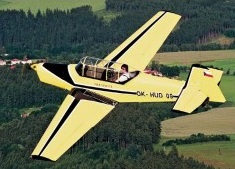
The Tulák Dandy is a 2-seat high-winged ultralight monoplane of the classic construction (side by side seats).

The fuselage is welded lattice-work steel tubes, covered by fabric and partly by metal. Dual controls are fitted.
The wooden wings, with flaps and ailerons, are covered by fabric.

Powered by Rotax 503 or 912 and similar powerplants, at least 68 have flown.

Tulak Dandy
Span: 9,80 m
Length: 5,60 m
Wing area: 10,80 sq.m
Empty weight: 255 kg
Cruising speed: 100 − 140 km/h

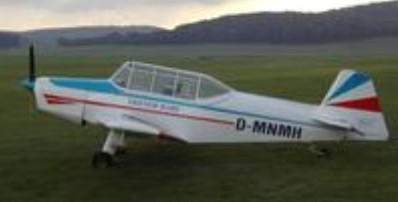
Podesva Trener Baby

Replica of the Czech Zlin 126 Trener, 2009 Price: 47000 EURO

Stall: 35 kt / 40 mph / 65 kmh
Cruise: 86 kt / 99 mph / 160 kmh
VNE: 113 kt / 130 mph / 210 kmh
Empty Weight: 296 kg / 653 lbs
MTOW Weight: 472 kg / 1041 lbs
Climb Ratio: 400 ft/min / 2,5 – 5 m/s
Take-off distance (50ft obstacle): 980 ft / 300 m
Landing distance (50ft obstacle): 980 ft / 300 m

Pobjoy Pirate

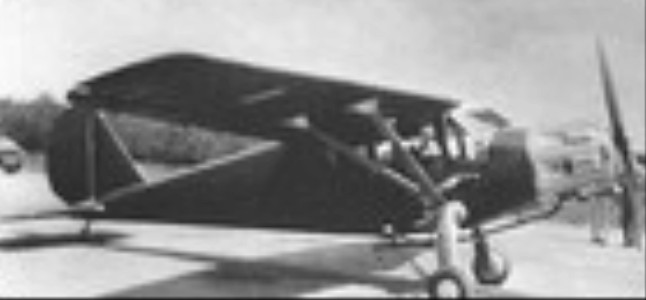
Until 1935 Pobjoy Airmotors Ltd had not previously built an aircraft, but concentrated successfully on engines. In June 1935 the company name was changed to Pobjoy Airmotors and Aircraft Ltd and at the same moment they introduced their only original aircraft design, the Pobjoy Pirate, aimed at the Leopard Moth market. They chose to power it with one of their own seven cylinder radial engines. At the time, the most powerful variant was the 90 hp (67 kW) Niagara III, much less powerful than the 145 hp (108 kW) Gipsy Major 10 of the Leopard Moth. The Pobjoy, though was less than half the weight of the de Havilland engine and Pobjoy believed that with the advantage of this weight saving (about 160 lb or 73 kg) they could build a lighter and smaller aircraft that would perform as well.

The designer of the Pirate was the experienced Harold Boultbee, who had recently produced the Civilian Coupé, and construction began early in 1935. The high wings were straight edged, but tapered, slightly swept on the leading edge and fully slotted. The trailing edge carried differential ailerons and interacting flaps. A pair of V shaped lift struts ran from the two wing spars down to the lower fuselage side where there was a universal joint to facilitate wing folding. The folding mechanism was unusual: unlocked, the wings slid forward and tipped leading edge down, so that when the front spar was released from its fitting the wings could fold rearwards and downwards about the rear spar. Because of the initial forward movement, the folded length was less than it would have been with conventional geometries.

The fuselage was of wooden construction, plywood covered and tapering strongly in elevation to the tail. The fin was triangular and carried a semicircular rudder moving above the tailplane and elevators. The main undercarriage oleo legs were attached close to the fuselage end of the lift struts. A glazed cabin placed the pilot ahead of the two side-by-side seated passengers. Ahead of them, the Niagara, under a characteristically neat Pobjoy cowling with “helmet” exhaust ports drove a two-bladed propeller.

In mid-1935 Pobjoy were collaborating with Shorts over the Pobjoy powered Short Scion, so Short’s test pilot, John Lankester Parker was available to try the Pirate. It first flew on 25 June and by 10 July had been in the air for a total of 70 minutes. Parker reported that the machine was underpowered and uncompetitive and it was never flown again. It was registered as G-ADEY but never carried these letters; it was broken up the following summer.

The Pirate was lighter and smaller than the Leopard Moth: the span was 3 ft 6 in (1.07 m) or 10% smaller and the all up weight 624 lb (283 kg, 28%) lighter, but this did not make up for the 38% decease in power.

Engine: 1 × Pobjoy Niagara III, 90 hp (67 kW)
Wingspan: 34 ft 0 in (10.36 m)
Wing area: 180 sq ft (17 sq.m) estimate
Gross weight: 1,600 lb (726 kg)
Maximum speed: 125 mph (201 km/h; 109 kn)