Potez 230

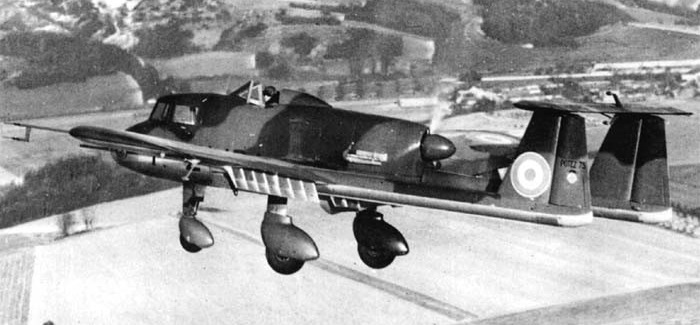
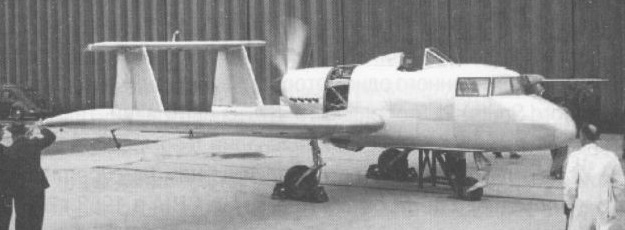
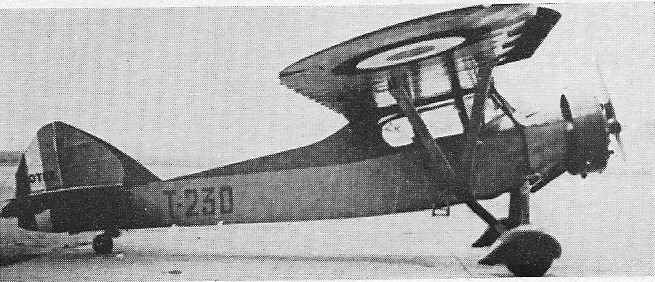
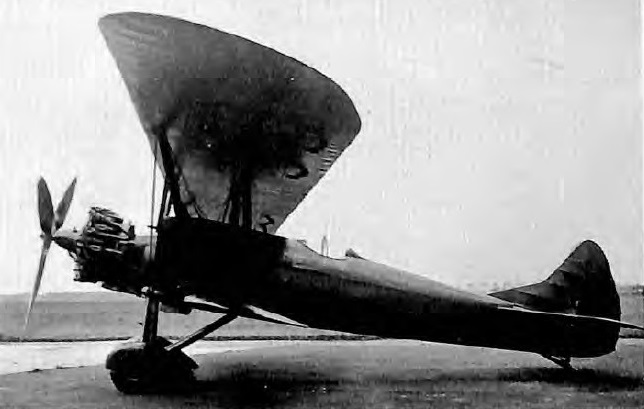
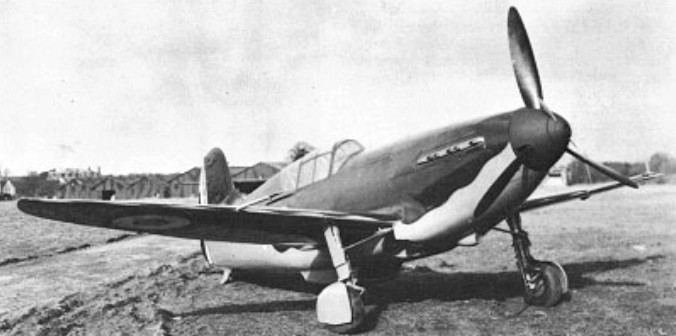
With the absorption of ANF-Mureaux in 1937 as a component of the SNCA du Nord (which also included Potez and retained the appellation for its products), Andre Brunet and his co-designers Lemaitre and Hubert continued the line of lightweight fighter development commenced with the ANF-Mureaux 190. In the autumn of 1938, work on a progressive development, the Potez 230, was begun. While possessing a number of features in common with the earlier fighter (eg, elliptical wings), the new aircraft was of more advanced design. Powered by a 670hp Hispano-Suiza 12Xcrs 12-cylinder liquid-cooled engine and having a proposed armament of one engine-mounted 20mm cannon and four wing-mounted 7.5mm machine guns, the Potez 230 was flown on 30 March 1940. When German forces occupied Villacoublay, the sole prototype of the Potez 230 was seized and transported to Germany for examination of the wing torsion box, which, of integral construction, was the first of its type to have been flown.

Max take-off weight: 1800 kg / 3968 lb
Wingspan: 8.74 m / 29 ft 8 in
Length: 7.57 m / 25 ft 10 in
Height: 2.18 m / 7 ft 2 in
Wing area: 10.97 sq.m / 118.08 sq ft
Max. speed: 560 km/h / 348 mph

Potez 230

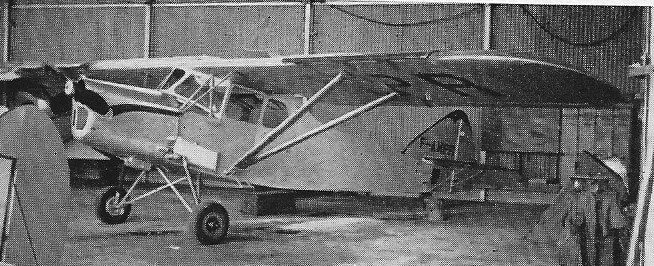
Potez 60 Sauterelle

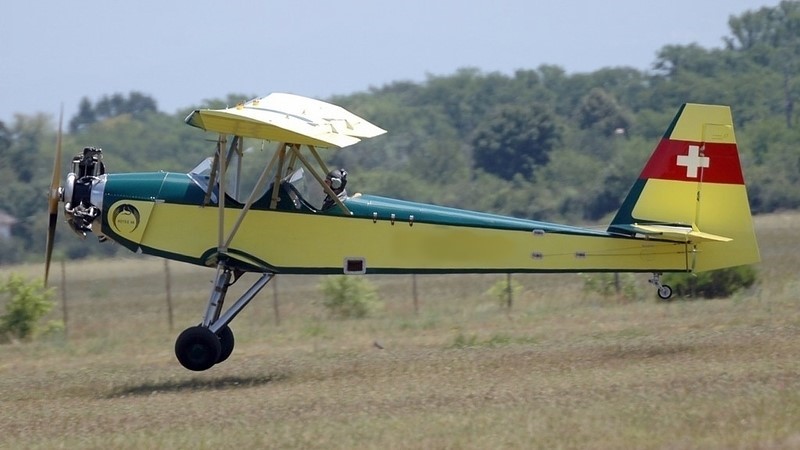
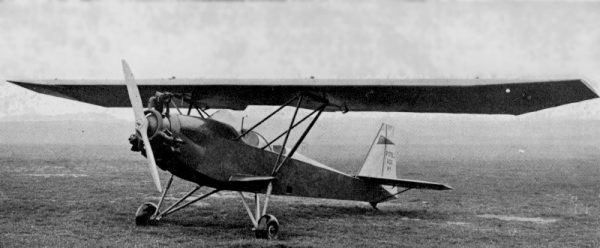
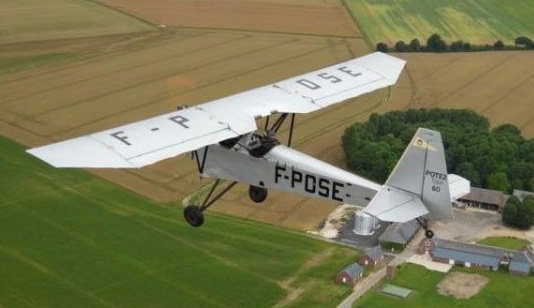
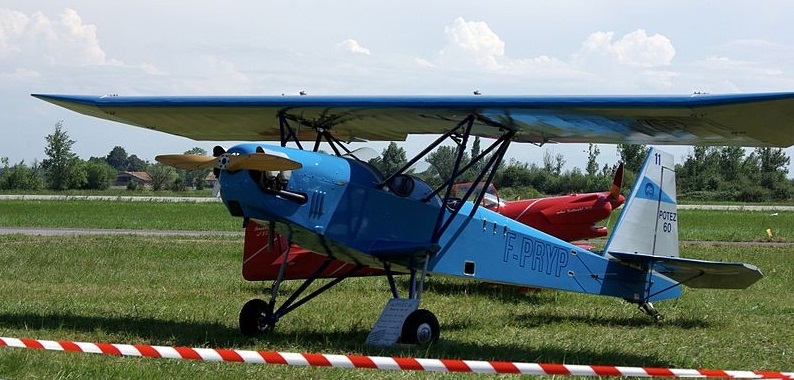
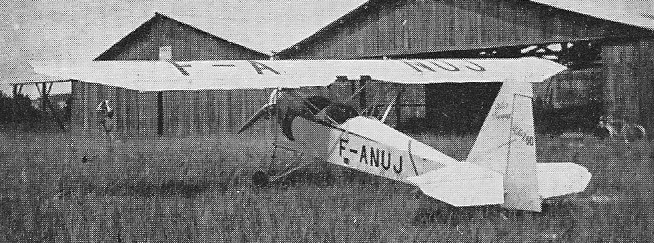
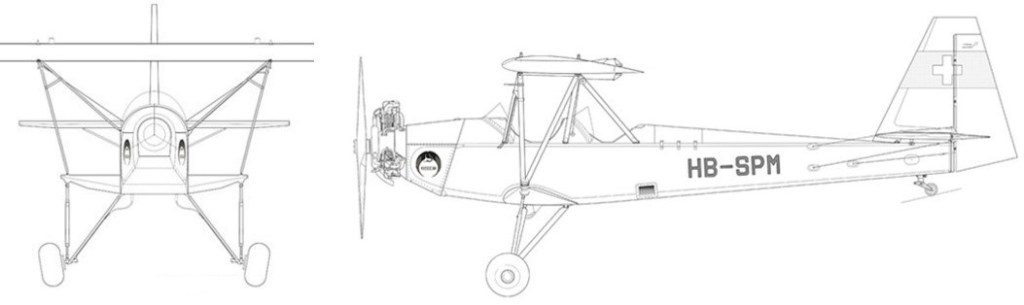
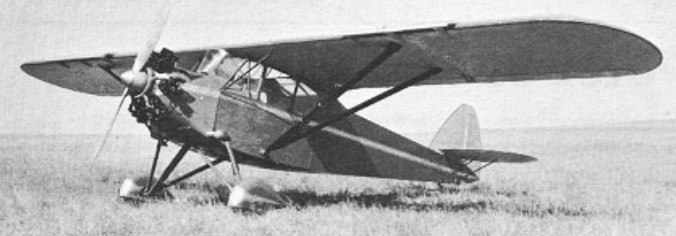
The Potez 60 sometimes named the Sauterelle (“Grasshopper”) is a French 1930s parasol-wing open-cockpit trainer. The Potez 60 is essentially made of wood and covered in linen.

The fuselage is made up of two plywood side panels, assembled on frames. Wooden fins allow the attachment of fairly wide track landing gear, in order to reduce the risk of a “wooden horse” by inexperienced pilots and to facilitate access to the front station.

The construction of the wing is in three panels around two wooden spars, mounted on tubular steel masts. Some Potez 60s had slats mounted on the leading edge. The empennage is wooden too; its size and shape have been slightly modified from the prototype.

The undercarriage is made of steel tubing with Potez or Messier type rubber dampers or its equivalent. Some aircraft had no brakes, others had cable brakes.

It had a wide-track tailwheel landing gear and is powered by a 45 kW (60 hp) Potez 3B uncowled radial engine.

The Potez 3B engine fitted to the Potez 60 was “one half” of the 6Ba fitted to the Potez 43. As a result, these engines have many parts in common. The 3B engine proved to be reliable, but it requires quite intensive maintenance, especially of the rocker arms, whose lubrication system is quite special.

Potez 60 is n° 6184, registered F-AOSE on August 11, 1936

Test pilot René Labouchère took off the Potez 60 for the first time in Méaulte on August 8, 1934. In December, the aircraft was presented in Villacoublay by Georges Detré to the STIAé, the powerful state body mandated to control any French aircraft. Detré gave a brilliant presentation, meant to demonstrate the aircraft’s docility and ease of piloting.

One additional machine was modified in 1948 to take a 75 hp Minie 4DC-30 engine and was referred to as the Potez 60/48.

An order for 250 was placed by the French government, but deliveries stopped after 155 aircraft were produced. On the first models, even the propeller was made by Potez – the Potez 121. Afterwards, several other brands were approved.

Powerplant: 1 × Potez 3B radial engine, 45 kW (60 hp)
Wingspan: 10 m (32 ft 9.75 in)
Empty weight: 629 lb
Length: 22 ft 10 in
Height: 7 ft 8 in
Loaded weight: 1232 lb
Maximum speed: 145 km/h (90 mph, 78 kn)
Time to 1640 ft: 3 min 45 sec
Ceiling: 3000 m / 9840 ft
Range: 720 km / 404 mi
Crew: 2

Potez 60/48
Engine: 75 hp Minie 4DC-30

Potez 58 / 580 / 581 / 582 / 583 / 584 / 595

Ultimate development in the series of high-wing monoplane tourers which began with the Potez 36, the Potez 58 prototype first flew in September 1934. Like its immediate predecessor, the Potez 43, it had accommodation for a pilot and two passengers. The wing retained its Vee-strut bracing, leading-edge slats and folding capability, but the wing root was enlarged, the fuselage and tail unit design further refined, and the divided landing gear strengthened and equipped with spatted wheel fairings as standard.

Potez 584
Engine: de Havilland Gipsy Major, 120 hp
Seats: 3

Potez 585
Engine: 1 x Potez 6Ba radial piston engine, 97kW
Max take-off weight: 906 kg / 1997 lb
Loaded weight: 515 kg / 1135 lb
Wingspan: 11.3 m / 37 ft 1 in
Length: 7.44 m / 24 ft 5 in
Height: 2.36 m / 8 ft 9 in
Wing area: 19.0 sq.m / 204.51 sq ft
Max. speed: 190 km/h / 118 mph
Cruise speed: 160 km/h / 99 mph
Range: 750 km / 466 miles

Potez 43 / 430 / 431 / 432 / 433 / 434 / 435 / 436 / 437 / 438

The success of the Potez 36 tourer led to development of the refined Potez 43, the prototype making its first flight in June 1932. It retained the strut-braced high wing which had characterised the P.36, but the span of the leading-edge slats was reduced to equal that of the ailerons and a refined fuselage was introduced with cabin accommodation for three. There was provision for wheel spats and the tail unit was revised.

The prototype and early production aircraft were powered by the Potez 6Ac engine, but later variants relied mainly on the Renault 4. Total production was 161, including a number built specifically for the Armee de I’Air for liaison and training.

Potez 431

Potez 431
Engine: 1 x Potez 6Ac, 100 hp
Wingspan: 37 ft
Wing area: 204 sq.ft
Length: 24 ft 5 in
Height: 7 ft 9 in
Empty weight: 1030 lb
Loaded weight: 1850 lb
Max speed: 106 mph
Cruise: 92 mph

Potez 434
Engine: 1 x de Havilland Gipsy Major, 120 hp

Potez 435
Engine: 1 x Renault 4 Pdi, 120 hp

Potez 436
Engine: 1 x Renault 4 POI, 140 hp

Potez 437
Engine: 1 x Renault 4 Pdi, 120 hp

Potez 438
Engine: 1 x Renault 4Pdi inline, 89kW
Max take-off weight: 840 kg / 1852 lb
Loaded weight: 560 kg / 1235 lb
Wingspan: 11.30 m / 37 ft 1 in
Length: 7.65 m / 25 ft 1 in
Height: 2.36 m / 8 ft 9 in
Wing area: 18.0 sq.m / 193.75 sq ft
Max. speed: 170 km/h / 106 mph
Ceiling: 5000 m / 16400 ft
Range: 700 km / 435 miles

Potez 439A
Engine: 1 x Potez 6Ba, 130 hp

Potez 37 / 39 / 390

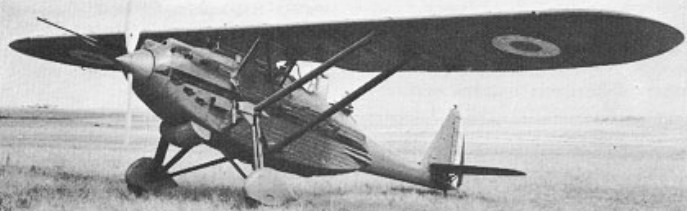
The Potez 39 was designed to a 1928 requirement for an aircraft to replace the Potez 25 and Breguet 19 machines then in service with the French Air Force in the A2 (Artillerie Biplace – two seat observation aircraft) role. The Potez 37 and Potez 39 appeared in 1930.

Both were two-seat braced parasol-wing monoplanes of all-metal construction, the former being intended for the fighter-reconnaissance role and having a rear fuselage which tapered into little more than a boom to give the gunner an improved field of fire. The prototype Potez 39 was designed for A.2 category observation role, and had a conventional fuselage and redesigned wings with elliptical tips. The Potez 37 was rejected for production, only two examples being built, but the Potez 39 showed great promise and was adopted by the Armee de I’Air.

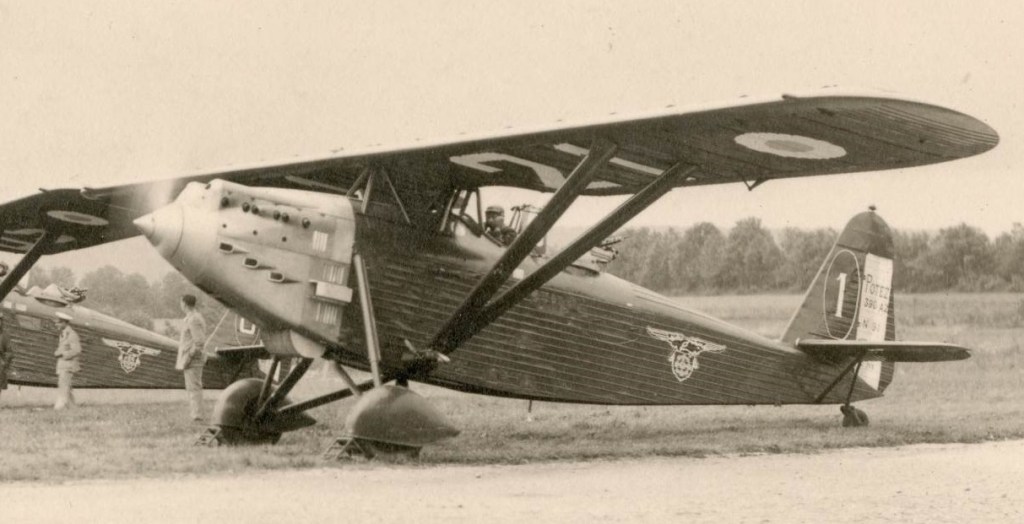
The Potez 39 was a parasol monoplane of all-metal construction, the first all metal Potez aircraft, with a tailwheel undercarriage. It was powered by a Hispano-Suiza 12H engine of 580 bhp (433 kW) as required by the specification. The crew of two sat in open, tandem cockpits, with the observer being armed with two Lewis guns on a ring mounting, and the pilot being armed with a single synchronised Darne machine gun, while light bombs could be carried in a small internal bomb-bay and on external racks. A fixed camera was fitted, operating through a hatch in the fuselage floor. The prototype flew in January 1930. Although the Breguet 27 was selected as the winner of the competition, both it and the Potez, which was runner-up, were chosen for production.

Compared to the Potez 25, of which over 2000 were ordered, production of the Potez 39 series was on a small scale, 100 Potez 390 aircraft being built for France and 12 Potez 391 variants, powered by a Lorraine-Dietrich 12H engine of 700 bhp, for the Peruvian Air Force.

The first production aircraft were delivered in 1934 but shortly afterwards, the Potez 39 began to be replaced by ANF Les Mureaux 117, Amiot 143 and Potez 540 aircraft ( in 1936).

Series Potez 390 and Potez 391 aircraft were subjected to various modifications during production and service, notably the introduction of a rudder with increased area, but they retained the basic features of the design, which included a divided fixed wide-track landing gear with wheel spats; streamlined Vee-struts supporting the wings; and glazed panels in the fuselage sides between the cockpits.

The Armee de I’Air received 232 P-390s and P-391s, the first unit to re-equip in early 1934 being the 34e Escadre, where they replaced Potez 25s. At the outbreak of the Second World War the Potez 39 remained in service with seven observation squadrons of the French Air Force, but these, along with the Breguet 27-equipped units, were withdrawn from the front in October 1939. The Potez 39 continued to serve in training units until the armistice of June 1940, at which time 41 remained in Metropolitan France. These aircraft were scrapped soon afterwards.

A number of prototype and development aircraft, including a floatplane, were tested but no further orders were received.

In early 1938, the Ilmavoimat / Maavoimat test team evaluated the Potez 39. Given that the aircraft was already being replaced in service in France, the evaluation was cursory and simply confirmed that the aircraft was obsolete and should not be considered further.

Potez 390 A.2
Engine: 1 x Hispano-Suiza 12Hb, 433kW
Max take-off weight: 2650 kg / 5842 lb
Loaded weight: 1492 kg / 3289 lb
Wingspan: 16.0 m / 53 ft 6 in
Length: 10.0 m / 33 ft 10 in
Height: 3.40 m / 11 ft 2 in
Wing area: 35.0 sq.m / 376.74 sq ft
Max. speed: 240 km/h / 149 mph
Ceiling: 7000 m / 22950 ft
Range: 700 km / 435 miles
Armament: 1 x 7.7mm + 2 x 7.7mm machine-guns
Bomb load: 120kg
Crew: 2
Potez 36

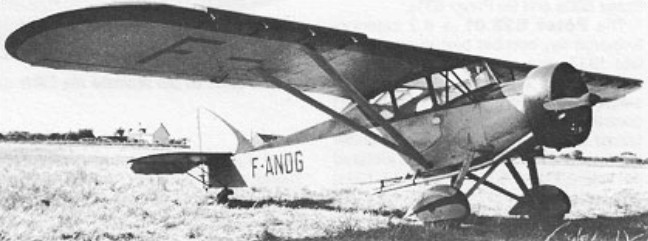
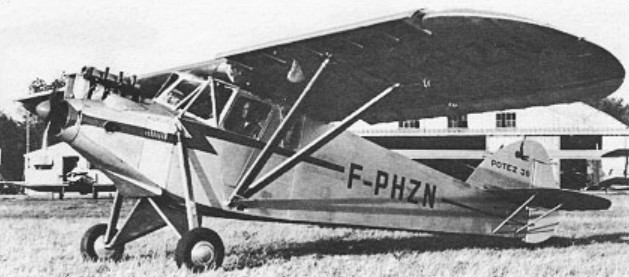
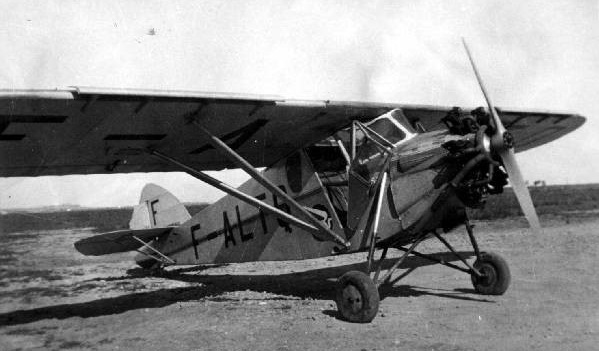
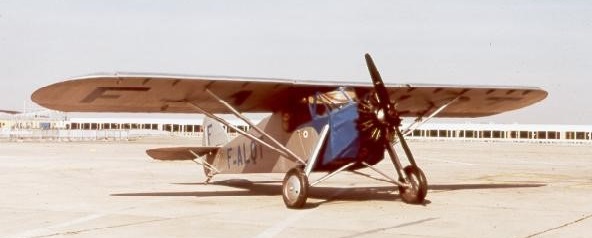
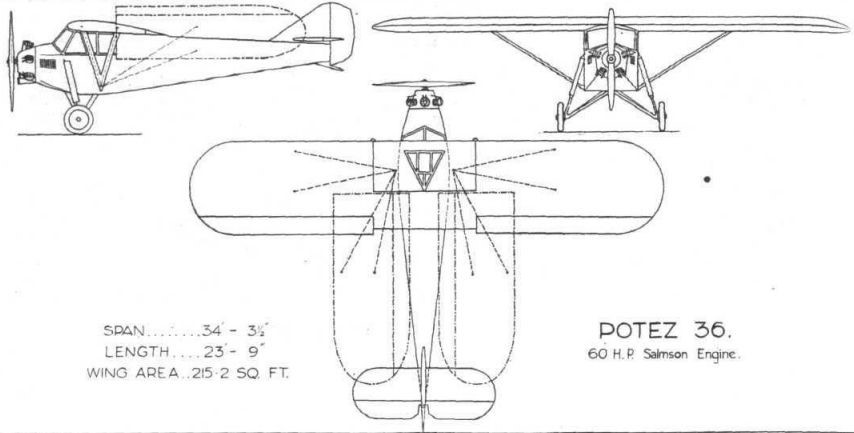
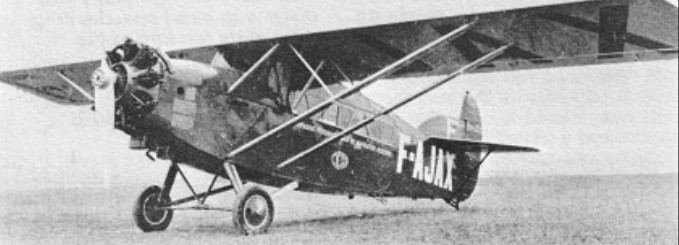
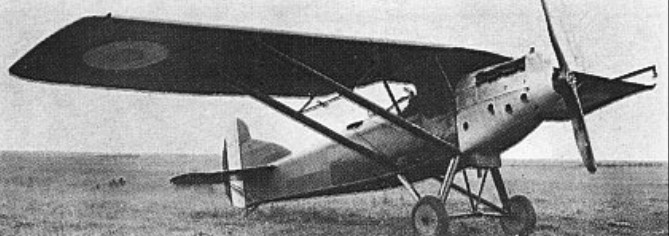
The Potez 36 was a French two-seat touring or sport high-wing braced monoplane designed by Coroller and Jarry and built by Potez at Meaulte, near Amiens in the Somme, and first flown in 1929. A braced high-wing monoplane, the Potez 36 had wide-track divided conventional landing gear, and its pilot and passenger were seated side-by-side in a fully enclosed cabin. Some of the aircraft had Potez-designed leading-edge slats produced a high safety factor, and its design also included folding wings, making it suitable for garage storage and easy to tow behind a car.

Potez 36/21 F-ALTQ 26 Apr 1935

The first serial Potez 36/3 was released in 1929. There were six manufactured without slats and with the Salmson 5Ac 60 hp engine. This was followed by several production versions.

Potez 36s proved a great success and some 300 were built for private owners and clubs between 1929 and 1933. Some were used by I’Armee de I’Air as scout/ liaison aircraft during the 1930s.

Gallery

Variants:

Potez 36
Prototype of the series powered by a 45 kW (60 hp) Salmson 5Ac radial engine.

Potez36/1
production version powered by a 52 kW (70 hp) Renault 4Pa; two built.

Potez 36/3
Prototype followed by six production aircraft with no slats, powered by a 45 kW (60 hp) Salmson 5Ac radial engine.

Potez 36/5
Variant with no slats but powered by a 71 kW (95 hp) Salmson 7Ac engine; five built, the first flew in August 1929.

Potez 36/13
Production version of the 36/5 but fitted with leading-edge slats, 96 built, the first few in June 1931.

Potez 36/14
Variant with a 71 kW (95 hp) Renault 4Pb engine and leading-edge slate and wheel brakes, 103 built. The last copy is on display in the suspended Albert Station, near Amiens. (F-PHZN since 1957, ex. F-MMEA No. 3207 of 1933)

Potez 36/15
Variant with a 75 kW (100 hp) Potez 6AC engine, 18 built 1931-32.

Potez 36/17
Variant with a 78 kW (104 hp) Cirrus Hermes IIB engine, two built in September 1931.

Potez 36/19
Variant with a 75 kW (100 hp) Renault 4Pci engine, two built in 1932.

Potez 36/21
Production variant with a 75 kW (100 hp) Potez 6Ac engine and wheels with balloon tyres, 29 built from November 1932.

Specifications:

Potez 36/3
Engine: 1 x Salmson 5Ac radial, 45kW / 60 hp
Wingspan: 10.45 m / 34 ft 3 in
Wing area: 20.00 sq.m / 215.29 ft2
Length: 7.50 m / 24 ft 7 in
Height: 2.45 m / 8 ft 0 in
Empty weight: 427 kg / 941 lb
Max take-off weight: 650 kg / 1433 lb
Max. speed: 150 km/h / 93 mph
Ceiling: 3600 m / 11800 ft
Range: 500 km / 311 miles
Seats: 2

Potez 36/14
Engine: 95 hp Renault 4Pb
Wingspan: 33 ft 3 in
Wing area: 215 sq.ft
Length: 25 ft 2 in
Height: 8 ft 1 in
Empty weight: 994 lb
Loaded weight: 1676 lb
Max speed: 93 mph
Time to 3280 ft: 9 min 30 sec
Absolute ceiling: 13,120 ft
Range: 431 mi

Potez 32 / 33

Potez 32

Derived from the Potez 29, the Potez 32 five-passenger transport or mail-plane retained the fuselage, tail unit and landing gear of its predecessor, but was a strut-braced high-wing monoplane. First flown in 1928, the prototype was followed by 54 production aircraft. An initial difference in comparison with the Potez 29 was the employment of a lower-powered, and thus cheaper and more economical, Salmson radial engine; later aircraft had the higher-powered Jupiter. The type was operated by CIDNA, Air Orient and Aeropostale, and 12 were exported to Canada.

The Potez 33 prototype, tested in March 1928, was a militarised version of the Potez 32 intended for liaison and observation, or as a trainer for pilots and observers. It had dual controls as standard, introduced large observation windows, and had a dorsal machine-gun position; light bombs could be carried.

Potez 33/2
Engine: 1 x Salmson 9Ab radial, 171kW
Max take-off weight: 1750 kg / 3858 lb
Loaded weight: 950 kg / 2094 lb
Wingspan: 14.50 m / 48 ft 7 in
Length: 10.15 m / 33 ft 4 in
Wing area: 35.0 sq.m / 376.74 sq ft
Max. speed: 190 km/h / 118 mph
Ceiling: 4500 m / 14750 ft
Range: 700 km / 435 miles
Armament: 1 x 7.7mm machine-gun

Potez 31

The Potez 31 was designed to meet the requirements of the 1925 C2 programme calling for a two-seat night fighter and diurnal reconnaissance-fighter. Not flown until 1929, and closely resembling the Potez 25M monoplane variant of the Potez 25 army co-operation biplane, the Potez 31 was a parasol monoplane of wooden construction with fabric covering. Embodying the facility developed for preceding types of accepting either Hispano- Suiza or Lorraine-Dietrich W-type water-cooled engines, the Potez 31 was tested with both the 500hp HS 12Mb and the 450hp L-D 12Eb. Armament consisted of two fixed forward-firing 7.7mm guns, two similar weapons on a flexible mount in the rear cockpit and a fifth gun firing through a hatch in the rear cockpit floor. Development of the Potez 31 was terminated with the discontinuation of the C2 programme.

Max take-off weight: 2130 kg / 4696 lb
Empty weight: 1270 kg / 2800 lb
Wingspan: 14.30 m / 47 ft 11 in
Length: 9.50 m / 31 ft 2 in
Height: 3.40 m / 11 ft 2 in
Wing area: 40.00 sq.m / 430.56 sq ft
Max. speed: 242 km/h / 150 mph