PZL Mielec M-18 Dromader

M-18BS

The M-18 was designed in co-operation with Rockwell International in the USA to FAR Part 23 standards. It uses several components of the then Rockwell S2R Thrush, including the outer wing panels. The cockpit is a sealed unit and has a similar layout to the Snow S2D-600. With a requirement for a crew seat, the rear canopy was later redesigned with a hatch on the port side for entry to a rear facing seat. The earlier M-18 models that were converted and new production aircraft were designated M-18A.

Described as a low wing agricultural mono¬plane with fixed landing gear, the unswept cantilever wings are of constant chord, with 2o 30’ dihedral on the centre section and 6o on the outer panels. The wing sections are NACA4416 at the root and NACM412 at the tip. The aircraftis fitted with a steel-capped wing spar with all-metal, two section, trailing-edge flaps, actuated hydraulically. Metal slotted ailerons and metal wing tips complete the 58’ wing span and 430.56 sq ft wing area.

The fuselage is of all-metal tubular construc¬tion and incorporates an all-metal tailplane. It stretches 31 feet long and in a flying attitude stands at 15’01”. The hopper is made from glass fibre and has a capacity of 2,500 litres, or 660 US gallons. The aircraft’s empty weight is 5,445 lbs with a maximum take-off weight of 11,684 lbs. It has a maximum speed of 138 knots and a stalling speed, with flaps extended, of 59 knots. The pilot being accommodated in a cockpit stressed to survive an impact of 40g. Special materials and treatment limit airframe corrosion to a minimum.

PZL-Mielec built three prototype aircraft powered by the uprated P.Z.L. ASz-621R engine. The first, for testing, was non-flying, but the second aircraft, SP-PBW, and the third aircraft, SP-PBZ, first flew on 27 August 1976 and 2 October 1976 respectively. From April 1978, a batch of ten pre-production aircraft were built, of which two were non-flying test aircraft. Five of them used for operational trials, in Eastern Europe and and two were used in trials in Egypt during the summer of 1978. Another was test flown (on 11 November 1978) as a firefighter to test the concept. The Polish type certificate was issued on 27 September 1978 and two aircraft from this batch were sold to Yugoslavia the following year.

Deliveries of the second batch of five air¬craft began in 1980, with four going to Canada. Canadian certification of the fire-fighting version was awarded on 10 March 1980. Another batch of ten aircraft was built in 1980, six of which went to Canada.

Production of the M-18 began following the receipt of Polish certification on 27 September 1978, but came to an end in 1984, shortly after the M-18A two-seat version was certificated by the Polish authorities. A dedicated two-seat agricultural trainer, designated the M-18AS, was constructed with a smaller hopper to allow an instructor to sit behind the pilot, and flew for the first time on 21 March 1988. Five were built by 1992.

In common with most East European air¬craft, Dromaders are built in batches. This is evident in the constructor number sequences. In the Soviet Union series of numbers are used, however, PZL-Mielec used an alphabetical and numerical sequence. The prototype Dromaders used 1ZP and the production Dromader 1ZO.
Mielec has produced a two-seat trainer Dromader, the M-18BS, first flying in November 1997.

The fifth batch to come out of Poland saw the first aircraft, 1ZO05-01, being delivered to the USA as N42255. Of the fifteen aircraft built, nine were sold to the United States, three to Hungary and two to Cuba. The fifteenth airframe was used for spares. In 1981 the Polish com¬pany had two new customers. Turkey purchased four aircraft and South Africa two. Hungary, Cuba and the USA were the main buyers until 1982, when Bulgaria purchased four aircraft and followed with another fourteen by the end of that year. From December 1983, the Greek Air Force took delivery of eighteen aircraft for use as fire bombers. As mentioned above, Cuba took delivery of their first M-18 in January 1981 and by October1988, forty-six aircraft had been reg¬istered in that country.

The nine-cylinder, supercharged radial engine, the AS-621z, which drives the four-blade PZL-Warszawa SP.00 propeller, has been the only power plant supplied by the factory. Operators in the United States have taken advantage of this large airframe with some replacing the PZL radial with turbine power. Turbine Conversion of Nunica, MI, converted some M-18/M-18A aircraft by installing P&WPT-6A-45 and -65 series engines and 800 US gallon hoppers. Delta Turbines have also converted a number of Dromaders to turbine power, fitting a TPF-33-10UA. One of the most unusual conversion was the installation of a 1000 shp Lycoming T53-L-3 from a Grumman OV-1 Mowhawk.

By the end of 1997, six hundred and eighty-three aircraft had been registered and more air¬craft were awaiting assembly.

The M-18B Dromader is certified under European Aviation Safety Agency EASA A.056.

Gallery

PZL Mielec M-18a
Engine: 1 x P.Z.L. Kalisz ASz-62IR radial, 746kW
Max take-off weight: 4700 kg / 10362 lb
Empty weight: 2470 kg / 5445 lb
Wingspan: 17.7 m / 58 ft 1 in
Length: 9.47 m / 31 ft 1 in
Height: 3.7 m / 12 ft 2 in
Wing area: 40.0 sq.m / 430.56 sq ft
Max. speed: 237 km/h / 147 mph
Cruise speed: 185 km/h / 115 mph
Range: 520 km / 323 miles

M18A
Engine: ASz-621RM, 967 hp
Prop: AW-2-30, 4 blade
Wing span: 58 ft
Wing area: 430.56 sq.ft
Length: 31 ft
Hopper cap: 2500 lt (660 USG)
Empty wt: 5445 lb
MTOW: 11,684 lb
Max speed: 138 kts
Stall: 59 kts

M18AS
Seats: 2

PZL Mielec M-18 Dromader

PZL Mielec TS-11 Iskra

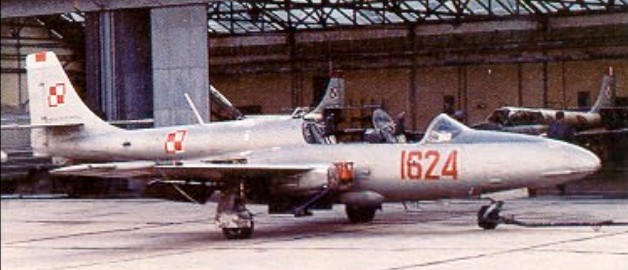
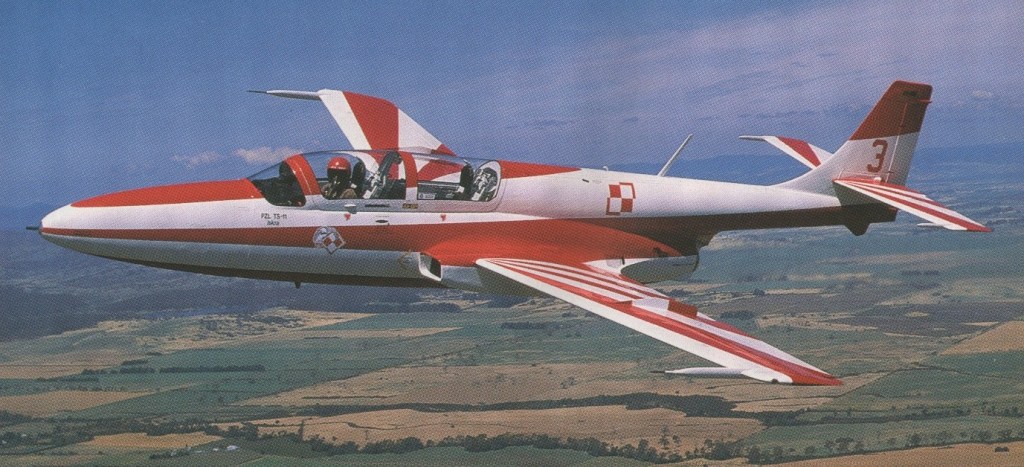
Design of the P.Z.L. Mielec TS-11 Iskra (Spark) two-seat turbojet-powered primary and advanced trainer began in 1957, being intended as a replacement for the TS-8 Bies two-seat basic trainer. Four prototypes were built, and the first flight of the type was recorded on 5 February 1960.

PZL Mielec TS-11 Iskra Article

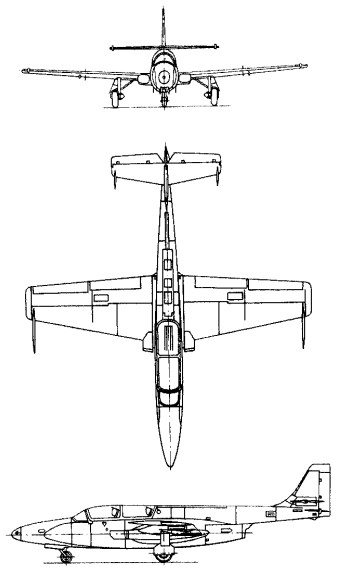
Following type approval during 1961 initial deliveries began in March 1963, and the TS-11 became operational with the Polish air force in 1964. Since that time well over 500 have been built, manufactured not only for use by the nation’s air force, but also for export to India, which procured 50. A cantilever mid-wing monoplane of all-metal construction, the TS-11 has retractable tricycle landing gear and is powered by a single turbojet mounted within the fuselage, aft of the cockpit.

Early aircraft were powered by the Polish-designed HO-10 turbojet developing 780kg thrust, but from the mid-1960s TS-11s have been powered progressively by the 2,205 lb / 800kg thrust SO-1 turbojet, the similarly rated but improved SO-3, or the uprated SO-3W. The Iskra was being replaced in Polish air force service by the I-22 Iryda.

Later developments were the Iskra 100 with attack capability and the Iskra 200, built as single and two seaters. The Indian Air Force also operated the Iskra 100.

Limited production of the 1987 version of the TS-11, the Iskra-Bis DF, continued at Mielec. The Iskra-Bis DF is a tandem-seat combat and reconnaissance trainer powered by a single uprated 10.8kN SO-3W turbojet. It is equipped with a 23mm cannon in the forward fuselage, an S-13 camera gun, and four underwing hardpoints for 100kg of bombs, rockets, and gun pods. For recon¬naissance training three cameras may be carried, one in each intake fairing and one in the cockpit floor.

0823 PZL-Mielec TS-11 200bis(R) Iskra 1H08-23

Gallery

Engine: 1 x Narkiewicz turbojet, est 1,760 1,980 lbs.t. (800 900 kgp)
Max speed, 497 mph (800 kph)
Service ceiling 39,370 ft (12 000 m)
Loaded weight, 7,496 lb. (3 400 kg)
Span, 32 ft 9.5 in (10 m)
Length, 36 ft 1 in (11m)
Height, 10ft 10 in (3.3 m)

PZL-WSK TS 11 bis DF Iskra
Engine: 1 x SO-W3, 1100kg
Installed thrust: 10.8 kN
Span: 10.06 m / 33 ft 0 in
Length: 11.15 m / 37 ft 7 in
Wing area: 17.5 sq.m / 188.37 sq ft
Height: 12 ft 6 in / 3.500 m
Empty wt: 2560 kg / 5644 lb
MTOW: 3840 kg / 8466 lb
Max speed: 770 kph / 478 mph
Initial ROC: 1140 m / min
Ceiling: 37730 ft / 11,500 m
T/O run: 660 m
Ldg run: 720 m
Fuel internal: 1200 lt
Range: 675 nm / 1250 km
Armament: 1 x 23 mm
Hardpoints: 4
Bombload: 400kg
Crew: 2

PZL Mielec TS-11 Iskra

PZL Mielec TS-8 Bies

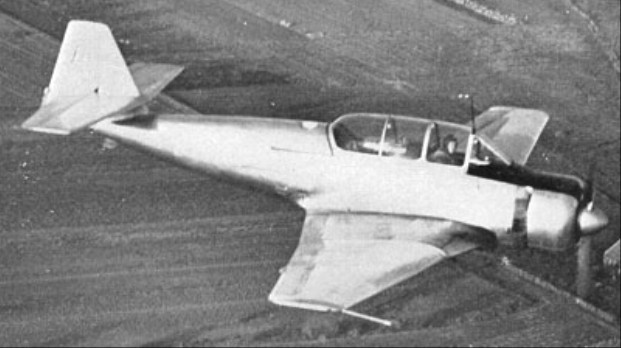
On 23 July 1955 the first prototype was flown of a two-seat basic trainer designated P.Z.L. TS-8 and later named Bies (Fiend). A cantilever low-wing monoplane with retractable tricycle landing gear, powered by a Narkiewicz WN-3 radial engine and accommodating two in tandem beneath a jettisonable transparent canopy, initial deliveries to the Polish air force began in 1958.

The type established several class speed records, and that set on 20 May 1957, of 320.362km/h over a 2000km closed circuit, remained unbeaten until August 1982.

Built until 1962, this fully aerobatic trainer remained in service for some six years, initial deliveries of the TS-11 Iskra which replaced it in service in the Polish air force beginning in 1964.

Engine: 340 hp / 246kW Narkiewicz WN 3
Span, 34 ft 5 in (10.5 m)
Length, 27 ft 10 in (8.5 m)
Wing area, 205.6 sq.ft (19.1 sq.m)
Height, 3.3 m (11 ft 10 in)
Empty weight, 2,359 lb (1070 kg)
Loaded weight, 5,417 lb (1550 kg)
Max speed, 194 mph (312 kph)
Cruise, 168 mph (270 kph)
Initial climb, 1340 fpm (6.8 m/sec)
Service ceiling, 19,685 ft (6000 m)
Range 497 mls (800 km)

PZL TS-8 Bies

PZL Mielec M-4 Tarpan

M 4P is a navigational trainer.

M 4 Tarpan
Engine: Narkiewicz WN 6, 180 hp
Max speed, 191 mph (307 kph)
Cruise, 155 mph (250 kph)
Initial climb, 1,260 fpm (6.4 m/sec)
Ceiling, 22,640 ft (6 900 m)
Range, 466 mls (750 km)
Empty weight, 1,671 lb (758 kg)
Loaded weight, 2,315 lb (1050 kg)
Span, 29 ft 0.5 in (8.85 m)
Length, 24 ft 1 in (7.33 m)
Wing area, 126.9 sq.ft (11.79 sq.m)

PZL Mielec LLP-M-15 Belphegor

Following an agreement between the Polish and Soviet governments for the design and production of a new large agricultural aircraft, allocated the designation P.Z.L. Mielec M-15, design of this aircraft was initiated in late 1971 and the initial LLP-M15 prototype made its first flight on 30 May 1973. One M-15 prototype and five pre-production aircraft followed, and completion of the development programme was signified by the award of a full certificate of airworthiness on 4 April 1979.

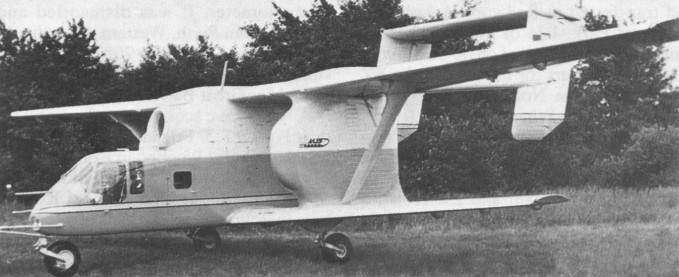
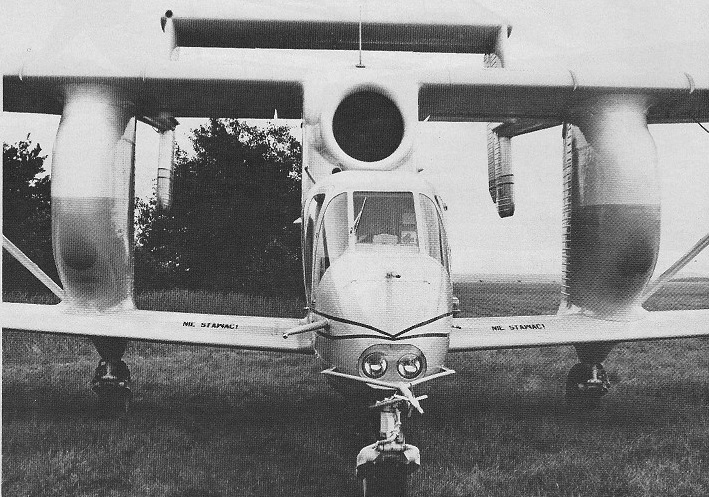
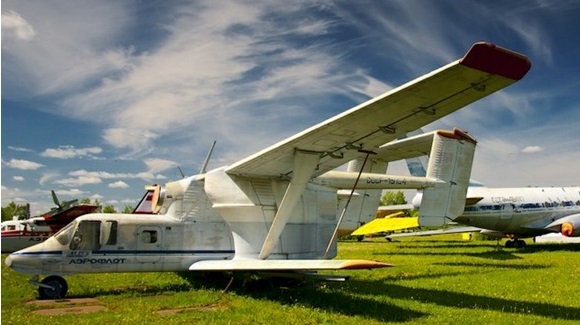
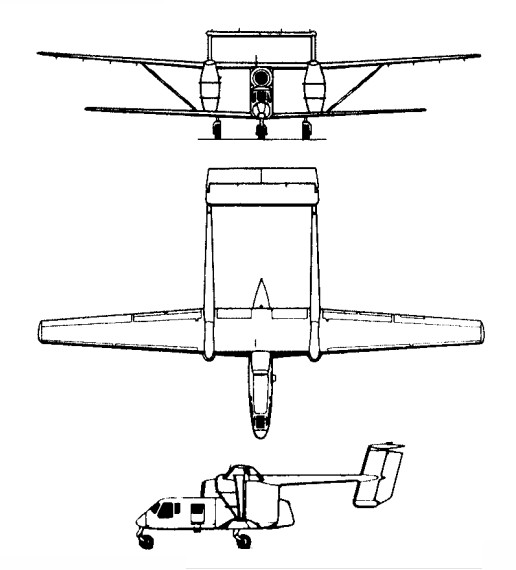
The M-15 had unequal-span biplane wings, twin tailbooms extending aft to twin fins and rudders united by a high-set tailplane and elevator, and fixed tricycle landing gear. A central fuselage nacelle provided accommodation for the pilot and, to his rear, had a cabin to seat two ground crew during ferry flights between operating areas. The single turbofan power-plant was mounted above the fuselage nacelle, and two streamlined chemical hoppers occupied the full gap between each wing, mounted directly beneath the tailbooms, their combined chemical capacity 2900 litres.

Powered by a 3,300-1b thrust Ivehenko AI-25 turbofan, it was also fitted with an Ivehenko AI-9 APU, which provides power for engine starts, refuelling and pumping chemicals into the two 1460-litre hoppers located between the wings. The cockpit was air-conditioned and behind was space for two ground crew and their gear, tools, spares, etc. The upper wing was equipped with a variety of high-lift devices, while the lower wing had nozzles for the dispensing of granular or liquid chemicals.

The cabin normally housed a mechanic or two, but could carry up to 21 passengers for ferry purposes.
Its usual working speed was 80 knots, but it could “dash” to the next job at over 140 knots.

Plans had been made to manufacture 3,000 M-15s, which had been given the name Belphegor during 1979, but production ended in 1981 after only 120 had been built because the aircraft was uneconomical in operation, P.Z.L. producing the turboprop An-3 instead.

Gallery

Engine: 1 x Ivchenko AI-25 turbofan, 1500kg / 3307 lb
Wing span: upper 72 ft (22 m); lower 49 ft (15 m)
Wing area: 67.9 sq.m / 730.87 sq ft
Length: 13.13 m / 43 ft 1 in
Height: 5.34 m / 18 ft 6 in
Max take off weight: 11686.5 lb / 5300.0 kg
Max. speed: 200 km/h / 124 mph
Cruise speed: 175 km/h / 109 mph
Range: 480 km / 298 miles
Crew: 1-2
Hopper cap: 2500kg

PZL Mielec M-15 Belphegor

PZL Bielsko SZD-45 Ogar

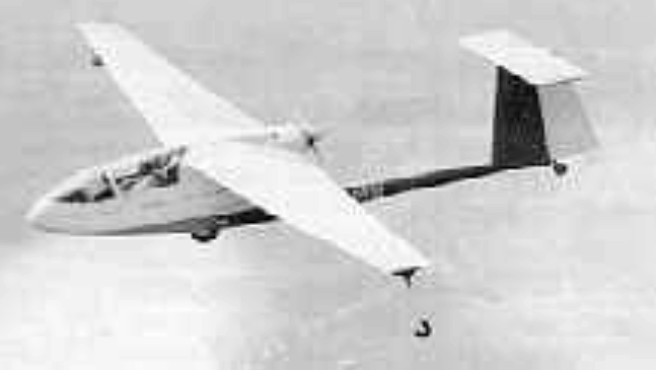
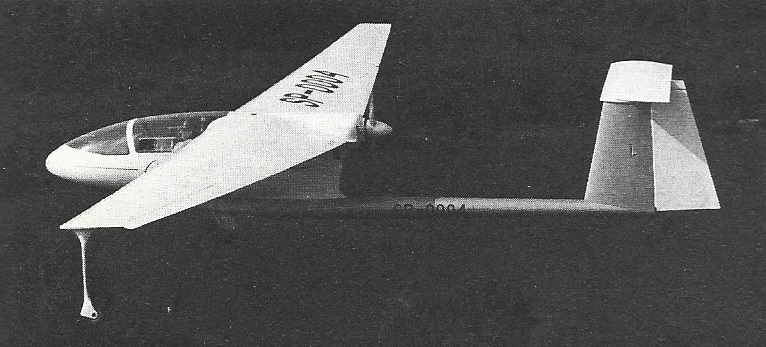
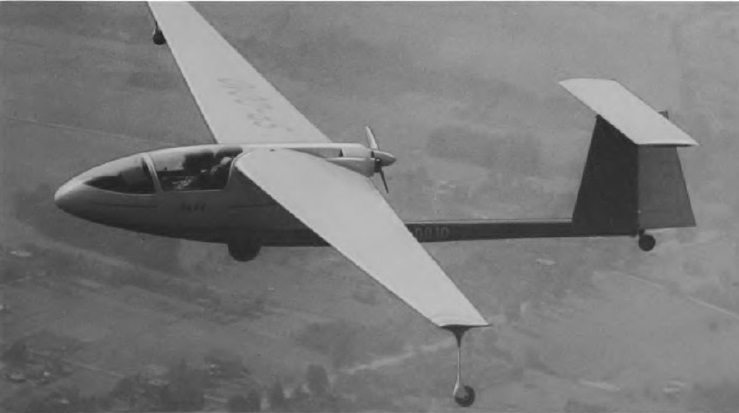
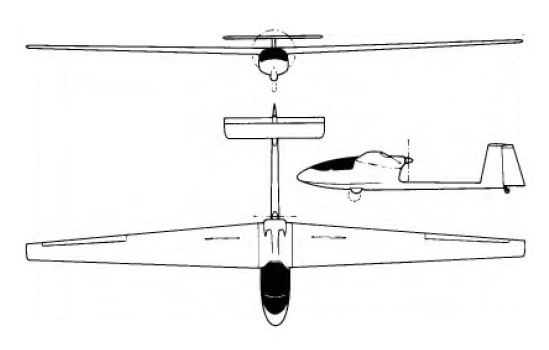
The Ogar (or Greyhound) two-seater motor glider designed by Dipl-lng Tadeusz Labuc is SZD’s first self-launching to go into production and was intended for training from ab initio to advanced stages, and for cross-country flying.

Of mixed glassfibre and wooden construction, the Ogar’s single-spar cantilever shoulder-mounted wooden wings have a moulded plywood stressed skin covered with glassfibre, and slotless ailerons of glassfibre sandwich construction; there are air brakes above and below each wing. The Ogar features sailplane rigging. The main nacelle of the pod and boom fuselage is a glassfibre/epoxy resin shell built on two wooden frames which carry the wings, engine mounting and fuel tank (up to 48.5lb of fuel can be carried) and also the tail boom. The two pilots sit staggered side-by-side with dual controls as standard under a two-piece flush-fitting canopy, the rear portion of which opens upwards for exit and entry. The fin is integral with the tail boom and there is a fully-castoring tailwheel under the rudder plus a semi-retractable monowheel with shock absorbers and a disc brake; for flying school use outrigger legs and wheels are mounted under the wing tips.

It first flew in prototype form on 29 May 1973 with a 45hp Stamo engine mounted behind the cabin and driving a two bladed Hoffmann pusher propeller; the T-tail unit is carried on a tubular duralumin boom that passes under the airscrew disc. Because the German Stamo engine was no longer in production a 68hp Sportavia-Limbach four-cylinder horizontally-opposed engine was later fitted to the prototype which was also later fitted with wing tip winglets, first flying with these on 10 September 1979. This modificatiion was devised by MrW. Blazewicz of Warsaw Technical University.

The production SZD-45A is powered by a 68hp Limbach SL 1700EC powerplant driving a two-blade Hoffman pusher propeller. In 1978 a version of the Ogar was proposed powered by a 60hp PZL-Franklin 2A-120C (later 2A-120CP) ‘flat twin’engine, which was to become the standard engine for production aircraft. The Franklin-engined SZD-45-2 Ogar-F first flew on 13 March 1979. A total of 65 Ogars had been built by the beginning of 1980, and the type had been exported to both East and West Germany, Sweden, the UK and the USA. The U.S. import is powered with the dual ignition, turbocharged, Revmaster engine. Production has now ended.

PZL Bielsko / SZD SZD 45 a Ogar
Engine: 51 kW/ 68 bhp Limbach SL 1700
Wing span: 17.53 m / 57 ft 6.25 in
Wing area: 19.1 sq.m / 205.6 sq.ft
Length: 26 ft 1 in / 7.95 m
Aspect ratio: 16.25
Airfoil: Wortmann FX 61-168/ FX 60-1261
Height: 1.72 m / 5 ft 7.75 in
Empty Weight: 470 kg / 1036 lb
Payload: 230 kg / 507 lb
Gross Weight: 700 kg / 1543 lb
Water ballast: None
Wing Load: 36.6 kg/sq.m / 7.49 lb/sq.ft
L/DMax: 22.6:1 at 97 kph / 52 kt / 60 mph
MinSink: 0.96 m/s / 3.15 fps / 1.87 kt at 50 mph / 39 kt / 72 km/h
Max. speed: 121 kts / 225 km/h / 112 mph at sea level
Stalling speed: 37 kt / 68 km/h
Landing speed: 42 kts / 78 km/h
Cruising speed: 51 kts / 95 km/h
Max rate of climb at S/L: 168 m/min / 551 ft/min
Take-off run: 200 m / 656 ft
Range with max fuel: 341 miles / 550 km / 296 nm
Seats: 2
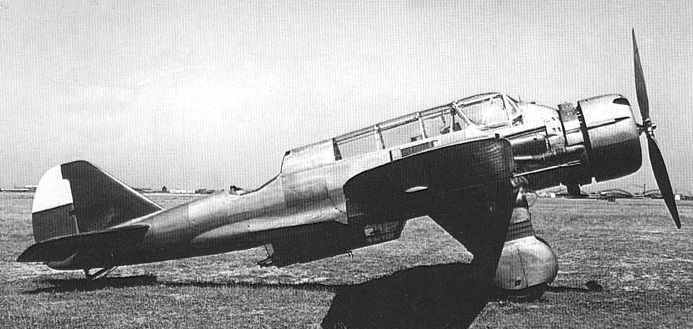
PZL P.50 Jastrzab

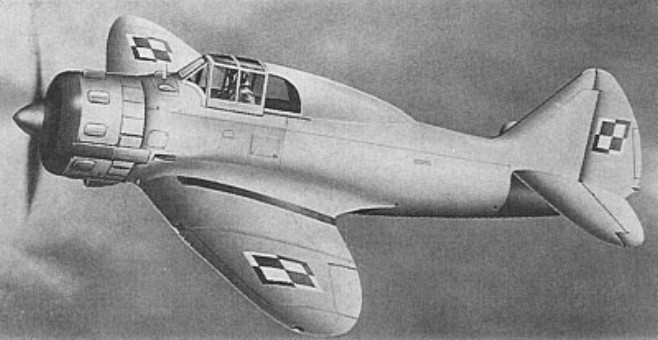
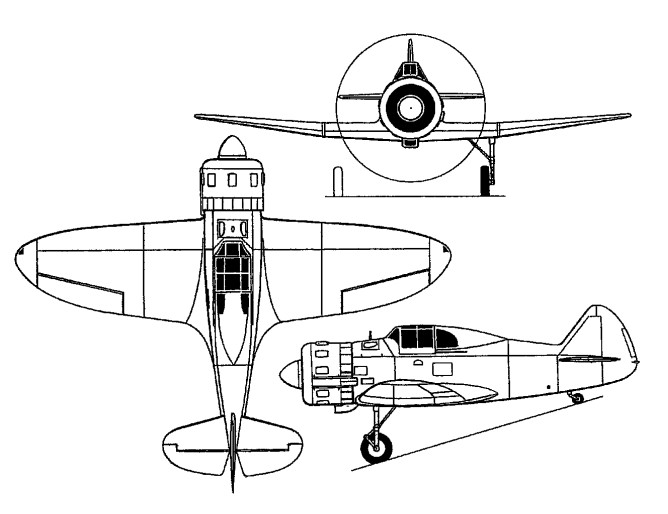
Intended as a successor in Lotnictwo Wojskowe service to the P.11, the P.50 Jastrzab (Hawk) was designed under the leadership of Wsiewolod Jakimiuk. The first of two prototypes, the P.50/I, was flown in February 1939 with an 840hp Bristol Mercury VIII nine-cylinder radial. Of all-metal stressed-skin monocoque construction, the P.50 was armed with four wing-mounted 7.92mm Wz 36 machine guns.

The Mercury-engined model was referred to as the Jastrzab A, an initial batch of 30 of this version being under construction at the time of the German invasion. The second prototype, the P. 50/II, was intended to serve as a development aircraft for the more advanced Jastrzab II. This featured a revised rear fuselage, armament augmented by two 20mm cannon and pilot armour, the engine being a 1375hp Bristol Hercules to be replaced in the series model by the 1200hp P.Z.L. Waran radial. The P.50/II was still awaiting its power plant at the time of the German assault. The first pre-series Jastrzab A was to be fitted with an 870hp Gnome-Rhone 14Kirs as a development aircraft for the Jastrzab B, and this was almost ready for flight test in September 1939.

Engine: Mercury VIII
Max take-off weight: 2500 kg / 5512 lb
Empty weight: 1700 kg / 3748 lb
Wingspan: 9.70 m / 32 ft 10 in
Length: 7.70 m / 25 ft 3 in
Height: 2.70 m / 9 ft 10 in
Wing area: 19.40 sq.m / 208.82 sq ft
Max. speed: 500 km/h / 311 mph
Range: 750 km / 466 miles

PZL P.50 Jastrzab

PZL P.46 Sum

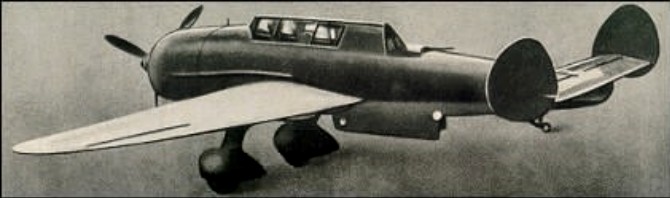
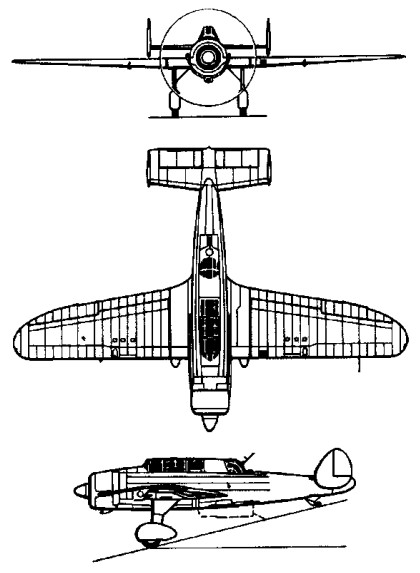
In 1936 Stanislav Prauss (later replaced by Tadeusz Soltyk) began work on a project reconnaissance bomber, which is, in essence, the development of “Carp”, which received later the name PZL P-46 Sum.

One P-23B Karas was modified to serve as a development aircraft for the improved P.46 Sum, with a twin fin/rudder tail unit and a retractable ventral gondola. However, the P.46 did not materialise beyond the prototype stage and the P.42 was subsequently converted back to Karas B standard. The first P.46 Sum light bomber prototype flew in October 1938. Two built.

PZL-46 Sum A
Engine: 1 x Bristol “Pegasus XX”, 675kW
Wingspan: 14.6 m / 48 ft 11 in
Length: 10.5 m / 34 ft 5 in
Height: 3.3 m / 11 ft 10 in
Wing area: 31.5 sq.m / 339.06 sq ft
Max take-off weight: 3550 kg / 7826 lb
Empty weight: 1995 kg / 4398 lb
Max. speed: 425 km/h / 264 mph
Cruise speed: 350 km/h / 217 mph
Ceiling: 7700 m / 25250 ft
Range w/max.fuel: 1300 km / 808 miles
Crew: 3
Armament: 6 x 7.7mm machine-guns
Bombload: 600kg

PZL-46 Sum B
Engine: 1 x Bristol “Pegasus XX”, 675kW
Wingspan: 14.6 m / 48 ft 11 in
Length: 10.5 m / 34 ft 5 in
Height: 3.3 m / 11 ft 10 in
Wing area: 31.5 sq.m / 339.06 sq ft
Max take-off weight: 3550 kg / 7826 lb
Empty weight: 1995 kg / 4398 lb
Max. speed: 460 km/h
Cruise speed: 350 km/h / 217 mph
Ceiling: 8700 m
Range w/max.fuel: 1150 km
Crew: 3
Armament: 6 x 7.9mm machine-guns vz.36/37
Bombload: 1000kg

PZL P.46 Sum

PZL P.24

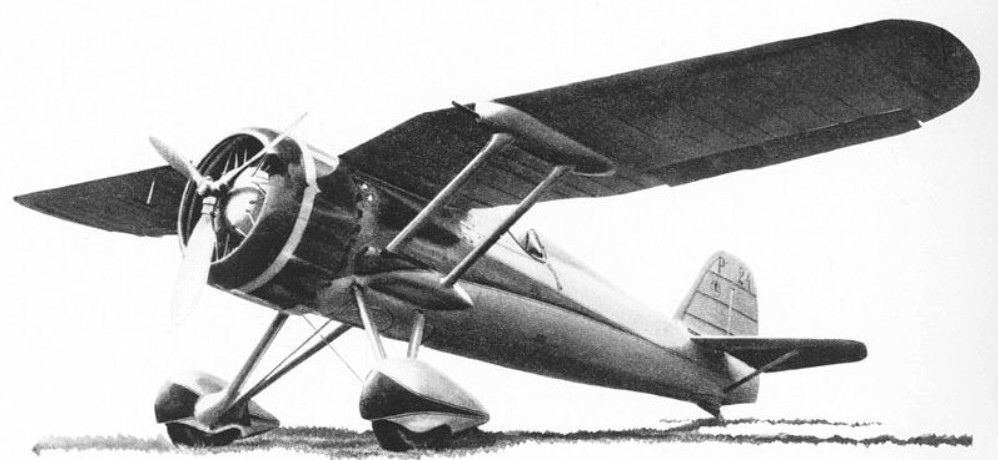
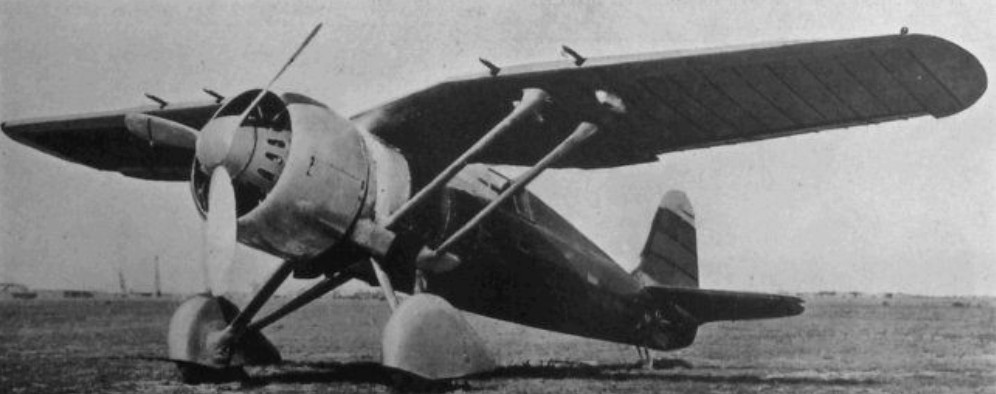
The PZL P.24 was developed as an export version of the PZL P.11, a gull-wing all-metal fighter designed by Zygmunt Puławski. The P.11 was powered with a license-built Bristol Mercury engine. The license did not permit export sales, so the French Gnome-Rhône company proposed using their engines in the P.11. The airframe of the P.Z.L. P.11 being redesigned to accept a new Gnome-Rhone engine designated 14Kds Mistral Major and rated at 760 hp / 567kW. The first P.24/I prototype, based on the P.11a, was flown in May 1933. The initial flight of the P.Z.L. P.24/I prototype ended in a forced landing when the propeller disintegrated. The P.24/I did not fly again until October 1933, showing a need for many modifications which were introduced in the P.24/II second prototype. The second P.24/II prototype, named the “Super P.24”, set a world speed record for radial engine-powered fighters (414 km/h) on 28 June 1934. The third P.24/III prototype was the “Super P.24bis” with a more powerful 694kW 14Kfs engine, flown in 1934 and armed with two 20mm cannon and two machine-guns. The armament was a combination of 20 mm Oerlikon FF cannon and 7.92 mm Colt-Browning machine guns in the wings. The type was shown at the Paris air show in 1934 attracting great interest from the participants.

The second prototype of the PZL P.24

The aircraft was conventional in layout, with high wings. It was all-metal and metal-covered. The wings had a gull-wing shape, with a thin profile close to the fuselage, to provide a good view for the pilot. This configuration was developed by Zygmunt Pulawski and called “the Polish wing”. The canopy was closed (apart from prototypes). An internal 360 liter fuel tank in the fuselage could be dropped in case of fire emergency. It had conventional fixed landing gear, with a rear skid.

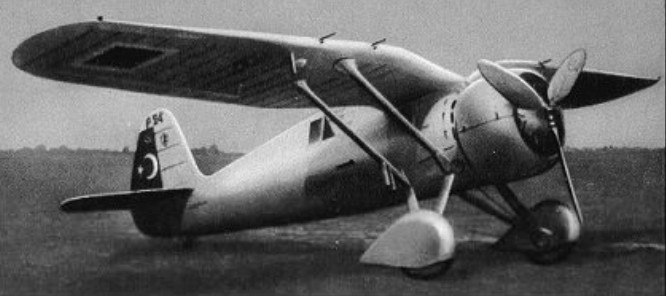
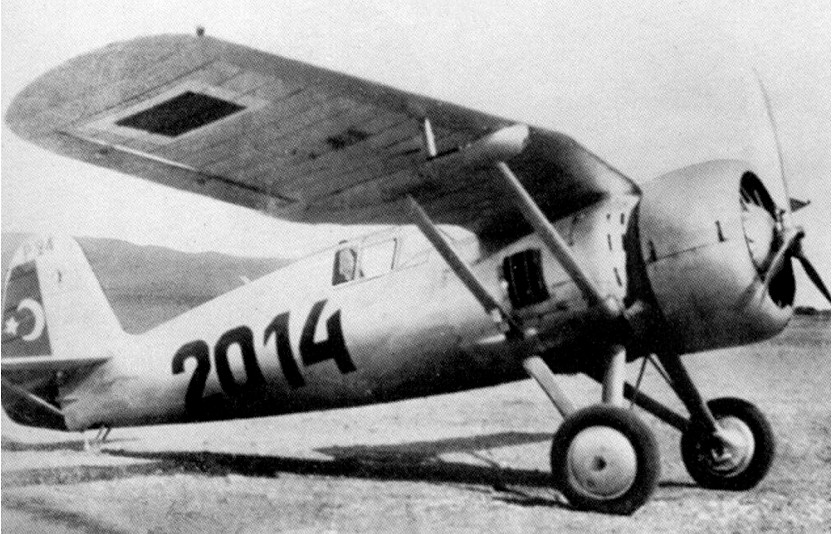
The first export order came from Turkey, which not only negotiated a licence for the manufacture of the P.24, but also ordered 14 P.24A fighters generally similar to that shown at Paris, 26 P.24C aircraft with four wing-mounted machine-guns, and components plus raw materials for the assembly of 20 more P.24As. The 20 P.24A/Cs were built under license in Turkey in Kayseri, followed by an additional 30 P.24G aircraft. Turkish P.24s were used for training until the late 1940s. Some were refitted with Pratt & Whitney Twin Wasp engines.

Next came an order from Bulgaria for 14 P.24B aircraft which were similar to the P.24C apart from installed equipment and were delivered from early 1938, followed by 24 P.24Cs and 26 examples of the P.24F, the final development of the type, which introduced a 723kW Gnome-Rhone 14N.07 engine of smaller diameter and had twin cannon and twin machine-gun armament. 22 were delivered from Poland in July 1939, just before the outbreak of World War II. The remaining four, lacking propellers, were bombed in the Okecie factory in September 1939 by the Germans.

The P.24E, developed to meet a Romanian requirement, was generally similar to the P.24C: six built by P.Z.L. had 671kW Romanian-built Gnome-Rhone 14Kllc32 engines, but later examples of the 40 or so P.24Es built by I.A.R. in Romania between 1937 and 1939 had the 701kW I.A.R.-built 14KMc36 engine.

In late 1939 I.A.R. developed a low-wing version of the P.24E under the designation I.A.R.80. Some components of the P.24E, mainly its tail section, were used in construction of the IAR 80. The four machine-gun equivalent of the P.24F had the designation P.24G.

The Greek Air Force first bought five P.24As in 1937, then 25 P.24Fs and six P.24Gs in 1938. The contract of the P.24 supply was signed in September, 1936, with final delivery date in May 1937 (due to the delayed delivery of the “Skoda” LK 32 machine guns from the Czechoslovakian construction factory). They had the standard equipment specifications with German radio and American oxygen supply system. They comprised almost the entire fighter strength of this last air force and were deployed with considerable success against both the Luftwaffe and Regia Aeronautica. The fighters were used to guard Bucharest and the Ploieşti oilfields from Soviet bombers at the start of Operation Barbarossa. Flying from Otopeni military airbase, the PZL P.24 fighters managed to shoot down 37 unescorted VVS bombers. 11 were destroyed on the ground. The P.24E was also used for ground attack missions until the end of 1941 and after 1942 it was relegated to training duties because of its obsolescence.

P-24F

Despite being a better fighter than the P.11, there were few acquired by the Polish Air Force, which preferred to wait for the PZL.50. When it became clear the PZL.50 would not be ready in time to counter the imminent German attack, the PAF resumed production of the P.11 and ordered the P.24. However, no PZL.24s were produced before the war started, and only two were used in the Polish Campaign. Polish Air Force had one PZL P.11g Kobuz which was used during Invasion of Poland. This aircraft, piloted by H. Szczęsny shot down two German aircraft on 14 and 15 of September. Usually this aircraft is identified as a P.24.

Gallery

Variants:

P.24
Enginne: Gnome-Rhône 14Kfs, 930 hp
Armament: two 20 mm cannon and two machine guns.

P.24A
It entered production as the P.24A.

P.24B
The P.24B version was armed with four machine guns.

P.24C
The P.24C was armed with four machine guns and two 50 kg bombs.

P.24D
The P.24D was developed for sale to Hungary, but it was not completed, Hungary purchasing the Fiat CR.32 instead.

IAR P.24E
The P.24E version was license-built in Romania by Industria Aeronautică Română as the IAR P.24E.

P.24F
The P.24F was armed with two cannon and two machine guns and bombs and powered with the more powerful 970 hp (720 kW) Gnome-Rhône 14N-07 engine.

P.24G
The last production version was the P.24G, produced from 1937 and powered with the more powerful 970 hp (720 kW) Gnome-Rhône 14N-07 engine. The P.24G was armed with four machine guns and bombs.

P.24H
The P.24H was to be powered with a Gnome-Rhône 14N-21 engine (1,100 hp) and carry four cannon or two cannon and two machine guns, but it was not completed.

P.24J
The P.24J version was to be armed with four cannon and was to be saled for export.

Specifications:

P.24A
Engine: 1 × Gnome-Rhône 14Kfs, 900 hp / 930 hp (max) (671 kW / 693 kW (max))
Wingspan: 10.71 m (32,80 ft)
Wing area: 17.90 sq.m (192.7 sq.ft)
Length: 7.50 m (22.96 ft)
Height: 2.69 m (8.82 ft)
Empty weight: 1,327 kg (2,925 lb)
Loaded weight: 1,870 kg (4,121 lb)
Max. takeoff weight: 2,000 kg (4,400 lb)
Power/mass: 0.376 kW/kg (0.230 hp/lb)
Maximum speed: 410 km/h (254 mph)
Range: 700 km (435 mi)
Service ceiling: 9,000 m (29,527 ft)
Rate of climb: 11 m/s (2,160 ft/min)
Crew: 1
Armament: 2 MGs, 2 20mm cannon
Bombload: 4 x 12.5 kg bombs

P.24B
Engine: 1 × Gnome-Rhône 14Kfs, 900 hp / 930 hp (max) (671 kW / 693 kW (max))
Wingspan: 10.71 m (32,80 ft)
Wing area: 17.90 sq.m (192.7 sq.ft)
Length: 7.50 m (22.96 ft)
Height: 2.69 m (8.82 ft)
Empty weight: 1,327 kg (2,925 lb)
Loaded weight: 1,870 kg (4,121 lb)
Max. takeoff weight: 2,000 kg (4,400 lb)
Power/mass: 0.376 kW/kg (0.230 hp/lb)
Maximum speed: 410 km/h (254 mph)
Range: 700 km (435 mi)
Service ceiling: 9,000 m (29,527 ft)
Rate of climb: 11 m/s (2,160 ft/min)
Crew: 1
Armament: 4 MGs
Bombload: 4 x 12,5 kg (27,5 lb)

P.24C
Engine: 1 × Gnome-Rhône 14Kfs, 900 hp / 930 hp (max) (671 kW / 693 kW (max))
Wingspan: 10.71 m (32,80 ft)
Wing area: 17.90 sq.m (192.7 sq.ft)
Length: 7.50 m (22.96 ft)
Height: 2.69 m (8.82 ft)
Empty weight: 1,327 kg (2,925 lb)
Loaded weight: 1,870 kg (4,121 lb)
Max. takeoff weight: 2,000 kg (4,400 lb)
Power/mass: 0.376 kW/kg (0.230 hp/lb)
Maximum speed: 410 km/h (254 mph)
Range: 700 km (435 mi)
Service ceiling: 9,000 m (29,527 ft)
Rate of climb: 11 m/s (2,160 ft/min)
Crew: 1
Armament: 4 MGs
Bombload: 2 x 50 kg

P.24E
Engine: 1 × Gnome-Rhône 14KIIc32, 900 hp / 930 hp (max) (671 kW / 693 kW (max))
Wingspan: 10.71 m (32,80 ft)
Wing area: 17.90 sq.m (192.7 sq.ft)
Length: 7.50 m (22.96 ft)
Height: 2.69 m (8.82 ft)
Empty weight: 1,327 kg (2,925 lb)
Loaded weight: 1,900 kg (4,188 lb)
Max. takeoff weight: 2,000 kg (4,400 lb)
Power/mass: 0.376 kW/kg (0.230 hp/lb)
Maximum speed: 408 km/h (253 mph)
Range: 700 km (435 mi)
Service ceiling: 10,000 m (32,808 ft)
Rate of climb: 11 m/s (2,160 ft/min)
Crew: 1
Armament: 2 MGs, 2 20mm cannon
Bombload: 2 x 50 kg (110 lb)

P.24F
Engine: 1 × Gnome-Rhône 14N-07, 970 hp (700 kW)
Wingspan: 10.68 m (32,80 ft)
Wing area: 17.90 sq.m (192.7 sq.ft)
Length: 7.81 m (22.96 ft)
Height: 2.69 m (8.82 ft)
Empty weight: 1,329 kg (2,930 lb)
Loaded weight: 2,000 kg (4,409 lb)
Max. takeoff weight: 2,000 kg (4,400 lb)
Power/mass: 0.376 kW/kg (0.230 hp/lb)
Maximum speed: 430 km/h (267 mph)
Range: 700 km (435 mi)
Service ceiling: 10,000 m (32,808 ft)
Rate of climb: 11,1 m/s (2,165 ft/min)
Crew: 1
Armament: 2 MGs, 2 20mm cannon
Bombload: 2 x 50 kg (110 lb)

P.24G
Engine: 1 × Gnome-Rhône 14N-07, 970 hp (700 kW)
Wingspan: 10.68 m (32,80 ft)
Wing area: 17.90 sq.m (192.7 sq.ft)
Length: 7.81 m (22.96 ft)
Height: 2.69 m (8.82 ft)
Empty weight: 1,329 kg (2,930 lb)
Loaded weight: 2,000 kg (4,409 lb)
Max. takeoff weight: 2,000 kg (4,400 lb)
Power/mass: 0.376 kW/kg (0.230 hp/lb)
Maximum speed: 430 km/h (267 mph)
Range: 700 km (435 mi)
Service ceiling: 10,000 m (32,808 ft)
Rate of climb: 11,1 m/s (2,165 ft/min)
Crew: 1
Armament: 4 MGs
Bombload: 2 x 50 kg

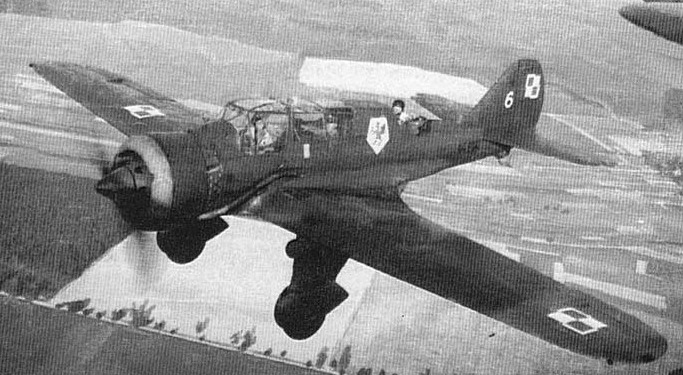
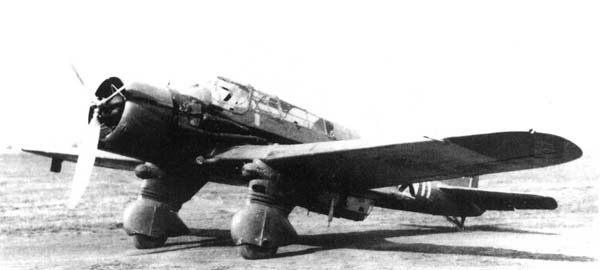
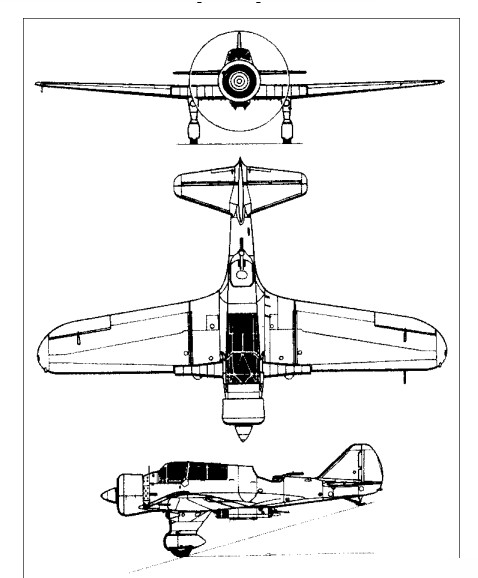
PZL P.23 Karas / P.42 / P.43 Karas

P.23

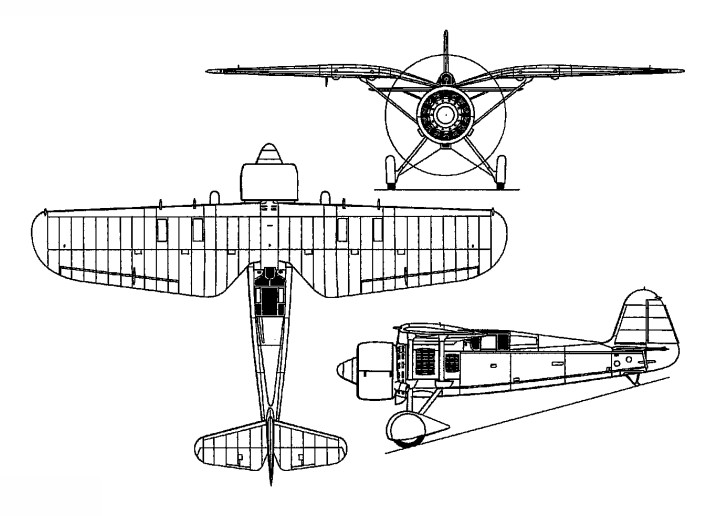
In response to the Polish Air Force’s need to replace its ageing biplane Potez 25 and Potez 27 light bomber/reconnaissance aircraft, a specification was presented to PZL in 1931 (Panstwowe Zaklady Lotnicze – the State Aviation Works) calling for an all-metal light bomber plane powered by a Bristol Pegasus air-cooled radial engine, which should carry a minimum 600 kg (1330 lb) bomb-load, and whose maximum speed should reach 300 km/h (186 mph). Another requirement was the ability to operate from improvised airfields.

During 1931 P.Z.L. had designed a six-passenger single-engine light transport, the P.Z.L. P.13, for service with LOT, but as it had no appeal to the airline its development was abandoned. It was decided subsequently to use this aircraft as the basis for an army co-operation aircraft accommodating a crew of three, and using as powerplant a licence-built version of the Bristol Pegasus radial engine.

Necessary changes to the project, apart from fuselage redesign, included the addition of wing flaps, and the provision for weapons mountings. The wing was designed by Franciszek Misztal, based on his original stressed-skin main spar concept, which had earlier been only tested on the PZL 19 high-performance touring airplane.

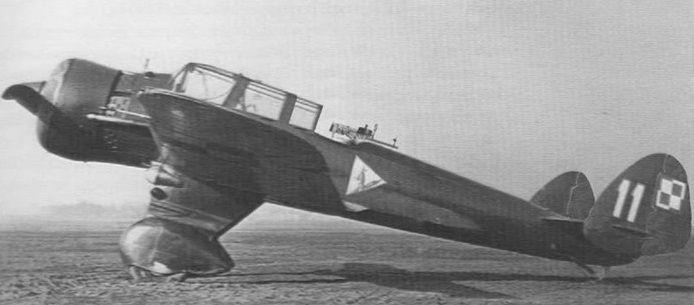
The first PZL P.23 prototype

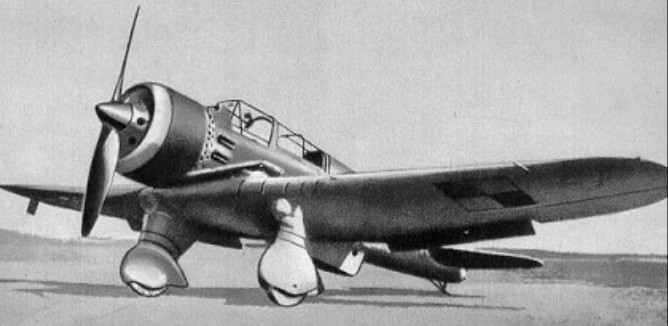
Following evaluation of the design by the Department of Aeronautics, P.Z.L. was instructed to build three prototypes and the first was powered by a 440kW Bristol Pegasus IIM2. Serious problems with the wing’s construction caused delays, and the first prototype, powered by the Bristol Pegasus II M2 engine made its maiden flight in August 1934. This aircraft had the designation P.23/I and name Karas (crucian carp), but testing soon revealed a number of shortcomings. The first prototype revealed many problems, which were overcome by the second and third prototypes. The fuselage was redesigned, with internal bomb bay removed to provide more space for the crew, and engine installation lowered for better visibility. The wing’s mechanization was redesigned with automatic slats added on the leading edge, and the wing root fairings significantly enlarged.

The P.23/II crashed during flight trials, but the P.23/III performed well and during development flying was modified progressively to what was to be production standard.

After additional changes to the engine fairing and the exhaust, the airplane was accepted by the Lotnictwo Wojskowe and given the designation PZL P.23A Karas. In 1935 production orders were placed for 40 examples of the P.23 Karas A with the 433kW P.Z.L.-built Pegasus II, and 210 of the P.23 Karas B with the 507kW P.Z.L.-built Pegasus VIII. The first P.23A Karas A flew in June 1936, but development problems with the Pegasus II engine resulted in these aircraft being relegated to the training role. The production started in the end of 1935 but its pace suffered because of frequent problems with the Pegasus II M2 engines, license-built by the Polish Skoda works (this engine variant was never produced by Bristol). In addition, the leading-edge slats proved unreliable, and were consequently removed. Only 40 P.23As were built and assigned to training duties, pending the availability of the P.23B variant fitted with the more powerful Bristol Pegasus VIII engine, whose production commenced in the summer of 1936. In February 1937 the production reached the pace of 20 aircraft per month, and the original order for 200 P.23s was fulfilled in September 1937. However, the P.23B Karas B began to enter service in mid-1937 and when production ended the type equipped 14 first-line squadrons. Additional 50 aircraft were ordered, and the production of the P.23B variant concluded in February 1938.

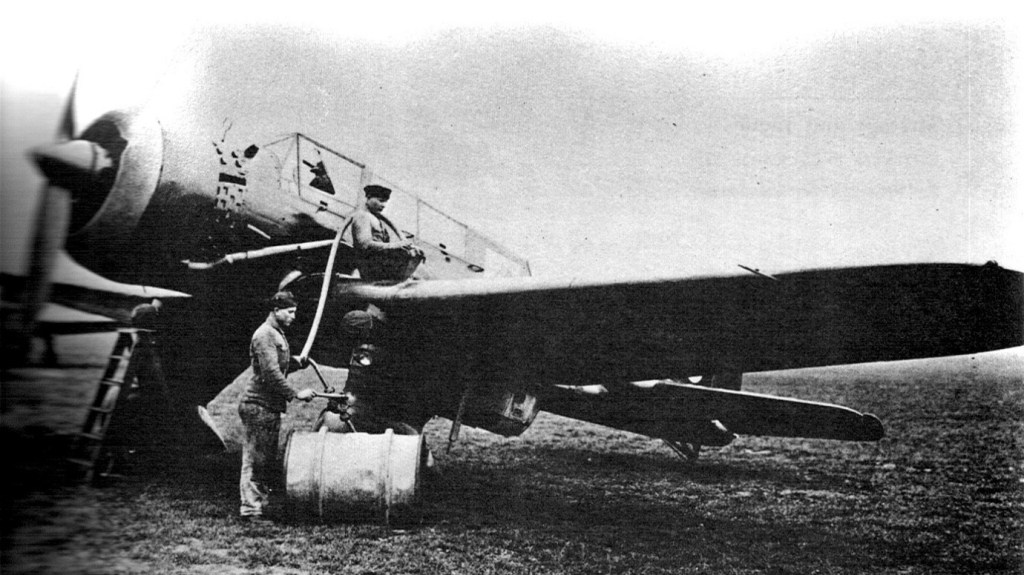
2 September 1939 – preparing for the first bombing raid onto German soil

One Karas B was modified under the designation P.42 to serve as a development aircraft for the improved P.46 Sum, with a twin fin/rudder tail unit and a retractable ventral gondola. However, the P.46 did not materialise beyond the prototype stage and the P.42 was subsequently converted back to Karas B standard.

P.42

The standard Polish light bomber and reconnaissance aircraft, the PZL.23 Karaś could not be exported because of licence restrictions on the use of the Polish-built (PZL) Bristol Pegasus engine. Developed under the leadership of Henryk Malinowski, the PZL.43 was an improved export variant of the PZL.23, powered instead by a Gnome-Rhône 14K engine, first flying in February 1937.

Like its P.23, the PZL.43 was conventional in layout, a low-wing, all-metal, metal-covered cantilever monoplane. Its fuselage was semi-monocoque. It had a crew of three: pilot, bombardier and an observer/rear gunner. The pilot and observer’s cockpits were in tandem and glazed with the open rear gunner’s position behind. The bombardier occupied a ventral combat gondola which had a machine gun position at the rear. The fixed undercarriage was heavily spatted, though not suited for rough airfields. Tanks in the centre section of the wings held 740 litres of fuel. A three-bladed propeller was used.

PZL P.43 Karaś

The differences between the two types derived chiefly from use of the heavier and longer (two rows of seven cylinders) Gnome-Rhône engine. To maintain the centre of gravity the fuselage was lengthened by adding one central section which moved the bombardier’s gondola rearwards. The new engine improved performance considerably, for example increasing maximum speed from 319 km/h to 365 km/h. In addition, armament was increased with two forward firing Karabin maszynowy wz. 36 machine guns mounted in offset fairings to clear the radial engine. Up to 700 kg of bombs could be carried under the wings, like the PZL.23. A common option was 24 x 12.5 kg bombs (300 kg in total). A camera was fitted. A P-23B was used for testing metallic three-bladed Hamilton Standard propeller.

No prototype preceded the production series of 12 aircraft completed in 1937. These were designated PZL.43A and powered by Gnome-Rhône 14Kirs motors of 900 to 930 hp (671 to 694 kW). An order was placed in April 1936, with the additional requirement of a more powerful Gnome-Rhone 14N-01 engine and an additional forward-firing machine gun, and 12 were built for the Bulgarian air force, given the designation PZL 43A, and delivered in 1937, reforming their airforce after a period of post-World War I treaty constraints. The Bulgarian Airforce called it the Chaika (Чайка, gull). Because of delays in engine shipments from France, this first series was eventually fitted with Gnome-Rhone 14kfs engines.

P-43A

This model differed by having the 694kW Gnome-Rhone radial engine, improved crew accommodation, and armament increased by the addition of a second forward-firing machine-gun. The excellent performance of the P.43A Karas led to a repeat order in March 1938, totalling 42, for a further improved P.43B Karas with the 950 to 1,020 hp (708 to 761 kW) Gnome-Rhone 14N.1. Of this total 33 were despatched and delivered by August 1939; of the balance, eight had been packed for despatch and the ninth was in final assembly.

Three complete aircraft from the Bulgarian order were left at Okęcie and these were damaged during an air raid on 4 September and later captured by the Germans in a factory in Warszawa-Okęcie. Some damaged aircraft left at Okęcie airfield were captured by the Germans. Five were repaired and delivered to Bulgaria. Another was tested by the Germans in Rechlin in 1940 before joining the others in Bulgaria in October.

Along with 12 PZL.43s and two PZL.43As delivered by Germany in 1940, these gave Bulgaria a total of 50 aircraft. They initially served in three 12-aircraft squadrons of the 1st Line Group (linyen orlyak). From 1942 they were used in the 1st Reconnaissance Regiment and 2nd Line Regiment. Chaikas were used mostly for training and searching for partisans in Macedonia in 1943–44. Several of them crashed during service and there were difficulties in obtaining spare parts. In 1944 they were withdrawn from combat service and were eventually written off in 1946.

P-43B

At the time of the German invasion of Poland, nine PLZ.43As of the Bulgarian order were crated ready for delivery or were incomplete, two lacking propellors. Five survived the initial German bombing attacks on the P.Z.L. factory and were moved to the airfield at Bielany and taken over by the Polish Air Force for use by 41 Eskadra Rozpoznawcza (41st Reconnaissance Squadron) which was mostly equipped with PZL.23 Karaś. They undertook reconnaissance duties but by 10 September 1939, there were the only two aircraft remaining. One was shot down by a Messerschmitt Bf 110 at Michałówek near Sulejówek and the crew killed. The second, damaged by a pair of Messerschmitt Bf 109s, two days later, crash landed in Brześć.

During the September campaign 114 P.23s were flown by first-line units, and additional 11 (including the five PZL 43s) were received as replacements. Of these, only 17 reached Romania on September 17.

Sometimes the aircraft is called the “PZL P.43”, but despite an abbreviation P.43 painted on the tail fin, the letter “P” was generally reserved for fighters of Pulawski’s design (like the PZL P.11).

Gallery

Variants:

PZL.43
First production series, 12 built.

PZL.43A
Second production series with more powerful Gnome-Rhône 14N-01 engine, 42 built.

PZL.43B
Improved version, powered by a 980 hp (731 kW) Gnome-Rhône 14N-01 engine.

Operators:

Bulgarian Air Force operated 50 aircraft

  1. jato/ Obrazcow Orliak (2. Squadron of the Exemplary Wing) operated 12 PZL.43
  2. Lineen Orliak (Level-flight (bomber) Squadron) operated 36 PZL.43A, 12 in each jato (Squadron)
  3. Razuznawatelen Polk (Reconnaissance Regiment) operated PZL.43A between March 1942 and August 1944
  4. Lineen Polk (Level-flight (bomber) Regiment) operated PZL.43A between March 1942 and August 1944
  5. jato za blisko razuznavanye (Close Distance Reconnaissance Squadron) operated 13 PZL.43A between August 1944 and early 1945
  6. jato za blisko razuznavanye operated 11 PZL.43A between August 1944 and early 1945

Luftwaffe tested captured aircraft.

Polish Air Force
41 Eskadra Rozpoznawcza (Reconnaissance Squadron) operated five PZL.43A aircraft

PZL.43A
Engine: 1 × Gnome-Rhône 14N-01, 1020 hp (750 kW)
Wingspan: 13.95 m (45 ft 9 in)
Wing area: 26.8 m² (288 ft²)
Length: 9.95 m (32 ft 8 in)
Height: 3.3 m (10 ft 10 in)
Empty weight: 2,200 kg (4,850 lb)
Loaded weight: 3,100 kg (6,830 lb)
Useful load: 900-1,325 kg (1,980-2,920 lb)
Max. takeoff weight: 3,525 kg (7,770 lb)
Maximum speed: 365 km/h at 4,000 m (227 mph at 13,000 ft)
Cruise speed: 300 km/h at ground level (186 mph at ground level)
Stall speed: 115 km/h (72 mph)
Range: 1,250 km (780 mi)
Service ceiling: 8,500 m (28,000 ft)
Rate of climb: 7.5 m/s (1,480 ft/min)
Wing loading: 115 kg/m² (23.7 lb/ft2)
Crew: 3
Armament:
2 x 7.92 mm PWU wz.36B fixed in nose;
1 x 7.92 mm PWU wz.36R in rear upper station;
1 x 7.92 mm PWU wz.36R in underbelly station;
Bombload: 600-700 kg

P-43B
Engine: Gnome-Rhone 14N-01, 980 hp
Wingspan: 13.95 m
Wing area: 26.80 sq.m
Length: 9.95 m
Height: 3.30 m
Maximum take-off weight: 3525 kg
Empty weight: 2200 kg
Normal takeoff eight: 3100 kg
Maximum speed S/L: 298 kph
Maximum speed at altitude: 365 kph
Cruising speed: 300 kph
Practical range: 1250 km
ROC: 450 m / min
Service ceiling: 8500 m
Crew: 3
Armament: one 7.9-mm front gun and two 7.7-mm Vickers machine gun in rear dorsal and ventral positions
Bomb load external: 700 kg

PZL P-23 / P-43 Karas