AC-pi
Sportflugzeugbau Rieseler built a single-engine single-seat light sporting parasol monoplane with a two cylinder Haacke engine which was put into production by Stahlwerk Mark at Breslau. A two-seat version, the R.IV/23, was subsequently developed.
1 engine
Rieflin Headless Aeroplane Co Hydro-aeroplane 1912
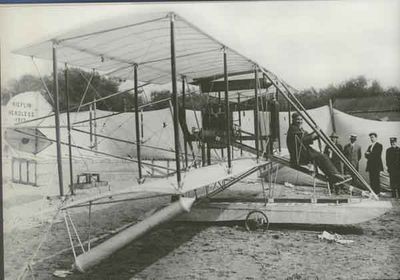
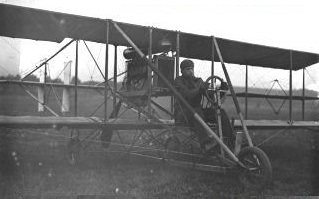
The Rieflin Headless Aeroplane Co Hydro-aeroplane of 1912 set a world’s record for sustained hydro-aeroplane flight over water when piloted by Fred C. Eels on June 25, 1912 over Irondequoit Bay, New York, seventy-three miles in 1:21:00, at an average speed of fifty-four miles per hour. Eells’ flight was cut short when his supply of gasoline gave out and he dropped his machine to the bay. The best previous record for sustained flight was forty-six miles.
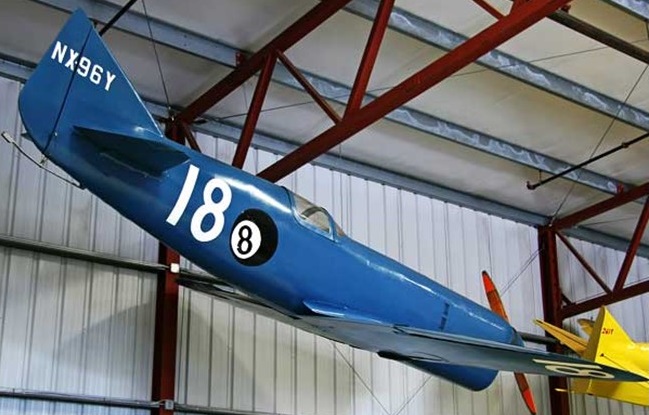
Rider R-6 Eight Ball
Rider R-5 Jackrabbit
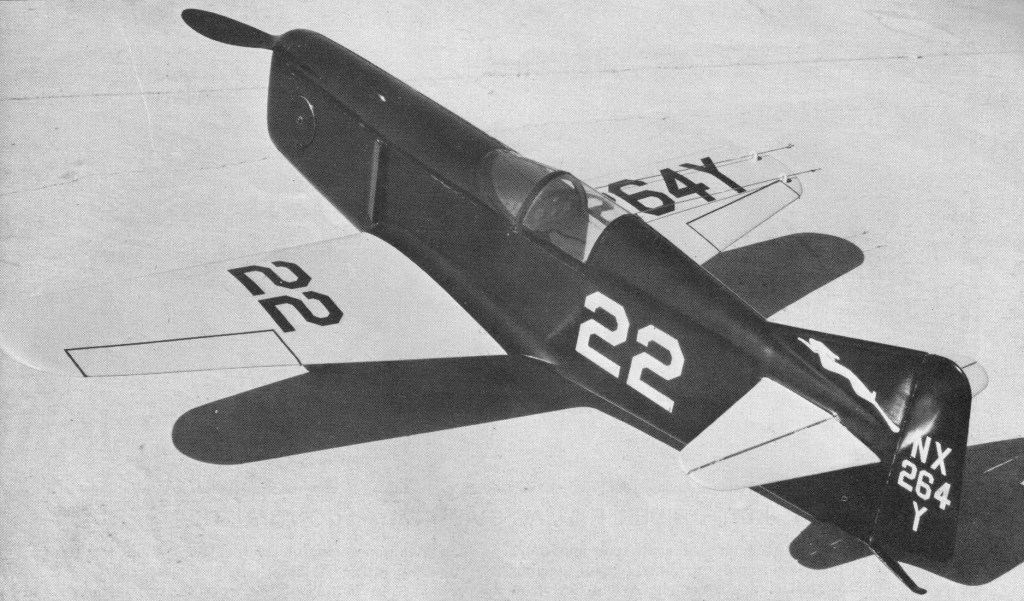
Keith Rider was a designer of the 1930’s air racing era. “Jackrabbit,” as it was called by its last racing owner, started life as a model R-5 and first appeared at the 1936 National Air Races. Its owner, Dave Elmendorf, painted it a cream yellow and gave it race number #22, which he had used on his Wedell Williams racer the previous year. The “Elmendorf Special” placed third in the 500 cu. in. event with a speed of 224.551 m.p.h.
The ship was not seen at the 1937 races, but was entered in the 1938 Nationals by its new owners, Marcoux and Bromberg. It had been rebuilt and sported a new black and yellow paint job. Race number #22 was retained but the name was changed to “Jackrabbit.” It was flown to fourth place in the 550 cu. in. event with a speed of 192.50. “Jackrabbit” last appeared at the 1939 races but did not race because of engine trouble.
Rider R-2
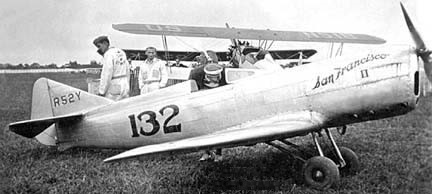
Built in 1931, the Rider R-1 was racer San Francisco II, piloted by Bob Clampett and Ray Moore, registered NX52Y.
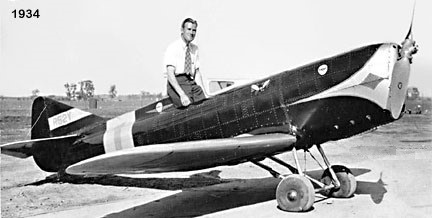
It was modified as 1933-34 Bumblebee (p: George Hague, Earl Ortman) and did not reappear until the 1938 Nationals as 260hp Bushey-McGrew B7M1 Bumblebee, re-registered NX98Y.
Engine: 200hp Menasco C-4
Wingspan: 17’0″
Length: 19’0″
Useful load: 300 lb approx.
Speed: 210 mph
Seats: 1
Rider San Francisco I
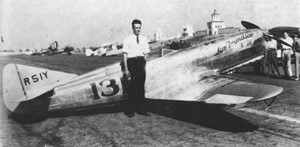
Bob Hall’s “Gee Bee” racers had dominated the 1931 Nationals. Behind Hall, at 237.738, was Ray Moore in the silver Rider No. 131, San Francisco I NR51Y, built by West Coast engineer Keith Rider and powered by a 6-cylinder, 160-hp Menasco in-line engine.
During a minor event in the 1931 Nationals, Moore had placed second to the Gee Bee Z and had actually beaten Wedell’s Wedell-Williams. That year, the Rider and Moore came in just 25 seconds behind Gehlbach.
It burned when the gas tank exploded on the ground in 1933. Salvage was sold to Roger Don Rae, who rebuilt it as 1934 Suzy (p: Roger Don Rae, Rudy Kling), it was a money-maker until it crashed on landing in 1936.
Engine: 200hp Menasco B-6S/C-6S
Wingspan: 21’4″
Length: 19’0″
Speed: 238 mph
Seats: 1
Richter Ric-Jet 4
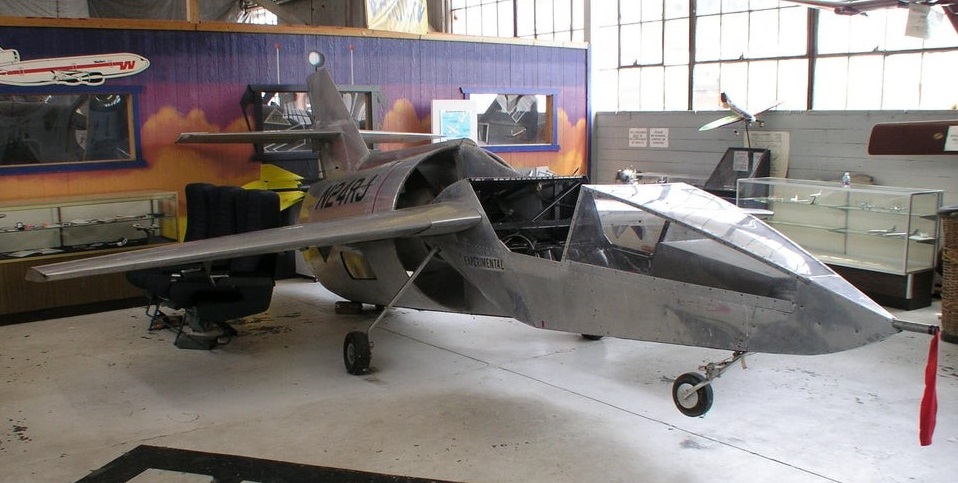
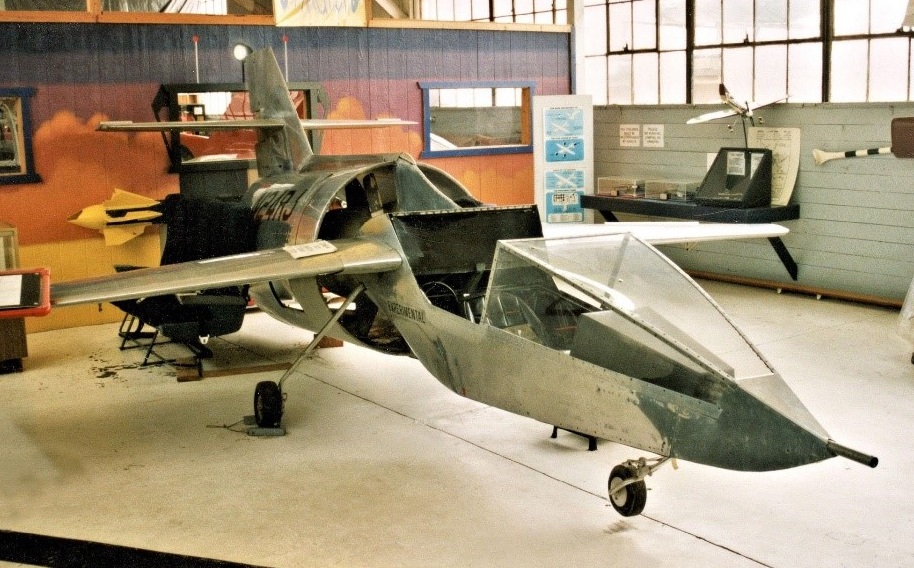
George Richter drew from his extensive experience as a modeler and a series of sub-scale models were built to try out different plan forms. The Ric Jet 4 was based upon Richter’s interpretation of the results of the model series. By July, 1973, the basic framework of the Ric Jet 4 was complete and on the gear. Engine placement and skinning followed as time and finances allowed. The finished product was an aircraft with a polished aluminum finish marred slightly by inexplicable patching and fairing of gaps with aluminum duct tape.
The Ric Jet 4 was never well publicized in the 70’s and many of its features have been garbled by word of mouth. In the spring of 1975 vague rumors of a jet-like all-aluminum aircraft making low altitude tests at Mojave Airport, California began to surface.
By 1980, the Ric Jet 4 had been retired to the Chino Air Museum and had sunk back into obscurity. It was not a successful project overall, but Richter’s layout showed a good understanding of the differences between ducted fan aircraft and turbojets. His fan or “contained propeller”, incorporating an unusually large gap between the fan tip and the inner wall of the duct, seemed heretical to formally trained designers.
The Ric Jet 4 gives the appearance of a single-seat sailplane pod melded with an aluminum barrel, a mid-wing and high cruciform tail. The landing gear is tricycle and fixed. The intake into the large diameter duct is carefully faired at the back of the pod, but the lips of the duct lack the inner radiused edges or bell-mouth usually found in ducted fans with high static thrust. A large engine access hatch is present on the starboard side of the duct allowing inspection and maintenance of the engine and fan via hinged panels in the centerline pod.
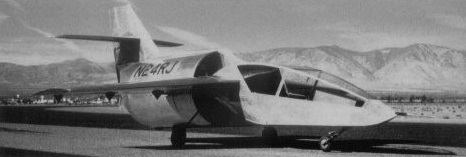
The fan unit consists of a tractor-mounted Mazda RX-2 automobile engine direct-driving a two-bladed 40 in (1.02 m) diameter wood propeller via an aluminum extension shaft replacing the original engine flywheel. A nicely streamlined pod encloses the engine and muffler, The propulsion package is supported concentrically by struts which incorporate flow straighteners aft of the propeller and provides vertical structural connections with the tail unit, a function that the after spar of the wing provides on the horizontal axis. To help in balancing the loaded aircraft, a battery box was located in the extreme nose forward of the instrument panel.
The wings have marked sweep back and anhedral, and incorporate full span slotted flaps. Spoilers are substituted for ailerons. The wings fold upward at their junction with the duct for hangarage and ground transport on a trailer. They are fabricated like the rest of the airframe from pop-riveted aluminum tube, channel and sheet.
The engine was located directly on the CG and overall stability of the aircraft was deemed acceptable. A pad was provided at the bottom rear of the duct as the aircraft rocked back when the pilot exited the cockpit.
Registered N24RJ cn 001, trial flights in ground effect were useful in confirming several of the Ric Jet’s features. The spoilers worked well for lateral control. The aircraft’s split rudder and large swept fixed surface fairing into a ventral strake was apparently large enough to ensure good low speed control in yaw. Wheel shimmy was eliminated and alignment of the landing gear was corrected. General ground handling characteristics were good.
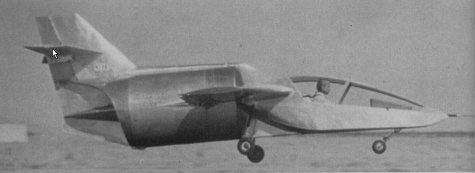
It was assumed that further trials would resume when a more powerful engine and a new propeller became available. It never happened, the aircraft sat for years, then was donated to the Chino Air Museum in the early 1980’s.”
Richter Dart
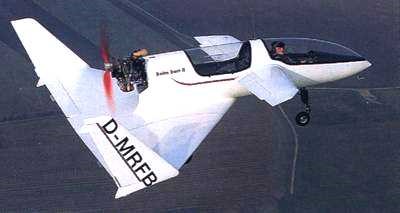
Klaus Richter developed the ultralight Dart aircraft. It was in this 2-seat aircraft that in 1996 crashed into the ground with Richter.
Richmond Airways Sea Hawk
Richmond Airways built a Sea Hawk five-seat flying boat in 1928, with Curtiss C-.6 engine driving pusher propeller.
Richet Cobra 202
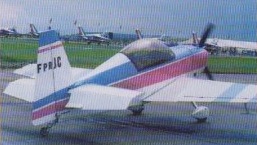
Richet revised the Cobra 200 of Yves Debordes and was selling the Cobra 202 in kit form via Sté Aéro-Composite of Saujon circa 1998. The wings are carbonfibre and the fuselage is of composite/foam construction.
Engine: AEIO-360, 200 hp
Wing span: 7.5 m
Wing area: 10.5 sq.m
MAUW: 770 kg
Empty weight: 520 kg
Fuel capacity: 160 lt
Max speed: 290 kph
Cruise speed: 270 kph
Minimum speed: 95 kph
Seats: 2

