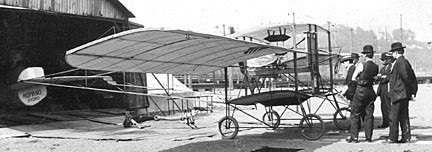
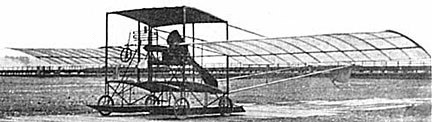
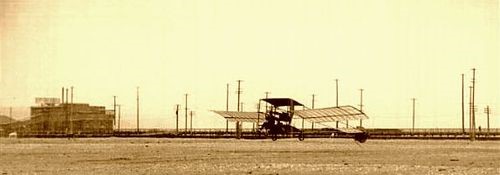
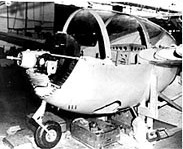
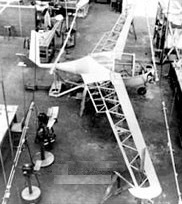
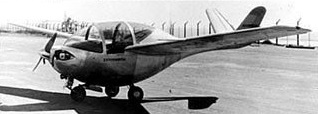
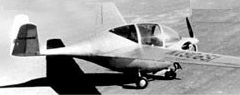
Built by Eugene Joseph Romano in Seattle, Washington, in 1910, the aircraft had a caged centre section designed like a biplane, while it had monoplane wings only.
According to a contemporary newspaper clipping of unknown origin, the Romanoplane had a span of 36 feet and “was flown successfully”.
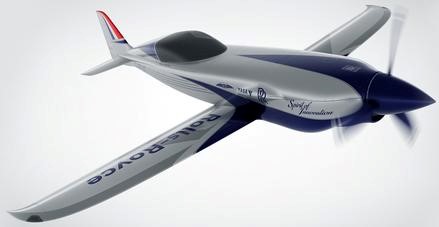
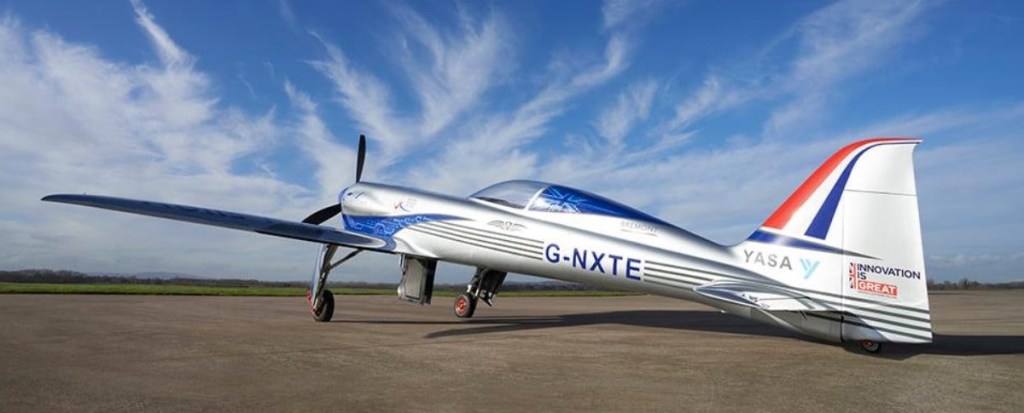
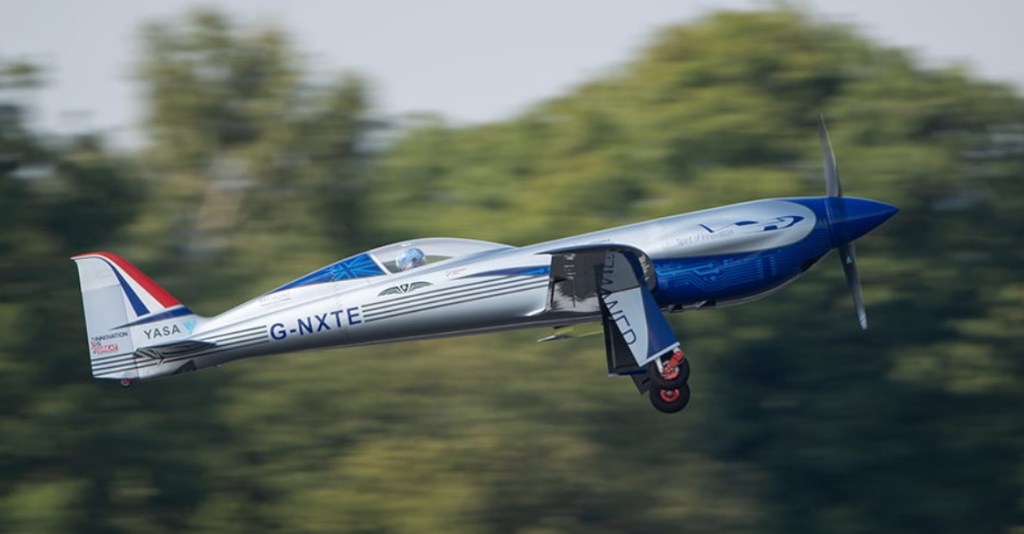
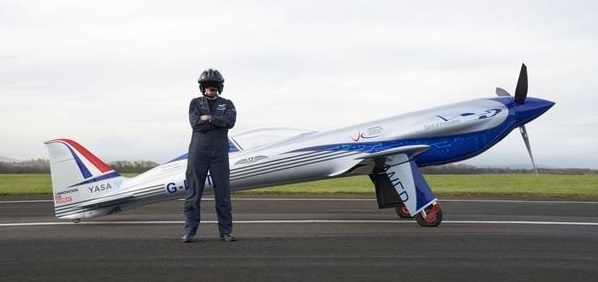
Rolls-Royce developed the ACCEL (Accelerating the Electrification of Flight) as an electric aircraft demonstrator racing aircraft to gain the all-electric air speed record, targeting over 480 km/h (260 kn). The existing electric aircraft record at that time was 182 kn (337 km/h), set in 2017 by a Siemens powered Extra 330.
Designed at Gloucestershire Airport, the project is partly funded by the UK government and involves partners such as electric motor and controller manufacturer YASA Limited and aviation start-up Electroflight.
The team aimed to reach the 1931 Schneider Trophy speed, which was won by a R-R-powered Supermarine S.6B, reaching 298 kn (552 km/h).
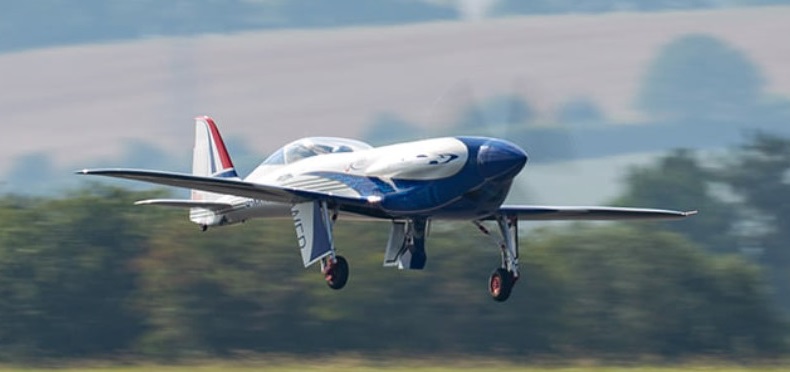
On 15 September 2021, Rolls-Royce announced the aircraft, named “Spirit of Innovation”, had successfully completed its first flight, flying from MoD Boscombe Down for fifteen minutes.
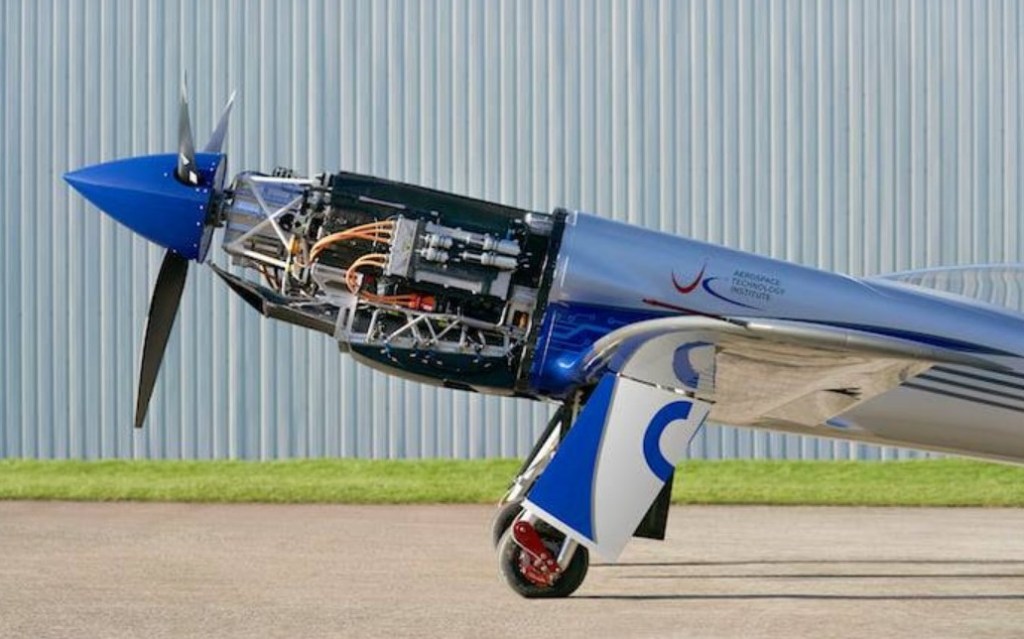
The 24 ft (7.3 m) span aircraft is powered by three high power density electric motors driving a single three-blade propeller spinning at 2,400 RPM, designed and manufactured by YASA, running at 750 volts and delivering over 400 kW (536 hp) combined from its 6,480-cell battery pack with cork insulation. Its cooled battery pack should have the highest energy density for an aircraft and should allow a 320 km; 170 nmi range.
It is derived from the carbonfibre Sharp Nemesis NXT racer, cruising at 282 kn (522 km/h) with a 350hp (260kW) piston engine, but reaching 355 kn (657 km/h) with a highly tuned engine. Battery power output will be 500 hp (373 kW) continuous, reaching 750kW (1,006hp) at maximum power. The battery, motors and control equipment weigh the same as the regular engine and fuel tank while the NXT has a maximum take-off weight of 1,200kg (2,645lb). Its 216 KWh battery pack weighs 1350 kg.
Rolls-Royce said that its all-electric Spirit of Innovation aircraft has set three new world speed records, making it the world’s fastest all-electric aircraft. The company has submitted data to the Fédération Aéronautique Internationale (FAI)— the World Air Sports Federation which controls and certifies world aeronautical and astronautical records—that at 15:45 (GMT) on 16 November 2021, the aircraft reached a top speed of 555.9 km/h (345.4 mph) over 3 kilometers, smashing the existing record by 213.04 km/h (132mph). In further runs at the UK Ministry of Defense’s Boscombe Down experimental aircraft testing site, the aircraft achieved 532.1km/h (330 mph) over 15 kilometers—292.8km/h (182mph) faster than the previous record—and broke the fastest time to climb to 3000 meters by 60 seconds with a time of 202 seconds. It subsequently reached a top speed of 623 km/h (336 kn), 555 km/h (300 kn) over 3 km (1.6 nmi), 532 km/h (287 kn) over 15 km (8.1 nmi), and was able to climb to 3,000 m (9,840 ft) in 3min 22s. The speeds achieved were accepted as world records for electric aircraft by the Fédération Aéronautique Internationale in January 2022.
During its record-breaking runs, the aircraft clocked up a maximum speed of 623 km/h (387.4 mph)—making the Spirit of Innovation the world’s fastest all-electric vehicle.
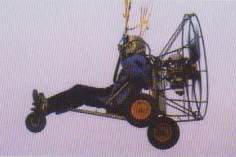
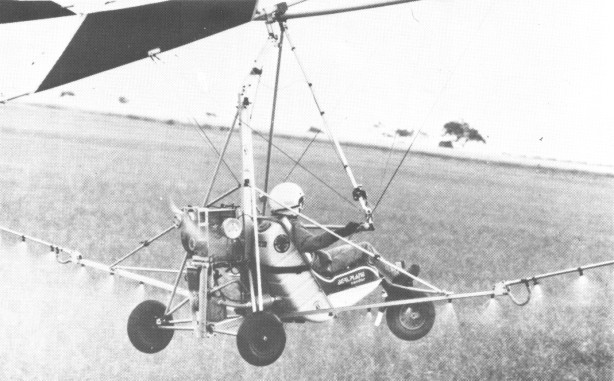
Instead of a complete trike unit, Martin Rütter supplies just an undercarriage, on to which any existing backpack can be mounted. The nosewheel is steerable.
Empty weight: 20 kg Certification: vVz Price (1998): 3400 DM
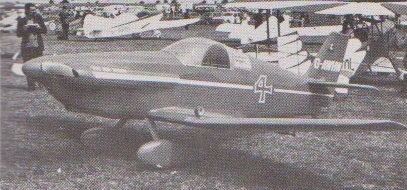
In 1964 Rollasons and the Tiger Club sponsored a competition for a midget racing aircraft which could be used for Formula One air racing. The winner was the Luton Group’s Beta, and after the prototype was attempted by that group, the design was taken over by Rollasons.
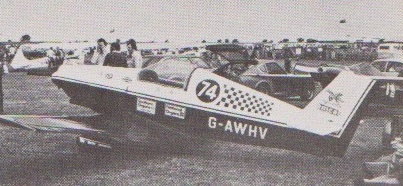
Beta B2A G-AWHV Continental C90
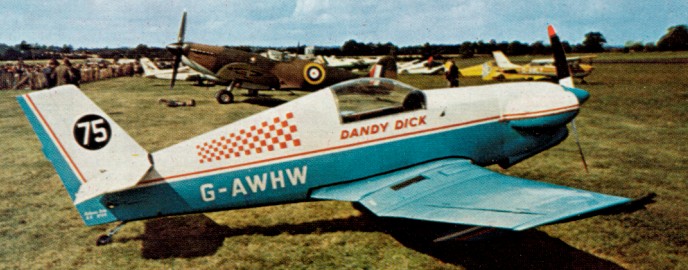
The Beta is a single seat sporting monoplane of all wood construction. The wing employs an NACA23012 aerofoil section and consists of a rectangular centre section and tapered outer panels. The wing is made up of a single main spar and auxiliary rear spar, wood ribs and plywood covering. The mass balanced wooden ailerons are fabric covered. Flaps are optional. The fuselage is a semi-monocoque structure consisting of elliptical wooden frames and plywood covered. The cantilever tail unit has a ply-covered fin and tail plane and fabric covered control surfaces. The fixed undercarriage has rubber in compression shock absorbers on early models, but spring steel legs on later models. Fuel capacity is 10.5 Imperial gallons. Four versions of the Beta are available, the basic difference being the engine fitted.
Beta B4 G-AWHW at Sywell 1975. Continental O-200-A
Beta B1 Engine: Continental A65, 65 hp Wing span: 20.05 ft Length: 16.08 ft
Beta B2 Engine: Continental C-90, 90 hp
Beta B2A Engine: Continental C-90, 90 hp Undercarriage: spring steel
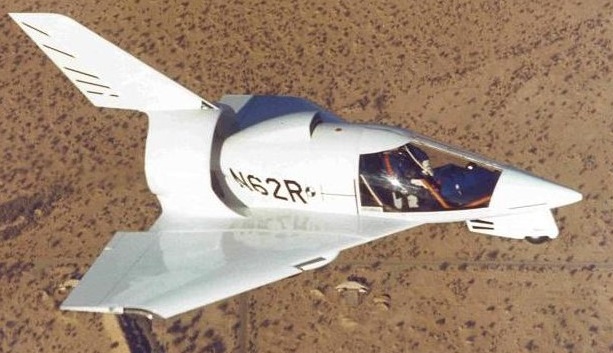
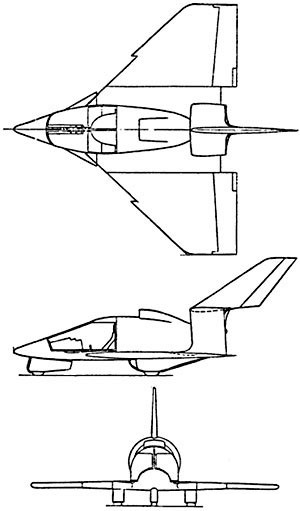
In 1974, Rohr Chairman Burt Raynes resolved to move Rohr into the light airplane market by summoning Walt Mooney as designer and project manager to come up with a quantum leap in light aircraft technology. Mooney selected the best people Rohr had, including key players Bill Chana, Bob Fronius, Mike Voydisch, and Don Westergren, and built three airframes; two flying prototypes and a static tester, plus 1/10- and 1/2-scale models for feasibility tests.
Fiberglass-reinforced plastic honeycomb construction. Sparless folding wings and vertical tail for storage in an average one-car garage. Goodrich Aerostructures Group was a contract manufacturer of engine cowlings and pylons.
A shortage of funds precluded further development. By the time the project ended (for reasons having nothing to do with the merits of the airplane), one prototype had accumulated 23 hours in the air.
Engine: 150hp Lycoming special high-rpm (4400rpm) Prop: four-blade ducted-fan pusher prop plus a six-blade stator Wingspan: 30’0″ Length: 28’0″ Gross weight: 1450 lb Seats: 2