A single-seat agricultural monoplane with 300 hp Lycoming engine. Prototype first flew in 1975 and a small batch produced.
1 engine
Romeo Ro 37 / Ro 45
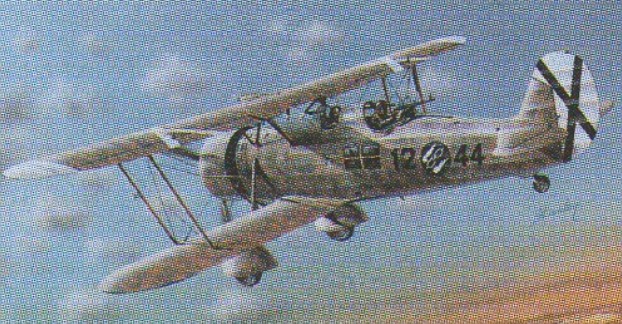
In the early 1930’s, the Regia Aeronautica put out a requirement for a light reconnaissance aircraft and also a heavier reconnaissance aeroplane. The first should have a 350 km/h (190 knots/220 mph) maximum speed, five hours endurance, three machine-guns and a bomblets dispenser, armour, and the capability to operate from improvised airfields. The heavier one should have a 325 km/h maximum speed, at least 1,300 km (800 miles) endurance, 7,000 m (22,750 feet) ceiling, climb to 5,000m (16,000) in 19 minutes, three crew, five weapons, high wing and other details.
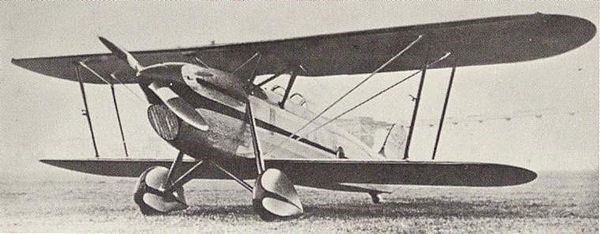
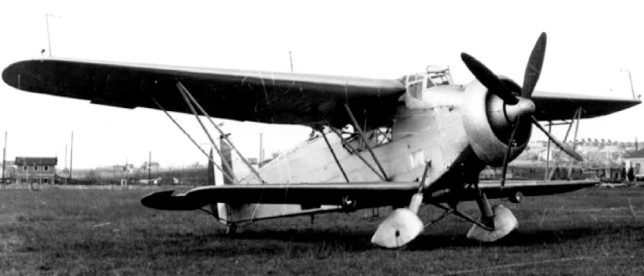
IMAM designed a new aircraft, the Romeo Ro.37, which first flew in 1933. The aircraft was an unequal-span single-bay biplane of mixed wood and metal construction. Its design included fixed tailwheel landing gear, all three wheels being provided with spats; a braced tail unit incorporating a variable-incidence tailplane; and accommodation for two in tandem enclosed cockpits, Power was provided by a 522kW Fiat A.30RA Vee engine of 560hp. It reached 300 km/h (162 knots). An improved Ro.37bis was developed subsequently, and this introduced an optional radial powerplant comprising either the Piaggio P. IX or P.X supercharged engine. The better reliability of this engine was considered more desirable and so this was the main version produced.
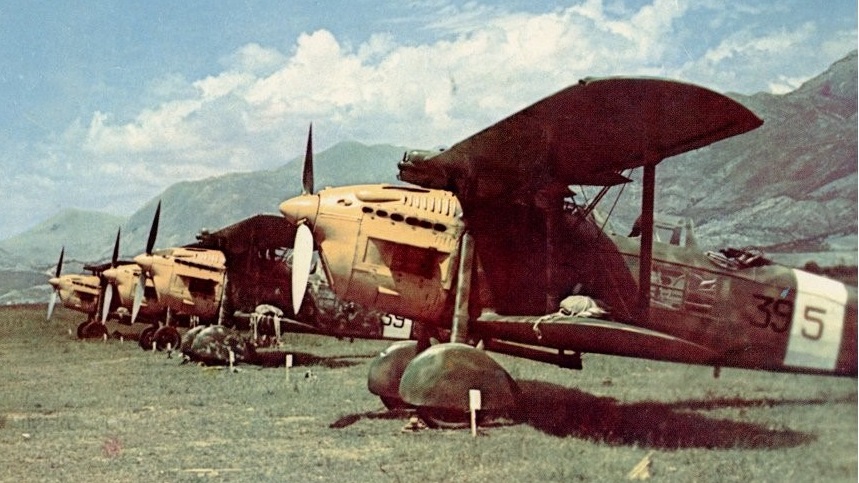
Both models proved popular for their day, with production of the Ro.37 and Ro.37bis exceeding 160 and 475 respectively. Ro.37 were exported (ten to Uruguay, sixteen to Afghanistan, fourteen to Hungary, eight to Austria, and one to Ecuador) and around 280 were in service with the Regia Aeronautica in 1940 in thirty squadrons.
IMAM also built a successor to the Ro.37, the Ro.45. This was an enhanced Ro.37 that first flew as a prototype on 10 December 1935. The 820 hp Isotta-Fraschini Asso XI.RC40 engine boosted maximum speed slightly to 217mph, increased the ceiling to 26,200 feet, and endurance to 1,398 miles. Destined for long-range reconnaissance and light bombing, it remained a single prototype.
The Ilmavoimat / Maavoimat evaluated both the Ro.37 and the single Ro.45 prototype but considered the design unsuitable for their overall requirement.
Ro.37 and Ro.37bis aircraft were involved in the Spanish Civil War from October 1936, when the first 10 arrived. Another 26 (possibly 58) went to this theatre and were used for many missions and tasks. They were used as assault aircraft, even though they were unarmoured. The results were satisfactory and some were even converted to a single-seat machine for use as attack fighters. The two-seat versions were used as heavy fighters, providing protection for S.81 bombers from Republican I-15s. It is not known if there were any air-to-air victories. They were also used extensively by the Regia Aeronautica during Mussolini’s invasion of Abyssinia between October 1935 and May 1936 and during the Italian occupation of that country until 1941. Some 275 Ro.37bis aircraft were in service with the Regia Aeronautica when Italy became involved in World War II, and these saw first-line service in the East and North African campaigns and in the Balkans. Some were in service up to 1943 and perhaps even later. They were very vulnerable, but in the war Italy did not have sufficient resources to produce a better observation aircraft, not even the Ro.63, a superior aircraft, similar to the Storch, but with more endurance. After withdrawal from first-line service they found a variety of uses, but all had been retired before Italy’s armistice with the Allies on 8 September 1943. The aircraft was produced until 1939 with a total of 569 (237 + 332bis) produced.
The remnants of the Ro.37’s sold to Afghanisatan were found northeast of Kabul by the Italian Army’s 132nd Artillery Regiment “Ariete”.
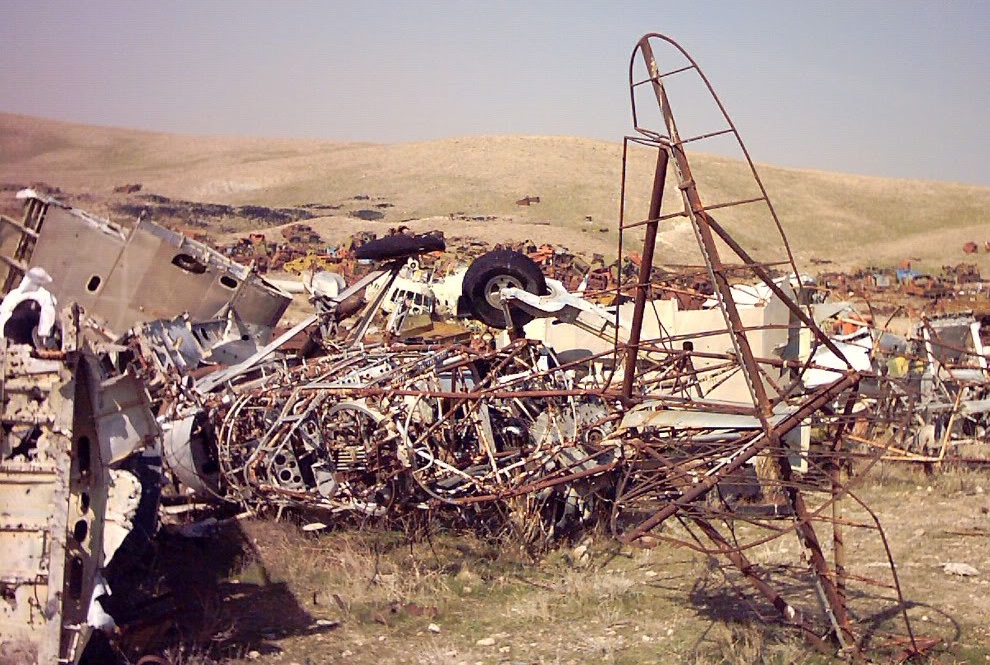
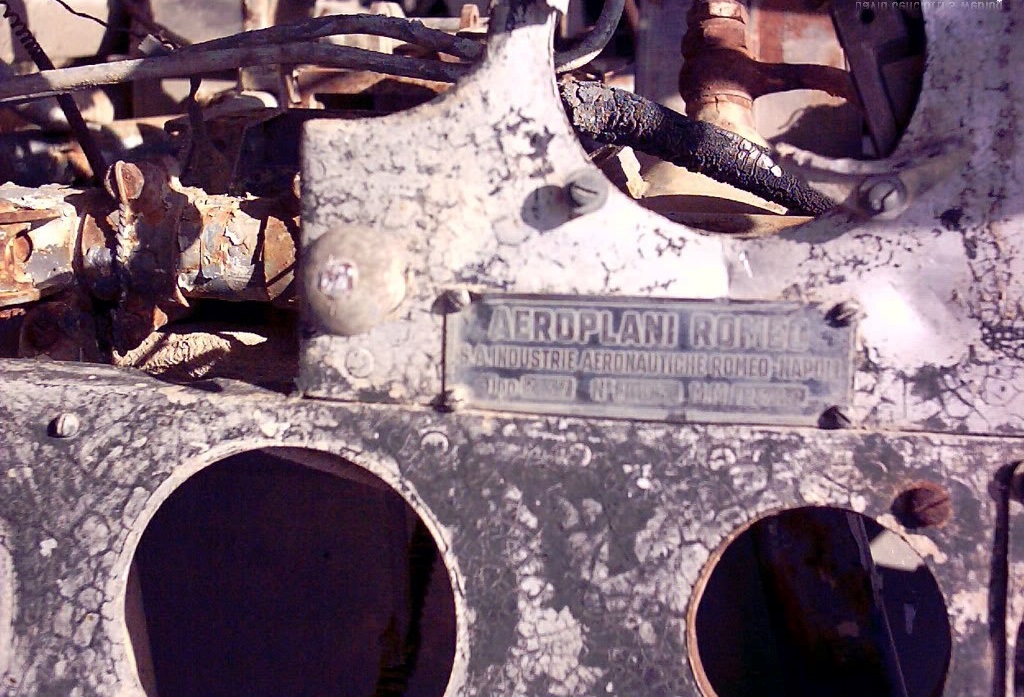
Of the 16 Ro.37bis sold to Afghanistan in 1938, 6 relics were recovered by an Italian / US team to the North East of Kabul and one of them is exhibited at Vigna di Valle Museum waiting to be completely restored.
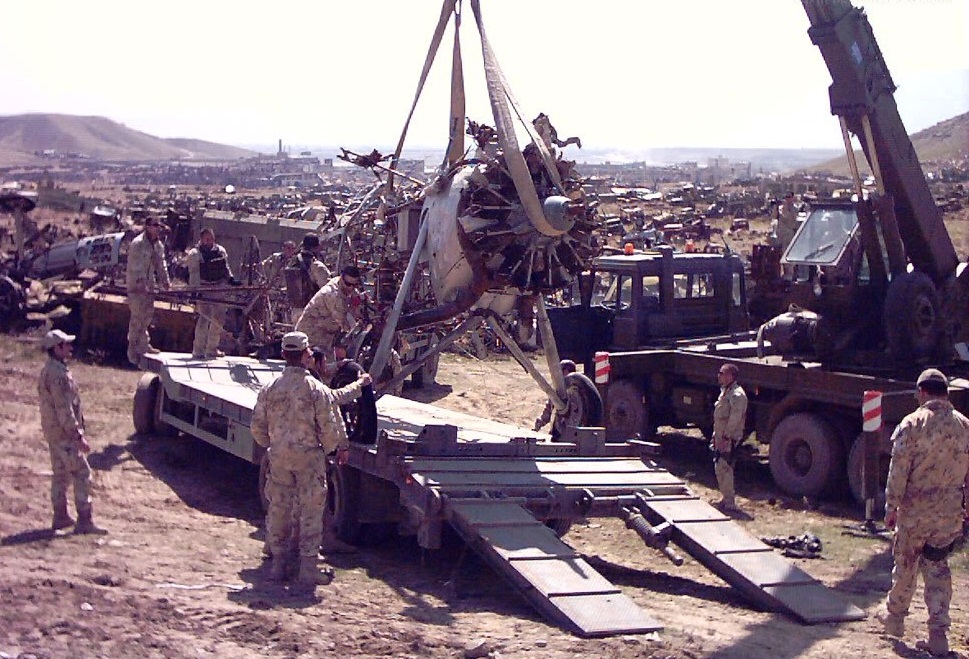
Tom Martin, LTC of the US Army, was the garrison commander at the Kabul Military Training Center and “neighbor” to the Italian garrison at Camp Invicta. Their garrison commander, LTC Mauro D’ Ubaldi, and Martin became friends through mutual security needs and engineer projects. D’ Ubaldi approached Martin and asked if he would help his team come onto our site and remove from the boneyard the a plane. They also recovered wings and there were scraps of material with paint on some of the parts which showed the material and colors.
Ro.37
Crew: 2
Engine: Piaggio P.IX RC.40, 560 hp (418 kW)
Maximum speed: 205mph
Range: 696 miles
Service ceiling: 23,620 ft
Armament: three machine guns (two in nose / one flexible mount rear cockpit)
Bombload: 397 lb (180kg) of bombs (twelve x 15 kg bombs) on underfuselage racks
Romeo Ro.30 / IMAM Ro.30
IMAM proposed the IMAM Ro.30, an improved Ro.1 (the Ro.1 was actually a Fokker C.V built under license in Italy) with a defensive turret and better engine. Limited numbers were built but a larger order was rejected by the Regio Esercito and the aircraft was not chosen for mass production, being only capable of 200 km/h (110 knots), five hours endurance, a climb rate of 4,000 m (13,000 feet) in 20 minutes, and had three weapons.
Romano Ro 92
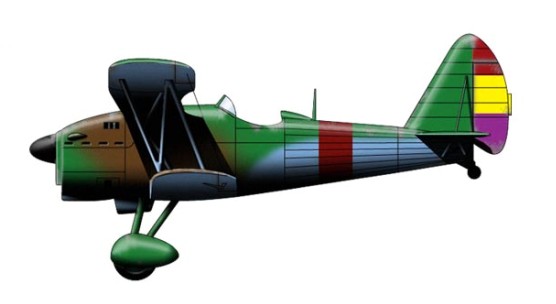
Apart from their contract for the R-83, the Spanish Republicans financed development as the R-92 of a version of the same design powered by an Hispano-Suiza 12Ycrs-l liquid-cooled 12-cylinder Vee engine rated at 900hp at 1900m. Similar to the R-83 apart from engine installation, an increase in vertical tail area, some local structural strengthening and the addition of a 20mm engine-mounted cannon to the armament, and in reverting to the gull configuration of the R-90, the R-92 prototype was apparently transported to a Sabena hangar at Evere, Brussels, for final assembly.
Euphemistically referred to as a “sportive plane” and assigned a Belgian civil registration, the R-92 was flight tested under the utmost secrecy by Jacques Lecarme of the French Centre d’Essais du Materiel Aerien (CEMA) before delivery to Barcelona in the summer of 1938. The subsequent fate of the sole example of the R-92 is unrecorded.
Wingspan: 8.88 m / 29 ft 2 in
Length: 7.63 m / 25 ft 0 in
Height: 3.10 m / 10 ft 2 in
Wing area: 21.00 sq.m / 226.04 sq ft
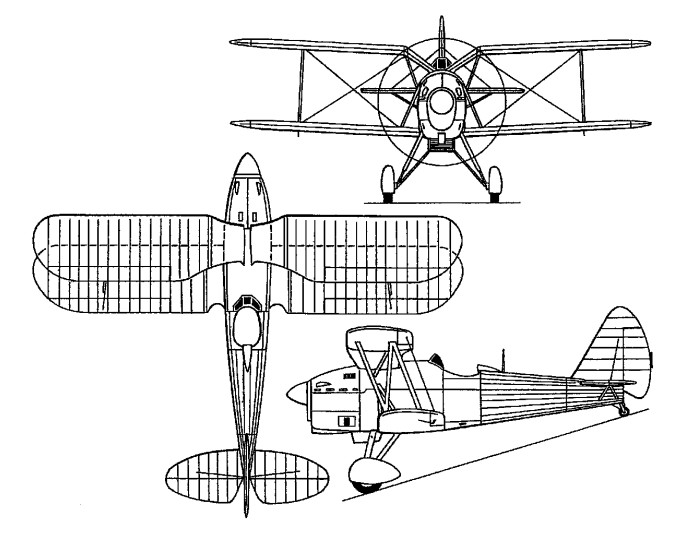
Romano Ro 90
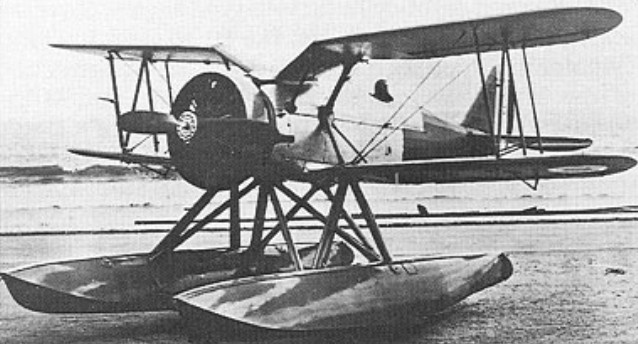
Dated in concept by comparison with other contenders designed to meet the 1933 Marine Nationale requirement for a single-seat float fighter, the R-90 proffered by the Chantiers Aeronavale Etienne Romano was a twin-float single-bay equi-span staggered biplane of mixed construction, the fuselage being of welded steel-tube and the wings of wood.
Powered by a 720hp Hispano-Suiza 9Vbrs nine-cylinder radial, the R-90 was flown in August 1935, attaining a speed of 352km/h at 3500m. During the following October, it was re-engined with a smaller-diameter 14-cylinder HS 14Hbrs two-row radial enclosed by a longchord NACA cowling. At the same time, the volume of the floats was increased and more substantial floatbracing struts were provided.
At the request of the Services Techniques, the prototype was again re-engined, this time with a liquid-cooled 12-cylinder HS 12Ycrs-l rated at 900hp at 1900m. A 20mm cannon was mounted between the cylinder banks, and, in this form, the R-90 could exceed 400km/h in level flight. It flew with the HS 12Y engine in October 1937, but in the previous March, the Marine Nationale had selected the Loire 210 to meet its requirement, and subsequent testing of the R-90 was related to the clandestine development of a shore-based version specifically for the Spanish Republican government.
Max take-off weight: 1990 kg / 4387 lb
Empty weight: 1642 kg / 3620 lb
Wingspan: 8.88 m / 29 ft 2 in
Length: 8.67 m / 28 ft 5 in
Height: 3.93 m / 13 ft 11 in
Wing area: 21.00 sq.m / 226.04 sq ft
Max. speed: 368 km/h / 229 mph
Range: 650 km / 404 miles
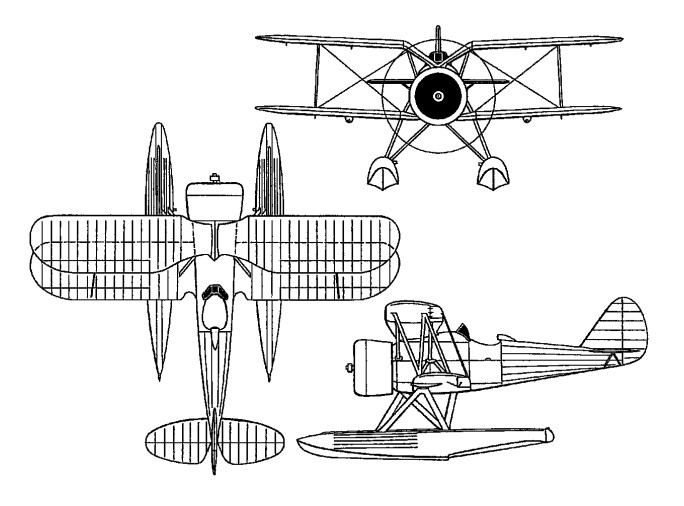
Romano Ro 83
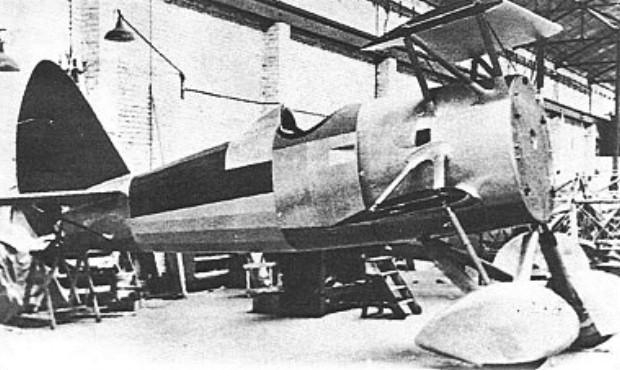
One of several contracts, most of which were clandestine, negotiated with representatives of Etienne Romano by a purchasing commission of the Spanish Republican government early in 1937, involved 24 land-based derivatives of the R-90 single-seat float fighter.
To support the subterfuge that Spain had actually ordered a re-engined version of the entirely different tandem two-seat R-82 trainer, the land-based fighter was allocated the non-sequential designation R-83, part manufacture and final assembly being undertaken clandestinely in Belgium by LACEBA (Les Ateliers de Construction et d’Exploitation de Brevets Aeronautiques).
The R-83 was fundamentally similar to the R-90 apart from having a 450hp Pratt & Whitney R-985 Wasp Junior engine, a cabane replacing the gulled upper wing centre section and a spatted wheel undercarriage. In order to further the pretence that the R-83 was purely a tuitional aircraft, a 280hp Salmson 9Aba radial engine was fitted in Belgium for flight testing and delivery to Spain where it was intended that the Wasp Junior engine be installed.
The first of an initial batch of six R-83s reached Spain on 20 April 1938, and the last on the following 5 July, these allegedly being re-engined as planned after arriving in Barcelona. The ultimate fate of these aircraft is unknown. The wings and fuselages of the remaining 18 were completed, but the aircraft had still to be assembled when the Spanish conflict terminated.
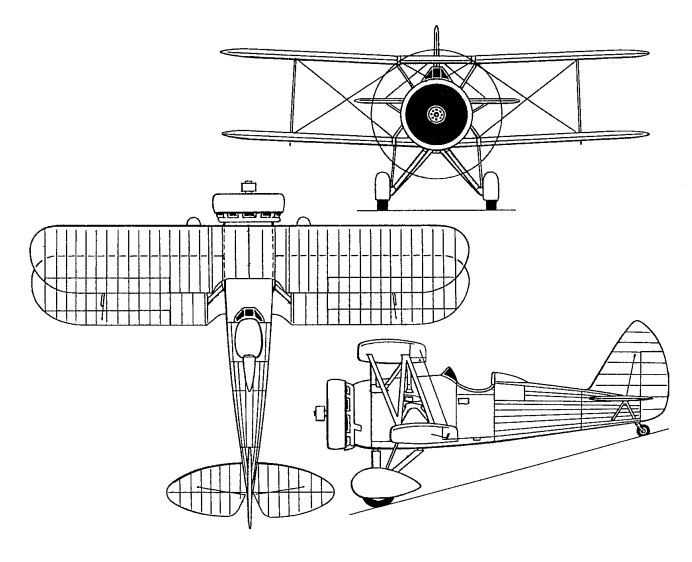
Romano Ro 80 / Ro 82
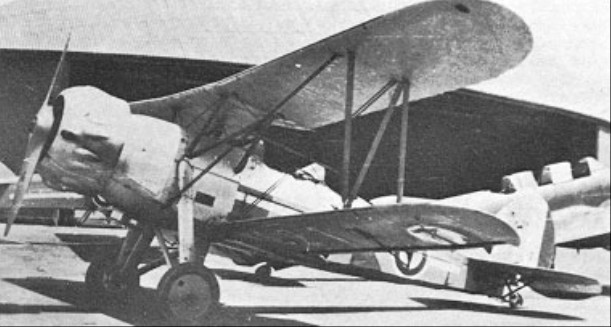
The Romano R-80.01 first prototype was a private venture by Etienne Romano, and was designed to provide an aerobatic two-seat biplane for company pilot Lemoigne to demonstrate at air shows. Tested in early 1935, it was also flown with great success by Michel Detroyat. Its design features included the provision of ailerons on both wings, robust divided landing gear, and a 179kW Lorraine 7Me radial engine in a NACA cowling. After testing also by the official STAe, the R80.01 then gave many aerobatic shows with Lemoigne at the controls.
In response to official suggestions, R-80.02 with the more powerful Salmson 9Aba engine was first flown in March 1936 and exhibited at the Paris Salon de I’Aeronautique of that same year. It incorporated changes already made on the aerobatic prototype, including ailerons on the lower wings only and a fin of increased area. Intended as a two-seat dual-control intermediate trainer, it was soon redesignated R-82.01. Two further protoypes were built, both of them being sold to private owners, one of them the well-known aviatrix Lucienne Saby.
Meanwhile, Romano had become part of the nationalised SNCASE and Michel Detroyat became Inspector of Flying Equipment for all the nationalised companies. On the latter’s urging, large orders were placed by the state for R-82 trainers for the Armee de I’Air. In the event, the total of production aircraft was 147, to which was added a further 30 ordered in 1937 by the Aeronavale. Series trainers featured a number of refinements and some simplifications, the principal external change being the introduction of a long-chord engine cowling.
By 1 August 1939 70 R-82s had been taken on charge, and all 177 series aircraft had been delivered by May 1940. The R-82 have excellent service with the Armee de I’Air and Aeronavale, largely equipping the Centres d’lnstruction and Ecoles de Pilotage.
In February 1938 two R-82s were purchased by a French intermediary company and ferried to Spain, where they were used for training and liaison duties by the Republican government fighting the Nationalist forces. It is uncertain whether these were new aircraft or machines taken from Armee de I’Air contracts.
R-82
Engine: 1 x Salmson 9Aba radial piston engine, 209kW
Wingspan: 9.88 m / 32 ft 5 in
Length: 7.82 m / 26 ft 8 in
Height: 3.34 m / 11 ft 11 in
Wing area: 23.72 sq.m / 255.32 sq ft
Max take-off weight: 1328 kg / 2928 lb
Loaded weight: 918 kg / 2024 lb
Max. speed: 240 km/h / 149 mph
Ceiling: 6500 m / 21350 ft
Range: 660 km / 410 miles
Romano R.15
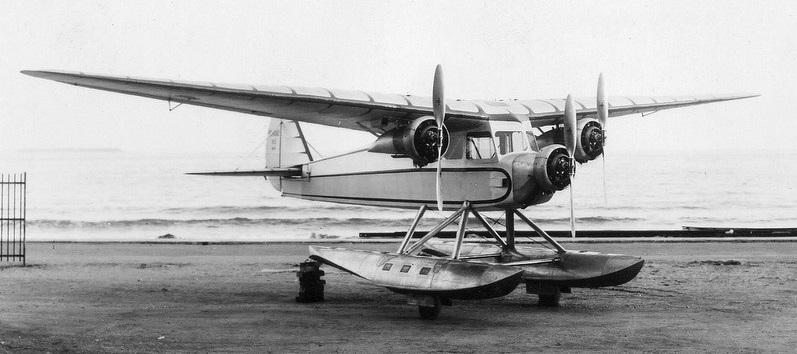
The R.15 was a high-wing floatplane of all-metal construction built in France by Romano. The pilot and passenger were seated in an enclosed cabin. It first flew in 1933 and showed good flight characteristics, but failed to win orders from the civil aviation industry.
Powerplant: 1 × Salmson 9Aer, 56 kW (75 hp)
Wingspan: 14.45 m (47 ft 5 in)
Length: 9.06 m (29 ft 9 in)
Height: 3.47 m (11 ft 5 in)
Wing area: 26.30 m2 (283.1 sq ft)
Empty weight: 928 kg (2,046 lb)
Gross weight: 1,268 kg (2,795 lb)
Maximum speed: 186 km/h (116 mph, 100 kn)
Cruise speed: 160 km/h (99 mph, 86 kn)
Range: 500 km (310 mi, 270 nmi)
Service ceiling: 6,500 m (21,300 ft)
Crew: 2
Romano R.5

In 1929 the French Air Ministry drew up a programme of military aircraft specifications to meet France’s needs over the next few years. One part called for a reconnaissance and observation seaplane and the R.5 was Romano’s response; at least two other manufacturers also built prototypes, though funding was not yet assured.
The Romano R.5 was an all-metal flying boat. Its parasol wing was built in three parts; its centre section mounted a 480 kW (650 hp) Hispano-Suiza 12Nbr water-cooled V-12 engine in tractor configuration on its leading edge and was braced 1,650 mm (65 in) over the fuselage by parallel pairs of struts from its outer ends to the mid-fuselage. Six short cabane struts braced it centrally. The inner and cantilever outer panels together provided a trapezoidal plan wing out to rounded tips; ailerons occupied most of the outer panels’ trailing edges. Structurally a mixture of steel and duralumin, with dural skinning, the wing was built around two spars; in the centre section these were elaborated into a trellised girder.
Its 15-metre-long (49 ft 3 in), flat-sided hull was built with of dural and with vedal, layers of dural and pure aluminium, for parts in direct contact with sea-water. The V-form underside had a single step under the wing and, further aft, a water rudder. The R.5 had a pair of Dornier-style sponsons, 6.3 m (20 ft 8 in) in span and 2.5 m (8 ft 2 in) at their broadest, mounted on the lower sides of the fuselage instead of wing mounted floats. There were plans to use these to contain retractable wheels to turn the R.5 into an amphibian.
In the nose there was a position for mooring operations, navigation equipment and a machine gun mounting. The pilots’ cabin was ahead of the propeller disc, fully enclosed and with side-by-side seats and dual controls. Behind the wing there were positions for a navigator who also operated the bomb release controls and for a radio and camera operator. Behind them was a dorsal gunner’s position, midway between the trailing edge and the tail. The fuselage became slender to the rear, where the tall fin carried a deep, rounded unbalanced rudder. The R.5’s tapered tailplane was raised out of the spray well up on the fin and supported from below with a pair of parallel struts from the upper fuselage. Its elevators were inset and unbalanced but far enough forward to only require a small central nick for rudder movement.

The Romano R.5 first flew in September 1932. Soon after, it was delivered to the Forces Aérienne de la Mer along with its competitors, the Amiot 110-S and CAMS 80. Only one was built.
Engine: 1 × Hispano-Suiza 12Nbr, 480 kW (650 hp)
Wingspan: 22.60 m (74 ft 2 in)
Wing area: 67.5 m2 (727 sq ft)
Aspect ratio: 7.6
Length: 16 m (52 ft 6 in)
Height: 4.50 m (14 ft 9 in)
Empty weight: 3051 kg
Gross weight: 4,300 kg (9,480 lb)
Maximum speed: 217 km/h (135 mph, 117 kn) at 1,500 m (4,900 ft)
Cruise: 172 kph
Range: 1,500 km (930 mi, 810 nmi)
Service ceiling: 6,700 m (22,000 ft)
Time to altitude: 6 min 5 sec to 1,500 m (4,900 ft)
Armament: two 7.5-мм Darne machine guns
Bomb load: 200 kg
Crew: Three
Romano R-3
A seaplane with Hispano-Suiza engine built in early 1920s to carry out research on seaplane floats.

